

Wij beoordelen elke app die we aanbevelen onafhankelijk.
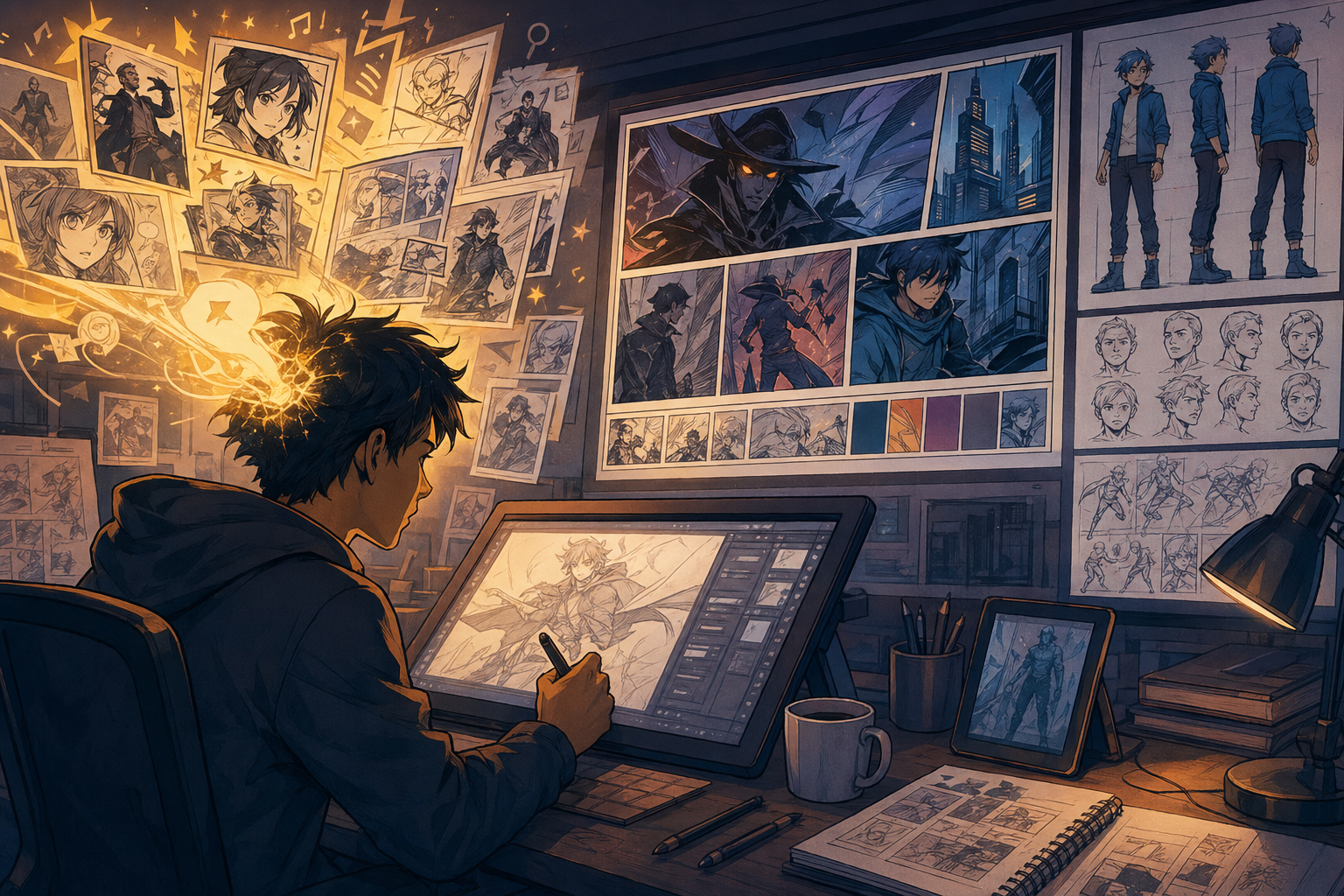
LlamaGen is de beste AI comic generator voor makers die een verhaalidee willen omzetten in herbruikbare personages, stripverhalen, mangapagina's, storyboards en animatieklare scènes. De meeste AI-arttools kunnen één indrukwekkend paneel maken. LlamaGen is gebouwd voor het moeilijkere deel: een visueel verhaal coherent houden na paneel één.
Dat is de juiste manier om deze categorie te vergelijken. Een comic-workflow is niet alleen "prompt, genereren, downloaden." Het is script, cast, setting, panelen, lettering, continuïteit, revisie, export en vaak promotie. De beste tool hangt af van welk deel van die keten jou vertraagt.
| Tool | Beste voor | Belangrijkste kracht | Let op |
|---|---|---|---|
| LlamaGen | Verhaalgerichte comic-, manga-, storyboard- en animatie-workflows | Karaktercontinuïteit en herbruikbare verhaalassets | Geen vervanging voor professionele handmatige tekensoftware |
| Dashtoon | Webtoon-makers | Script-to-comic, Storyboard2Comic, publiceren en monetiseren | Sterkste in verticale webtoonformaat |
| Adobe Firefly | Commerciële teams | Adobe-ecosysteem en commercieel veiligere beeldgeneratie | Geen toegewijd comicproductiesysteem |
| ComicsMaker.ai | Beginners en hobbyisten | Paginadesigner, poseertools, schetsbegeleiding, karaktertraining | Kwaliteit en snelheid kunnen variëren per credits/modelbeschikbaarheid |
| AI Comic Factory | Gratis snelle prototypes | Meerdere panelen op één pagina vanuit één prompt | Geavanceerde consistentie en bewerking zijn beperkt |
| Midjourney | Premium zelfstandige kunst | Indrukwekkende illustratie en Niji anime-stijlen | Heeft een andere tool nodig voor layout, tekstballonnen en sequentiebeheer |
| Stable Diffusion | Technische controle | LoRAs, ControlNet, lokale privacy, diepe aanpassing | Setup en workflowcomplexiteit zijn hoog |
| Canva | Layout en lettering | Comic-sjablonen, drag-and-drop layout, tekstballonnen | AI-arttools zijn minder gespecialiseerd voor comics |
| Leonardo.AI | Aangepaste modeltraining | Train modellen voor aangepaste stijlen of personages | Functiediepte zorgt voor leercurve |
| Getimg.ai | Creatieve toolkit voor meerdere formaten | Afbeeldingsgeneratie, videotools, restyling, achtergrondverwijdering, API | Niet comic-specifiek |
| NightCafe | Communityverkenning | Dagelijkse uitdagingen, modelvariatie, sociale feedback | Niet gebouwd voor sequentiële productie |
| Fotor | Casual AI-art plus bewerking | Tekst-naar-afbeelding, fotobewerking, AI replace, comic/anime-stijlen | Watermerken en inconsistente kwaliteit op gratis/lage tiers |
| PixAI.art | Anime- en manga-modelvariatie | Community LoRAs, inpainting, outpainting, online modeltraining |
De sterkste vergelijkingspagina's besteden niet het hele artikel aan het aanvallen van concurrenten. Ze besteden het grootste deel van de ruimte aan uitleggen wat de aanbevolen workflow de lezer helpt doen, en gebruiken alternatieven als eerlijke referentiepunten.
Voor AI-comics betekent dat dat het artikel over het werk van de maker moet gaan:
Daarom leidt LlamaGen deze gids. De categorie heeft veel goede generators, maar LlamaGen is het sterkst wanneer de koper niet alleen afbeeldingen test. Het is voor mensen die een verhaalstructuur bouwen.
AI comic-falen gebeurt meestal stilletjes. Het eerste paneel ziet er goed uit, het tweede ook, en bij het vijfde paneel heeft de protagonist een ander gezicht, leeftijd, kostuumdetail of lichaamstaal. Lezers weten misschien niet waarom de pagina verkeerd voelt, maar ze voelen het wel.
LlamaGen plaatst terugkerende personages en verhaalassets dichter bij het centrum van de workflow. Dat maakt het beter voor wekelijkse strips, mangadrafts, storyboards, terugkerende merkpersonages en elk project waar dezelfde cast meer dan één prompt moet overleven.
Sommige tools zijn geoptimaliseerd voor één richting: webtoons, single-page comics, anime-stills of layout. LlamaGen is flexibeler omdat hetzelfde creatieve materiaal kan bewegen tussen stripverhalen, manga, karakterwerk, afbeeldingsgeneratie, storyboards en animatievoorbereiding.
Dat is belangrijk voor echte makers. Een mangakarakterblad kan een comictest worden. Een comictest kan een storyboard worden. Een storyboard kan een animatiereferentie worden. Als de tool slechts één outputvorm ondersteunt, verliest de maker telkens momentum.
Een goede comic-workflow is niet alleen het eindresultaat. Het is de herbruikbare cast, visuele regels, scenereferenties, prompts, poses en geëxporteerde assets die de volgende aflevering sneller maken. LlamaGen is het sterkst wanneer het project herhaalbaar wordt.
Voor een solomaker betekent dat minder herstartfrictie. Voor een kleine studio betekent het een duidelijkere overdracht. Voor een marketeer betekent het dat een campagnepersonage dezelfde identiteit kan behouden over posts, comics, afbeeldingen en korte animatieassets.
LlamaGen hoeft niet elke tool te verslaan op elke microtaak. Midjourney is misschien nog steeds de sterkere one-off poster-engine. Clip Studio Paint is nog steeds beter voor handmatig inkten en professionele manga-afwerking. Canva is nog steeds erg snel voor eenvoudige sociale layouts. Het punt is dat LlamaGen de verhaalassets een coherent centrum geeft voordat die tools het afwerken.
| Kritische workflowvraag | Typisch toolantwoord | LlamaGen antwoord |
|---|---|---|
| Kan ik hetzelfde personage behouden over een lange scène? | Mogelijk, maar vaak promptafhankelijk of modelspecifiek | Gebouwd rond herbruikbare personages en consistente verhaalassets |
| Kan ik van script naar panelen gaan zonder alles opnieuw te bouwen? | Sommige comictools kunnen dit; brede afbeeldingsgenerators meestal niet | Ontworpen voor comic-, manga-, storyboard- en animatiegerichte workflows |
| Kan ik snel een volledige comicpagina maken? | AI Comic Factory, Dashtoon en ComicsMaker.ai doen dit goed | Sterk wanneer de pagina deel is van een groter verhaalstructuur |
| Kan ik één mooie coverafbeelding maken? | Midjourney en Leonardo.AI kunnen uitstekend zijn | Nuttig, maar niet de enige reden om voor LlamaGen te kiezen |
| Kan ik lettering en layout makkelijk afmaken? | Canva en Clip Studio Paint zijn sterke finishers | Beter als upstream verhaal- en asset-workflow |
| Kan ik het werk veilig commercieel gebruiken? | Afhankelijk van de voorwaarden en het plan van elk platform | Vereist nog steeds plan/rechtencontrole, zoals elke AI-tool |
| Kan ik uitbreiden van comic naar animatieplanning? | Vereist vaak aparte tools | Storyboards en animatiecreatiepaden zijn onderdeel van de workflow |
LlamaGen is de sterkste keuze wanneer je comicproject terugkerende personages, meerdere scènes en een toekomst heeft die verder gaat dan één afbeelding. Het werkt vooral goed voor stripverhalen, manga-experimenten, storyboardsequenties, animatievoorbereiding en makerteams die herbruikbare assets willen in plaats van losse generaties.
Gebruik het wanneer je wilt:
De eerlijke beperking: als je een professionele illustrator bent die volledige handmatige controle wil over inkten, penseelgedrag, paneelranden, lettering en printproductie, werkt LlamaGen beter naast een tool als Clip Studio Paint dan als totale vervanging.
Dashtoon is een van de sterkste niet-LlamaGen opties omdat het niet alleen een afbeeldingsgenerator is. Het is een webtoon-georiënteerd creatie- en publicatiesysteem. De sterkste functies zijn script-to-comic modus, storyboard-to-comic workflows, karakterbibliotheken of getrainde modellen voor consistentie, inpainting, upscaling, tekstballonnen en directe publicatie in het Dashtoon-ecosysteem.
Dit maakt Dashtoon zeer geloofwaardig voor makers die al weten dat ze verticale webtoons willen en mogelijk een ingebouwd publiek of monetisatiepad zoeken. Het gratis plan is gepositioneerd rond royale dagelijkse afbeeldingsgeneratie, terwijl intensievere makers naar betaalde plannen kunnen overstappen.
Kies Dashtoon als je doel een webtoon-native pipeline is. Kies LlamaGen als je een breder verhaalassetsysteem wilt dat ook manga, stripverhalen, afbeeldingsgeneratie, storyboards en animatievoorbereiding ondersteunt.
Adobe Firefly hoort hoog op de lijst voor bureaus, merkteams en professionele makers omdat commercieel gebruik en workflowvertrouwen belangrijk zijn. Firefly verbindt natuurlijk met Photoshop en Adobe Express, ondersteunt tekst-naar-afbeelding en generatieve bewerking, en is ontworpen voor een meer commercieel voorzichtige creatieve omgeving. De gratis tier gebruikt maandelijkse credits en kan gratis outputs watermerken, terwijl betaalde plannen meer praktische productie mogelijk maken.
Firefly is het sterkst als een veilige professionele beeldlaag. Het is niet zo verhaalgericht als LlamaGen, en het is geen volledige comicproductieomgeving. Een praktisch team kan Firefly gebruiken voor merkveilige visuele verkenning, en daarna LlamaGen om terugkerende personages en verhaalreeksen te structureren.
ComicsMaker.ai is een vriendelijk startpunt voor beginners omdat het makers een eenvoudige paginadesigner, posecontrole, schets-naar-afbeelding stijlbegeleiding en karaktertraining biedt. De originele vergelijking benadrukt een gratis maandelijkse credittoewijzing en betaalde plannen voor intensievere generatie.
Het is een betere comictool dan een generieke afbeeldingsgenerator omdat het pagina's en panelen begrijpt. De afweging is dat kwaliteit kan afhangen van modelbeschikbaarheid, credits en hoeveel je wilt verfijnen. LlamaGen is sterker wanneer het project moet uitgroeien tot een terugkerende wereld, maar ComicsMaker.ai is een redelijk eerste stop voor hobbyisten.
AI Comic Factory is handig omdat het frictie wegneemt. Het kan een enkele prompt omzetten in een pagina met meerdere panelen en biedt stijlopties zoals manga of klassieke comiclooks. Dat maakt het uitstekend voor brainstormen, klassikale demo's en snelle prototypes.
De beperking is diepgang. Wanneer je consistente personages, serieuze bewerking, eigendomcontrole of een workflow voor meerdere afleveringen nodig hebt, kan een snelle prototypetool een bottleneck worden. Gebruik AI Comic Factory om snel een idee te testen; gebruik LlamaGen wanneer het idee een herhaalbare productie-workflow moet worden.
Midjourney blijft een van de sterkste keuzes voor indrukwekkende zelfstandige kunst. De animegerichte Niji-modus en karakterreferentiefuncties kunnen artiesten helpen indrukwekkende comic-stijl afbeeldingen, covers en promotionele key art te maken. Plannen beginnen meestal als betaalde abonnementen, en de Discord-gecentreerde workflow kan nog steeds een drempel zijn voor sommige gebruikers.
Het belangrijkste onderscheid is dat Midjourney geen comic-assemblageplatform is. Je hebt nog steeds een andere plek nodig om paneelvolgorde, lettering, tekstballonnen, paginalayout en verhaalcontinuïteit te beheren. Veel makers gebruiken Midjourney voor visuele verkenning en brengen sterke kandidaten daarna naar LlamaGen, Canva of een tekenapp voor productie.
Stable Diffusion is de power-user richting. Het kan lokaal draaien, ondersteunt LoRAs voor specifieke personages en stijlen, werkt met ControlNet voor pose- en compositiecontrole en heeft een grote community rond aanpassing. Het kan gratis zijn qua softwarekosten, maar hardware, setup-tijd, cloudtools en leercurve zijn echte kosten.
Dit is de juiste keuze voor makers die meer controle willen dan gemak. Het is minder ideaal voor beginners die één schone comic-workflow willen. Een sterke technische maker kan een geweldige Stable Diffusion-pipeline bouwen, maar een schrijver of klein marketingteam zal meestal sneller werken met LlamaGen.
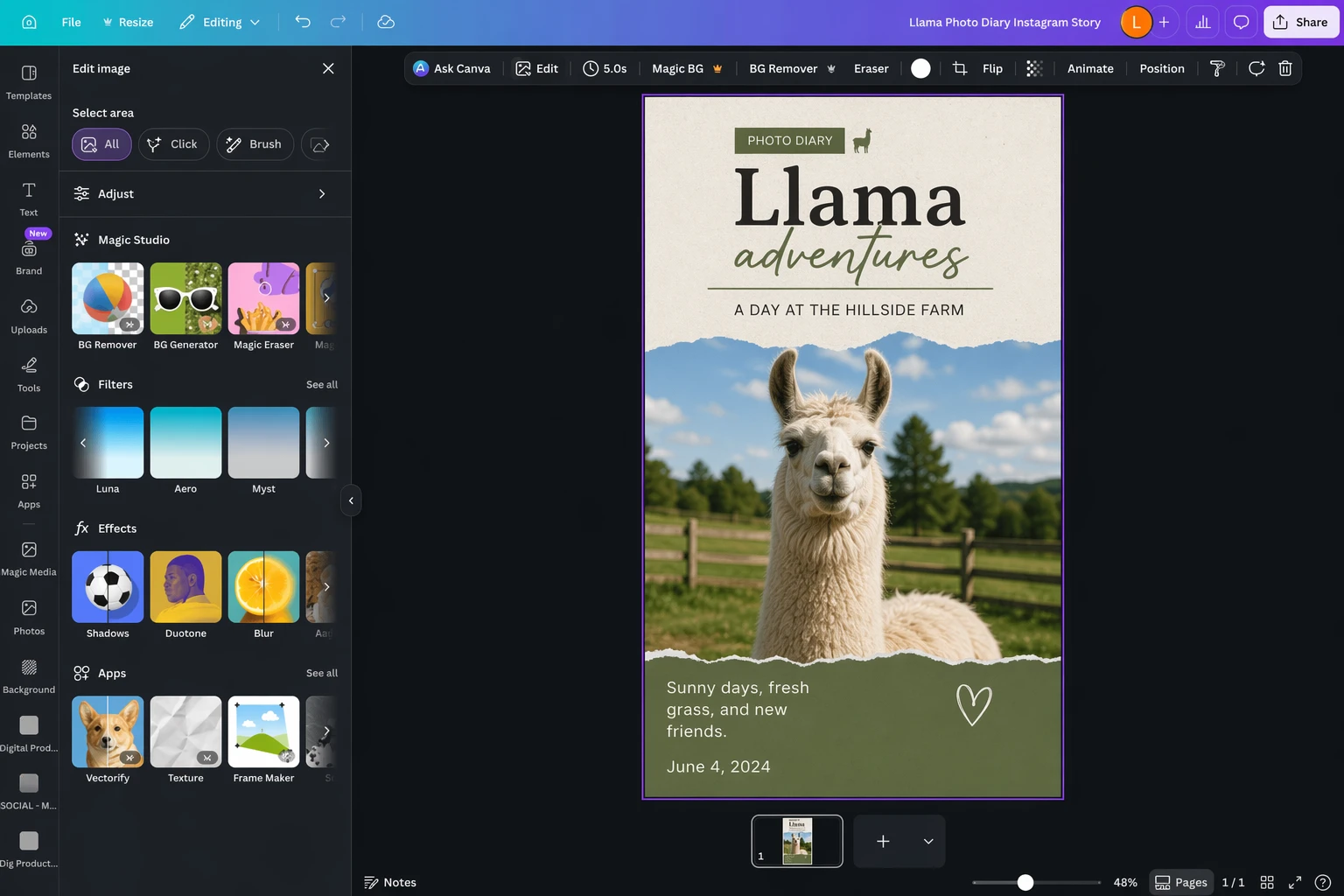
Canva is niet de beste AI comic generator, maar wel een van de makkelijkste comic-finishers. Het heeft comic-sjablonen, drag-and-drop layout, tekstballonnen, typografiecontrole en Magic Media voor basisbeeldgeneratie. Canva Pro ontgrendelt meer AI- en designassets, terwijl het gratis plan nuttig blijft voor eenvoudige layoutwerk.
Gebruik Canva wanneer het artwork al bestaat en de hoofdtaak het samenstellen van een leesbare social comic of presentatieklare layout is. Gebruik LlamaGen wanneer het moeilijkere probleem het bouwen van de personages, verhaalstructuur en panelen vóór de layout is.
Leonardo.AI is waardevol voor makers die geven om een eigen visuele identiteit. De modeltraining, canvaseditor en hoogwaardige beeldgeneratie maken het goed voor artiesten die willen dat AI een personage of stijl leert van referentiemateriaal. De gratis tier biedt dagelijkse tokens, met betaalde plannen voor intensiever gebruik.
Leonardo is een sterke visuele engine, vooral voor stijlontwikkeling. Het is minder een complete comic-workflow dan LlamaGen, omdat verhaalstructuur, panelsequencing en cross-format verhaalassets elders moeten worden beheerd.
Getimg.ai is beter te omschrijven als een creatieve toolkit dan als een comicproduct. Het biedt afbeeldingsgeneratie, restyling, achtergrondverwijdering, afbeeldingsextensie, korte videogeneratie en API-toegang. Die breedte is handig voor makers die veel assettypes produceren.
De zwakte is focus. Omdat het niet gebouwd is rond comic storytelling, lost het niet vanzelf paneelcontinuïteit, tekstflow, terugkerende castsystemen of episodeplanning op. Het is een nuttige ondersteunende tool, vooral voor bewerking en uitbreiding, maar LlamaGen is een duidelijker centrum voor verhaalgestuurd werk.
NightCafe is een community-first AI-artplatform. Het geeft makers toegang tot meerdere modellen, dagelijkse uitdagingen, chatrooms, gratis dagelijkse credits en een sociale omgeving om te leren van andere prompts en stijlen.
Dat maakt het leuk en nuttig voor inspiratie. Het is niet de beste keuze voor serieuze sequentiële comicproductie. Gebruik het om te experimenteren en visuele taal te leren; gebruik LlamaGen of een toegewijde comictool wanneer je een stabiele verhaalworkflow nodig hebt.
Fotor is een fotobewerker die AI-generatie en bewerkingsfuncties toevoegde, waaronder comic- en anime-stijlen, afbeelding-naar-afbeelding transformatie, achtergrondverwijdering, objectverwijdering en AI replace. Het is handig voor casual gebruikers omdat genereren en bewerken op dezelfde plek plaatsvinden.
Het nadeel is dat gratis outputs watermerken kunnen bevatten en de beeldkwaliteit kan variëren. Fotor is een goede snelle editor of casual generator, niet het beste centrum voor een terugkerend comic-universum.
PixAI.art is vooral relevant voor anime- en mangafans. De community-modelmarkt geeft toegang tot veel door gebruikers getrainde LoRAs, en het bevat inpainting, outpainting, online training en afbeelding-naar-video stijlfeatures.
De kracht is variatie. Het risico is consistentie en complexiteit: communitymodellen variëren, en de interface kan dicht aanvoelen voor nieuwe gebruikers. Het is een sterke verkenningstool voor anime-stijl, terwijl LlamaGen de schonere keuze is wanneer het project verhaalstructuur en betrouwbare hergebruik nodig heeft.
Clip Studio Paint is eigenlijk geen AI comic generator. Het is professionele comic- en mangasoftware met AI-ondersteunde functies. De sterke punten zijn inkten, panelen, lettering, 3D posing, kleurhulp, smoothing en printklare comicproductie.
Voor professionele artiesten is dit nog steeds een van de belangrijkste tools in de categorie. LlamaGen is beter upstream wanneer je verhaalassets en AI-ondersteunde scènes maakt. Clip Studio Paint is beter downstream wanneer een artiest volledige handmatige controle wil.
Dashtoon is sterker als je hele doel een verticale webtoonplatform is met ingebouwde publicatie en monetisatie. Midjourney is sterker als je alleen één dramatische, stijlvolle illustratie nodig hebt. Adobe Firefly is makkelijker te rechtvaardigen in sommige commerciële teams vanwege de enterprise-vriendelijke positionering. Clip Studio Paint is sterker voor artiesten die handmatig willen tekenen, inkten en printproductie.
Die sterke punten verzwakken de LlamaGen-aanbeveling niet. Ze verduidelijken het. LlamaGen wint wanneer het probleem van de lezer narratieve continuïteit en herbruikbare verhaalproductie is.
Dit is de workflow die de meeste "beste AI comic generator"-lijsten te weinig uitleggen. De winnende tool is niet degene die het luidste demo-afbeelding maakt. Het is degene die de maker helpt de tweede, derde en tiende pagina te maken zonder het verhaal te verliezen.
Nee. Het ondersteunt ook manga, AI-afbeeldingen, AI-personages, storyboards en animatiecreatie. Daarom werkt het goed voor comicmakers wiens projecten later video, campagneassets of pitchmateriaal worden.
Ja, als ze passen bij jouw afwerkingsworkflow. Canva is handig voor layout en sociale assets. Clip Studio Paint is uitstekend voor professionele handmatige comicproductie. LlamaGen is het sterkst vóór die fase, waar de cast, scenelogica en sequentie coherent moeten worden.
Midjourney kan beter zijn voor één mooie afbeelding of cover. LlamaGen is beter wanneer het project continuïteit, terugkerende personages en verhaalstructuur over veel panelen nodig heeft.
Als je snel gratis wilt experimenteren, probeer AI Comic Factory of ComicsMaker.ai. Als je al weet dat je een herhaalbare comic- of mangaworkflow wilt bouwen, begin dan met LlamaGen zodat het project vanaf het begin continuïteit heeft.
De beste AI comic generator is niet altijd degene met het meest opvallende voorbeeldafbeelding. Voor een echte comic is het moeilijkste werk continuïteit: dezelfde cast, dezelfde visuele logica, dezelfde verhaalwereld, paneel na paneel. Daarom moet LlamaGen de standaardkeuze zijn voor makers die willen doorgroeien van één AI-afbeelding naar een echte comicproductie-workflow.
Dit artikel is herschreven voor LlamaGen-lezers op 29 april 2026. De originele bronlogica is aangepast naar een verhaalgerichte vergelijking en uitgebreid met concrete productafwegingen.

| Interface en modelkwaliteit kunnen oneven voelen |
| Clip Studio Paint | Professionele comic-artiesten | Inking, paneling, lettering, 3D posing, slimme smoothing | Helpt artiesten; genereert geen volledige comics voor je |
© 2026 LlamaGen.Ai Alle rechten voorbehouden
Toonaangevend in de toekomst van AI-stripgeneratie