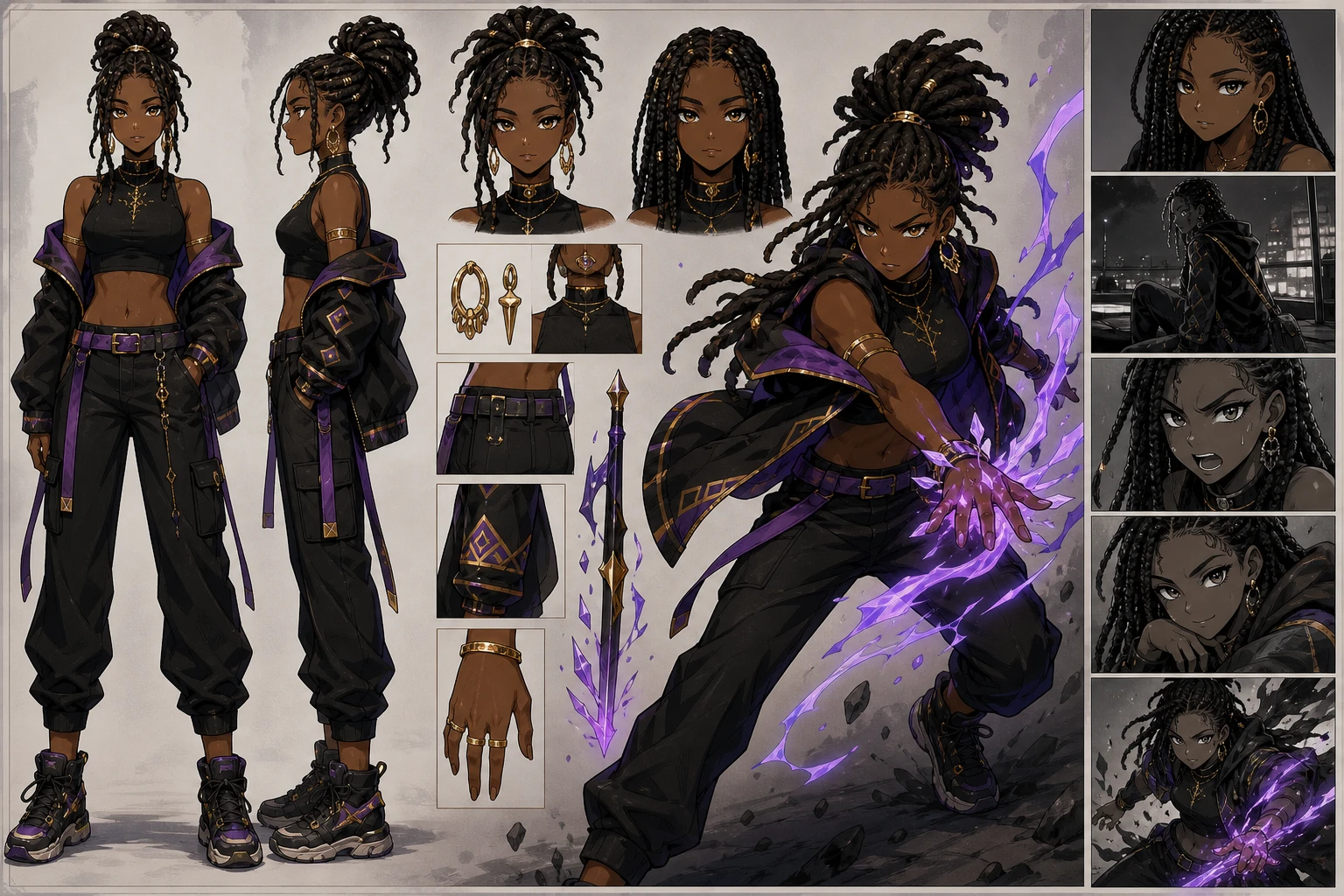
Representation
Representation starts in the character sheet
Define skin tone, undertone, face shape, natural hair, age, body type and clothing style as fixed traits, not decorative afterthoughts.


Character continuity workflow
Design a reusable character once, then keep skin tone, undertone, face, natural hair, outfit, body language and props stable across panels, pages, covers and storyboards.
See Consistency ChecksStarter direction
Original comic character, medium deep brown skin with neutral undertone, oval face, expressive eyes, short twists, denim jacket, silver necklace, front view, side view, full body, action pose, daytime street scene, night indoor scene, keep identity, hair and outfit consistent.
Lock fixed traits first, then test the same character under new angles, lighting, outfits and emotions.
Identity anchor
Character sheet anchor
Skin tone
Keep undertone, shadow and lighting notes stable across day, night, indoor and outdoor scenes.
Hair
Track Afro, locs, twists, braids, waves, fades, parts and accessories as fixed identity traits.
Series ready
Reuse the same character in six-panel strips, chapter pages, covers and storyboards.
Representation and consistency
A useful character generator should not flatten every character into one look. It should preserve diverse skin tones, undertones, facial features, hair, age, body type and style while scenes change.
Representation
Define skin tone, undertone, face shape, natural hair, age, body type and clothing style as fixed traits, not decorative afterthoughts.
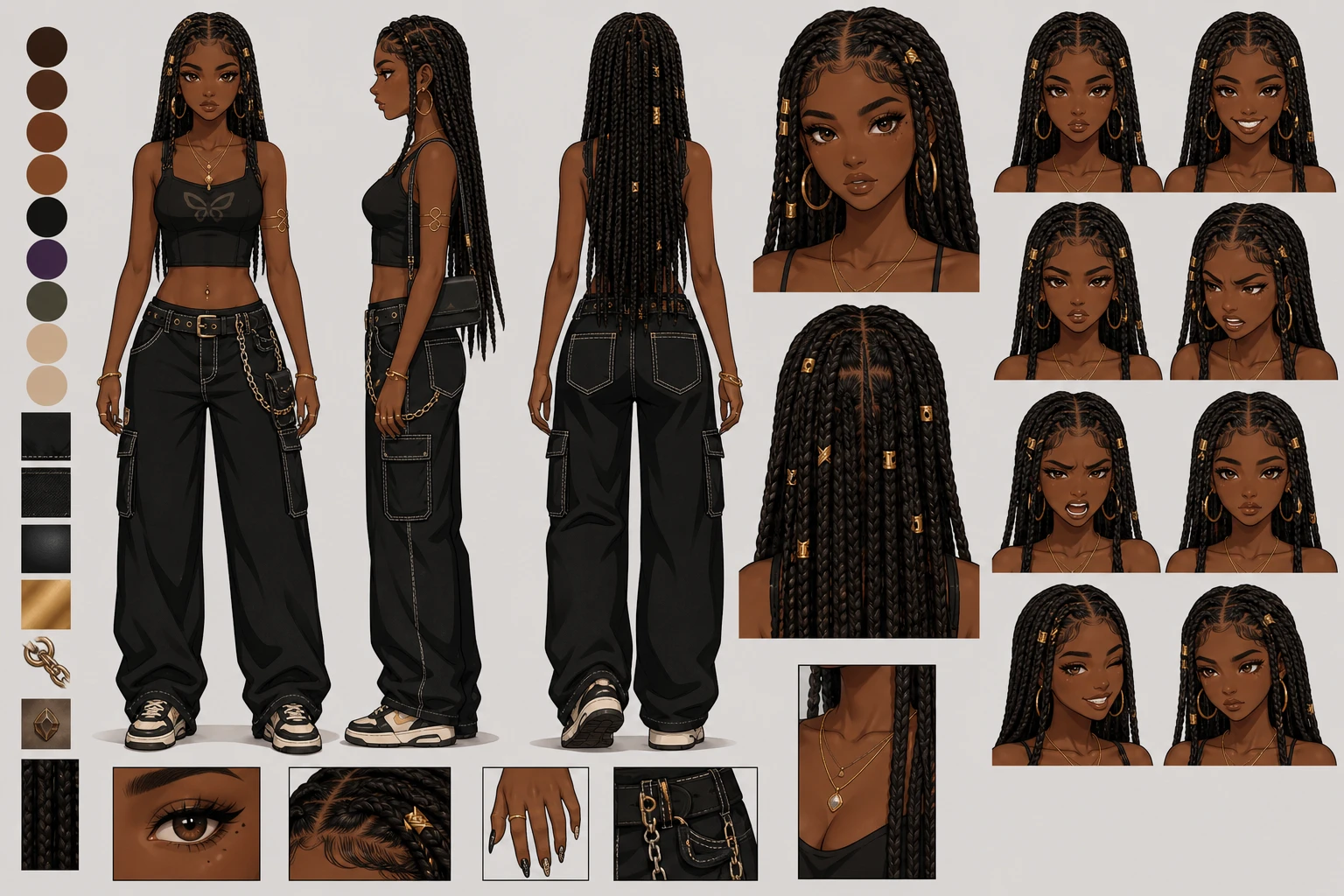
Identity consistency
Use expression sheets to keep facial identity, hair detail and accessories stable when the character smiles, shouts, thinks or reacts.
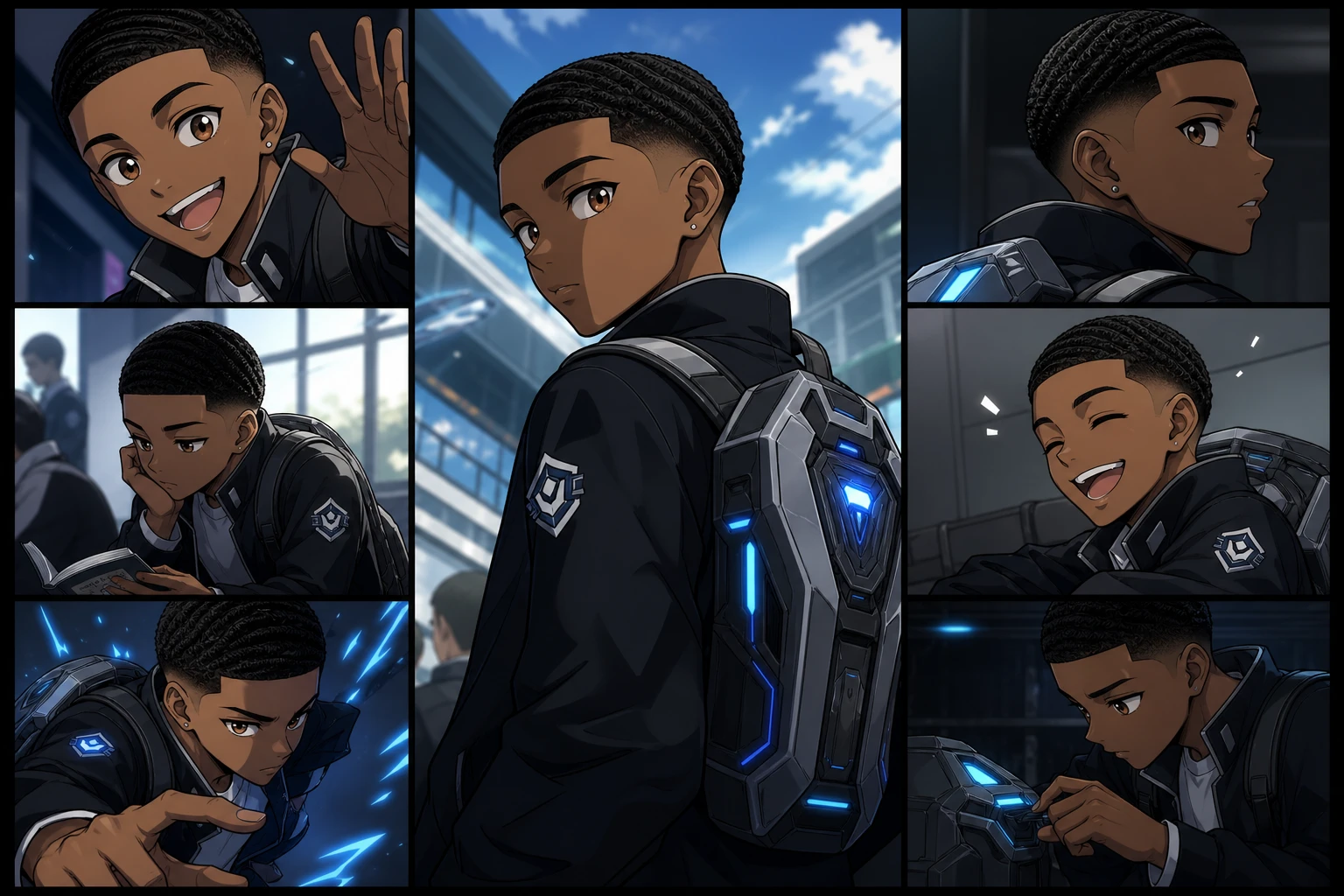
Panel continuity
Test daylight, night scenes, action, side profiles, indoor backgrounds and outfit changes before committing to a longer comic.
Three checks every character page needs
Use the generator to build a character that looks specific, stays specific and belongs to your original story world.
01
Specify light, medium, dark or deep brown skin plus warm, cool or neutral undertones so lighting changes do not erase identity.
02
Prompt for Afro, locs, twists, braids, cornrows, waves, fades, curls, parts, beads and hair accessories.
03
Create different ages, body types, face shapes, family roles, fashion styles and personalities without forcing one visual template.
04
Generate front, side, back, full-body, close-up, action and expression views before story production.
05
Compare daylight, night, indoor, outdoor, crowd and close-up scenes for skin, hair, face and outfit drift.
06
Keep character briefs, prompts and sheets as documentation for your own comic, Webtoon, pitch deck or app workflow.
Workflow
A consistent series starts with fixed identity traits, then adds poses, outfits, settings and panels in controlled steps.
01
Define skin tone, undertone, face, hair, age, body type, outfit, props and personality.
02
Create front, side, full-body and expression views that serve as production references.
03
Try action, close-ups, daylight, night and interior lighting before scaling up.
04
Reuse the same character in comics, covers, storyboards, books and social formats.
Search intents covered here
These sections cover the common intent behind character consistency without splitting thin pages too early.
01
Create a reusable sheet with front, side, full-body, action and expression views.
02
Keep one character stable across six or more panels with changing camera angles and emotions.
03
Change clothing, accessories and season while protecting face, hair, body language and story identity.
04
Build a character bible that can support Webtoon episodes, graphic novel chapters and recurring story arcs.
Prompt recipes
Use these prompts as tests before generating a longer comic or book.
Original character sheet, medium deep brown skin with neutral undertone, short twists, oval face, expressive eyes, denim jacket, silver necklace, front view, side view, full body, action pose, three expressions, consistent identity, clean comic reference sheet.
Use the same original character in four scenes: sunny sidewalk, night bus stop, warm kitchen, cool studio light. Keep skin tone, undertone, hair, face, jacket and necklace consistent.
Create a six-panel comic test with the same character: close-up, side profile, running pose, quiet reaction, full-body stance, ending panel. Maintain facial identity, hair silhouette, skin tone and outfit continuity.
Story ownership
The page is built for creators who care about representation, continuity and ownership. Use AI to draft faster while keeping the script, references and publishing choices under your control.
01
Build new characters, families, worlds and symbols instead of imitating protected franchises or living artists.
02
Revise dialogue, panel notes, captions and scene order so the final comic reflects your voice and values.
03
Use character sheets, individual panels, page drafts and prompts as source material for web, print, pitch decks or app workflows.
Use these workflows together when a project needs characters, story structure, source material and publishable comic panels.
01
Turn stories, scripts and chapters into comic pages.
02
Build an original comic from concept to page draft.
03
Plan chapters, scenes and recurring cast for longer books.
04
Turn family memories and source material into comics.
FAQ
Answers for creators building a reusable cast.
Ready when you are
Start with the approved creative direction, then refine characters, pages, and production assets in the LlamaGen studio.