Comics for Students
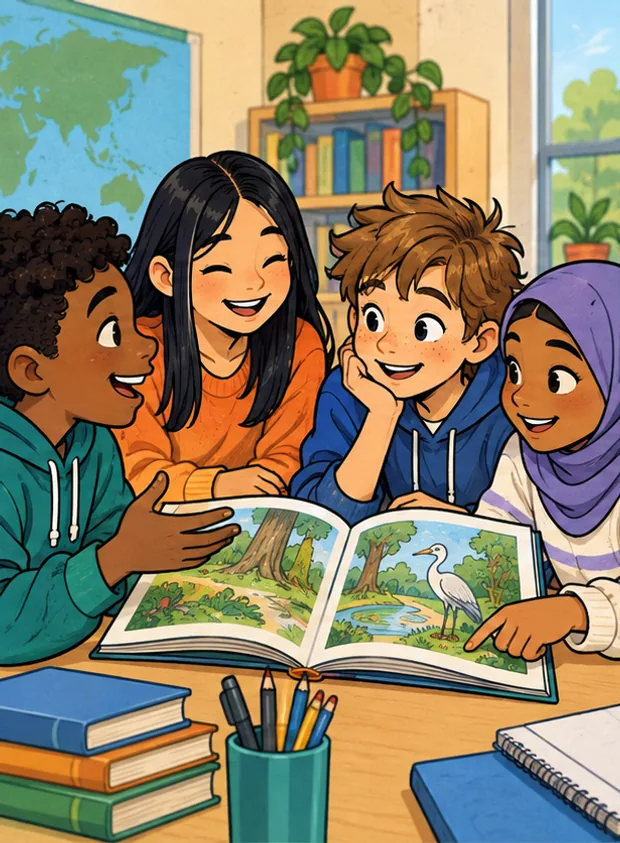
Turn a reading response, science idea, or school project into a comic strip with clear panels and captions.
Make a school project comic

For students & teachers
Create classroom comic strips, school projects, and printable worksheets.
Easy to start · Fast to create and share · No drawing required
Choose the format that fits your lesson or assignment
Turn a reading response, science idea, or school project into a comic strip with clear panels and captions.
Make a school project comic
Build an educational comic worksheet or guided workbook from a lesson goal and classroom instructions.
Create a comic workbook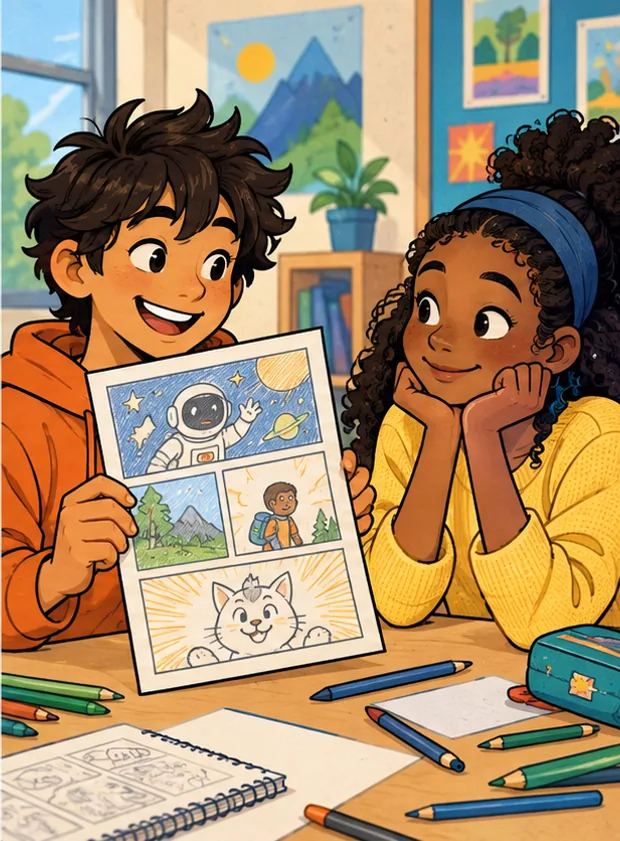
Give students a blank four-panel or six-panel comic template they can print, draw on, and share.
Get a free printable templateA comic strip tells a story through pictures arranged in order. Each panel captures one moment; short dialogue or captions connect the action and help readers follow the idea.
For classwork, the format can turn an abstract topic into a visible sequence. Students can show what happened, why it mattered, and what changed by the end.
If the activity begins with a story arc, use our plot diagram guide to map the important beats before making panels.

An online comic maker helps students show their understanding of a story, process, or concept.
Create an editable comic strip from the lesson, then review the facts and wording with students.
A classroom comic can make a student project easier to plan, present, and discuss.
A clear plot makes a strong comic. Sketch an exposition-to-resolution plot diagram when the assignment asks for a narrative arc.
Students can also make comics to invent characters, practice dialogue, and tell their own stories.
Teachers can turn a creative prompt into a guided comic workbook; students can start from a blank six-panel template.
A comic strip gives students a reason to select the main ideas instead of copying a long passage. One panel can show a key action, another can show a consequence, and a final panel can make the takeaway clear.
The visual format also opens more ways to participate. Students can plan with words first, draw on paper, or use an online comic maker to turn their outline into an editable draft. Teachers can use a comic worksheet for a quick check of understanding or a larger class project.
A short classroom strip can become a longer visual story. Plan characters, setting, and turning points, then decide whether the idea needs one page or several. For a multi-page project, explore the AI comic book maker or a graphic novel workflow.
Ideas for student work and teacher-made activities
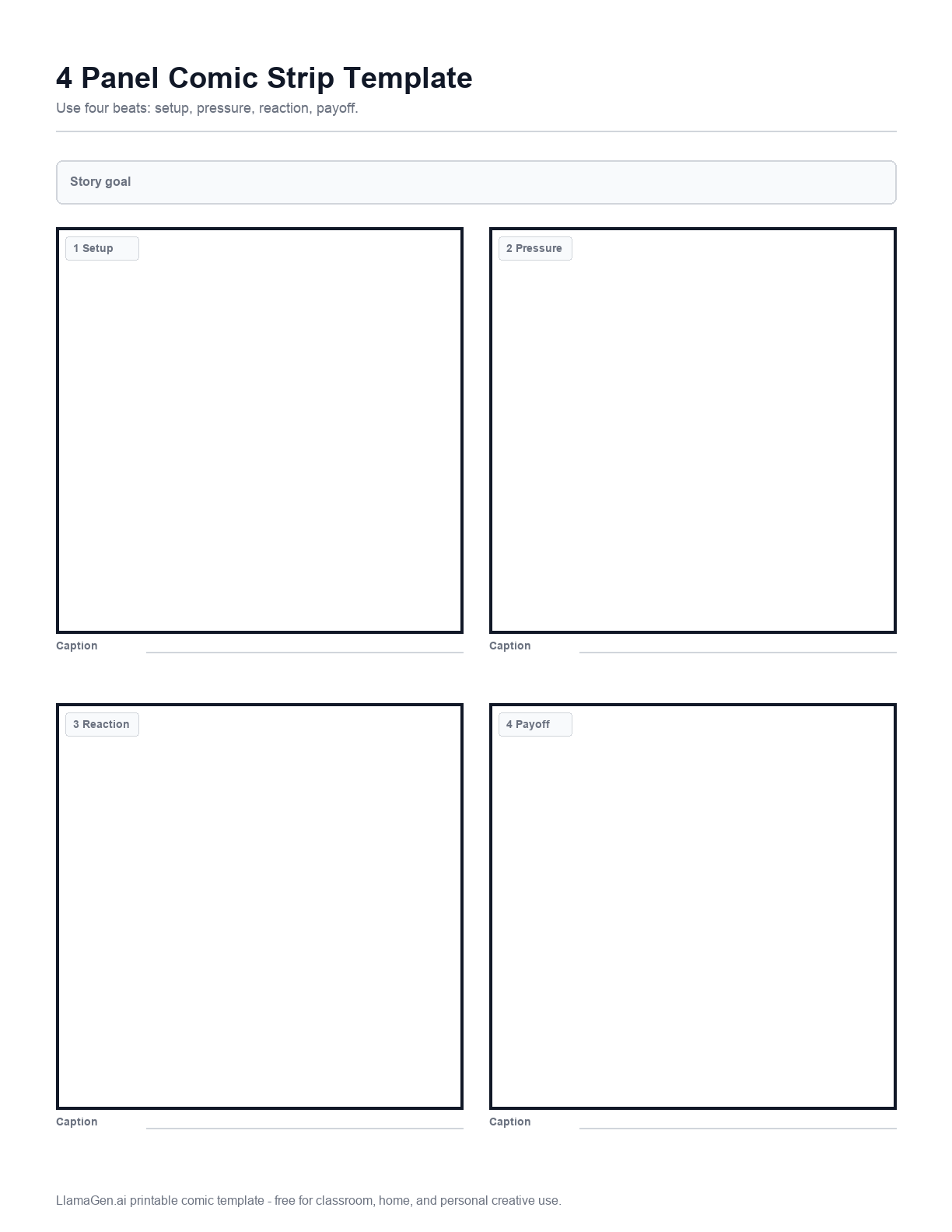
A quick beginning, change, result, and ending.
View template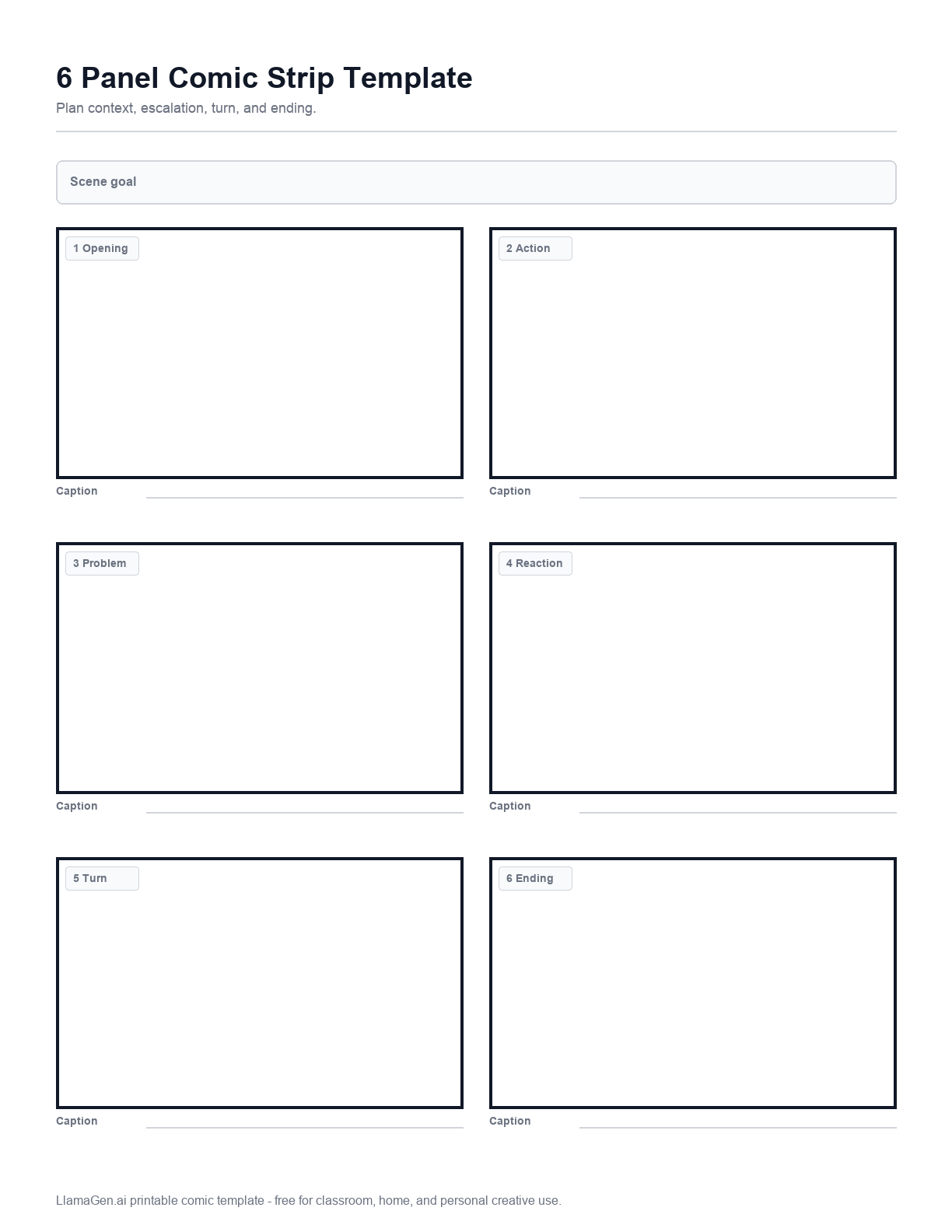
Room for a longer story or step-by-step explanation.
View template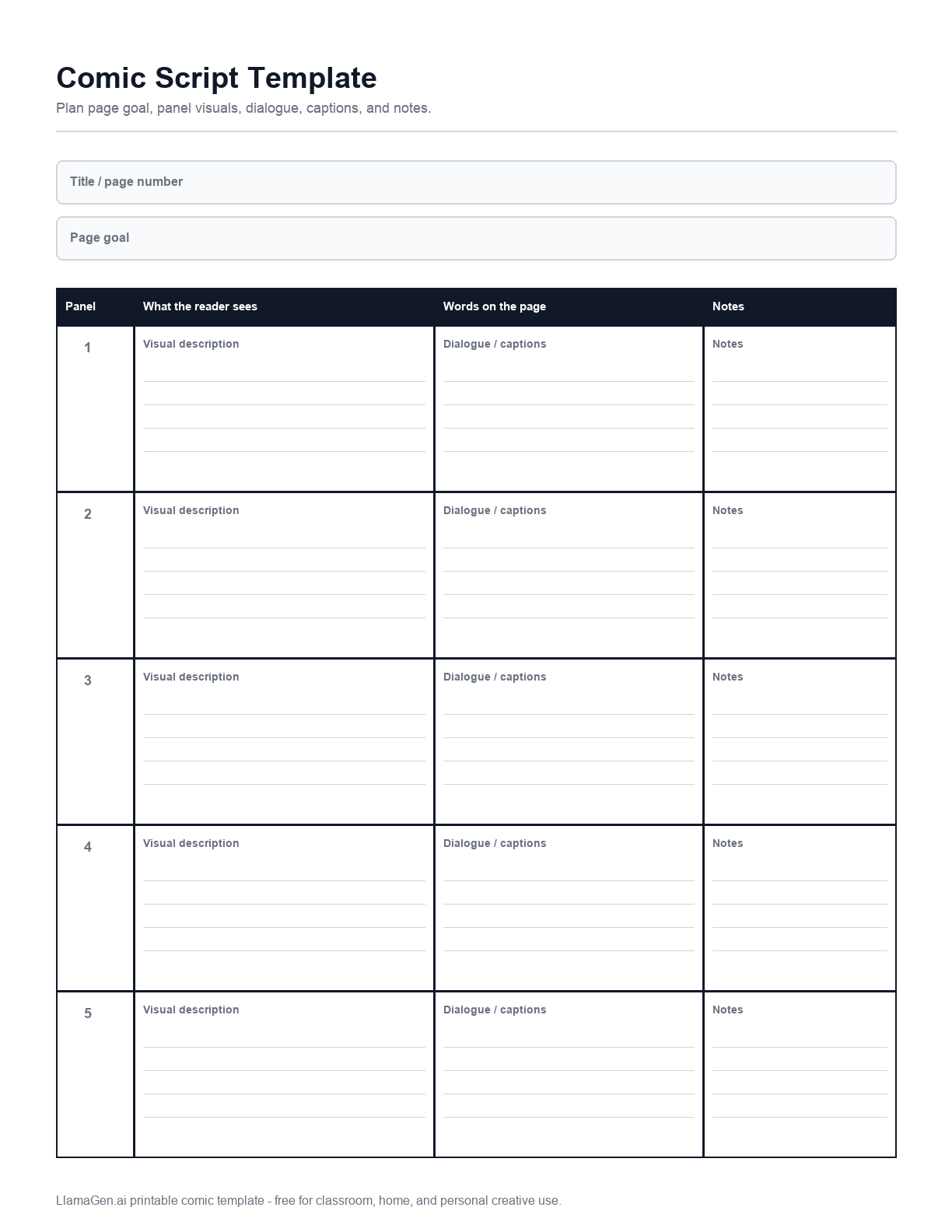
Plan scenes, dialogue, and captions before drawing.
View templateChoose a ready-to-print comic strip template when students need space to draw. For a guided activity with instructions, make an editable comic workbook. For a finished visual story, start with the school project comic maker.
Start with a school project, a teacher-led activity, or a blank printable page. The goal determines the best format.
Have the assignment, rubric, reading passage, lesson notes, or required facts ready before you create.
Choose the beginning, key changes, and ending. A four-panel or six-panel outline keeps each moment focused.
For story structure help, try the plot diagram guide before drawing.
Add only the people, places, or objects students need to understand the topic. Keep details consistent across panels.
Use the school comic maker or workbook generator to turn the brief into editable visual panels.
Use short speech and narration to explain actions, introduce vocabulary, and connect one panel to the next.
Check facts, names, spelling, reading order, and the teacher's rubric. Revise anything the first draft missed.
Present the finished comic digitally, or use a printable template when students need a paper activity.
Sports psychology · original teaching outline
An original example for coaches, educators and authors: teach a different skill in each chapter, keep one fictional athlete and coach, and approve the educational script before rendering each page. This is a sample outline—not a customer's work or a completed LlamaGen comic.
Chapter 1
An athlete turns a vague ambition into a measurable training goal.
Chapter 2
A missed shot leads to a more useful internal cue.
Chapter 3
A runner practices returning attention to the next stride.
Chapter 4
A player notices nerves before an important game.
Chapter 5
A coach guides a rehearsal of a free throw.
Chapter 6
A teammate helps the hero rejoin the next play.
Chapter 7
The cast reviews a familiar warm-up and focus checklist.
Independent research and teaching projects illustrate real use cases for comics in sport, athlete education, and adolescent social-emotional learning. They do not establish keyword search volume or imply endorsement of LlamaGen.
A scholarly comic represents elite athletes' parents' experiences of performance expectations.
Read the researchFour-panel graphic narratives help students discuss ethics, empathy and cultural competence.
Read the university caseA comic series and teacher's guide support classroom social-emotional learning practice.
View the teacher's guideA comic strip asks students to choose the most important moments and explain them in a clear sequence. Pictures, dialogue, and captions can show what they understand about a reading, event, or process.
Start with the assignment topic and required facts. Outline four or six moments, create an editable draft with the school project comic tool, then check every caption and fact before submitting it.
Yes. The comic workbook generator can build a guided activity from a lesson goal. For an empty page students can draw on, download a free four-panel or six-panel PDF template.
Reading comprehension, history timelines, science processes, vocabulary, social skills, and creative writing all work well when the task can be shown as a sequence of clear moments.
Yes. A short classroom strip can be the first page of a longer comic book. LlamaGen also has a separate AI comic book workflow for multi-page stories.
Yes. Choose one age-appropriate learning objective per chapter and keep recurring characters consistent. Review psychological and health statements with a qualified expert; an educational comic is not therapy.
A graphic novel maker helps plan and create a longer visual story with multiple scenes or pages. For a brief class activity, a comic strip template is usually a simpler place to begin.
Special education pricing for teachers, schools and districts.
20,000credits/month
Includes all Standard Plan features, plus:
Prioritized generation (5x faster)
50,000credits/month
Includes all Pro Plan features, plus:
Prioritized generation (5x faster)
Confirm the latest plan price and terms on the secure pricing page before payment.
Bring a class idea, a story, or a lesson goal. Start with the format that works for your students.