Exposition
01The bridge at dusk
Mira finds a lantern beside the wooden bridge while walking with her dog at dusk.


A plot diagram is a picture of how a story moves from its opening situation to its ending. It places the important events along an arc so readers can see how a problem begins, how tension grows, and which moment changes the outcome.
The familiar story arc has a beginning, middle, and end. A six-part plot structure adds useful names for the events inside those larger sections: exposition, conflict, rising action, climax, falling action, and resolution. Students can use the same map to analyze a book or plan a story of their own.
In one sentence: A plot diagram shows the events that create a story's central problem, turning point, and outcome.
Follow this original short story, The Lantern Bridge, through all six stages. Each scene can become one panel in a storyboard or comic strip.
Mira finds a lantern beside the wooden bridge while walking with her dog at dusk.
Dark clouds gather as Mira and her dog begin to cross the bridge.
A gust carries the lantern toward a broken section of the bridge, and her dog sounds the alarm.
Mira reaches across the gap to catch the lantern as the bridge sways above the river.
Safely across, Mira lights the lantern and the wind begins to fade.
Mira and her dog walk home under the stars while the bridge glows behind them.
These labels help students choose meaningful events instead of retelling every scene. A story may shift or repeat parts of the arc, but the questions still help reveal its structure.
Introduce the main characters, setting, and situation before the central problem changes their lives.
Ask: Who is here, where are they, and what is normal?
Name the challenge or opposing force that gives the protagonist a reason to act.
Ask: What does the character want, and what stands in the way?
Arrange the attempts, discoveries, and setbacks that make the problem more urgent.
Ask: Which events make the outcome less certain?
Show the decisive moment when the protagonist must make a choice or confront the central challenge.
Ask: What is the story's most consequential moment?
Trace the immediate consequences of the turning point as remaining questions begin to settle.
Ask: What changes after the decisive moment?
Close the central problem and show what the characters or their world have become.
Ask: How does the story end, and what is different?
Plot diagrams make the cause and effect of a narrative easier to see. Students can connect each event to the central conflict, discuss why a climax matters, and compare how different stories build tension. The diagram also gives young writers a practical plan before they draw or write.
For a literature assignment, explore the hero's journey in The Odyssey and ask which moments would become the most important panels.
Notice the events that change a character's choices.
Test whether each scene moves the central problem forward.
Turn abstract plot terms into clear visual moments.
FROM STORY ARC TO VISUAL STORY
Write one event for each stage, then open LlamaGen to turn the sequence into illustrated panels. You can refine the characters, captions, and pacing in the comic workspace.
Start with a blank plot diagram worksheet. Fill in the six events for a novel, play, movie, or original story, then use those notes as your panel outline.
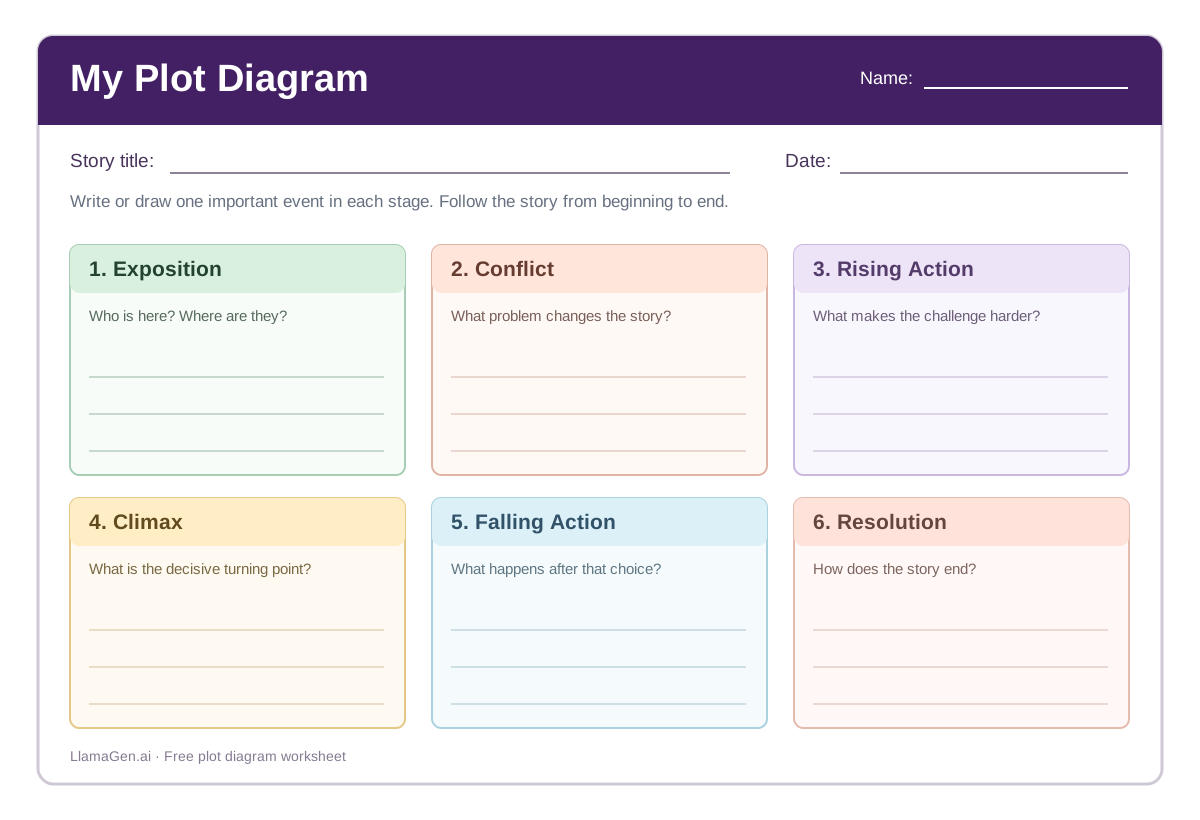
FREE BLANK TEMPLATE
Print the sheet for a class discussion or save it and add your own labels. The template uses original vector artwork and stays sharp when printed.
Download blank templateCreate illustrated panelsFor a first plot activity, combine the six labels into three groups: the beginning introduces the world and problem, the middle shows attempts and the turning point, and the end shows the result. Add the six labels as students become ready for more detail.
Use the blank worksheet for reading notes, a group discussion, or an individual assignment. For a visual response, ask students to turn each written event into a scene with one caption. A classroom comic can also help students show changes in mood and character motivation.
Begin with a short text whose central problem is easy to identify.
Use the guiding questions above and keep each answer to one sentence.
Ask why the climax changes what can happen next.
Draw them on paper or build a six-panel comic from the outline.
All six stages include a relevant event.
Events show how the conflict grows and is resolved.
Labels, captions, and visuals are easy to follow.
A plot diagram is a visual map of a story's major events. It helps readers see how a problem begins, grows, reaches a turning point, and ends.
The six parts are exposition, conflict, rising action, climax, falling action, and resolution. Some classes combine the first two or use a three-part beginning, middle, and end version.
They describe the same progression in different ways. A story arc emphasizes the rise and fall of tension, while a plot diagram labels the events that create that shape.
Yes. The structure works for books, films, plays, comics, and original stories. Use the six labels as prompts, then adjust them to fit the work you are analyzing or creating.
Write a short sentence for each plot stage, then give each stage its own panel. Add a scene, a character action, and a caption or line of dialogue to make the sequence easy to follow.
Start with six events. Build the moments into a visual sequence in LlamaGen.