
Chapter structure
Turn chapters into visual beats
Break prose, outlines or scripts into chapter arcs, page goals, panel prompts and emotional rhythm.


Long-form comic workflow
Turn a premise or manuscript into chapters, arcs, character bibles, page beats and panel drafts. Keep representation, continuity and creator-owned story decisions visible across the whole book.
Chapters
Plan arcs, turning points, page goals and callbacks across a full book.
Cast bible
Track skin tone, hair, face, outfits, relationships, speech and emotional range.
Export
Create panel prompts, page drafts and individual assets for assembly or publishing.
New to document-to-comic production? Read the step-by-step Comic Copilot manuscript upload guide before you start.
Graphic novel examples
Graphic novels need chapter logic, recurring visual identity and story ownership. The workflow should support quiet memoir, urban fantasy, speculative worlds, family sagas and indie action without forcing one style.
Chapter structure
Break prose, outlines or scripts into chapter arcs, page goals, panel prompts and emotional rhythm.
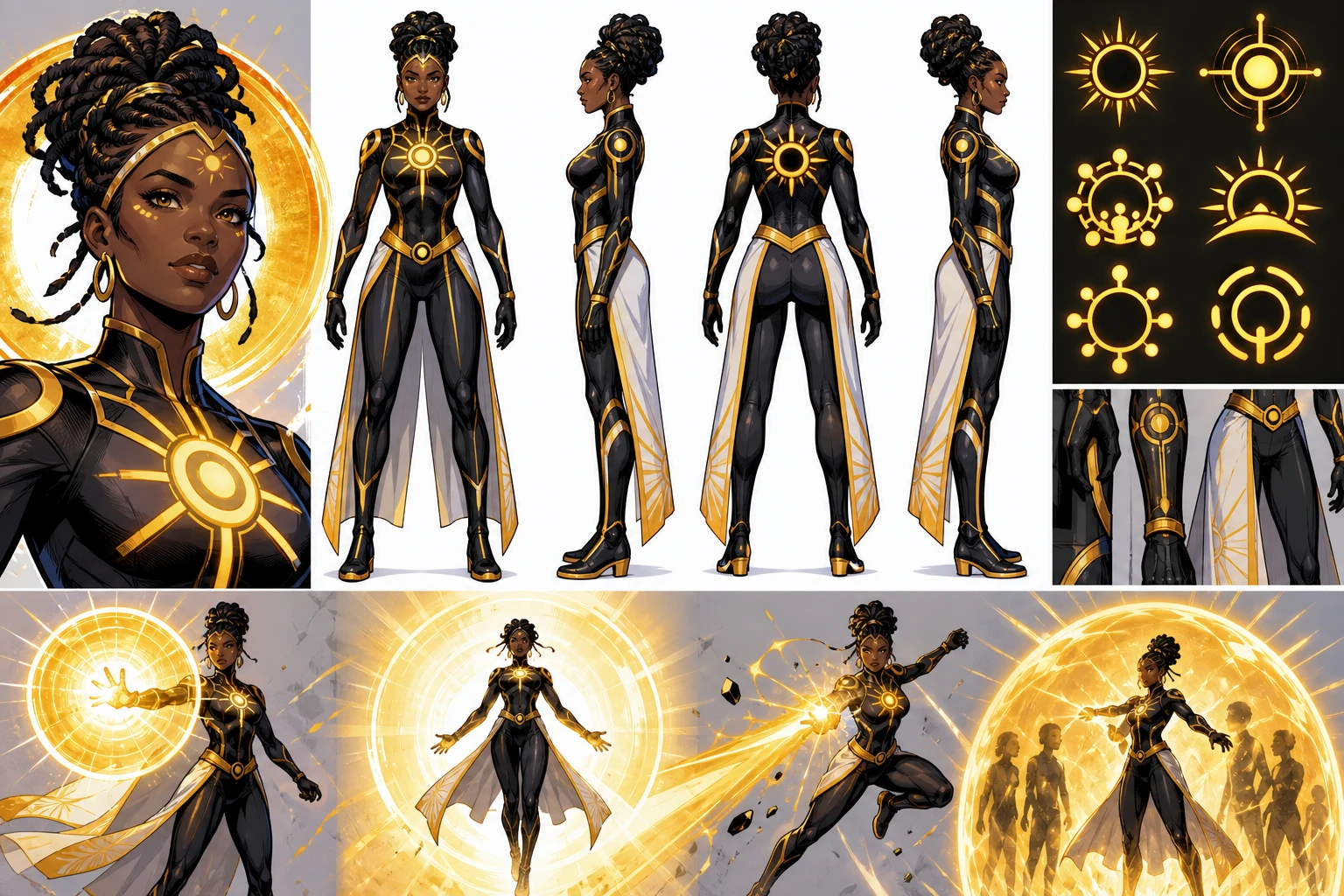
Consistency
Use character bibles to maintain skin tone, undertone, hair, face, wardrobe, body language and relationships.
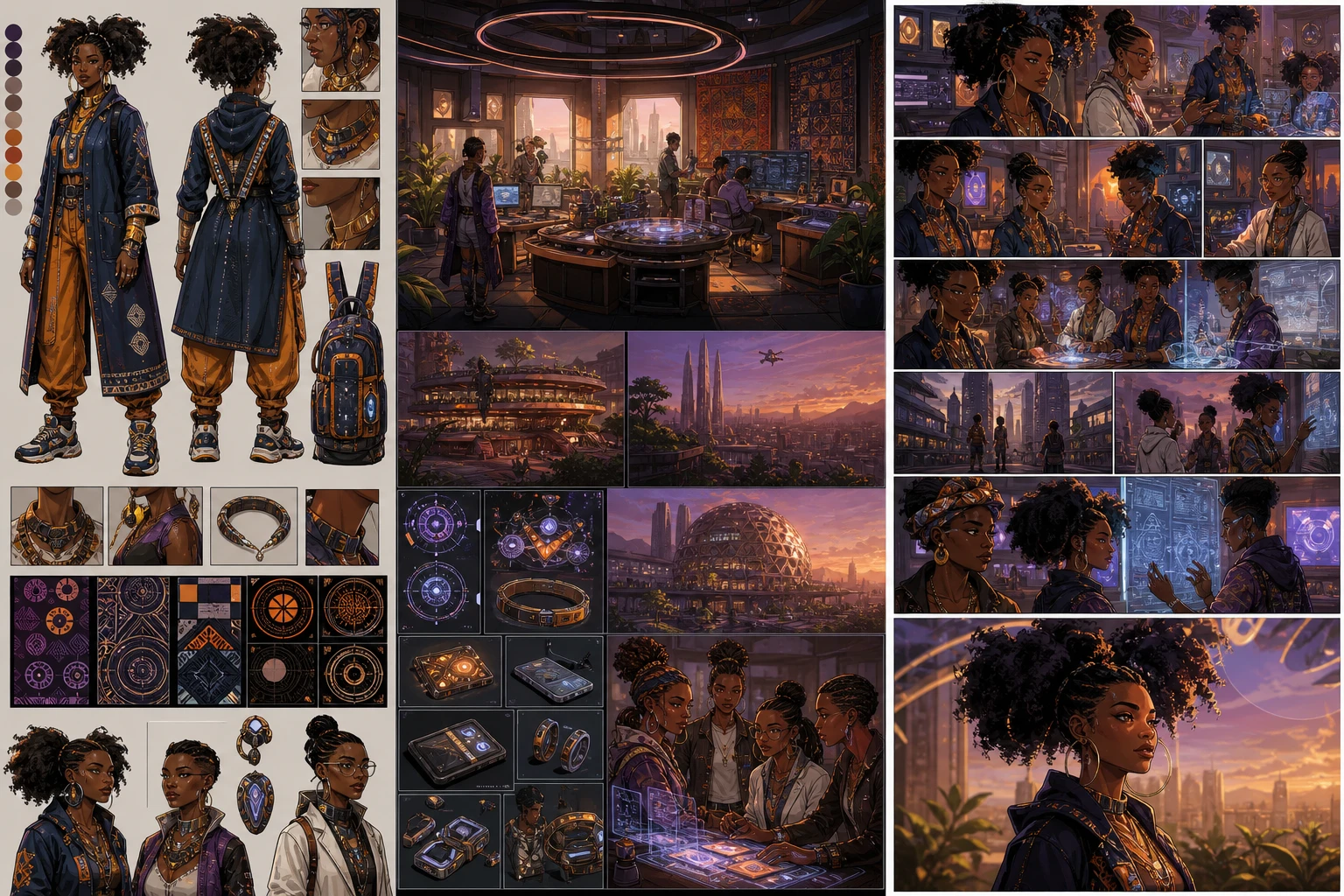
World ownership
Develop neighbourhoods, music venues, family homes, futures and histories with cultural detail rather than generic visual shorthand.
Graphic novel controls
A graphic novel maker should connect long-form story planning with the visual details that keep readers oriented.
Generate chapter summaries, turning points, emotional beats and page goals.
Track cast references, relationships, speech style, visual identity and outfit changes.
Create panel counts, camera direction, captions, dialogue and scene transitions.
Check skin, hair, body, age, style and family/community roles across the story.
Revise voice, pacing, chapter captions and dialogue before generating final art.
Export individual panels, page drafts, prompt notes and cover concepts for assembly.
Workflow
Long-form comics work best when structure, cast and visual world are planned together.
01
Create premise, themes, genre, chapter arc and audience notes.
02
Define recurring characters, visual anchors, relationships and voice.
03
Break the first chapter into page beats, panels, captions and dialogue.
04
Check identity, setting, wardrobe, pacing and ownership before export.
Search intents covered here
These sections answer common searches for creating longer sequential books.
01
Map chapters, arcs, turning points and visual motifs before drawing pages.
02
Keep the same cast recognisable across chapters, time jumps and locations.
03
Create page beats, panel prompts, captions and dialogue notes for a chapter.
04
Prepare panels, page drafts, cover concepts and notes for assembly or pitching.
Prompt recipes
Use these for long-form story planning and production handoff.
Create a graphic novel plan for this premise. Include logline, themes, audience, chapter arc, recurring cast, locations, visual motifs, first chapter page beats and continuity checklist.
Build a graphic novel character bible for six recurring characters. Include skin tone, undertone, hair, age, body type, clothing style, family role, speech style, emotional range and outfit variants.
Turn chapter one into twelve comic pages with panel counts, camera angles, captions, dialogue placeholders, setting notes, recurring objects and export checklist.
Story ownership
The page is built for creators who care about representation, continuity and ownership. Use AI to draft faster while keeping the script, references and publishing choices under your control.
01
Build new characters, families, worlds and symbols instead of imitating protected franchises or living artists.
02
Revise dialogue, panel notes, captions and scene order so the final comic reflects your voice and values.
03
Use character sheets, individual panels, page drafts and prompts as source material for web, print, pitch decks or app workflows.
Use these workflows together when a project needs characters, story structure, source material and publishable comic panels.
01
Turn stories, scripts and chapters into comic pages.
02
Keep the same character stable across scenes.
03
Build an original comic from concept to page draft.
04
Turn family memories and source material into comics.
FAQ
Questions about long-form planning, continuity and publishing.
Ready when you are
Start with the approved creative direction, then refine characters, pages, and production assets in the LlamaGen studio.