

 Sci-fi romance
A Love Simulation with a Robot Transfer Student
A quiet school romance where a government-built android begins asking questions its training never prepared it to answer.
From dramatic beat to playable scene
Generate scene action, dialogue, turning points, and visual intent—then move the result into LlamaGen's screenplay and storyboard workflows.
Generated story direction
The Last Train Signal
Script beat · dialogue · reviewable storyboard
Ctrl + Enter to generate
What a useful result looks like
The strongest first draft creates decisions you want to make next: whose story this is, what can be lost, which image belongs on the page, and where the tension should turn.
Sci-fi romanceA quiet school romance where a government-built android begins asking questions its training never prepared it to answer.
 Urban fantasy
A frightened teenager discovers that the darkness around him can fight—and that someone else has been waiting for it to wake.
 Fantasy adventure
A lost traveler meets a star-eyed spirit and learns why the forest has been calling her home through every dream.
Real LlamaGen workflow
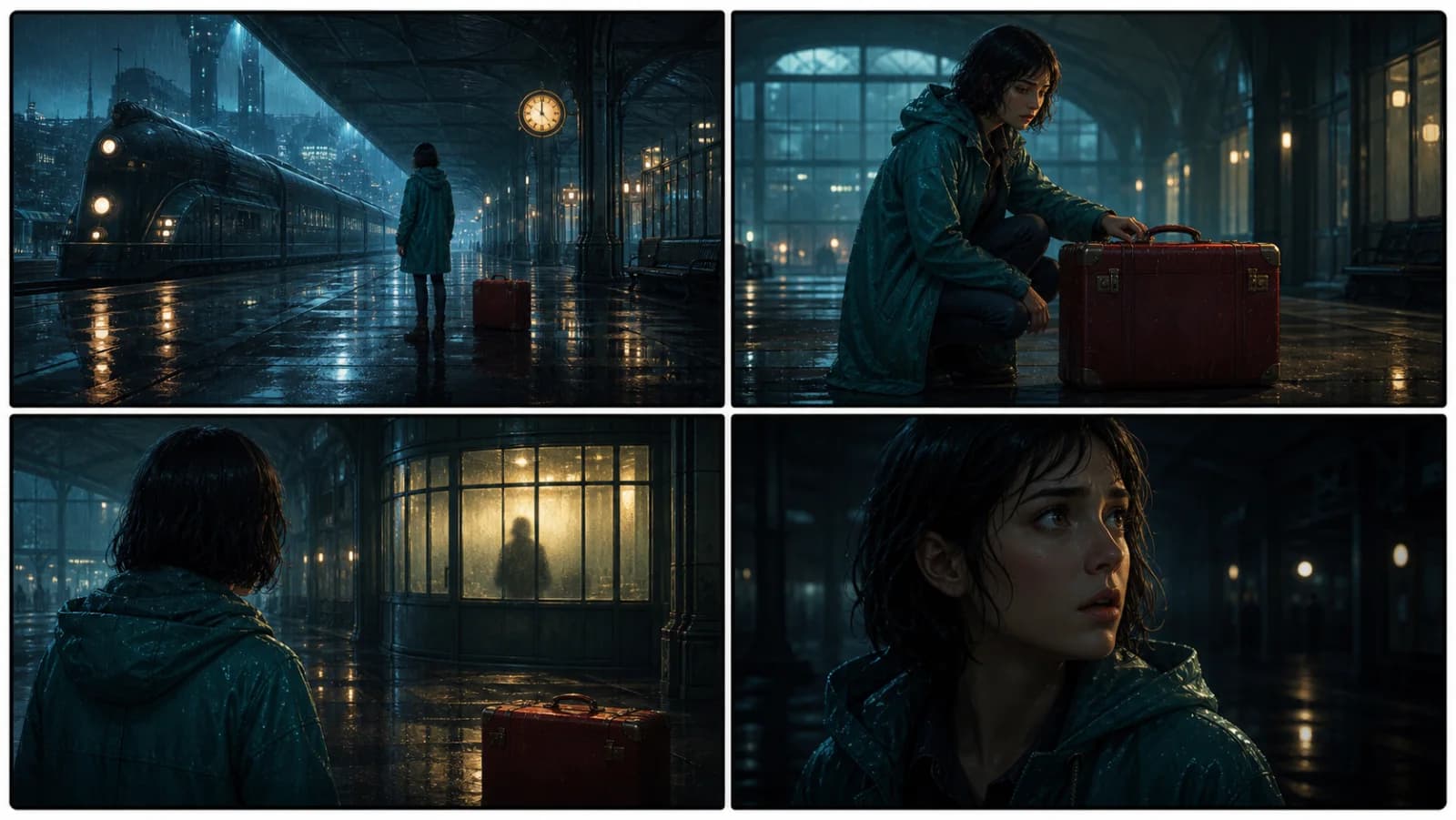
The Last Train Signal begins as one written beat. LlamaGen carries the same character, location, and red suitcase into four connected shots that can be reviewed before production.
Creative control, not prompt roulette

01
Give every scene a setup, pressure point, and changed situation so it earns its place in the script.

02
Generate speech with intention, interruption, and subtext while keeping action lines concise and visibly filmable.

03
Continue formatting in the screenplay editor, then carry the approved visual beats into connected storyboard frames.
A three-part writing rhythm
Start with a premise, character, scene, theme, or reader promise. LlamaGen identifies the tension that can carry the piece forward.
The result arrives with structure—not just paragraphs—so you can inspect the hook, progression, characters, and next decision.
Continue scenes, organize chapters, preserve character notes, and move approved beats into screenplay, comic, or storyboard workflows.

Move from page to shot without rebuilding the idea.
Continue in the screenplay editor for formatting and revision, then break the approved scene into connected storyboard shots.
Questions before the first page
The generated scene includes a scene heading, visual action, character cues, and dialogue. Continue in the screenplay editor for deeper formatting, revisions, outlines, and production-ready organization.
Yes. Describe who wants what, where the scene happens, and what changes by the end. LlamaGen can propose the action and dialogue that connect those points.
Approve the dramatic beats first, then use the storyboard workflow to split them into shot sizes, camera intent, character positions, and consistent visual references.
Related writing workflow
Use the AI Screenplay Editor when a script, fiction draft, storyboard brief, video idea, or canvas note needs proper scene headings, action, dialogue, parentheticals, cover pages, outlines, beats, and collaboration-ready revisions.
INT. COMMUNITY CENTER - NIGHT
Folded chairs. A storm outside. MAYA stands at the microphone with a page of notes she no longer needs.
MAYA
If the city will not read the record, we will read it out loud.
AI-manusforfatter
Continue in the screenplay editor for formatting and revision, then break the approved scene into connected storyboard shots.