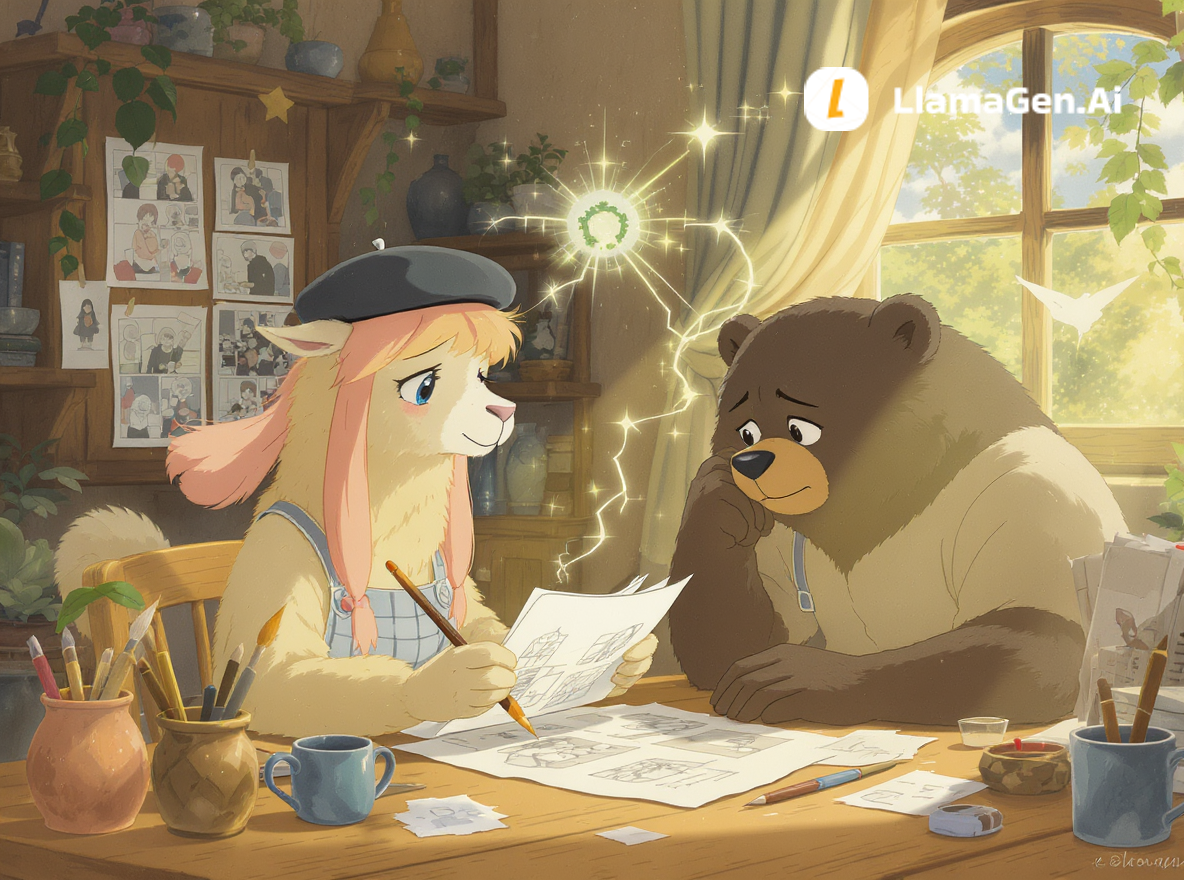

If you’ve ever tried to create a blog with consistent animal character profiles, you already know the real problem is not creativity. It’s continuity. Your fox looks charming in post one, slightly different in post three, and completely off-model by post seven. The rabbit’s jacket changes color. The owl’s face shape drifts. And suddenly your audience stops feeling like they’re following real characters and starts feeling like they’re looking at disconnected illustrations.
I’ve seen this happen with creators, educators, indie comic artists, and brand teams. The good news is that this is fixable. You do not need to become a full-time character designer to solve it. You need a repeatable system, the right visual references, and a workflow built for sequential storytelling instead of one-off images. That is exactly why platforms like LlamaGen.AI stand out. It is designed for character consistency across panels, pages, episodes, and even motion outputs.
In this guide, I’ll show you how to build a blog with consistent animal character profiles, how to maintain 6-character consistency in as little as 48 hours, and how to avoid the most common mistakes that break visual trust. If you want a practical tutorial, advanced tips, and a real production workflow, you’re in the right place.
When readers return to your blog, they are not just coming back for information. They are coming back for familiarity. Consistent animal characters act like visual anchors. They build trust, emotional recognition, and brand memory.
This matters whether you are creating:
If your dog detective, panda teacher, or raccoon adventurer changes too much from post to post, you lose one of the strongest storytelling advantages you have.
In my experience, inconsistency creates three expensive problems:
Readers lose emotional connection
They stop identifying the character as the same personality.
Production time doubles
You spend hours re-prompting and redrawing instead of publishing.
Your brand looks less professional
Even great writing feels less polished when visuals drift.
This is why a generic AI image tool often falls short. It can create a cute animal image. But building a blog with consistent animal character profiles requires cast management, reference reuse, editable workflows, and multi-panel continuity. That’s where and become genuinely useful.
If you want the featured-snippet version, here it is:
To create a blog with consistent animal character profiles:
That is the short answer. The rest of this guide shows you how to do it well.
Most people start with blog content and create characters later. That usually leads to visual drift. I recommend the opposite.
Before you publish your first post, create a cast bible for your animal characters.
For each character, define these six elements:
For example:
Milo the Fox
Rust-orange fur, cream muzzle, green satchel, confident smile, fast-moving poses, lead explorer
Nora the Owl
Brown feather pattern, round glasses, navy cape, thoughtful expression, composed posture, wise explainer
This step sounds simple, but it solves a huge percentage of the consistency problem before image generation begins.
A rundown of the latest LlamaGen feature releases, product enhancements, design updates, and important bug fixes.
Text prompts alone are fragile. A strong workflow uses reusable visual references. On LlamaGen.AI’s AI Character Sheet Generator, you can build repeatable character references that make long-form projects much easier to control.
This is especially helpful if your blog includes:
Once your animal cast is defined, you can use those references across comics, storyboards, webtoons, and even consistent character video workflows.
If you need a real production plan, here is one I’d use for a six-character animal cast.
Hour 1-2: create the character brief
Hour 3-5: generate base character sheets
Hour 6-8: stress test consistency
Goal: identify where drift happens early
Hour 1-3: build episode templates
Hour 4-6: create repeatable layouts Use AI comic generator tools or AI comic strips maker to create scene templates that can repeat from post to post.
Hour 7-8: refine with panel editing Instead of regenerating entire pages, use editable panel workflows to:
This is one of the most practical advantages of LlamaGen.AI. It is built for sequential editing, not just one-click image output. If you’re publishing regularly, that difference saves hours every week.
A lot of creators ask me some version of this: “Can AI actually keep the same animal character consistent across multiple scenes?” The answer is yes, but only if your workflow supports it.
With LlamaGen.AI, the best results come when you treat your animal blog like a serialized story universe.
That means using:
For blog creators, this is useful even if you are not making a full comic. A visual blog post often works better when treated like a mini sequential story.
Here’s a reliable stack for animal-character blogging:
Create characters first
Start with Design AI characters
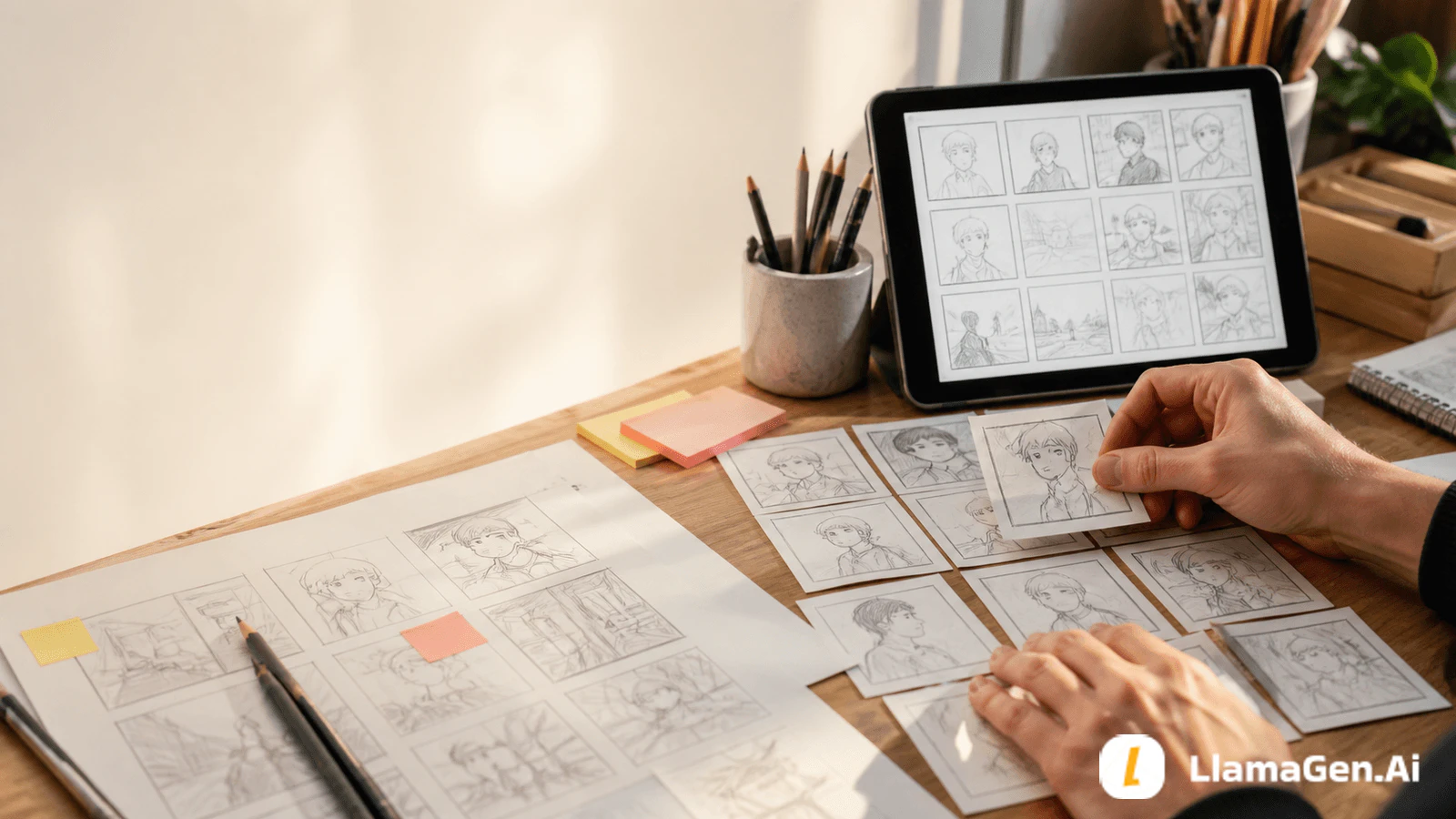
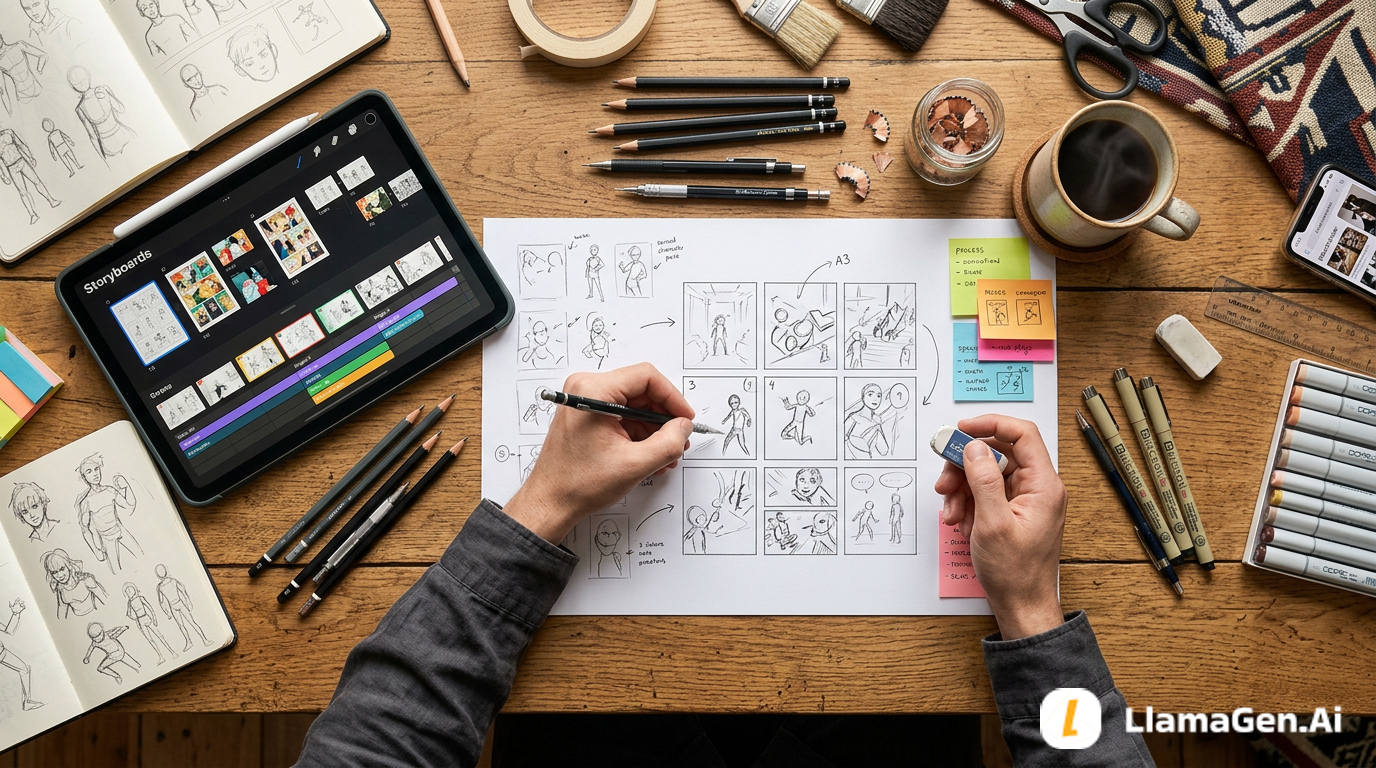
Draft scenes as a storyboard
Use AI Storyboard Generator or start directly at storyboard
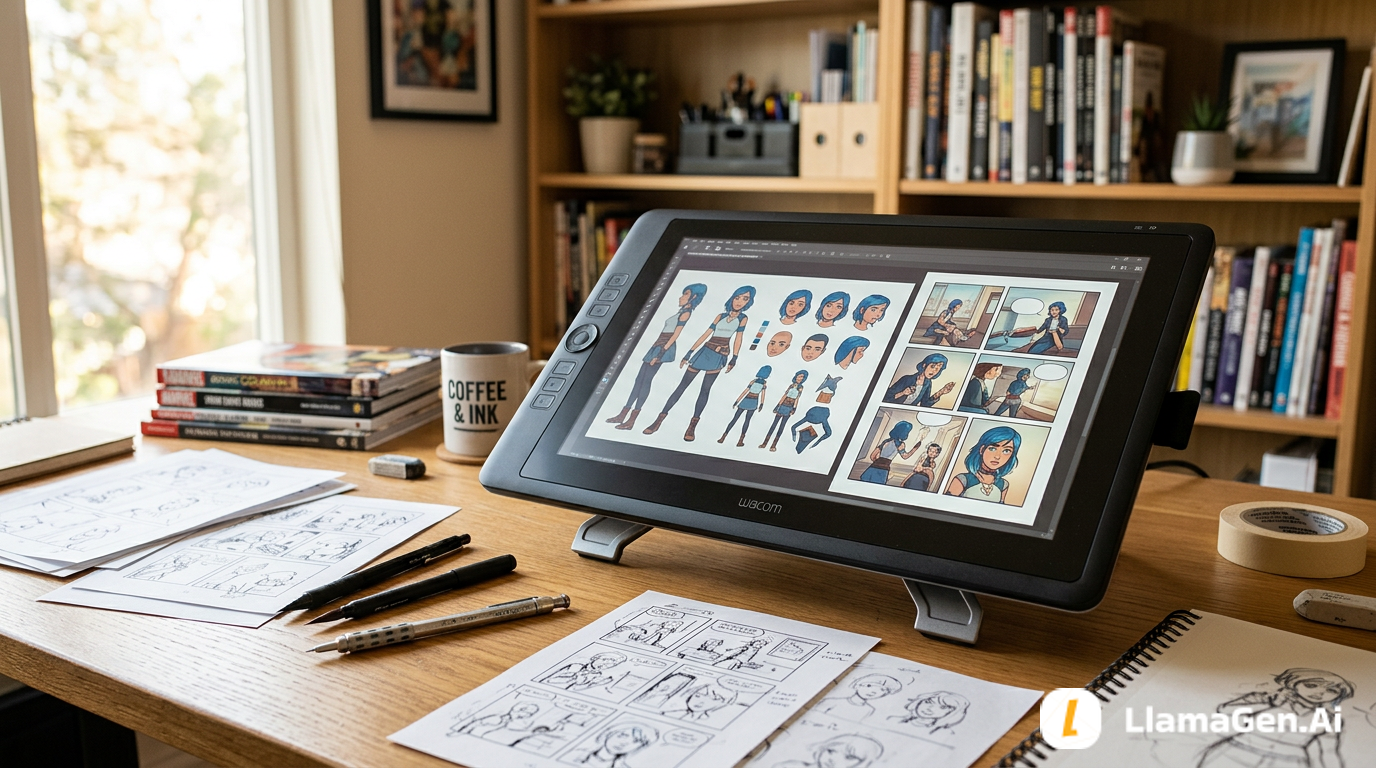
Turn scenes into comic-style blog visuals
Move into AI Comic Generator
Refine text and panel pacing
Add or edit bubbles, captions, and layout
Export for your blog
Use image export for individual post sections or PDF/ZIP for larger story batches
This matters because your blog is not just publishing images. It is publishing recognizable episodes.
Here are the best practices I recommend after working through multi-scene visual storytelling workflows.
Choose three non-negotiable traits for every character. For example:
If everything is flexible, nothing stays consistent.
If your rabbit changes outfit, keep pose and expression familiar. If expression changes dramatically, keep clothing identical. Controlled variation feels intentional. Uncontrolled variation feels broken.
Make three anchor scenes for each animal:
These become your fallback references for future posts.
LlamaGen.AI supports redraw, swap, restore, and panel editing workflows. That means you can fix one visual issue without losing the rest of the composition. For recurring blog content, this is a huge time saver.
Related learning resources on YouTube:
If your audience reads on mobile, vertical sequences often outperform traditional page layouts. If your blog has downloadable lesson packs or print-friendly content, page-based comic layouts may work better.
LlamaGen.AI supports both classic comic pages and vertical webtoon-style reading, which is useful if your animal character blog spans web, classroom handouts, and social publishing.
Even talented creators fall into these traps.
A prompt that says “friendly fox who loves adventure and helping others” is emotionally nice, but visually weak. Add concrete identity markers.
Better:
If you test a new art style and a new scene structure in the same generation, you won’t know what caused the inconsistency. Change one variable at a time.
Multi-character scenes create the most drift. Always bring strong references into cast scenes. This is one reason LlamaGen.AI’s character and story workflows are valuable for multi-character blogs.
Creators often overfocus on generation and underuse editing. But speech bubble placement, panel redraws, crop tools, and caption cleanup are often what make the final result look polished.
Helpful tutorials:
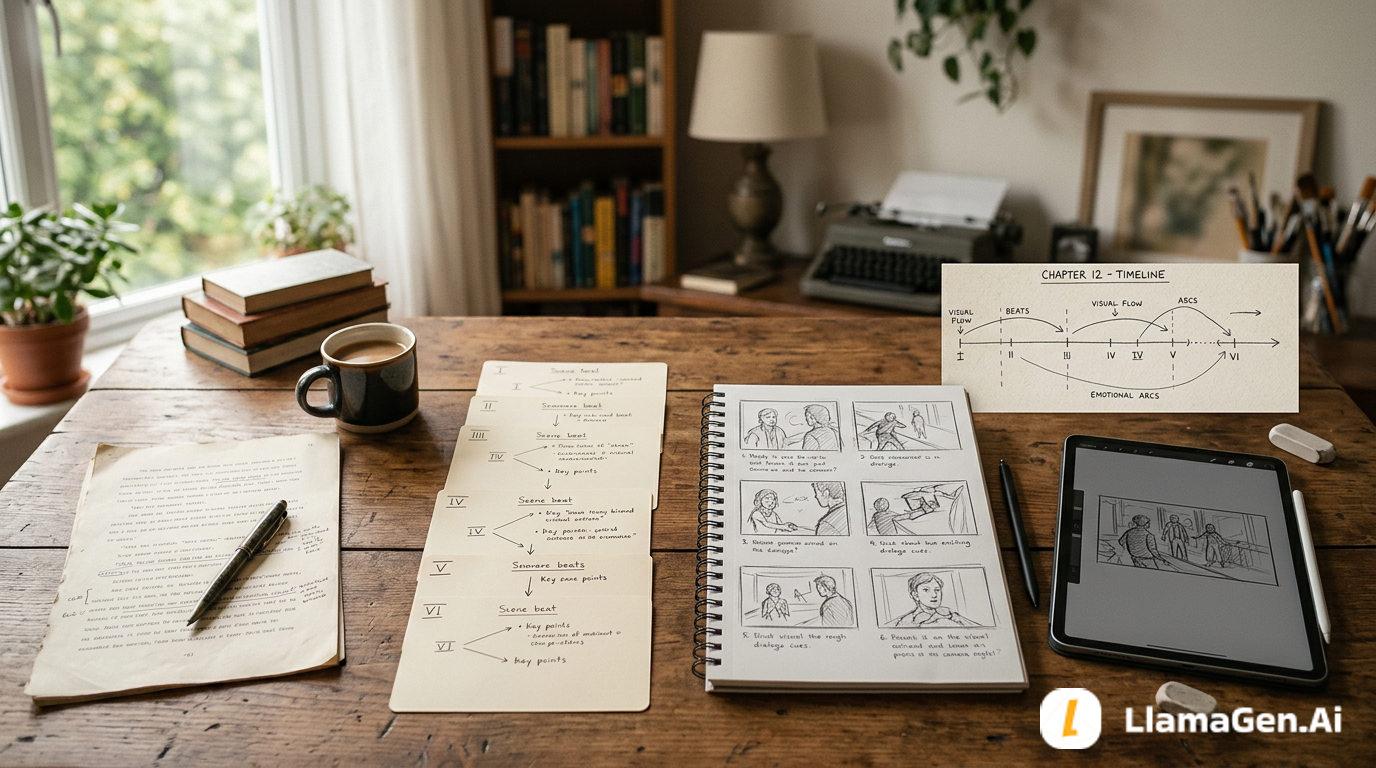
If you want a sustainable publishing system, here is one that works well.
Monday: outline the post topic
Tuesday: script character dialogue or narration
Wednesday: generate storyboard scenes
Thursday: convert to final blog visuals
Friday: export and publish
Saturday: save the best new character expressions into your reference library
Once you have a stable cast, one of the smartest expansions is turning successful blog episodes into short motion content with AI Video Generator or Voice Story Generator. This helps you repurpose the same animal profiles for YouTube Shorts, classroom narration, or social clips without rebuilding from scratch.
A practical starting target is 3 to 6 characters. With a strong character-sheet workflow and reusable references, you can maintain 6-character consistency much more reliably.
No. This works for blogs, lesson content, branded mascots, storybooks, and visual explainers. LlamaGen.AI is especially strong because it supports comics, storyboards, storybooks, anime-style visuals, and video in one ecosystem.
You can use image-based reference workflows and image-to-character pipelines. That makes it easier to preserve the spirit of your original animal cast.
Start with:
If you want to create a blog with consistent animal character profiles, the breakthrough is not “better prompting” alone. It is building a repeatable character system. Once you lock visual rules, create reusable references, and work in a platform designed for sequential storytelling, everything gets easier. Your posts feel more connected. Your audience remembers your cast. Your production time drops. And your blog starts to feel like a real world, not a pile of unrelated images.
The most practical solution I’ve found is to treat character creation, storyboarding, panel editing, and publishing as one workflow. That is where LlamaGen.AI genuinely helps. Its character consistency engine, comic-first production tools, storyboard features, and export options are built for exactly this kind of recurring visual content.
If your next step is simple, make it this: create one animal character sheet today, test it across three scenes, and build from there. Small wins turn into a stable cast faster than you think.
Popular creator tools
Go from comics and storyboards to stylized photos with LlamaGen.
Just refer your friends, followers, and customers to earn up to 30% in recurring commissions for a lifetime!