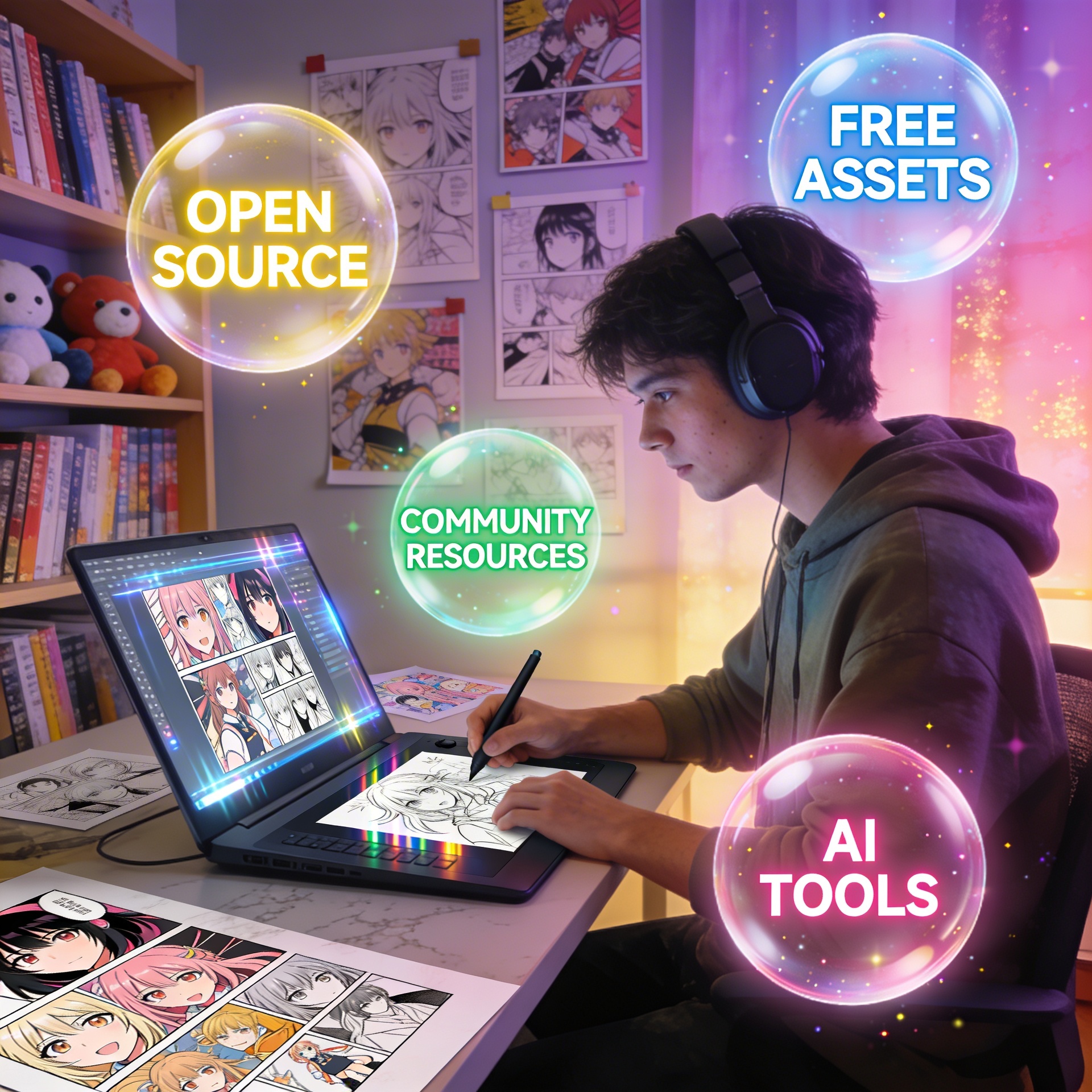
If you have ever sketched a great character on paper, then watched that personality disappear the moment you moved into AI, you are not alone. I hear this frustration constantly from creators: “My hand-drawn hero looks right in my notebook, but every generated panel turns them into someone else.” The second pain point is just as real: once your script has more than three people in a scene, keeping cast selection consistent becomes slow, messy, and mentally exhausting.
That is exactly why Llamage supports hand-drawn character generation (direct hand-drawing or creation from sketches) and scripted character selection (AI-recommended character selection based on script text) matters so much. In practice, this workflow can save hours in pre-production, reduce redraw cycles, and help you reach reliable 6-character consistency in 48 hours instead of fighting every panel manually. I have seen this become a breakthrough for comic creators, storyboard artists, educators, and indie teams who need to move from rough ideas to usable pages fast.
In this guide, I’ll walk you through how to turn sketches into reusable characters, how to let script text guide cast selection, and how to combine both inside the broader LlamaGen.AI ecosystem for comics, manga, storyboards, and even motion workflows.
The biggest misconception in AI art is that every workflow should start with a polished prompt. In real projects, that is rarely true.
Most creators begin with one of these:
a pencil sketch on scrap paper
a half-finished digital doodle
a character silhouette with notes
a storyboard frame with rough expressions
a script that names characters before designs are finalized
That gap between rough ideation and production is where many tools break down. Generic image generators are often strong at one-off pictures, but weak at sequential storytelling. They do not naturally preserve identity from panel to panel. They also do not understand that your “girl with short blue hair” in panel 1 needs to remain the same person in panel 12.
This is where LlamaGen.AI stands out. Its platform is built around:
character consistency across panels
editable panel workflows
story-first and script-first production
comic, manga, webtoon, storyboard, and video outputs
reusable character references for long-form projects
If your goal is visual storytelling rather than random image generation, that difference is huge.
What hand-drawn character generation actually means in production
Változásnapló
Álmokat gyújt a fiataloknak Ahol történetek milliói kelnek életre
A legújabb LlamaGen funkciók, termékfejlesztések, dizájnfrissítések és fontos hibajavítások összefoglalója.
✦
✧
✦
✧
Új médium a történetmeséléshez
Készíts korlátlan számú történetet, képregényt, animációt, játékot és még sok mást másodpercek alatt, modern közönségre hangolva
When people hear “hand-drawn character generation,” they often think it is just image-to-image. In a real production pipeline, it is broader than that.
Direct hand-drawing and sketch-to-character are different, and both matter
A strong workflow usually includes two input modes:
Direct hand-drawing
You draw the character shape, pose, or face directly.
The system interprets that visual structure.
This is ideal when proportions and silhouette matter more than polish.
Creation from sketches
You upload a rough sketch or scanned drawing.
The AI refines it into a more production-ready character.
This is ideal when you already have concept art but need reusable outputs.
On LlamaGen.AI, this concept fits naturally into the platform’s Character and Comic workflows. You can start with a rough visual reference, then expand it into a reusable cast asset for comics, storyboards, or anime-style scenes. Relevant entry points include the AI Character Design tool and the AI Character Sheet Generator.
Why this matters emotionally, not just technically
A hand-drawn sketch carries intent. It contains the tiny things that make a character yours:
the uneven bangs
the slouched shoulders
the oversized jacket
the narrow eyes
the exaggerated nose
the “I know this is messy, but this is them” feeling
When you can preserve that intent instead of rewriting it into generic prompt language, you keep your creative ownership intact. That is not a small thing. It is often the difference between abandoning a project and finally finishing page one.
How scripted character selection removes cast confusion from your workflow
Once your character designs exist, the next bottleneck appears: script interpretation.
You write something like:
Maya enters the classroom. Ben avoids eye contact. Their teacher stands near the window.
Simple to read. Annoying to manage across dozens of scenes.
Without cast-aware tooling, you end up manually deciding:
which version of Maya to use
whether Ben should appear in uniform or casual wear
which teacher reference is the current one
whether a side character should appear in this scene at all
AI-recommended character selection based on script text
This is where scripted character selection becomes a real productivity feature, not just a convenience.
The workflow is straightforward:
the script mentions named characters
the system maps those names to your saved cast
scene generation uses the likely correct characters automatically
you review, edit, and lock choices before full output
This works especially well in storyboarding and comics, where repeated cast decisions create friction. On LlamaGen.AI, this idea aligns with the platform’s Story, Comic, and Story Cast workflows. If you are building scenes from scripts, you can move from writing to visual blocking far faster using tools like the AI Storyboard Generator, Story Writer, and character workflows supported across the platform.
The practical benefit is simple: less time matching names to faces, more time improving pacing, expressions, and dialogue.
A 3-step workflow to go from rough sketch to consistent comic cast
This is the process I recommend when you want immediate results.
Step 1: Turn your rough sketch into a reusable character asset
Start with the ugliest useful drawing you have. Seriously. It does not need clean line work.
Best practices:
keep the silhouette readable
exaggerate key traits
note signature outfit details
include front-facing or 3/4 face if possible
avoid cluttered backgrounds in the source image
Then use that sketch as the foundation for character generation. In LlamaGen.AI, I would typically begin with character-focused tools first, not a full comic page. That gives you a stable reference before you ask the system for narrative scenes.
Expected outcome in the first hour: one character reference that feels recognizably yours.
Pro tip: build a mini character sheet before page generation
Before making comics, create 3 to 6 reference states:
neutral pose
happy expression
angry expression
action pose
alternate outfit
close-up face
That extra setup usually reduces later redraws dramatically. On serialized projects, it can save you dozens of corrections.
Step 2: Connect your script text to named cast members
Once your character assets are stable, move into script-aware production.
Your script should use consistent names. Avoid switching between:
“Detective Rana”
“Rana”
“the detective”
“Officer Rana”
Pick one primary naming structure, then keep scene notes clear.
Example script snippet:
Scene 4: Rooftop at sunset.
Rana confronts Jules near the edge.
Jules smiles, but does not step back.
A drone rises behind them.
From here, a scripted character selection system can recommend:
Rana → saved character asset A
Jules → saved character asset B
drone → object/background asset or scene prompt support
In LlamaGen.AI, this becomes especially powerful when paired with storyboarding and multi-panel comic generation, because your cast remains anchored as scenes evolve. If you are drafting from text, start with Storyboarding with AI or explore Visual Story Writing.
Expected outcome in 24 hours: a script where your named cast is no longer floating abstractly. Each name points to a reusable visual identity.
Step 3: Generate scenes, then fix continuity at the panel level
This is the part many creators skip. They generate too early, then blame the tool for inconsistency.
Instead:
lock your core cast
generate scene drafts
inspect panel-level continuity
redraw only what broke
preserve what already works
LlamaGen.AI is especially strong here because it is not just a one-shot image model. It supports iterative editing through features like:
panel redraw
page and panel swapping
restore history
speech bubble editing
caption control
layout optimization
That matters because consistency is not achieved in one perfect generation. It is achieved through controlled iteration.
Expected outcome in 48 hours: a short sequence with consistent cast identity across multiple panels, often enough to validate a full project.
What results you can realistically expect in 48 hours
Let’s keep this practical. You do not need a finished graphic novel in a weekend.
But if you follow the workflow above, realistic short-term wins include:
1 to 3 core characters created from rough sketches
6-character consistency planning if you build a small cast system
1 complete storyboard scene from script text
1 polished comic page or short strip
fewer manual prompt rewrites
faster panel correction cycles
For teams, the gain is often even bigger. Writers, artists, and producers can align faster because visual references and script logic live in the same ecosystem.
Common mistakes that quietly ruin sketch-to-cast workflows
I see these issues all the time, even with talented creators.
Mistake 1: Treating every scene as a fresh prompt
If you do not anchor the character first, the model will improvise. That is fine for concept exploration, terrible for continuity.
Solution: create reusable character references before scene generation.
Mistake 2: Uploading messy sketches without visual priorities
A rough sketch is fine. An unreadable sketch is not.
Solution: emphasize silhouette, hairstyle, clothing cues, and face shape.
Mistake 3: Using inconsistent character names in scripts
AI-recommended character selection works best when names are stable.
Solution: standardize names in your script and keep aliases limited.
Mistake 4: Over-editing text instead of fixing the right panel
When one panel breaks, creators often regenerate the whole page.
Solution: use panel-level editing and redraw only what changed. This is one of the strongest parts of the LlamaGen.AI workflow.
Mistake 5: Ignoring publishing format early
A page for print reads differently than a vertical webtoon.
Solution: decide early whether you are targeting page-based comics or vertical scroll. LlamaGen.AI supports both, which is a major production advantage.
Best practices for long-form character consistency
If you are planning a series, not just a one-off test, these tips matter.
Build a cast bible before chapter one
Your cast bible should include:
character name
visual reference
signature outfit
alternate outfit
emotional range
pose references
relationship notes
scene-specific constraints
This pairs well with LlamaGen.AI’s emphasis on character sheets, story cast workflows, and sequential storytelling.
Use storyboard mode before final comic rendering
For many creators, storyboarding first cuts wasted effort by 30% to 50%. You solve camera angle, staging, and cast presence before polishing.
Learn the editing tools, not just generation tools
Beginners focus on generation. Professionals focus on recovery.
The official YouTube Learning Hub is excellent for this, especially tutorials on:
consistent characters
panel control
batch redraw
swap pages and panels
restore panel history
speech bubble control
Those editing features are often what transform a “promising draft” into something publishable.
Featured snippet answers: quick solutions to common search questions
Can AI generate characters from hand-drawn sketches?
Yes. A strong workflow lets you upload or draw rough character sketches, then refine them into reusable visual assets. On LlamaGen.AI, this works best when paired with character design and character sheet workflows for better continuity.
What is scripted character selection?
Scripted character selection means the AI recommends which saved characters should appear in a scene based on script text. This helps match names in your story to consistent visual references.
Why is this useful for comics and storyboards?
Because comics and storyboards depend on recurring characters across many scenes. Without cast consistency, every new panel risks breaking immersion and increasing manual fixes.
What is the best way to keep AI comic characters consistent?
Start with a stable character reference, standardize script names, generate scenes from a saved cast, and use panel-level editing instead of regenerating full pages. LlamaGen.AI is especially strong for this because its workflow is built for sequential storytelling.
Where this workflow fits inside the bigger LlamaGen.AI ecosystem
One reason I recommend LlamaGen.AI so often is that sketch-based creation and script-based selection are not isolated gimmicks. They connect to a broader production stack:
If you have been stuck between messy sketches, inconsistent AI outputs, and scripts that feel impossible to manage visually, you are not doing anything wrong. You are running into a workflow problem, not a talent problem.
That is why Llamage supports hand-drawn character generation (direct hand-drawing or creation from sketches) and scripted character selection (AI-recommended character selection based on script text) is such a practical breakthrough. It helps you preserve your original idea, connect that idea to the right cast, and move into comics or storyboards without losing control of the story.
My best advice is simple: do not wait for perfect art. Start with one rough sketch, one clean character name, and one short scene. Build a small cast system today. In the next 48 hours, you can have a testable workflow, a more consistent page, and a lot more confidence than you had yesterday.
If you are ready to turn those sketches and scripts into an actual visual story, here’s the most useful next step: