

Original character creator
OC Maker. Your character, ready for its next scene.
Describe an original character or add a reference. Explore a look, compare variations, then carry your selected design into a comic or scene.
Model
Style choices guide the image prompt. Results vary.
Sign in to generate. Credit cost and available options appear in the generator.
Start with words or a reference
Shape an original design from a clear brief, a sketch or a reference image.
Explore a design before committing
Compare expressions, outfits and visual directions around the details you want to keep.
Give the character a world
Plan scenes around your OC, from illustrated stories to game concepts and short-drama storyboards.
One character. More ways to tell their story.
Explore finished-project concepts for games, illustrated stories and short dramas. Start with the character, then imagine where they could go.
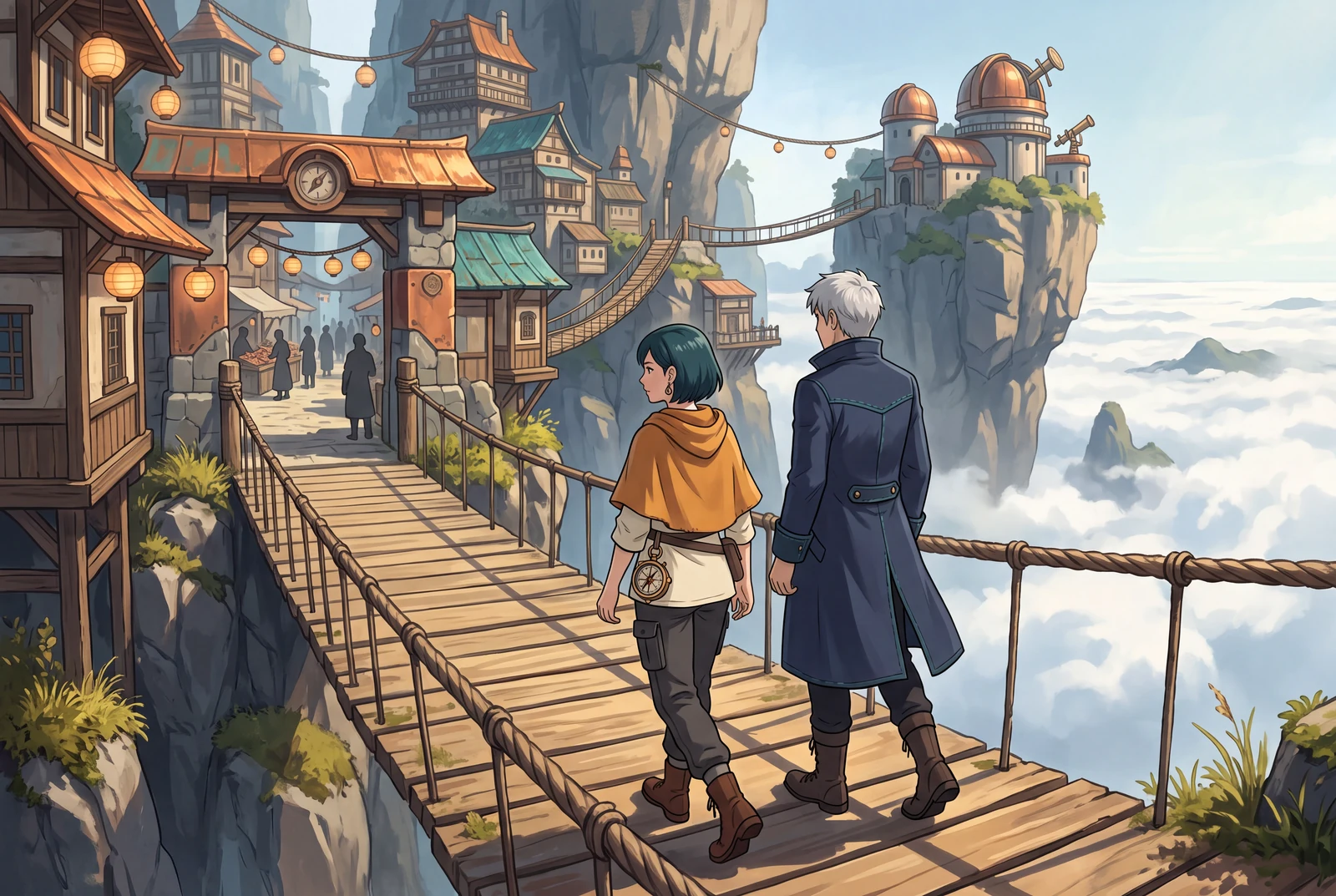
Give your OC a place in a game concept, from a scene to a coordinated character set.
Take an original character beyond the portrait and into an adventure world.
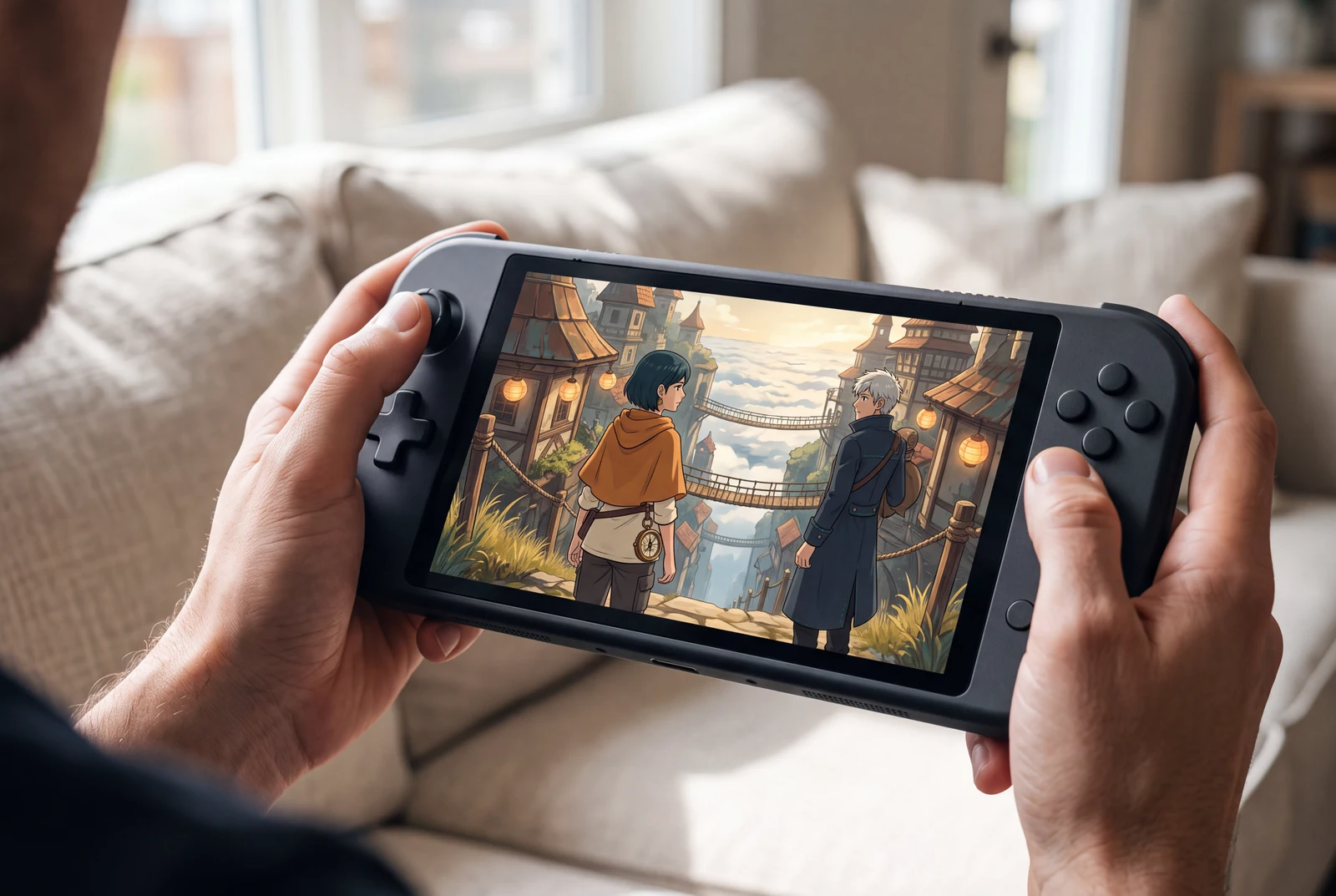
See how the character could feel on a handheld screen.
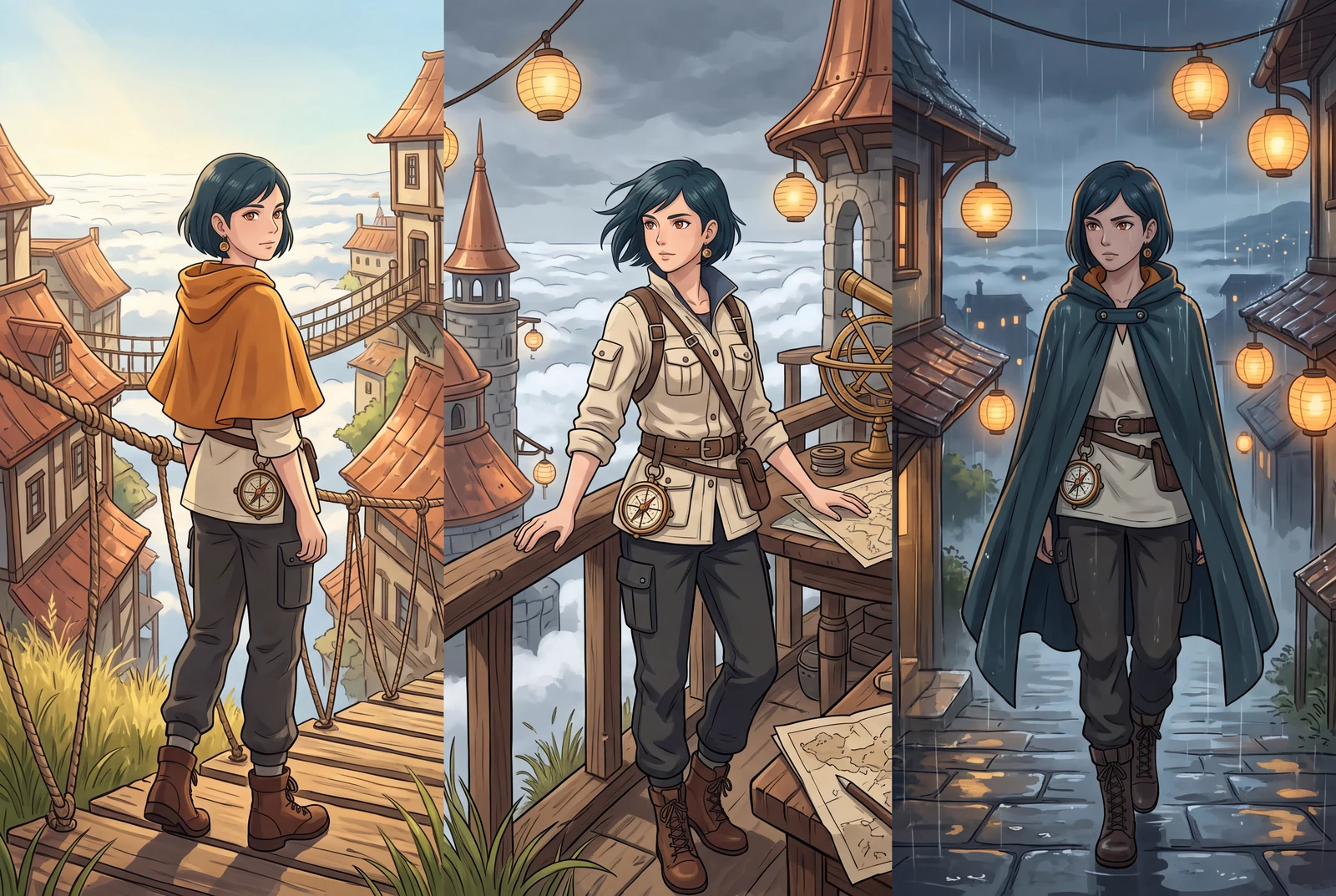
Explore three outfit directions while keeping a recognizable visual identity.
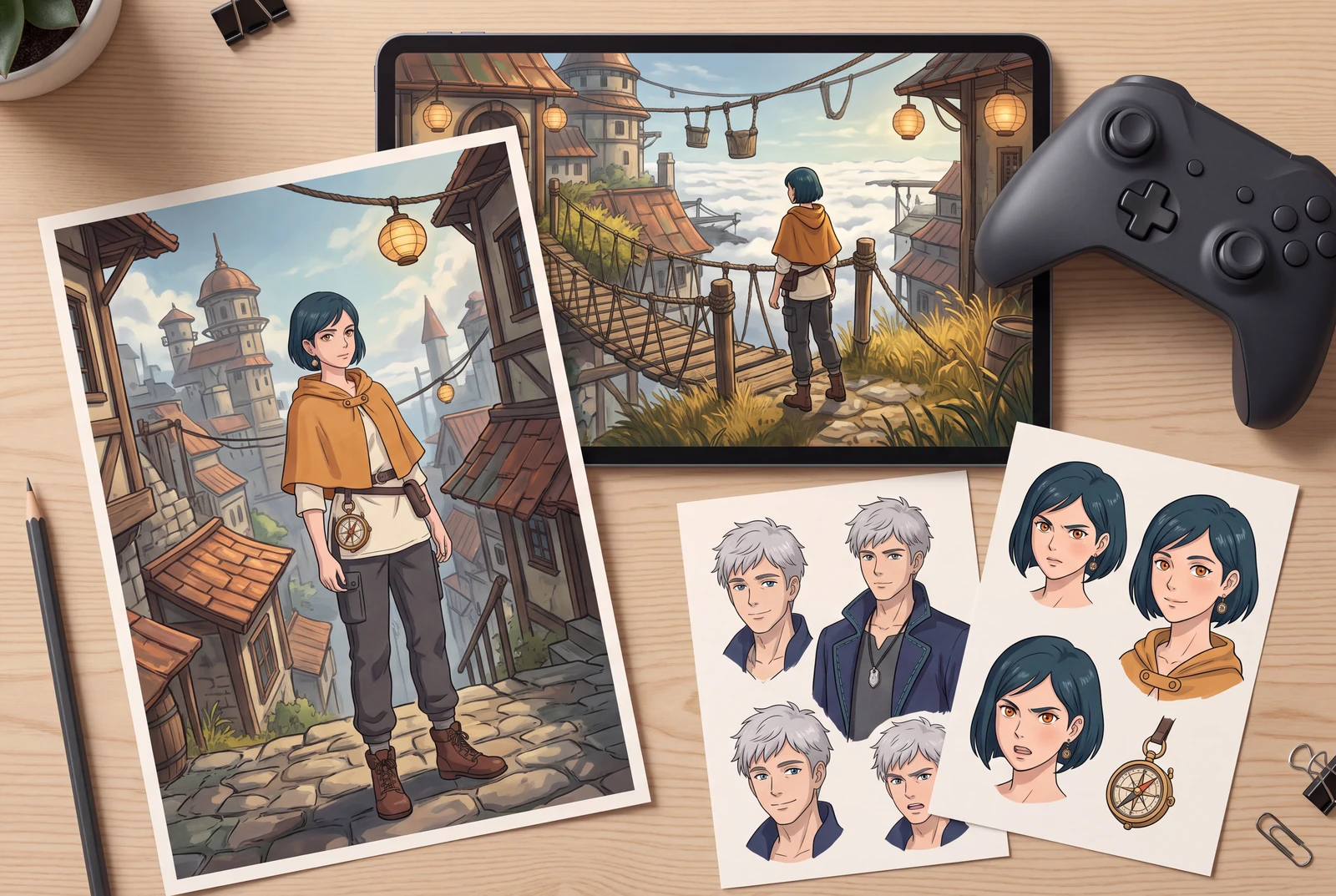
Bring the world, character art and reference cards into one coordinated concept.
See a character move beyond a portrait into an illustrated story and its supporting designs.
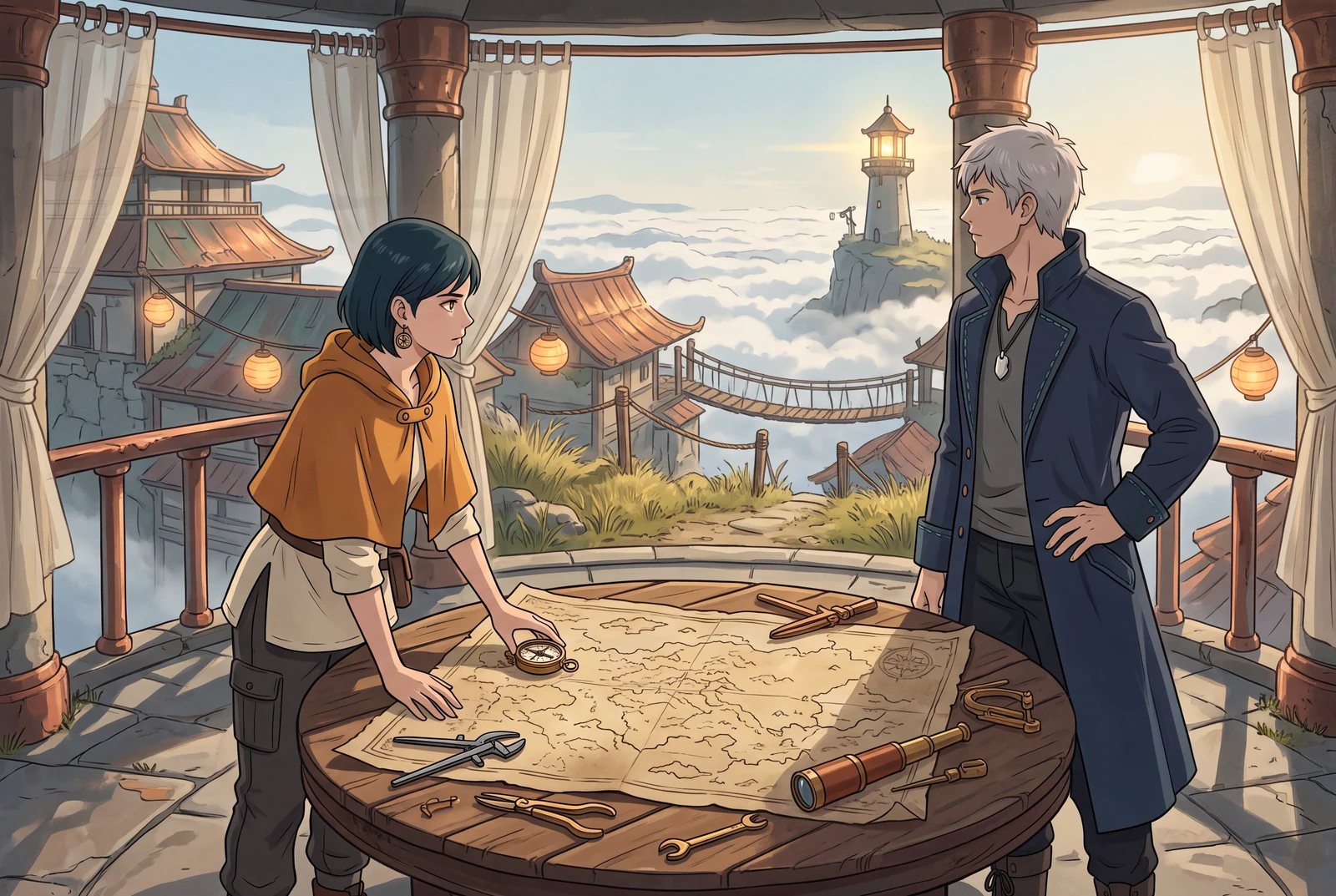
Give your OC a place, a relationship and a reason to be there.
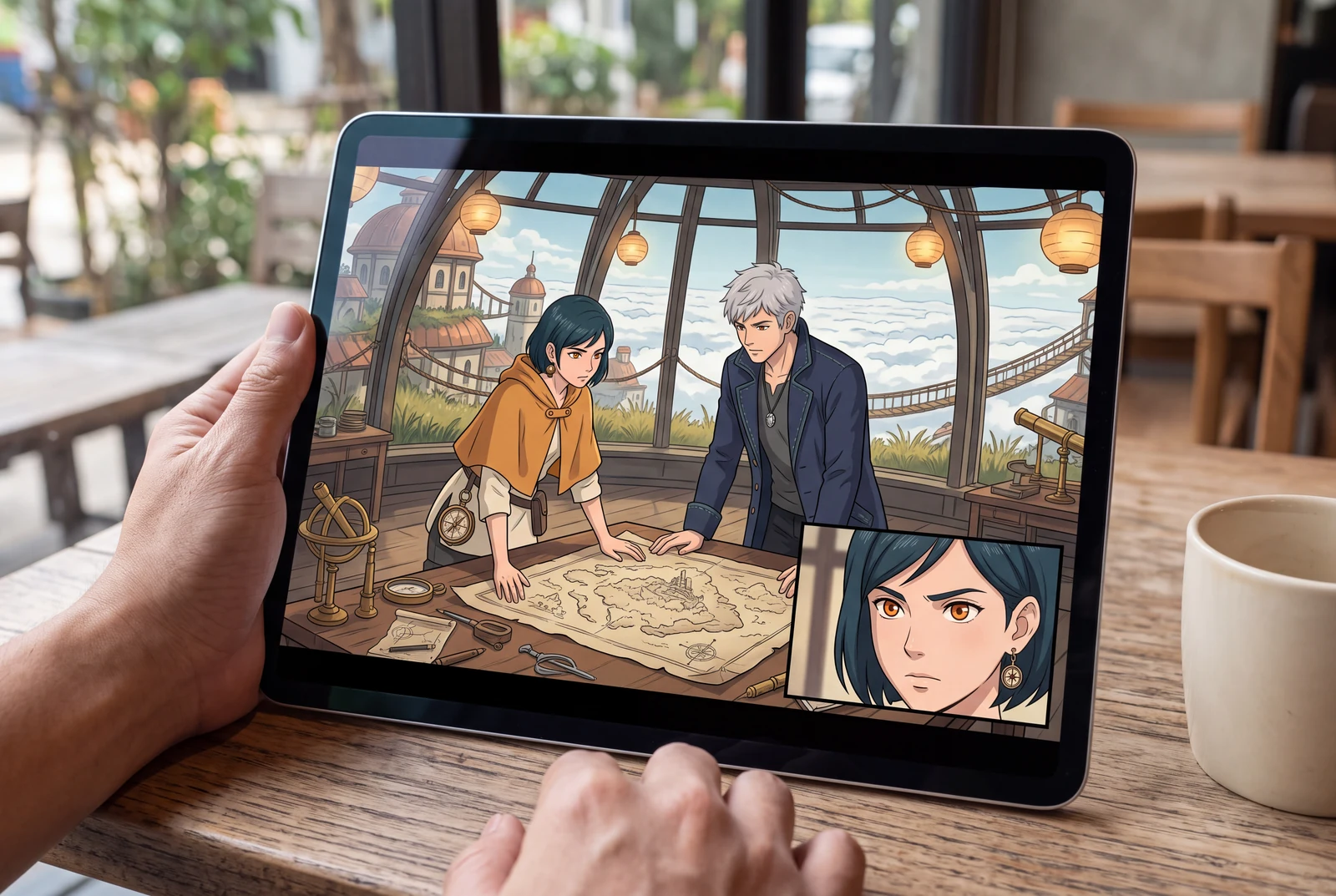
Read the scene at a natural viewing size, with the cast in context.
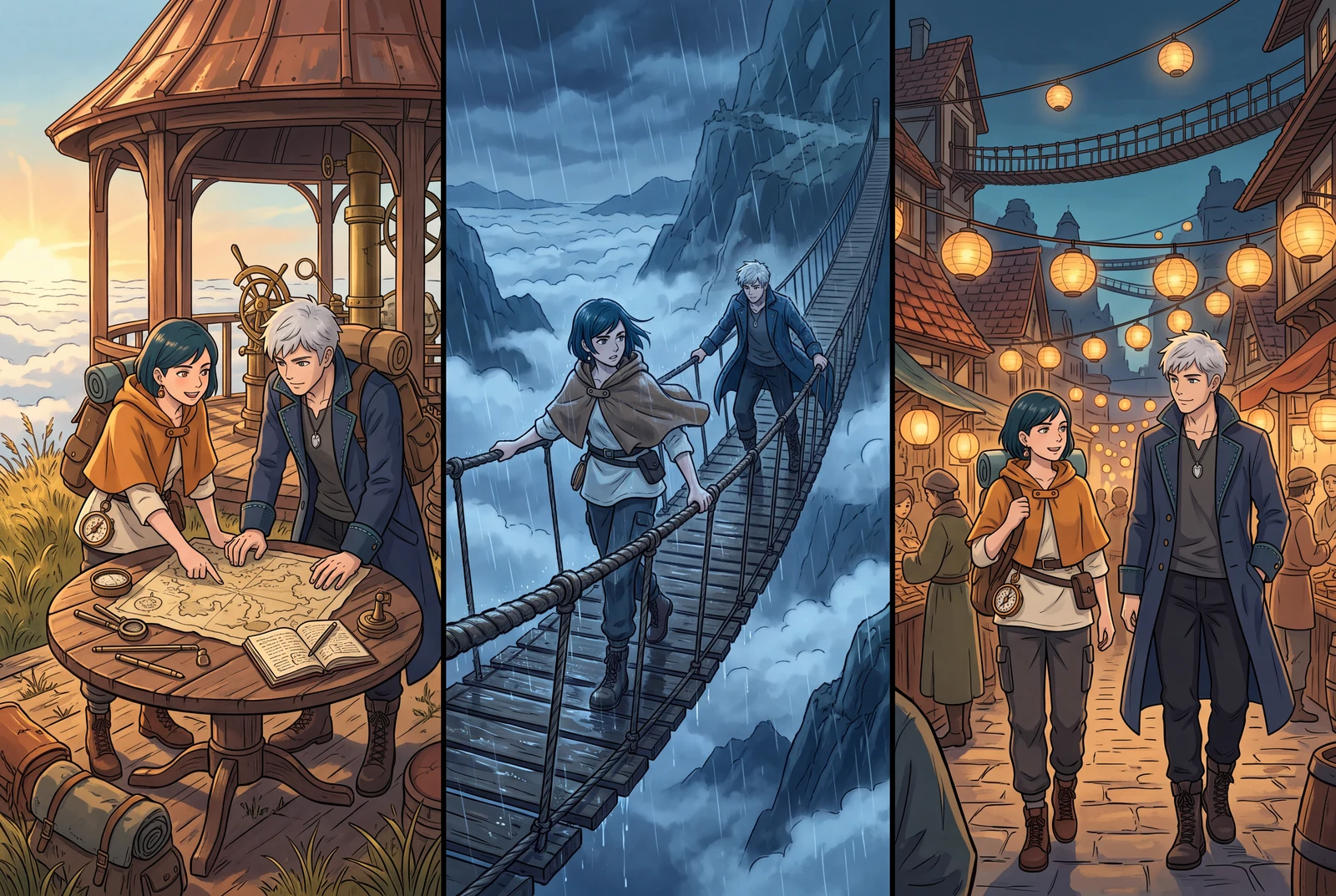
Move one cast through three settings, moods and story moments.
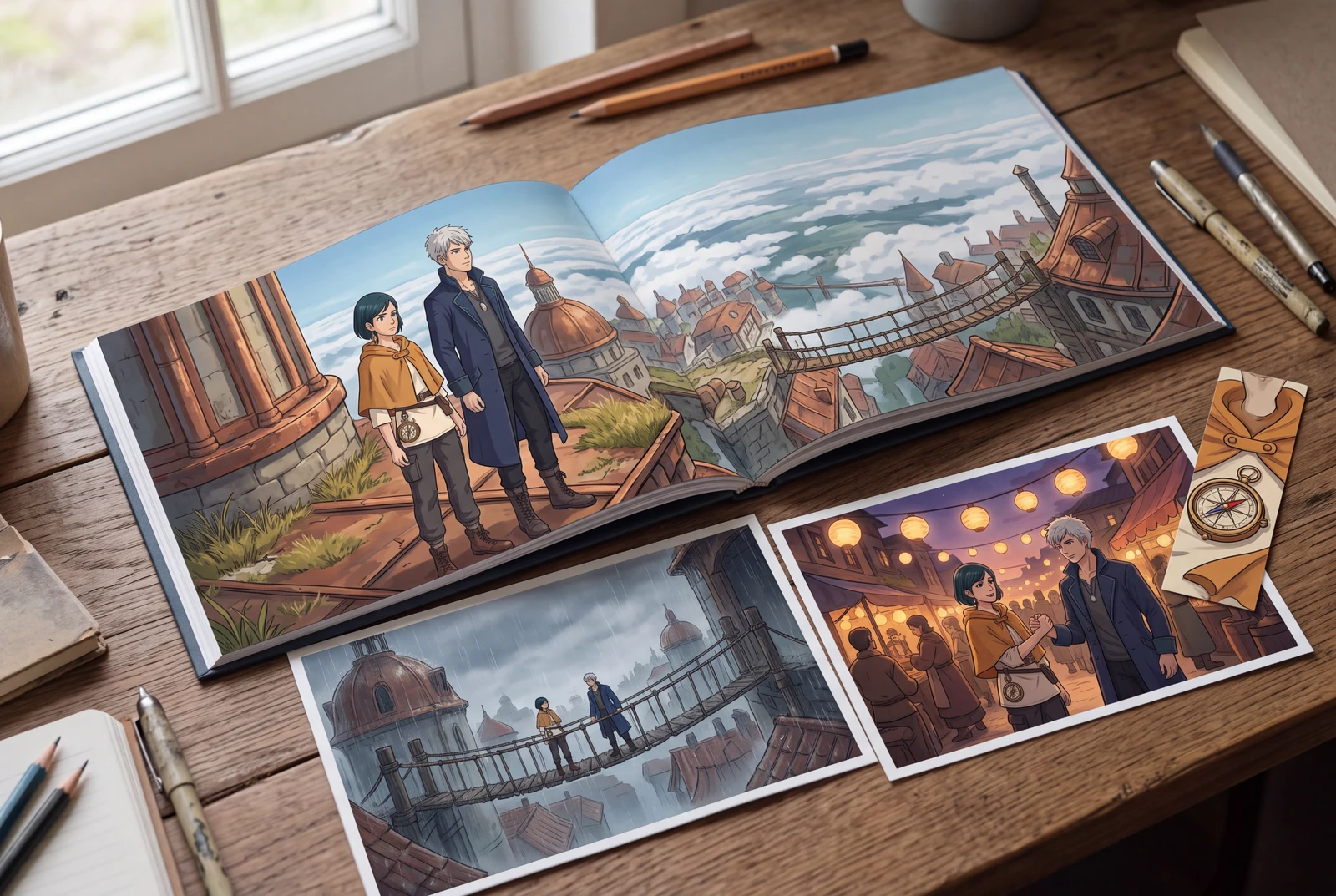
See a story spread and supporting scenes work together as a set.
Explore the expressions, framing and scene continuity of an illustrated short-drama concept.
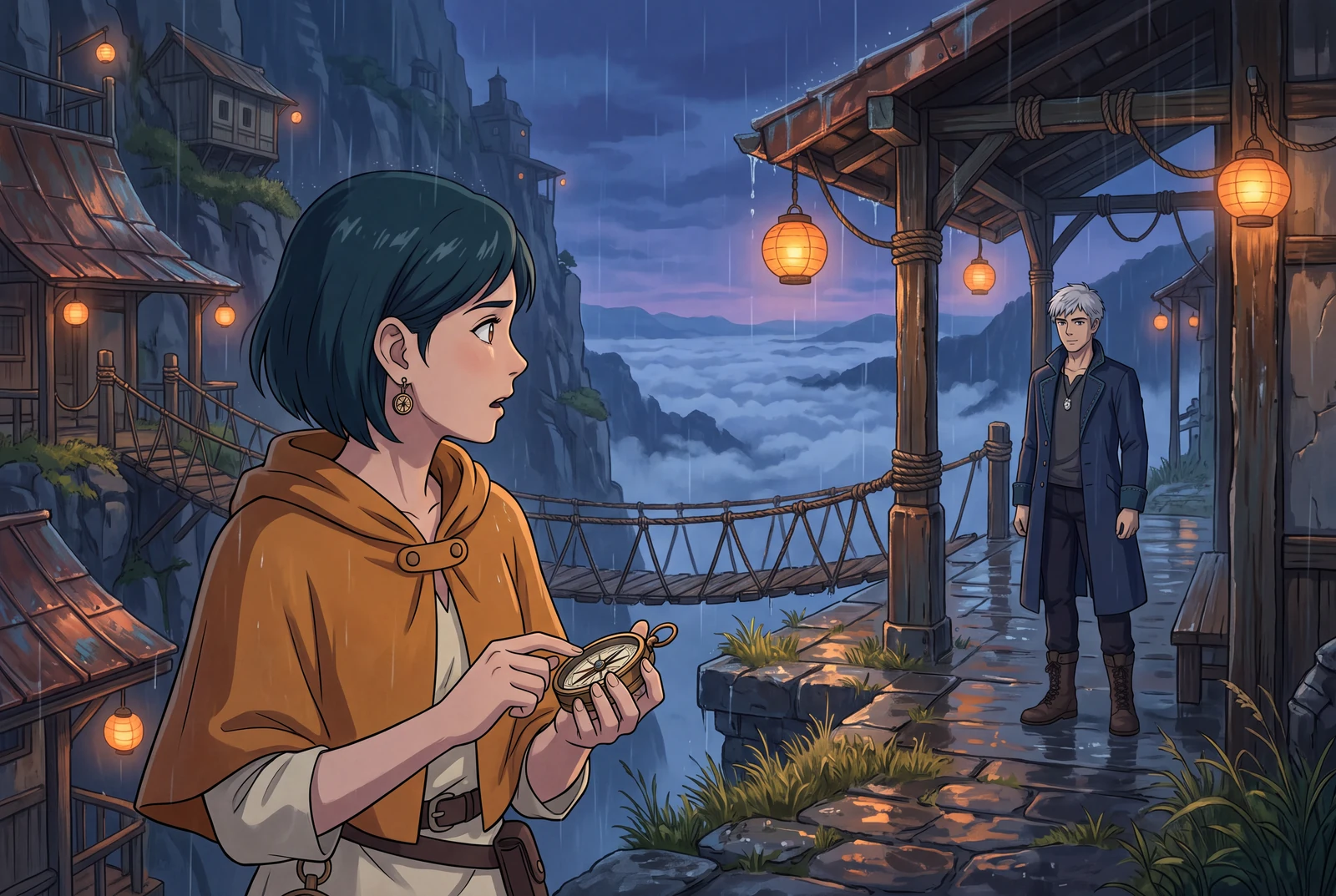
Build a moment around expression, atmosphere and the connection between characters.
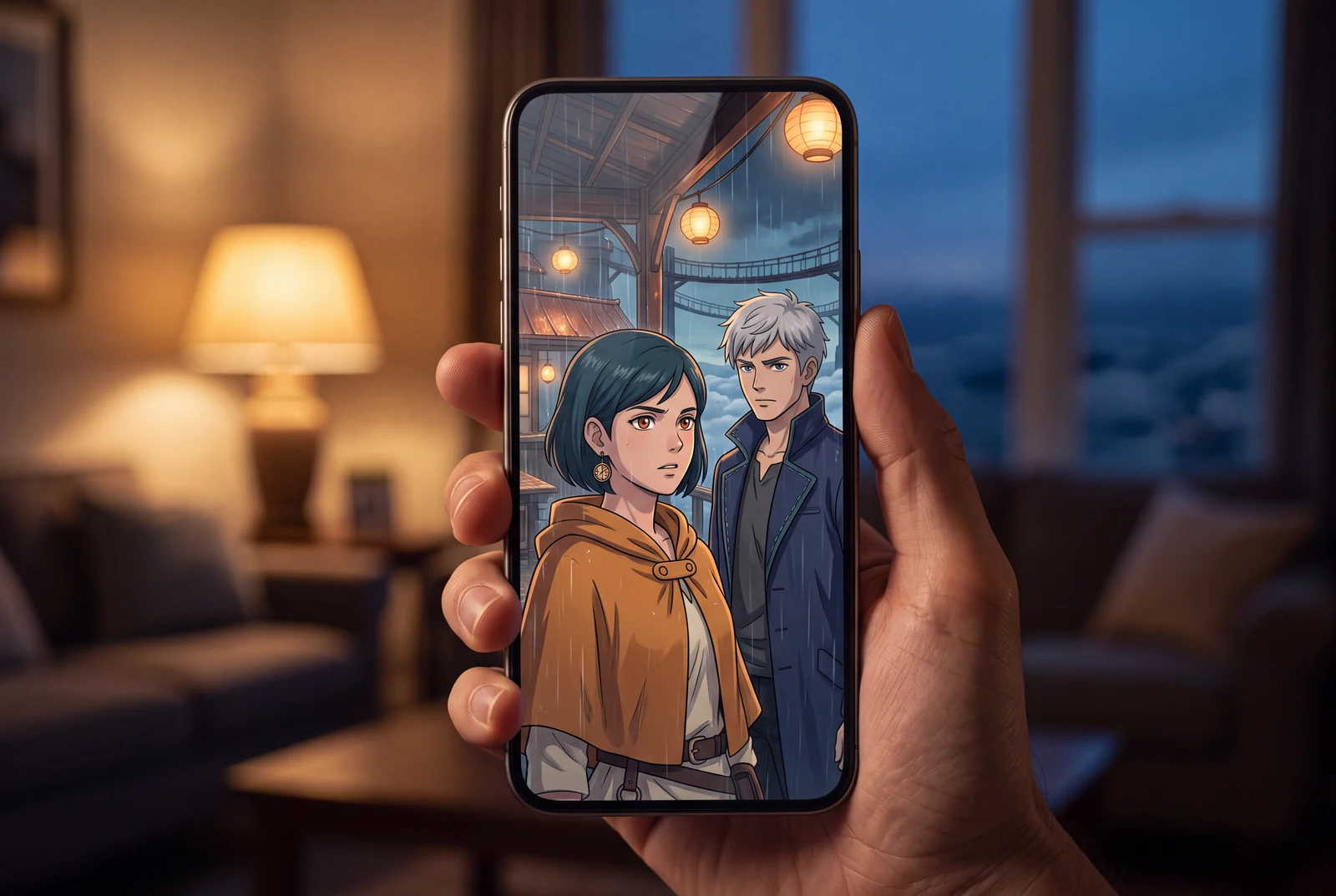
Frame the same character for a close, vertical viewing experience.
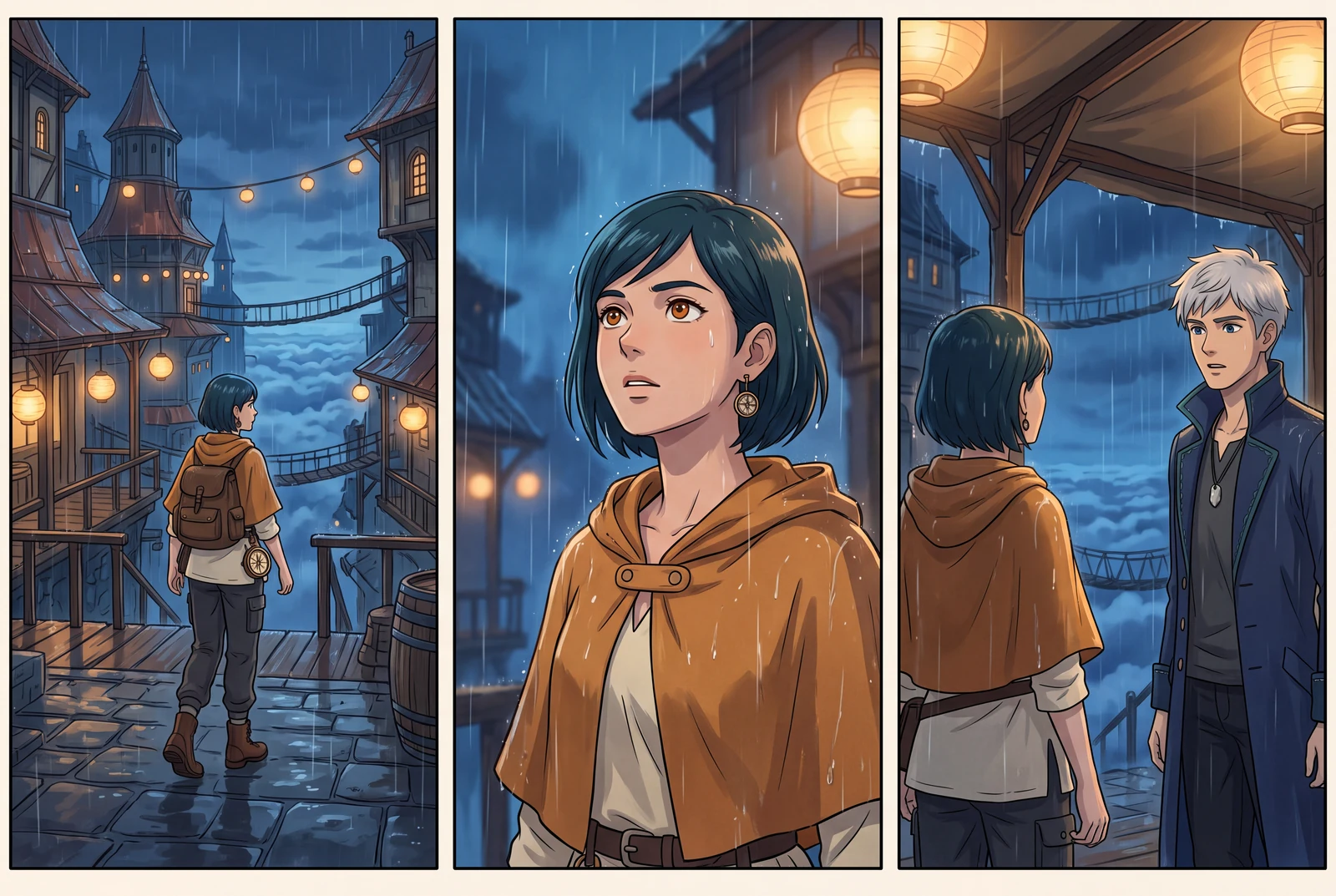
Explore an establishing shot, a close-up and a two-shot from one scene.
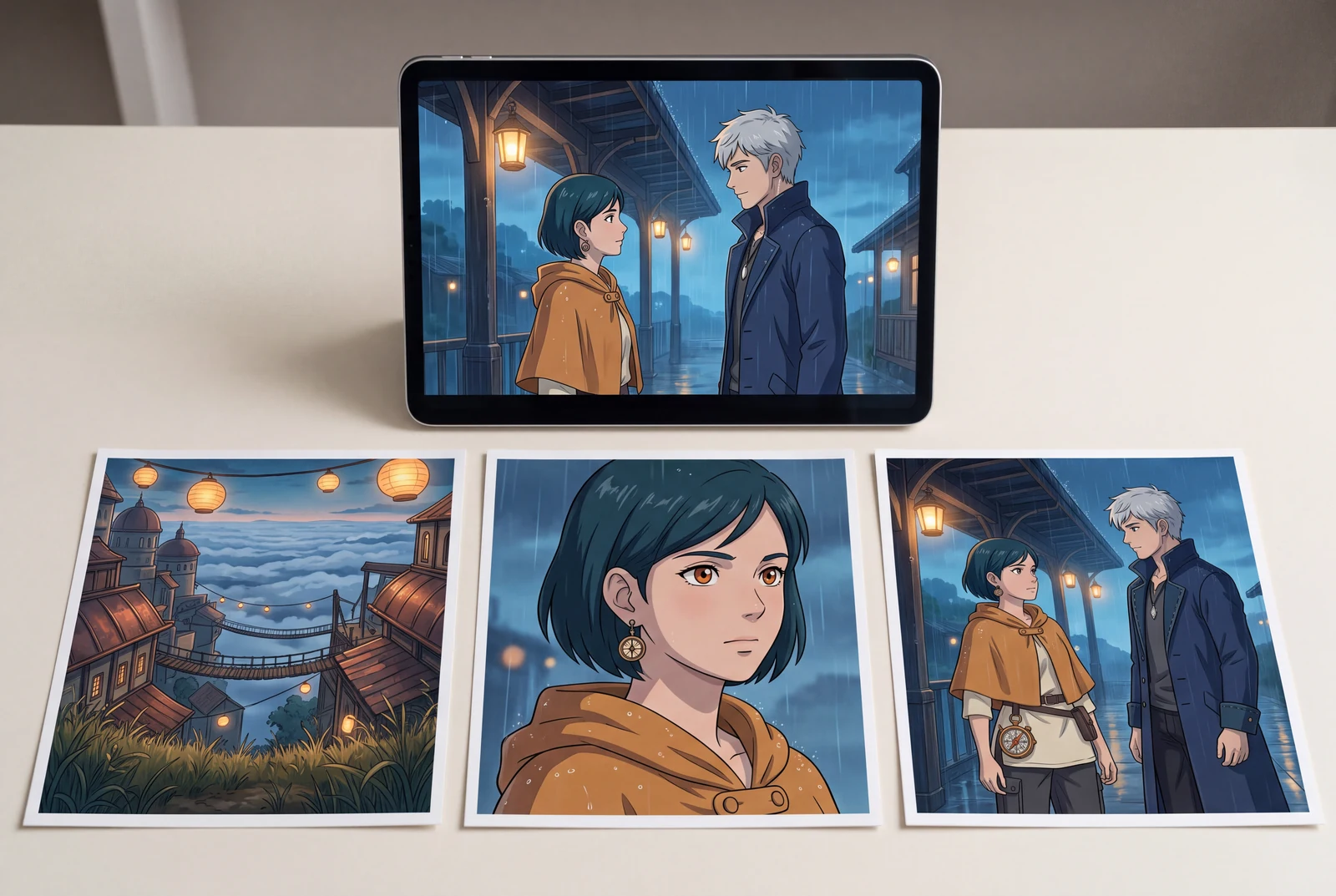
Keep cast, costumes and atmosphere connected across a set of drama stills.
AI-generated showcase concepts. Game screens, story spreads and drama frames illustrate possible creative uses.
From a first idea to a character you can develop
Keep the brief clear, compare what matters, then plan the next scene.
- 1
Give your OC a direction
Describe their role, silhouette, outfit and one signature detail. Add a reference you own or have permission to use.
- 2
Generate, compare, refine
Use the generator, review its current credit cost, and compare the face, proportions and outfit. Change one detail at a time.
- 3
Build the next scene
Keep your selected image as a reference for a comic, storyboard or game concept. Check the character again when the pose or lighting changes.
A few details make an OC easier to recognize
Use these practical checks as you refine a character design.
- Keep a few identity anchors: hairstyle, silhouette, palette and a signature prop.
- Change one variable at a time, such as the pose, outfit or expression.
- Compare eyes, costume details and proportions against your chosen reference before using the next image.
Create a short-drama storyboard concept with the adult cartographer and an adult silver-haired pilot in a navy coat. On a rainy harbor walkway, she reveals a hidden map. Show an establishing shot, a tense close-up and a reaction shot.
Questions about OC Maker
What is an OC maker?
OC means original character. An OC maker helps you turn a description or reference image into a character design you can develop for your own project.
Can I create a character from text?
Yes. Start with a role, appearance, outfit and a distinctive detail. The character studio is where you choose the available generation options and run the request.
Can I use a reference image?
Use a sketch or image you own or have permission to use. Follow the studio upload controls for supported files and limits, and describe which details matter.
Will my OC look identical in every image?
A chosen reference and repeated identity details can help. Results still need review: compare the face, hair, outfit and proportions across scenes and revise any drift.
Is OC Maker free to use?
Generation requires an account and uses the options and credits shown in the studio. Check your available credits and the current pricing before generating.
Does this create a playable game or a finished video?
This page helps you develop character artwork and scene concepts. A playable game, animation rig or finished video needs its own production workflow.
Can I use my OC in a comic or manga?
Yes. Take your selected character image into a comic workflow as a reference, describe the scene, and review the character and text in each result.
Can I use the artwork commercially?
Review the current Terms of Service and any rights attached to your prompts, references and project. Avoid assuming that generation clears third-party rights.
Kan AI gjenskape det nøyaktige utseendet til en historisk person?
Denne guiden fastslår ikke nøyaktig gjenskapelse. Portretter og oppføringer har attribusjonsgrenser, og genererte bilder tilfører tolkning. Merk resultatet som en original fremstilling og vis til materialet som er brukt.
Hvordan kan en historisk karakter utvikle seg i en historie?
Planlegg hva som endrer seg i den voksne karakterens situasjon, kunnskap eller mål, og skill deretter den dramatiske buen fra dokumenterte hendelser. Ikke presenter oppdiktede private tanker eller dialog som biografi.
Låser et referansebilde karakteren automatisk?
Ingen automatisk identitetslås er etablert her. Bruk godkjente kjennetegn, sjekk kontrollene som for øyeblikket tilbys i produktet, og sammenlign hver nye opptreden med referansen. Det eksisterende fiktive arbeidet trengte fortsatt gjennomgang.
Character design references
Use these independent technique guides when planning and reviewing an original character.
- Character design fundamentals
Guidance on silhouette, color, distinctive details and expressions.
- Building a character model sheet
An artist’s guide to comparing proportions, views, colors and poses.
- Working with reference images
Keep visual references beside the canvas while reviewing a design.
Meet your next main character
Bring a clear idea or a reference and start developing an original design.
Create a characterLag et tydeligere neste utkast
Bruk en fokusert guide med et eksisterende arbeidseksempel og en praktisk gjennomgangsplan før du starter en ny generering.
- Lag et historisk karakterark du kan forklare
Skille dokumentert historie, visuell tolkning og fiktiv dialog, og gå deretter gjennom godkjente karakterkoder gjennom en historie.