

Franco-Belgian comic template for readable color adventures
Example preview
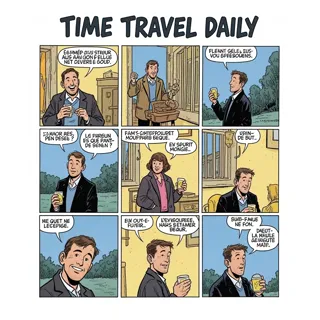
Develop an original bande dessinée inspired scene with readable silhouettes, detailed settings, and a warm adventure tone. Give the location a story role rather than filling every panel with decoration.
Build a clear, colorful adventure scene in which the setting helps explain what the characters discover.
When to use this template
- An original neighborhood mystery with environmental clues.
- A gentle travel adventure built around a landmark, map, or unfamiliar place.
- A character-led scene that needs a detailed setting and an easy-to-follow action.
Build your first draft
Choose one discovery
Decide what the protagonist learns in this scene, such as finding a hidden passage or noticing an unusual delivery.
Describe the setting and visual hierarchy
Name the time of day, architecture, important clue, clothing, and one focal action. Ask for clear outlines and readable color separation.
Review the reading path
Check that the clue is visible, figures separate from the background, and consecutive actions can be understood. Simplify crowded backgrounds before extending the story.
Try a complete example
The missing bell at the harbor
Original Franco-Belgian color comic adventure, bande dessinée inspired clear outlines and expressive faces. A young bicycle courier with a red satchel arrives at a sunny small harbor. Establish a cobblestone quay, striped lighthouse, fishing boats, and an empty bell bracket on the pier. The courier notices a wet rope leading toward a boat and points it out to an elderly harbor keeper in a blue coat. Detailed but uncluttered environment, readable silhouettes, warm coastal colors, focus on the discovery, no readable text, no copied characters or logos.
The empty bracket and wet rope turn the setting into evidence for the story. A limited cast and one discovery keep the detailed environment readable.
Before you publish
- Describe your own cast and setting instead of requesting a recognizable copyrighted character.
- Inspect small clues and background objects after generation; a detailed image can still omit the object that makes the scene understandable.
Questions about this template
- What makes this different from a generic comic template?
- The starting direction emphasizes color bande dessinée, detailed settings, and an adventure tone. Your prompt should still specify the cast, clue, action, and composition.
- Does the template reproduce a particular artist?
- Use it for an original scene with broad Franco-Belgian comic characteristics. Specify visual traits such as clear outlines and readable settings rather than an artist imitation.
- How much background detail should I request?
- Include details that establish place or advance the plot. If the reader cannot identify the character and main action quickly, remove competing objects or widen the shot.