

Humorous Manhwa for Kids: Build a Visual Animal Comedy
Example preview
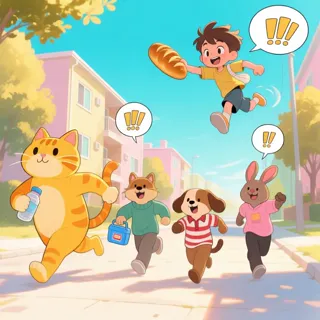
Draft a cheerful manhwa-style animal story with a clear visual setup and gentle payoff. Use repeated props and expressive reactions to make the joke readable.
For light, child-friendly comedy featuring quirky animal friends. The stored prompt explicitly centers funny situations and animals, making everyday misunderstandings a useful starting point.
When to use this template
- An animal-friendship joke with a kind resolution
- A silly classroom warm-up story
- A short comic about trying and failing at a small task
Build your first draft
Choose one misunderstanding
Give two animal characters different expectations about the same object. Make the situation visible in the first image.
Build a gentle reversal
Let the joke come from a surprising use of the object or a mistaken assumption. Keep the characters’ expressions clear.
Review the payoff
Read the strip without captions. Make sure the ending is kind, understandable, and appropriate for the intended readers.
Try a complete example
The oversized umbrella
Four humorous manhwa panels: a small rabbit proudly opens an enormous umbrella; a duck laughs because the sky is clear; apples fall from a nearby tree; both friends shelter under the umbrella and collect a snack. Bright friendly colors, expressive animal faces, one orchard location, no text.
The umbrella changes from an apparent mistake into a useful object. That reversal creates the joke without requiring a written punchline.
Before you publish
- Keep proportions distinctive so the animals remain easy to identify as their expressions change.
- Review accidental frightening faces or physical mishaps before sharing with young readers.
Questions about this template
- Does the humor need dialogue?
- No. A repeated object and a visible reversal can carry the joke. Add a short line only if it improves timing rather than explaining an unclear image.
- Can I use more than two animals?
- You can, but start with two when the strip is short. Extra characters need reactions and can distract from the object that makes the joke work.
- How do I make the joke suitable for children?
- Use familiar situations and a gentle consequence. Review the final art and wording with the intended age group in mind rather than relying on the style label alone.