

Reaction Close-up Webtoon: Show an Emotion Changing in Three Beats
Example preview
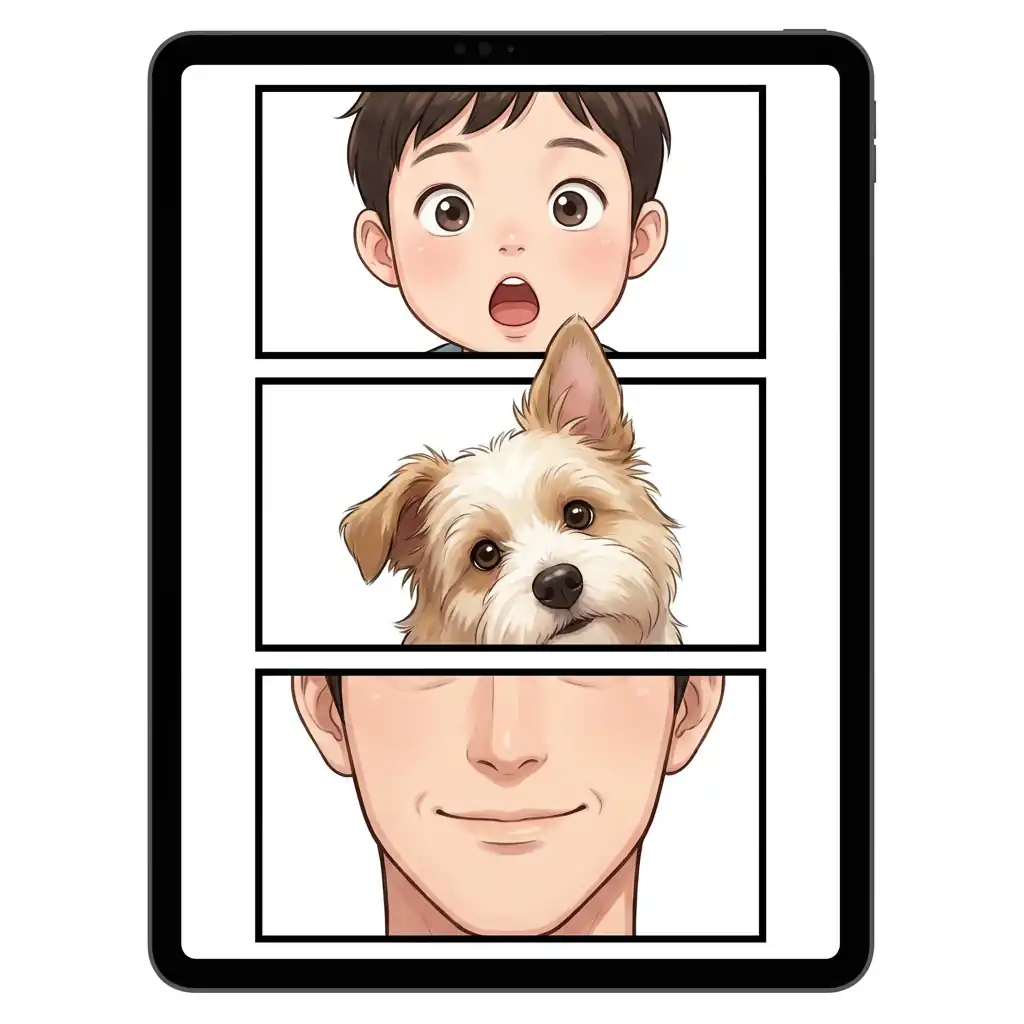
Create a three-panel portrait stack focused on facial reactions. Use a clear eyeline and a specific trigger to make subtle emotional progression understandable on a phone screen.
For a character beat where the reaction matters more than large action. The source specifies close-ups, subtle progression, and consistent characters in three stacked 5:8 portrait compositions.
When to use this template
- A character recognizing an unexpected visitor
- A quiet response to a meaningful object
- A misunderstanding turning into relief
Build your first draft
Name the trigger
Explain what the character sees or hears. Even if it stays offscreen, define its location so the eyeline remains consistent.
Write three distinct states
Use observable differences such as tense brows, widening eyes, and a relaxed mouth. Avoid asking for three vaguely emotional faces.
Check identity and acting
Compare facial structure, hairstyle, lighting, and gaze across panels. Rework a face that changes identity or skips the middle reaction.
Try a complete example
The familiar whistle
Three stacked portrait close-ups of an original young mechanic: first, concentrated with eyes lowered; second, eyes lift toward the same offscreen doorway in surprise; third, a relieved smile with shoulders relaxing. A small worn brass whistle hangs at the doorway edge as the visual cue, warm workshop light, no text.
The fixed doorway direction connects the expressions. Relaxing shoulders add a readable physical change beyond a small variation in the mouth.
Before you publish
- Faces are the main content here, so review identity consistency more carefully than decorative background detail.
- The requested portrait ratio and pixel dimensions still need measurement in your publishing workflow.
Questions about this template
- Can a reaction sequence work without showing the event?
- Yes, when the reader already knows the trigger or the scene provides a clear cue. Otherwise add an establishing panel before the close-up stack.
- How subtle should the expressions be?
- Keep enough difference to read at phone size. A tiny eyebrow change can disappear when the page is reduced, so use gaze and posture as well.
- Does this replace a dialogue scene?
- It handles the emotional response, not the whole exchange. Use a dialogue layout when readers need to follow who speaks and what information is shared.