

1
اكتب الوصف
حدّد الدور، والشخصية، والعمر، والهيئة العامة، والزي، ولغة الألوان، والإكسسوارات، وسياق القصة.
حوّل وصف شخصية واحد إلى نظام بصري متكامل: بورتريهات، وتصاميم كاملة للجسم، ولقطات turnaround، ومجموعات تعبيرات، ومراجع وضعيات، وتنوعات أزياء، ومشاهد storyboard، ورسومات شخصيات جاهزة للإنتاج.
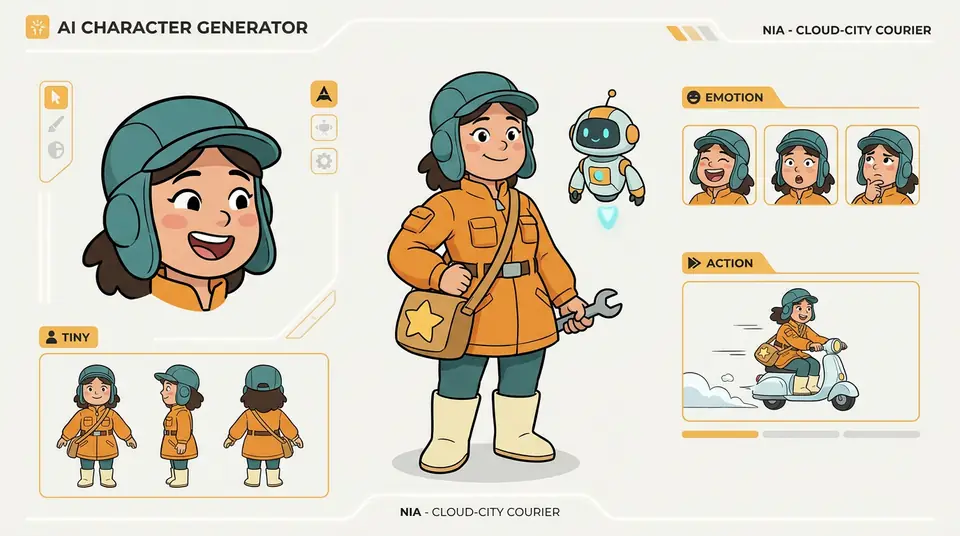
ابنِ هوية قابلة لإعادة الاستخدام لنفس الشخصية عبر الأساليب والوضعيات والتعبيرات والإكسسوارات ولقطات turnaround والأزياء وتسليمات الإنتاج.
Generate complete looks without losing the face, hair, proportions, or visual identity you already approved. Every result is saved beside the character and stays ready for poses, expressions, comics, and scenes.
Design a character with outfits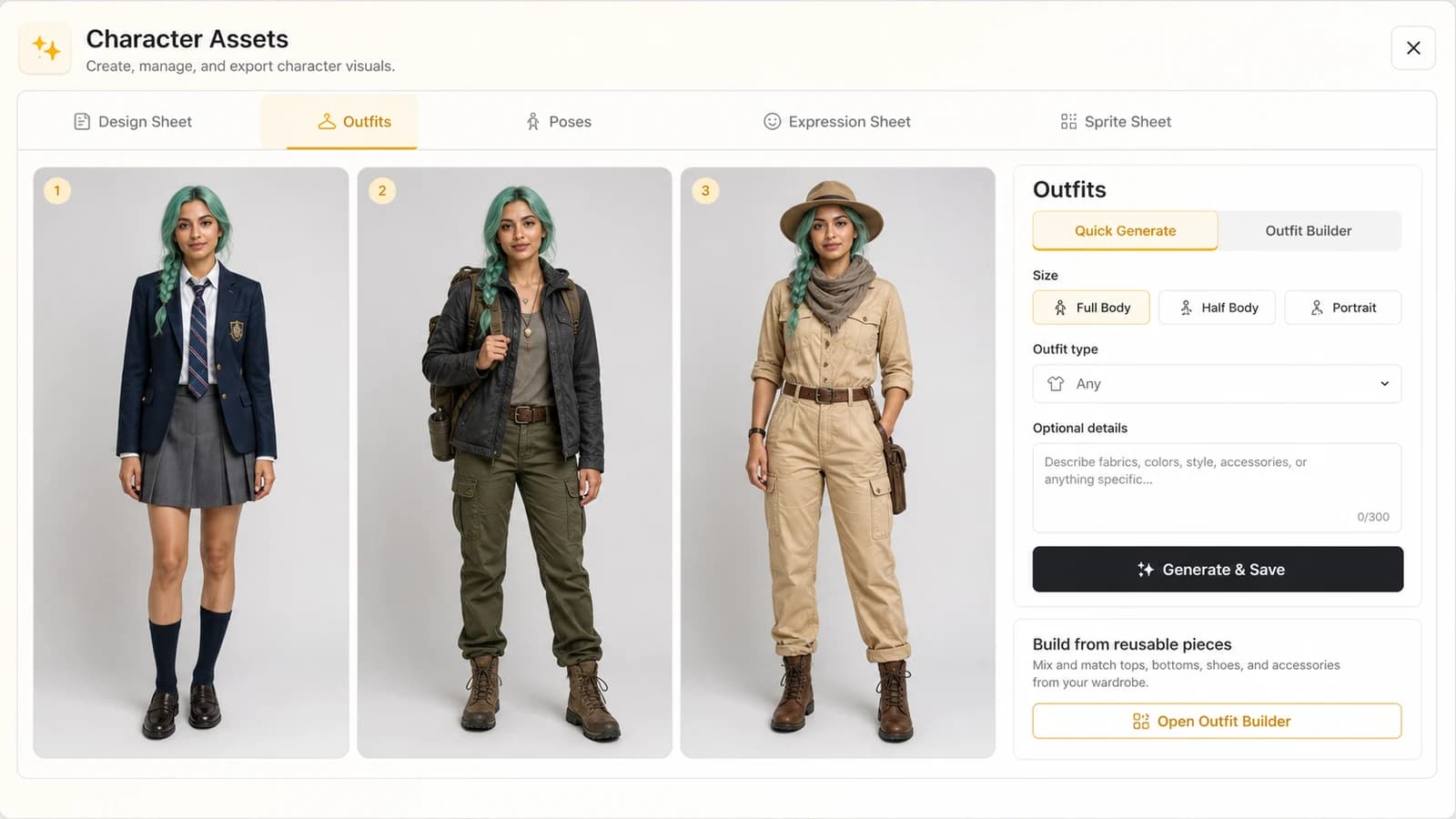
Outfit workflow · Quick Generate
Swipe horizontally to explore the full interface.
workflow تصميم الشخصيات
الصفحة دي معمولة للمبدعين اللي محتاجين أكتر من مجرد بورتريه جذاب. تركيزها على workflow قابل للتكرار وراء تصميم شخصية قابل للاستخدام فعلاً: توجيه الـprompt، والتحكم في الأسلوب، ولقطات turnaround، ومجموعات التعبيرات، وتنوعات الوضعيات، والإكسسوارات، ومراجع جاهزة للمراجعة.
استخدمه لما تكون الشخصية لازم تفضل مميزة ويمكن التعرف عليها عبر المشاهد والوضعيات والصور المصغرة وشيتات المراجع وملاحظات الإنتاج، بدل ما تتغير كل مرة تولّد فيها صورة جديدة.
الشخصية الواعدة ممكن تفقد ملامح الوجه أو تفاصيل الزي أو هويتها البصرية لما كل prompt يبدأ من الصفر.
المنظور الأمامي والجانبي والخلفي، مع التعبيرات وتنوعات الوضعيات، مكلفة في التنفيذ وبطيئة في التعديل اليدوي.
الفرق محتاجة تقارن بين توجهات الأنمي والكوميكس والألعاب والـ3D المخصص من غير ما تعيد بناء وصف الشخصية كل مرة.
Before
فكرة شخصية مبدئية، مع شوية تجارب prompts منفصلة، ومن غير مرجع مشترك لفريق الإنتاج.
After
نظام شخصية واضح بأساليب متنوعة، وهوية متسقة، وأفكار وضعيات، وملاحظات تعبيرات، ومخرجات شيتات مراجع جاهزة للمراجعة.
احصل على توجه بصري قابل للمراجعة قبل ما تبدأ دورة إنتاج concept art كاملة.
أعد استخدام نفس توجيه الشخصية عبر الأساليب والوضعيات والتعبيرات ومناظير شيتات المراجع.
Case study
فريق صغير للألعاب أو الكوميكس يقدر يحدد وصف الشخصية مرة واحدة، ويولّد عدة توجهات فنية، ويحتفظ بأقوى مجموعة مراجع للنمذجة أو اللوحات أو الصور التسويقية.
نتيجة مفيدة
غموض بصري أقل قبل الإنتاج: الفريق بيراجع نفس هوية الشخصية، ولغة الزي، وتوجيه الوضعيات.
workflow تصميم الشخصيات من LlamaGen, تخطيط concept art ومراجع الشخصيات
خلّي الشخصية، والهيئة العامة، والزي، ولوحة الألوان، والإكسسوارات، وملاحظات إعداد الشخصية الكاملة مرتبطة بنفس المصدر الإبداعي.
خطّط للمنظور الأمامي والجانبي والخلفي، واللقطات القريبة، والكامل، والأزياء، ومراجع الإكسسوارات قبل الإنتاج.
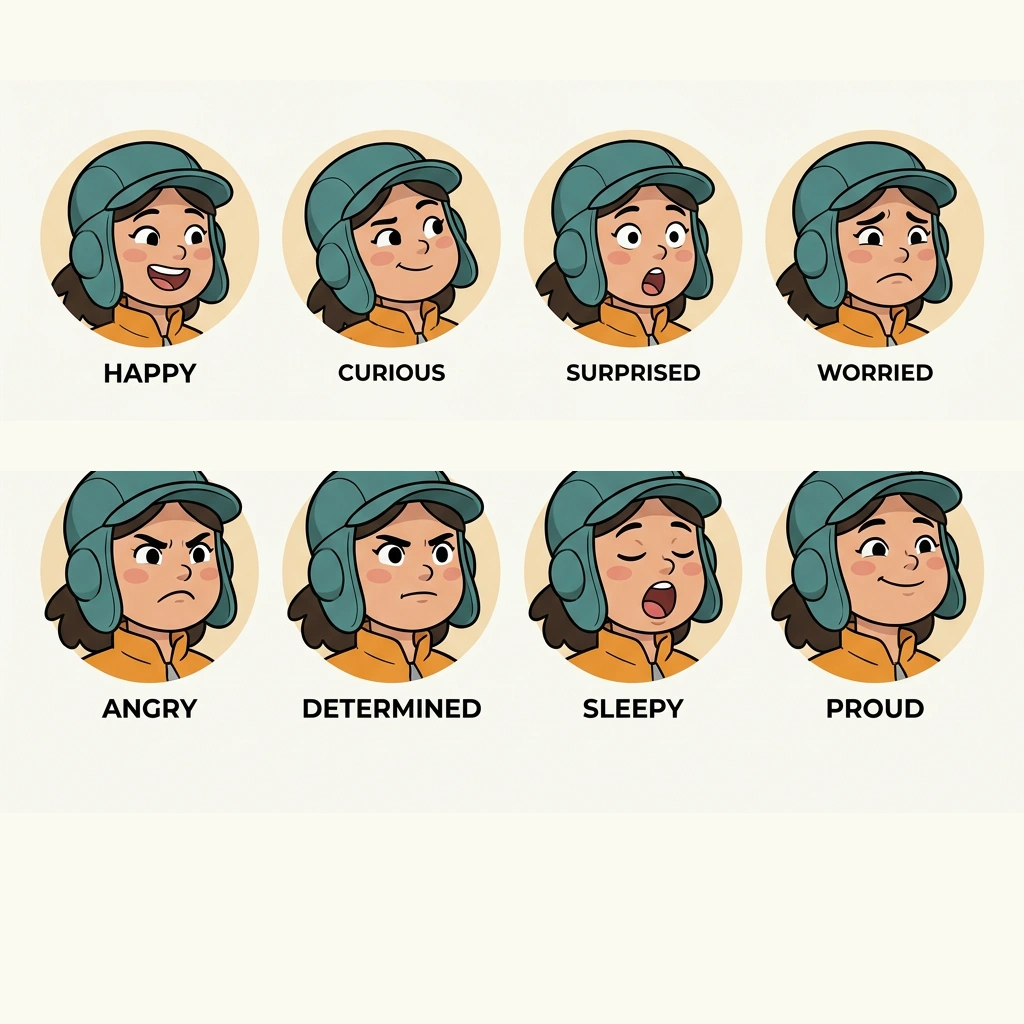
اعرض نسخ سعيدة، وفضولية، ومندهشة، وقلقة، وغاضبة، ومصممة، ونعسانة، وفخورة لنفس الوجه.
انتقل من بورتريهات منفصلة إلى مراجع turnaround ووضعيات وأزياء وstoryboard يقدر الفريق يشتغل عليها.
LlamaGen بيساعدك تبني workflow متكامل لتصميم الشخصيات بالذكاء الاصطناعي بدل معرض صور متقطع. ابدأ بوصف شخصية كرتونية، وثبّت الهوية البصرية، وبعدها ولّد model sheet، و8 تعبيرات، و360 turnaround، ووضعيات، وأزياء، ومراجع مشاهد storyboard يقدر فريقك يناقشها.
حدّد الدور، والشخصية، والعمر، والهيئة العامة، والزي، ولغة الألوان، والإكسسوارات، وسياق القصة.
استكشف الأنمي والكوميكس والأسلوب التشكيلي والواقعي و3D stylized أو توجهات concept الألعاب من نفس المصدر.
أنشئ بورتريهات، ومناظير كاملة للجسم، وشيتات أمامي-جانبي-خلفي، ومراجع تفاصيل لمراجعة الإنتاج.
ولّد 8 مشاعر، ووضعيات حركة، وتكوين الكاميرا، والأزياء، ولحظات storyboard.
استخدم أقوى المراجع في storyboard والكوميكس وأصول الألعاب وعروض pitch وmodel sheets.
ارفع مرجع أو اكتب وصفًا مختصرًا، ثم حوّل الفكرة إلى حزمة شخصية كرتونية منظمة: توجه فني، وشيت تصميم أمامي-جانبي-خلفي، و8 تنويعات عاطفية، و360 turnaround، ووضعيات حركة، وملاحظات أزياء، وإكسسوارات، وصور مشاهد جاهزة للتصدير.
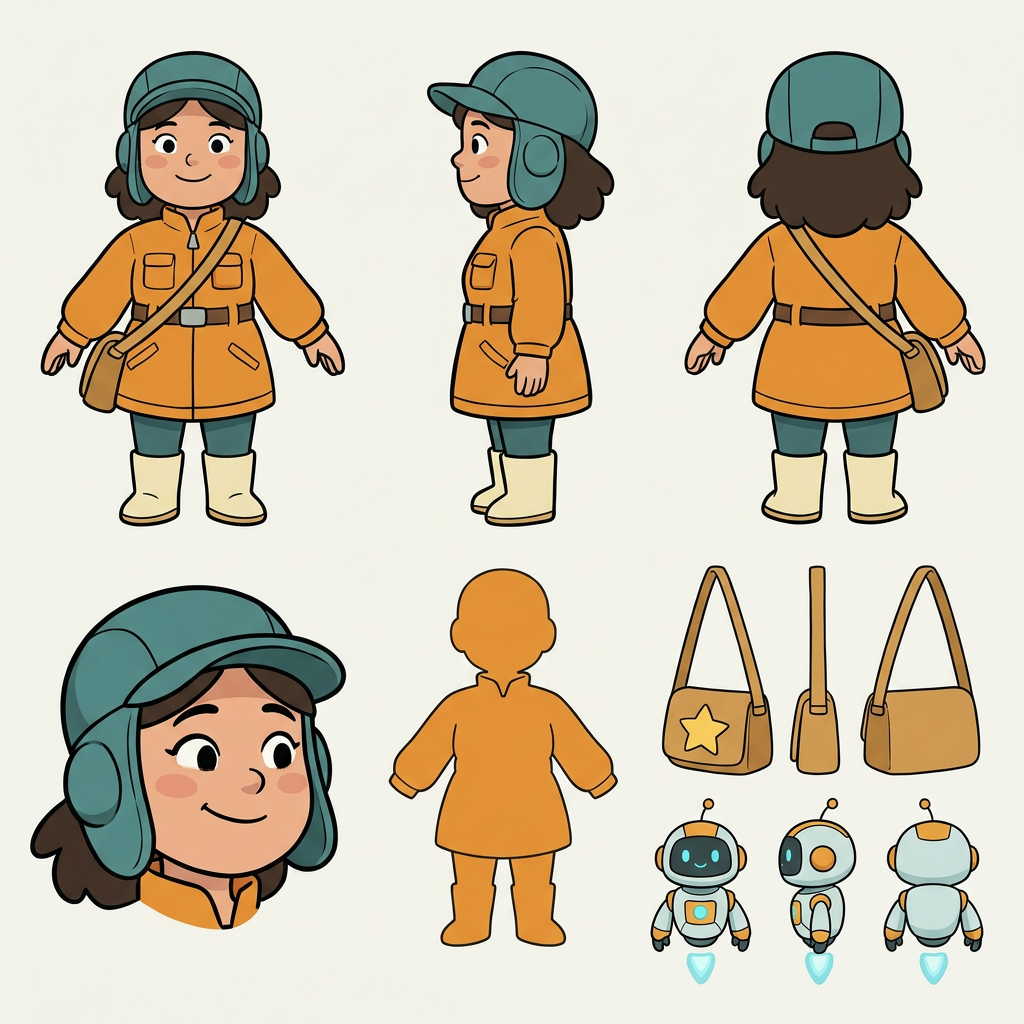
الشخصية ما تشتغلش فعلاً إلا لما الجمهور يقدر يتعرف عليها مرة تانية. LlamaGen بيساعدك تحافظ على شكل الوجه، ولغة الزي، ولوحة الألوان، والإكسسوارات، وعناصر القصة عبر البورتريهات والشيتات والوضعيات ومراجع المشاهد.
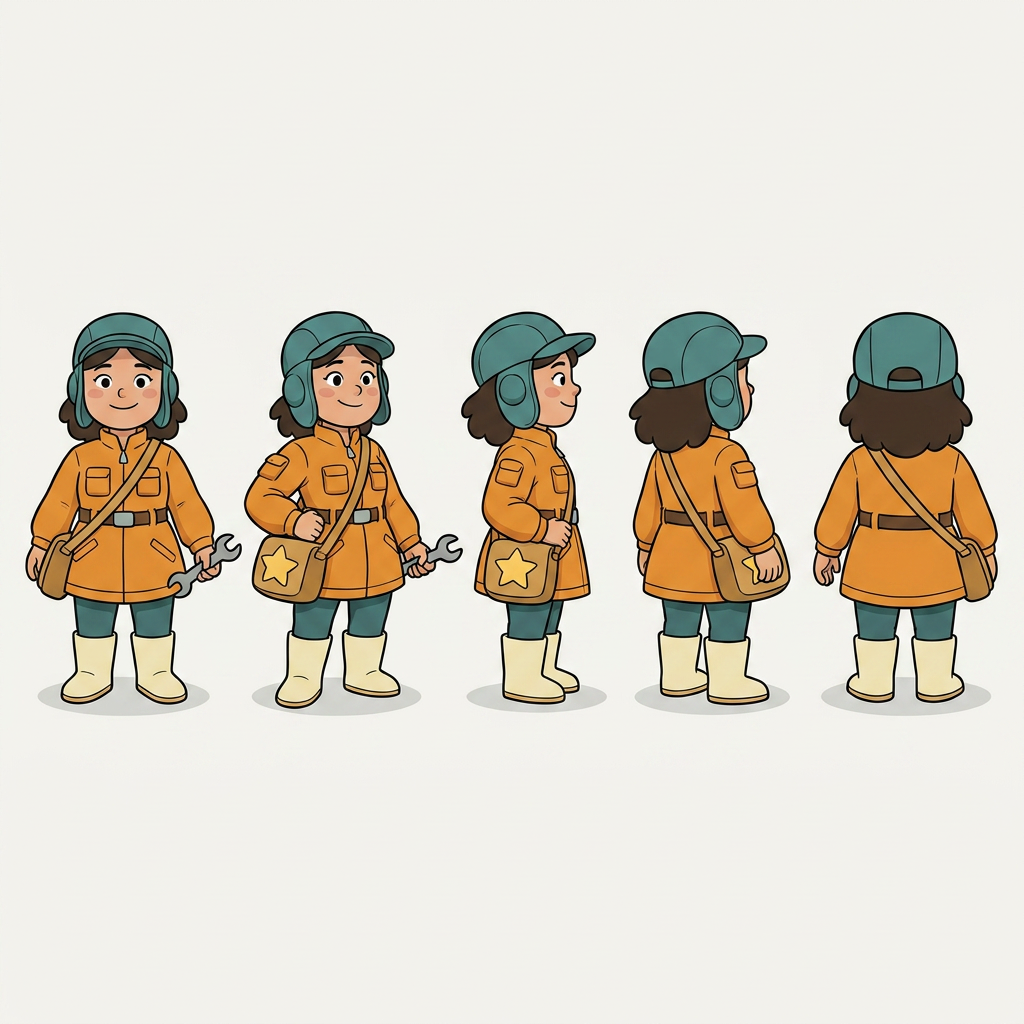
تصميم الشخصية القوي مش مجرد وجه. تحكّم في الأسلوب ولغة الجسد وزاوية الكاميرا والمشاعر والملابس والإكسسوارات ولحظات التفاعل، علشان تبقى الشخصية مفيدة لأبعد من أول بورتريه.
قارن بين نسخ أنمي وكوميكس وفانتازيا وواقعية و3D stylized مع الحفاظ على فكرة الشخصية الأساسية.
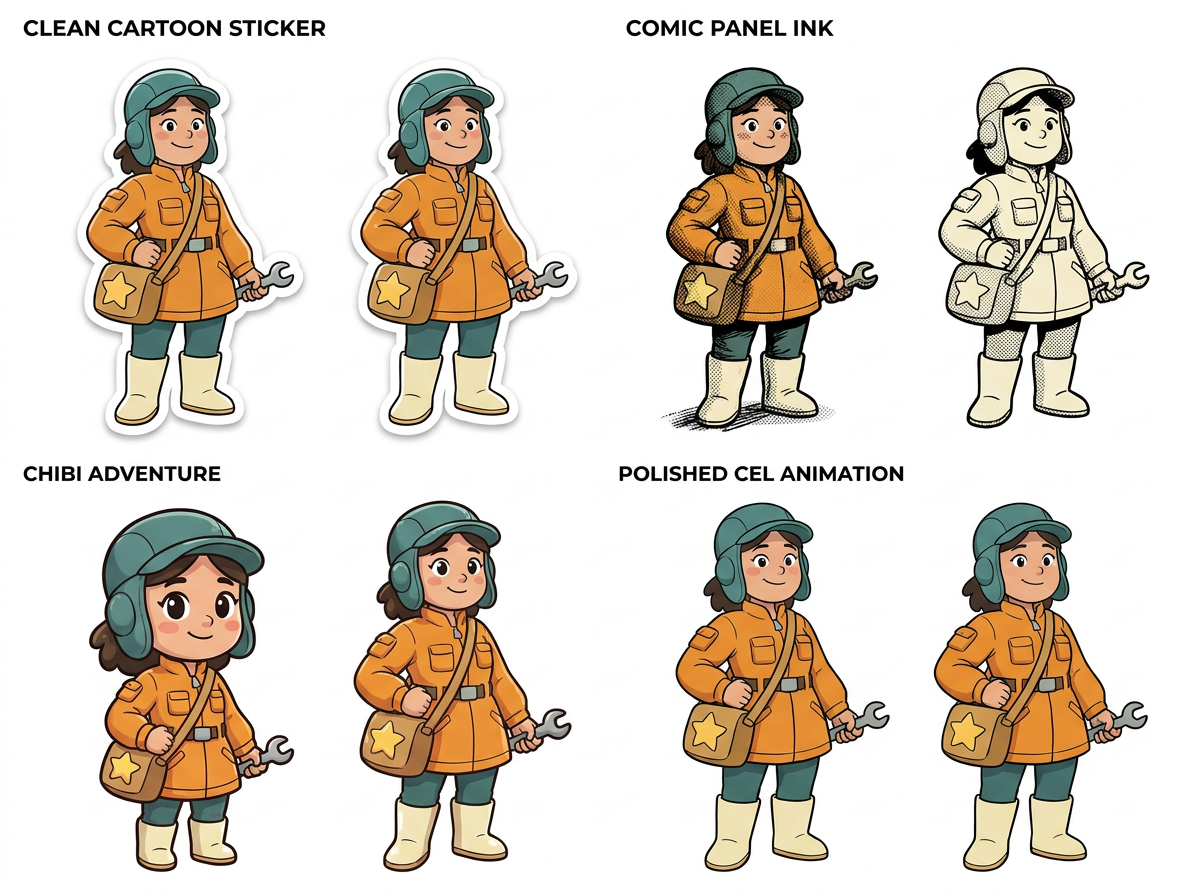
أنشئ لقطات قريبة، ووضعيات حركة كاملة للجسم، ومناظير ثلاثة أرباع، ومراجع تراعي الكاميرا للسرد البصري.
ولّد الفرح والغضب والخوف والثقة والدهشة والحالة المحايدة مع الحفاظ على نفس الوجه والشخصية.
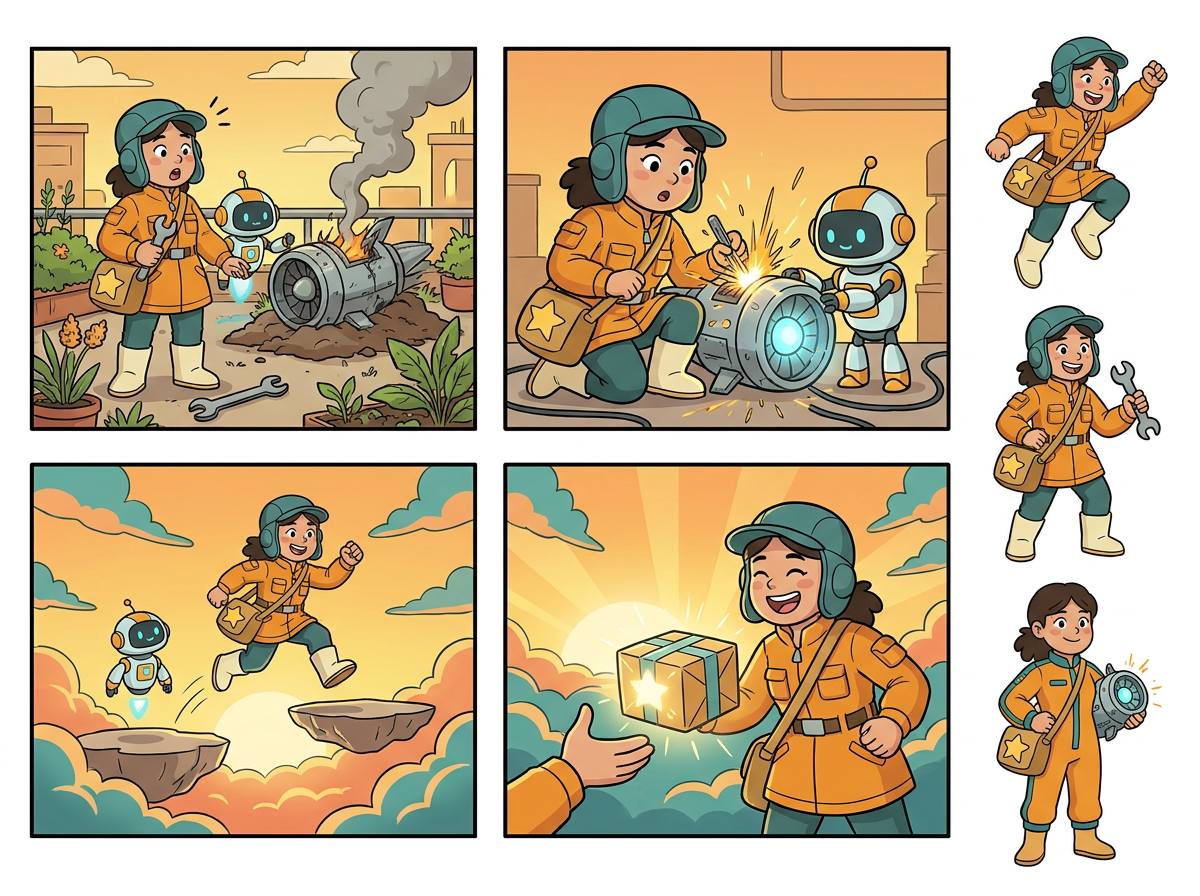
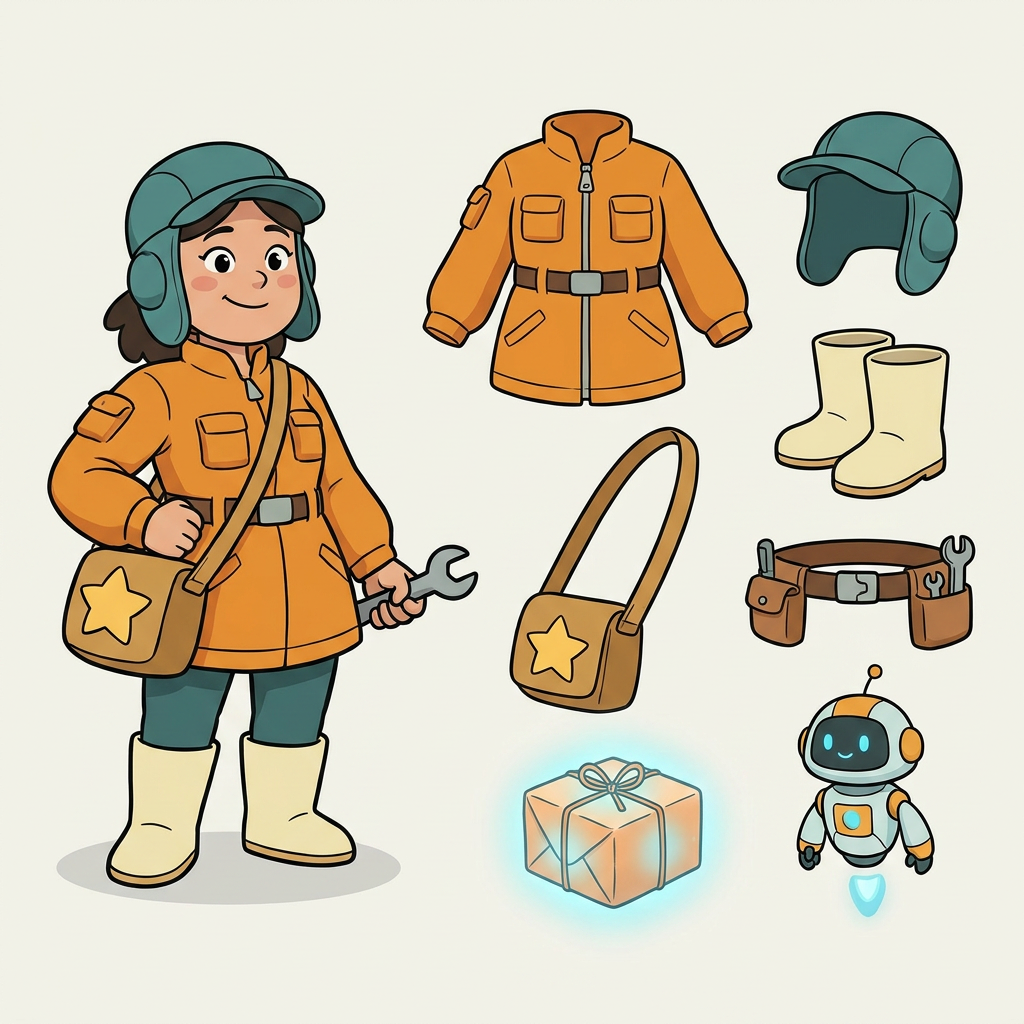
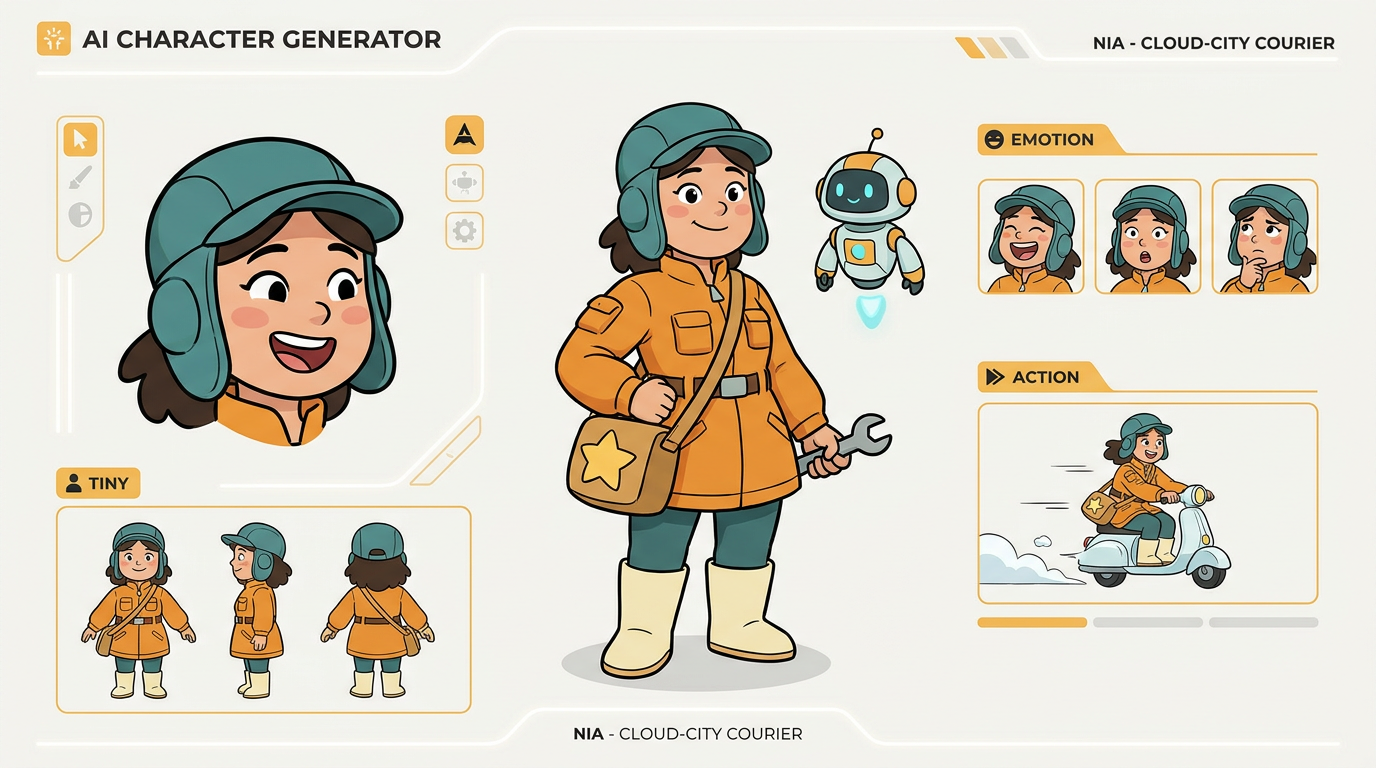
خطّط الملابس، وحزام الأدوات، والشنطة المميزة، والروبوت المساعد، والطرد المتوهج، واستمرارية الـstoryboard حول نفس الشخصية.
مولّد الشخصيات الكرتونية الاحترافي لازم يطلع المراجع اللي فرق الإنتاج بتطلبها فعلاً: مدى عاطفي، ومناظير model sheet، ومرجع دوران، ومشاهد حركة جاهزة للـstoryboard.
8 تنويعات عاطفية
وجوه سعيدة، وفضولية، ومندهشة، وقلقة، وغاضبة، ومصممة، ونعسانة، وفخورة لنفس الهوية الكرتونية.
مناظر أمامية وجانبية وخلفية
شيت إنتاج منظم يضم مناظير كاملة للجسم، ولقطة قريبة للرأس، وهيئة الزي، والشنطة المميزة، وإكسسوار المرافق.
مرجع دوران 360 درجة
مناظر أمامية، وثلاثة أرباع، وجانبية، وثلاثة أرباع خلفية، وخلفية للنمذجة والتحريك ومراجعة الاتساق.
وضعيات ديناميكية وأزياء
لوحات storyboard، ووضعيات حركة، وزي بديل، واستمرارية مشاهد لمغامرة توصيل بمحرك نجمي فوق الأسطح.
فريق الإنتاج لا يحتاج إلى صورة موفقة واحدة. هو يحتاج إلى مجموعة مراجع تثبت أن الشخصية قادرة على الظهور عبر أساليب وزوايا ومشاعر وأزياء ومتطلبات مشاهد مختلفة.
الهوية
Turnaround
المشاعر
الأسلوب
الإكسسوارات
الوضعية
Turnaround
المشهد
استخدم workspace واحد لتصميم الشخصيات بالذكاء الاصطناعي لاستكشاف المفاهيم، والحفاظ على اتساق الهوية، والتحكم في الوضعيات والتعبيرات، والتفكير بمنطق model sheet، والمشاهد متعددة الشخصيات، والتسليم البصري.
حافظ على نفس الوجه والهيئة والزي ولوحة الألوان والإكسسوارات عبر المراجع المولدة.
اتساق الشخصية
أنشئ مناظر أمامية وجانبية وخلفية ولقطات قريبة وكاملة للجسم للنمذجة والمراجعة البصرية.
شيتات turnaround
ولّد مدى عاطفي مع الحفاظ على نفس الوجه والشخصية والدور القصصي.
تصميم التعبيرات
تحكّم في تفاصيل الزي والإكسسوارات والأسلحة والأدوات والعناصر البطولية لتقوية السرد.
الملابس والإكسسوارات
قارن بين مظهر الأنمي والكوميكس والفانتازيا والواقعي و3D stylized انطلاقًا من وصف واحد.
التوجه الفني
صمّم حركات الشخصية واستمرارية المشهد للكوميكس والـstoryboard والروايات البصرية والألعاب والحملات.
مشاهد storyboard
ولّد لقطات قريبة، وحركة كاملة للجسم، ووضعيات تراعي الكاميرا، وتكوينات جاهزة للمشهد.
الوضعيات والتكوين
اجمع أفضل البورتريهات والشيتات والتعبيرات والمراجع للفنانين والعملاء والفرق.
تسليم للإنتاج
إجابات واضحة عن الاتساق والأساليب وشيتات الشخصيات والاستخدام التجاري وتسليم الـworkflow.
نعم. يمكن للمستخدمين الجدد البدء بـ credits مجانية لاختبار الجودة وسرعة الـworkflow. وإذا كنت تحتاج إلى حجم أكبر، يمكنك شحن credits إضافية أو اختيار خطة مدفوعة.
يمكنك توليد شخصيات Anime وواقعية و3D وWatercolor وPixel Art وغيرها. كما يمكنك التحكم في سمات تفصيلية مثل العمر، وتصفيفة الشعر، والملابس، وتوجيه الأسلوب البصري.
استخدم صورة مرجعية، وثبّت السمات الأساسية في الـprompt، وأعد استخدام seed والإعدادات عبر عمليات التوليد. ده بيساعد في الحفاظ على الهوية عبر الوضعيات والمشاهد وتنوعات الأسلوب.
نعم. يمكنك استخدام الشخصيات المولدة في الألعاب والكوميكس ومشاريع التحريك والأصول التسويقية وغيرها من workflows التجارية.
يمكنك التصفح بدون تسجيل دخول. لكن لإنشاء شخصيات جديدة، وحفظ المشاريع، وإدارة المخرجات، يفضّل إنشاء حساب.
نعم. رفع الصور المرجعية يساعد على مطابقة الشكل المستهدف والحفاظ على الاتساق عند إنشاء وضعيات متعددة وتنوعات للمشاهد.
أنشئ توجيه شخصية قابل لإعادة الاستخدام للألعاب والأنمي والكوميكس ومفاهيم VTuber والـstoryboard والعوالم البصرية الجاهزة للعروض.