Task-aware screenplay context
Use a current passage for local edits, a scene for pacing and dialogue, or an outline plus key scenes for structural diagnosis.


Bring the current line, scene, character arc, outline, and storyboard into the right task at the right time. Work with focused context instead of pasting the whole project into disconnected chats.
Opens the LlamaGen storyboard project workspace.
Northline / visual direction
One story world, carried from screenplay to production.
Bring the right context to each task
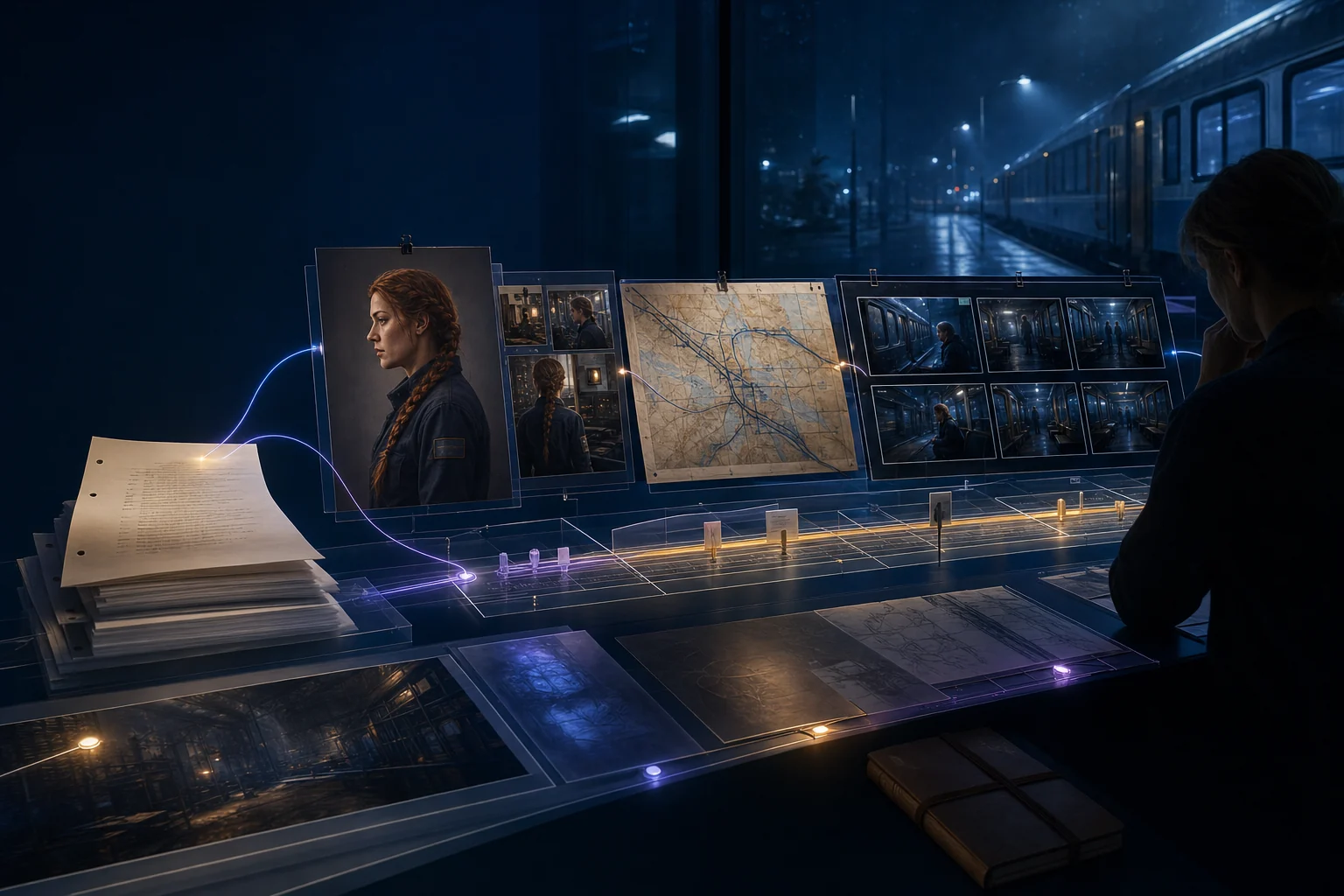
Give each task only the context it needs: a line for dialogue, a scene for pacing, an outline for structure, or a visual reference for continuity. Compare the result, keep what works, and return it to the screenplay or storyboard.
Use a current passage for local edits, a scene for pacing and dialogue, or an outline plus key scenes for structural diagnosis.
Compare suggestions before applying them and keep the screenplay—not a detached AI answer—as the source of truth.
Give storyboard generation the scene action, relevant characters, known location, camera intent, and adjacent visual references it actually needs.

Worked example · Context is a product decision
A focused request reduces irrelevant material and makes the boundary inspectable. Whole-draft work still matters, but it should begin with structure and then inspect the scenes that carry the problem.
The workflow
The workspace stays clearer when every request begins with a defined scope and ends in a real project artifact.
State whether you need a line revision, scene pass, character check, structural diagnosis, translation, or storyboard.
Include the current focus and just enough surrounding story information to preserve meaning and continuity.
Evaluate the result beside the screenplay, character brief, or storyboard sequence it is meant to improve.
Explore the connected workflow
Visual screenplay handoff
Break down an approved scene into cast, location, props, story beats, blocking, continuity notes, and storyboard handoff requirements. This is a visual production workspace—not a replacement for drafting or screenplay formatting software.
AI Script Doctor
Review structure, character drive, scene function, pacing, theme, and dialogue with a diagnosis-first workflow that turns vague notes into prioritized, executable revision choices.
Storyboard coverage planning
Turn one approved screenplay scene into a reviewable coverage plan: map story beats to shot purpose, framing, screen direction, continuity risks, and an intentional shot order. This workspace is for pre-production decisions, not one-click storyboard generation.
FAQ
No. Local line work may only need the current passage and scene goal. Structural analysis needs a wider map, while storyboarding usually needs the selected scene and visual references.
Set a narrow objective, state what must be preserved, compare against the original, and apply only the parts that strengthen your intention.
Usually the scene action, characters, location, dramatic beat, selected camera choices, style direction, and adjacent reference frames are more useful than an unrelated full draft.
Write or import a scene, shape its structure, and turn the screenplay into a storyboard you can refine, share, present, and export.