Strength control
Choose Light, Auto, Strong, or Maximum according to the source noise level.


AI image denoiser
Upload a noisy low-light, compressed, scanned, or generated image and reduce grain while preserving edges, texture, and the source atmosphere.
Denoise your image
Use lower strength for faces and subtle texture; increase it for heavy high-ISO or compression noise.
Upload a grainy image
Night photo, portrait, scan, product image, or AI artwork
Denoise strength
Output framing
Matches the first source image to protect the original crop.
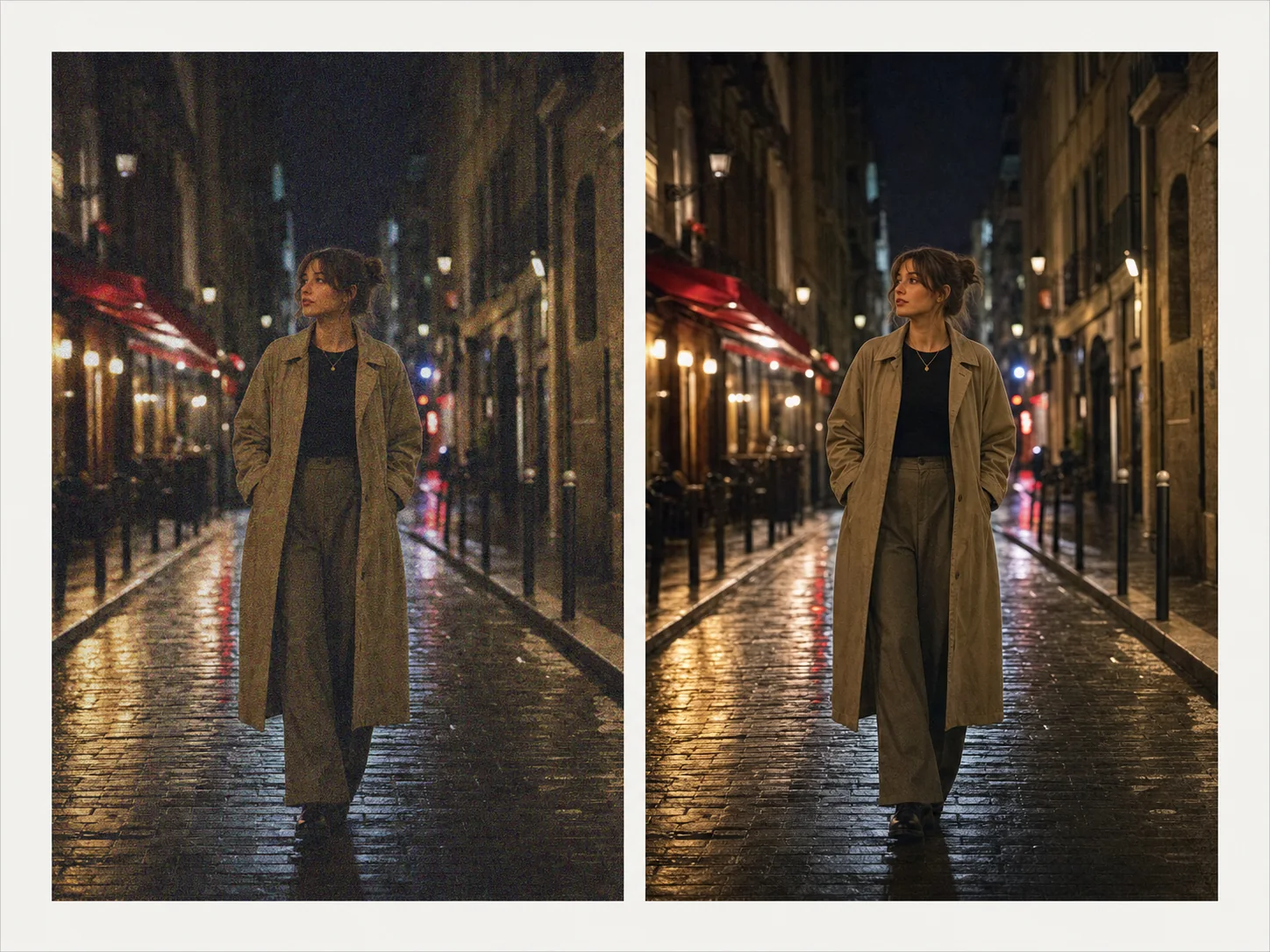
Noise-aware cleanup
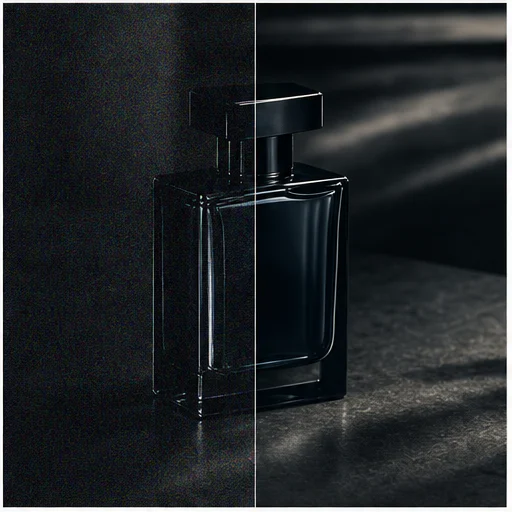
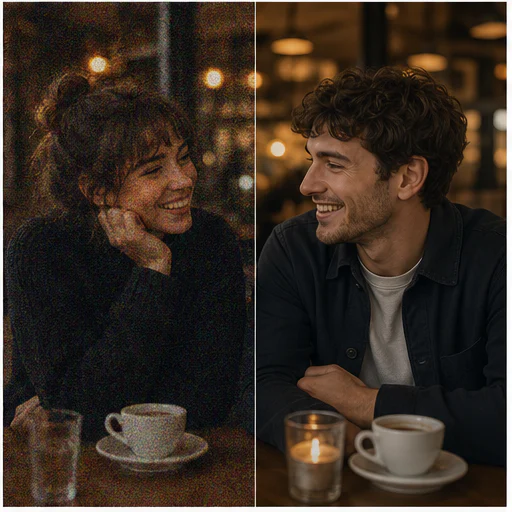
Useful denoising separates random digital noise from real edges, skin, hair, fabric, product texture, stars, and intentional film grain.
Choose the lightest setting that solves the problem. Maximum cleanup can be useful for damaged files, but it deserves careful review for waxy faces and softened patterns.
Choose Light, Auto, Strong, or Maximum according to the source noise level.
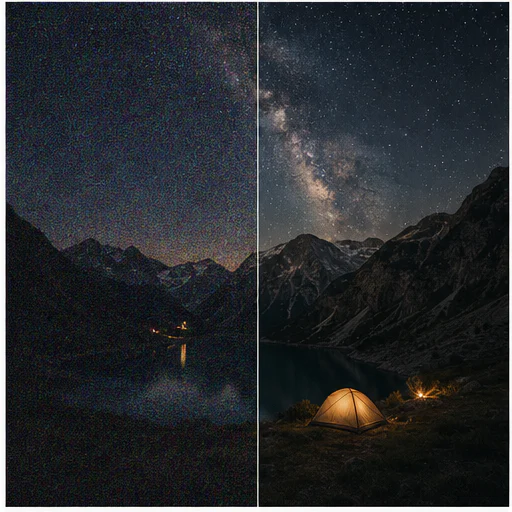
Reduce high-ISO chroma speckles and grain while preserving the night atmosphere.
Soften block artifacts and edge noise in repeatedly exported JPG images.
The prompt explicitly protects faces, hair, fabric, products, and fine patterns.
Real examples
Low-light portraits, pets, stage scenes, products, night landscapes, and cafés reveal whether denoising protects fine detail instead of producing plastic surfaces.
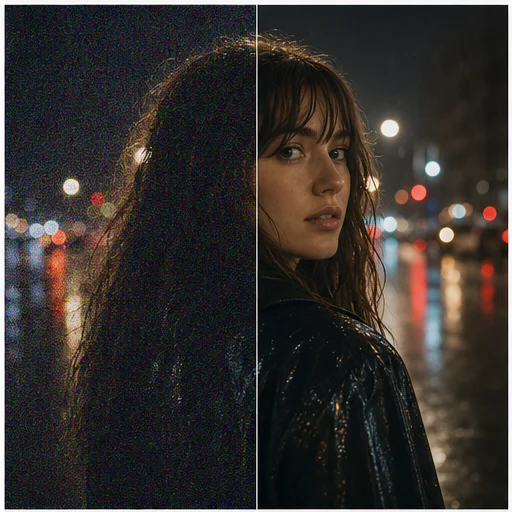
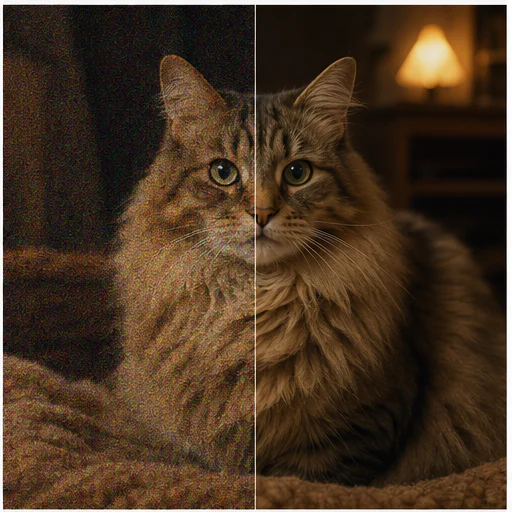
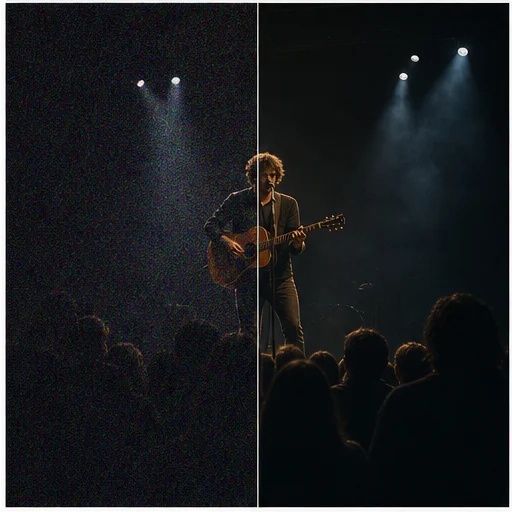
How it works
Follow the short workflow, then inspect the generated details before using or publishing the result.
Use the largest available source rather than a social-media thumbnail.
Start with Auto and compare a stronger setting only when necessary.
Inspect faces, edges, texture, and dark areas before keeping the result.
Real creator feedback
Read what creators shared about making comics, characters, and visual stories with LlamaGen.

@jake-m
As an avid creator of comic book style graphics, I've struggled to find a tool that truly allows me to unleash my creativity at scale. llamagen.ai not only breaks limits but shatters them, offering endless possibilities for my projects. It's the ultimate AI-powered solution I've been waiting for!
@sarah-l
I've tried numerous AI tools for image generation. And they are quite fun to play with but llamagen.ai is the first app I've actually saw a potential use-case. The character consistency really grabbed my attention as it's something I hadn't seen before and I can see the appeal for professionals and amateurs alike. Truly a game-changer!

@michael-b
llamagen.ai has reignited my passion for storytelling. As a busy professional, finding time to pursue creative projects can be challenging. But this app has proven so easy to use... It's like having a creative companion by my side!

@alex-t
Being part of the creative industry demands efficiency without sacrificing quality. llamagen.ai not only meets but exceeds these expectations. Really loved playing with the storyboarding and having an AI to help with not only image generation, but also the text content - it's really a nice way to help enhance the overall experience.
@maya-s
I enjoy a great comic book and have been very sceptical about AI. For example the criticisms of the Batman AI comic saga where not without merit. But through the scepticism I do see a place for such tools. While I still value an authentic man-made production, the ability for me to create something on my own (with a little help from AI) is really empowering and exciting.
@taylor-h
Maintaining character consistency is a challenge that I did not expect to be overcome so fast. While not perfect at times, the results are impressive and I’m really looking forward to the chance to further customize my workflow and AI generation.
Practical workflows
Keep the generated image as a reviewable draft, reference, or finished asset according to the needs of the job.
Night
Reduce distracting grain in city, concert, event, and indoor photography.
Portrait
Remove noise without turning skin and hair into smooth painted surfaces.
Archive
Reduce print grain, scanner noise, and compression in older photos.
Creative
Polish speckles and compression artifacts in generated illustrations.
Review notes
Noise reduction should make the image calmer without removing the real surface detail that makes it believable.
skin keeps pores and natural transitions
hair and fabric edges remain defined
dark gradients do not become banded
intentional stars or fine texture remain visible
colors and white balance stay unchanged
the source framing is preserved
FAQ
Practical answers about source images, generated results, rights, and review.
It targets high-ISO grain, chroma speckles, compression artifacts, scanner noise, and similar random texture.
The prompt protects true edges and texture, but aggressive settings can still soften detail. Compare the result at full size.
Denoise first when grain is dominant; unblur first when the main problem is camera shake or missed focus.
Related tools
Move from this focused edit into the next photo or fashion task.
Upload a blurry portrait, product, document, or memory and recover cleaner edges and natural detail without changing the original composition.
Upload a portrait, selfie, or group photo and reconstruct naturally open eyes while preserving identity, expression, lighting, people, and the original crop.
Upload a faded, scratched, blurry, or timeworn photo and create a clearer restoration that protects faces, clothing, history, and the original composition.
Upload one clear portrait, choose a haircut and optional color, then generate a realistic preview that keeps your face, expression, clothing, and background recognizable.
Start with your image
Choose a cleanup strength and create a calmer result without changing the composition.