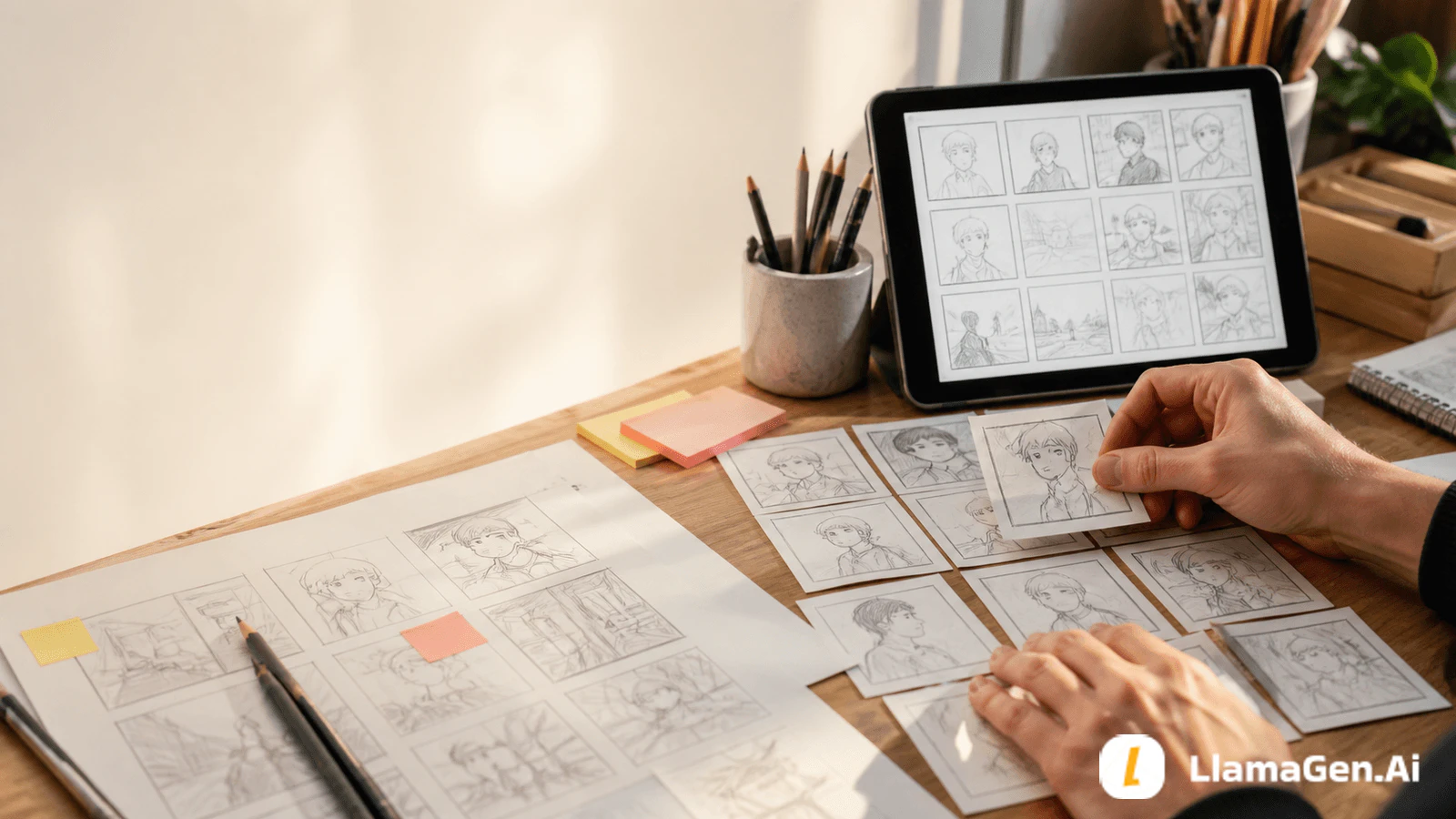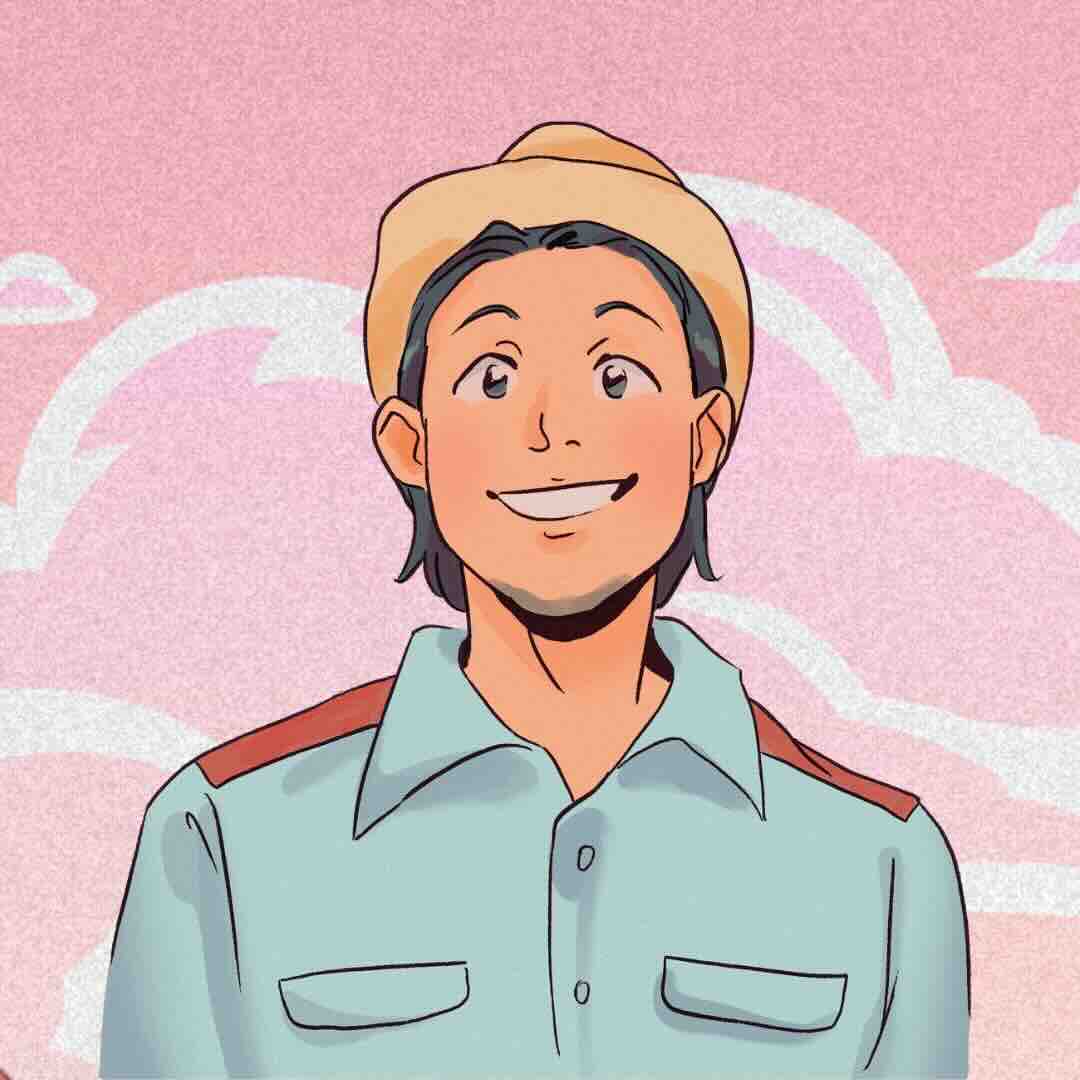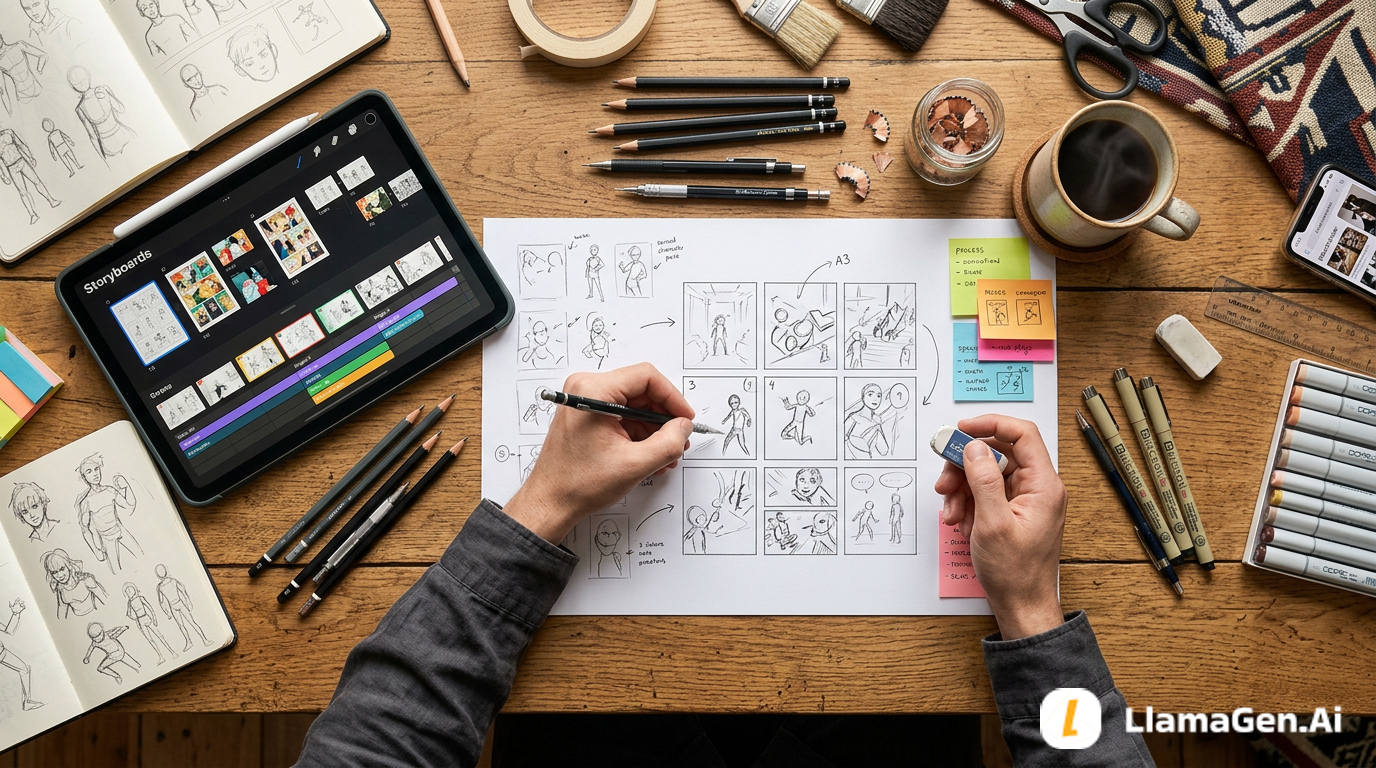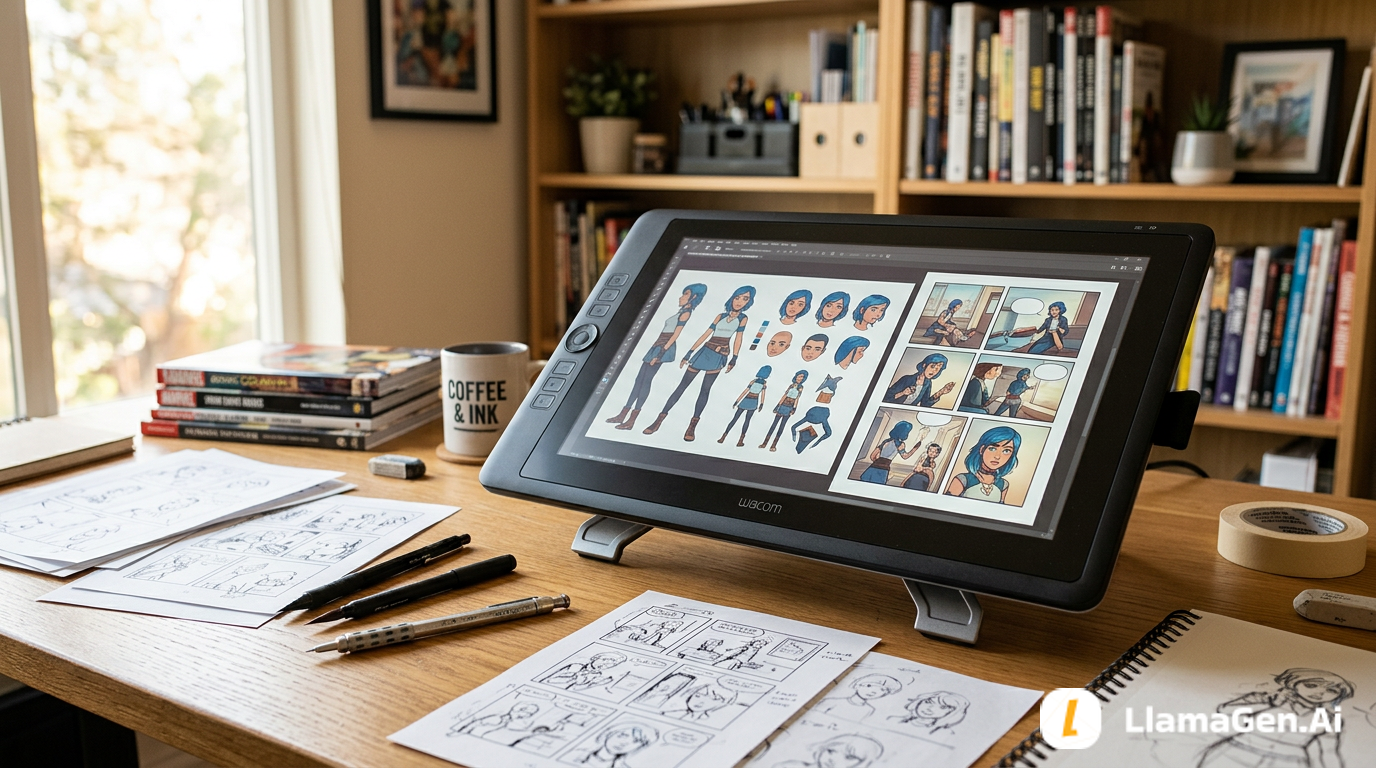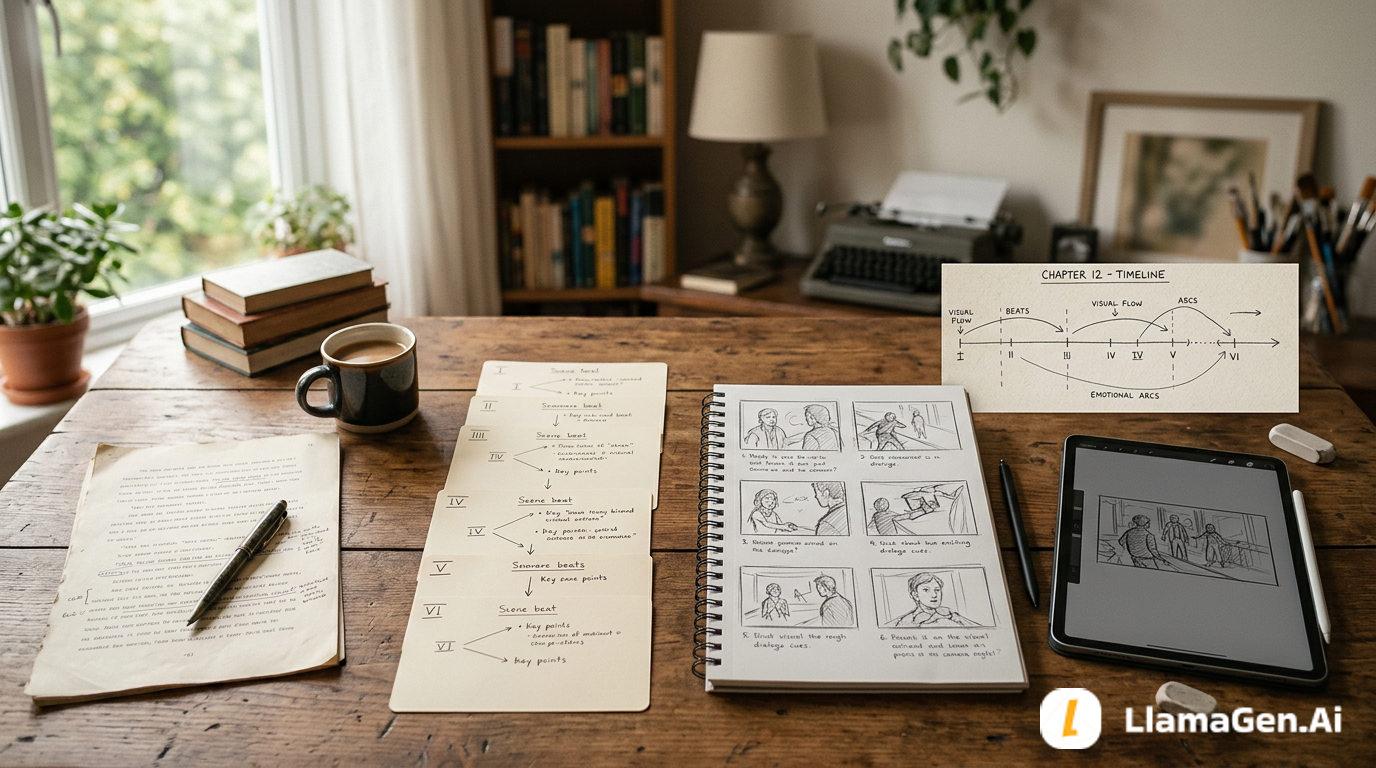

Distinct comic characters are not built by changing hair color alone.
They become readable when each character has a different design recipe:
story role + body type + silhouette + face shape + posture + costume mass + visual anchor
If two characters still look identical in black silhouette, at small thumbnail size, or without their hair color, the design is not finished.
Use LlamaGen.AI Character Design to create character sheets, compare the cast as a lineup, and repair same-face problems before you generate comic panels.
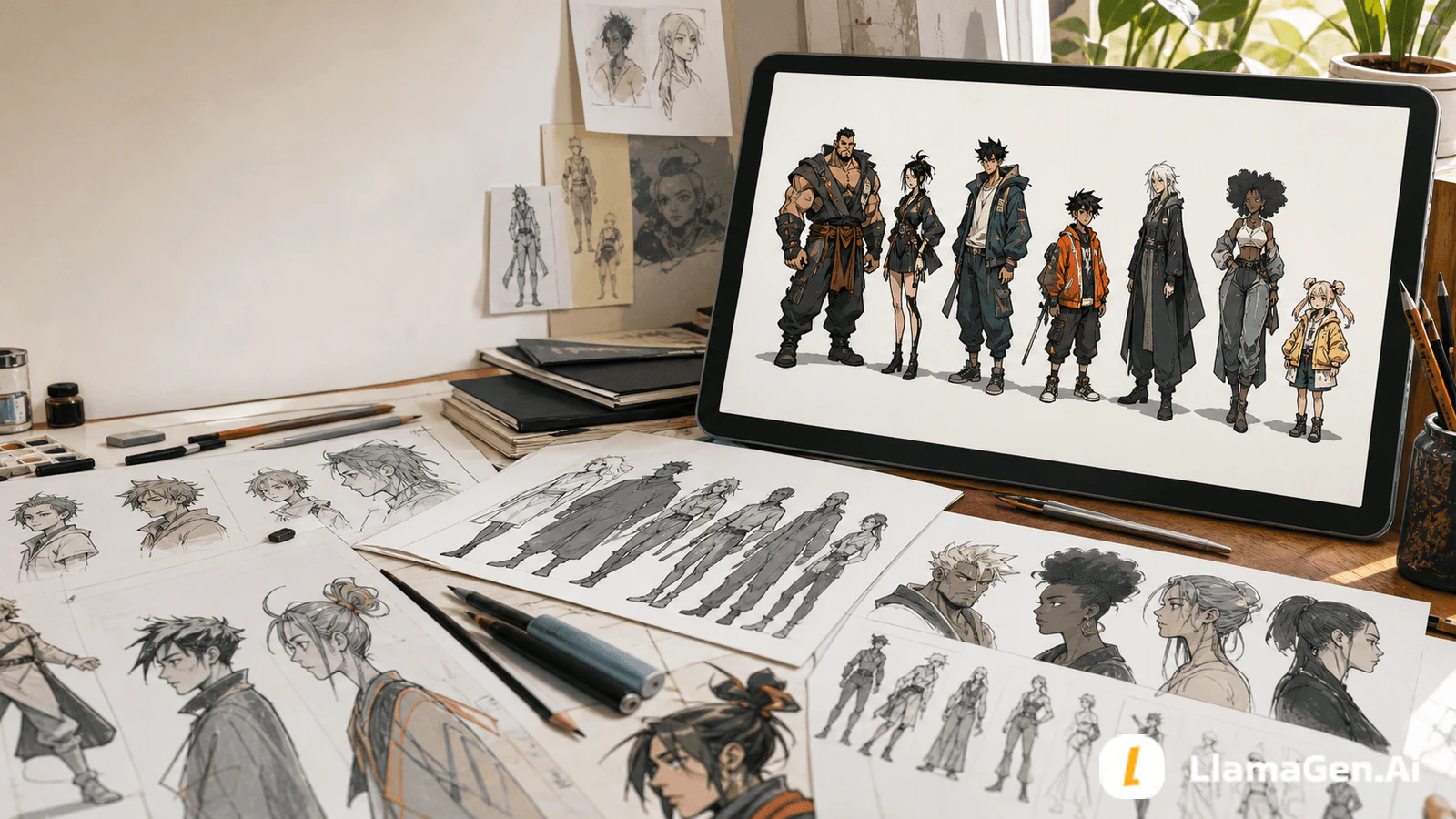
Same-face syndrome is not just an art skill problem. It is often a planning problem.
It happens when every character is designed from the same default:
AI workflows can make this worse because a model may average your prompts into the most common appealing face unless you give it stronger design constraints.
The fix is to design the cast as a system, not one isolated portrait at a time.
This tutorial uses a four-character comic cast and tests whether the designs remain readable before final panels.
| Test item | Setup |
|---|---|
| Date tested | August 18, 2026 |
| Project | Spare Parts Academy |
| Cast size | 4 recurring characters |
| Target tool | LlamaGen.AI Character Design |
| Creation stage | Before comic page generation |
A rundown of the latest LlamaGen feature releases, product enhancements, design updates, and important bug fixes.
| Target output | Cast lineup, silhouette test, same-face repair notes, character sheet prompt |
| Active editing time | About 22 minutes |
| Total elapsed time | About 42 minutes including a failed same-face pass |
| Editorial note | This is a workflow test, not a pricing benchmark. Output style, model behavior, and credit cost can vary by workspace settings. |
The test question was:
Can a writer or beginner creator make a comic cast easier to recognize without becoming a professional character designer first?
A character design should support what the character does in the story.
Write the story role first:
| Character | Story role | Design direction |
|---|---|---|
| Ivo | Nervous inventor who overplans everything | Compact body, tight posture, layered utility pockets |
| Sena | Bold athlete who acts before thinking | Tall wedge silhouette, forward lean, strong shoulders |
| Miri | Calm strategist who notices hidden patterns | Long vertical silhouette, still posture, simple clean outfit |
| Toma | Cheerful trader who talks his way out of trouble | Rounder shape language, open hands, asymmetrical accessories |
This already gives you more variation than:
four attractive students in a sci-fi academy
The second prompt may produce four versions of the same person.
The silhouette test is simple:
Fill each character with black.
Shrink the lineup.
Remove color and facial details.
Can you still tell who is who?
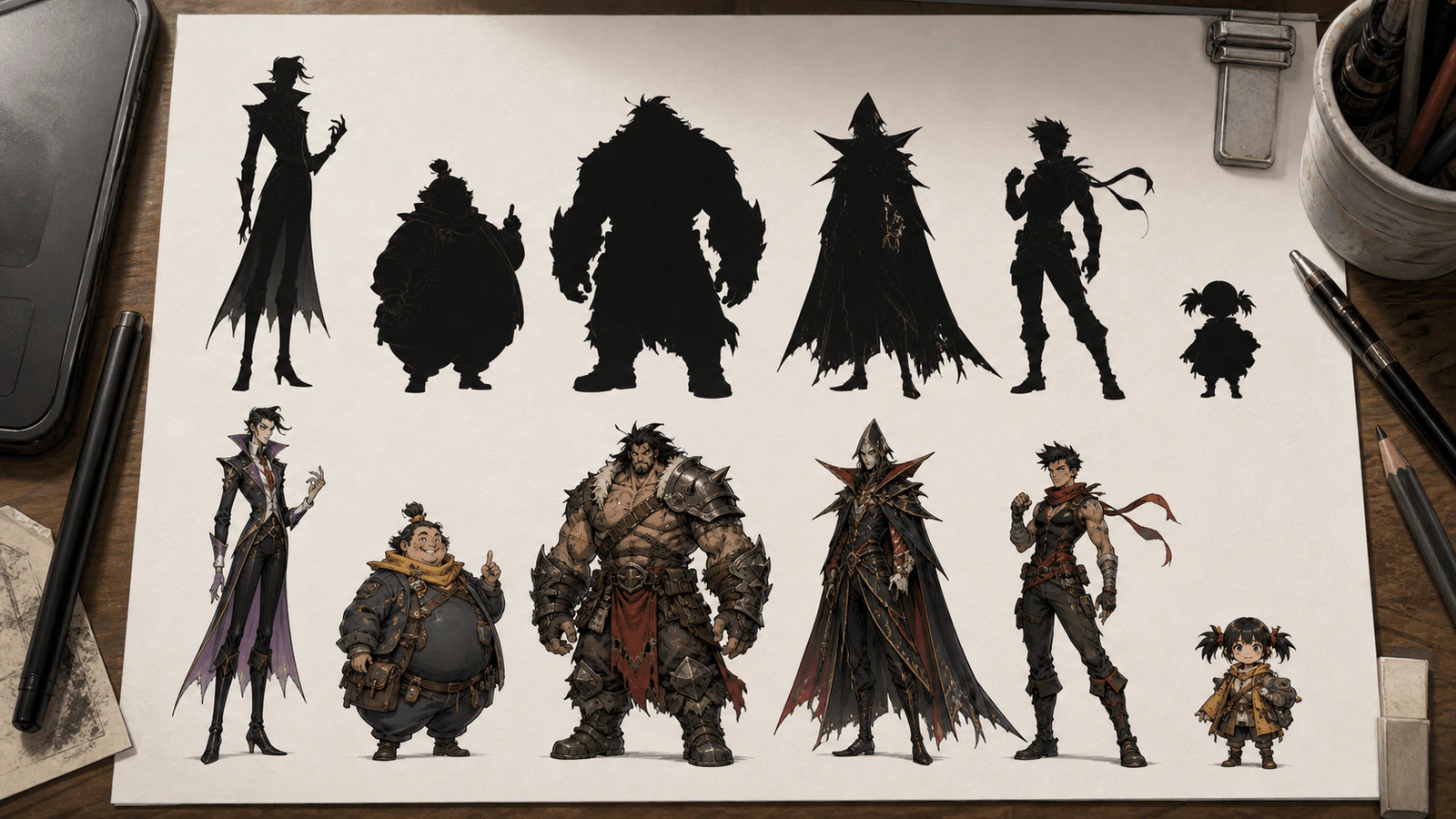
Use this table to plan silhouette contrast:
| Contrast lever | Weak version | Stronger version |
|---|---|---|
| Height | Everyone is average height | One compact, one tall, one long, one broad |
| Shape language | Everyone is slim and smooth | Round, square, triangle, vertical |
| Posture | Everyone stands straight | Hunched, forward lean, still upright, relaxed open |
| Costume mass | Same jacket shape | Pockets, scarf, shoulder pad, apron, coat, tool belt |
| Hair outline | Same head shape with different color | Different volume, parting, length, and silhouette |
You do not need extreme caricature. You need enough contrast for quick reading.
Same-face repair should happen before you generate final pages.
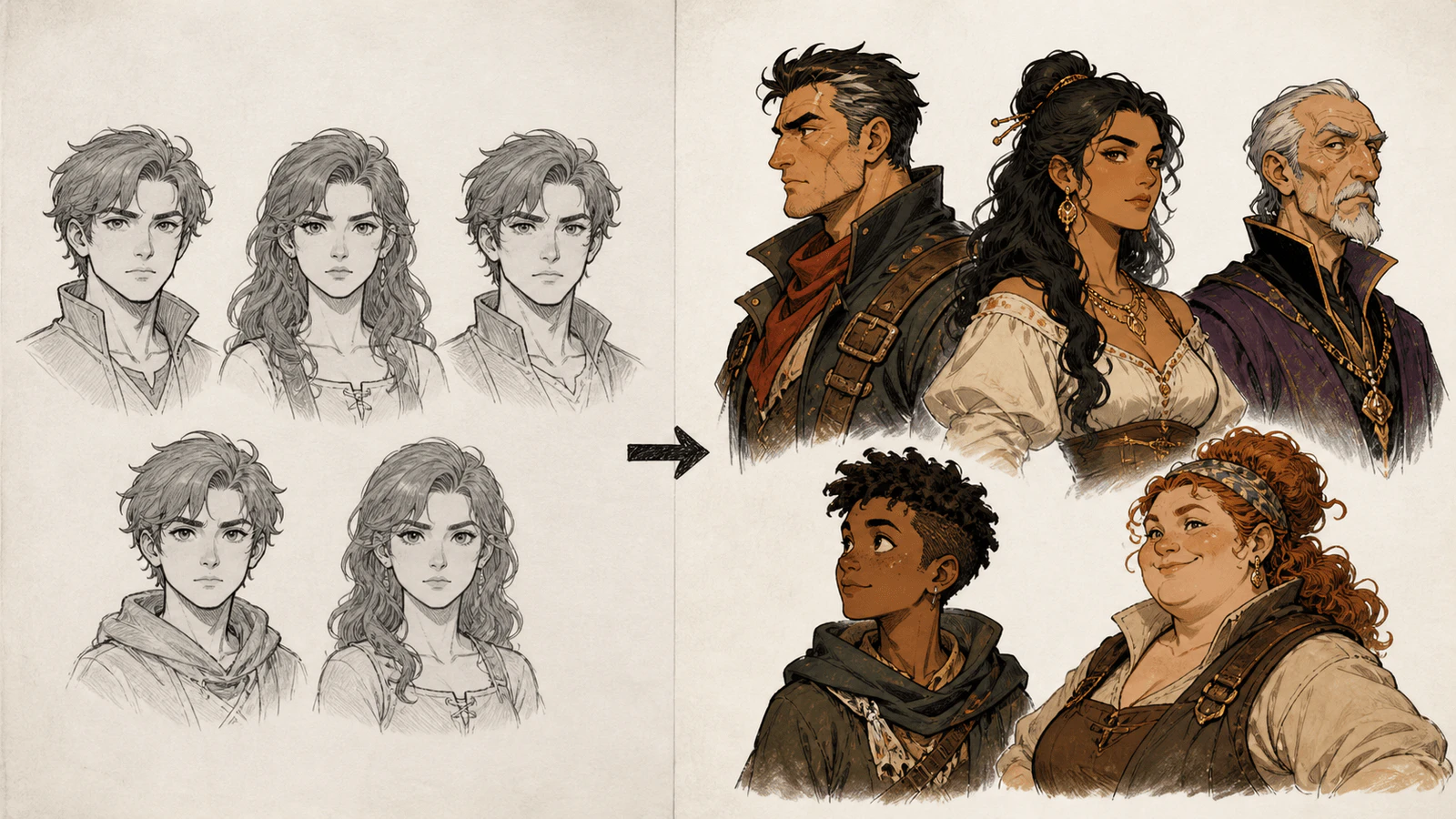
Use this checklist:
| Design area | Same-face warning | Repair move |
|---|---|---|
| Head shape | Same oval head | Square jaw, round cheeks, long narrow face, heart shape |
| Eyes | Same size and spacing | Narrow, wide-set, deep-set, sleepy, sharp, soft |
| Nose and mouth | Same small features | Strong bridge, round nose, thin mouth, wide smile |
| Brows | Same neutral brow | Heavy, arched, flat, expressive, hidden |
| Age signal | Everyone looks 19 | Add age lines, softness, sharpness, or maturity cues |
| Expression habit | Everyone smiles the same way | Smirk, guarded look, focused stare, open grin |
The point is not to make characters ugly. The point is to make them specific.
A visual anchor is the one thing readers can remember after one glance.
Examples:
| Character | Anchor | Why it helps |
|---|---|---|
| Ivo | Oversized repair gloves | Tells us he builds and fidgets |
| Sena | Diagonal training sash | Creates motion even when standing still |
| Miri | Long straight coat with one bright clasp | Supports calm vertical shape |
| Toma | Coin pouch and uneven scarf | Reads as trader and improviser |
Do not give every character five anchors. One or two strong anchors are easier to track across panels.
Body type is not decoration. It can tell the reader how a character moves, protects themselves, takes space, or reacts under pressure.
| Body design choice | Story signal |
|---|---|
| Compact and tense | Guarded, precise, anxious, technical |
| Tall and angular | Alert, competitive, sharp, restless |
| Broad and grounded | Stable, protective, difficult to move |
| Round and open | Social, warm, approachable, expressive |
| Long and still | Observant, elegant, reserved, strategic |
Avoid using body type as a moral label. The goal is readability and movement variety, not stereotype.
Do not prompt four isolated portraits. Prompt one lineup with comparison rules.
Create a character design lineup for a comic cast.

Style:
Clean modern comic design, readable at thumbnail size, no text in the image.

Cast:
1. Ivo, nervous inventor, compact body, tight posture, oversized repair gloves, layered utility pockets.
2. Sena, bold athlete, tall wedge silhouette, forward lean, strong shoulders, diagonal training sash.
3. Miri, calm strategist, long vertical silhouette, still upright posture, simple coat with one bright clasp.
4. Toma, cheerful trader, rounder shape language, open hands, uneven scarf, coin pouch.

Requirements:
- Each character must have a different body type.
- Each character must pass a black silhouette test.
- Use different head shapes and facial feature spacing.
- Keep the same art style across the cast.
- Avoid same-face syndrome.
- Show full body front view and one small expression inset per character.
- No readable text, no labels, no fake UI.
If the result still feels too similar, do not ask for "more unique." Give the model exact repair instructions.
Repair the cast for stronger visual contrast.

Keep the same characters and style, but:
- make Ivo more compact with a rounder head and tighter shoulders
- make Sena taller with a clearer triangular silhouette
- make Miri longer and calmer with a narrow face
- make Toma rounder with a broader smile and asymmetrical scarf
- keep hair color secondary to shape and posture
- make the lineup readable in black silhouette
Once the lineup works, turn each character into a sheet.
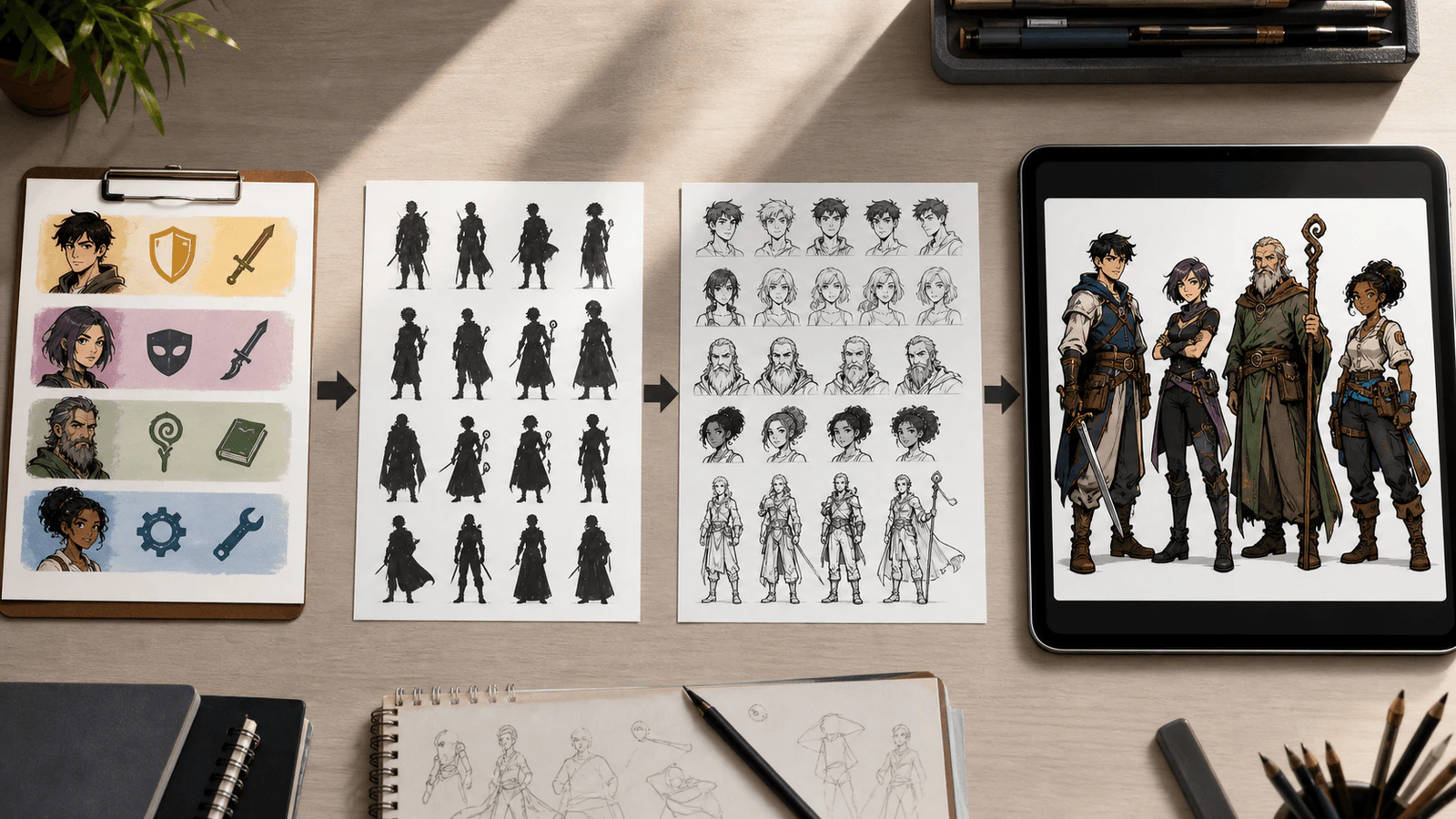
The useful workflow is:
cast role notes
-> lineup prompt
-> silhouette test
-> same-face repair
-> character sheet
-> panel generation
For each sheet, include:
| Sheet item | Why it matters |
|---|---|
| Full body front view | Keeps proportions stable |
| Side or three-quarter view | Helps panel variation |
| Face close-up | Locks feature spacing |
| Expression row | Prevents every emotion from changing the face |
| Costume details | Preserves anchors |
| Pose notes | Keeps personality visible |
You can use LlamaGen.AI Character Design for the first design pass, then keep the approved sheet as the reference for comic and story workflows.
A lineup is useful, but characters also need to read inside panels.
Test them in a simple scene:
Create a 4-panel comic scene where the four characters stand around a broken delivery drone in a school workshop.

Rules:
- Keep each character recognizable from the lineup.
- Vary body language by personality.
- Do not rely only on hair color.
- Keep faces consistent with the character sheet.
- Leave space for speech bubbles.
- No readable text inside the image.
Then ask:
| Question | Pass condition |
|---|---|
| Can I identify everyone at small size? | Yes, by shape and posture |
| Does each character move differently? | Yes, their body language is distinct |
| Do the faces stay stable? | Yes, expression changes do not create new people |
| Can black-and-white readers still tell them apart? | Yes, costume mass and silhouette help |
| Is one anchor visible in most panels? | Yes, but not every panel is overloaded |
| Problem | Likely cause | Fix |
|---|---|---|
| Characters only differ by hair | Prompt lacks body and posture constraints | Add silhouette, body type, and costume mass |
| Same face with different outfits | Face shapes were not specified | Assign head shape, eye spacing, nose, brows |
| Character changes every panel | No reference sheet | Create a sheet before page generation |
| Cast feels too exaggerated | Contrast is too broad | Keep shape variety but simplify costume details |
| Designs look good alone but not together | Created as isolated portraits | Build and approve a lineup first |
Keep a short character lock file for each recurring character.
Name:
Story role:
Body type:
Silhouette:
Head shape:
Eyes:
Posture:
Costume anchor:
Color anchor:
Expression habit:
Do not change:
Example:
Name: Ivo
Story role: Nervous inventor
Body type: Compact, narrow shoulders
Silhouette: Small rectangle with oversized glove shapes
Head shape: Round with soft jaw
Eyes: Wide and slightly tired
Posture: Shoulders raised, hands close to body
Costume anchor: Oversized repair gloves
Color anchor: Muted blue jacket, yellow tool tags
Expression habit: Thinking frown, quick side glance
Do not change: gloves, compact height, round head, anxious posture
This is the kind of reference that helps AI and human collaborators stay aligned.
Same-face syndrome is when different characters share the same face structure, expression habits, and proportions, so readers only recognize them through hair, color, or clothing.
Use moderate contrast across several design areas: height, posture, body type, face shape, costume mass, and one memorable anchor. You do not need to exaggerate every feature.
Design the first pass as a group lineup. It is much easier to see repeated shapes when the whole cast stands together.
It can help, especially when you provide a lineup, clear design constraints, and approved character sheets. Treat the first good image as production reference, not as the final source of truth.
Start with LlamaGen.AI Character Design. Build the cast lineup first, repair same-face issues, then move approved characters into comic panels or storyboards.
A readable comic cast is designed in relation to itself.
Hair color helps, but it is not enough. Give each character a story role, body type, silhouette, face structure, posture, and visual anchor. Then test the cast together before the first real page.
That small planning step can save hours of repair later.
Popular creator tools
Go from comics and storyboards to stylized photos with LlamaGen.
Just refer your friends, followers, and customers to earn up to 30% in recurring commissions for a lifetime!