A sustainable webtoon update schedule is not the fastest schedule you can survive for two weeks. It is the slowest schedule that still teaches readers when to come back.
For most independent creators, that means:
| Creator stage | Practical release rhythm | Buffer target | Episode scope |
|---|---|---|---|
| First series test | Every 2 weeks | 1 finished episode | 12-24 panels |
| Stable solo creator | Weekly or every 10 days | 2-4 finished episodes | 20-40 panels |
| Small team | Weekly | 4-6 finished episodes | 30-60 panels |
| Launch month | 2 episodes in week one, then normal pace | 3+ finished episodes | Keep launch episodes shorter |
The goal is not to publish forever at panic speed. The goal is to protect the series long enough for readers to trust it.
Use the LlamaGen.AI Webtoon Generator to turn one written episode into thumbnail panels, visual drafts, and repeatable scene assets before you commit to the final update schedule.

Most webtoon burnout starts with a quiet mismatch:
A rundown of the latest LlamaGen feature releases, product enhancements, design updates, and important bug fixes.
Readers experience the result as late updates, sudden quality drops, long hiatuses, or episodes that feel padded. Creators experience it as dread.
A better schedule begins before art production. Decide the episode's job, panel budget, update rhythm, and repair rules before you generate or draw the final panels.
This workflow was designed for a beginner webtoon creator making a weekly vertical-scroll drama with AI-assisted panels.
| Test item | Setup |
|---|---|
| Date tested | August 13, 2026 |
| Project | Sunlight Terminal |
| Format | Vertical-scroll webtoon |
| Creator | Solo writer-artist using AI drafts and manual edits |
| Goal | Publish consistently without turning every week into a sprint |
| Target tool | LlamaGen.AI Webtoon Generator |
| Creation entry | Start an AI comic draft |
| Test output | Schedule, buffer board, episode scope, and repair workflow |
The question was simple:
Can one creator plan a webtoon update schedule that survives busy weeks, weak drafts, and revision time?
Do not start with "weekly" because weekly sounds serious. Start with the amount of work you can repeat.
Use this rule:
release promise = episode size x production time x recovery time
If one finished episode takes you 10 hours and you only have 8 stable creative hours per week, a weekly schedule is already borrowing energy from the future.
Better options:
| If your episode takes | Safer schedule | Why |
|---|---|---|
| 3-5 hours | Weekly | Small gag, short scene, or mini update |
| 6-10 hours | Every 10-14 days | Enough room for edits and life |
| 12-20 hours | Twice monthly | Good for story-heavy episodes |
| 20+ hours | Monthly or season batch | Better for polished fantasy, action, or large casts |
This is not less professional. It is more honest.
A buffer is not a pile of ideas. It is finished or nearly finished publishable work.
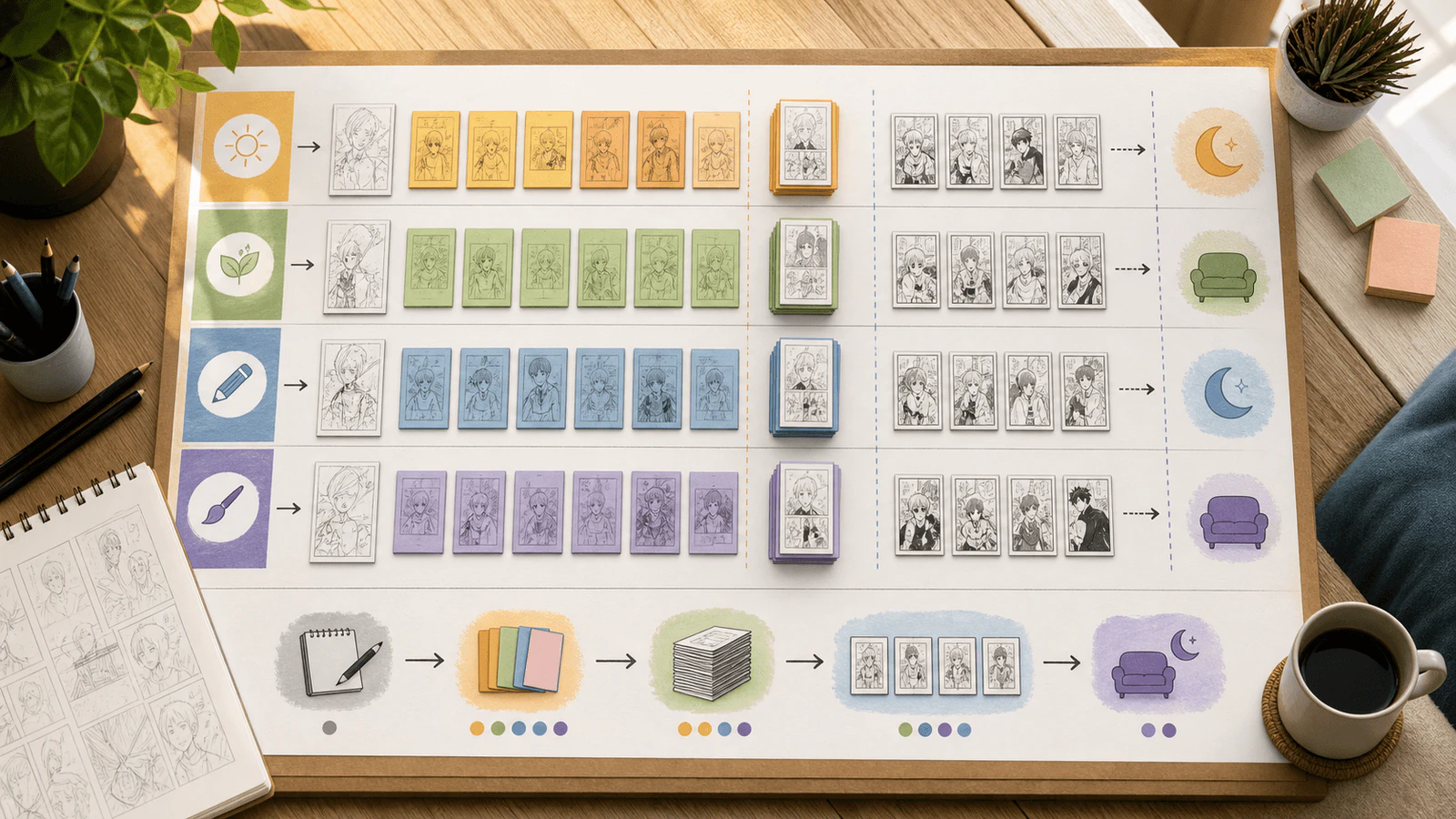
Use a three-layer buffer:
| Buffer layer | What counts | Minimum target |
|---|---|---|
| Story buffer | Episode outlines and hooks | 4-8 episodes |
| Visual buffer | Thumbnails or AI draft panels | 2-4 episodes |
| Publish buffer | Final lettered episode | 1-3 episodes |
For a new creator, the first milestone is not "publish episode one." It is "finish episode two before publishing episode one."
That single delay can prevent the first schedule crash.
A sustainable webtoon schedule needs a panel budget. Without one, every emotional beat becomes another panel, every joke becomes another reaction, and every background becomes a delay.
For each episode, define:
| Episode job | Suggested panel budget | Cut first |
|---|---|---|
| Introduce a character | 12-24 panels | Extra reaction shots |
| Reveal a secret | 18-32 panels | Repeated setup dialogue |
| Action chase | 24-45 panels | Complex crowd/background panels |
| Quiet relationship scene | 14-28 panels | Redundant close-ups |
| Finale or cliffhanger | 30-60 panels | Side jokes and nonessential transitions |
Here is a prompt you can use before generating panels:
Plan this webtoon episode for a sustainable solo creator.

Return:
1. The episode's one-sentence job.
2. The must-have story beats.
3. A realistic panel budget.
4. Which beats deserve large scroll moments.
5. Which beats should be combined or cut.
6. A cliffhanger or soft ending.

Story:
[paste episode summary]
Then move the approved beat list into the AI comic creation flow.
The moment a schedule becomes impossible, creators usually cut quality by accident. A better system cuts scope on purpose.
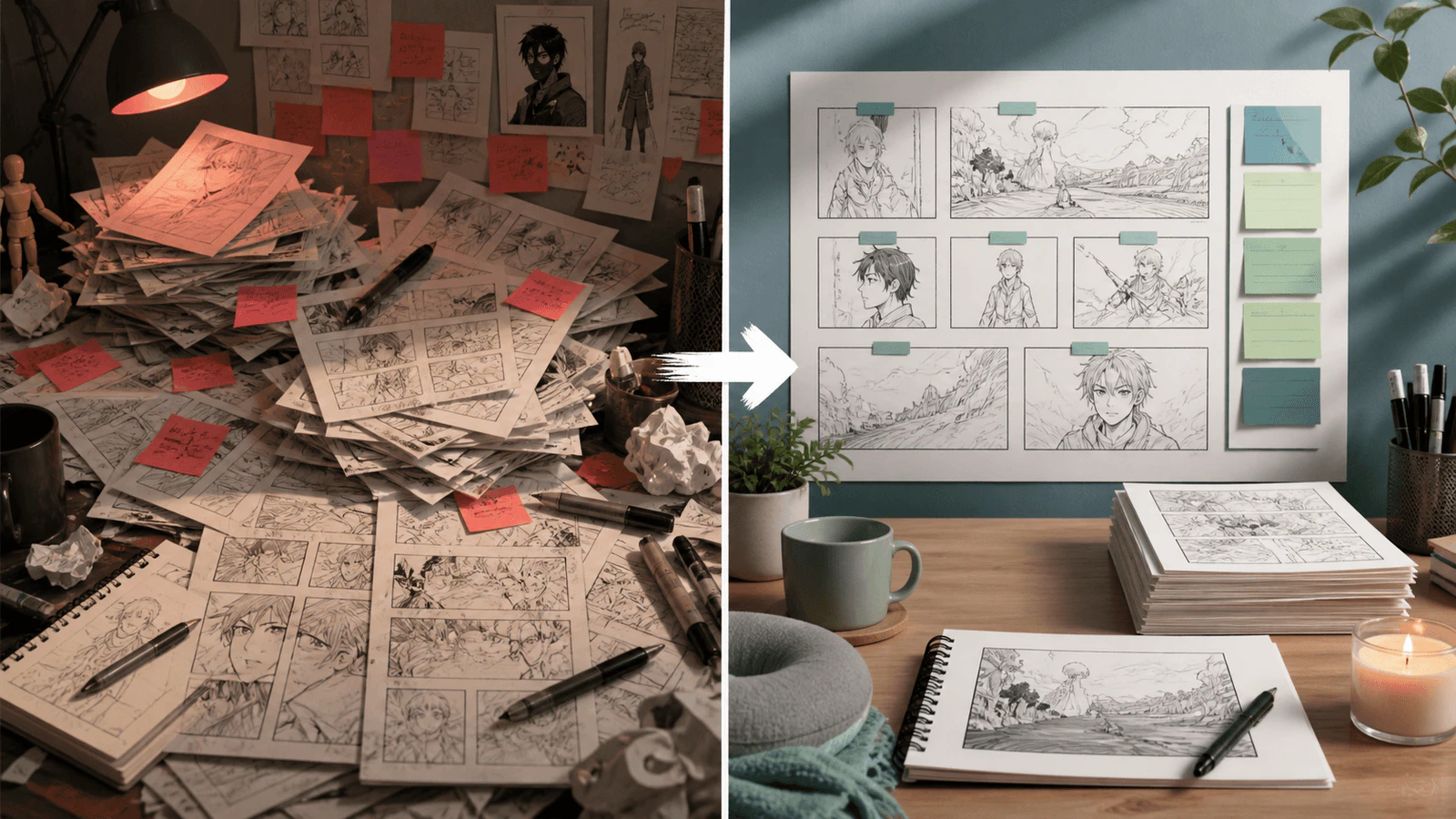
Use this order when a week gets crowded:
| Do not cut first | Cut first instead |
|---|---|
| Character recognizability | Extra camera angles |
| The emotional turning point | Decorative background detail |
| Readable lettering | Redundant reaction panels |
| The final hook | Side jokes that do not move the scene |
| Rest day | Optional polish pass |
The reader will forgive a simpler alley background. They will notice if the main character's face, emotion, or motivation collapses.
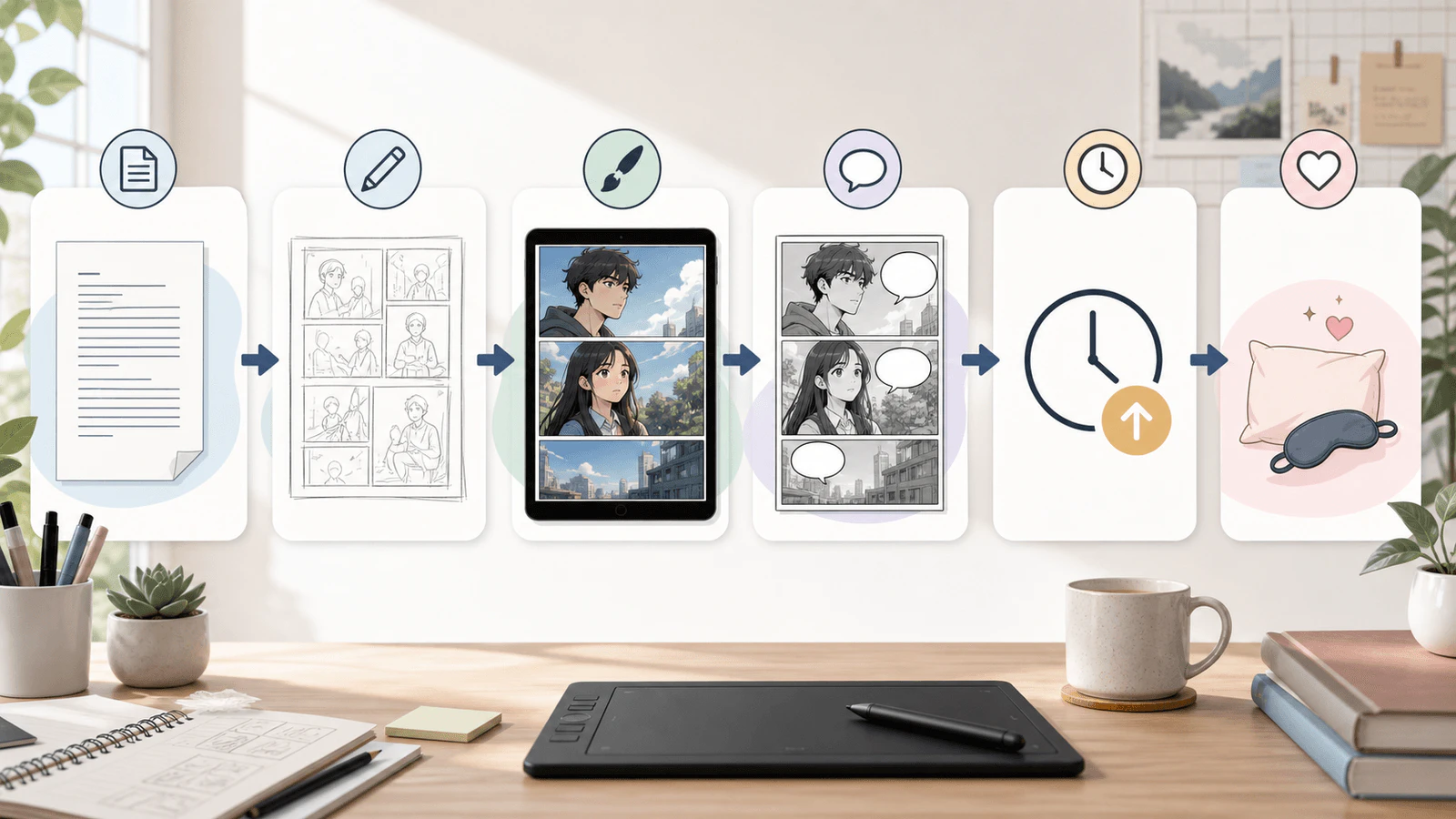
Switching between writing, generating, editing, lettering, and posting burns more energy than creators expect.
A calmer production week can look like this:
| Day | Focus | Output |
|---|---|---|
| Monday | Outline and beat check | Episode job and panel budget |
| Tuesday | Thumbnail and AI draft pass | Rough vertical scroll |
| Wednesday | Character repair and scene polish | Stable cast and key panels |
| Thursday | Lettering and mobile readability | Final reading pass |
| Friday | Schedule, social crop, backup | Publish-ready package |
| Weekend | Rest or light idea capture | No required production |
If your life does not allow weekday production, move the blocks. The point is to separate the jobs so every session has one clear purpose.
Many creators launch with too many episodes at once, then vanish.
Try this instead:
| Launch stage | Safer plan |
|---|---|
| Before launch | Finish 2-3 episodes and outline 4 more |
| Launch day | Publish episode 1 and preview the update rhythm |
| Week 1 | Publish episode 2 only if episode 3 is nearly ready |
| Week 2 onward | Follow the normal schedule |
| After 6-8 episodes | Review workload and adjust the season plan |
If readers ask for faster updates, that is good news. It does not mean the schedule should collapse.
Use LlamaGen.AI as a production assistant, not as a reason to remove planning.
episode summary
-> beat list
-> panel budget
-> thumbnail draft
-> character consistency check
-> lettering pass
-> export and schedule
Inside the Webtoon Generator, keep each episode tied to the same character references, style notes, and recurring locations. That reduces rework and makes your buffer more useful.
| Week | Work |
|---|---|
| Week 1 | Write, thumbnail, generate rough panels |
| Week 2 | Repair, letter, export, schedule |
| Buffer rule | Do not publish until the next episode is started |
| Day | Work |
|---|---|
| Monday | Beat list and panel budget |
| Tuesday | Draft panels |
| Wednesday | Repair key characters |
| Thursday | Lettering and mobile read |
| Friday | Schedule and promote |
| Weekend | Recovery or future outlines |
| Stage | Work |
|---|---|
| Month 1 | Write 8 episode outlines |
| Month 2 | Generate thumbnails and key visuals |
| Month 3 | Finish episodes 1-4 |
| Launch | Publish on a weekly rhythm while finishing the back half |
Change the schedule before these signs become normal:
The schedule is part of the product. A smaller reliable update can build more trust than a huge episode followed by silence.
Before announcing a webtoon schedule, confirm:
Ready to test a sustainable episode plan? Open the LlamaGen.AI Webtoon Generator, convert one written scene into a vertical-scroll draft, and use the panel budget before you polish.
Weekly is familiar, but it is only the best schedule if you can keep it without draining the buffer. A reliable 10-day or twice-monthly schedule is often stronger for solo creators.
Try to finish at least two episodes before publishing the first one. If your episodes are long or your life schedule is unpredictable, aim for three.
AI can reduce thumbnailing, draft generation, and variation time, but it does not remove planning. The biggest improvement comes from using AI after you define the episode job, panel budget, and repair checklist.
Finish the current arc as cleanly as possible, then announce a new season rhythm with a clear reason: better quality, better consistency, and a healthier long-term schedule.
Popular creator tools
Go from comics and storyboards to stylized photos with LlamaGen.
Just refer your friends, followers, and customers to earn up to 30% in recurring commissions for a lifetime!