

Bring the actual text
Paste the article body or upload a readable source. Omit navigation, ads, and unrelated comments.
Article to Comic
Turn an article into a visual explainer without losing its point. Paste the text, choose the angle, and create a comic draft you can check against the original.

Existing prompt-gallery artwork. The article exercise below is illustrative, not its original source.
View example sourceAn editorial adaptation
A comic needs a visual argument, not a sentence in every box. Separate what the article says from the scenes used to explain it.
Fictional article brief
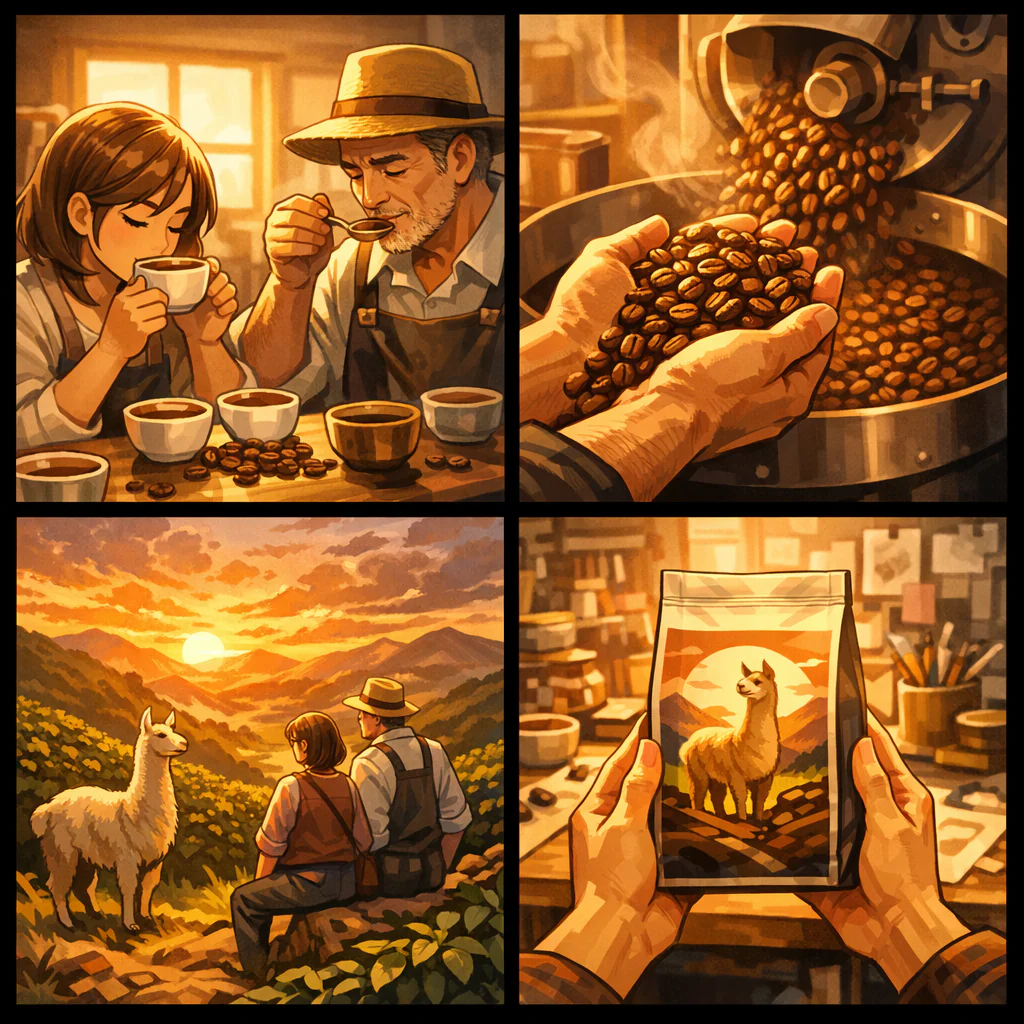
A small coffee label developed its identity through repeated tasting sessions and careful roasting. Its packaging tells the story of the place that inspired the founders. The article follows that process, from the first tasting to the finished pack.
The brief is fictional and was written as an adaptation exercise around existing artwork. It is not a customer article or a recorded conversion.
Use the tasting session to show what the founders are trying to discover.
A roasting scene gives the process a concrete, observable action.
Use a landscape only if the article actually supports that setting.
The final pack connects the process to the brand story; avoid adding unsupported claims.
The workflow
Paste the article body or upload a readable source. Omit navigation, ads, and unrelated comments.
Identify one main idea, the intended reader, and any facts or quotations that must survive the adaptation.
Review each panel beside the article. Correct invented details and distinguish an illustration from a quotation.
Made for this source
Convert the article's structure into a beginning, explanation, evidence, and takeaway—not a wall of shortened paragraphs.
Pasted text and uploaded material travel with the creation request. Clear source boundaries make the output easier to review.
Continue in Studio to shorten captions, adjust the order, or revise a misleading scene before publishing.
The example library
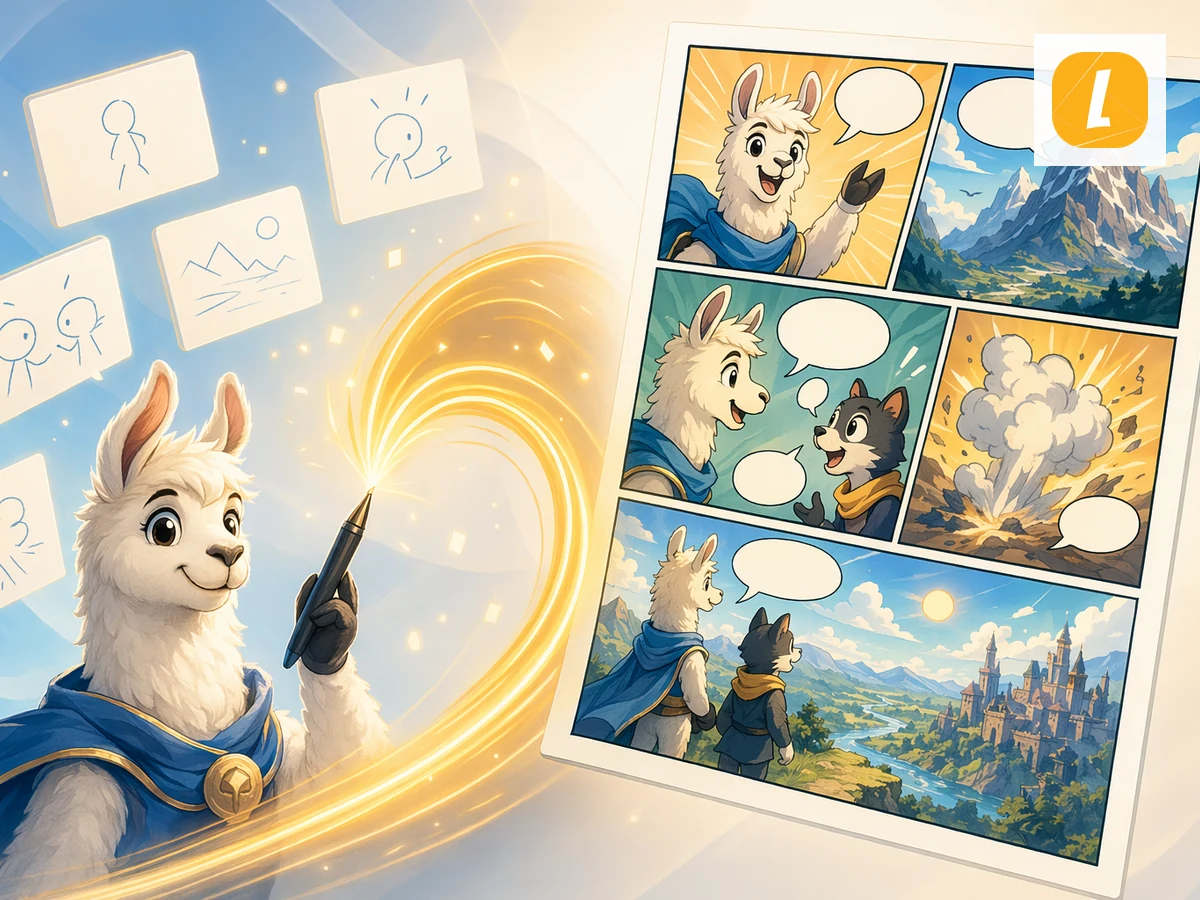
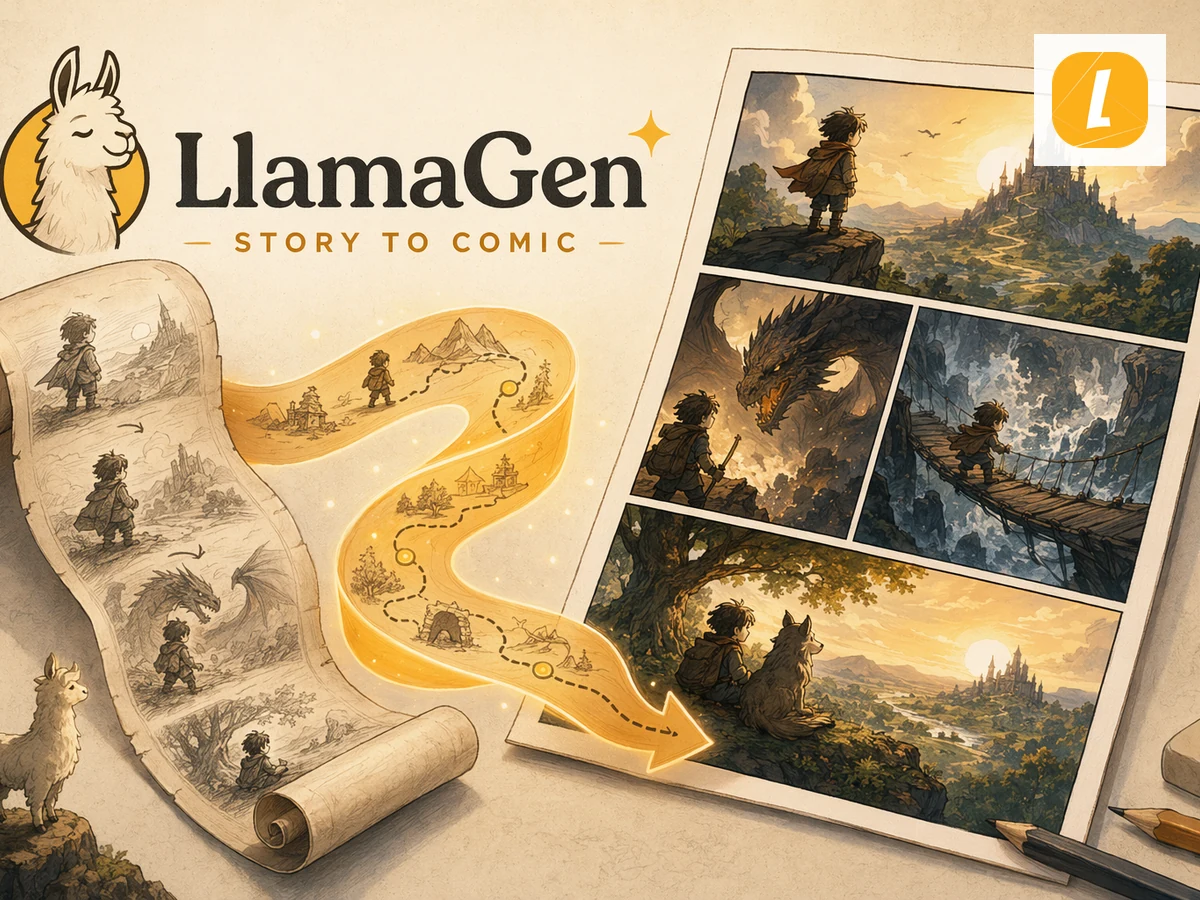
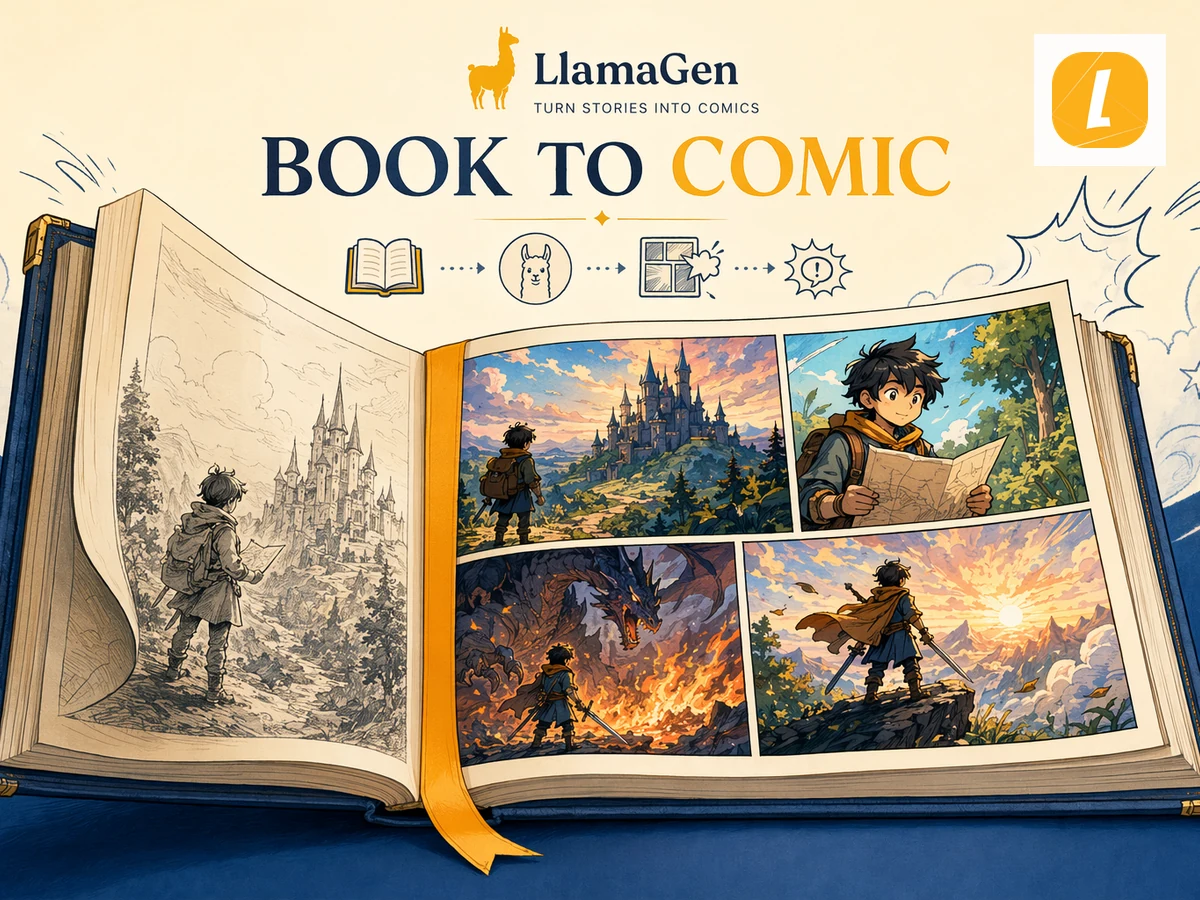
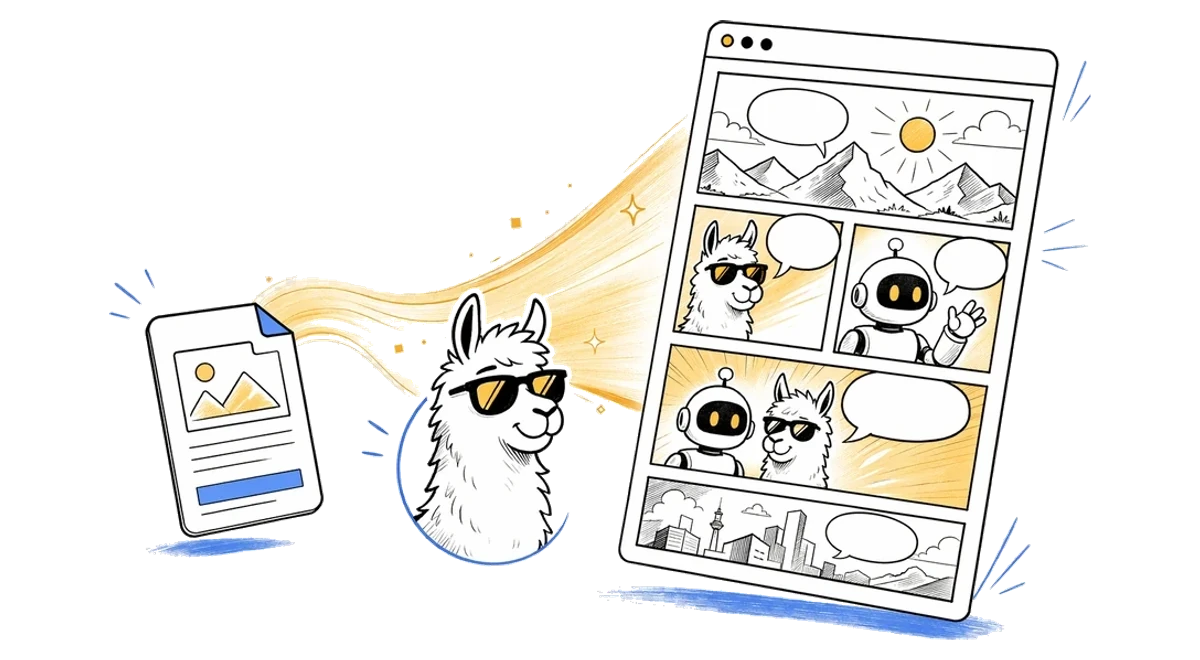
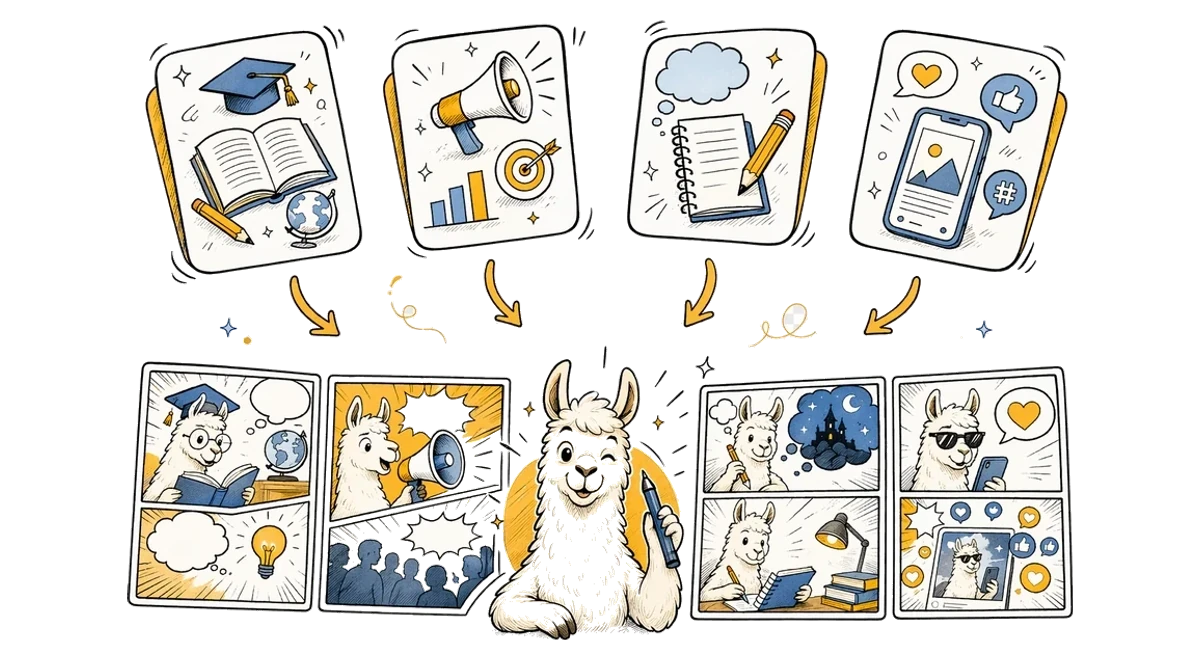
Existing illustrations show how process, a change of setting, or an observable action can carry information. They do not establish the accuracy of a generated adaptation.

Existing LlamaGen illustration, not a conversion of your uploaded file.
View example source
Existing LlamaGen illustration, not a conversion of your uploaded file.
View example sourcePut it to work
Turn a single concept into a sequence that can be discussed, checked, and revised in class.
Create an illustrated companion to the article, keeping a visible route back to the full context.
Show the real decisions and process behind a product. Do not add testimonials, statistics, or claims missing from the source.
A useful starting brief
Keep the article's claim and its qualification together.
Create a four-panel visual explainer from this article. Preserve the main claim, its supporting evidence, and its caveats. Use short captions. Do not invent quotes, numbers, or people.
Turn a written process into observable actions.
Adapt this article as a process comic. Keep the actions in source order, maintain the same people and objects, and end with the article's actual takeaway. Flag anything that needs a human fact check.
Give readers a reason to read the original.
Create a concise comic companion to this article for first-time readers. Show the central question, two supported ideas, and the takeaway. Avoid presenting the comic as a complete substitute for the original article.
The review pass
Do not let the illustration turn a possibility into a certainty. Preserve the article's qualifications.
Verify quotations and names. Invented speech should never look like a quote from a real person.
Credit the original where appropriate and confirm you can adapt it. Strip out private information before upload.
Questions, answered
Paste the article body or upload the file. This page does not provide a verified URL-fetch or paywall-reading step, so a URL alone may not supply the source.
TXT, Markdown, HTML/HTM, and PDF files up to 50 MB. Pasted text is also supported.
No. The tool makes a draft from your source; you remain responsible for checking facts, quotations, names, and the accuracy of the adaptation.
Start with one section or a focused excerpt. A short comic cannot preserve all the nuance of a long article.
Yes. Use the direction field to define the reader, visual style, panel emphasis, and facts to keep. You can keep refining in Studio.
Yes, generation uses your account credits. You can prepare the text first; sign-in and credit checks use the existing LlamaGen flow.
From the community
The examples above are selected from the existing LlamaGen library. For broader styles and creator feedback, explore the full gallery and community wall.
The complete original collection is still here. These are general style references, not results from this converter. Original prompts and artwork retain their source language.
Loading the reference library…
A different starting point
Bring your source and a clear direction. Create a first draft, then review the details in LlamaGen Studio.
Back to your sourceMove from a single generated image or video into comics, manga, storyboards, and connected visual stories.