

2400 × 1500 PNGOpen CDN original
Build a reusable character reference, carry its visual anchors into each scene, and check continuity across pages. Start with the character studio, then use the workflow and published 40-panel case to review drift before it spreads through a chapter.
Example identity brief
Workflow preview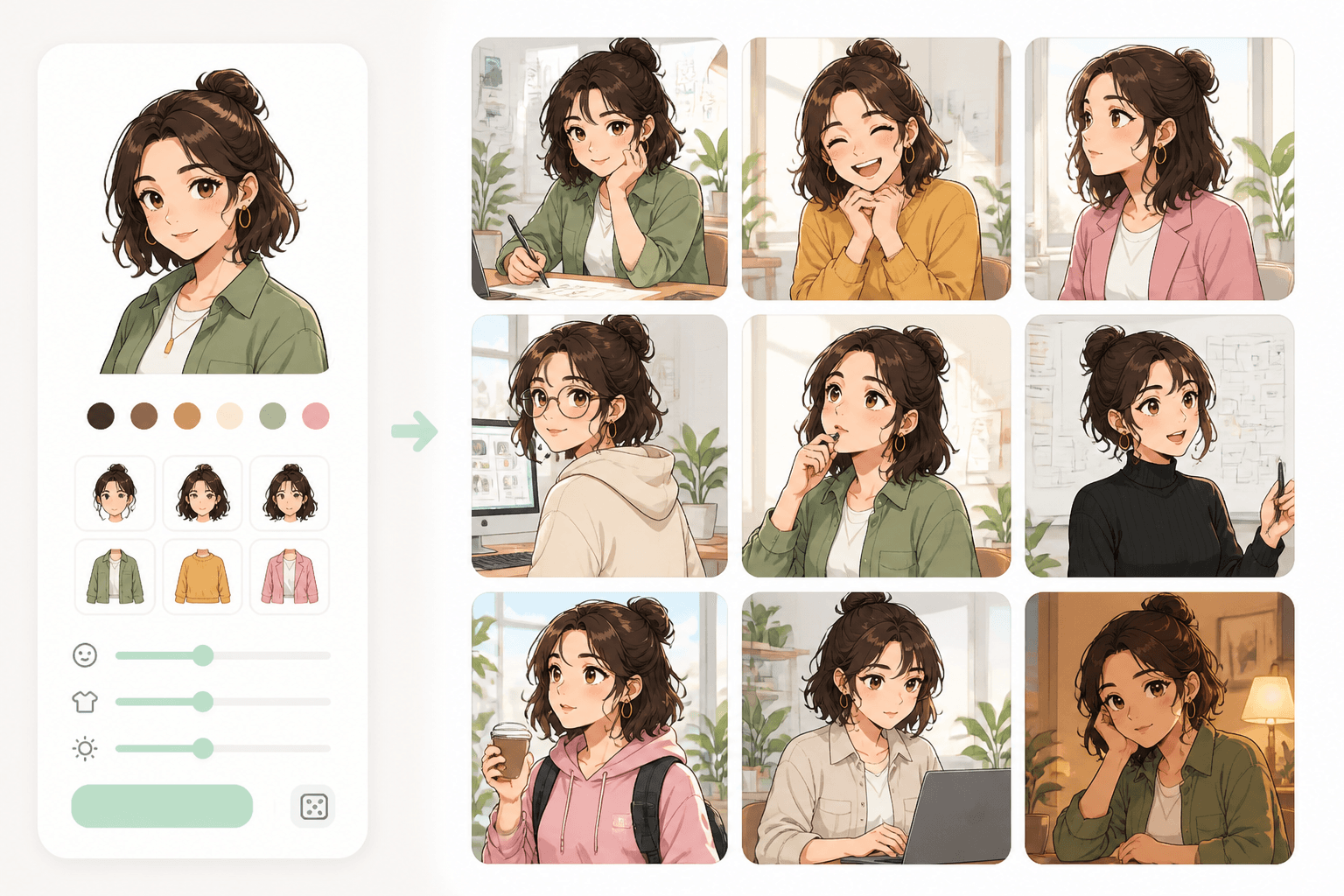
Illustrative identity grid
One reference
compare every appearance
Across pages
review, repair, continue
Open the character studio and define the face, hair, body, outfit and style, or start from an authorized reference image. Keep the approved image as the comparison source rather than replacing it with every new output.
Give each cast member a stable name or ID. Record specific anchors and their side: for example, Ren Ito has a silver undercut, indigo jumpsuit and one red mechanical left arm. Separate permanent identity from the action or setting.
List the characters needed in that panel and supply their approved references where the chosen workflow supports them. Change the shot, expression or background deliberately; keep identity wording stable. The public case supplied only the references for each panel’s named cast.
Review the new panel against the original reference and adjacent pages. Check face and head, hair, body cues, outfit colors and unique accessories. Inspect close-ups, distant figures, partial occlusion and left/right details separately.
Keep the failed image, name the mismatch and regenerate or edit that panel using the approved reference. Review both characters again after a repair; accept the corrected panel before continuing the sequence.
The creation button opens the character studio. The checklist here describes how to review recurring characters; it is not a set of automatic face-lock or outfit-lock switches.
Keep the original design and a concise list of face, hair, clothing, color and left/right anchors.
Compare each new appearance with that reference, keep a record of mismatches and repair the affected panel.
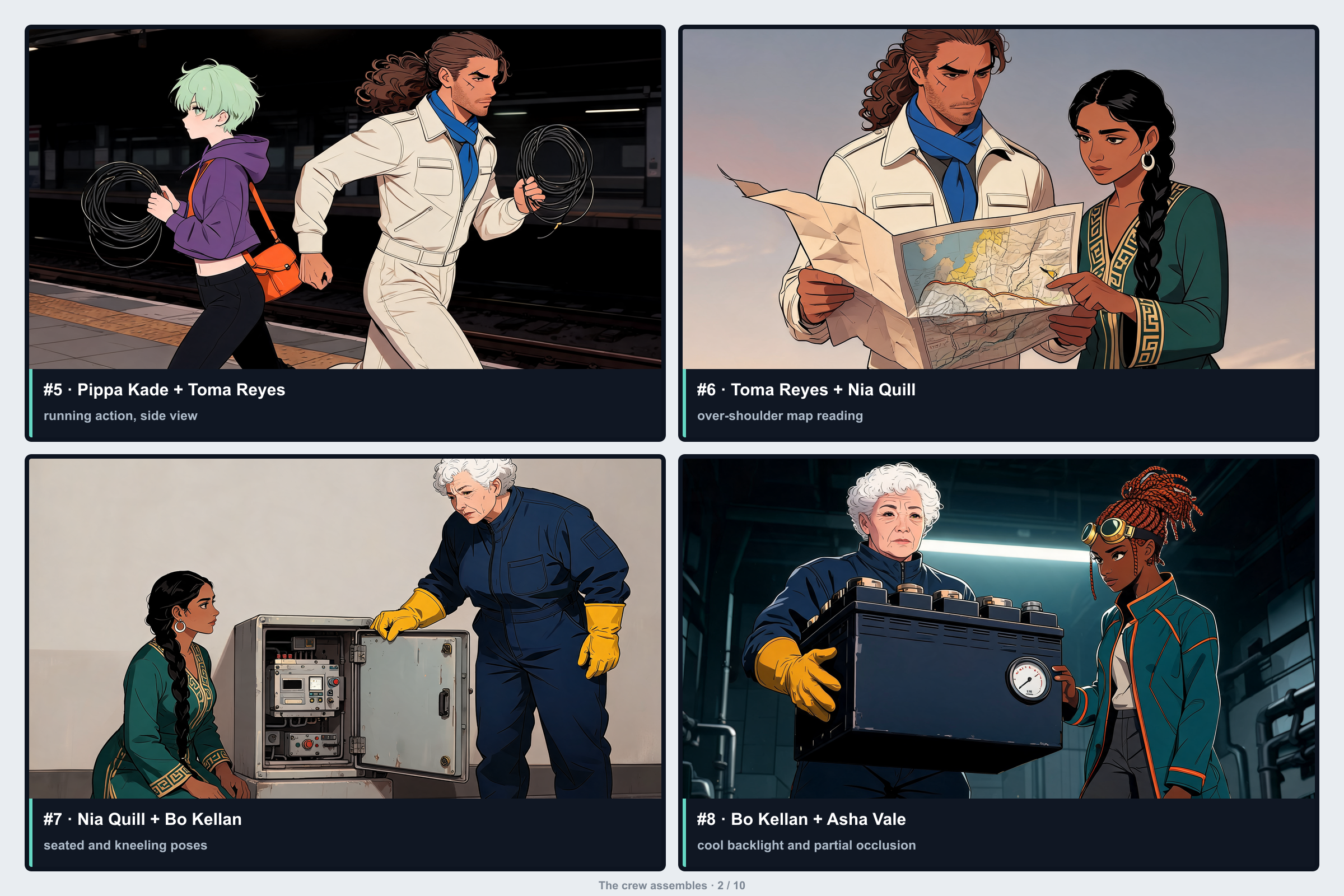
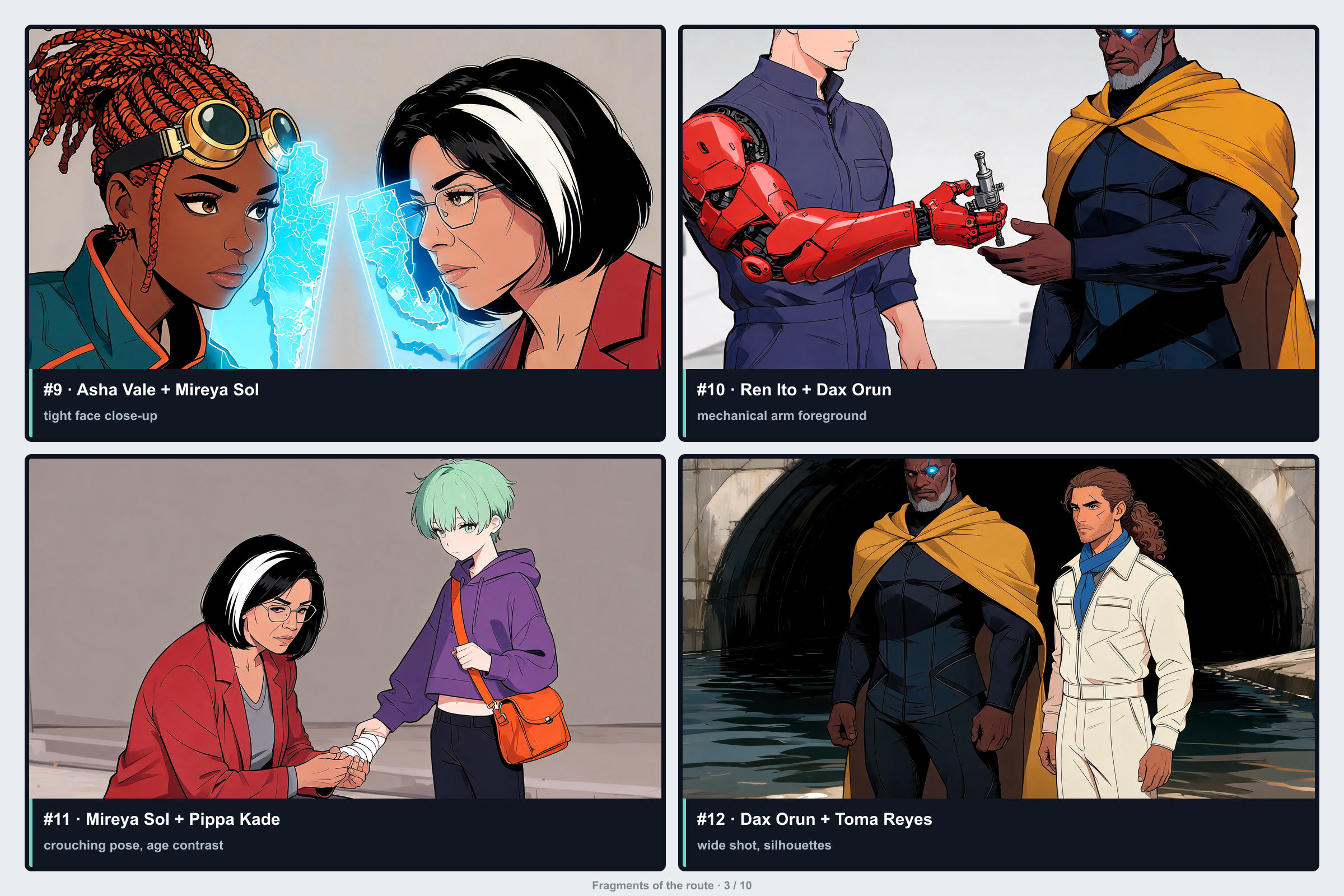
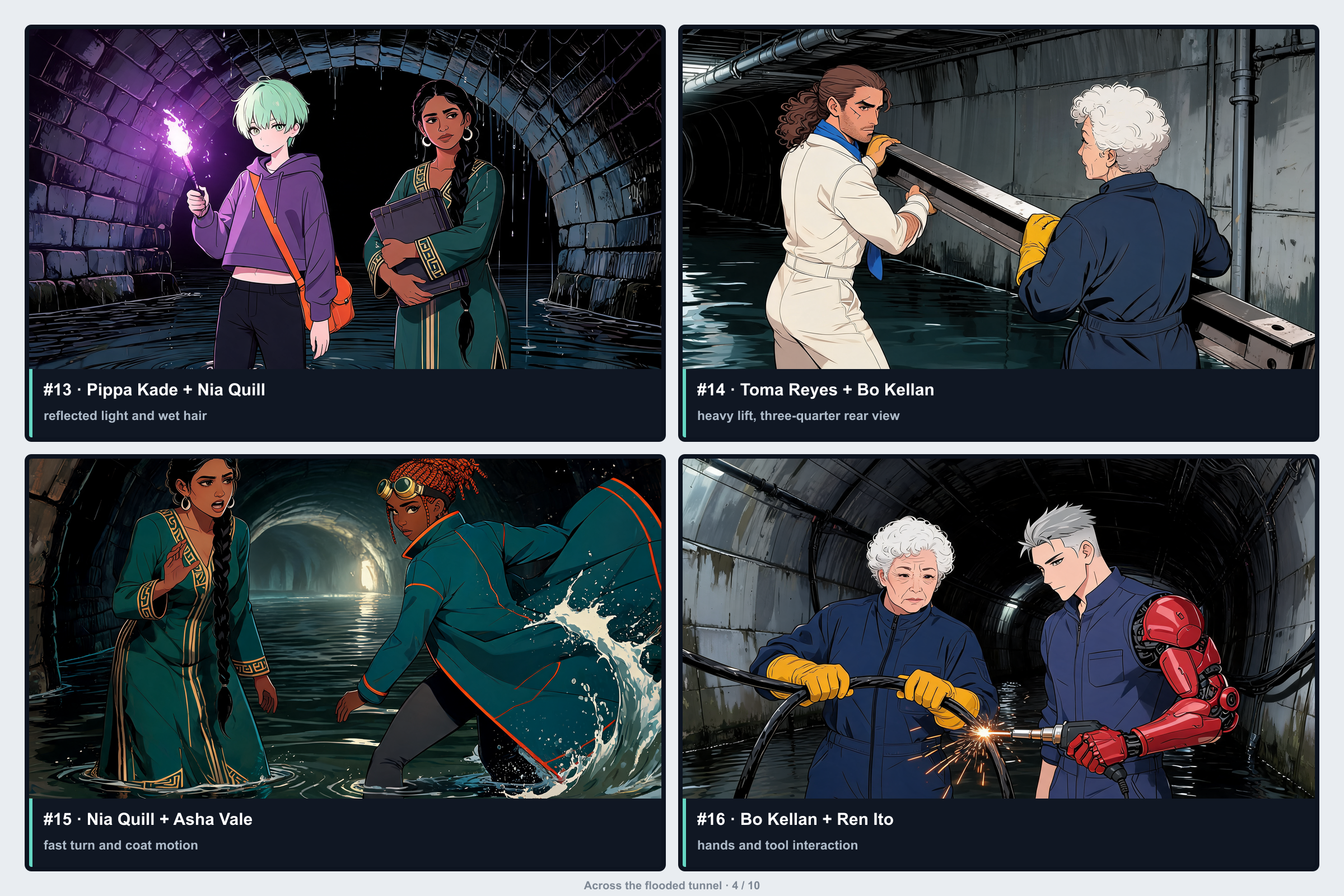
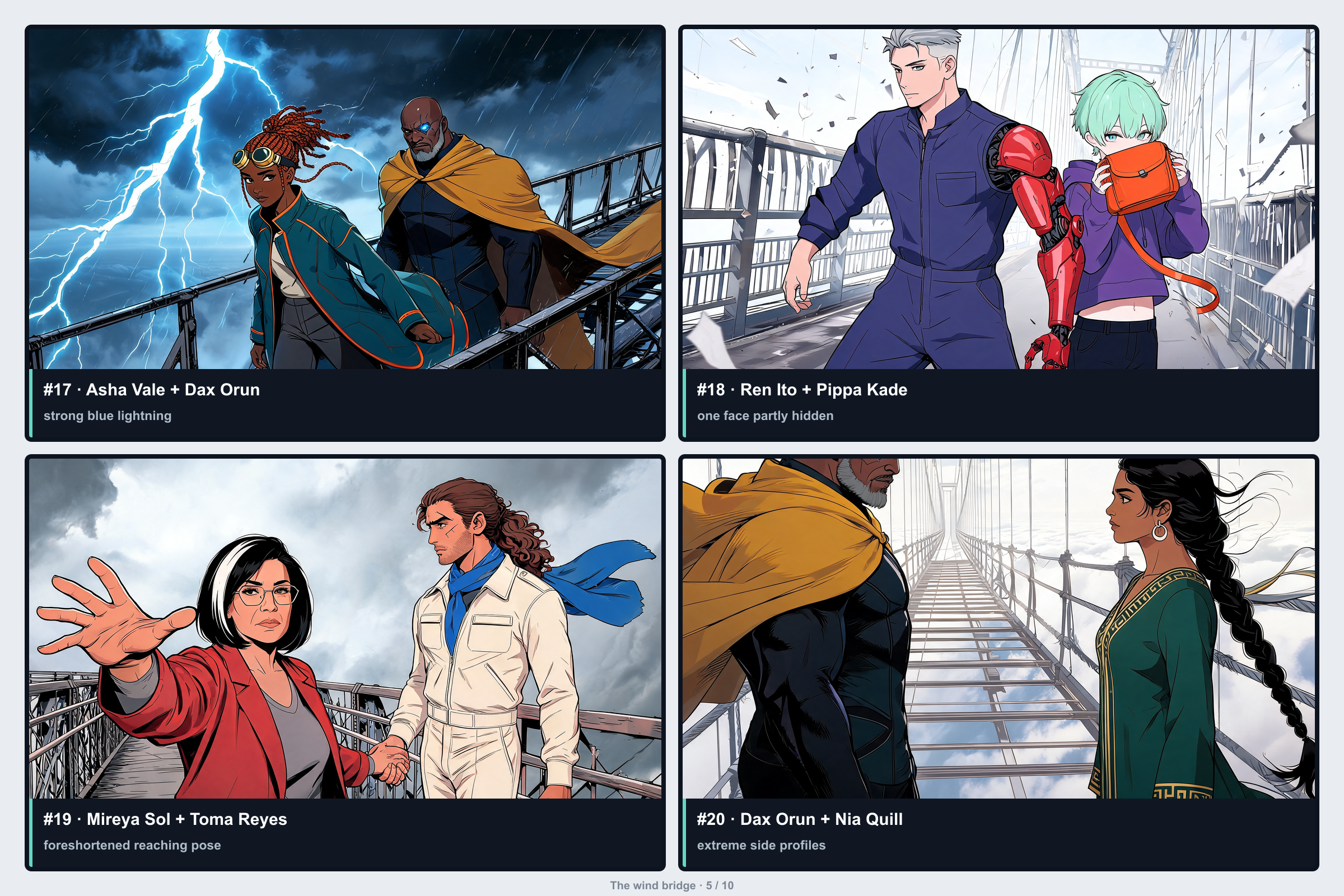
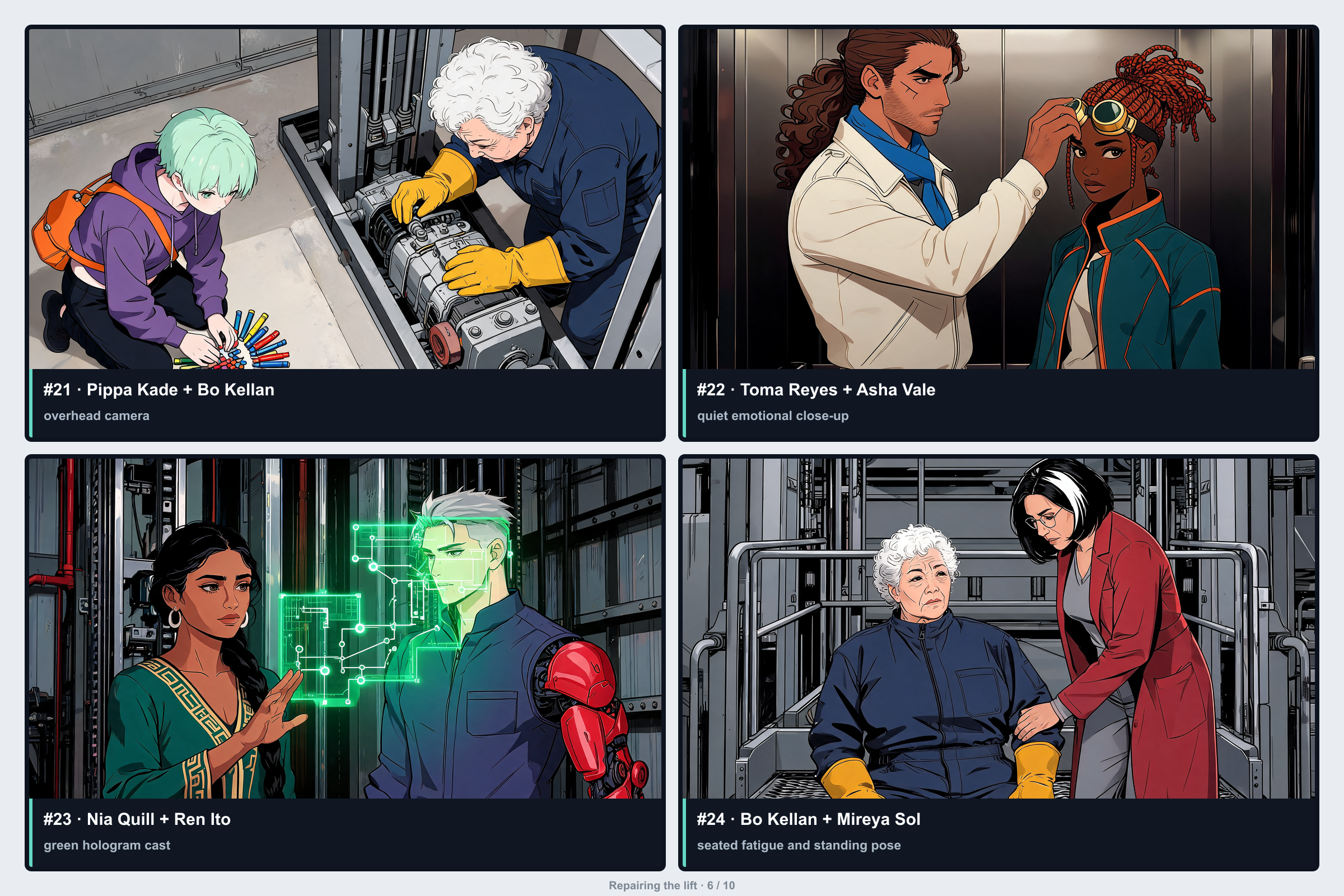
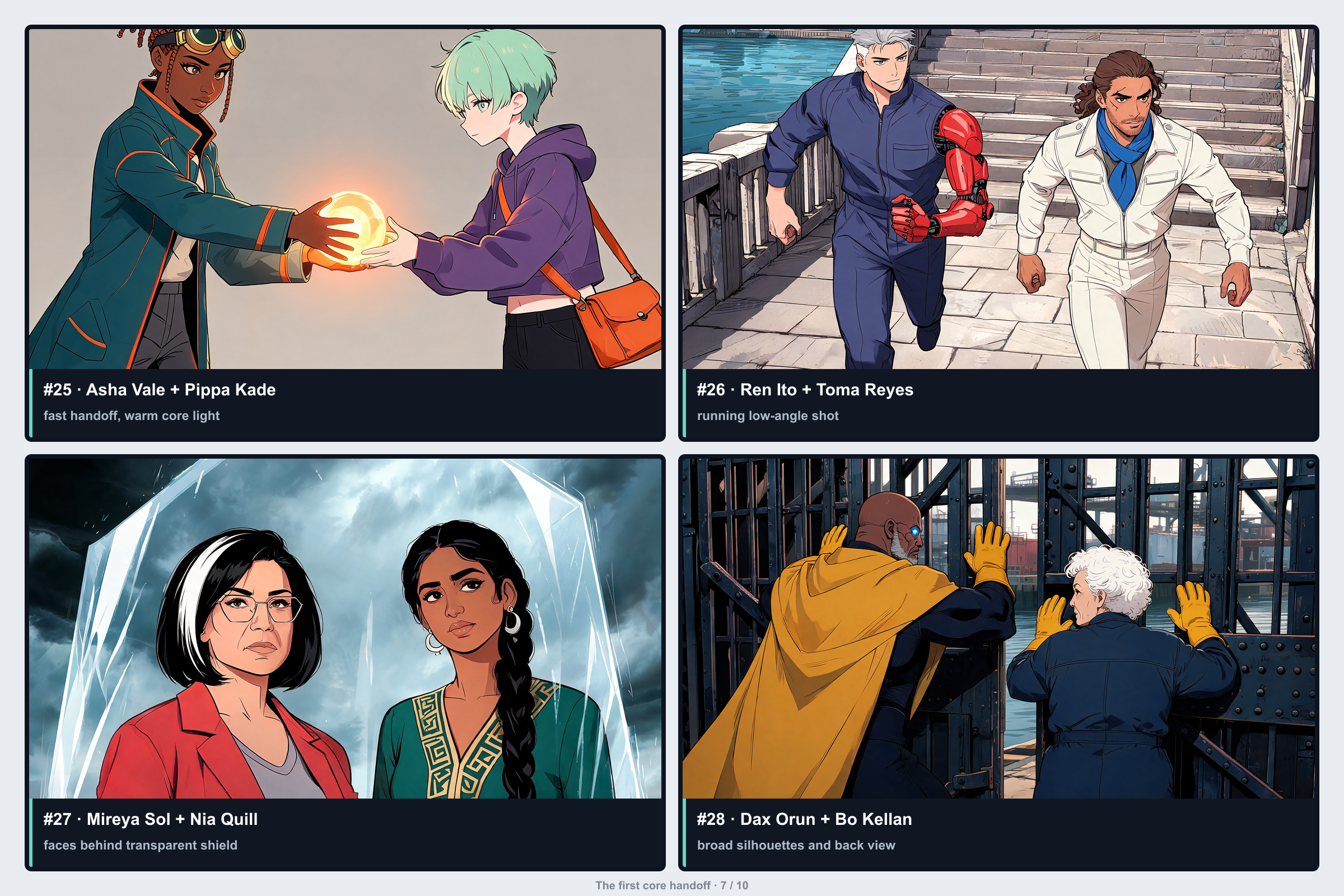
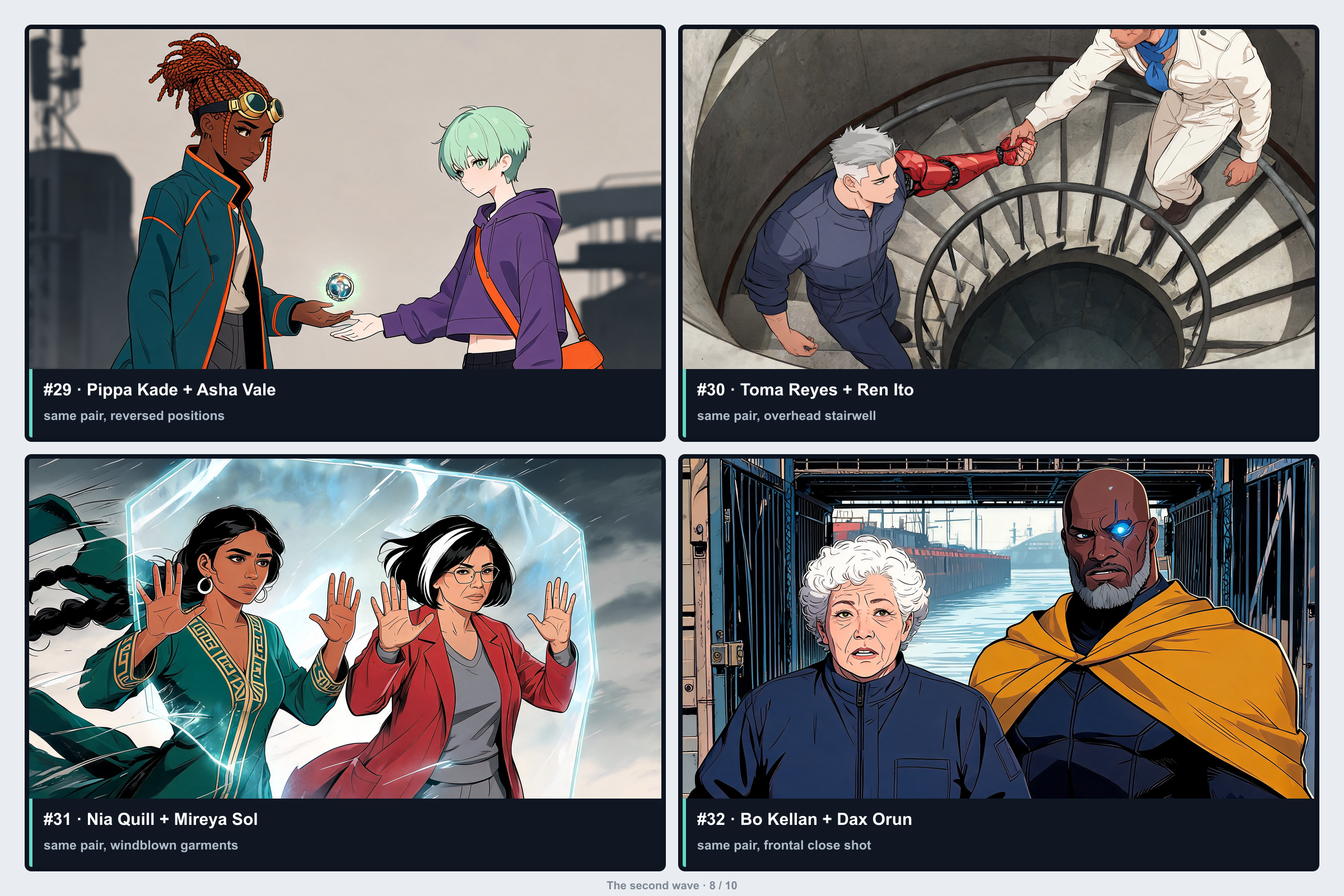
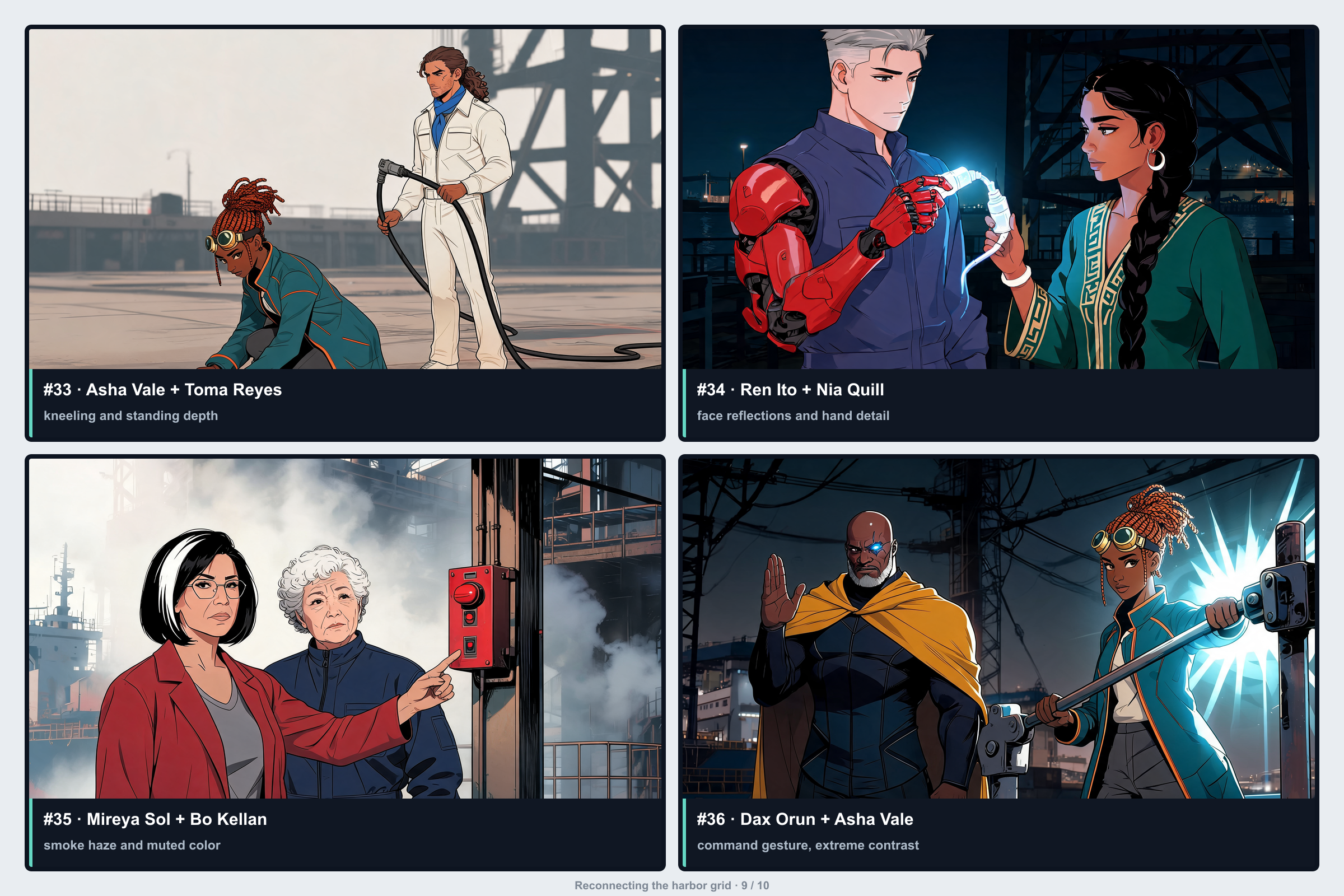
This original 10-page case was generated on 11 August 2026 with ByteDance Seedream 5 Lite. Eight registered characters made 80 reviewed appearances across 40 panels. The first delivery accepted 37 panels; three failures were repaired. Thirteen accepted panels retain disclosed minor deviations. This is one controlled run, not a success-rate guarantee for other projects or models.
Registered cast
8
Each character appears exactly 10 times
Final panels
40
Published across 10 original pages
Scored appearances
80
Every real cast appearance reviewed
First delivery
37/40
37/40 panels; 77/80 appearances accepted
Targeted redraws
3
All failed originals remain visible
Final delivery
40/40
40 accepted panels, including 13 with disclosed minor deviations
Approved identity anchors
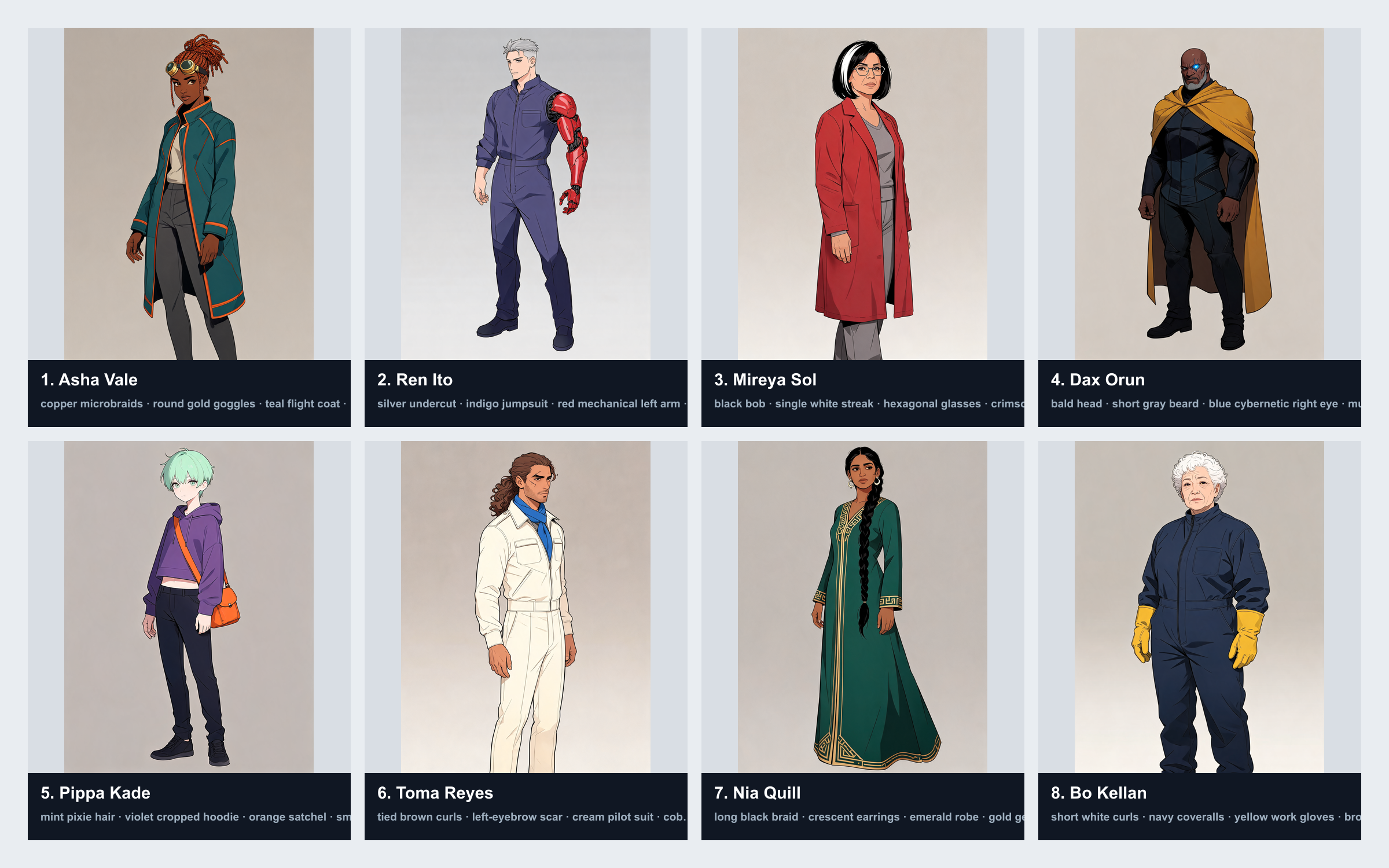
Each character has a distinct face, hair, silhouette, outfit, palette, and unique anchor. Every panel received only the references for its named cast, avoiding an overloaded eight-image prompt.
Asha Vale
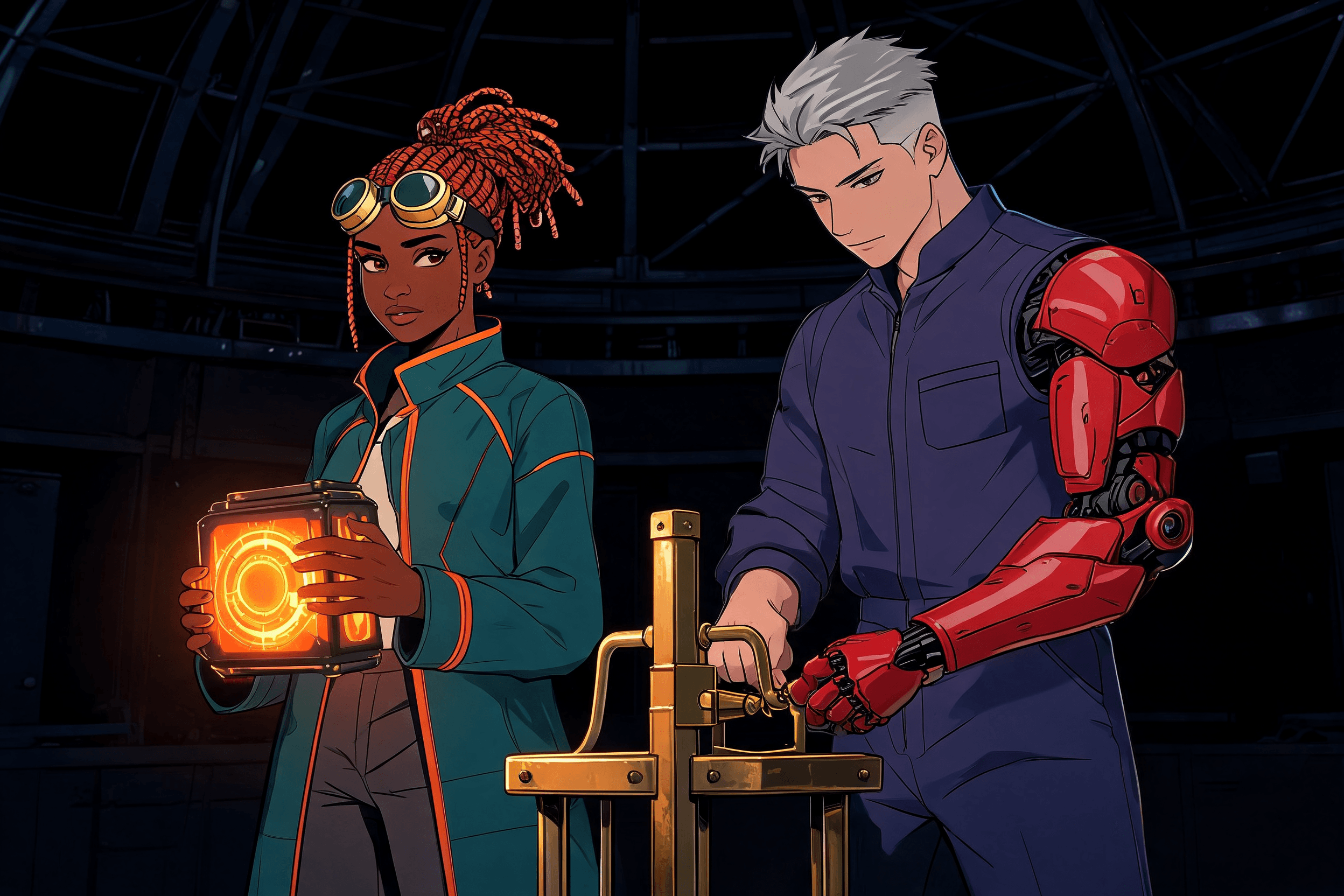
10 appearancescopper microbraids · round gold goggles · teal flight coat · orange piping
Ren Ito
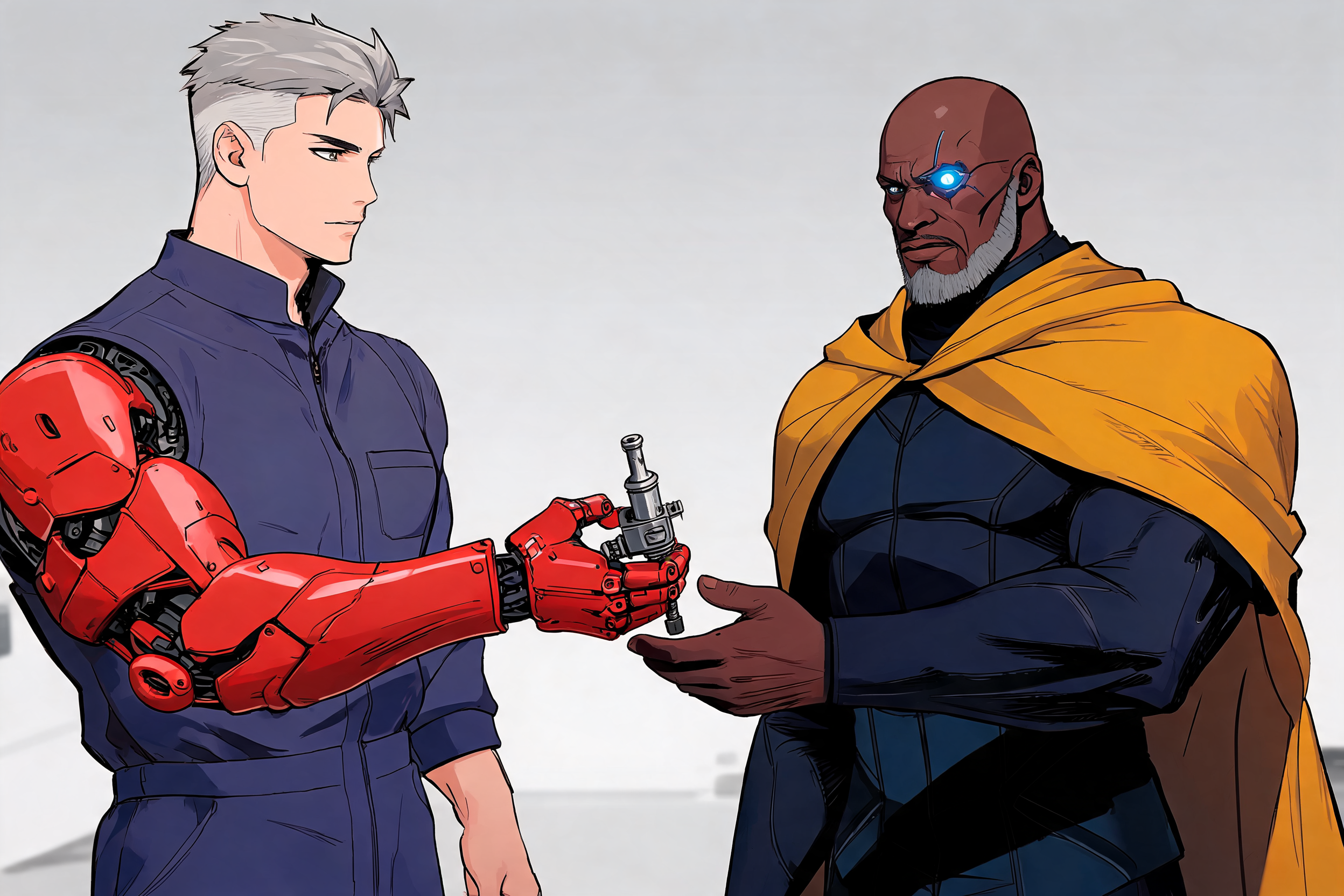
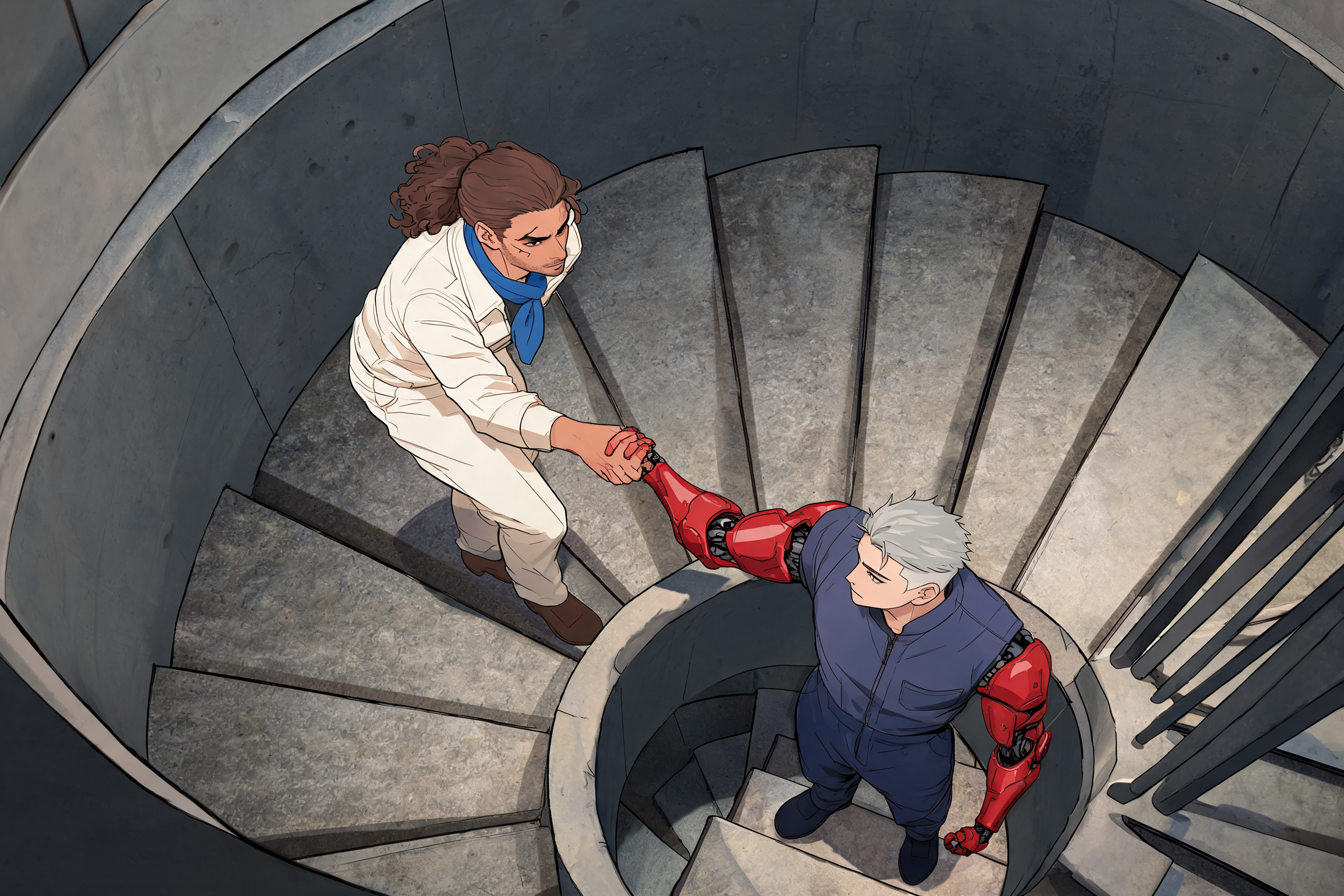
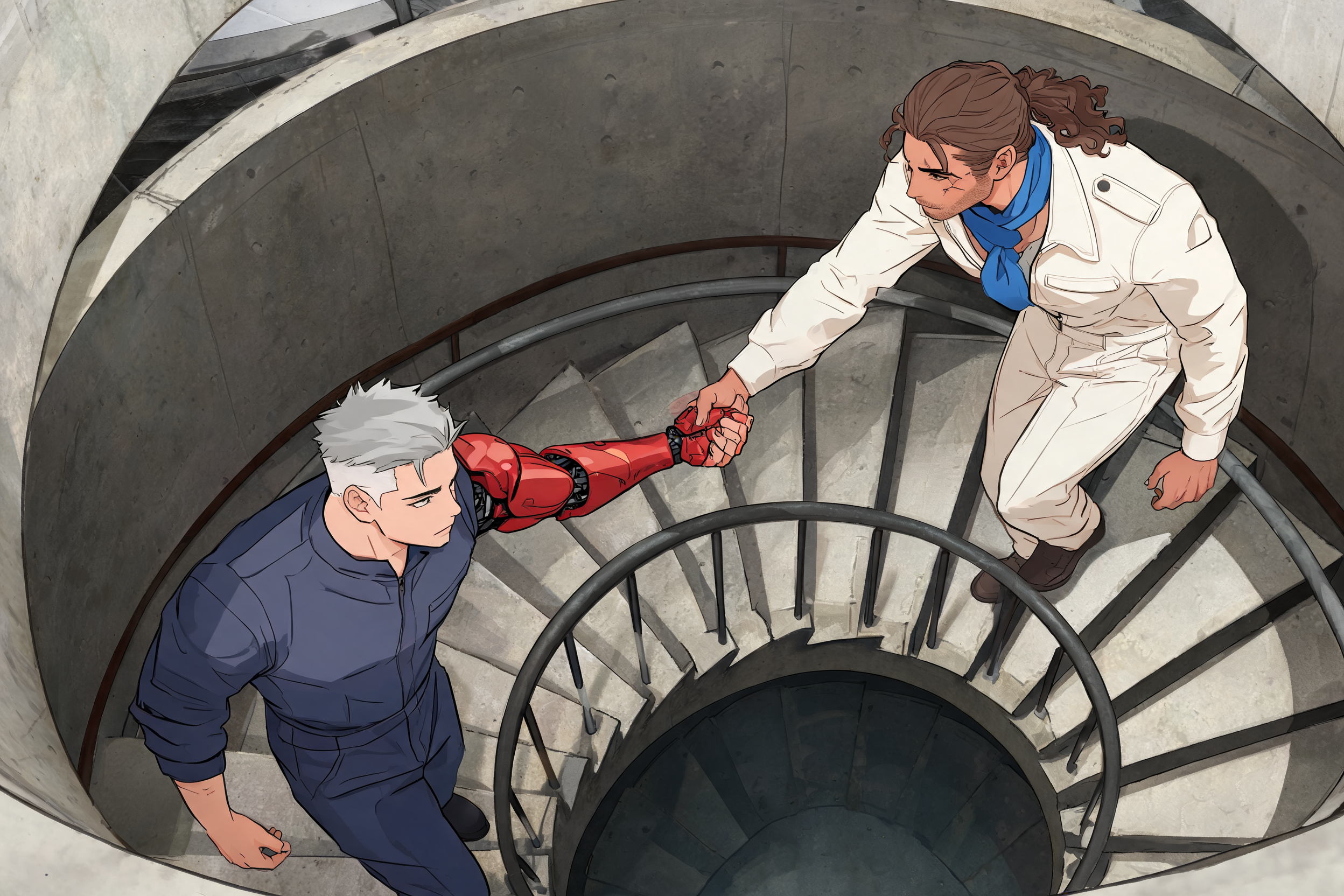
10 appearancessilver undercut · indigo jumpsuit · red mechanical left arm · angular face
Mireya Sol
10 appearancesblack bob · single white streak · hexagonal glasses · crimson medic coat
Dax Orun
10 appearancesbald head · short gray beard · blue cybernetic right eye · mustard mantle
Pippa Kade
10 appearancesmint pixie hair · violet cropped hoodie · orange satchel · small wiry build
Toma Reyes
10 appearancestied brown curls · left-eyebrow scar · cream pilot suit · cobalt scarf
Nia Quill
10 appearanceslong black braid · crescent earrings · emerald robe · gold geometric trim
Bo Kellan
10 appearancesshort white curls · navy coveralls · yellow work gloves · broad shoulders
Complete result, not a highlight reel
Inspect the full contact sheet and original 2400 × 1600 pages on the CDN. Labels disclose the cast and visual challenge for each panel, including accepted minor deviations.
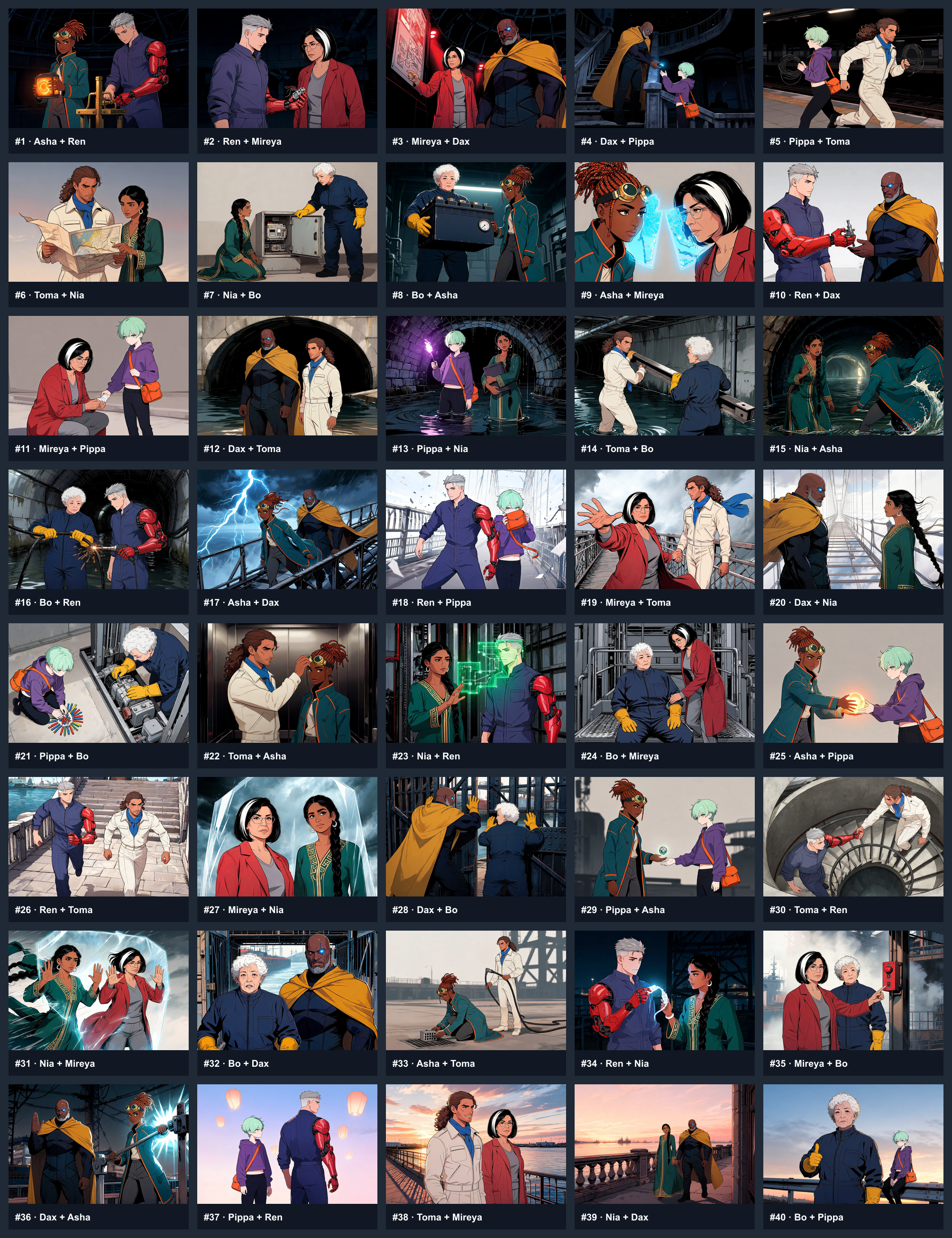
Expand the reader to load the original 2400 × 1600 PNG pages without optimizer recompression.
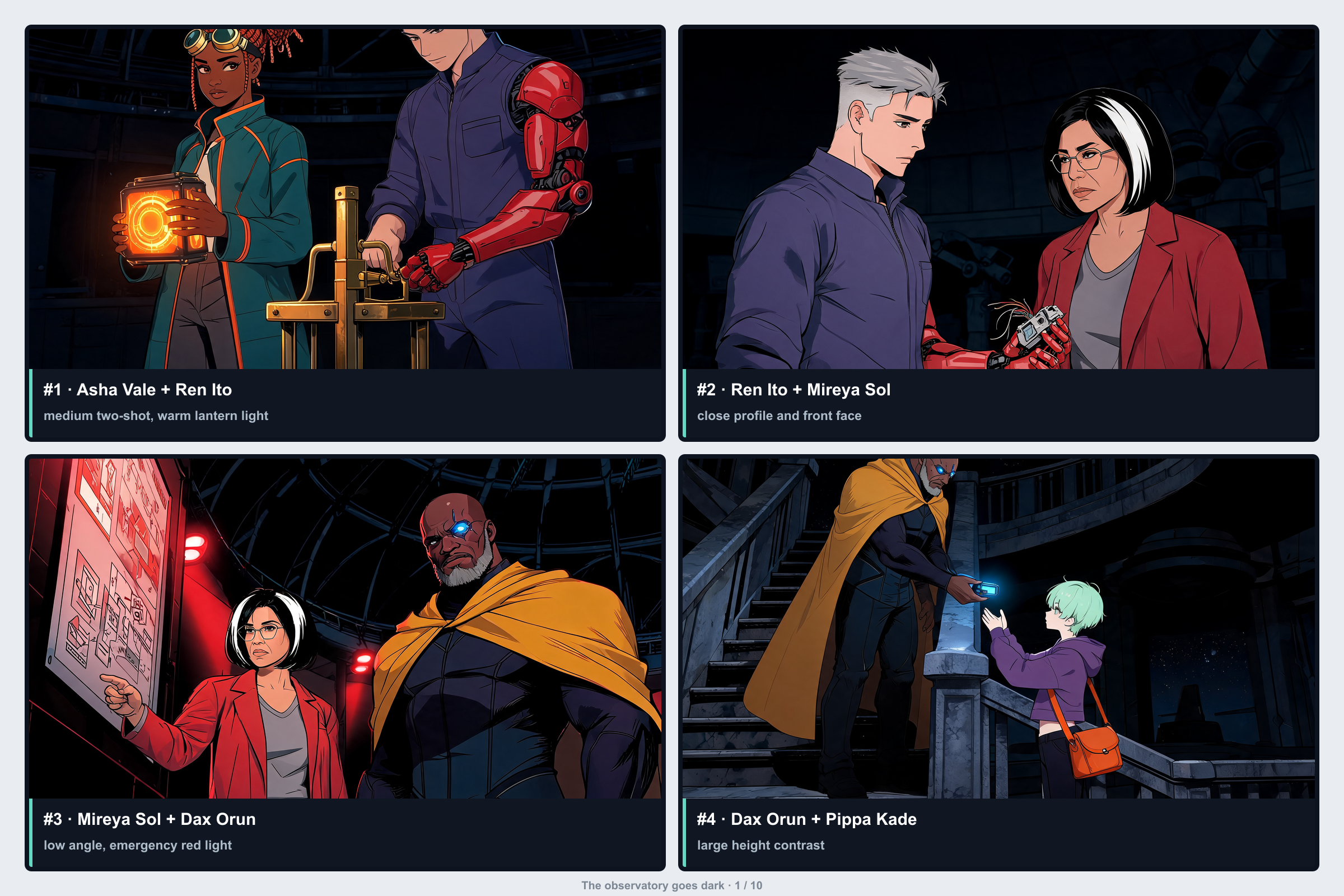
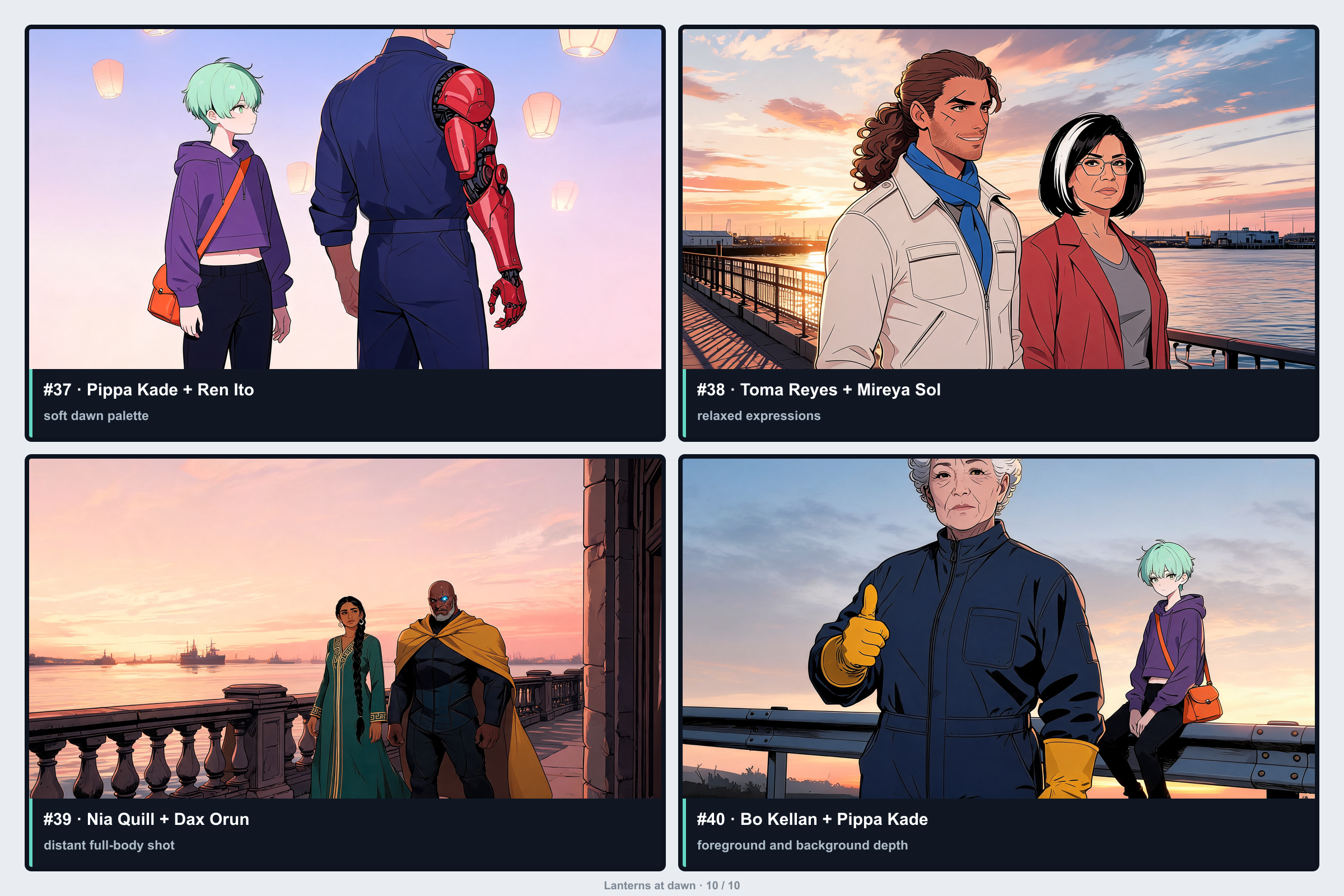
Identity failures disclosed
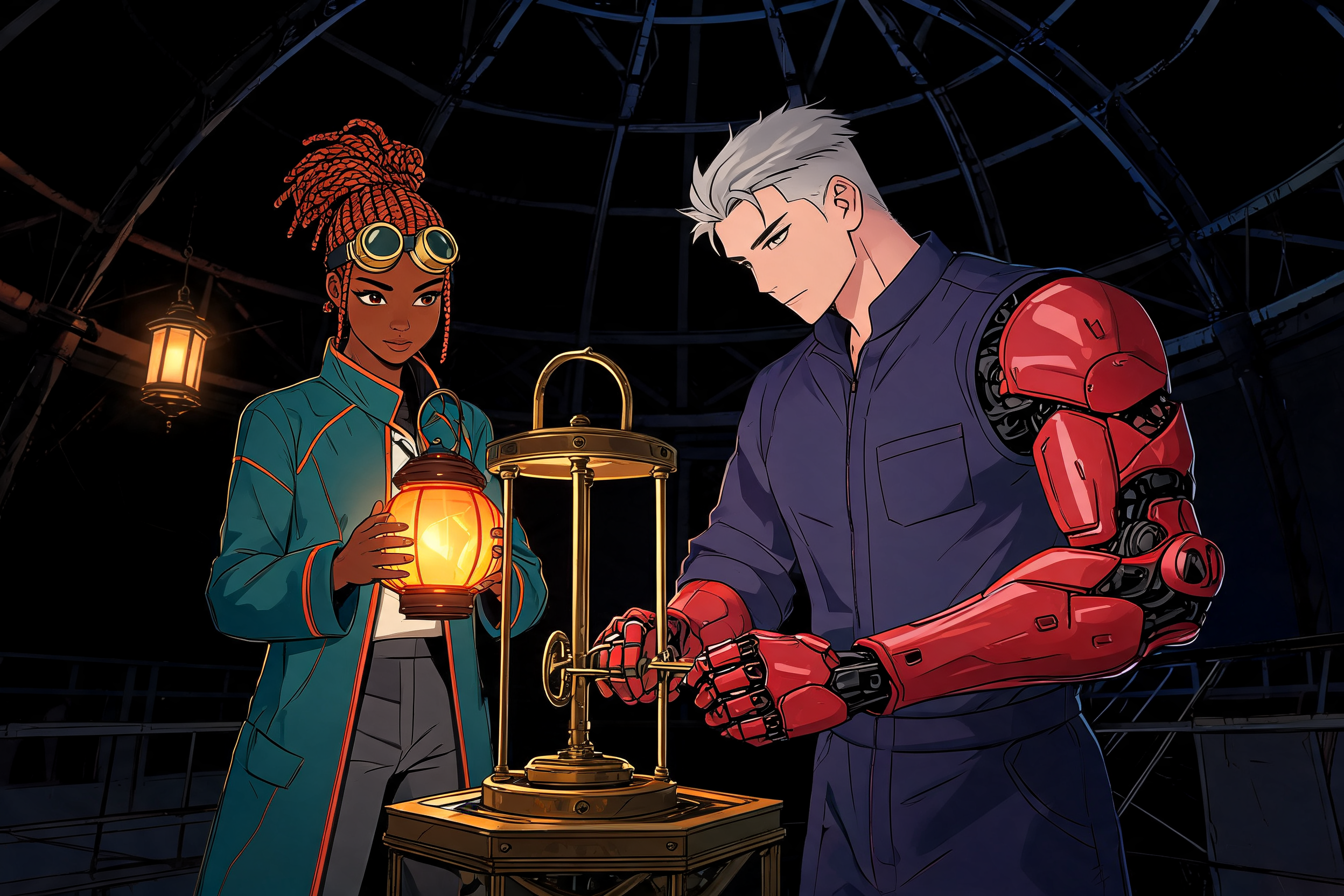
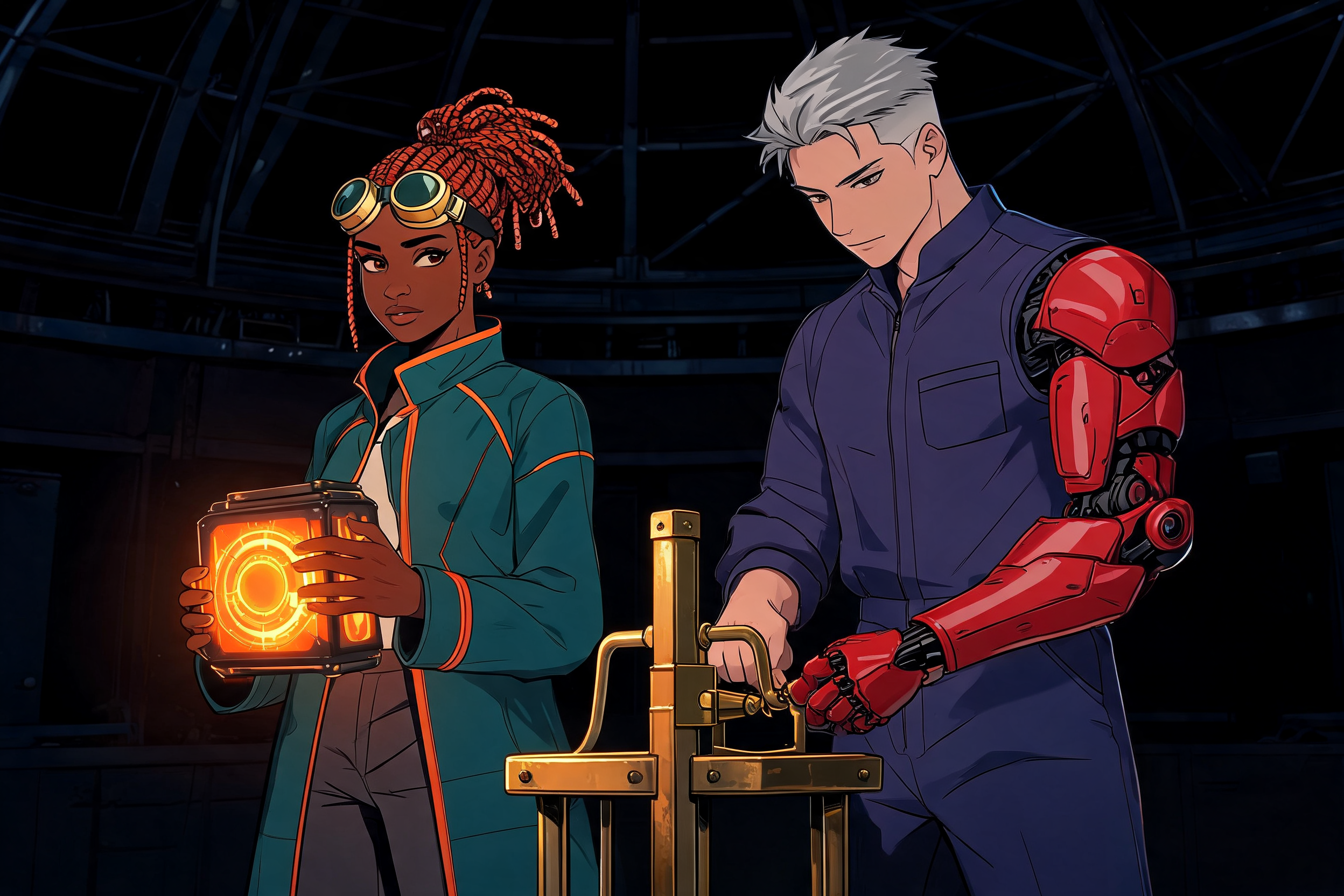
Three panels failed because Ren Ito's single mechanical left arm was duplicated. Each first-delivery image is preserved beside its one-redraw result; no failed panel was silently removed from the score.
Panel 1Asha Vale + Ren Ito
Ren Ito's single red mechanical left arm was rendered with duplicate robotic hand or forearm anatomy.
Panel 10Ren Ito + Dax Orun
Ren Ito's single red mechanical left arm was rendered with duplicate robotic hand or forearm anatomy.
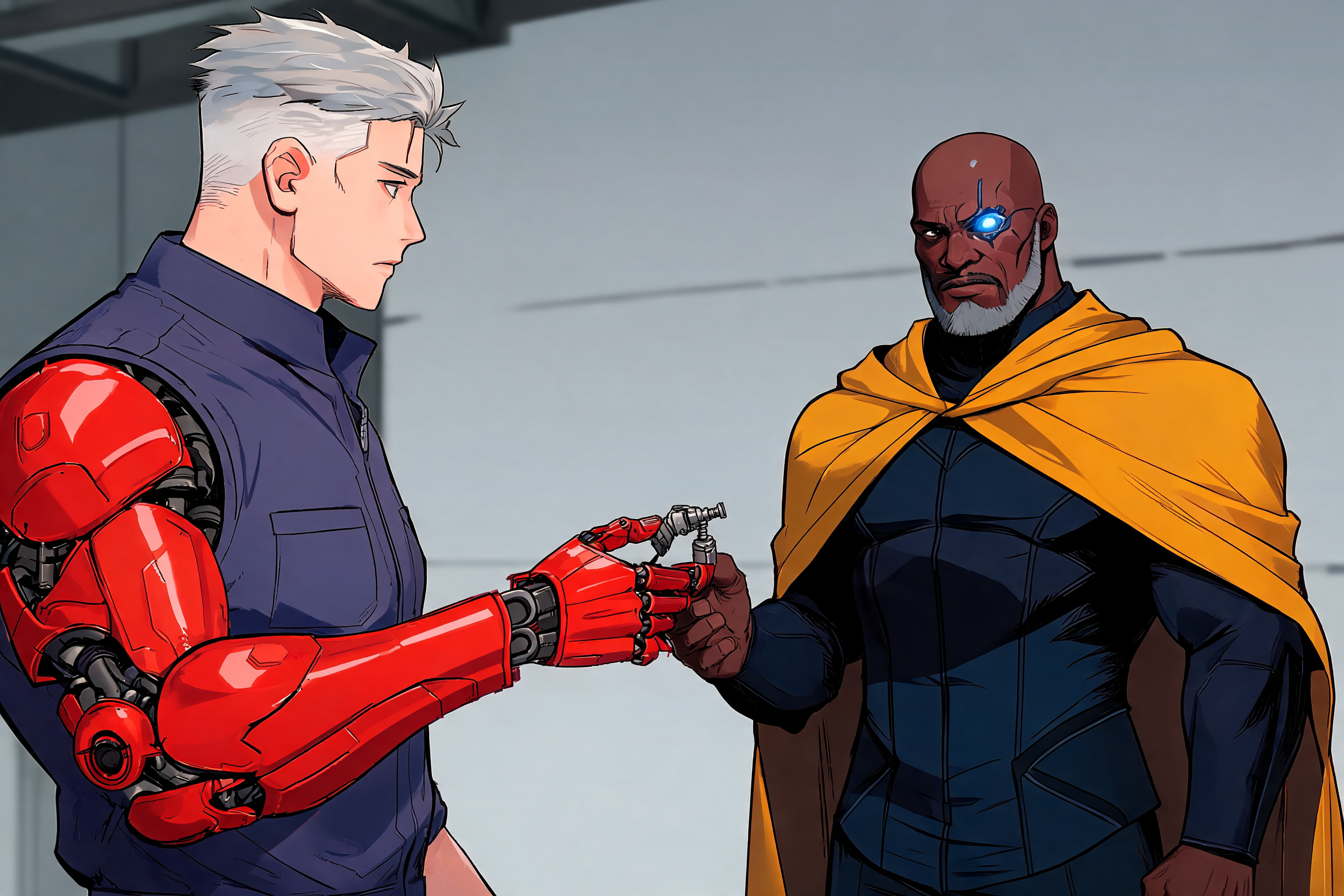
Panel 30Ren Ito + Toma Reyes
Ren Ito's single red mechanical left arm was rendered with duplicate robotic hand or forearm anatomy.
The record reports 51 successful image calls and zero provider failures. Active human review time was not instrumented separately, and no settled provider invoice or credit ledger was captured, so exact cost is not reported. The test used diagnostic labels, not story dialogue, and did not evaluate video continuity.
Approved evidence SHA-256: 98c7d95e7fe7663b99d3ae8f482ad6583c281c7a8a836d68d40e8c819ab1d636
Different production tasks expose different kinds of drift. Use the original reference as the source of truth.
Compare face shape and hair silhouette at both scales. If an identifying feature is hidden or too small to inspect, mark it unverified rather than assuming it passed.
Review jacket color, trim, accessories and left/right placement after changes in lighting or camera angle. A new background should not silently redesign the character.
Check each cast member separately for swapped clothing, borrowed facial traits and merged limbs. In the published case, a duplicated mechanical arm triggered failure even when other styling looked consistent.
An identity can remain recognizable while small details vary. Keep those deviations visible in the review instead of describing every accepted result as perfect.
Cross-page continuity
For a planned sequence, review an establishing shot, a reaction close-up and a return to the wider scene together. Compare the same identity anchors across all three and against the original reference. This is a suggested check, not another measured benchmark.
Reference preparation
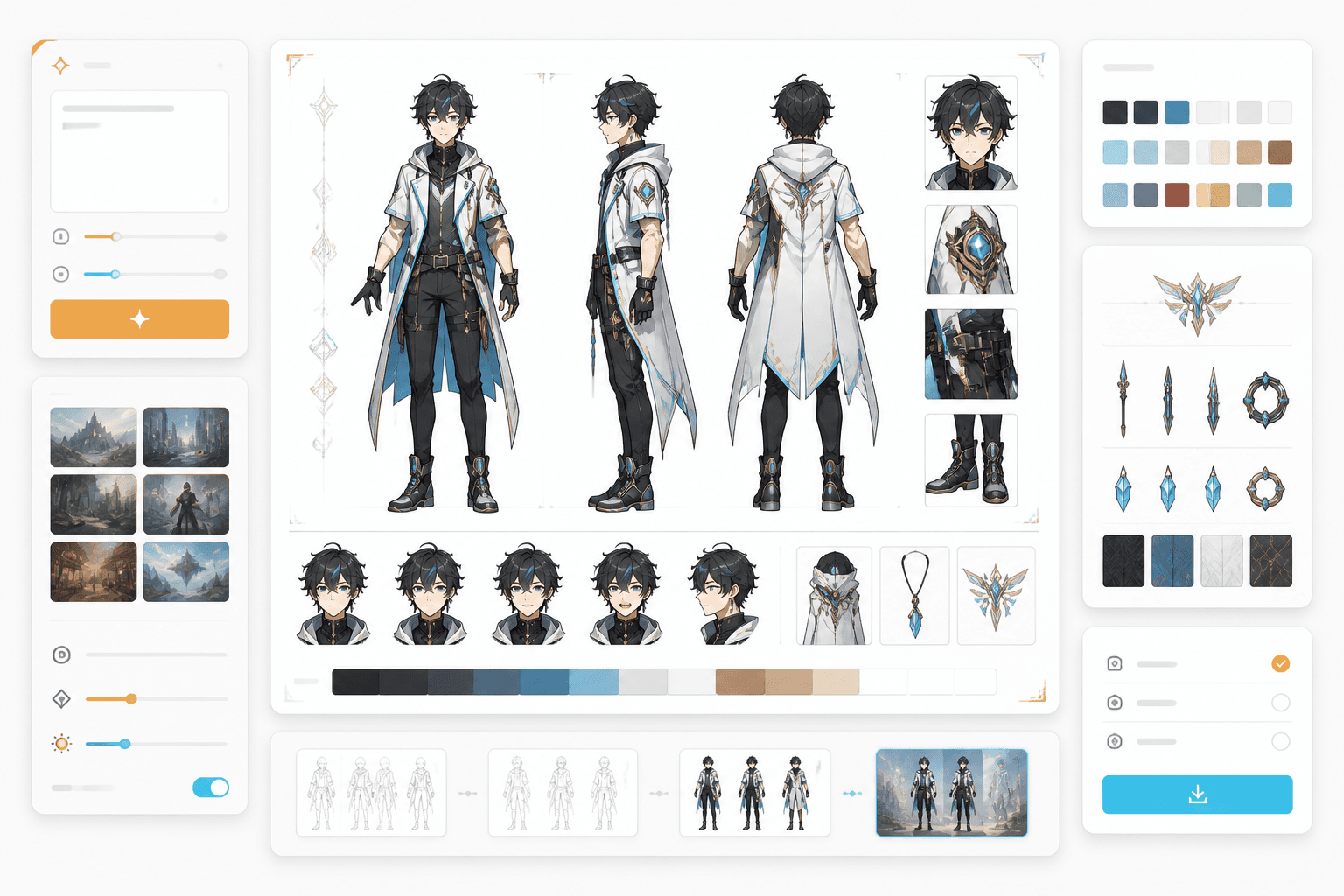
A sheet records views, expressions and outfit details; consistency is the separate task of keeping those details recognizable in later scenes. Approve the sheet before using it as a reference, and inspect generated views for contradictory marks or mirrored accessories.
Disclosed repair
Panels 1, 10 and 30 of the public case failed because Ren Ito’s mechanical-left-arm anchor was duplicated. Each received one targeted redraw. The failed originals, repaired panels and appearance-level decisions remain available for comparison.
Workflow guide
A strong first portrait is only the starting point. Check the same face, hair, outfit and left/right identity details in a close-up, a wider scene and the next page before treating the design as reusable.
Open the character studio and define the face, hair, body, outfit and style, or start from an authorized reference image. Keep the approved image as the comparison source rather than replacing it with every new output.
Give each cast member a stable name or ID. Record specific anchors and their side: for example, Ren Ito has a silver undercut, indigo jumpsuit and one red mechanical left arm. Separate permanent identity from the action or setting.
List the characters needed in that panel and supply their approved references where the chosen workflow supports them. Change the shot, expression or background deliberately; keep identity wording stable. The public case supplied only the references for each panel’s named cast.
Review the new panel against the original reference and adjacent pages. Check face and head, hair, body cues, outfit colors and unique accessories. Inspect close-ups, distant figures, partial occlusion and left/right details separately.
Keep the failed image, name the mismatch and regenerate or edit that panel using the approved reference. Review both characters again after a repair; accept the corrected panel before continuing the sequence.
Adapt these planning templates to your approved references and supported tool. They are suggested briefs; the controlled case’s exact original input is linked in its evidence section.
Start with one reusable character, then check each appearance and repair drift before expanding the sequence.