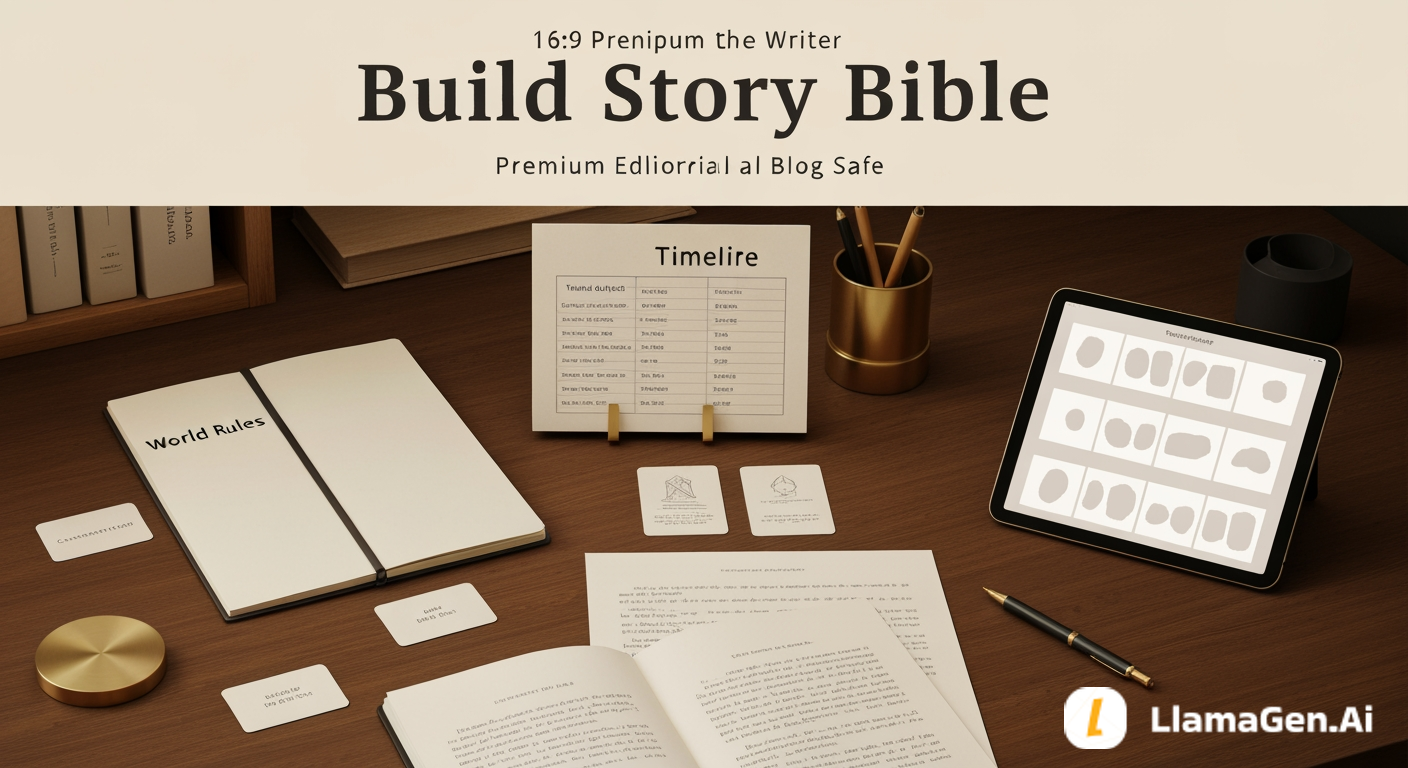
A story bible is the operating system for a novel.
It keeps core facts stable as the draft grows: who the characters are, what they want, what the world allows, what has already happened, what must not change, and which images should keep returning.
For visual writers, a story bible should do one more job: make the novel easier to turn into storyboards, comic tests, pitch decks, book trailers, and video assets.
That is why this template is built around the full writer workflow:
story promise -> character bible -> world rules -> scene memory -> visual motifs -> storyboard handoff
A practical first step is to open LlamaGen.AI Story AI, paste the compact template below, and build a project bible before asking for a full chapter draft.
You need a story bible when the book is too large to keep in your head.
That can happen in chapter two. It can happen in book three. It can happen the first time a character's eye color changes, a magic rule contradicts itself, or a side character suddenly speaks in a different voice.
A story bible is especially useful when you are writing:
The goal is not to make a beautiful document. The goal is to prevent drift.
I used a small original fiction project and built the story bible as if it would later feed chapters, storyboards, and pitch assets.
| Test item | Setup |
|---|---|
| Date tested | August 5, 2026 |
| Project | The Glass Orchard |
| Source input | 426-word original fiction brief |
| Writer stage | After premise, before full chapter drafting |
| Target output | Story bible, character bible, scene memory, visual motifs, storyboard handoff |
A rundown of the latest LlamaGen feature releases, product enhancements, design updates, and important bug fixes.
| Active editing time | About 14 minutes |
| Total elapsed time | About 28 minutes including review and prompt repair |
| AI/editorial model note | CMS editorial review used GPT-5.4; product model and credit cost can vary by workspace settings and generation type |
| Credits / cost note | Treat this as a workflow test, not a pricing benchmark |
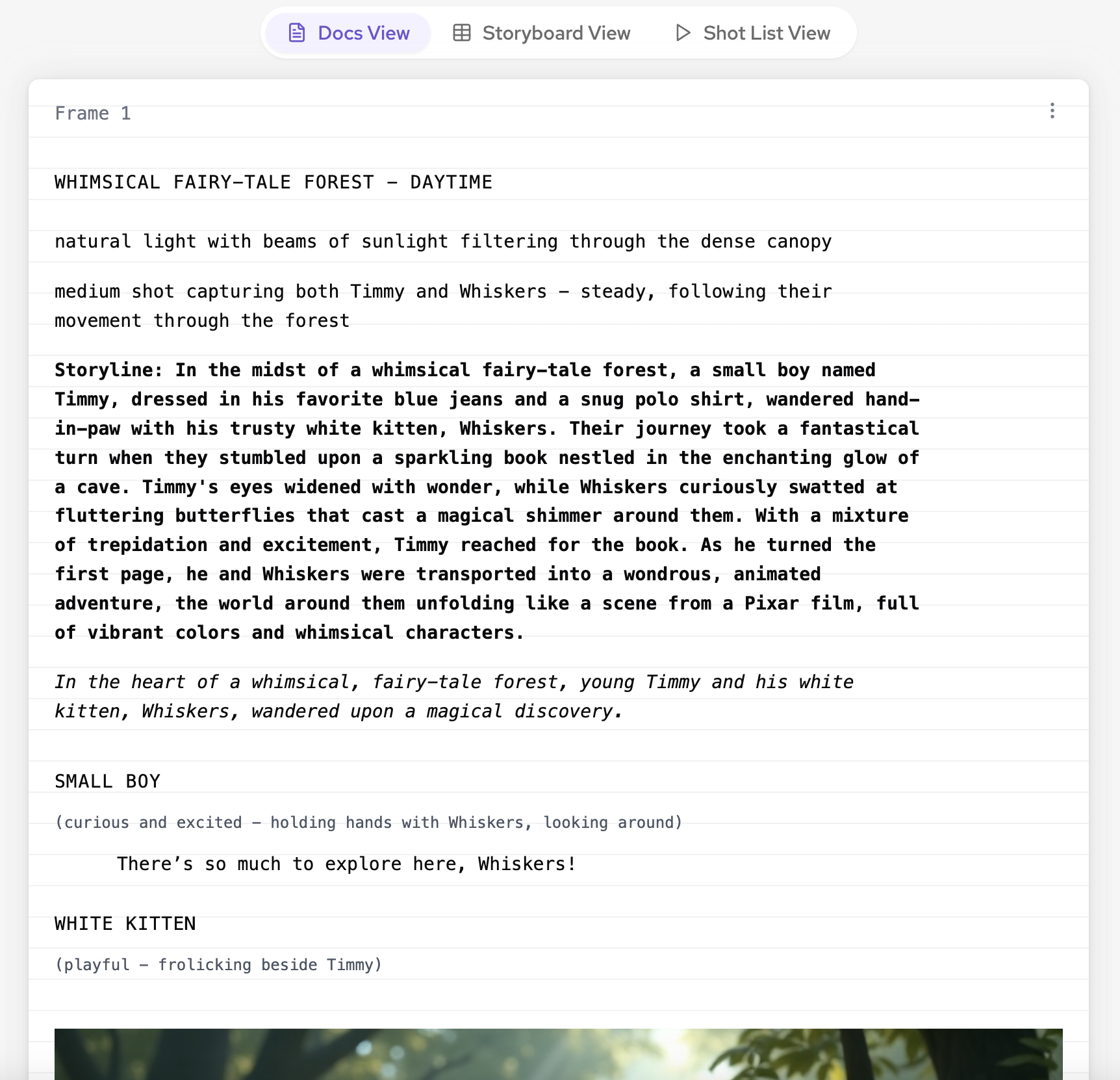
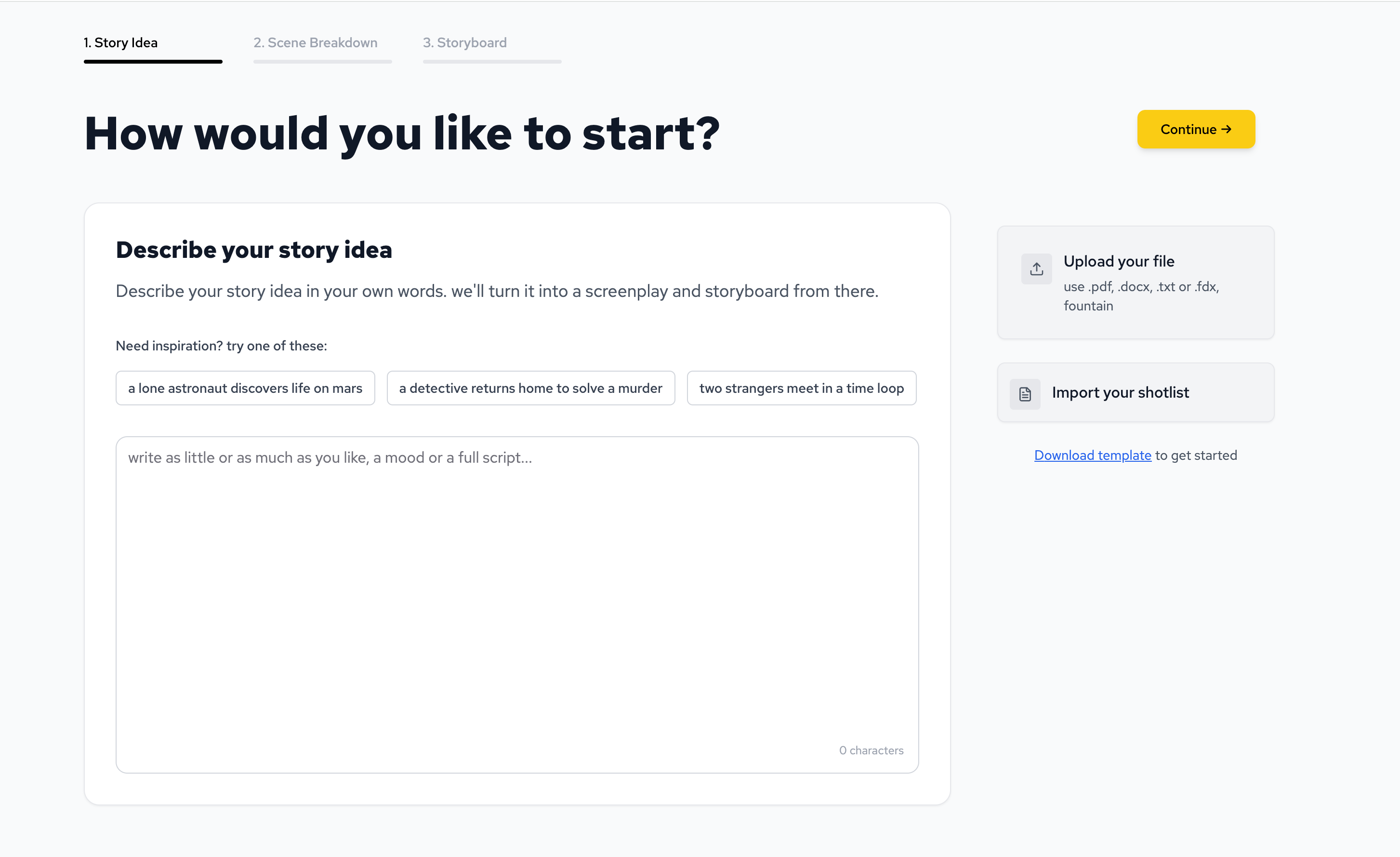
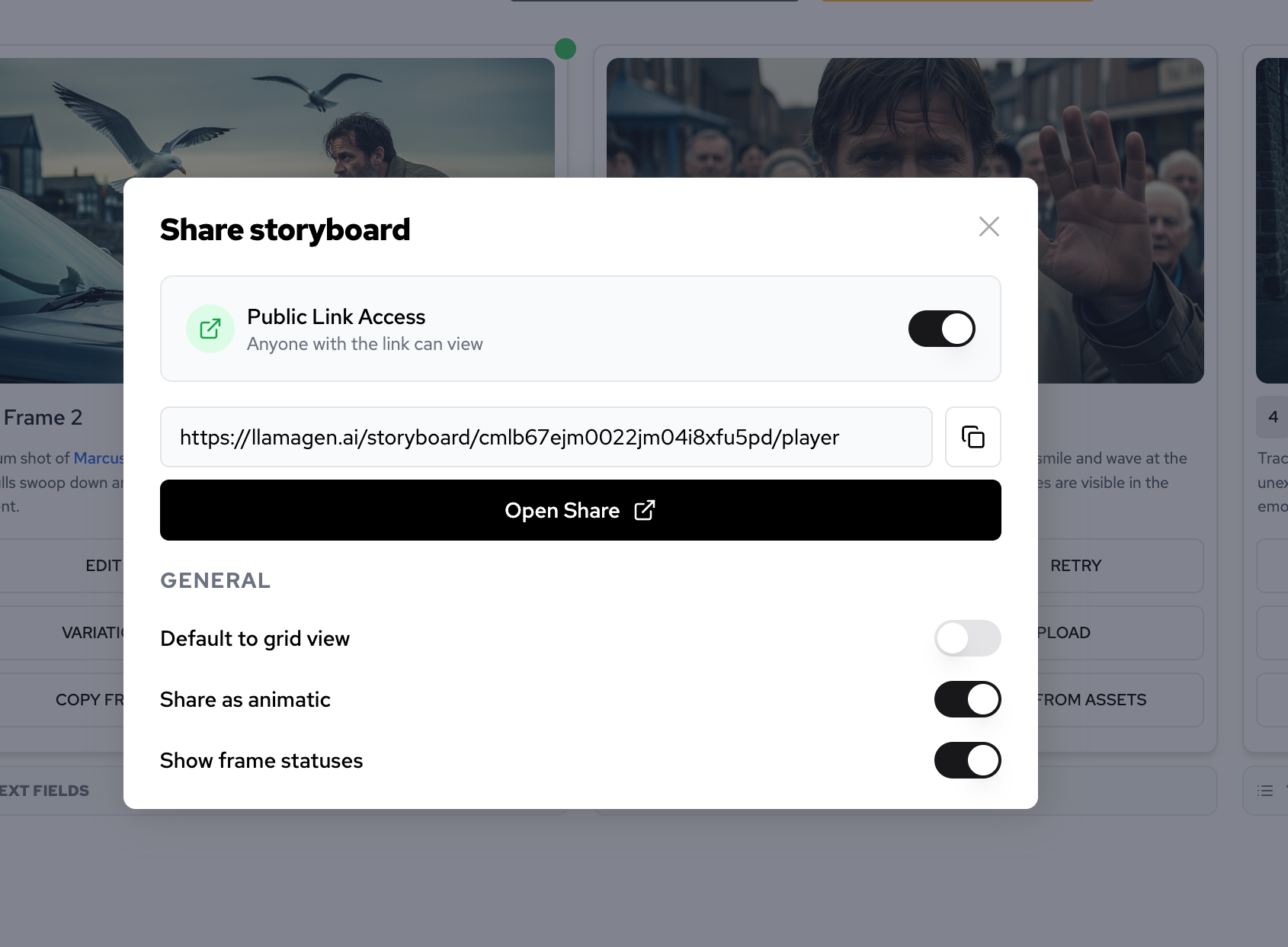
Here are the LlamaGen product surfaces used as workflow references.
The key test question was:
Can this story bible preserve continuity and also prepare the project for visual storytelling?
Title: The Glass Orchard

Premise:
Mira, a former city archivist, returns to the floating greenhouse where her missing mother once grew memory-fruit for the royal courts. Each fruit stores one witnessed moment. The greenhouse is being dismantled by a private salvage company, and Mira has one night to recover the final fruit her mother hid before she disappeared.

Character notes:
Mira is careful, observant, and slow to trust. She wears a weathered blue raincoat, carries a brass catalog key, and notices rooms by smell before she notices them by sight. She wants evidence, not comfort.

Opening scene:
Rain taps against the greenhouse glass like nervous fingers. Mira climbs through the broken service hatch and finds the orchard lights still awake, row after row of silver branches glowing under the storm. A salvage drone turns its lens toward her. Somewhere deeper in the greenhouse, a music box begins playing the song her mother used to hum.

Goal:
Build chapter one as a restrained mystery scene, then prepare visual beats that could become a storyboard, comic sequence, or book trailer.
Copy this into Story AI before you ask for a chapter.
Create a story bible for this novel project.

Return these sections:

1. Story promise
- One-sentence premise
- Dramatic question
- Reader expectation
- Emotional contract

2. Protagonist bible
- External identity
- Visual anchor
- Emotional wound
- Active want
- Hidden need
- Voice rules
- Decisions they would not make

3. Supporting cast
- Name
- Function in the story
- Relationship to protagonist
- Secret or pressure
- Visual anchor
- Voice rule

4. World rules
- What is normal
- What is strange
- What has a cost
- What cannot happen
- Words, objects, or terms that must stay consistent

5. Timeline and continuity
- Before chapter one
- Chapter one facts
- Open questions
- Clues planted
- Promises to pay off later

6. Scene memory
- Location
- Sensory anchor
- Conflict
- Character choice
- Object continuity
- Ending hook

7. Visual motifs
- Repeating images
- Color and light pattern
- Signature props
- Environments
- Shots that could become storyboard frames

8. Adaptation handoff
- Six storyboard-ready shots
- Trailer moments
- Comic or webtoon panel ideas
- Assets that must remain consistent

9. Guardrails
- Do not change
- Do not reveal yet
- Tone to preserve
- Cliches to avoid
This template is intentionally practical. It does not ask for every detail. It asks for the details most likely to break when a novel gets long.
The first output should define what the story is promising.
| Field | Working note |
|---|---|
| One-sentence premise | A former archivist enters a dying floating greenhouse to recover the last memory her missing mother hid. |
| Dramatic question | Can Mira recover the hidden memory before the greenhouse is erased? |
| Reader expectation | Restrained mystery, tactile worldbuilding, emotional tension under controlled prose. |
| Emotional contract | The story should value evidence, grief, and memory without turning sentimental too early. |
This section helps keep the novel from becoming a different book every time you revise.
The protagonist bible is where many continuity problems are prevented.
| Field | Mira note |
|---|---|
| External identity | Former city archivist returning to a forbidden greenhouse. |
| Visual anchor | Weathered blue raincoat, brass catalog key, observant posture. |
| Emotional wound | Her mother vanished without explanation, leaving evidence instead of comfort. |
| Active want | Recover the final memory-fruit before salvage crews destroy the greenhouse. |
| Hidden need | Accept that evidence can hurt and still be worth finding. |
| Voice rules | Precise, restrained, concrete, more sensory than confessional. |
| Would not do | She would not trust a convenient explanation, abandon evidence, or make a dramatic speech in chapter one. |
If you later create storyboards, comic panels, or trailer shots, this section can double as a character continuity card.
World rules should be short enough to reuse in prompts.
| Rule type | Working note |
|---|---|
| What is normal | Memory-fruit is cultivated, cataloged, traded, and archived by institutions. |
| What is strange | The greenhouse still behaves as if Mira's mother is expected to return. |
| What has a cost | A memory can be witnessed, but it changes what the witness can deny. |
| What cannot happen | Memory-fruit does not predict the future or create full ghosts. |
| Terms to preserve | Memory-fruit, brass catalog key, salvage drone, silver branches, floating greenhouse. |
These rules help stop the story from over-explaining itself or drifting into a different genre.
Scene memory is a compact record of what each scene does.
| Scene | Purpose | Continuity to preserve |
|---|---|---|
| Broken service hatch | Bring Mira into danger. | Rain, blue coat, brass key, cracked glass. |
| Silver orchard rows | Show beauty and threat together. | Glowing fruit, old automation, wet branches. |
| Drone encounter | Add pressure and surveillance. | Industrial drone, no cute personality, salvage company threat. |
| Music box aisle | Connect the mystery to Mira's mother. | Warm light, old song, restraint, no full reveal yet. |
| Reflected hand | End chapter one on a controlled supernatural image. | The hand appears in the fruit reflection, not physically in the room. |
This section makes it easier to return to a chapter weeks later and know what must remain true.
Visual motifs are not decoration. They are memory handles.
| Motif | How to reuse it |
|---|---|
| Rain on glass | Opening, transitions, isolation, exterior danger. |
| Silver branches | Greenhouse identity, memory-fruit rows, visual continuity. |
| Brass catalog key | Mira's method, archive identity, tactile object anchor. |
| Warm music box light | Emotional thread to the mother, contrast against cold rain. |
| Drone lens glare | Surveillance, time pressure, salvage company presence. |
If you later use the AI storyboard generator, these motifs become shot-level constraints.
A strong story bible should produce a clean visual handoff.
Using the story bible, create six storyboard-ready shots for chapter one.

For each shot include:
- shot number
- camera framing
- action
- character continuity
- object continuity
- environment continuity
- what must not be shown yet
Example output:
| Shot | Framing | Action | Do not show yet |
|---|---|---|---|
| 1 | Wide exterior | Mira climbs through a broken service hatch in rain. | Do not show the mother's face. |
| 2 | Over-the-shoulder | A salvage drone turns toward her. | Do not make the drone playful. |
| 3 | Low tracking shot | Mira walks between silver branches. | Do not explain memory-fruit in text. |
| 4 | Close-up | The brass catalog key opens an old panel. | Do not change the key design. |
| 5 | Medium shot | A music box glows under roots. | Do not make the moment sentimental. |
| 6 | Insert | A fruit reflects a woman's hand. | Do not reveal the full memory. |
This is the bridge from prose to visual planning. It also gives a later trailer or comic adaptation a better starting point than raw prose.
Here is the weak prompt I tested:
Make a story bible for my mystery fantasy novel about a magical greenhouse.
The output looked organized, but it failed as a production bible.
| Failure | What happened | Fix |
|---|---|---|
| Too generic | The protagonist became "brave but haunted." | Require visual, emotional, and decision anchors. |
| World drift | The fruit became prophecy, ghosts, and magic healing. | Add "what cannot happen" rules. |
| No scene memory | The bible did not record chapter-one facts. | Add a scene memory section. |
| Weak visual handoff | It produced vibes, not shots. | Add storyboard-ready shot fields. |
| No guardrails | The model kept revealing the mother too soon. | Add "do not reveal yet" and "tone to preserve." |
The repair prompt was:
Revise this story bible for production use.

Preserve:
- Mira's blue raincoat
- brass catalog key
- smell-first perception
- restrained mystery tone
- memory-fruit stores witnessed moments only
- no full mother reveal in chapter one

Add:
- scene memory
- visual motifs
- storyboard-ready shot handoff
- guardrails for future drafts
That repair made the bible useful for the next chapter.
Use this order:
This is slower than asking for chapter one immediately. It is much faster than fixing continuity after five chapters drift apart.
Before you draft the next chapter, check:
| Check | Pass condition |
|---|---|
| Character anchor | The protagonist has stable visual, emotional, and decision rules. |
| World rules | The strange parts of the world have limits. |
| Scene memory | Every major scene records what changed. |
| Clue tracking | Mystery promises are recorded before they are forgotten. |
| Visual motifs | Repeatable images are listed for covers, storyboards, and trailers. |
| Guardrails | The bible says what not to reveal or change yet. |
| Handoff | The story can become shots, panels, or a pitch asset without starting over. |
A story bible is a reusable reference that tracks characters, world rules, timeline facts, scene memory, and continuity guardrails for a fiction project.
Start short. A useful first bible can be 2 to 5 pages. Expand it only when the story adds characters, rules, locations, or reveals that must stay consistent.
No. A character bible is one section inside a larger story bible. The full story bible also tracks world rules, timeline, scene memory, motifs, and adaptation notes.
Yes. Add visual motifs and storyboard-ready shots to the story bible. That turns the bible into a bridge between prose and visual production.
Build the story bible before the chapter draft gets too large.
For visual writers, the strongest template is not only about plot and character. It also records scene memory, visual motifs, and storyboard handoff notes.
Start in LlamaGen.AI Story AI, paste the template, and create a story bible that can support chapters, storyboards, comic tests, and pitch assets without losing continuity.
Just refer your friends, followers, and customers to earn up to 30% in recurring commissions for a lifetime!