An AI story generator is useful when you need ideas fast. An AI story writer is more useful when you are building long-form fiction that depends on memory, structure, character continuity, and a clean handoff into visual assets.
That distinction matters because writers do not only need paragraphs. They need a repeatable system:
For this test, I used a small original fiction input and ran it through a writer-focused workflow: story expansion, character bible, scene planning, storyboard handoff, and revision. A practical next step is to open LlamaGen.AI Story AI and start from a structured story brief instead of asking for a generic chapter.
This was not a one-prompt demo. The goal was to simulate how a novelist or screenwriter might actually work.
| Test item | Setup |
|---|---|
| Date tested | August 2, 2026 |
| Source input | 426-word original fiction brief |
| Writer stage | Early chapter development after the premise exists |
| Target output | Story bible notes, three scene cards, six storyboard-ready shots |
| Workflow path | Story brief to scene cards to visual storyboard handoff |
| Active editing time | About 11 minutes |
A rundown of the latest LlamaGen feature releases, product enhancements, design updates, and important bug fixes.
| Total elapsed time | About 24 minutes including review and prompt repair |
| Credits / cost note | Credits vary by model, output type, and account settings, so treat this as a workflow test rather than a pricing benchmark |
Here are the public LlamaGen product surfaces used as references for this workflow.
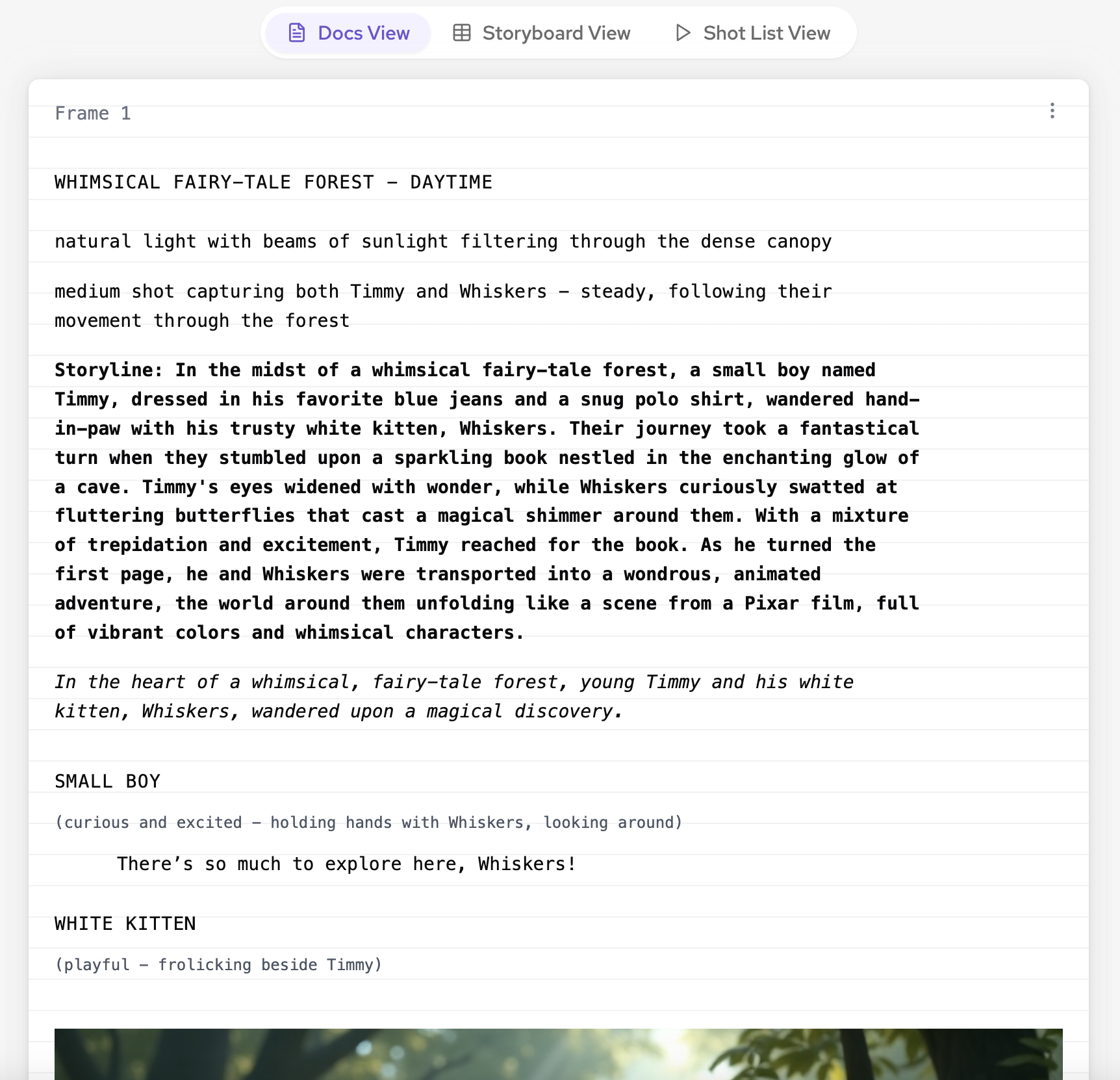
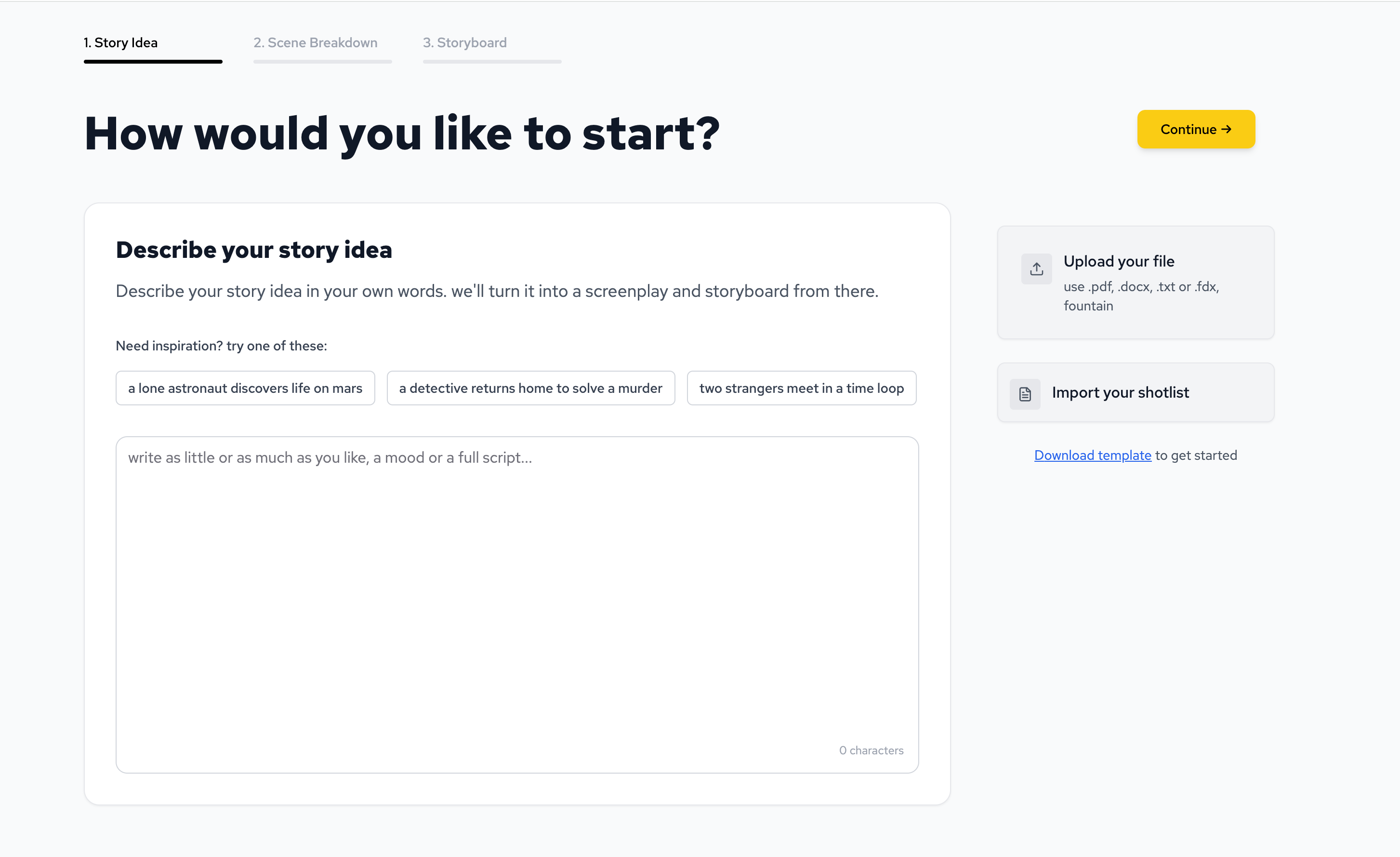
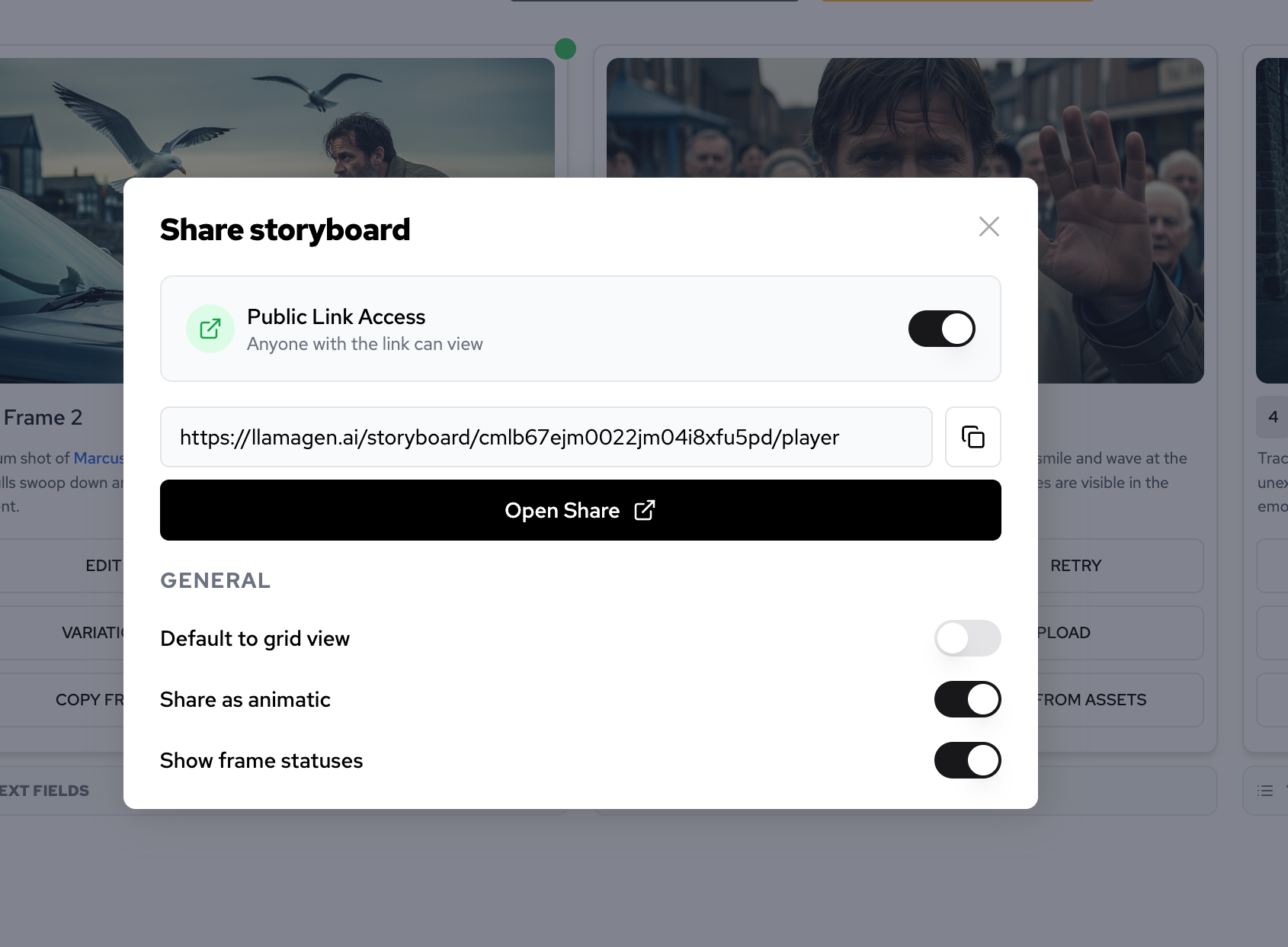
The test centered on a practical production question: can this help a writer keep moving after chapter one, or does it mainly produce an attractive first draft?
I used this original brief:
Title: The Glass Orchard

Premise:
Mira, a former city archivist, returns to the floating greenhouse where her missing mother once grew memory-fruit for the royal courts. Each fruit stores one witnessed moment. The greenhouse is being dismantled by a private salvage company, and Mira has one night to recover the final fruit her mother hid before she disappeared.

Character notes:
Mira is careful, observant, and slow to trust. She wears a weathered blue raincoat, carries a brass catalog key, and notices rooms by smell before she notices them by sight. She wants evidence, not comfort.

Opening scene:
Rain taps against the greenhouse glass like nervous fingers. Mira climbs through the broken service hatch and finds the orchard lights still awake, row after row of silver branches glowing under the storm. A salvage drone turns its lens toward her. Somewhere deeper in the greenhouse, a music box begins playing the song her mother used to hum.

Goal for this pass:
Build chapter one as a mystery scene with emotional restraint, then prepare visual beats that could become a storyboard or trailer.
This is the kind of input an AI story generator can understand. The difference is what happens next.
| Need | AI story generator | AI story writer |
|---|---|---|
| Fast premise ideas | Strong | Strong |
| One-off short story | Strong | Strong |
| Multi-chapter continuity | Often weak unless you keep pasting context | Better when it keeps character, scene, and story bible context together |
| Character consistency | Text-only consistency at best | Can connect character notes to visual and storyboard assets |
| Revision workflow | Usually prompt by prompt | Better for staged work: premise, outline, chapter, scene card, visual plan |
| Writer control | Depends on prompt detail | Stronger when the workflow separates story decisions from prose generation |
| Visual handoff | Usually absent | Can move toward storyboard, comic, screenplay, or video planning |
The practical rule is simple: use a generator when you need a spark. Use a writer workflow when you need a project.
The first prompt should not ask for a chapter. It should ask for structure.
You are helping me develop long-form fiction.

Use the source brief below. Do not write the chapter yet.

Return:
1. A one-sentence dramatic question.
2. A nine-beat chapter-one spine.
3. The emotional turn of the scene.
4. Three continuity facts that must remain stable later.
5. Two visual motifs that can be reused in a storyboard.

Keep the tone restrained, mysterious, and grounded.
The useful output was not polished prose. It was a decision map:
| Output | Result from the test |
|---|---|
| Dramatic question | Can Mira recover her mother's hidden memory before the greenhouse is erased? |
| Emotional turn | Mira starts the scene seeking evidence and ends it realizing the evidence may still be alive in a recorded memory. |
| Stable continuity facts | Blue raincoat, brass catalog key, smell-first perception, mother's song, salvage drone threat. |
| Reusable motifs | Rain on glass, silver branches, warm music box light inside a cold greenhouse. |
This is where an AI story writer starts to feel different. It creates scaffolding you can reuse instead of generating a single block of prose.
The next step is to protect continuity before generating more text.
Create a compact story bible entry for this project.

Include:
- protagonist visual anchor
- protagonist emotional anchor
- object continuity
- location rules
- mystery rules
- details to avoid changing later

Keep each bullet short enough to paste into future scene prompts.
Output example:
| Bible field | Working note |
|---|---|
| Protagonist visual anchor | Mira wears a weathered blue raincoat and carries a brass catalog key. |
| Emotional anchor | She wants verifiable truth and resists sentimental explanations. |
| Object continuity | The catalog key opens archival drawers and greenhouse maintenance panels. |
| Location rules | The floating greenhouse is old, wet, luminous, and partially automated. |
| Mystery rules | Memory-fruit stores witnessed moments, not fantasies or prophecies. |
| Do not change | Do not turn the mother into a villain in chapter one. Do not make the fruit magical without a cost. |
This step is especially important for long-form work. Without a bible, a model may invent a new coat, a new backstory, or a new magic rule in every pass.
If you need a dedicated place to keep these notes, Story AI is the natural hub. If the project is headed toward shots or panels, connect the same bible to the AI storyboard generator instead of rebuilding context later.
A common mistake is asking for finished prose too early. Scene cards make revision easier because you can fix intention before style.
Create three scene cards for chapter one.

Each card must include:
- scene purpose
- conflict
- sensory anchor
- character choice
- visual beat
- ending hook

Do not write full prose yet.
Output examples:
| Scene card | Purpose | Visual beat | Ending hook |
|---|---|---|---|
| Service hatch | Bring Mira into the forbidden space and establish danger. | Rain beads across cracked greenhouse glass while a salvage drone wakes. | The drone identifies her mother's old access code. |
| Silver rows | Make the orchard feel beautiful but unsafe. | Memory-fruit glows inside paper-thin glass skins. | A fruit shows a reflection that is not Mira's. |
| Music box aisle | Connect the mystery to Mira's mother. | Warm light spills from a small music box under wet roots. | The song skips on the exact note where her mother used to stop humming. |
At this point, the story has enough structure to become prose, a storyboard, a comic sequence, or a trailer plan.
Long-form writers often need more than chapters. They may also need pitch assets, book trailers, webtoon tests, social clips, or concept visuals.
The handoff prompt was:
Convert the three scene cards into six storyboard-ready shots.

For each shot, include:
- shot number
- camera framing
- action
- character continuity
- environment continuity
- what must remain readable visually

No dialogue. No caption text. Keep it production-friendly.
Output example:
| Shot | Framing | Action | Continuity |
|---|---|---|---|
| 1 | Wide exterior | Mira climbs through a broken service hatch during rain. | Blue raincoat, brass key visible, greenhouse floating above dark water. |
| 2 | Over-the-shoulder | A salvage drone turns its lens toward her. | Drone is industrial and unbranded, not cute or futuristic in a toy-like way. |
| 3 | Low tracking shot | Mira moves between silver branches and hanging memory-fruit. | Fruit glows softly, greenhouse remains wet and old. |
| 4 | Close-up | Mira smells the air before touching the catalog key. | Her habit of noticing scent comes before visual confirmation. |
| 5 | Medium shot | A music box glows under tangled roots. | Warm light contrasts with cold rain and silver branches. |
| 6 | Insert shot | One fruit reflects a woman's hand that is not present. |
This is the bridge from writing to visualization. If the project later needs panels or a pitch reel, the shot list can move into the storyboard workflow or a screenplay pass in the AI screenplay editor.
Now the model has enough constraints to write without drifting.
Write the first 650 words of chapter one.

Use the story bible and scene cards.
Requirements:
- third person limited through Mira
- restrained mystery tone
- sensory detail before exposition
- no direct explanation of memory-fruit until Mira interacts with one
- maintain the blue raincoat, brass catalog key, rain, silver branches, drone, and music box
- end on the reflected hand in the fruit
This produced a usable draft because the prompt contained stable story material. The prose was not perfect, but it did not wander into random worldbuilding or over-explain the magic system.
I also tested the weaker version:
Write a cool first chapter about a girl who enters a magical greenhouse where her mother disappeared. Make it cinematic and emotional.
The result showed common problems:
| Problem | What happened | Why it matters |
|---|---|---|
| Generic protagonist | Mira became a "young woman with haunted eyes" and lost the brass key. | The character stopped being reusable. |
| Over-explained lore | The first paragraphs explained how memory-fruit worked. | The mystery lost tension. |
| Unstable tone | The scene became melodramatic and prophecy-heavy. | The intended restrained mystery disappeared. |
| Weak visual handoff | The output had mood but no clear shot plan. | It could not easily become a storyboard or trailer. |
The fix was not to simply ask the model to write better. The fix was to separate the job into stages:
Before writing prose, preserve these anchors:
- Mira wants evidence, not comfort.
- She wears a weathered blue raincoat.
- She carries a brass catalog key.
- The greenhouse is wet, old, luminous, and being dismantled.
- The mother is absent, not revealed as villain or ghost in chapter one.

Now create scene cards first. Do not write the chapter yet.
That prompt repaired the workflow because it restored continuity and delayed prose until the project had structure.
| Use case | Best choice | Reason |
|---|---|---|
| You need ten premise ideas | AI story generator | Speed matters more than continuity. |
| You need a short flash-fiction draft | AI story generator | The context window is small and the output is self-contained. |
| You are writing a novel chapter | AI story writer | You need persistent character and plot constraints. |
| You are building a series bible | AI story writer | You need reusable rules, not just prose. |
| You want to turn a chapter into a storyboard | AI story writer plus storyboard workflow | The shot list depends on story continuity. |
| You are pitching a book trailer | AI story writer plus visual workflow | You need scenes, motifs, and character anchors that can survive video generation. |
For long-form fiction, the better question is not, "Which AI writes prettier paragraphs?" The better question is, "Which workflow helps the next chapter stay true to the last one?"
Use this stack when starting a new long-form project.
Use this story brief. Do not write prose yet.
Return the dramatic question, nine-beat chapter spine, emotional turn, continuity facts, and reusable visual motifs.
Create a compact story bible entry with protagonist anchor, emotional anchor, object continuity, location rules, mystery rules, and details to avoid changing.
Create three scene cards with purpose, conflict, sensory anchor, character choice, visual beat, and ending hook.
Convert the scene cards into six storyboard-ready shots with framing, action, character continuity, environment continuity, and visual readability notes.
Write the scene only after the above structure is approved. Preserve the story bible and end on the specified hook.
This stack is slower than a one-click generator, but much faster than repairing a wandering chapter afterward.
No. A generator usually creates a single output from one prompt. A writer workflow helps you develop, revise, and preserve a project across multiple steps.
Yes. The same story bible can support prose, comic panels, storyboards, and pitch assets. The key is to keep character and world rules stable before generating visuals.
Usually no. Start with the story spine, bible, and scene cards. Draft prose after the structure is clear.
Open LlamaGen.AI Story AI and paste a compact story brief. Treat the first output as project structure, not final prose.
Use an AI story generator when you need sparks. Use an AI story writer when you need a system for long-form fiction.
For the August "Write to Visualize to Pitch" workflow, the writer path was more reliable: story brief, story bible, scene cards, storyboard-ready shots, then prose. That path gives a novelist something more useful than one good paragraph. It creates reusable story assets that can carry into chapters, comics, storyboards, and video pitches.
Start with LlamaGen.AI Story AI and build the story structure before asking for the final draft.
| The mystery remains restrained, not a full ghost reveal. |
Just refer your friends, followers, and customers to earn up to 30% in recurring commissions for a lifetime!