

Four-Grid Family Pet Comic: A Balanced Two-by-Two Story
Example preview
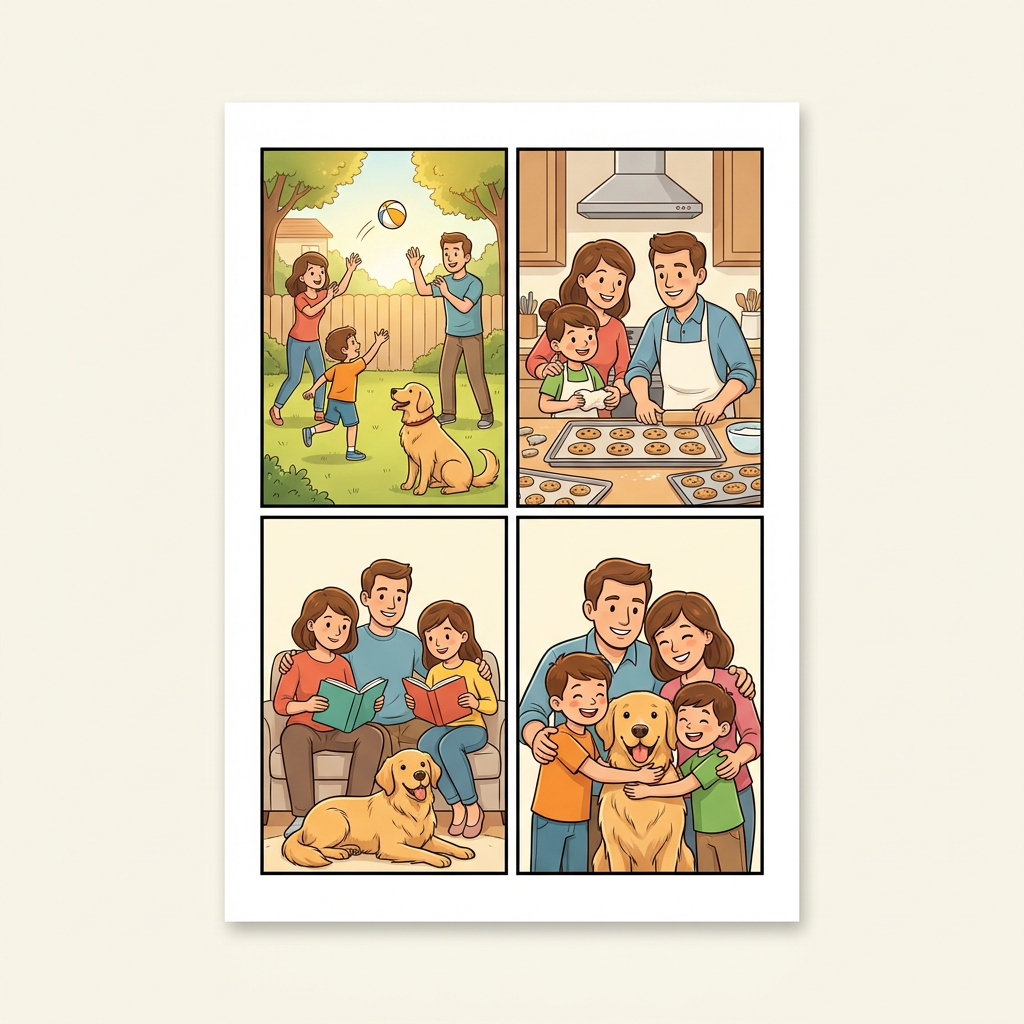
Arrange a family-and-dog adventure in a two-by-two comic grid on a vertical page. Use balanced panels to show both the setting and the characters’ reactions.
For a family pet story where each scene benefits from a broad composition. The source requests four panels in a two-by-two grid, distinct from the narrow stacked pet-strip layouts.
When to use this template
- A park outing with a small discovery
- A family dog story suitable for a photo-page layout
- A four-beat comic balancing scenery and reactions
Build your first draft
Set the grid order
Write four beats in the intended reading order, usually top left, top right, bottom left, bottom right. Keep one event in each panel.
Balance people and pet
Plan shots that include the dog without shrinking it into the background. Repeat coat markings and family clothing.
Review the page as a whole
Check that the grid has four separate cells and that the reading order is clear. Adjust cropping and page dimensions in the final layout.
Try a complete example
The picnic helper
Two-by-two family comic grid on a vertical white page: a family lays out a picnic; a breeze lifts the blanket corner; a small spotted dog sits on the corner; everyone settles beside the dog with a basket. Clean black borders, balanced square-ish scenes, stable clothes and dog markings, no text.
The blanket anchors the story across a balanced grid. The dog’s useful action earns the ending and keeps it central to every scene.
Before you publish
- Check for accidental diagonal reading paths when characters point across grid boundaries.
- A two-by-two request does not guarantee correct page geometry; inspect the output and print crop.
Questions about this template
- Why choose this over a vertical strip?
- The grid gives each scene more horizontal room for people, a pet, and a setting. A tall strip is better when phone scrolling or close-up timing matters more.
- Can I use it on a photo page?
- You can place the result in a page design after checking resolution and crop. The internal ID does not certify a 10-by-15 physical output.
- How do I keep the story order clear?
- Number the beats in your prompt and use character eyelines or repeated props to lead from left to right and then down. Review the final arrangement before lettering.