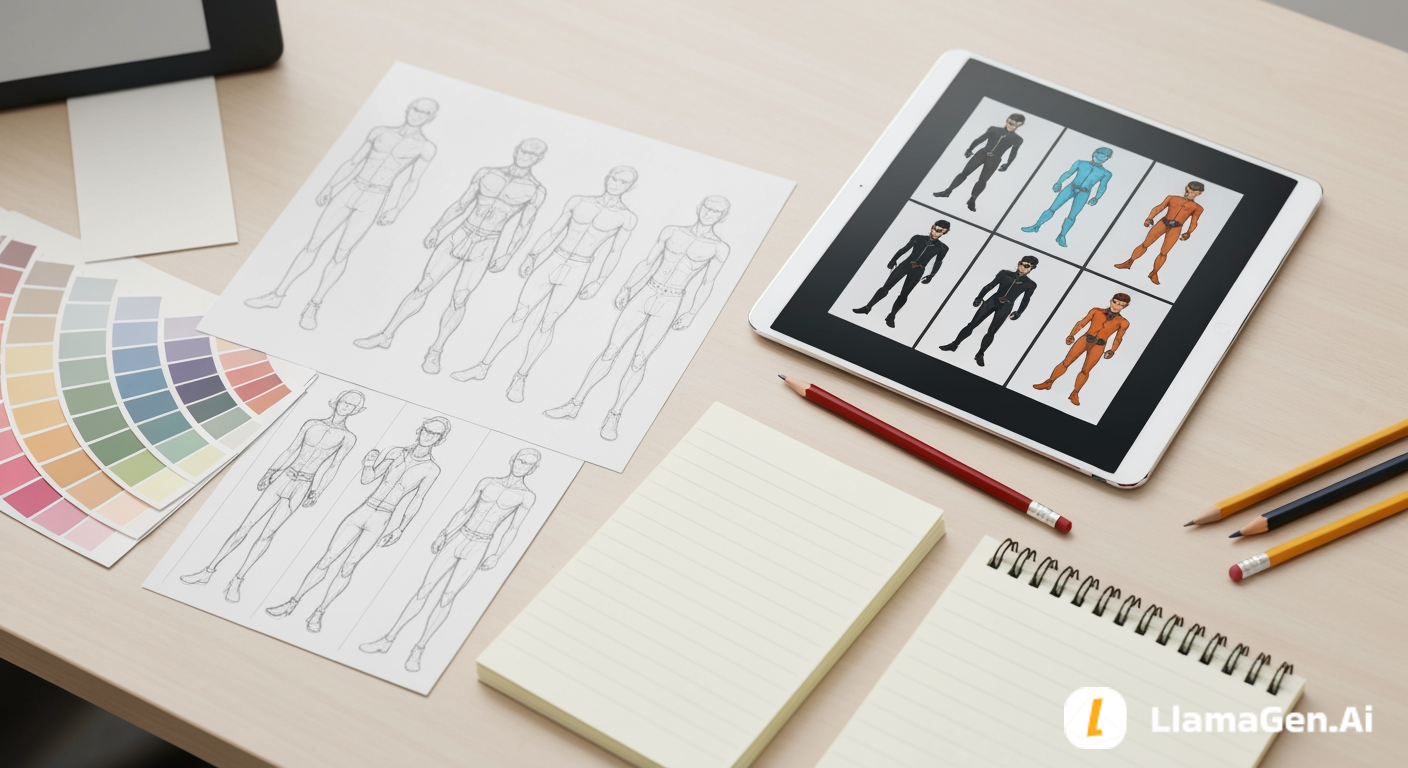
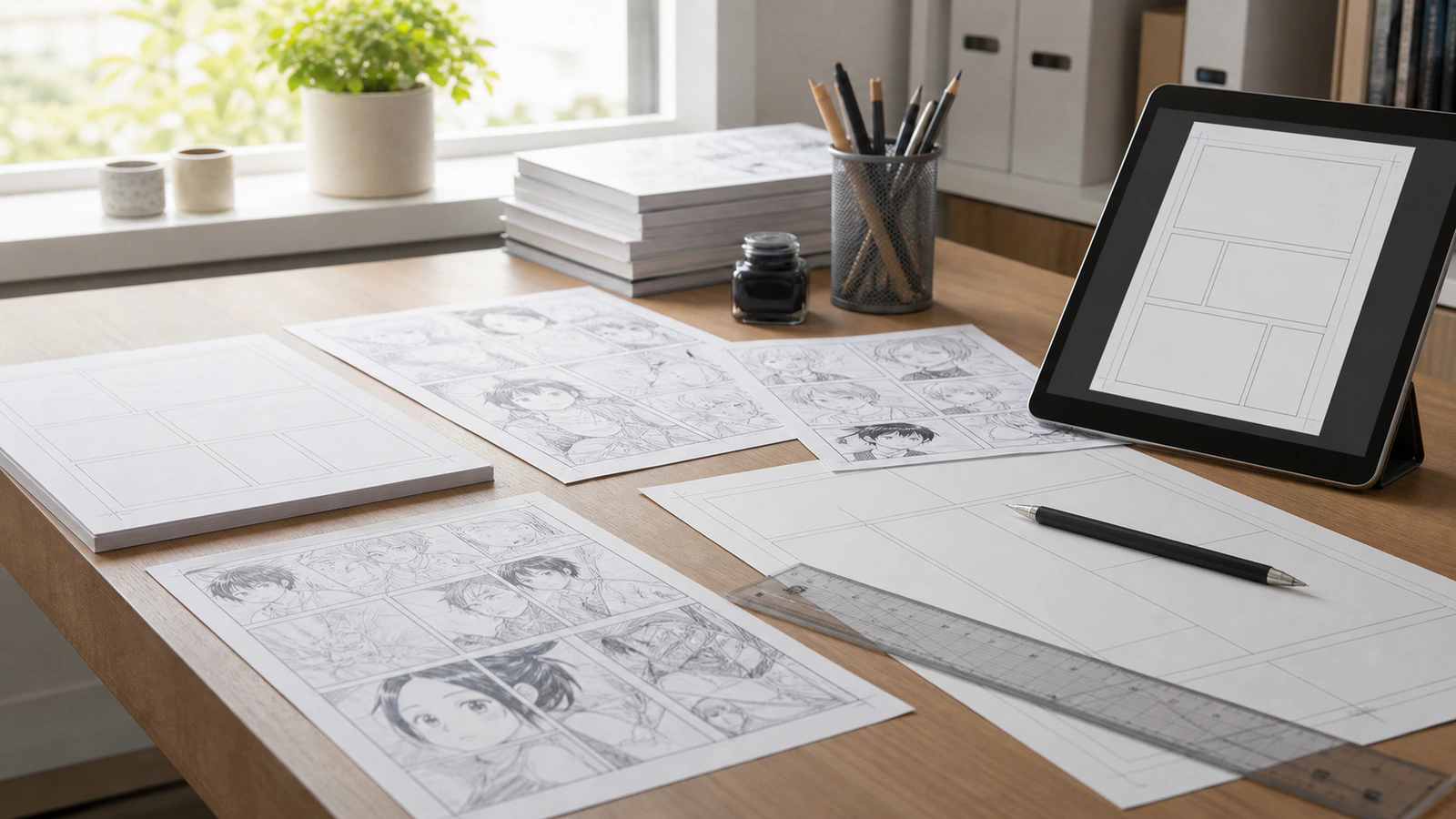
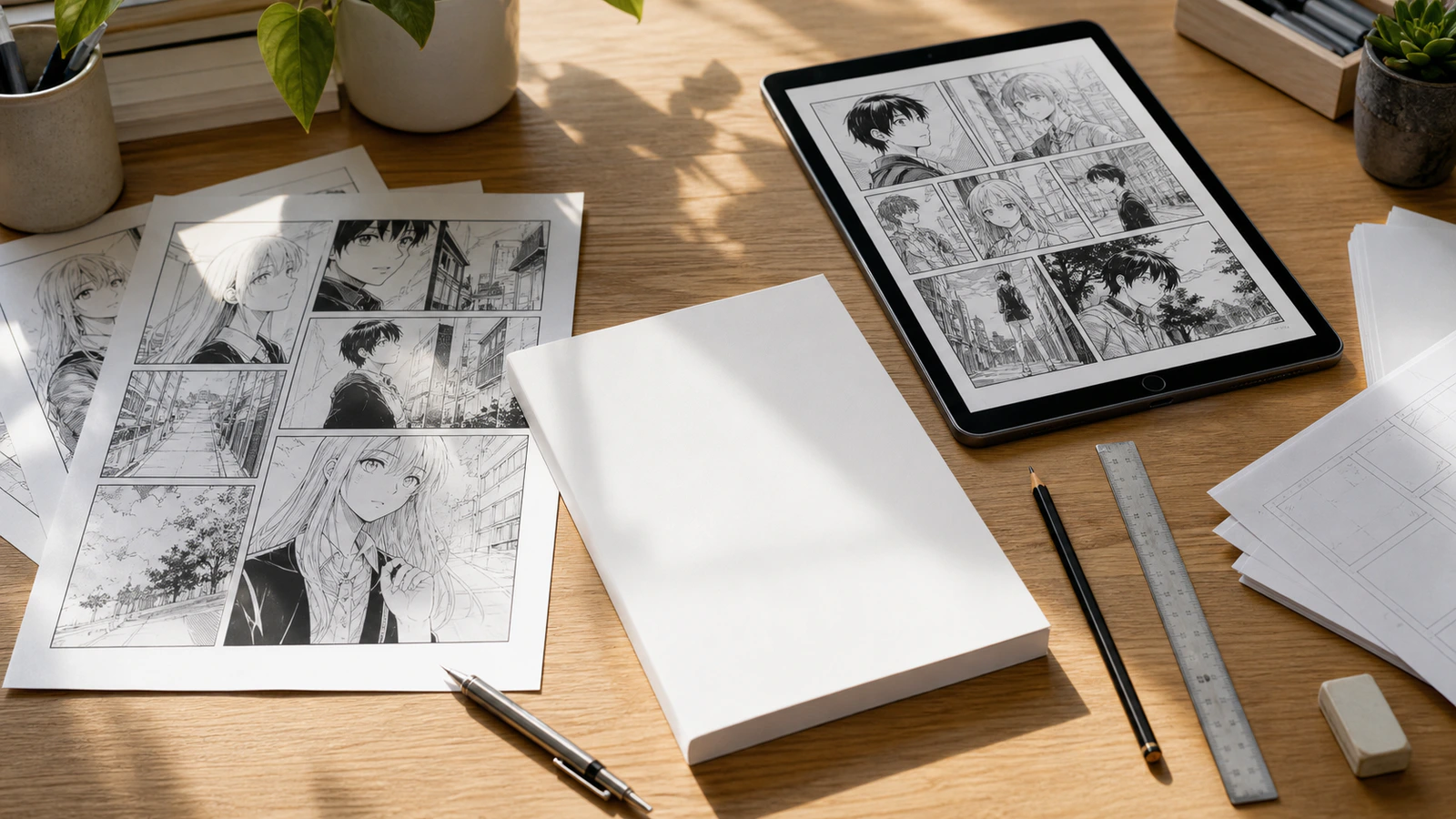
A comic falls apart fast when the main character looks different on every page.
Readers can forgive a simple background or a rough first draft. They usually will not forgive a protagonist whose face, hair, outfit, age, or personality drifts from panel to panel. Character consistency is what turns a good comic idea into a readable sequence.
A character sheet with appearance, personality, visual anchors, and consistency rules.
That sheet becomes the reference for world building, panel scripts, and final comic pages.
What You Will Create
A comic character sheet is not just a portrait. It is a production reference you can reuse across pages and episodes.
For this workflow, your character sheet should include:
Character role
One-sentence story function
Face and hair details
Outfit and color rules
Body shape and silhouette
Personality shown through behavior
Recurring prop or visual symbol
Expression range
Do-not-change rules
Optional flexible details
Here is a simple target format:
Name:
Story role:
Want:
Pressure:
Face:
Hair:
Outfit:
Palette:
Silhouette:
Personality in action:
Recurring prop:
Never change:
Can change:
Example:
Name: Leo
Story role: nervous apprentice repair kid
Want: prove he can fix something valuable
Pressure: every machine he touches breaks in a new way
Face: slim face, curious eyes, small bandage on left cheek
Hair: messy black hair with a copper hair clip
Outfit: oversized tan utility jacket, dark green shirt, patched work pants
Palette: tan, dark green, copper, dusty gray
Silhouette: small frame, large jacket pockets, tool strap
Personality in action: careful with objects, blurts out ideas when scared
Recurring prop: dented screwdriver
Never change: bandage, copper clip, utility jacket, screwdriver
Can change: dust, small stains, sleeve position, expression
That is enough to start generating and reusing a character.
Why Character Creation Comes Before Panels
If you generate panels first, the model has to reinvent the character over and over. That usually creates drift.
تبدیلیوں کا ریکارڈ
نوجوانوں کے خواب روشن کریں جہاں لاکھوں کہانیاں زندگی پاتی ہیں
LlamaGen کی تازہ ترین فیچر ریلیزز، پروڈکٹ بہتریوں، ڈیزائن اپ ڈیٹس، اور اہم بگ فکسز کا خلاصہ۔
✦
✧
✦
✧
کے لیے ایک نیا ذریعہ کہانی سنانا
لامحدود کہانیاں، کامکس، اینیمیشنز، گیمز اور مزید بنائیں—چند سیکنڈز میں، جو جدید ناظرین سے جڑیں
A story can say:
Leo opens the crate.
But a comic page still needs answers to questions like:
Which Leo?
What age does he appear to be?
What is his hair shape?
Which jacket is he wearing?
What expression fits the moment?
What pose language repeats?
What colors should stay consistent?
What should never change?
Character creation answers those questions once, then gives each panel the same identity to build from.
Step 1: Start From the Story Seed
Do not design a character in isolation. Pull the design from the story.
From Day 1:
In a floating junk market above the city, Leo, a nervous apprentice repair kid, wants to prove he can fix something valuable, but every machine he touches breaks in a new way. When he opens a dented delivery crate and finds a tiny robot repeating his missing sister's voice, he must decide whether to hide it from the market guards or follow the robot's map, which points to a place that officially does not exist.
This already gives you strong design inputs:
Story detail
Character decision
nervous apprentice repair kid
small frame, careful posture, tool strap
machines break when he touches them
cautious hands, anxious expression
floating junk market
patched clothing, practical pockets
missing sister
emotional softness, keeps a family token
tiny robot and crate
recurring screwdriver or repair tag
The goal is not to decorate the character. The goal is to make the design support the story.
Step 2: Define the Character Role
A strong comic character is built around a role, not only an aesthetic.
Common role types include:
Protagonist
Rival
Mentor
Trickster
Guardian
Comic relief
Mystery figure
Companion
Antagonist
Then define the story function:
This character exists to [create pressure / solve problems / reveal the world / challenge the hero / make the theme visible].
Example:
Leo exists to make the fear of failure visible. His repair skills should look real, but his body language should show that he expects things to go wrong.
That one sentence helps every later design choice.
Step 3: Pick Three Visual Anchors
A visual anchor is a detail that helps readers recognize a character instantly.
Good anchors include:
Hair shape
Glasses or eye shape
Jacket shape
Color accent
Scar, bandage, tattoo, or mark
Repeated prop
Silhouette
Bag, weapon, tool, or familiar
Do not choose ten anchors. Choose three. Too many details make the character harder to reproduce across panels.
Those three elements should survive every panel, angle, pose, and expression.
Step 4: Separate Fixed Rules From Flexible Details
This is the most important consistency step.
Fixed rules should not change:
Hair length and shape
Key face details
Main outfit
Signature color
Recurring prop
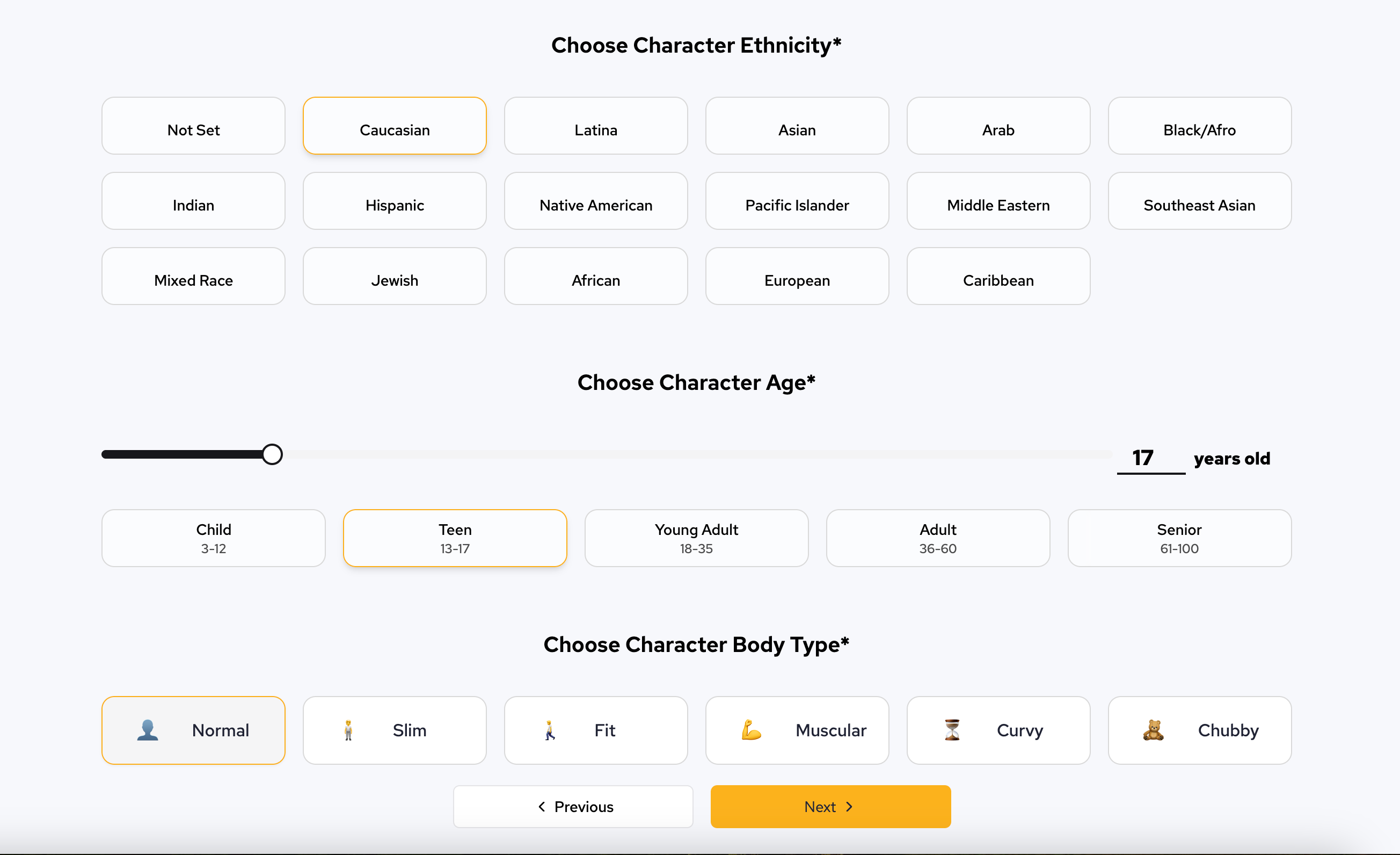
Age range
Species or body type
Flexible details can change:
Facial expression
Pose
Lighting
Dirt, scratches, or small stains
Jacket open or closed
Camera angle
Emotional intensity
If everything is fixed, the character feels stiff. If everything is flexible, the character drifts. A useful sheet defines both.
Never change: short messy black hair, copper clip, tan utility jacket, left cheek bandage, dented screwdriver.
Can change: sleeve position, dust level, expression, pose, lighting, camera angle.
Step 5: Make Personality Visible
Personality should not stay at the level of abstract adjectives.
Weak:
Leo is nervous but brave.
Stronger:
Leo checks every screw twice before acting, talks too fast when cornered, and steps between danger and broken machines even when his hands shake.
Turn personality into visible behavior:
Trait
Visible behavior
Nervous
clenched shoulders, checks tools twice
Curious
leans toward strange objects
Brave
moves forward while scared
Defensive
keeps one hand near a prop
Kind
fixes small things without being asked
This gives you better prompts and clearer panels.
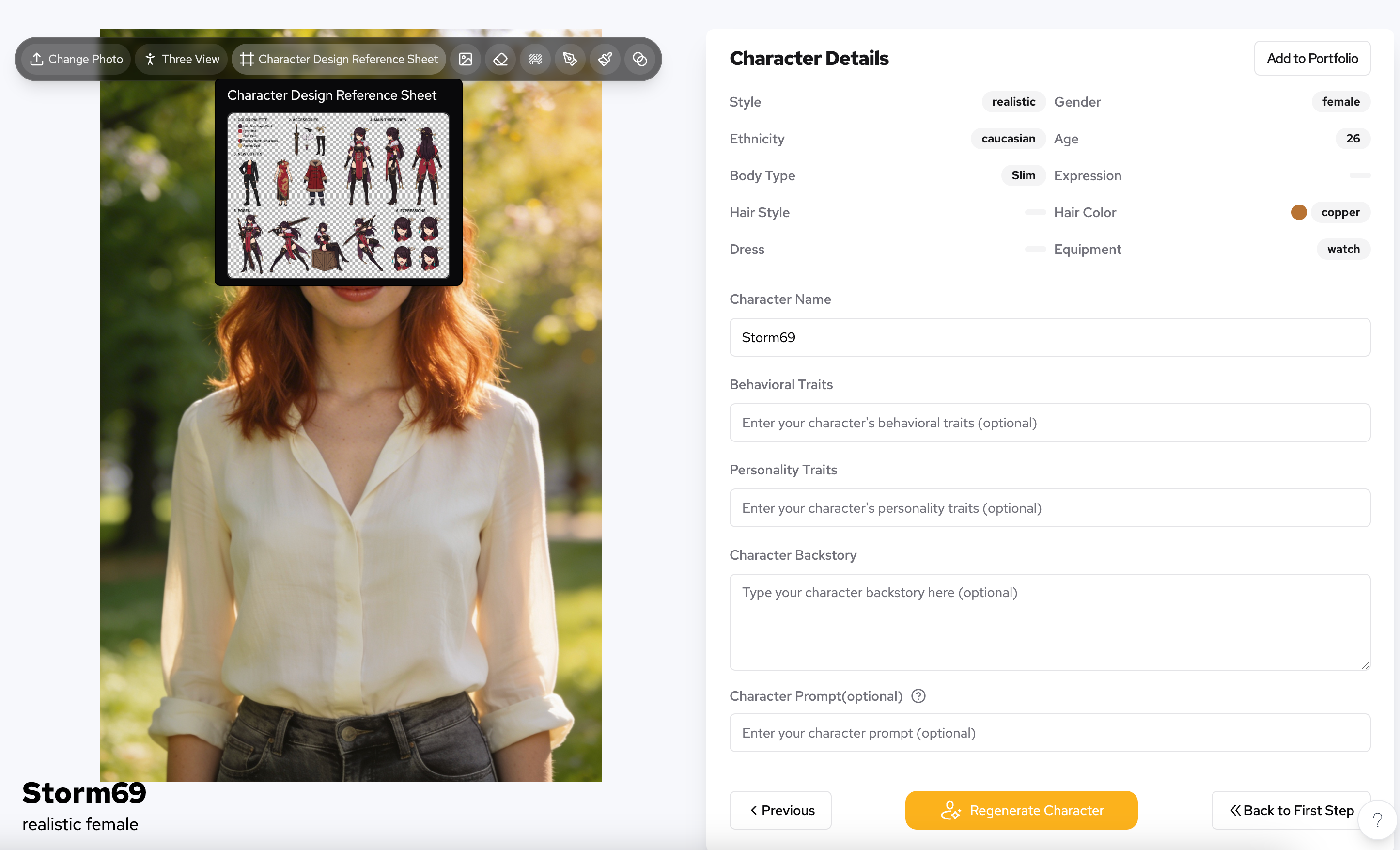
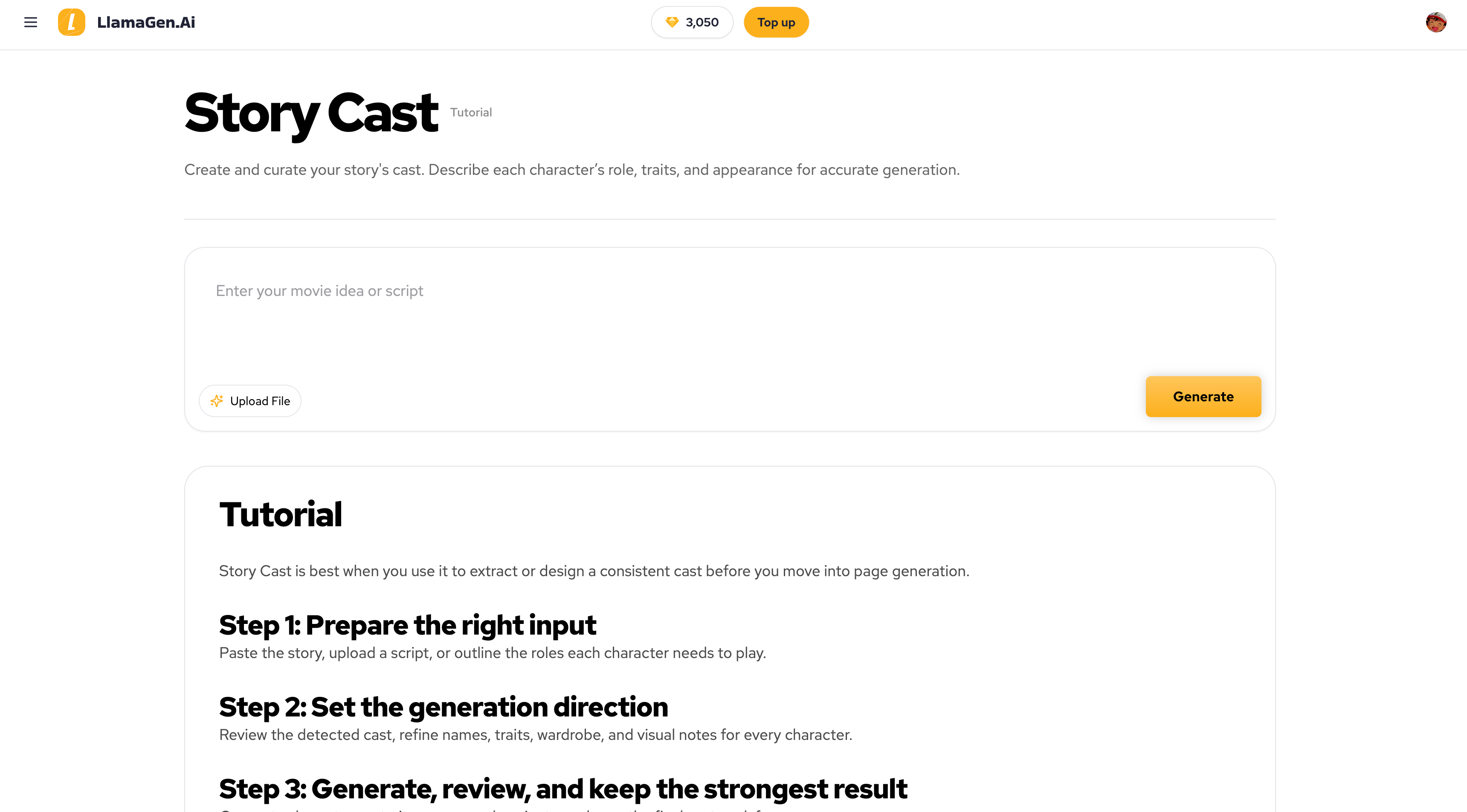
Step 6: Use LlamaGen.AI for the Character Sheet
LlamaGen.AI fits naturally at this stage because character creation feeds directly into later comic work: pages, panels, storyboards, expressions, and reusable cast references.
Use LlamaGen.AI to create:
Character portraits
Multi-view references
Outfit variants
Expression references
Props connected to the character
Reusable story cast assets
Start with a focused prompt:
Create a comic character sheet for this character:
[paste character sheet]

Style: clean cinematic manga, readable silhouette, consistent face.
Output: front view, side view, expression samples, key prop.
Important: preserve the fixed rules exactly.
After generating, compare the result against your sheet before using it in a page. If one of the anchors disappears or the outfit changes too much, revise the prompt or tighten the fixed rules.
Prompt Examples You Can Copy
Use these prompts to move from story seed to a reusable character design.
Prompt 1: Turn a story seed into a character sheet
Create a comic character sheet from this story seed:
[paste story seed]

Output:
- name
- story role
- want
- pressure
- face details
- hair details
- outfit
- color palette
- silhouette
- personality shown through behavior
- recurring prop
- never-change rules
- flexible details
Keep it practical for generating consistent comic panels.
Prompt 2: Create visual anchors
Design 3 strong visual anchors for this comic character:
[paste character notes]

Rules:
- each anchor must be easy to recognize in a small panel
- avoid overcomplicated costume details
- include one silhouette anchor, one color/detail anchor, and one prop anchor
Prompt 3: Convert personality into visible behavior
Convert these personality traits into visible comic behavior:
[paste traits]

Output a table:
Trait | Body language | Facial expression | Repeated action | Panel idea
Avoid abstract adjectives unless they are tied to visible action.
Prompt 4: Generate a LlamaGen-ready character prompt
Turn this character sheet into a concise image generation prompt for a reusable comic character reference:
[paste character sheet]

Include:
- age range
- face
- hair
- outfit
- palette
- silhouette
- key prop
- expression range
- fixed rules
Do not include story spoilers.
Prompt 5: Check for consistency risks
Review this character sheet for consistency risks:
[paste character sheet]

Find:
- details that are too vague
- details that are too complex
- missing visual anchors
- conflicts between outfit, story role, and personality
- rules that should be fixed before generating panels
Return a revised version.
A Complete Example
Here is a finished character sheet for Leo:
Name: Leo
Story role: protagonist
Story function: makes fear of failure visible while leading the reader into the floating junk market
Want: prove he can repair something important
Pressure: every machine he touches breaks in a new way
Face: slim face, curious eyes, small bandage on left cheek
Hair: messy black hair, copper hair clip on right side
Outfit: oversized tan utility jacket, dark green shirt, patched work pants, worn boots
Palette: tan, dark green, copper, dusty gray
Silhouette: small frame, large pockets, tool strap crossing chest
Personality in action: checks tools twice, leans toward mysteries, talks fast when scared
Recurring prop: dented screwdriver
Expression range: anxious focus, startled curiosity, guilty smile, determined fear
Never change: bandage, copper clip, tan jacket, screwdriver, small frame
Can change: dust, sleeve position, pose, expression, lighting
Now Leo can be used consistently in:
Character portraits
Story cast references
First-page panels
Expression sheets
Cover concepts
Future episodes
Character Creation Checklist
Before moving to world building, check your character sheet:
The character has a clear story role.
The character has one visible goal or pressure.
The face and hair are specific enough to repeat.
The outfit has a small number of memorable details.
The color palette is limited and recognizable.
The silhouette can be recognized in a small panel.
The personality is expressed through visible behavior.
There is at least one recurring prop or symbol.
The never-change rules are explicit.
The flexible details are explicit.
The sheet can be copied into a LlamaGen character prompt.
The design supports the story seed from Day 1.
Next Step: World Building
The next article in this series is World Building. That guide turns your story and character sheet into three reusable locations and a visual style definition.