
Subway systems are full of small decisions.
Tap the right card. Stand behind the platform line. Let passengers exit before boarding. Offer priority seats. Keep escalator flow clear. Hold the handrail. Move inside the train. Follow station signs. Use the correct gate if a payment fails.
These instructions are important, but they often live in separate posters, app pages, fare notices, station announcements, and support articles. For a new rider, tourist, student, or commuter using a new payment method, the experience can feel fragmented.
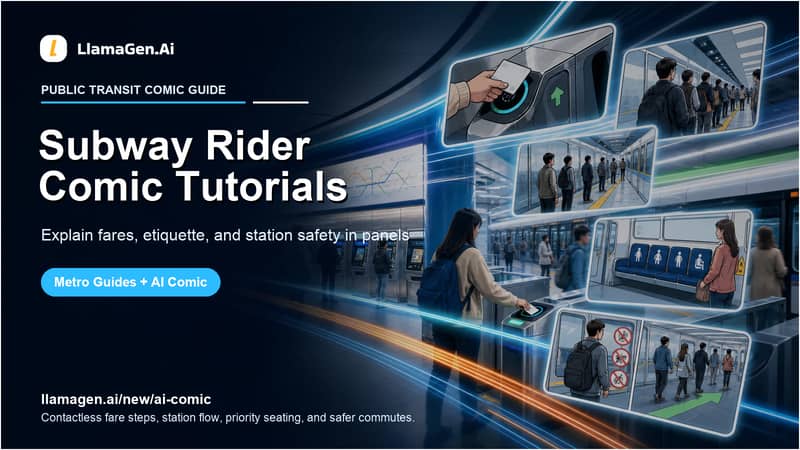
A comic tutorial can turn those scattered instructions into one readable story. It shows the rider entering the station, making the correct choice, and finishing the ride safely.
With LlamaGen.AI's AI comic creator, a subway or metro communications team can create clear tutorial comics for fare education, passenger etiquette, safety campaigns, and public-service messages.
Comics work especially well when the instruction has a sequence.
For example, a contactless payment tutorial is not just "tap your card." The rider may need to check whether the card works, approach a fare gate, wait for a signal, enter, and know what to do if the gate does not open. A comic can show each step without making the guide feel intimidating.
Station safety is also sequential. A rider should stand behind the platform line, let people exit first, board calmly, and move away from the door. That is a story. A comic can make the safe flow visible.
Passenger etiquette is the same. Priority seats, stroller space, backpacks, loud audio, and door blocking are social situations. Comics can teach the better behavior without sounding like a scolding announcement.
| Topic | Comic tutorial angle | Possible channel |
|---|---|---|
| Contactless fare payment | A rider checks the card, taps once, waits for the signal, and enters. | Website guide, station poster, app help page. |
| Fare gate troubleshooting | A rider steps aside, checks the card, and asks staff for help. | In-app FAQ, station screen, help center. |
| Let riders exit first | Doors open, people exit, then waiting riders board calmly. | Train doors, platform posters, social video. |
| Priority seating | A passenger notices someone who needs a seat and offers it kindly. | Train interior poster, accessibility campaign. |
| Platform safety | A rider stands behind the line and avoids rushing the doors. | School outreach, station signage. |
| Escalator etiquette | Riders hold the handrail, keep bags close, and leave space. | Station screens, tourist guide. |
The best comic topics are operationally simple and emotionally familiar. If riders have seen the situation before, the comic can teach the norm quickly.
Open llamagen.ai/new/ai-comic and start with one rider journey.
Choose one complete rider path:
New rider enters subway station -> uses contactless card -> passes fare gate -> waits safely -> boards after others exit.
This keeps the comic focused. It also helps the AI create panels that read in order.
Write the goal like an internal brief:
Audience: first-time subway riders and tourists
Goal: explain how to use a generic contactless card at the fare gate and ride safely
Tone: friendly, confident, simple
Format: 6-panel tutorial comic
Must show: ticket machine, fare gate, card tap, platform queue, train doors, priority seating
Must avoid: real payment logos, real subway brand names, confusing station text
This prevents the comic from becoming a generic subway scene. The AI needs the tutorial purpose.
Use a prompt like this:
Create a 6-panel subway rider tutorial comic.

Panel 1: A first-time rider enters a clean modern metro station and looks at a simple route map shape.
Panel 2: The rider checks a generic contactless card and walks toward the fare gate.
Panel 3: Close-up of the rider tapping the generic card on a fare reader. The gate opens with a clear positive signal, but no readable text or payment logos.
Panel 4: The rider stands behind the platform safety line while other riders wait calmly.
Panel 5: Train doors open. Passengers exit first, then the rider boards without rushing.
Panel 6: Inside the train, the rider stands clear of the doorway and notices priority seats reserved for people who need them.

Style: modern public-service comic, clean station design, inclusive riders, clear gestures, friendly civic tone, readable panel order.
Avoid: real metro logos, readable station names, payment network brand marks, unsafe crowding, confusing signs.
This gives LlamaGen.AI a complete scene arc: station entry, payment, platform, boarding, onboard behavior.
Review the generated comic with operational questions:
A rundown of the latest LlamaGen feature releases, product enhancements, design updates, and important bug fixes.
If the answer is not yet yes, revise the prompt panel by panel.
Copy this into LlamaGen.AI:
Create a 6-panel educational comic for a subway or metro public-service campaign.

Theme: making a first subway ride simple, safe, and respectful.
Audience: new riders, tourists, students, commuters, families, and older passengers.
Message: follow the station flow, use the fare gate calmly, and share train space with others.

Panel 1: A rider enters a modern station and checks a simplified route map shape.
Panel 2: The rider approaches a ticket machine and a fare gate area with a generic contactless card.
Panel 3: The rider taps the generic card once on the reader and waits for the gate to open.
Panel 4: On the platform, riders stand behind the safety line and leave space near the doors.
Panel 5: Train doors open. People exit first, then waiting riders board.
Panel 6: Inside the train, the rider stands clear of the doors while another passenger offers a priority seat to someone who needs it.

Style: clean modern educational comic, cinematic metro lighting, clear panel order, friendly civic tone, inclusive passengers, practical gestures.
Avoid: real subway logos, readable station text, payment network brand marks, aggressive warning symbols, unsafe behavior.
This prompt can become a website guide, a station poster, a rider education blog post, or a social carousel.
Transit agencies have a hard communication job. They need messages that are accurate, inclusive, multilingual, and easy to understand at speed.
AI comics help because they make the message visual before it becomes text-heavy. A team can quickly test different versions:
The team can then select the strongest concept, review it internally, localize captions, and publish the final version across channels.
After generating the comic, split it into formats:
| Format | Use |
|---|---|
| Full 6-panel comic | Blog post, help center, rider education page. |
| 3-panel short version | Station screen, social post, app card. |
| One-panel reminder | Fare gate signage or train interior prompt. |
| Animated panel sequence | Short video for social and in-station displays. |
| Printable handout | Schools, tourism offices, public-service events. |
Keep the same character and visual style across versions when possible. A recurring rider character can become a friendly guide for future transit lessons.
Before publishing, confirm:
AI can speed up creative production, but public transit content still needs human review. The best workflow is fast drafting, careful review, then consistent publishing.
The easiest way to begin is to answer one question:
What does a new rider need to understand before the ride feels easy?
If the answer is "how to tap a card," make that comic. If the answer is "how to board safely," make that comic. If the answer is "who should use priority seats," make that comic.
LlamaGen.AI helps turn those rider questions into visual tutorials that people can understand quickly.
Create your first subway rider tutorial comic at llamagen.ai/new/ai-comic.
Popular creator tools
Go from comics and storyboards to stylized photos with LlamaGen.
© 2026 LlamaGen.Ai All rights reserved
Leading the Future of AI Comic Generation