

Start in your free Story workspace
Save an adventure brief and write or use the free plan's available text-generation allowance. Your account's current Story limits apply; free play is not unlimited AI generation.
Turn one prompt into a text-based fantasy simulation where the world reacts to your choices, characters remember what matters, and every turn can become a new plot branch.
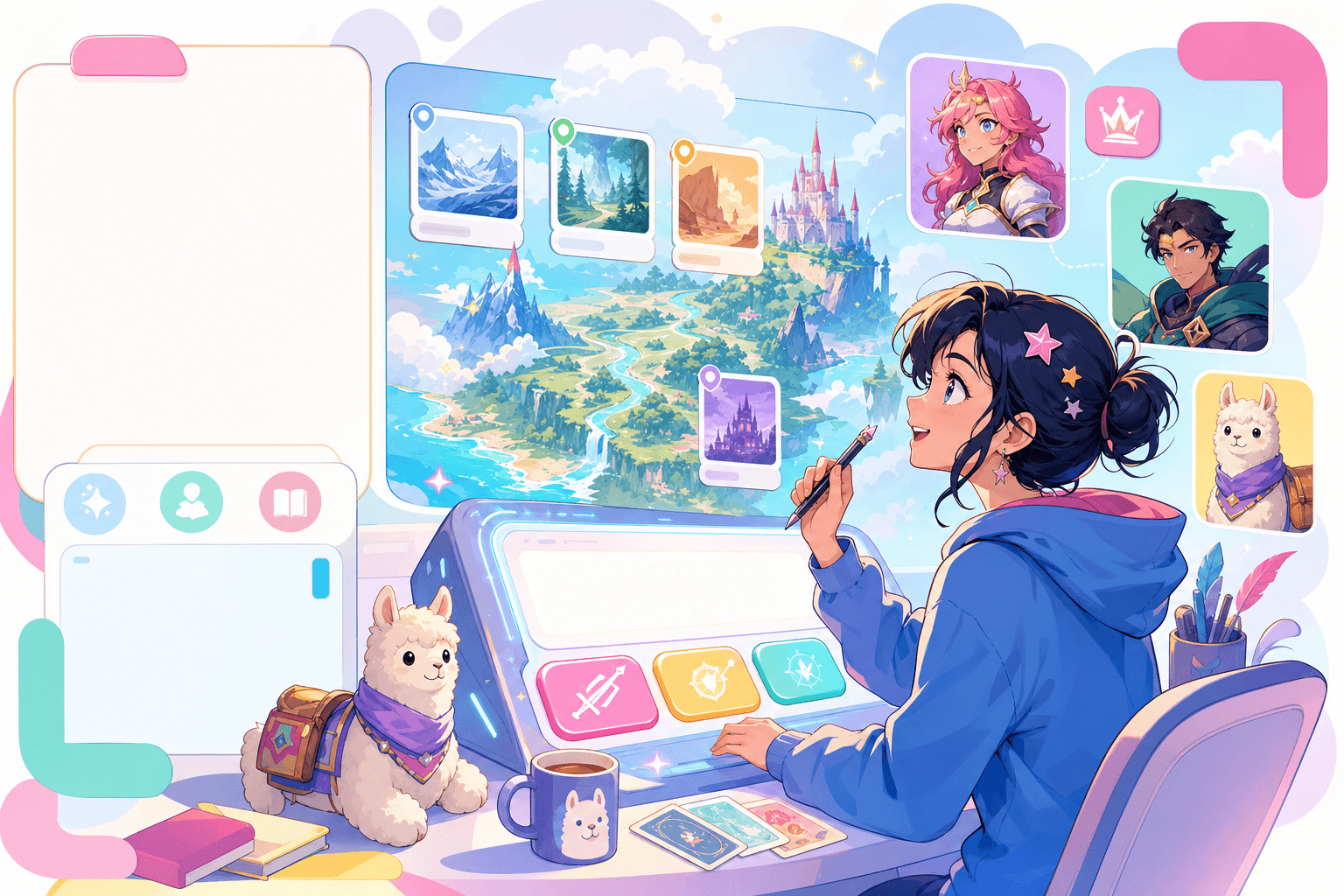
Example story turn
You wake beside a moonlit well. The rope is wet, your compass points down, and someone inside the water whispers your childhood nickname.
Prompt lab
Use these as first turns, then ask Story to continue in second person, first person, or novel-style third person.
Start a free adventureAI continuation
The rope hums when the lantern descends. Something below is not pulling the light down. It is reading it.
Your companion steps back from the well and whispers that the compass did not point underground yesterday. It pointed at you.
The examples on this page are prepared previews. Choose or edit a brief to bring that text into Story after signing in.
Save an adventure brief and write or use the free plan's available text-generation allowance. Your account's current Story limits apply; free play is not unlimited AI generation.
Paid Story plans provide higher text-generation allowances, longer context, and image-generation access. Actual allowances and credit costs depend on your plan and selected model.
Choose Start a free adventure to keep your brief in this browser for up to seven days while signing in. Save it to Story before continuing; if the account has reached its limit, compare plans and return to the same draft.
The best interactive fiction needs more than endless output. It needs a gameable premise, strong prose, readable choices, and mechanics that create pressure.
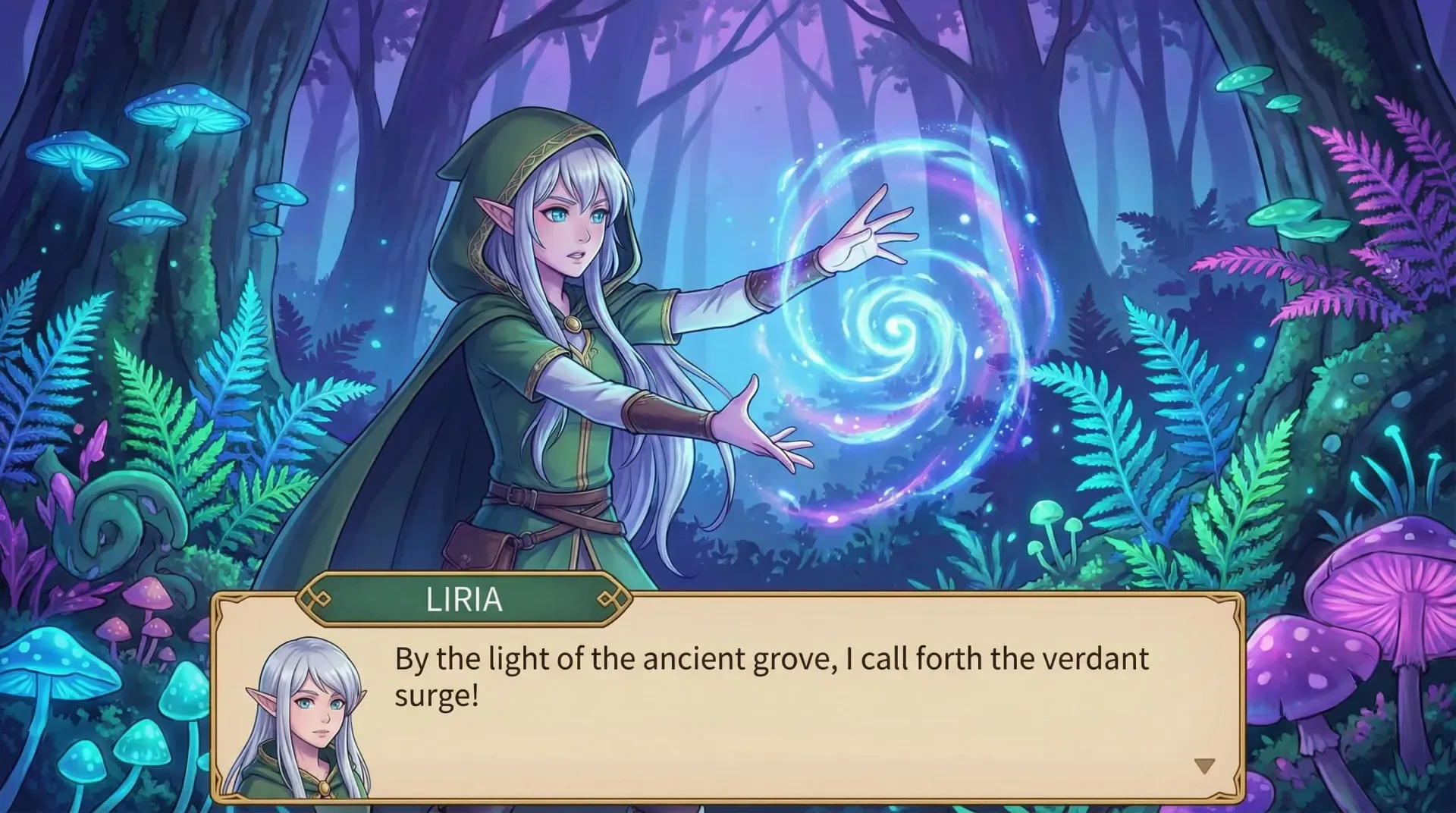
Start with a goal, a dangerous location, a rule of the world, and a reason the player cannot simply walk away.

Give every major character a want, a fear, a secret, and a way to change when the player chooses differently.
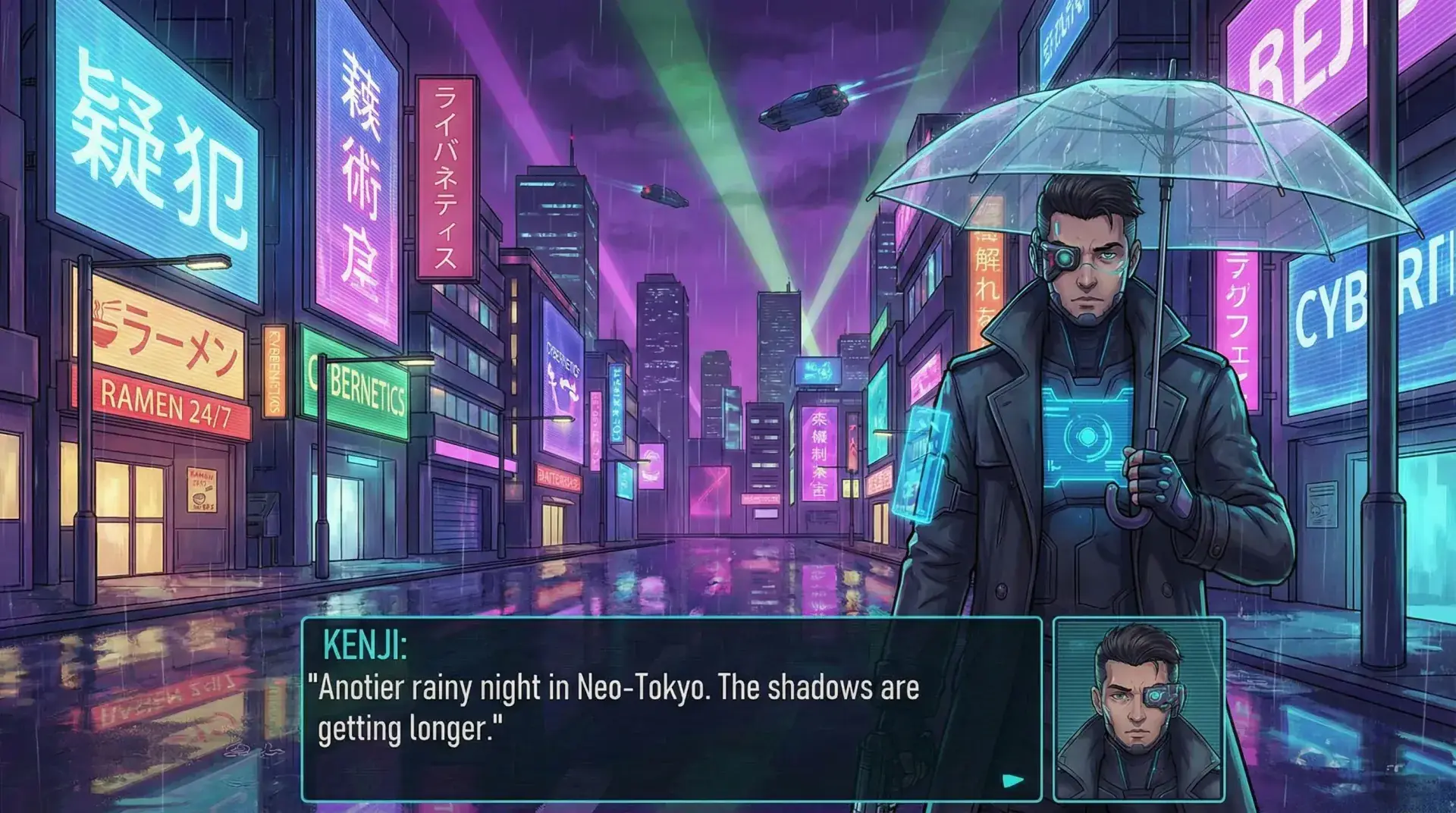
Track clues, trust, wounds, inventory, magic costs, timers, and factions so the adventure has stakes without becoming spreadsheet-heavy.
Mechanics
Use Story as a flexible AI game master. Add light systems that create tension, then let the AI narrate outcomes in prose.
Ask the AI to carry forward what changed: who heard you, what broke, what clock advanced, and what door closed.
Keep a short story bible for locations, laws of magic, factions, unresolved clues, and promises the player made.
Track companion loyalty, suspicion, romance, rivalry, or morale so dialogue choices change later scenes.
Treat items as story levers: keys, cursed tools, maps, disguises, favors, and evidence can unlock new options.
Add countdowns for storms, rituals, guards, hunger, or political fallout so pacing stays sharp.
Give the AI rules for fantasy, horror, mystery, romance, or sci-fi so each run feels coherent.
Prompt lab
Use these as first turns, then ask Story to continue in second person, first person, or novel-style third person.
Create a second-person fantasy text adventure. I am a failed royal cartographer entering a city that vanished from every map. Give me a vivid opening, three choices, one companion, and one hidden danger.
Start a free adventureRun a text-based winter survival story. Track warmth, trust, food, and time. Keep the writing literary, tense, and grounded. End each turn with four meaningful actions.
Start a free adventureStart an interactive story about a reluctant healer and a cursed knight. Make every choice affect trust, reputation, and the cost of magic.
Start a free adventureProcess
A simple workflow for turning an idea into a playable interactive story in LlamaGen Story.
Describe the genre, player role, goal, opening location, tone, and one rule that makes the world different.
Define companions, rivals, factions, inventory, trust, timers, or clues so the story has pressure.
Choose an action, let AI continue the scene, then revise the narration or ask for stronger choices whenever the run needs focus.
Examples
Use the same Story workspace for roleplay, interactive fiction, game prototyping, and novel-style branching scenes.
Explore rooms, clues, factions, traps, and character choices without losing the rhythm of a novel.
Track suspects, evidence, red herrings, and reveals while the AI writes each scene from your actions.
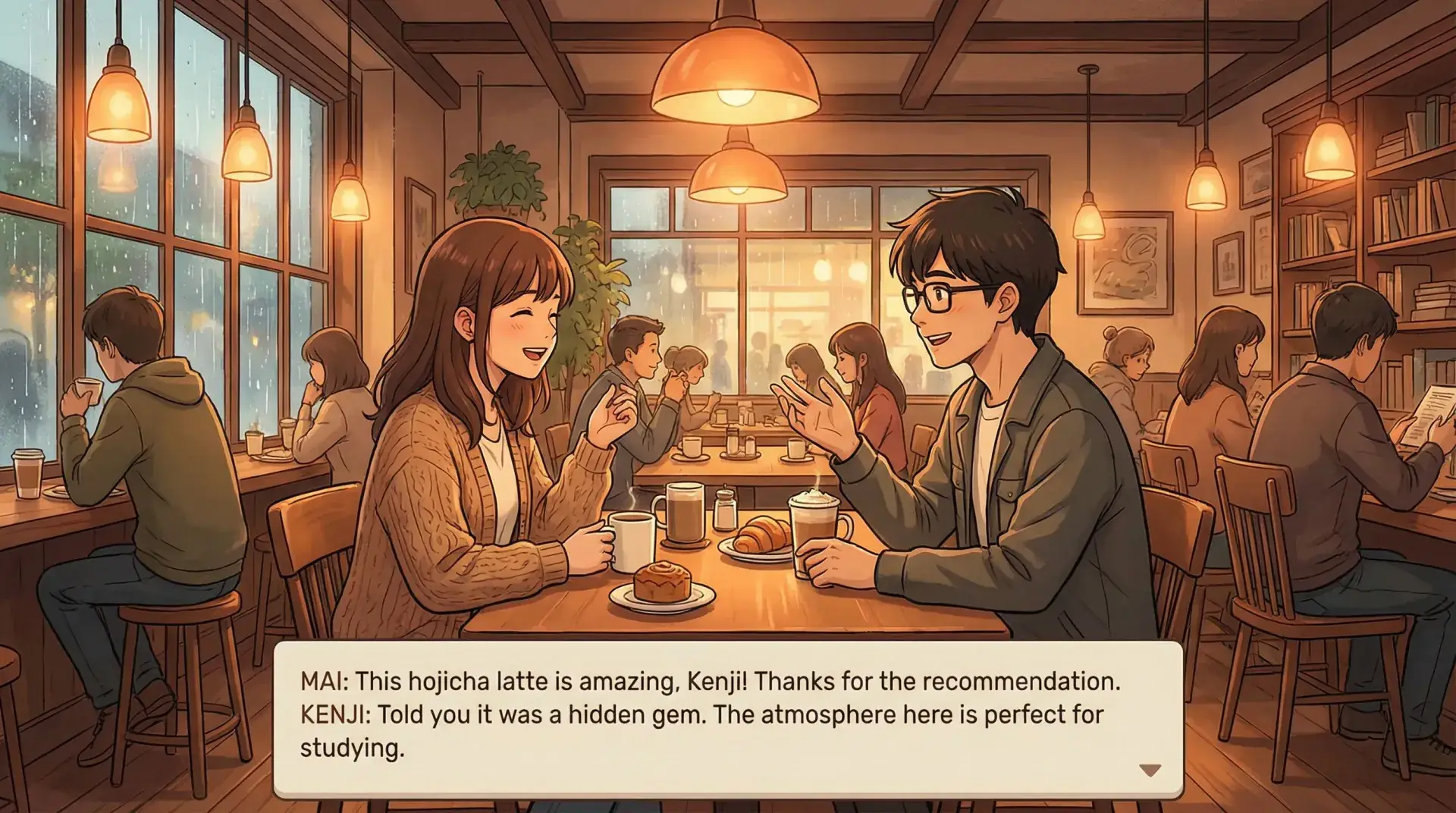
Run quiet interactive stories around relationships, daily rituals, choices, and slow emotional change.
Interactive fiction
Most games let you explore worlds designed in advance. LlamaGen Story helps you build an AI-generated world that writes back: new rooms, secrets, factions, choices, and consequences can appear as you play.
Use vivid scene prompts, voice direction, tone notes, and revision requests so the adventure reads like fiction, not a command log.
Ask for hooks, reversals, quest clocks, secrets, and scene goals so every choice pushes the story somewhere interesting.
Build companions, rivals, patrons, and hidden agendas that make dialogue and decisions matter.
Comparison
Traditional games are carefully authored. AI adventures are co-created turn by turn. The strongest result uses both: good design rules plus flexible generation.
Open Story
Bring a premise, a character, or a strange object. Story can help turn it into a playable AI text adventure.
Play in StoryAn AI text adventure is an interactive story or game where you describe actions in text and AI continues the world, characters, consequences, and choices.
Yes. You can start in LlamaGen Story for free and use it to create interactive story games, roleplay sessions, fantasy simulations, and branching fiction.
Give the AI a strong premise, clear player role, genre rules, character motivations, stakes, and light mechanics such as inventory, trust, clues, or danger clocks.
Yes. Story is useful for prototyping player choices, scene branches, quest ideas, companion dynamics, and game systems before building a full game.
Use notes, summaries, and story bible sections in Story to keep recurring characters, locations, clues, and rules available as you continue the adventure.
No. Fantasy works especially well, but you can also create mystery, horror, sci-fi, romance, slice-of-life, survival, school drama, or visual novel style adventures.