Most beginner webtoon episodes should start around 12-30 panels. Many ongoing vertical-scroll episodes land closer to 20-50 panels, while special action or finale episodes can go longer.
But the better question is not "How many panels should I make?"
The better question is:
How many panels does this episode need to deliver one clear story turn?
Use this as a practical starting point:
| Episode type | Practical panel range | Best for |
|---|---|---|
| Mini update or gag | 6-12 panels | One joke, one reveal, one beat |
| Short scene | 12-20 panels | Dialogue, setup, slice of life |
| Standard webtoon episode | 20-40 panels | A complete scene with a hook |
| Action or romance peak | 30-55 panels | Emotion, movement, payoff |
| Season opener or finale | 40-70+ panels | Big turn, but only if the team can sustain it |
The LlamaGen.AI Webtoon Generator can help you turn a story beat list into a vertical-scroll draft before you spend hours polishing panels that may need to be cut.
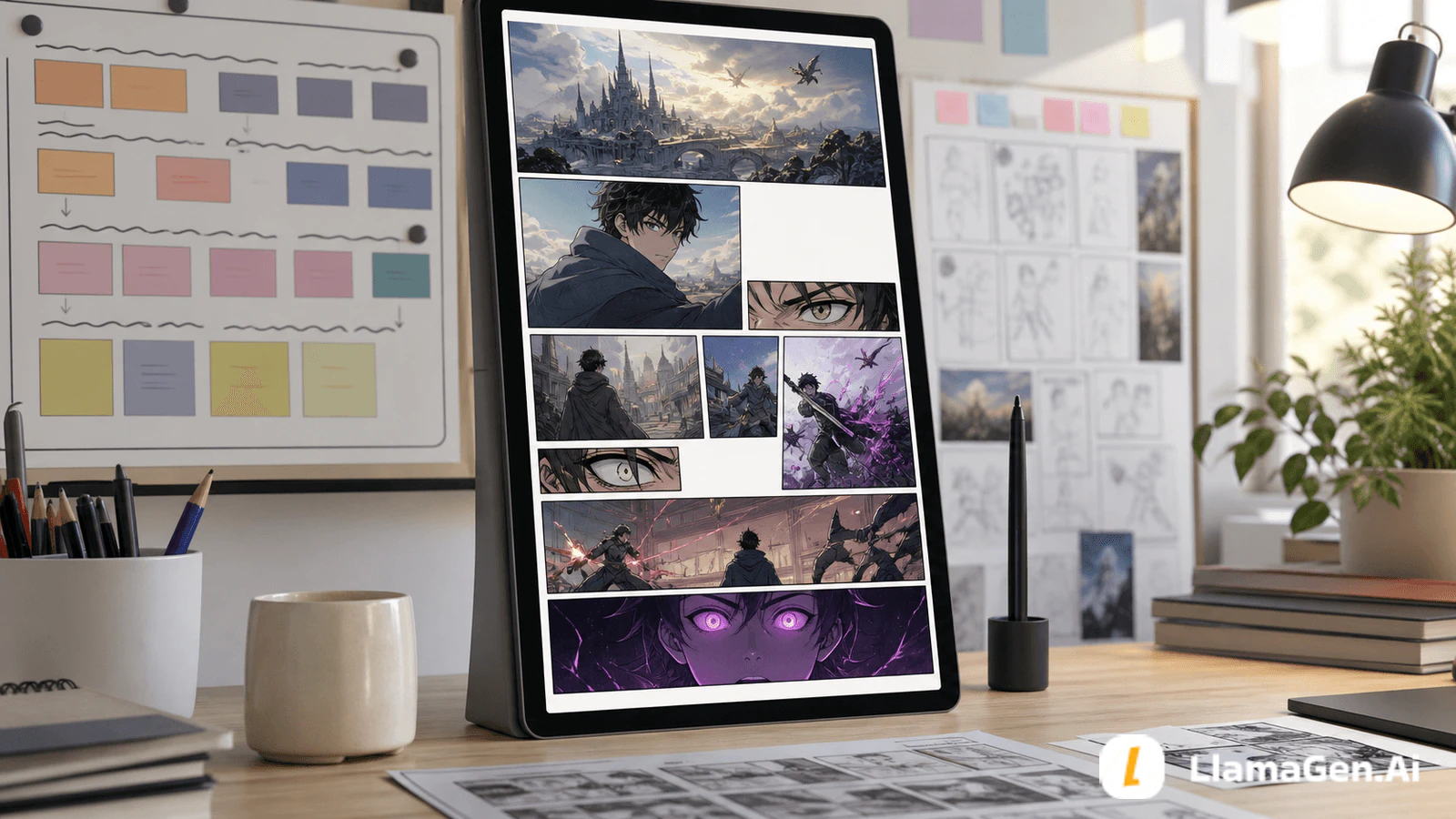
Panel count controls four things at once:
Too few panels can make a scene feel abrupt. Too many panels can make the episode feel padded and push the creator toward burnout.
The right number depends on the episode's job.
| If the episode needs to... | You probably need... |
|---|---|
| Land one simple joke | Fewer panels and faster rhythm |
| Establish a location | A few large atmosphere panels |
| Carry emotional dialogue | Medium panels and reaction beats |
| Show movement or action | More panels, clearer transitions |
| End on suspense | Space before the final reveal |
This test was designed for a beginner creator planning a vertical-scroll webtoon episode with AI-assisted drafts.
| Test item | Setup |
|---|---|
| Date tested | August 14, 2026 |
| Project | Glass Harbor |
| Format | Mobile-first vertical-scroll webtoon |
| Source input | 650-word scene outline |
| Target tool | LlamaGen.AI Webtoon Generator |
| Creation entry | Start an AI comic draft |
| Goal | Choose a panel budget before generating final art |
| Test output | Panel ranges, pacing plan, and revision checklist |
The scene:
Mira, a new ferry worker in a floating city, discovers that one dock disappears every night at 2:17. Her supervisor tells her not to count the passengers. Mira counts anyway and realizes one passenger is her future self.
The episode's job:
Introduce Mira, establish the strange ferry rule, and end with the future-self reveal.
A panel is not decoration. A panel should usually do at least one of these jobs:
For the test scene, the beat list was:
| Beat | Purpose | Panel estimate |
|---|---|---|
| Mira starts her night shift | Establish character and place | 3-5 |
| The supervisor warns her | Rule and tension | 4-6 |
| The ferry fills with passengers | Atmosphere | 3-6 |
| Mira counts anyway | Decision | 4-6 |
| The impossible passenger appears | Reveal | 4-8 |
| Cliffhanger reaction | Hook | 2-4 |
That gives a first budget of 20-35 panels.
Different episode types need different density.
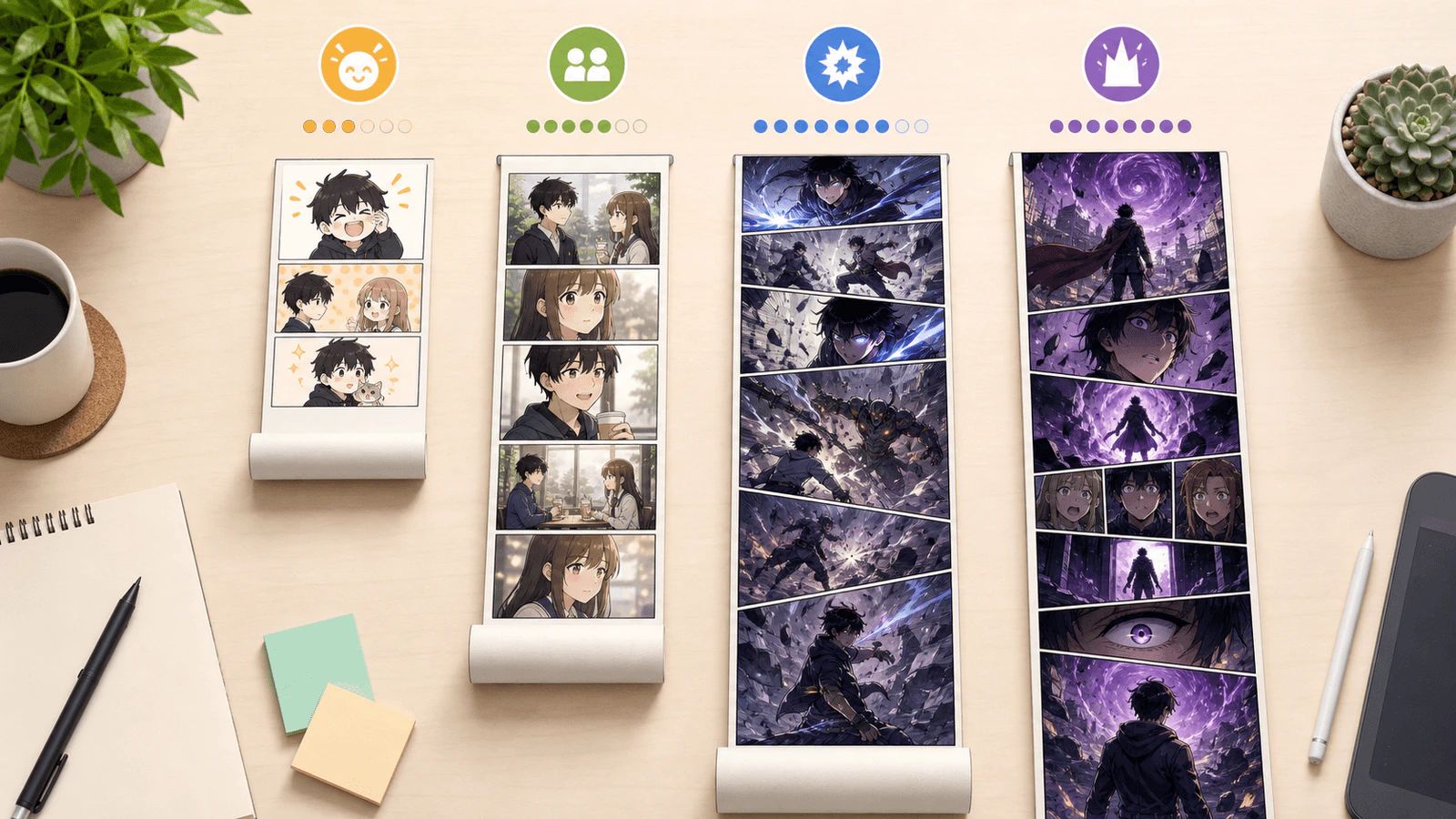
Use this table when planning:
| Episode type | Good panel behavior | Watch out for |
|---|---|---|
| Gag update | Fast setup and punchline | Over-explaining the joke |
| Dialogue scene | Reaction panels and readable pauses | Too many identical faces |
| Action scene | Clear movement between panels | Confusing camera jumps |
| Mystery reveal | Silence, spacing, final image | Spoiling the reveal too early |
| Romance beat | Micro-reactions and quiet pauses | Repeating the same emotion |
If you cannot explain why a panel exists, combine it with another panel or cut it.
Webtoons are read by scrolling. That means empty space and panel size are part of the timing.
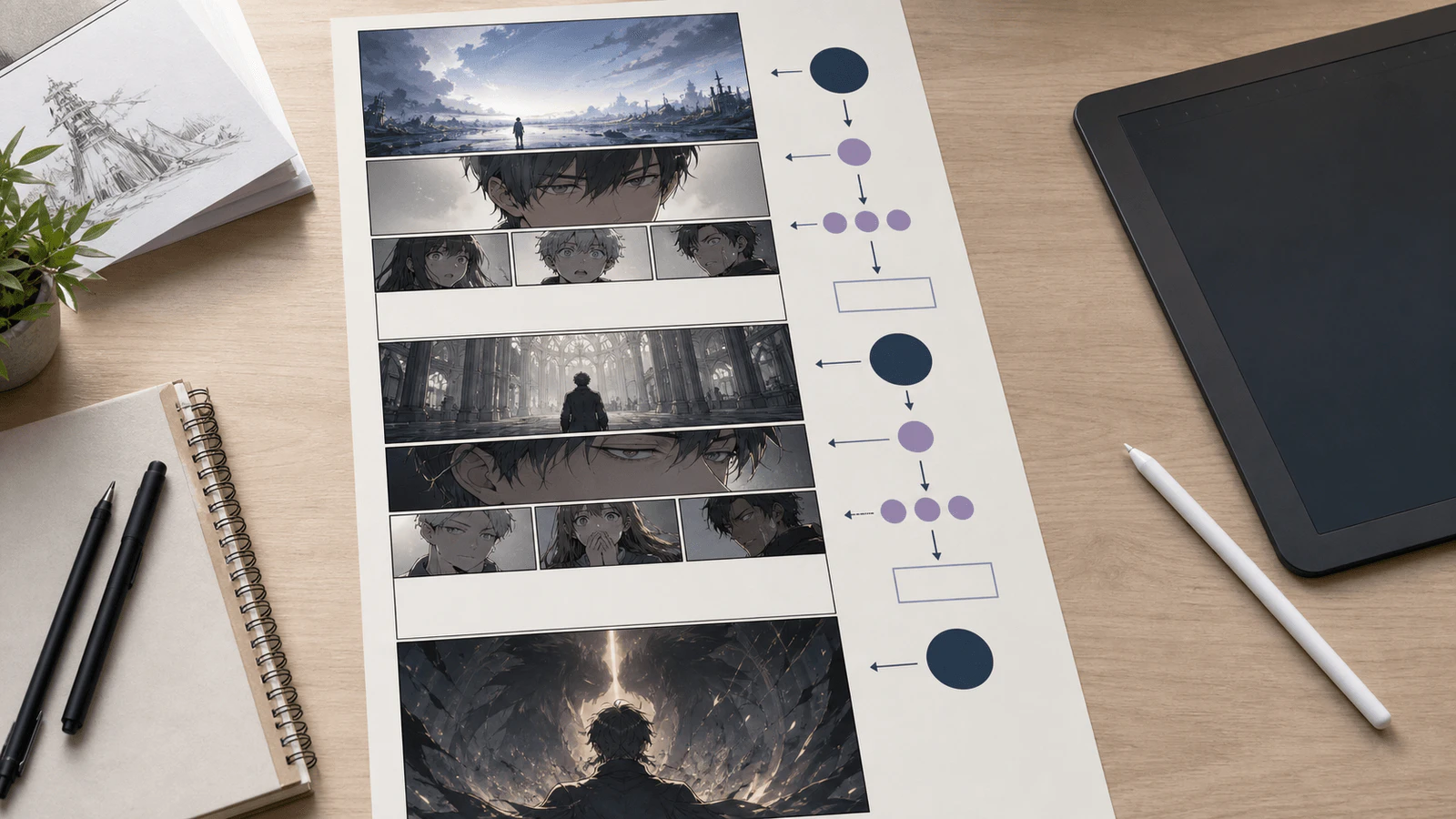
Three 30-panel episodes can feel completely different:
| Structure | Reader feeling |
|---|---|
| 30 same-sized panels | Flat and tiring |
| 20 panels plus big scroll gaps | Slow, atmospheric, cinematic |
| 38 small action panels | Fast, tense, energetic |
| 24 panels with strong final spacing | Clean and memorable |
Panel count is the skeleton. Scroll spacing is the breathing.
Before opening the generator, write a panel budget like this:
Plan a vertical-scroll webtoon episode from this scene.

Return:
1. The episode's main story turn.
2. A recommended panel count range.
3. Beat-by-beat panel allocation.
4. Which panels should be large.
5. Where to use scroll breathing space.
6. Which panels can be cut if the episode is too long.
7. A final cliffhanger panel prompt.

Scene:
[paste scene outline]
Then use the result in the LlamaGen.AI Webtoon Generator or start directly from AI Comic Strips.
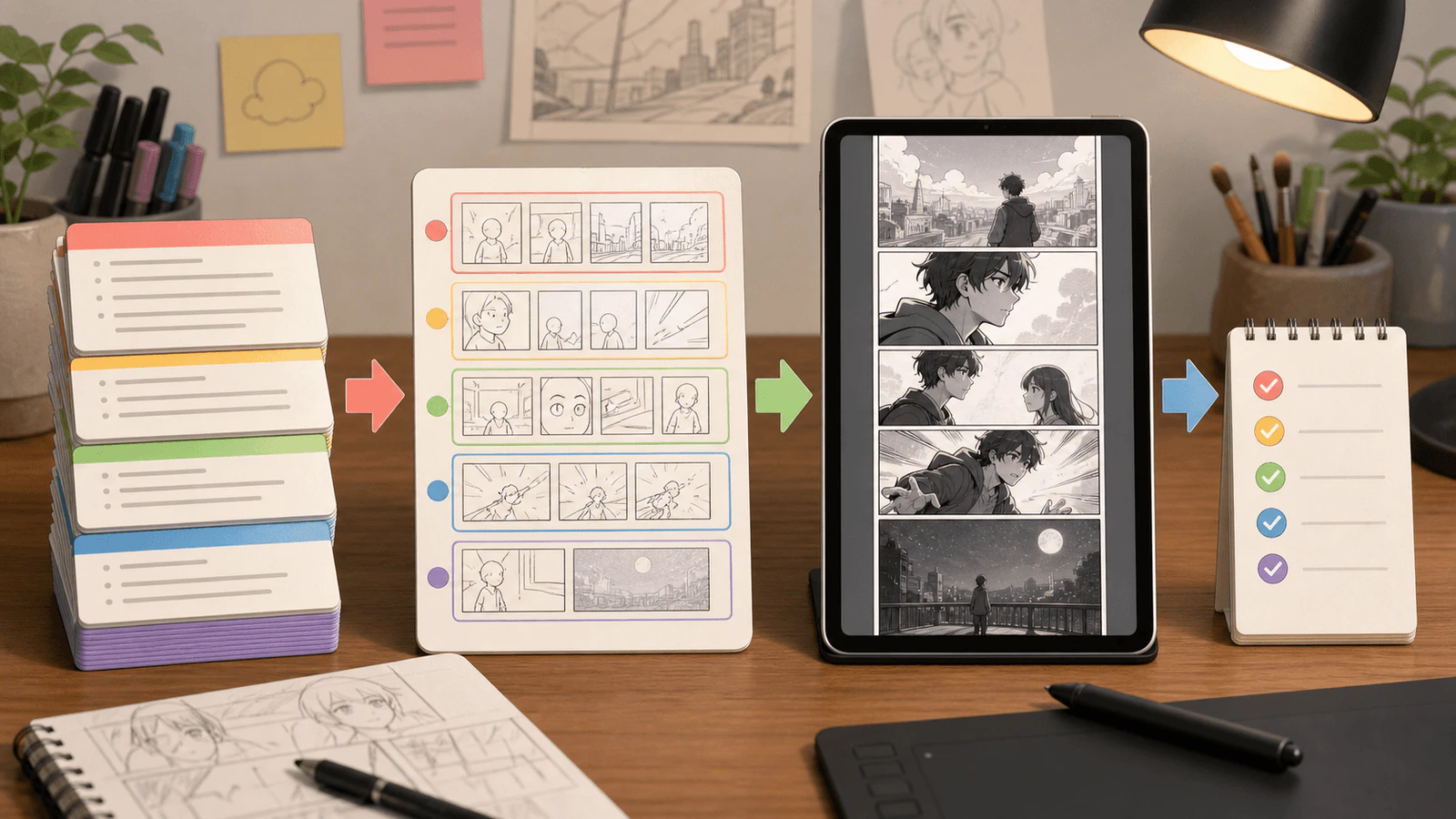
For the Glass Harbor test scene, a strong beginner budget was 28 panels:
| Section | Panels | Notes |
|---|---|---|
| Opening ferry dock | 4 | Establish night, water, floating city |
| Mira begins shift | 3 | Character introduction |
| Supervisor warning | 5 | Keep dialogue short |
| Passengers board | 5 | Use vertical atmosphere and repeated shapes |
| Mira counts | 4 | Increase tension |
| Future self reveal | 5 | Give the reveal enough space |
| End hook | 2 | One reaction, one final image |
That is enough for a full scene, but still manageable for a solo creator.
Add panels when the reader needs clarity or emotional time.
Good reasons to add panels:
Weak reasons to add panels:
Cut panels when they repeat information.
| Repeated element | Better fix |
|---|---|
| Same face angle 4 times | Keep the strongest reaction |
| Long exposition | Turn one line into a visual clue |
| Repeated walking shots | Use one transition panel |
| Too many background panels | Keep one strong establishing image |
| Extra reactions after the hook | End earlier |
The ending is especially important. Many beginner episodes continue for two or three panels after the hook has already landed. Stop when the reader wants to scroll to the next episode.
Use this formula for a first draft:
panel budget = story beats x 3 to 5 panels
Then adjust:
For a 6-beat episode, this usually lands between 18 and 30 panels.
Before publishing a webtoon episode, ask:
If the answer to the last two questions is no, the panel count is too high.
Open the LlamaGen.AI Webtoon Generator, paste your episode outline, and ask for a panel budget before creating the final draft.
Not always. Ten panels can work for a gag, announcement, micro-scene, or experimental update. It may feel too short for a plot-heavy drama episode.
Sixty panels can work for a finale, action set piece, or small-team production. For a solo beginner, 60 panels every week can become difficult to sustain.
No. A consistent range is more useful than a fixed number. Readers care about rhythm and story satisfaction more than exact panel count.
Start with 12-30 panels. Once your workflow is stable, test 30-45 panel episodes for bigger story turns.
Popular creator tools
Create comics, storyboards and stylized photos with LlamaGen.
Turn an idea into polished comic strips in minutes.
Create comics with AI02Create expressive manga art and multi-panel stories.
Create manga with AI03Visualize every scene before production starts.
Create storyboards with AI04Transform any photo into a comic-style illustration.
Create comics from pictures with AI05Build shareable strips with characters that stay consistent.
Create comic strips with AIA rundown of the latest LlamaGen feature releases, product enhancements, design updates, and important bug fixes.







© 2026 LlamaGen.Ai All rights reserved
Leading the Future of AI Comic Generation