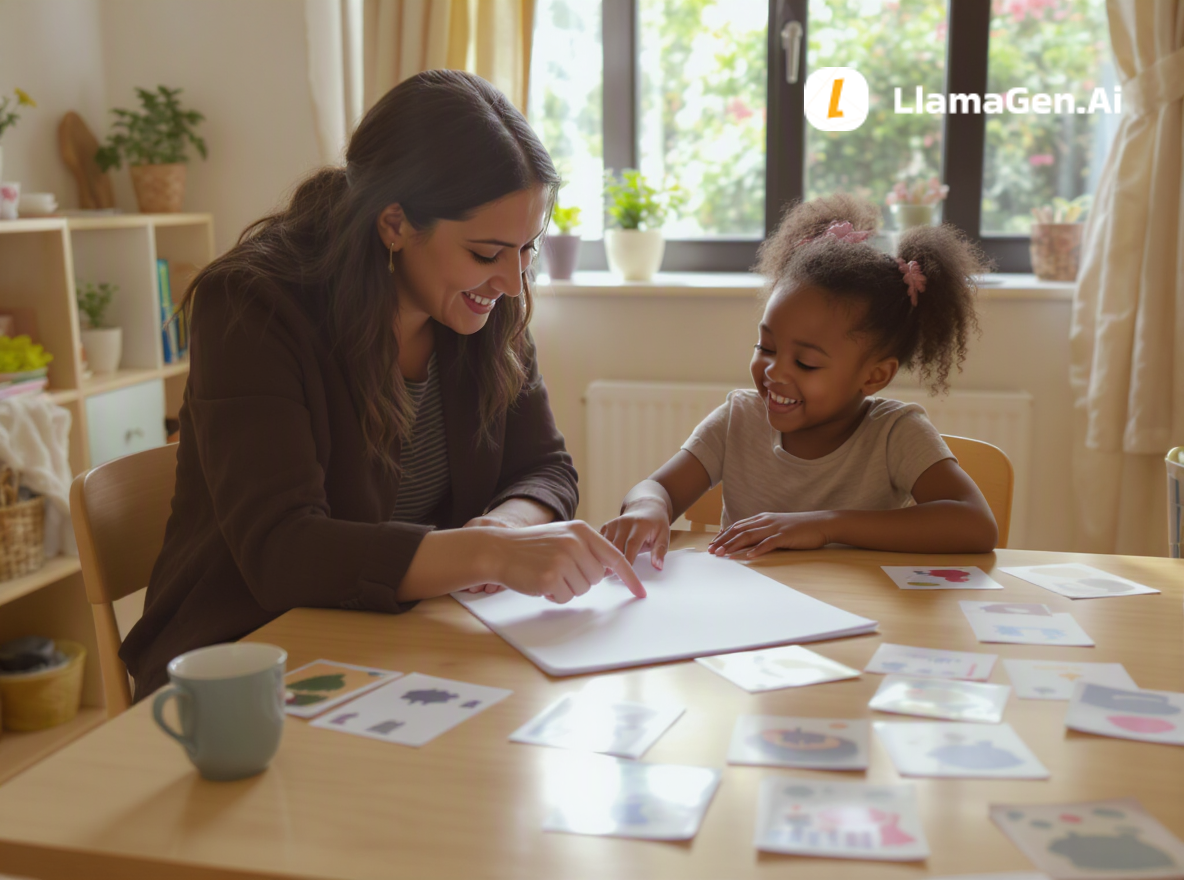
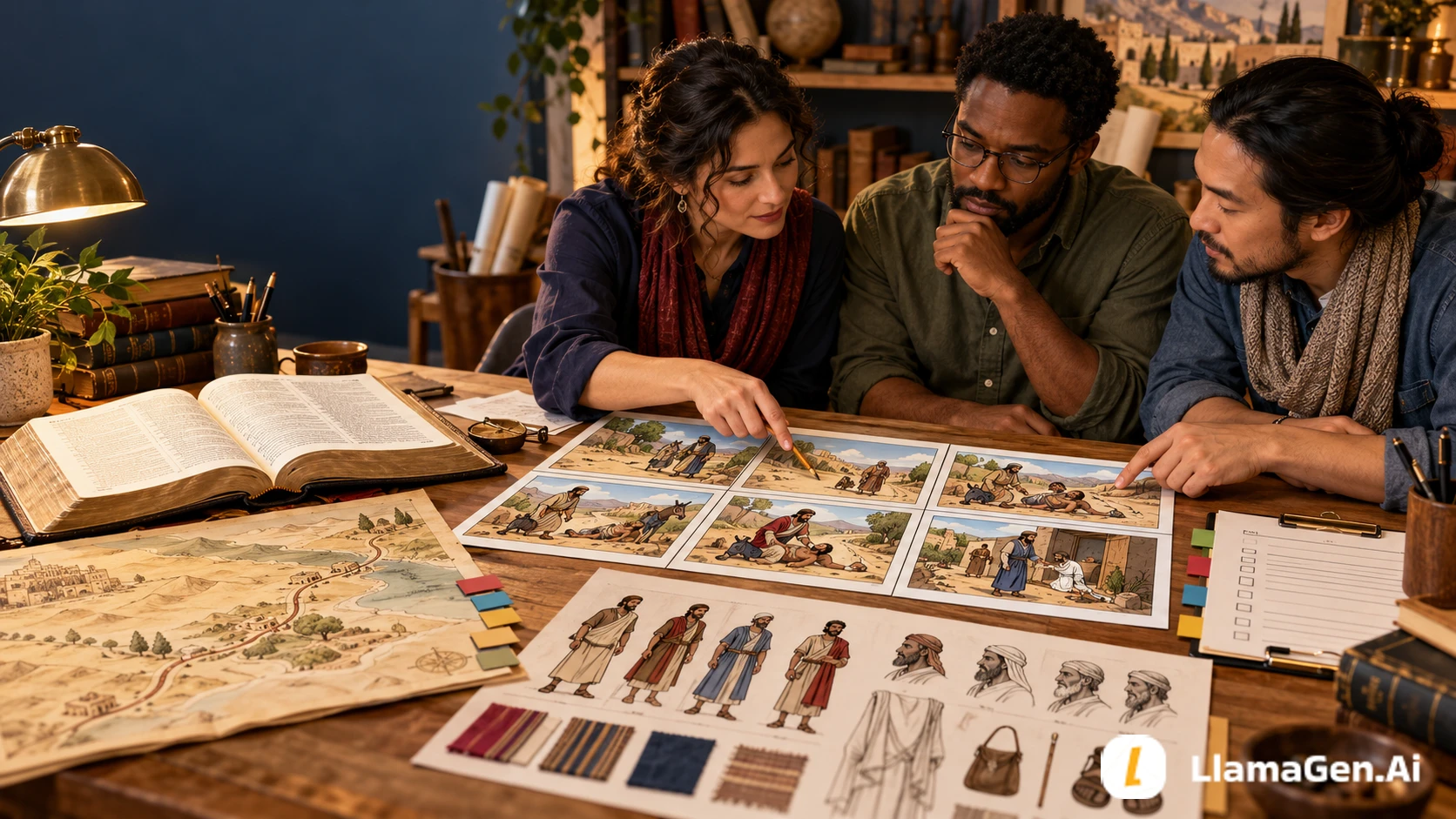
For many autistic learners and neurodivergent children, the challenge is not imagination. The ideas may be there. The feelings may be there. The story may be there.
The hard part is turning all of that into open-ended writing.
Writing asks a learner to manage many tasks at once:
finding words
sequencing events
understanding emotions
remembering details
organizing ideas
tolerating uncertainty
staying focused long enough to finish
That is a lot.
Visual storytelling changes the entry point.
Instead of asking:
“Write a full paragraph about your day.”
You can ask:
“What happened first?”
Then you place that answer into a comic panel.
That small shift can make storytelling feel more concrete, more predictable, and less overwhelming.
This is why AI comics can be so useful for parents, teachers, therapists, and creators supporting autistic learners. The goal is not simply to make pretty pictures. The goal is to help a learner start, continue, revise, and finish a story with more confidence.
Why open-ended writing can feel overwhelming
Open-ended writing is flexible, but that flexibility can also create pressure.
A learner may need to decide:
what the story is about
who is in the story
what happens first
what happens next
how the character feels
what words to use
when the story is finished
For some children, especially those who benefit from structure, that many decisions at once can become exhausting.
A comic reduces the load.
A panel creates a boundary.
A caption creates a simple sentence.
A speech bubble gives one character one thought at a time.
A sequence of panels shows beginning, middle, and end.
Comics turn storytelling into something the learner can see.
That matters because visual structure can make abstract tasks feel more manageable. Instead of holding the whole story in memory, the learner can look at the panels and build one step at a time.
A real parent story
Recently, a parent partially homeschooling their 13-year-old autistic child shared a simple but powerful observation.
Changelog
Spark dreams for the young Where millions of stories come alive
A rundown of the latest LlamaGen feature releases, product enhancements, design updates, and important bug fixes.
✦
✧
✦
✧
A new medium for Storytelling
Vibe creating unlimited stories, comics, animations, games, and more—in seconds that resonate with modern audiences
They had tested several AI creative tools together.
Many tools could generate impressive images. Some were beautiful. Some were fast. Some produced surprising results.
But most of them created new problems.
Characters changed from one scene to the next. A face looked different. A hairstyle shifted. An outfit changed. A familiar character suddenly felt unfamiliar.
The child was not just reacting to image quality.
They were reacting to unpredictability.
The parent noticed that LlamaGen felt different for three practical reasons:
the visuals were clear
the character stayed consistent
the comic workflow felt structured instead of chaotic
That combination made the creative process feel less like fighting the tool and more like building a story.
For this family, the breakthrough was not “AI made better art.”
The breakthrough was:
The child could finish a story without losing trust in the process.
That is the difference that matters.
Why character consistency matters so much
Many AI image tools are designed for novelty.
They are good at producing new images, new styles, new scenes, and new surprises.
But educational storytelling often needs the opposite.
It needs continuity.
If a learner creates a character and that character changes dramatically from panel to panel, the story can become harder to follow. For some learners, the change can feel frustrating or even upsetting.
A consistent character helps create predictability.
Predictability supports trust.
Trust makes it easier to keep going.
In a comic, character consistency can include:
the same face
the same hairstyle
the same outfit
the same age
the same body shape
the same visual style
the same emotional arc
This is not just a visual feature. It is part of the learning experience.
When the character stays familiar, the learner can focus on the story.
AI images vs. AI comics
A single AI image can be useful.
But a story usually needs more than one image.
That is where AI comics become different.
Generic AI Image Generator
AI Comic Workflow
Creates one image at a time
Builds a sequence of panels
Often changes character details
Keeps characters more consistent
Focuses on visual novelty
Focuses on story continuity
Requires repeated prompting
Supports panel-by-panel editing
Good for exploration
Better for communication
For autistic learners, this difference can be important.
The goal is not infinite creative options.
The goal is a process that feels understandable.
A structured AI comic workflow can support:
sequencing
emotional expression
cause and effect
perspective-taking
reading comprehension
routine planning
confidence-building
That is why comics are more than creative outputs.
They are structured thinking tools.
What makes a comic workflow feel safer
A comic workflow can feel safer when it reduces unnecessary uncertainty.
Here are the three things that matter most.
1. Clear visuals
Clear visuals help learners focus on meaning.
If a scene is too crowded, overly detailed, or visually inconsistent, the learner may spend more energy decoding the image than understanding the story.
Good educational comics should make it easy to answer:
Who is in this panel?
What are they doing?
How do they feel?
What changed from the previous panel?
What might happen next?
Visual clarity lowers cognitive load.
2. Stable characters
A familiar character can become an anchor.
When the learner sees the same character across multiple panels, they can more easily follow the story.
This is especially useful for:
daily routines
social situations
emotional regulation stories
academic explanations
personal storytelling
The character becomes a guide through the sequence.
3. Editable panels
A good workflow should not force the learner to restart everything when one part goes wrong.
If one panel feels off, you should be able to edit that panel.
This matters because restarting can break momentum.
For a learner who is already working hard to stay engaged, protecting momentum is often more important than chasing perfection.
A simple rule:
Fix one panel. Do not restart the whole story.
A simple 20-minute AI comic activity
Here is a beginner-friendly activity parents, educators, and therapists can try.
The goal is not to create a perfect comic.
The goal is to complete one small story.
Step 1: Create one familiar character
Start with a single character.
Keep the prompt short and concrete.
Example prompt:
A friendly 13-year-old student with short black hair, a blue hoodie, calm expression, simple manga style, clear line art, consistent appearance
Avoid adding too many details at first.
For the first session, choose:
one character
one outfit
one visual style
one emotional tone
The fewer variables, the easier it is to stay focused.
Step 2: Choose one familiar routine
Pick a routine the learner already understands.
Good beginner topics include:
making breakfast
packing a school bag
feeding a pet
brushing teeth
getting ready for class
taking a break after a hard task
Familiar routines reduce decision fatigue.
The learner does not need to invent an entire fantasy world. They only need to explain what happens first, next, and last.
Step 3: Create three panels
Use a fixed three-panel structure:
Beginning
Middle
End
For example:
The character gets a bowl.
The character pours cereal.
The character sits down and eats.
A three-panel comic is small enough to finish, but structured enough to feel like a complete story.
Step 4: Add one caption per panel
Start with captions before dialogue.
Captions are easier because they describe what is happening.
Example captions:
“First, I got my bowl.”
“Next, I poured the cereal.”
“Then, I sat down and ate.”
This supports sequencing, language practice, and confidence without requiring a full paragraph.
Step 5: Review the story together
After the comic is complete, ask simple reflection questions:
Which panel feels most like you?
Which part was easiest?
Which part was hardest?
What should happen next time?
What feeling does the character have?
The review step turns the comic from a generated image into a learning moment.
How LlamaGen supports this workflow
LlamaGen.AI is designed for sequential storytelling, which makes it different from tools that only generate single images.
For this kind of learning activity, the most useful features are: