

LlamaGen.Ai Logo

Family story to comic

Turn Family Memories Into Comics

Transform interviews, photos, timelines and source notes into a visual story that respects real people, family voice and cultural context. Build keepsakes, classroom projects and archive-ready pages.

See Memory Workflow

Starter direction

Create a family history comic from these notes: grandmother moved from Mississippi to Chicago in 1968, worked nights, loved gospel records, taught three grandchildren to cook. Separate verified facts from imagined dialogue, create a timeline, four-page comic outline, family-safe tone and review checklist.

For real family stories, keep facts, sources and invented dialogue clearly separated.

Create a Family Comic
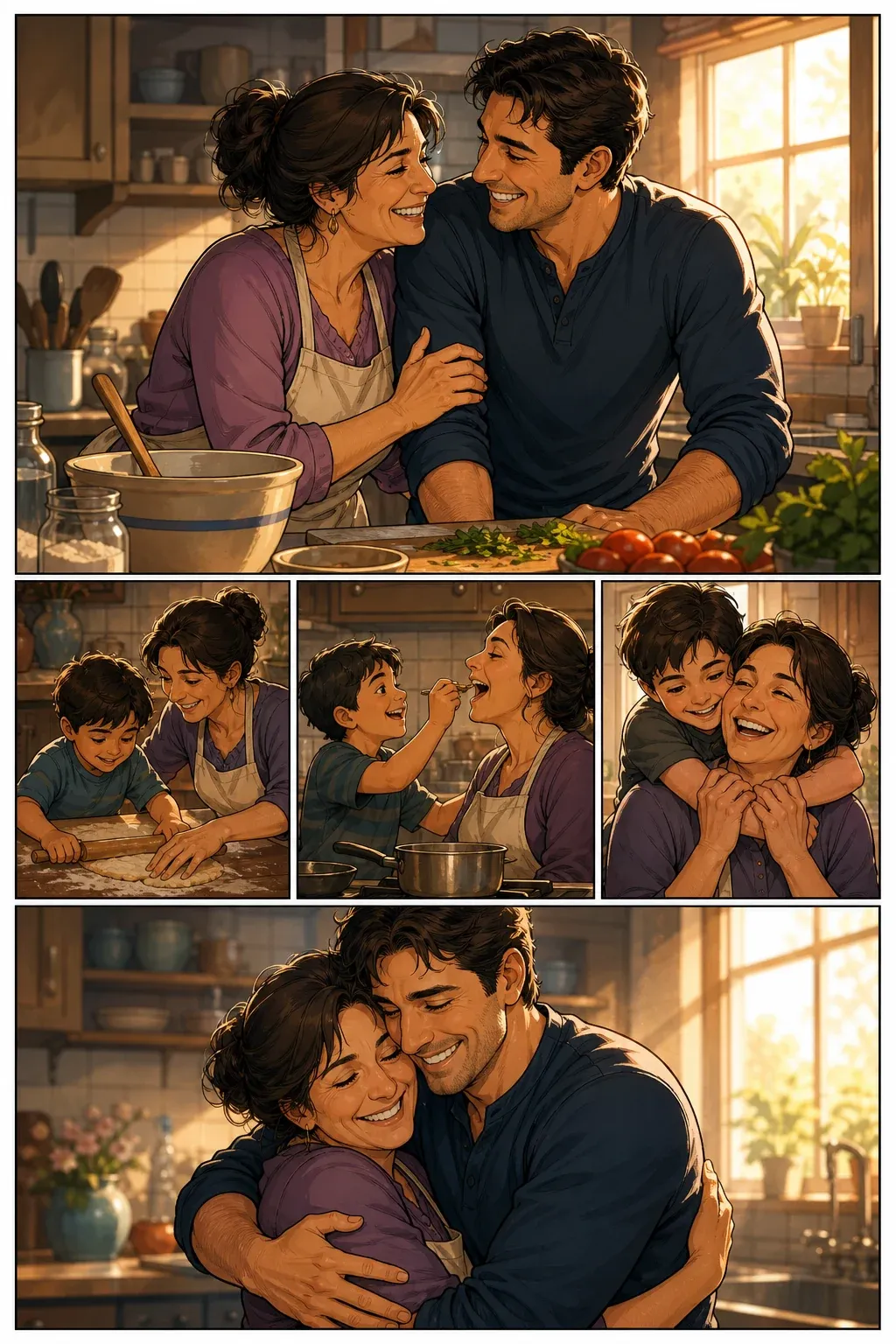
Family memory comic book scene

Memory story

Family memory comic

01

Sources

Separate verified dates, places and names from imagined scenes or dialogue.

Family voice

Keep speech, food, music, place and memory details editable by the family.

Generations

Show elders, children, parents, relatives and community across time periods.

Family story examples

Respect real people while making the story visual

Family history comics need sensitivity. The goal is not to invent a fantasy over real lives, but to make memories easier to share, teach and preserve.

Family memory comic with multiple generations

Representation

Show families across age, style and generation

Represent elders, children, parents, cousins, neighbors and chosen family with varied skin tones, hair, body types and clothing across different decades.

Biography comic worksheet for family history

Source-based

Build from timeline and source notes

Use dates, places, interview excerpts and family photos as source material, then label any invented dialogue before publishing.

History lesson comic board adapted for family memory

Shareable output

Turn a private memory into a shareable page

Create individual panels, captions and page drafts that can become a PDF, slideshow, printed keepsake or classroom activity.

What the workflow protects

Accuracy, representation and consent for personal stories

A family comic maker should help you tell meaningful stories without flattening real people or inventing unsupported claims.

01

Interview to scene outline

Turn oral history notes into scenes, captions and questions that family members can review.

02

Timeline organization

Sort dates, locations, migrations, milestones and family branches before writing panels.

03

Respectful visual references

Use photos, clothing, hairstyles and places as direction while considering consent and privacy.

04

Generational representation

Show real diversity across age, skin tone, hair, body type, family role and fashion era.

05

Fact versus dialogue labels

Separate documented claims from imagined dialogue, reconstructed scenes and emotional interpretation.

06

Private export workflow

Create pages for family review, printed books, classroom slides, PDFs or archive submissions.

Workflow

From family notes to a reviewed comic

Move carefully from source material into comic scenes, keeping privacy and family review in the loop.

01

Gather sources

Collect interviews, photos, dates, names, places, recipes, music and family memories.

02

Build a timeline

Organize verified facts and mark gaps that need family review.

03

Draft scenes

Create age-appropriate page beats, captions and clearly labeled fictionalized dialogue.

04

Review and export

Let relatives edit claims, names, images and tone before sharing or printing.

Start a family comic

Search intents covered here

Family history comic use cases

These sections answer common searches around family stories, genealogy and memory projects.

01

Oral history comic maker

Turn interview transcripts and recorded memories into comic scenes with review notes.

02

Genealogy comic project

Create a visual timeline that explains family branches, places, migration and milestones.

03

Family memory keepsake

Make a comic page, PDF or printed gift from a favorite memory, recipe, trip or milestone.

04

Source-based family biography

Use source notes and review steps to avoid unsupported claims about real people.

Prompt recipes

Family history prompts to adapt

Use these with your own family sources and review process.

Interview to comic outline

Turn this family interview into a four-page comic outline. Separate verified facts from imagined dialogue, list missing source questions, identify key family members, create panel beats, captions and a respectful review checklist.
Best for oral history
Protects factual boundaries

Migration story comic

Create a family history comic about a move from one city to another. Include timeline, setting details, work, school, music, food, neighborhood, family relationships and source notes. Avoid inventing claims not in the notes.
Good for intergenerational stories
Works with photos and interviews

Memory page

Create a one-page family memory comic from this event: a Sunday dinner where three generations cook together. Show elders, children, family objects, food details, warm dialogue placeholders and a note asking relatives to verify names and quotes.
Good for gifts
Keeps dialogue editable

Story ownership

Create original work you can stand behind

The page is built for creators who care about representation, continuity and ownership. Use AI to draft faster while keeping the script, references and publishing choices under your control.

01

Original IP, not copies

Build new characters, families, worlds and symbols instead of imitating protected franchises or living artists.

02

Editable story control

Revise dialogue, panel notes, captions and scene order so the final comic reflects your voice and values.

03

Exportable production assets

Use character sheets, individual panels, page drafts and prompts as source material for web, print, pitch decks or app workflows.

FAQ

FAQ about family history comics

Privacy, accuracy and export questions for personal stories.

Ready when you are

Turn the direction into a project you can keep building.

Start with the approved creative direction, then refine characters, pages, and production assets in the LlamaGen studio.

Create a Family Comic