
Representation
Everyday adventures with diverse children
Create friend groups with varied skin tones, hairstyles, body types, clothes, ages and personalities in school, home and neighborhood settings.


Kid-friendly comic workflow
Turn stories, lessons and family moments into age-appropriate comic pages with diverse children, families, hair, skin tones, body types and everyday settings represented with care.
Paste your story, then choose the page count and layout.
Age fit
Set reading level, vocabulary, tone, visual intensity and classroom suitability.
Families
Show children, parents, elders, siblings and communities across many appearances and styles.
Worksheets
Generate questions, captions, vocabulary and exportable classroom or home materials.
Children's comic examples
Children's comics can show Black children, families, hair, neighborhoods and joy inside everyday adventures, classroom stories and family memories without making every page about identity alone.
Representation
Create friend groups with varied skin tones, hairstyles, body types, clothes, ages and personalities in school, home and neighborhood settings.
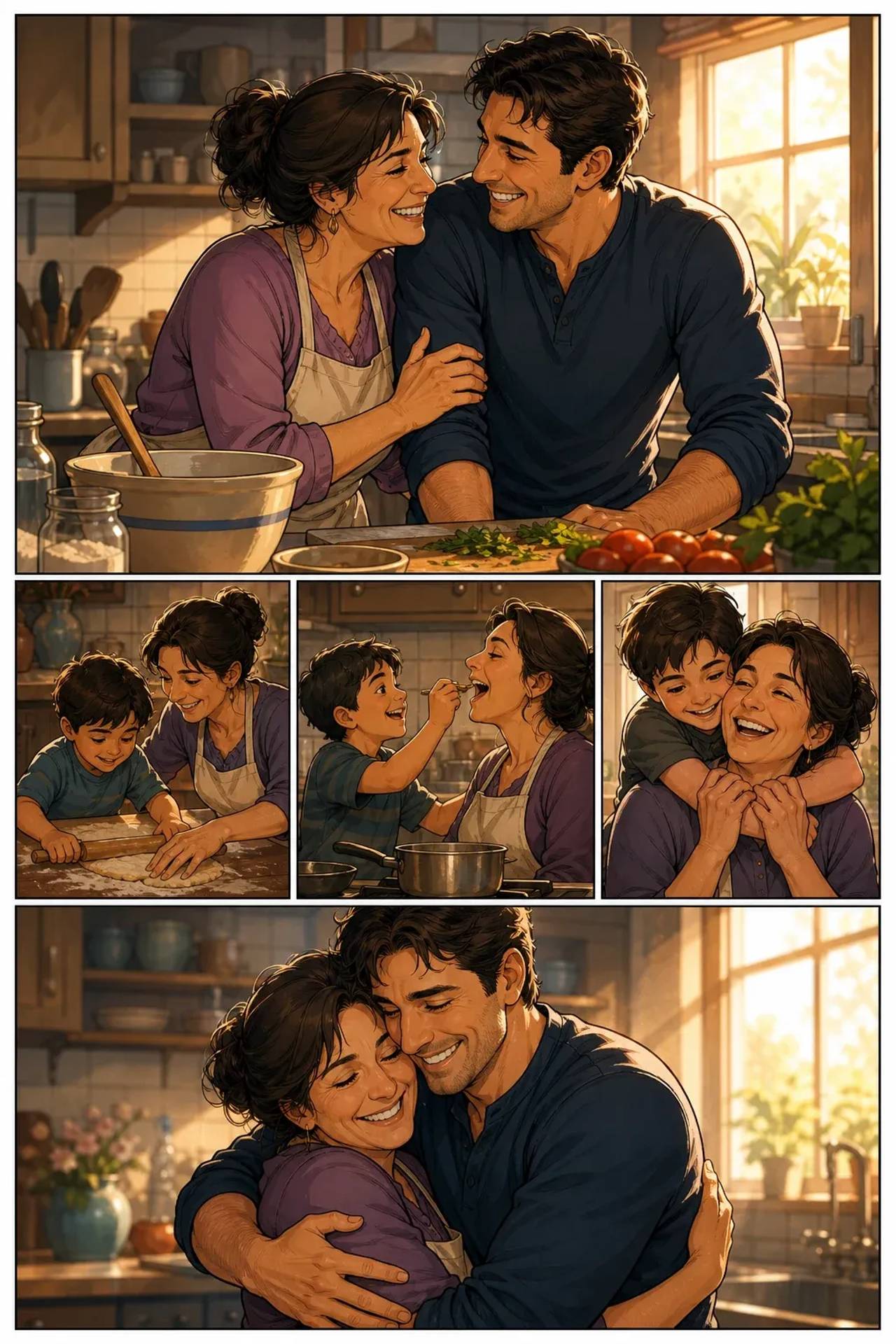
Family story
Turn recipes, holidays, grandparents, moves and family sayings into simple panels with age-appropriate dialogue.
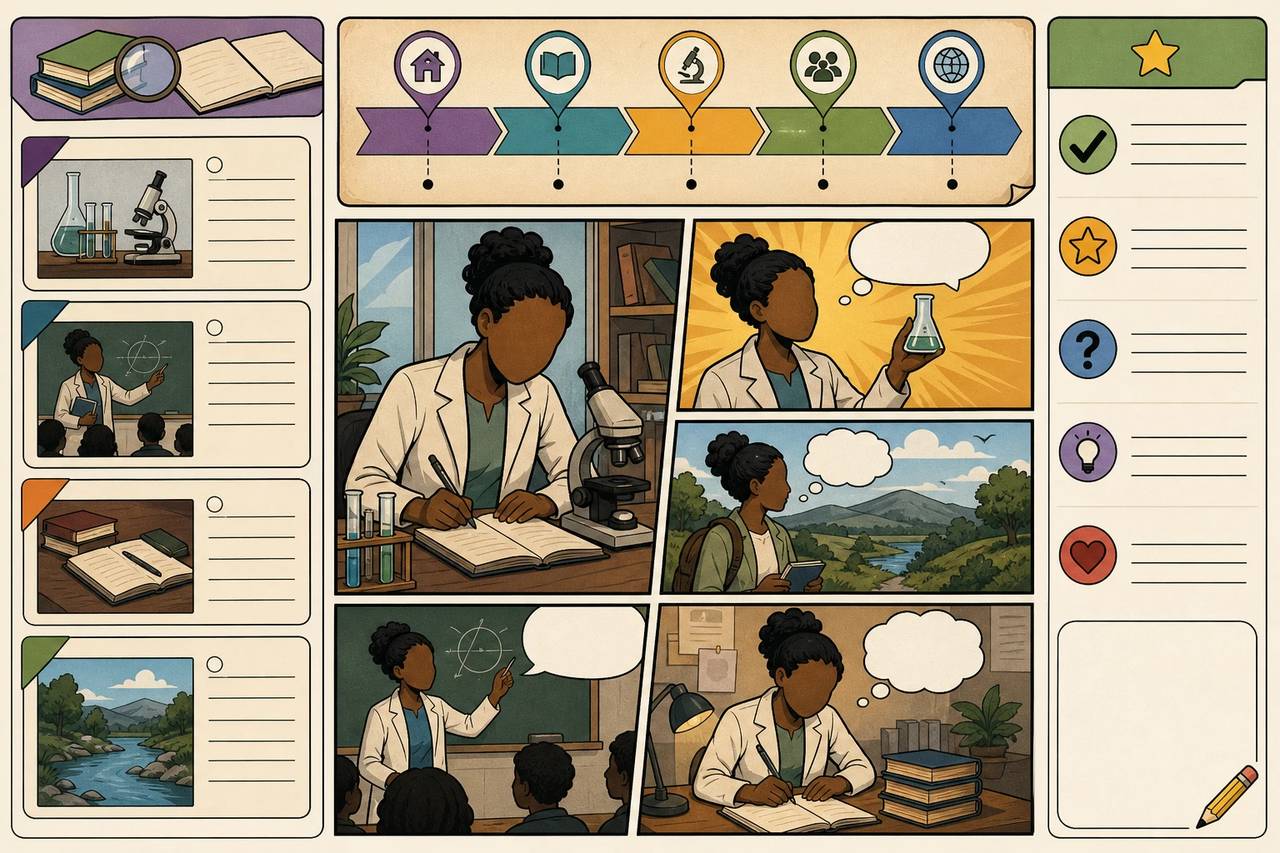
Education
For history or biography assignments, separate facts from invented dialogue and make the worksheet editable by a teacher or parent.
Kid-friendly controls
Use clear age settings, representation checks and export options for home, classroom and library use.
Set age range, vocabulary, sentence length, humor, lesson goals and emotional intensity.
Represent skin tones, undertones, natural hair, family roles, body types, disabilities, clothes and hobbies.
Generate simple panel beats, captions, speech bubbles and visual directions.
Add questions, vocabulary words, reflection prompts and teacher-editable notes.
Choose bright, friendly, low-intensity art directions for younger readers.
Prepare pages, individual panels, slides, PDFs or activity sheets.
Workflow
Start with age and purpose, then generate the panels and learning material around it.
01
Choose reading level, tone, lesson, family purpose or classroom outcome.
02
Describe children, families, settings, hair, clothes, personalities and relationships.
03
Create a short comic with simple dialogue, clear actions and safe visuals.
04
Export pages with questions, vocabulary, captions or worksheet prompts.
Search intents covered here
These sections cover home, school and family searches for kid-friendly comics.
01
Turn a short story into simple panels and age-appropriate dialogue.
02
Create student comic strip projects, history activities or reading comprehension pages.
03
Adapt family memories and oral stories into pages children can read and share.
04
Generate questions, captions, vocabulary and reflection prompts alongside the comic.
Prompt recipes
Use these for home, school or library projects.
Create a six-panel children's comic for ages 8-10 about two cousins building a tiny library. Include diverse children, natural hair detail, family support, simple dialogue, warm humor, lesson takeaway and three worksheet questions.
Turn this family memory into a kid-friendly one-page comic. Keep facts clear, use simple captions, show elders and children respectfully, add vocabulary words and ask a relative to review names and details.
Create an age-appropriate biography comic from teacher-provided sources. Separate verified facts from imagined dialogue, include four panels, captions, vocabulary and reflection questions.
Story ownership
The page is built for creators who care about representation, continuity and ownership. Use AI to draft faster while keeping the script, references and publishing choices under your control.
01
Build new characters, families, worlds and symbols instead of imitating protected franchises or living artists.
02
Revise dialogue, panel notes, captions and scene order so the final comic reflects your voice and values.
03
Use character sheets, individual panels, page drafts and prompts as source material for web, print, pitch decks or app workflows.
Use these workflows together when a project needs characters, story structure, source material and publishable comic panels.
FAQ
Questions for parents, teachers and youth programs.
Ready when you are
Start with the approved creative direction, then refine characters, pages, and production assets in the LlamaGen studio.