
Visual narrator
Create a visual narrator who stays recognizable
Keep skin tone, facial identity, hair, age shifts and clothing grounded as the story moves through time.


Personal story to panels
Transform memoir notes, essays, journals and recorded memories into visual scenes you can edit. Keep real voice, emotional truth, privacy boundaries and character continuity under your control.
Paste your story, then choose the page count and layout.
Voice
Keep narrator captions, tone and dialogue editable so the story still sounds like you.
Privacy
Change names, faces, places and identifying details before public release.
Continuity
Keep your visual narrator recognizable across ages, locations, outfits and chapters.
Memoir examples
A memoir comic workflow should help with structure and imagery while keeping voice, identity, consent and emotional nuance in the creator's hands.
Visual narrator
Keep skin tone, facial identity, hair, age shifts and clothing grounded as the story moves through time.

Scene structure
Convert essays, journals or chapter drafts into panel beats, captions and dialogue that can be revised line by line.
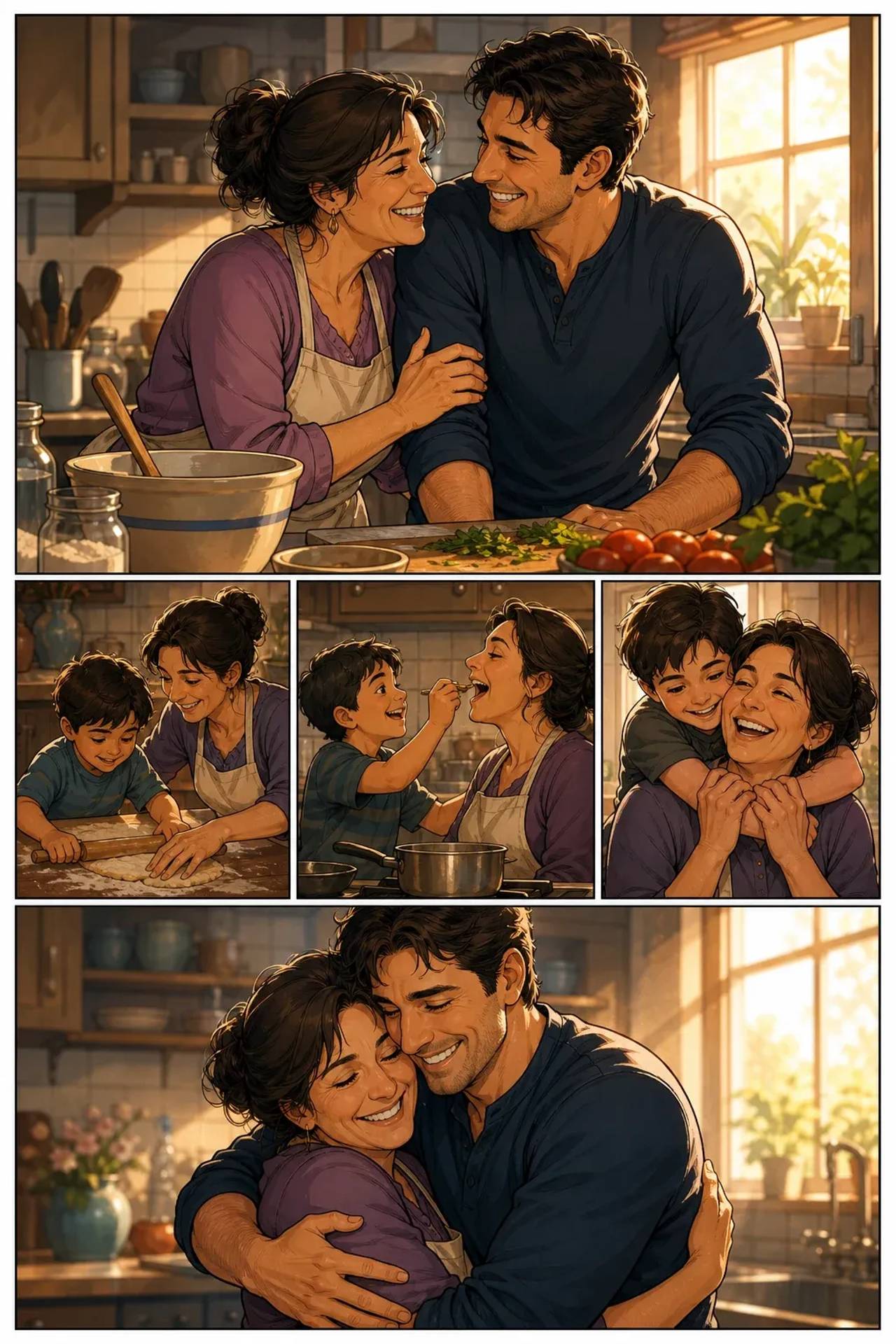
Privacy and consent
Change names, composite characters, blur locations or fictionalize details while preserving the emotional truth of the story.
Memoir controls
Memoir needs more than visual polish. It needs voice, consent, privacy and continuity.
Break essays, journals and memoir chapters into page beats, panels and narrator captions.
Keep the same person recognizable across years, settings, emotions and outfits.
Add food, music, neighborhood, language, hair, clothing and objects that make memory specific.
Treat speech and internal monologue as drafts you can revise for truth and tone.
Create versions with changed names, composite scenes, less identifiable faces or altered locations.
Export individual panels, page drafts and prompts for a zine, webcomic, graphic memoir or pitch.
Workflow
Keep the personal voice first, then build scenes, references and panels around it.
01
Start with one memory, essay, journal entry or turning point.
02
Decide which names, faces, places and events need privacy edits.
03
Create panel beats, narrator captions, recurring objects and visual motifs.
04
Edit dialogue, captions and emotional pacing before exporting pages.
Search intents covered here
These sections answer common searches for turning life writing into comics.
01
Turn lived experience into a visual narrative with timeline and scene control.
02
Convert journal entries into scenes, captions and visual motifs.
03
Plan longer memoir chapters with recurring narrator, locations and emotional arcs.
04
Create versions that protect real people while preserving the story's meaning.
Prompt recipes
Replace the details with your own chapter, boundary notes and voice.
Turn this memoir chapter into a six-page comic outline. Keep narrator voice, mark privacy-sensitive names and places, create scene beats, captions, visual motifs, dialogue placeholders and continuity notes for the visual narrator.
Convert this journal entry into a one-page comic with four panels, narrator captions, mood, setting, recurring object, facial expression notes and editable dialogue.
Create a visual narrator sheet for a graphic memoir: present-day narrator, younger version, three expressions, two outfits, skin tone and undertone, hair, posture, recurring object and privacy-safe variant.
Story ownership
The page is built for creators who care about representation, continuity and ownership. Use AI to draft faster while keeping the script, references and publishing choices under your control.
01
Build new characters, families, worlds and symbols instead of imitating protected franchises or living artists.
02
Revise dialogue, panel notes, captions and scene order so the final comic reflects your voice and values.
03
Use character sheets, individual panels, page drafts and prompts as source material for web, print, pitch decks or app workflows.
Use these workflows together when a project needs characters, story structure, source material and publishable comic panels.
FAQ
Questions about voice, privacy and publishing personal stories.
Ready when you are
Start with the approved creative direction, then refine characters, pages, and production assets in the LlamaGen studio.