Write a scene before a biography
Give Rowan one problem: a cartographer who misses a bus because they refuse to ask directions.
What to check: The goal and weakness should explain one visible choice, such as a hurried pose or an unfolded map.


Learn how to make an original character with a clear motivation, visual identity, short profile, and reusable reference. Follow a concrete brief before generating art.
Create a character draftCheck the selected model, required plan, and credit cost in the generator before you submit. Available models and limits can change.
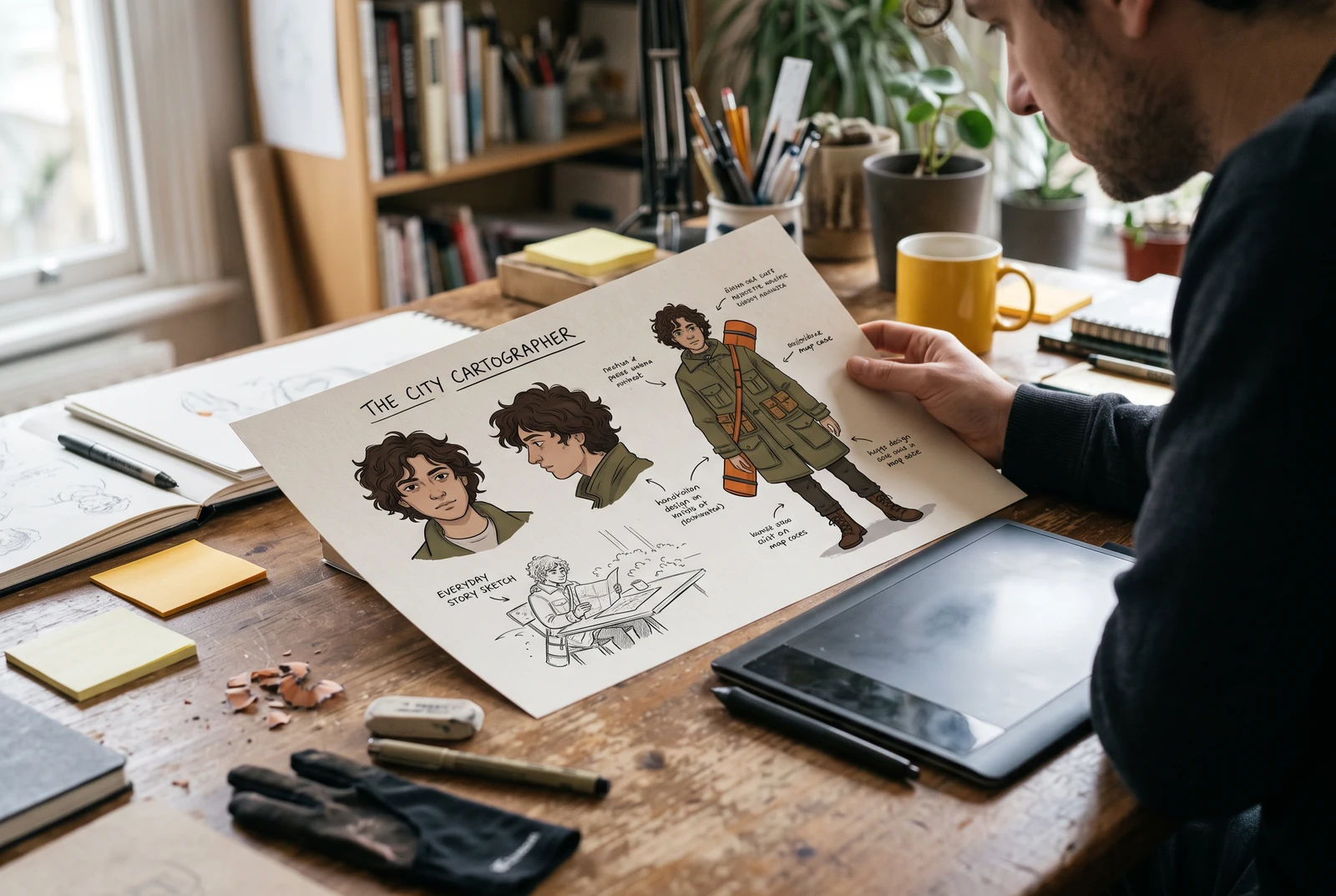
AI-generated workflow illustrations. Fictional scenes, not customer photos or proof of a particular generator result. Printing and physical products are not included.
An OC is an original character you develop for a story, comic, roleplay, or game concept. Begin with one useful contradiction: what does the character want, and which habit makes it difficult?
Record a name, role, goal, fear, strength, and weakness. Example: a city cartographer wants to map every alley but refuses to ask for directions.
Keep face, hair, palette, silhouette, outfit, and accessory in one fixed paragraph. Put pose, expression, location, and lighting in another paragraph.
Create a neutral portrait, then one small scene such as missing a bus. Compare identity details and revise the brief before planning a full comic.
Original city cartographer named Rowan, dark curls, olive coat, orange map case, determined expression, wants to map every alley but hates asking directions, neutral front-view portrait, plain background.
Model
AI-generated workflow illustrations. Fictional scenes, not customer photos or proof of a particular generator result. Printing and physical products are not included.
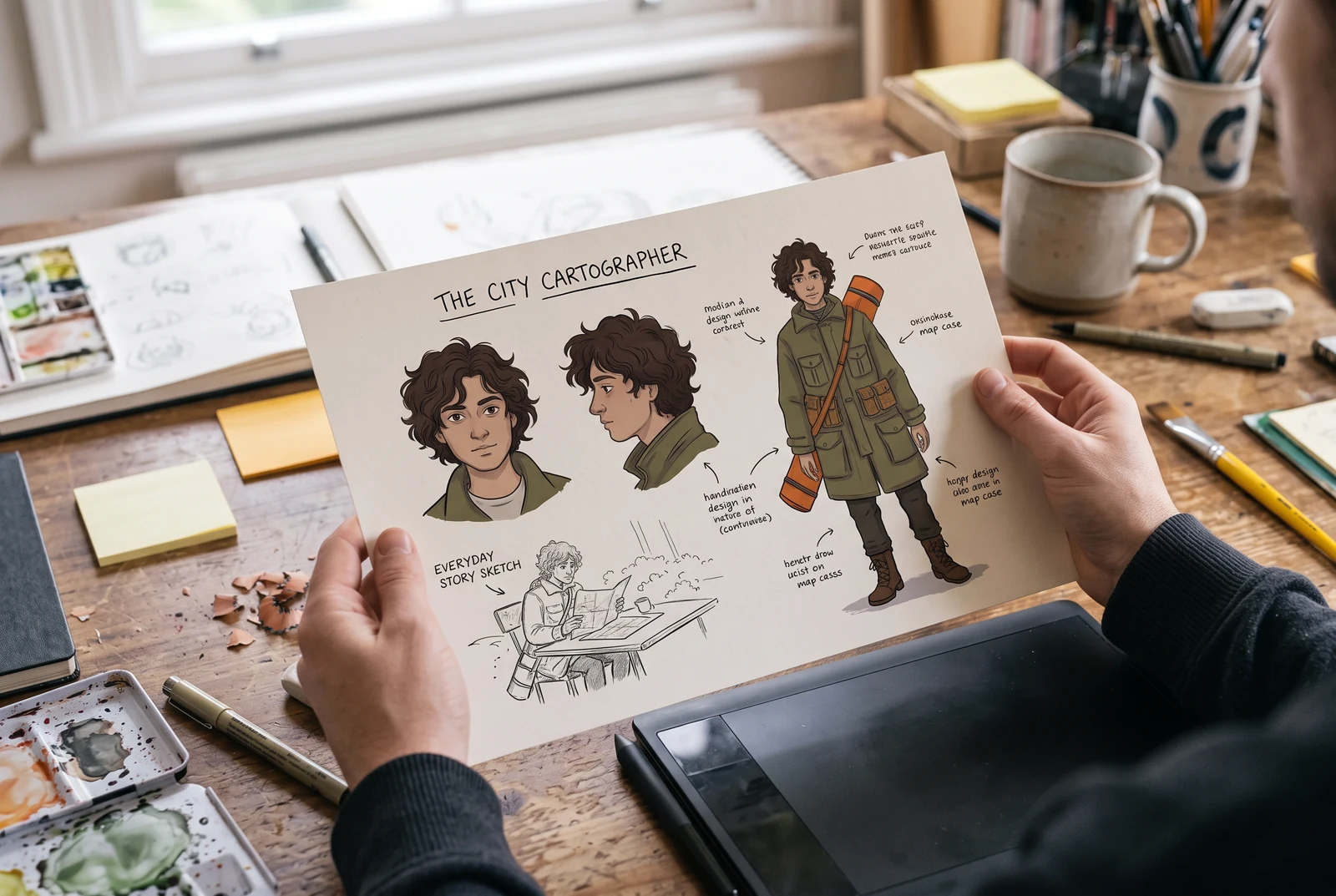
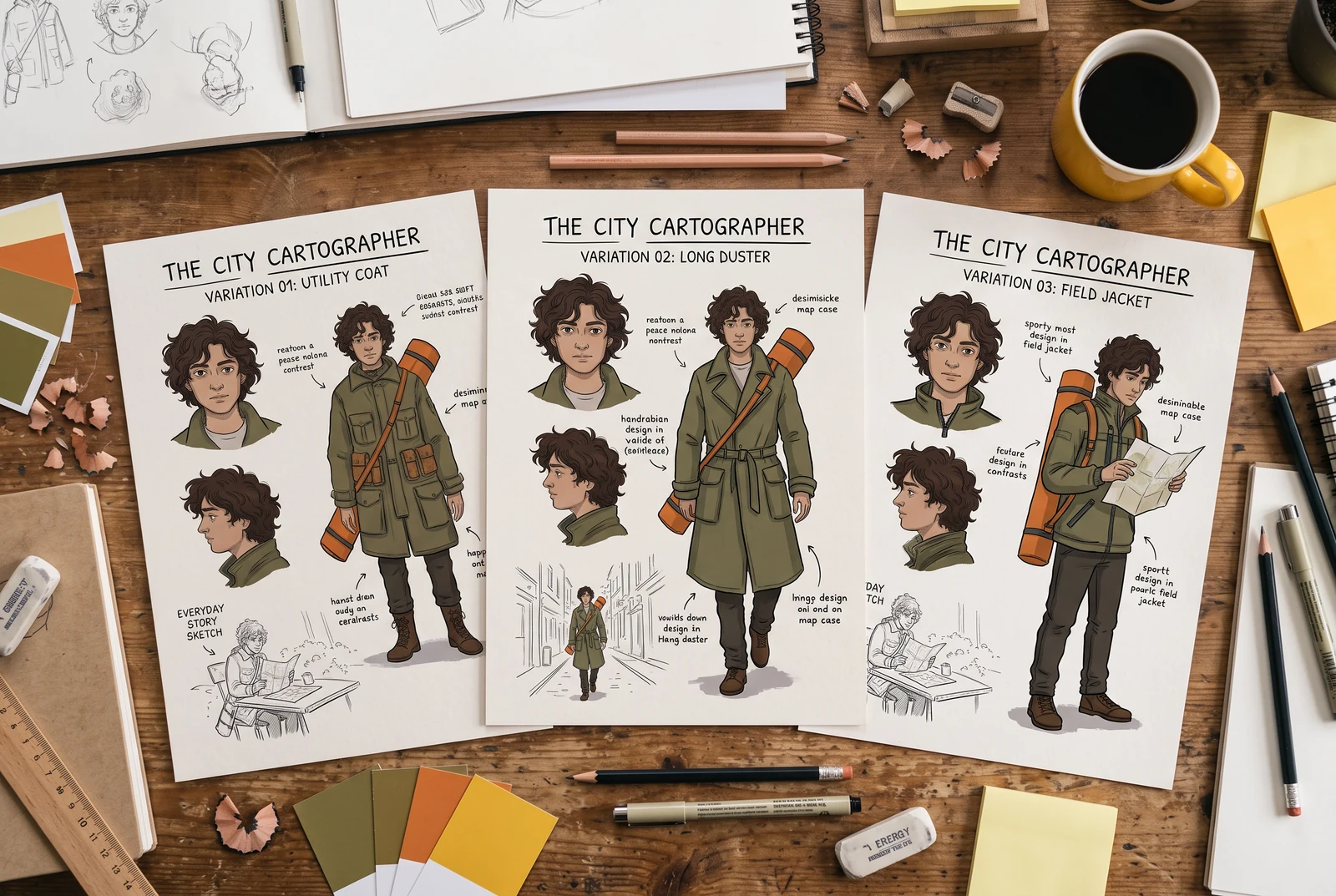
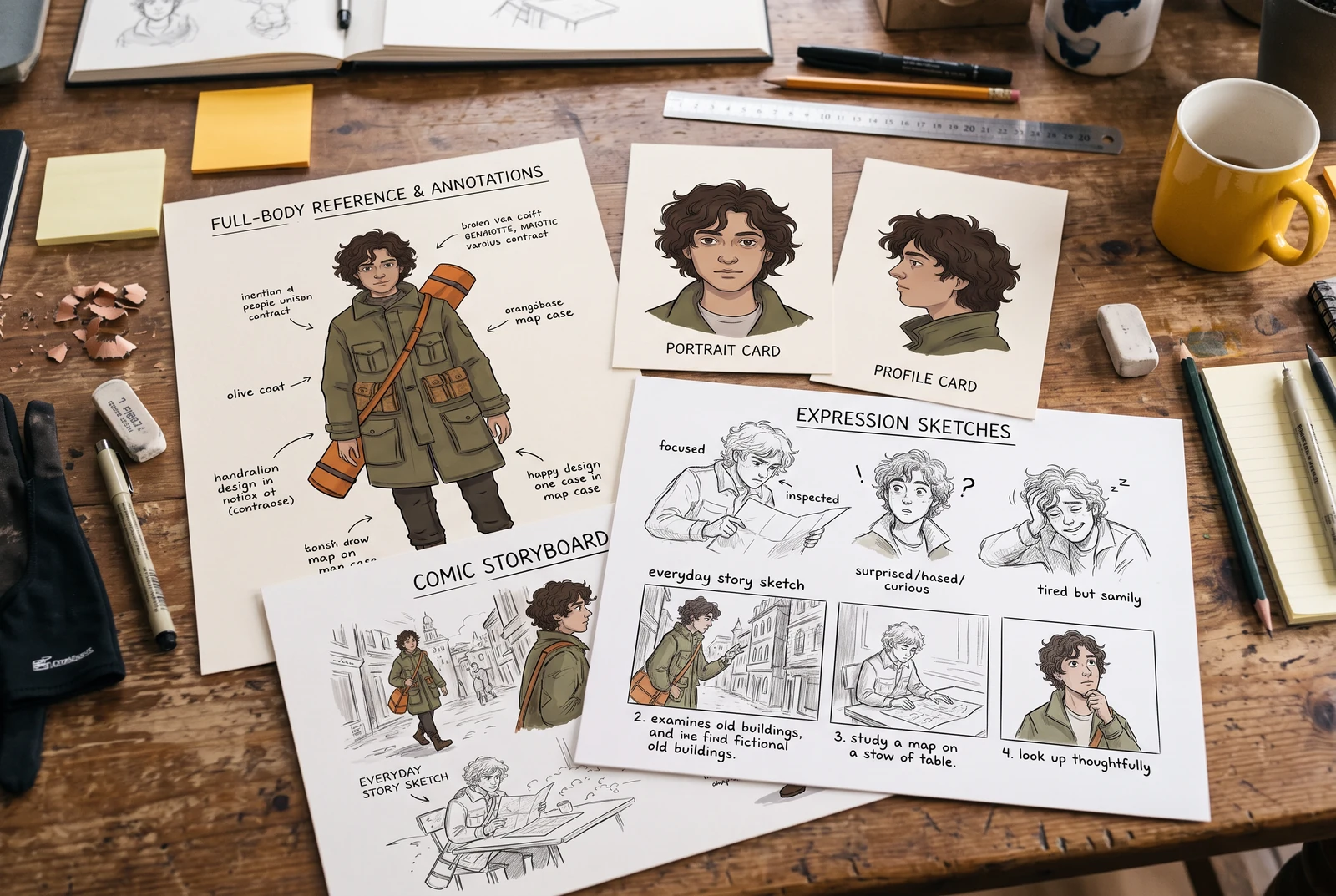
Try these small review tasks before expanding your character set. These are suggested exercises, not measured customer results.
Give Rowan one problem: a cartographer who misses a bus because they refuse to ask directions.
What to check: The goal and weakness should explain one visible choice, such as a hurried pose or an unfolded map.
Send a neutral portrait and a short identity paragraph to a collaborator.
What to check: Separate fixed traits from today’s expression, pose and location so the next prompt stays focused.
Keep a portrait, a full-body reference and one simple scene together.
What to check: Compare the face, olive coat and orange case before expanding to a longer sequence.
No. Start with a goal, a weakness, and a few visual anchors. A short everyday scene often reveals more useful decisions than pages of biography. Expand the history after the character has a clear role.
You can read these guides and prepare a brief without generating. Image generation depends on your account, selected model, plan, and available credits. Check the cost shown before submitting.
Save a neutral portrait and a short identity brief. Keep the face, palette, outfit, and key accessory fixed. Change one pose or expression at a time and compare each result; consistency is not guaranteed.
Check the original creator’s permissions before uploading or reusing an image. A download button is not permission for AI processing, editing, or commercial use. Use your own sketch when permission is unclear.
Build original characters with design ideas, reusable character sheets, expression studies, pose references, and a coordinated wardrobe.
LlamaGen product documentation · Updated November 4, 2026
These briefs are starting examples, not tested customer case studies. Review every image for missing details and consistency before reusing it.
The lifestyle scenes were generated with Google Vertex AI, Nano Banana 2.1, and visually reviewed for this guide. They illustrate how finished artwork could be used. They are not screenshots of this generator or customer case studies.
Adobe: staging and solid drawing
Adobe explains how staging directs attention and how solid drawing conveys weight and balance. Apply those principles when reviewing poses and silhouettes; this is educational reading, not an endorsement of LlamaGen.
Published by LlamaGen · AREGRID LIMITED