Character continuity guide
Consistent manga characters: reference, review, and real output
A repeated name does not define a repeated design. Start with Mira, an invented teaching example, to learn what to lock and what can change. Then inspect a separate first-party 40-panel controlled run with eight actual recurring characters, three repaired identity failures, and retained minor deviations. Neither is a guarantee of perfect continuity.
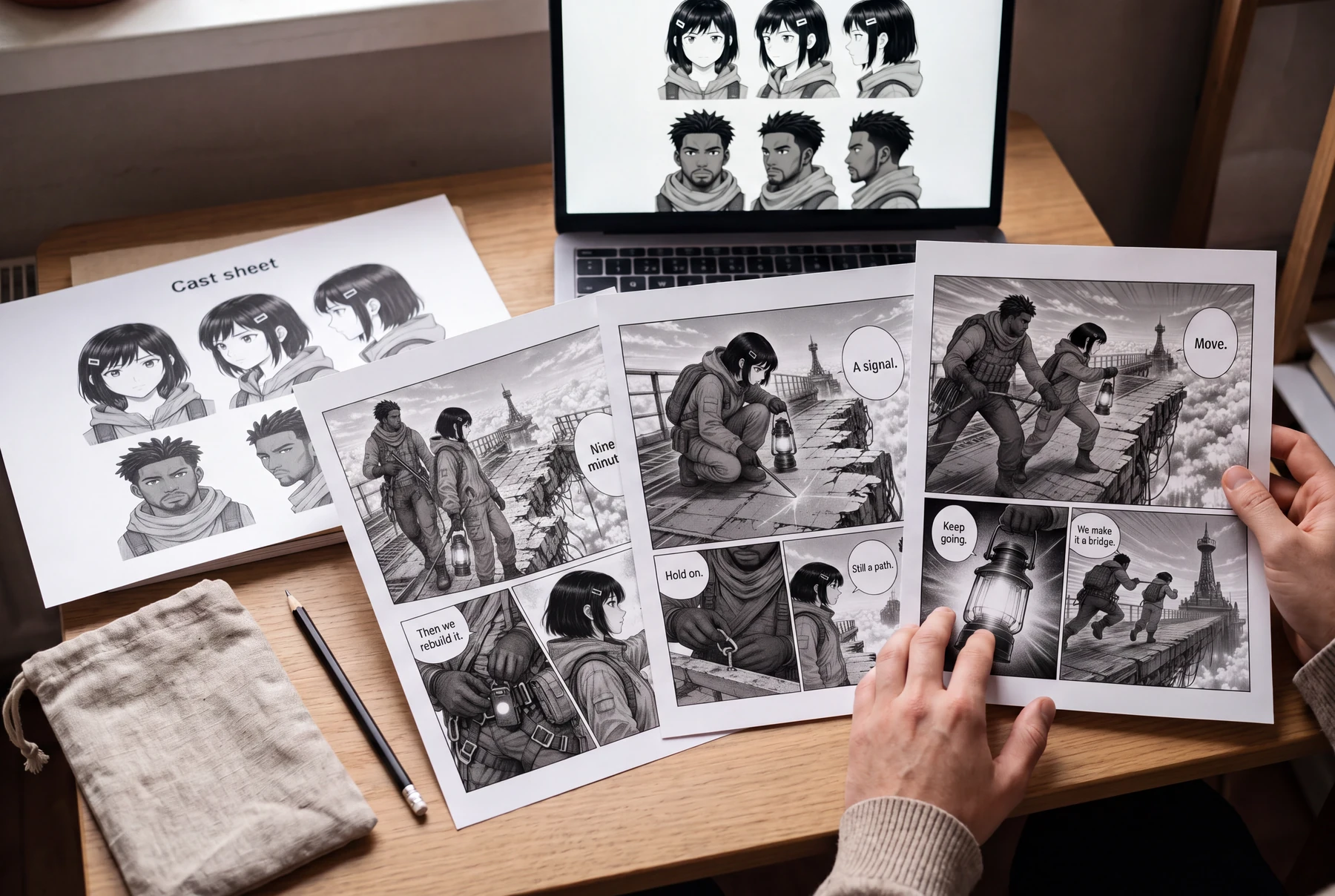
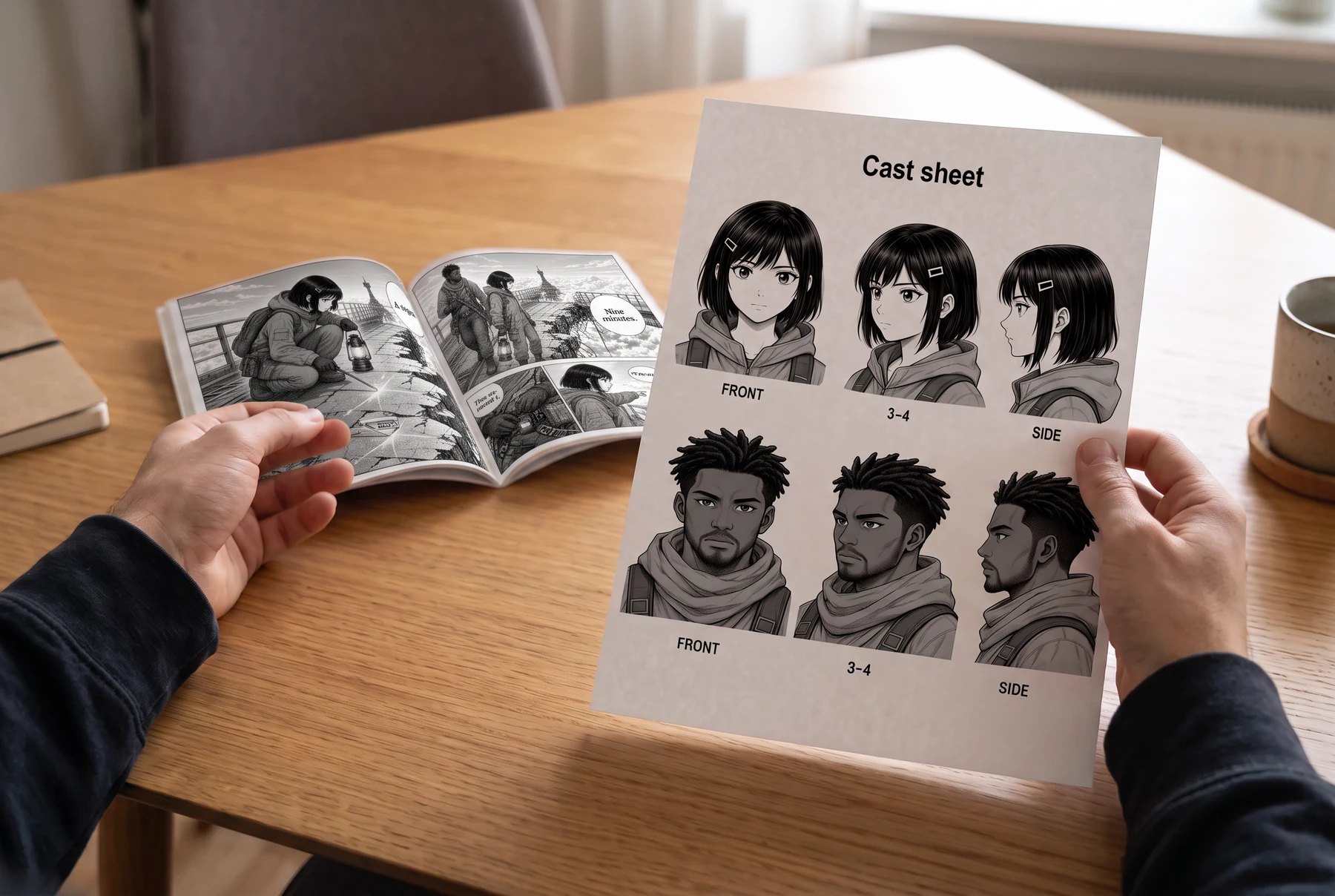
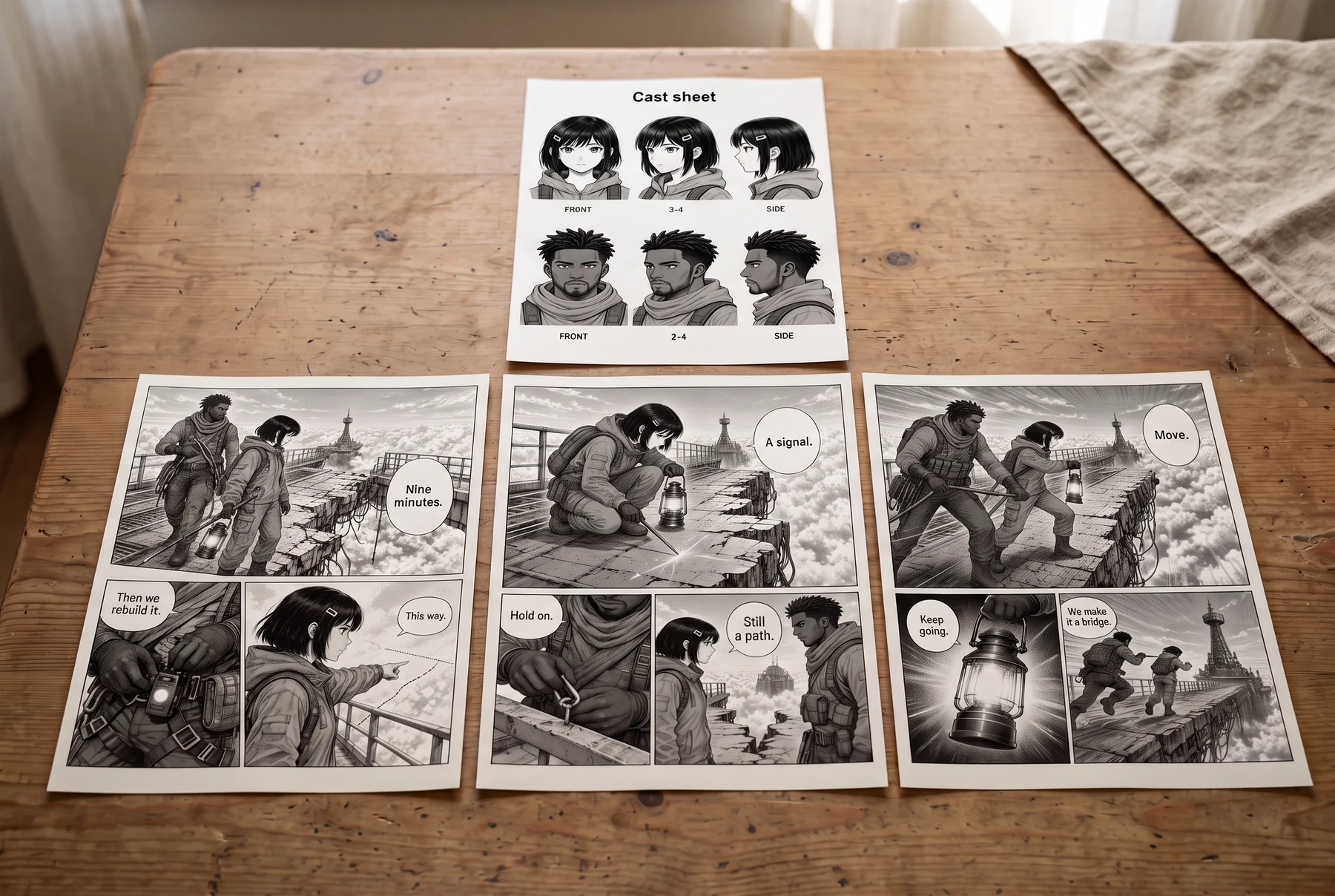
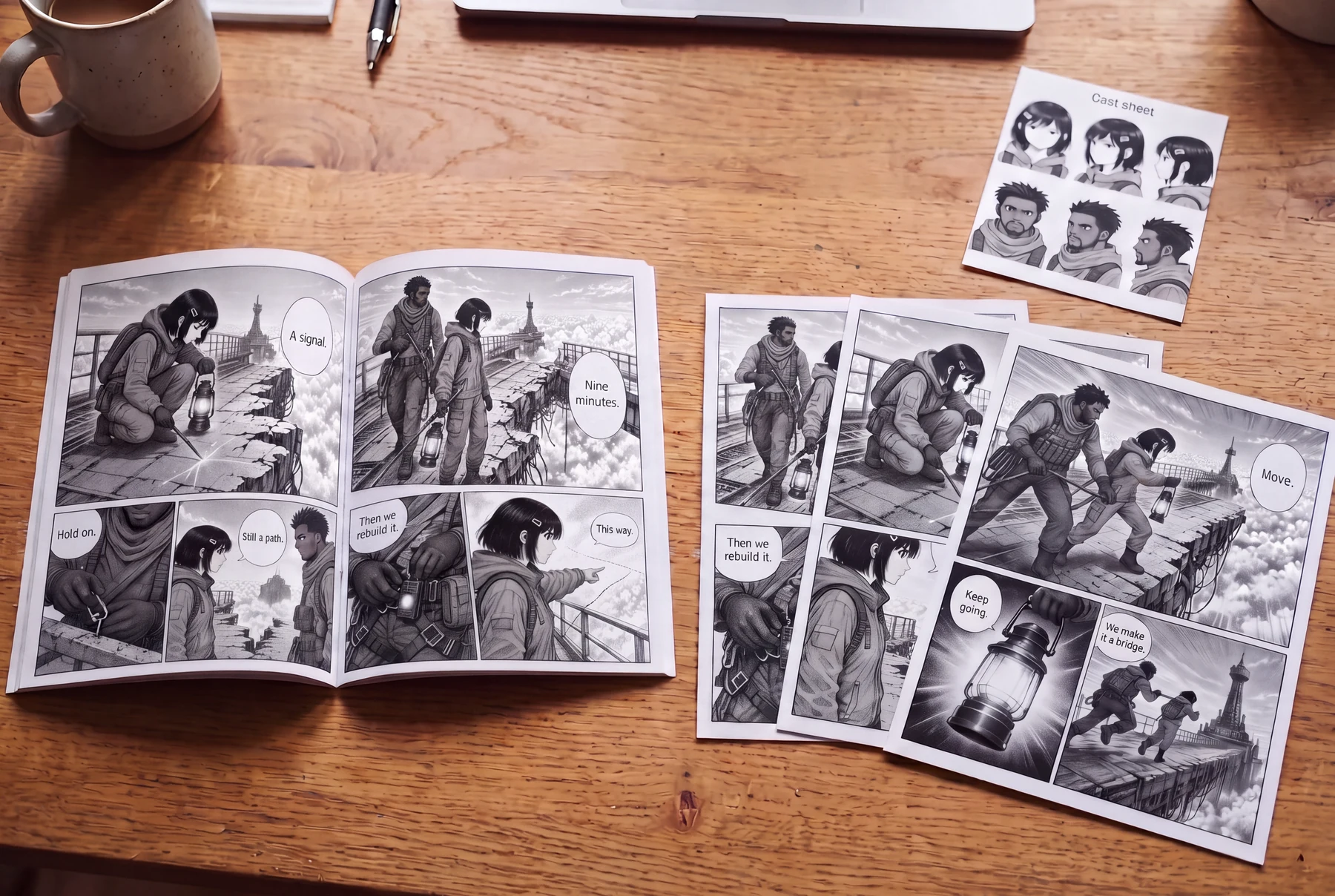
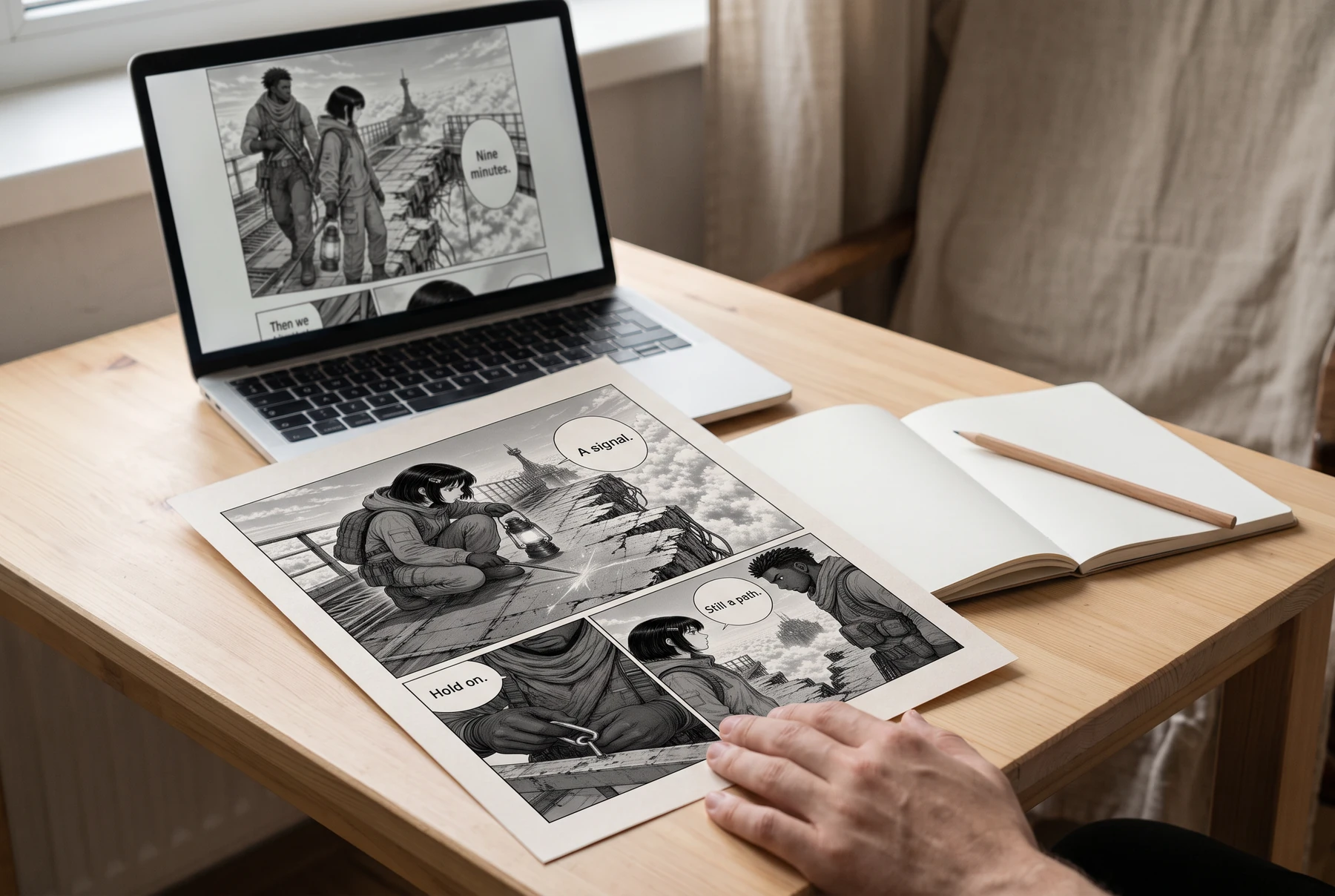
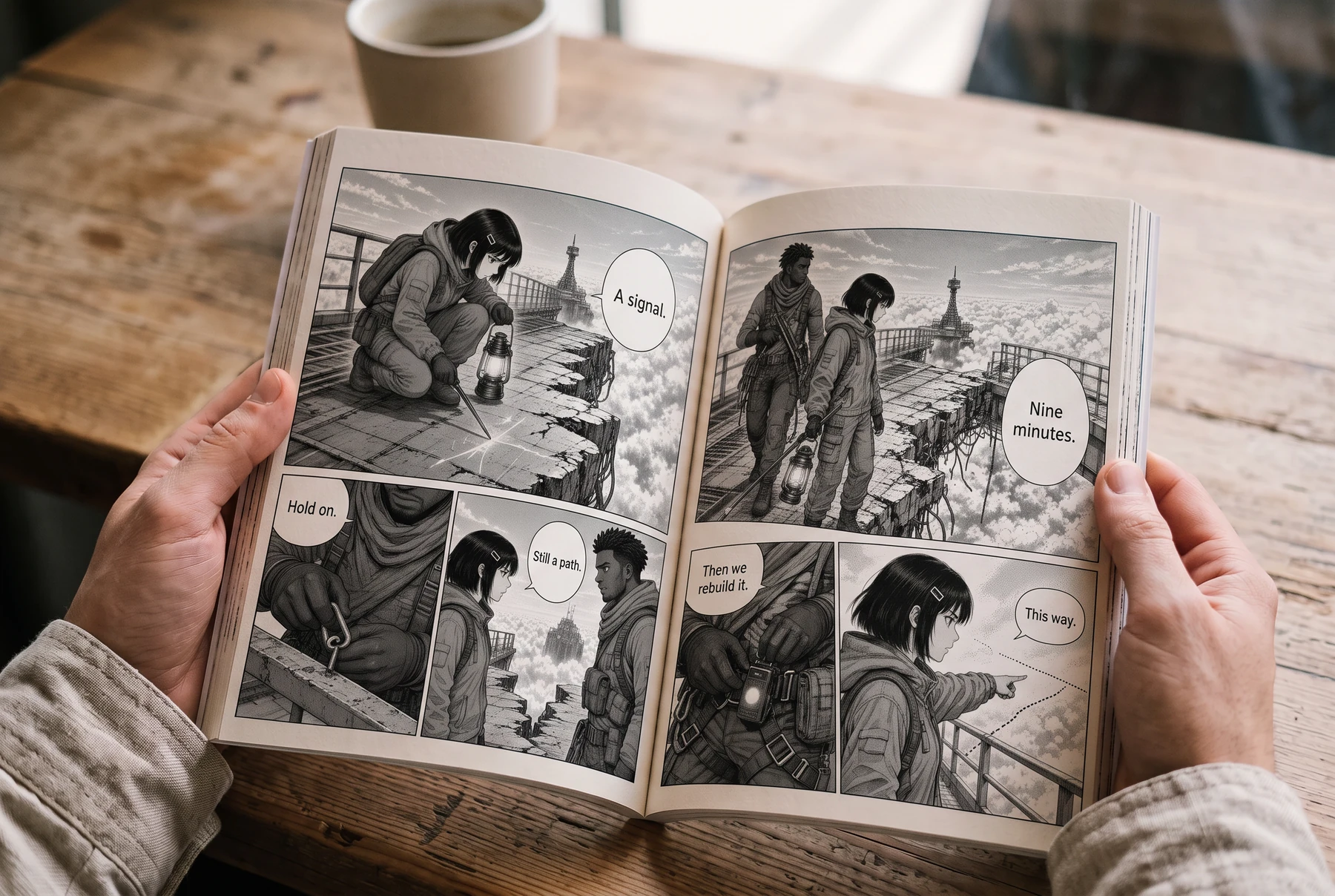
AI-generated lifestyle concepts with fictional people and original sample artwork. These scenes illustrate how manga could be read or presented; they are not customer photographs or verified product runs. Printed books and sets are self-prepared concepts, not a printing or delivery service offered by LlamaGen.
01
Separate fixed identity from changeable details
Build a compact character bible before drafting a sequence. Choose details that remain readable at panel size. Distinguish identity from acting: a surprised face or raised arm should not become a new haircut or costume.
- Fixed reference
- Mira has chin-length black hair, a triangle clip on her left, and a dark jacket. Keep the clip’s shape, hair length, and jacket silhouette stable. Define left from Mira’s perspective, not the reader’s.
- Variable scene state
- Expression, camera angle, pose, and notebook position may change. Record deliberate changes, such as opening the notebook, so the next panel follows the action.
02
Carry a short scene note into each panel
Reuse the identity description with the same reference image when your workflow supports it. Add only the current action and framing. LlamaGen’s manga generator describes character setup and reusable scene context; its editor describes revising selected panels in the surrounding page. These are the product’s published capabilities, not evidence that every detail will persist.
Worked example: a notebook changes hands
Panel 1: Mira holds a closed notebook against her jacket. Panel 2: she opens it with both hands. Panel 3: she points to a page with her right hand while her left supports the book. Repeat her fixed identity in each prompt; update only the action, view, and notebook state.
03
Compare the sequence, then inspect the detail
Place the new panel beside the reference and the previous panel. First check recognition at reading size: hair silhouette, jacket, and proportions. Then inspect the clip and notebook at a larger size. A clip can be hidden by a turned head; invisibility alone is not a continuity error. A visible clip switching sides is.
Check cause and effect too. If the notebook closes between panels, show or explain that action. Review the page again after a correction, because fixing one panel can introduce a new mismatch with its neighbor.
04
Describe one correction precisely
If one panel loses a defining detail, request a focused revision. Name the affected panel, the reference, the error, and the details to preserve. Save the previous version so you can compare both results.
Targeted redraw prompt
Revise panel 3 using Mira’s reference. Move the triangle hair clip to her left temple (the viewer’s right in a front view). Preserve her chin-length black hair, dark jacket, pose, framing, and notebook action. Keep her right hand pointing and left hand supporting the open book. Change only the misplaced clip.
05
Audit a real 40-panel sequence rather than isolated portraits
The ten-page Lantern Relay case below preserves all 40 generated panels and 80 appearances of eight registered characters. Each appearance was checked against the approved reference for its character, including left/right anatomical anchors. The first delivery accepted 37 panels; three failed because one character's mechanical left arm gained duplicate hand or forearm anatomy.
After three targeted redraws, all 40 panels met the case's identity acceptance rules. Thirteen accepted panels still had disclosed small differences in accessories, scars, or hands. Treat these numbers as one team's first-party, model-specific observation—not an independent accuracy estimate or an assertion that every new chapter will match it.
Documented delivery · August 11, 2026
Eight recurring characters, 40 scored panels, 80 appearances
The Lantern Relay is an original ten-page controlled sequence. Its eight registered characters appeared 80 times across 40 panels; the source keeps reference sheets, every panel, identity scores, three rejected first-pass examples and their repaired versions.
- Registered cast
- 8 characters
- Inspected
- 40 panels · 80 appearances
- First delivery
- 37/40 panels
- Targeted repairs
- 3 redraws
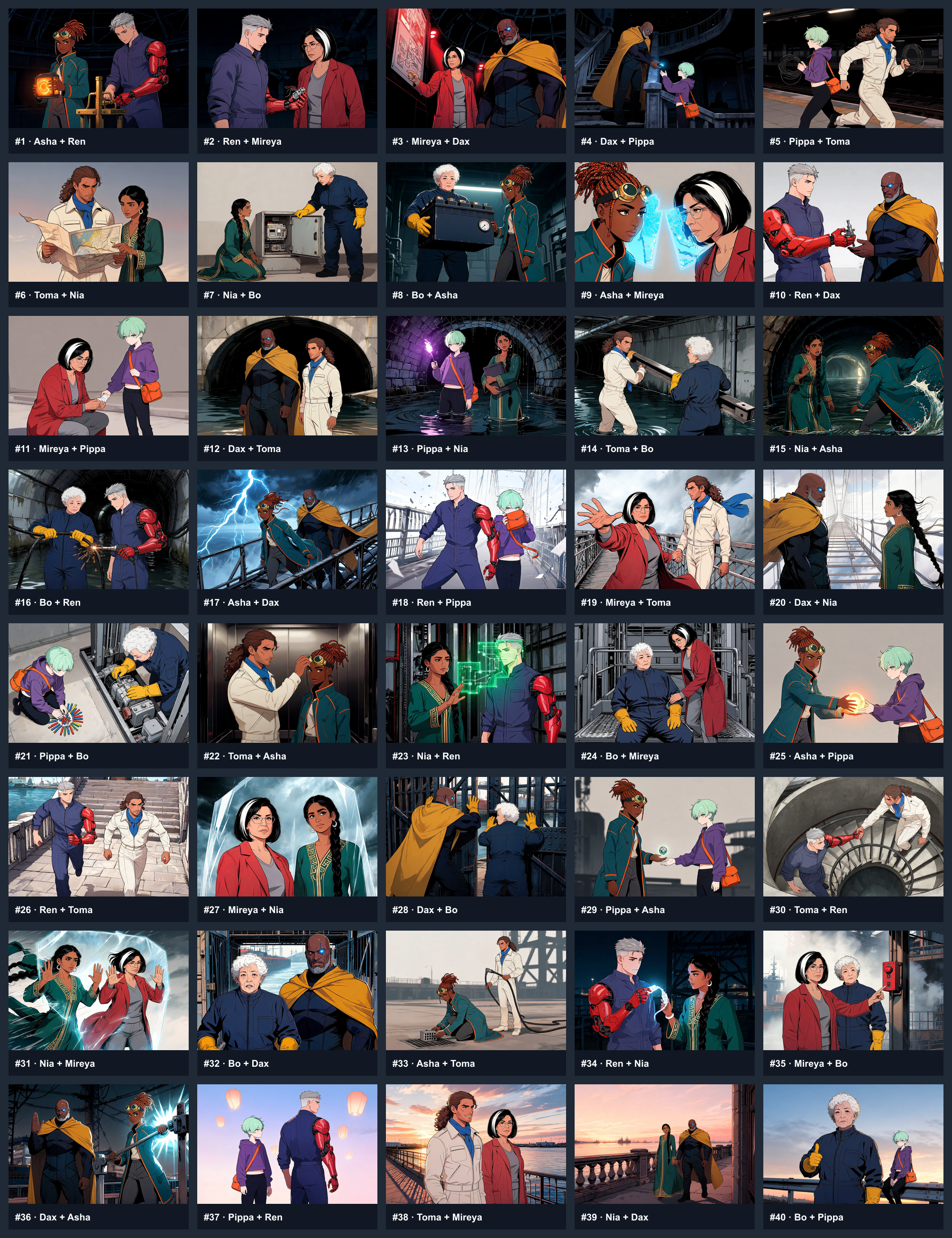
ByteDance Seedream 5 Lite generated the panels using approved references for each named cast member. Three first-pass failures duplicated one character's mechanical arm; each was repaired with a targeted redraw. The final delivery accepted 40 panels, with minor deviations still disclosed in 13 of them.
What this does not prove: Scope: acceptance means the published identity checklist passed, not pixel-identical faces or flawless drawing. Some earrings, scars, and hand geometry still vary. This one first-party run is not an independently reproduced reliability score or a promise for other models.
Source record SHA-256: 98c7d95e7fe7663b99d3ae8f482ad6583c281c7a8a836d68d40e8c819ab1d636
Planning more than a single page? Follow the complete step-by-step AI manga book tutorial, including a reviewed chapter-length sequence and export checks.
Planning diagram
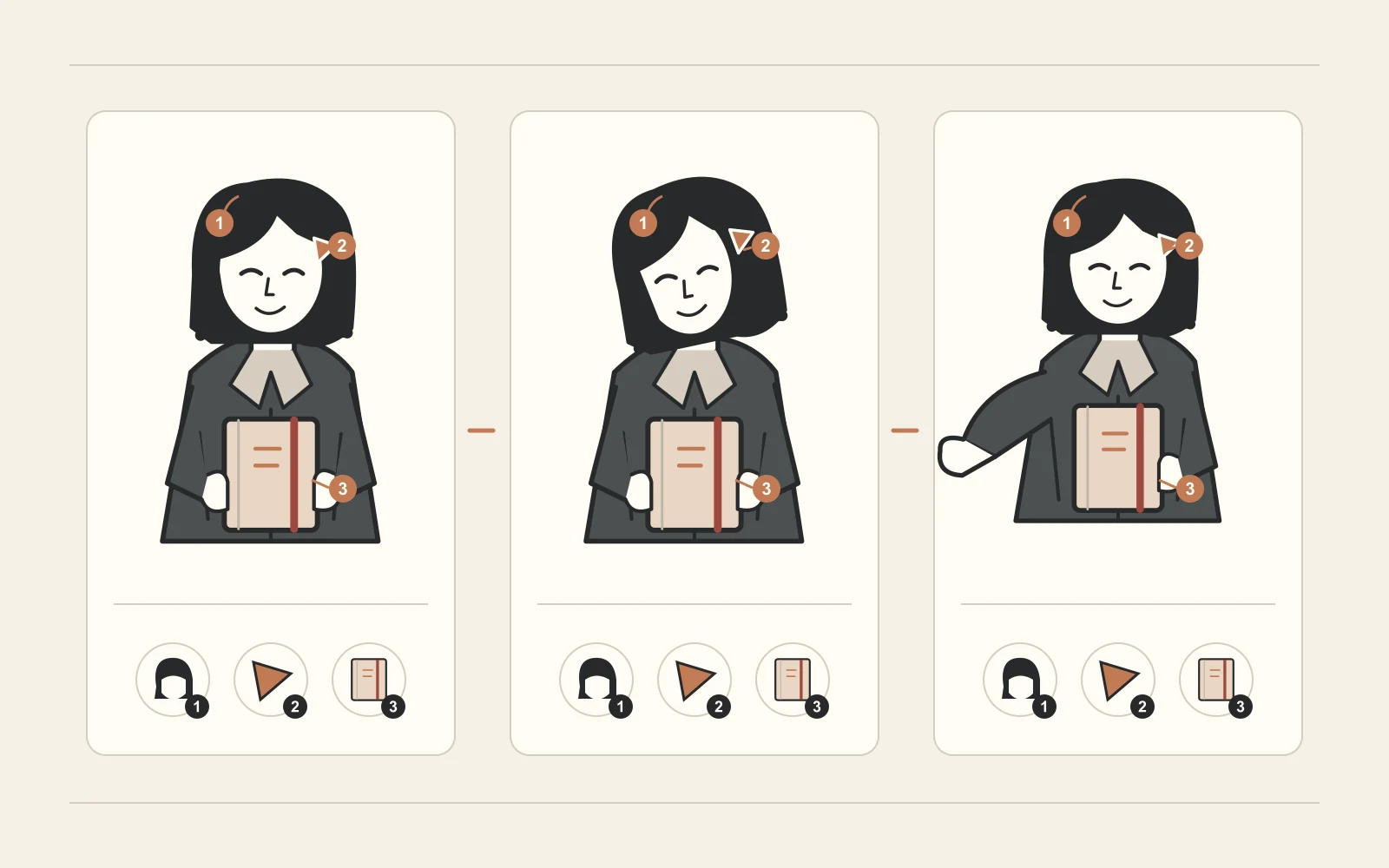
AI-assisted editorial guide with original teaching examples. The diagrams illustrate a workflow; they are not screenshots, measured product results, or customer testimonials.
Before continuing the chapter
- Identity details match the reference.
- Left and right refer to the character’s body.
- Prop changes follow a visible or explained action.
- The corrected panel still fits its neighbors.
Questions
Will a character bible guarantee consistency?
No. It gives generation and review a clear target. Small accessories, distant faces, and difficult angles can still need corrections.
Should every panel use exactly the same prompt?
Keep the identity wording stable, but change the action, framing, and scene state. Otherwise the prompt may conflict with the story beat.
Does the Mira illustration show the measured 40-panel result?
No. Mira is an authored instructional illustration. The separately labelled Lantern Relay case below contains first-party generated output, original character references, scored appearances, rejected examples, corrections, and limitations.
Sources & scope
Sources support the specific points described below. A source link does not imply an endorsement of LlamaGen.
- LlamaGen AI Manga Generator
Official product description of character setup, scene context, and panel revision. First-party capability information, not independent validation.
- LlamaGen Manga Editor
Official description of panel editing, layers, page context, and saved versions. Check the live product for current availability.
- LlamaGen controlled character-continuity review (August 11, 2026)
First-party record of eight reference characters, 40 panels, 80 identity appearances, three repaired first-pass failures, and disclosed remaining minor deviations. Not an independent benchmark.