
Manga planning guide
Turn a short script into four readable manga panels
A panel script explains visible action and dialogue. This original example follows Mira returning a notebook at a rainy station. It is an authored storyboard exercise, not a recorded LlamaGen generation or a claim about typical output.
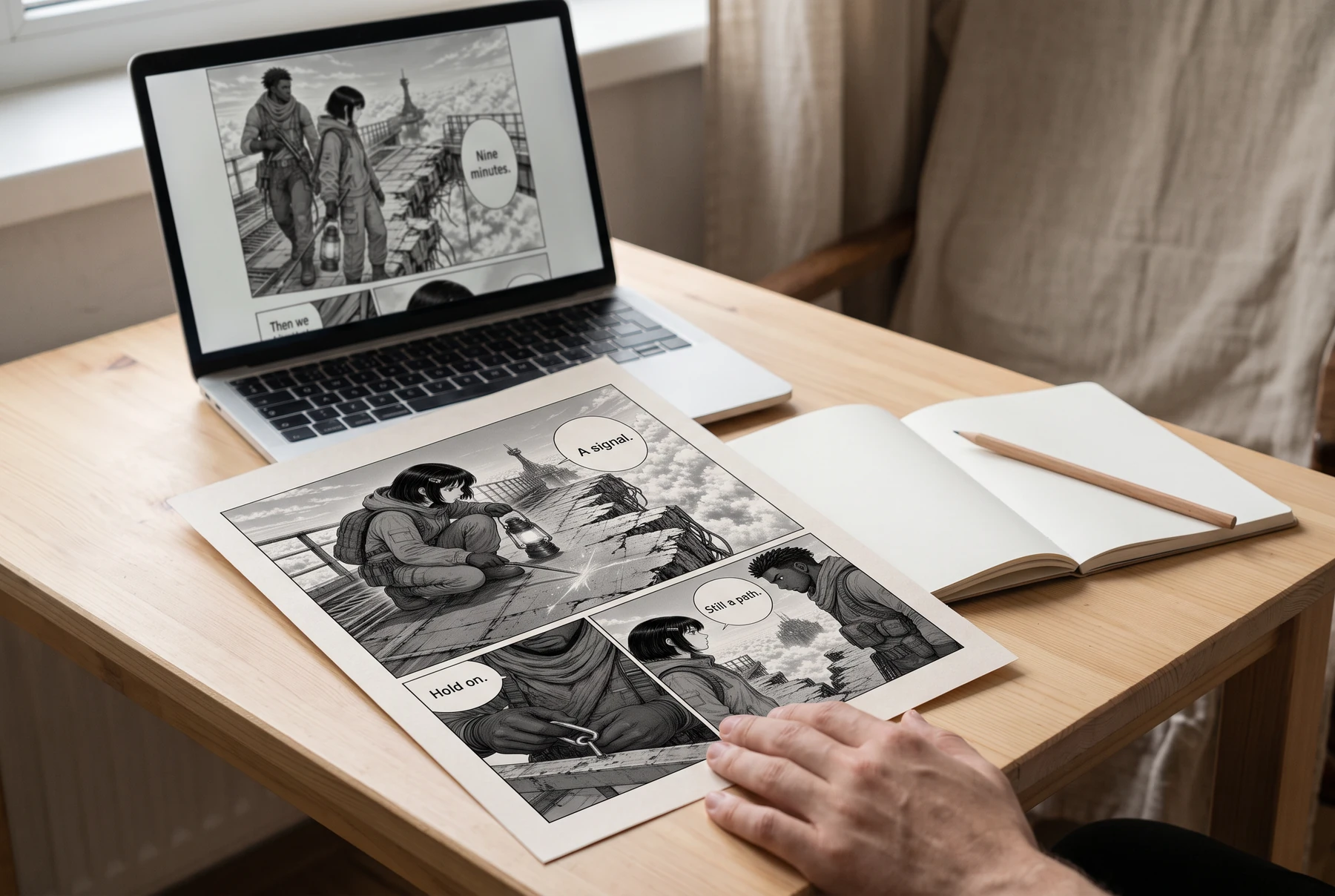
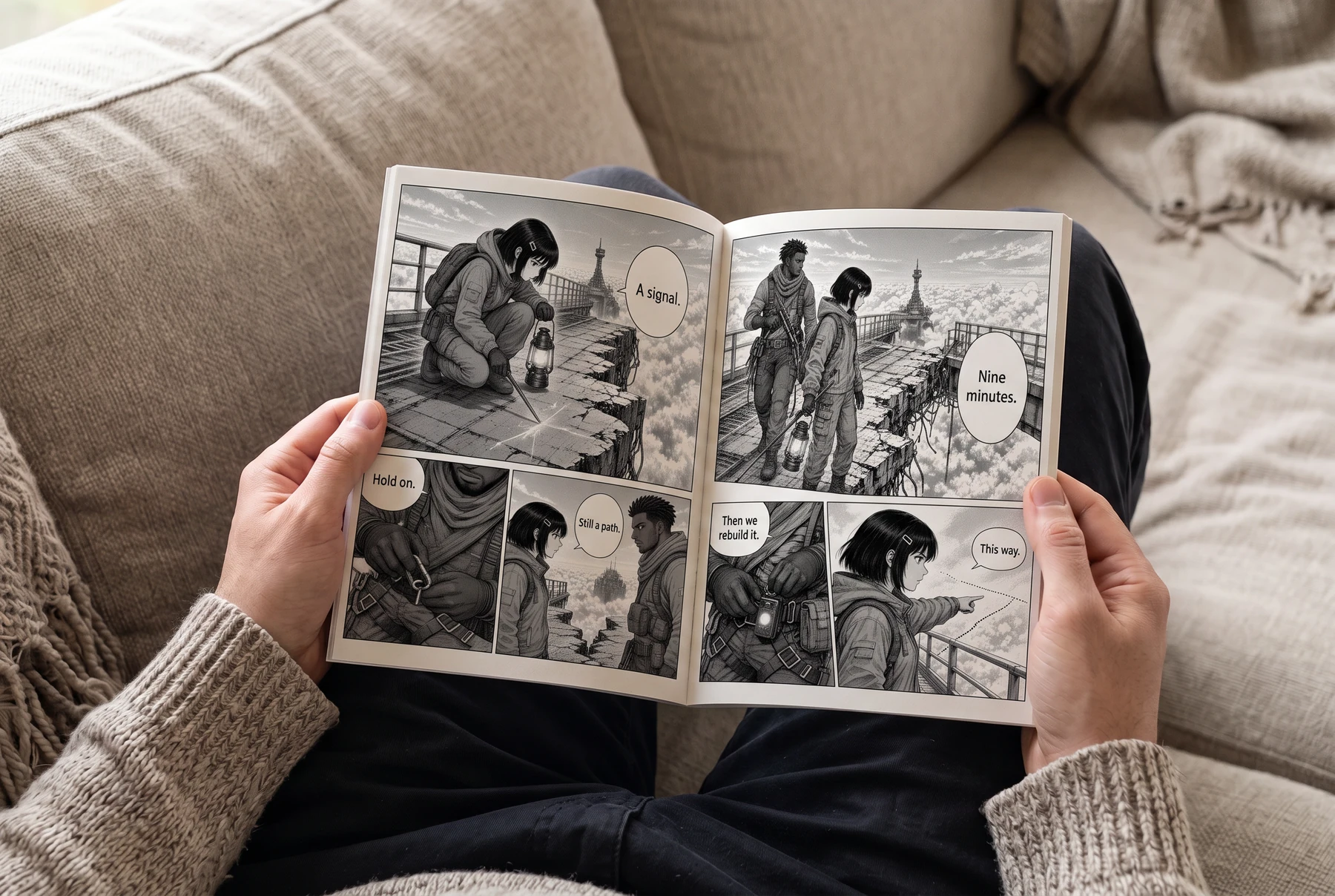
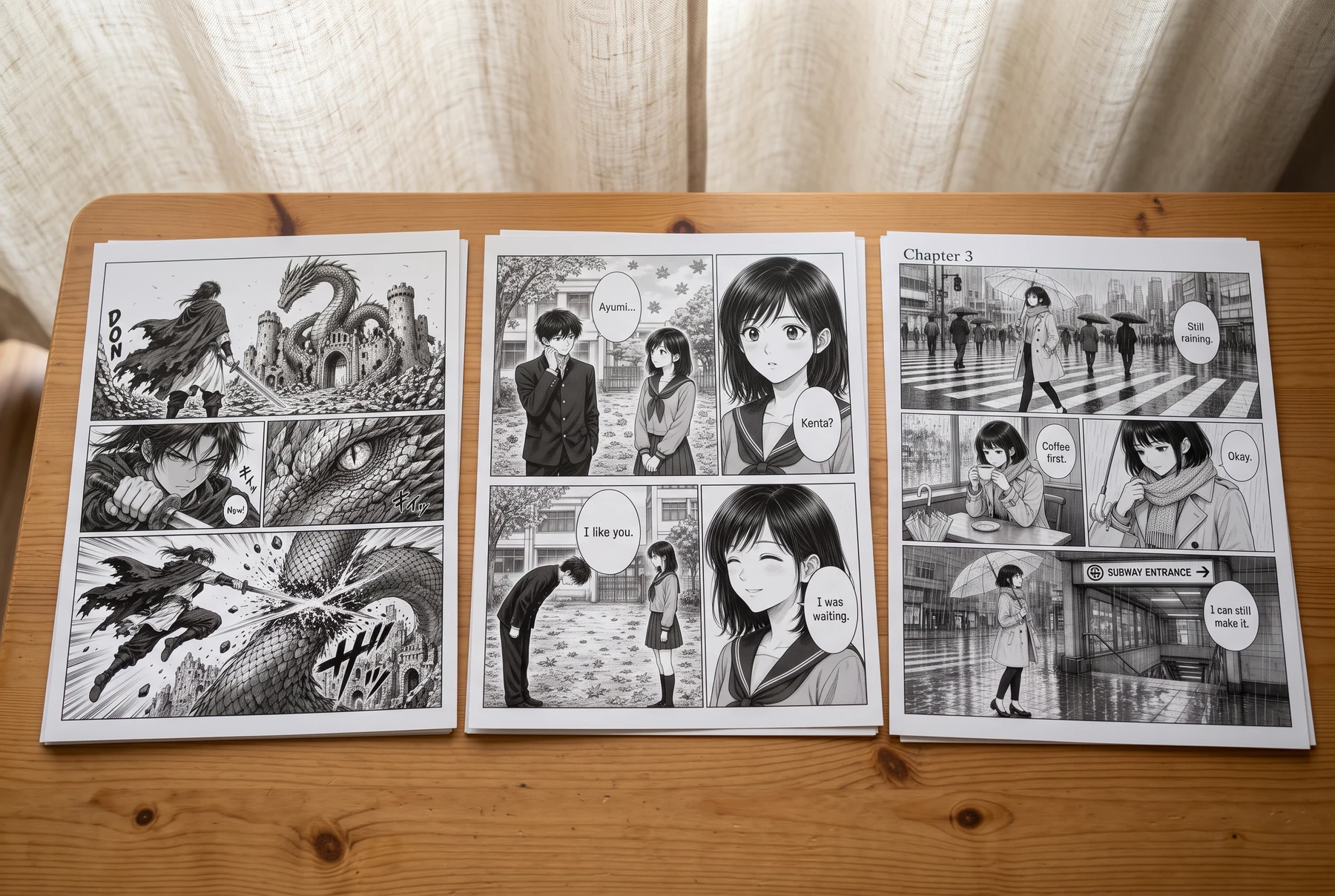
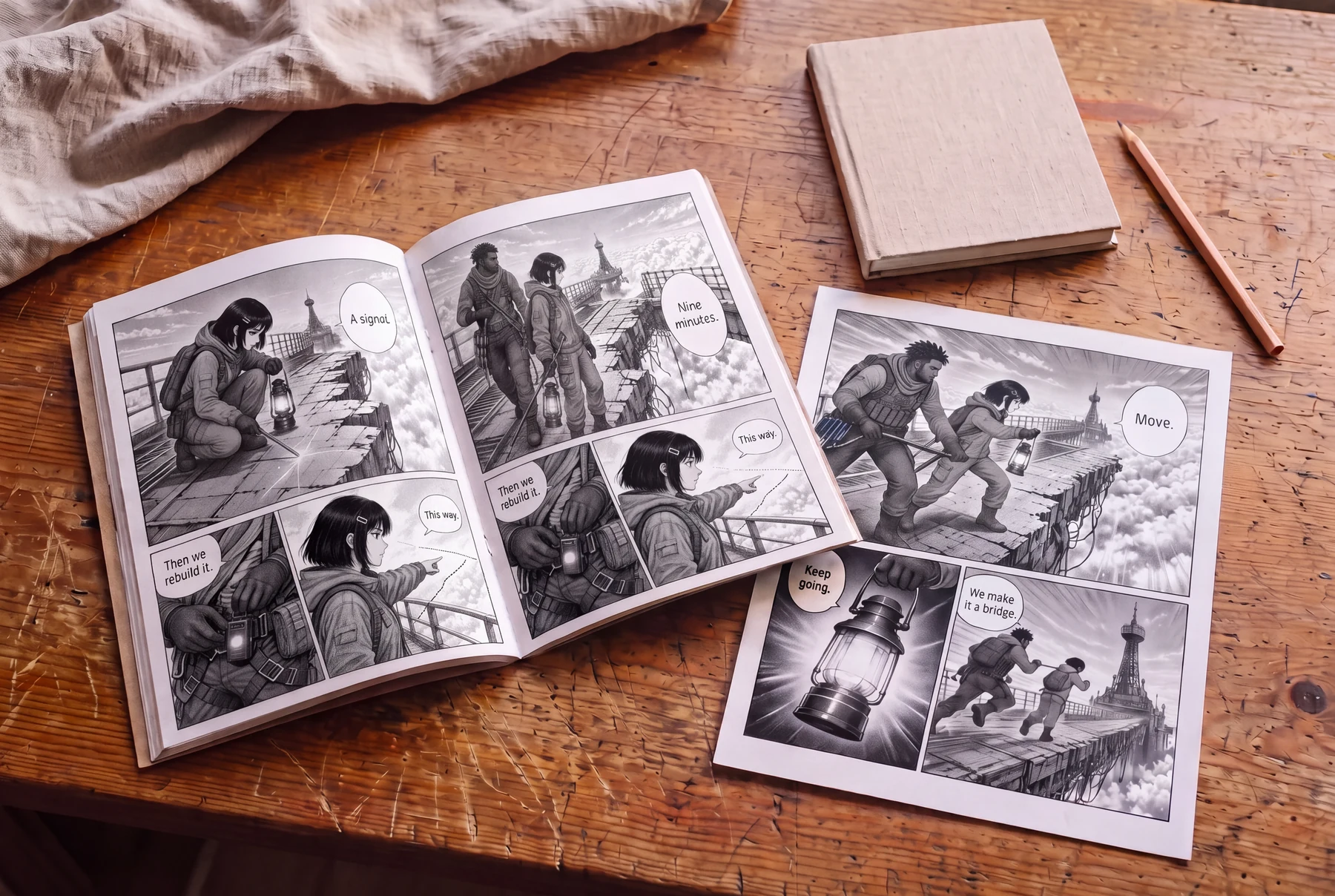
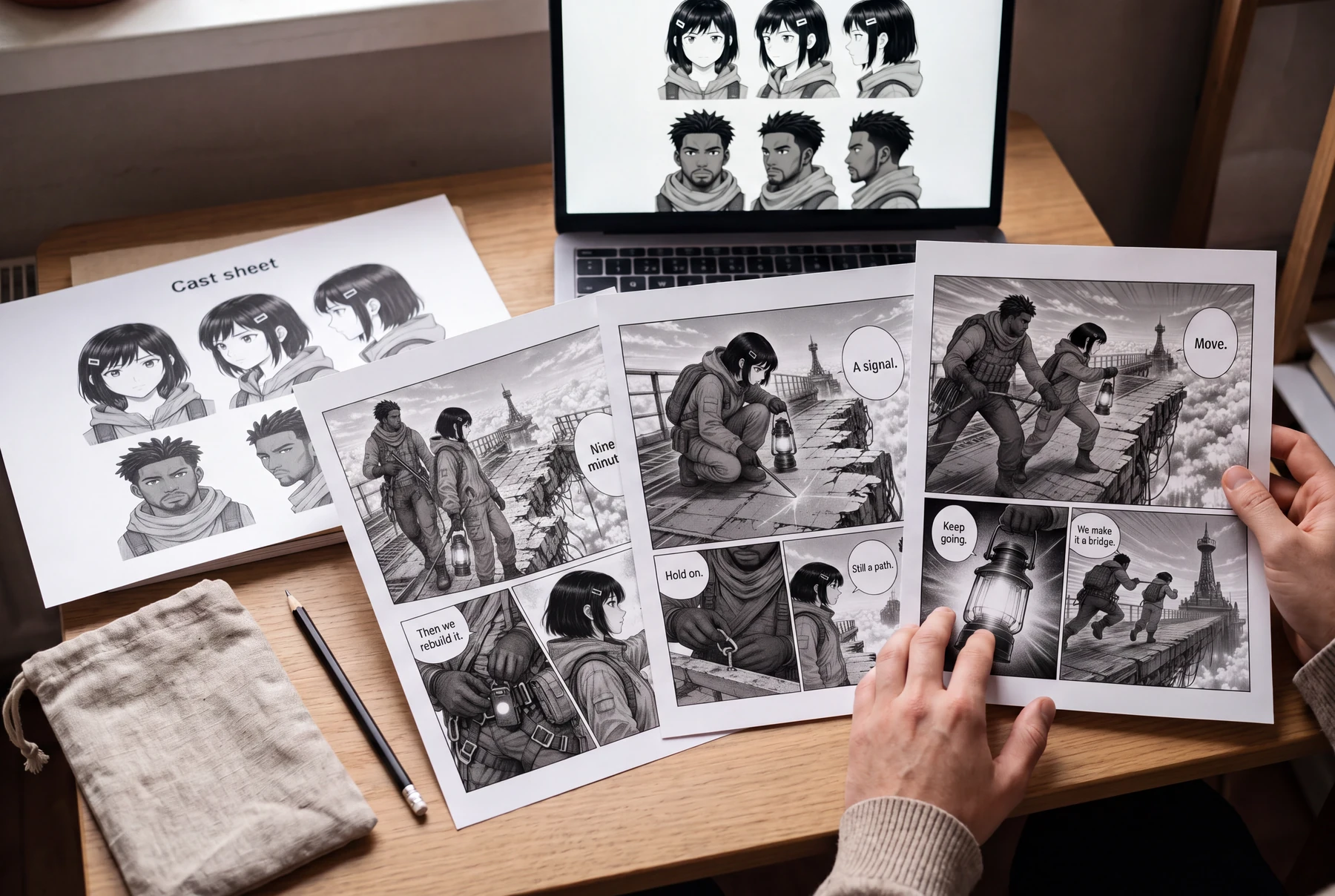
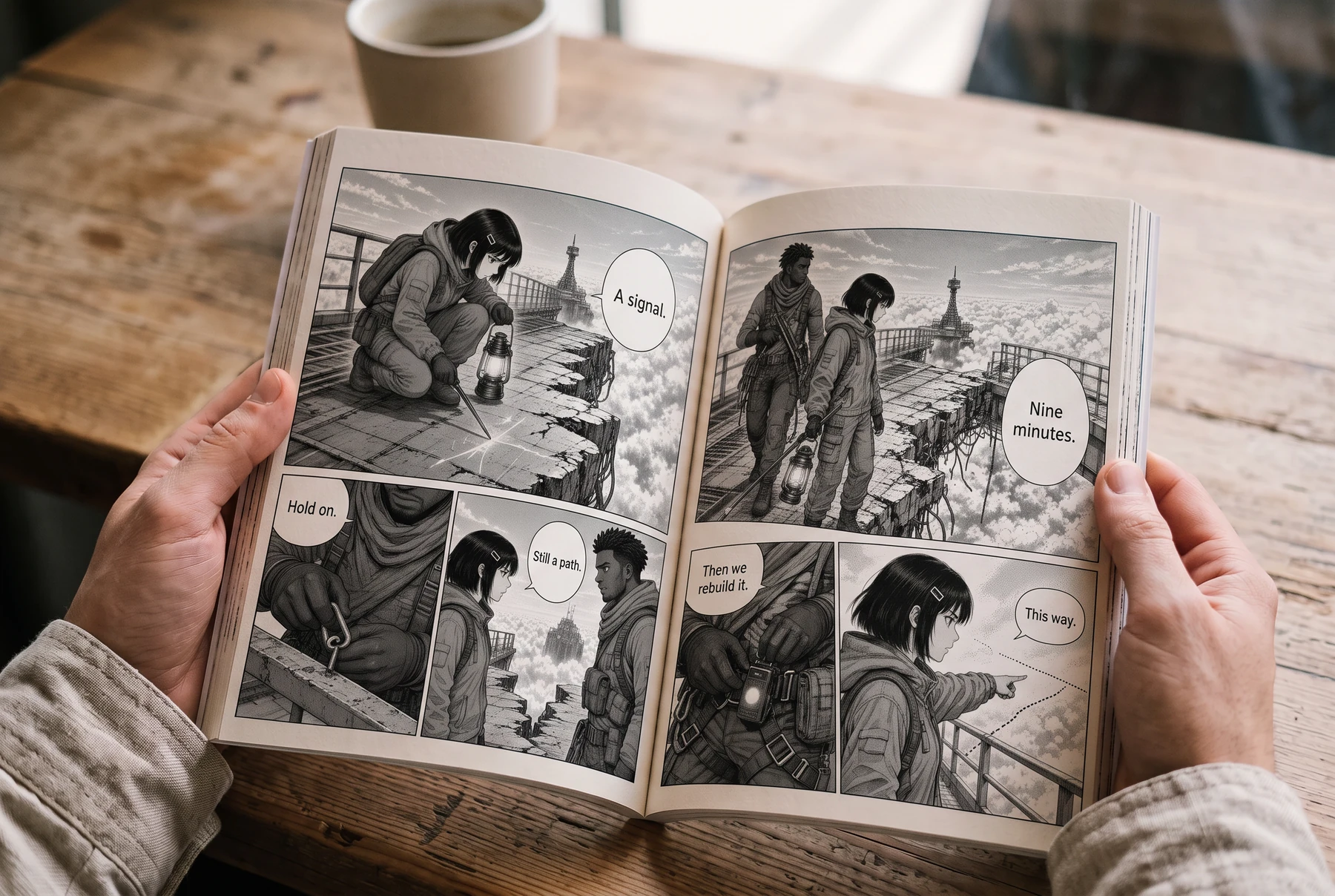
AI-generated lifestyle concepts with fictional people and original sample artwork. These scenes illustrate how manga could be read or presented; they are not customer photographs or verified product runs. Printed books and sets are self-prepared concepts, not a printing or delivery service offered by LlamaGen.
01
Give the scene one visible goal
Brief: Mira finds a notebook beneath a station bench and returns it before the train arrives. Hesitation becomes connection. One location and two characters keep attention on the exchange.
Record the references: Mira has chin-length black hair, a triangle clip on her left, and a dark jacket; the commuter wears a gray coat. The notebook has a red elastic band.
02
Assign one story beat to each panel
Read right to left, top to bottom: top-right 1, top-left 2, bottom-right 3, bottom-left 4. Lens numbers suggest framing; they do not guarantee camera-accurate generation.
- Panel 1 · Notice
- 28 mm wide view: rain beyond the canopy; Mira bends toward the notebook under the bench. The commuter waits at right. No dialogue.
- Panel 2 · Offer
- 50 mm medium view: Mira offers the closed notebook, red band visible. Mira: “Is this yours?”
- Panel 3 · Recognize
- 85 mm close-up: the commuter recognizes the notebook and reaches for it. Commuter: “My daughter's drawings…” The closed notebook's value becomes clear.
- Panel 4 · Resolve
- 50 mm two-shot: the commuter holds the notebook; Mira's hands are empty. Both smile. Commuter: “Thank you.” The handoff completes the scene.
03
Copy the plan into a reusable prompt
Replace the cast and setting; keep the beat structure. Put exact dialogue on separate lines for proofreading or lettering.
Original four-panel prompt
Create a four-panel manga draft, right to left, top to bottom: top-right 1, top-left 2, bottom-right 3, bottom-left 4.
Setting: rainy station, beneath one canopy.
Cast: Mira, chin-length black hair, triangle clip on her left, dark jacket; commuter, gray coat.
Prop: closed notebook, red elastic band. Keep designs consistent.
1: 28 mm wide framing. Mira notices the notebook beneath a bench; commuter waits at right. No dialogue.
2: 50 mm medium framing. Mira offers the notebook, red band visible.
Mira: "Is this yours?"
3: 85 mm close-up. Commuter recognizes it and reaches for it; notebook stays closed.
Commuter: "My daughter's drawings…"
4: 50 mm two-shot. Commuter holds the notebook, Mira's hands empty; both smile.
Commuter: "Thank you."
Use clear silhouettes and space for dialogue. No extra characters, captions, or speech.
04
Review the page, then revise one problem
Read without dialogue: can you follow the notebook from bench to Mira to commuter? Then read the words: is each speaker clear? Fix the handoff before polishing shading.
Generated drafts may change faces, props, text, or panel count. Check every result. The official generator and editor pages describe workflows; they do not validate this example or guarantee its result.
Planning diagram
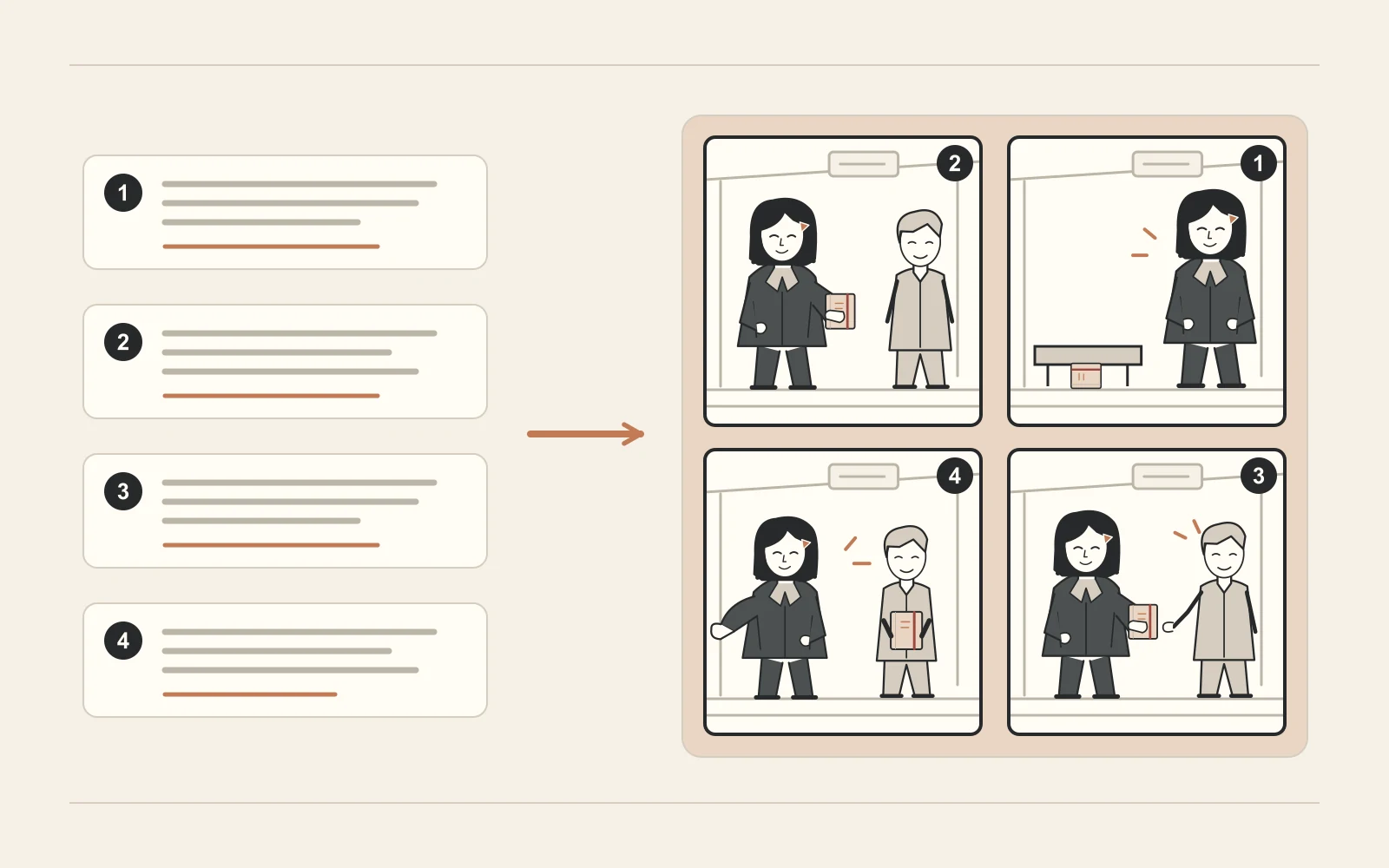
AI-assisted editorial guide with original teaching examples. The diagrams illustrate a workflow; they are not screenshots, measured product results, or customer testimonials.
Before keeping the draft
- Four panels follow the declared reading order.
- Mira's hair, left-side triangle clip, and dark jacket stay consistent.
- The notebook keeps its red band and changes hands once.
- Each bubble points to the correct speaker.
- Dialogue is correct and legible at reading size.
- The final panel resolves the return without explanation.
Questions
How much script belongs in one panel?
Start with one visible action or reaction. Split finding, lifting, opening, and returning into separate moments, or simplify the scene.
Must a manga page have four panels?
No. Four panels keep this exercise manageable. Add space when an action, pause, or exchange needs it.
Is this an example of tested product output?
No. The authored script, prompt, and diagram explain planning. They are not a product test, generated page, or success-rate evidence.
Sources & scope
Sources support the specific points described below. A source link does not imply an endorsement of LlamaGen.
- LlamaGen AI Manga Generator
Official workflow: story brief, cast notes, drafting, and dialogue review. First-party documentation, not independent evaluation.
- LlamaGen Manga Editor
Official overview of page composition, artwork, and dialogue editing. Check the product for current capabilities.