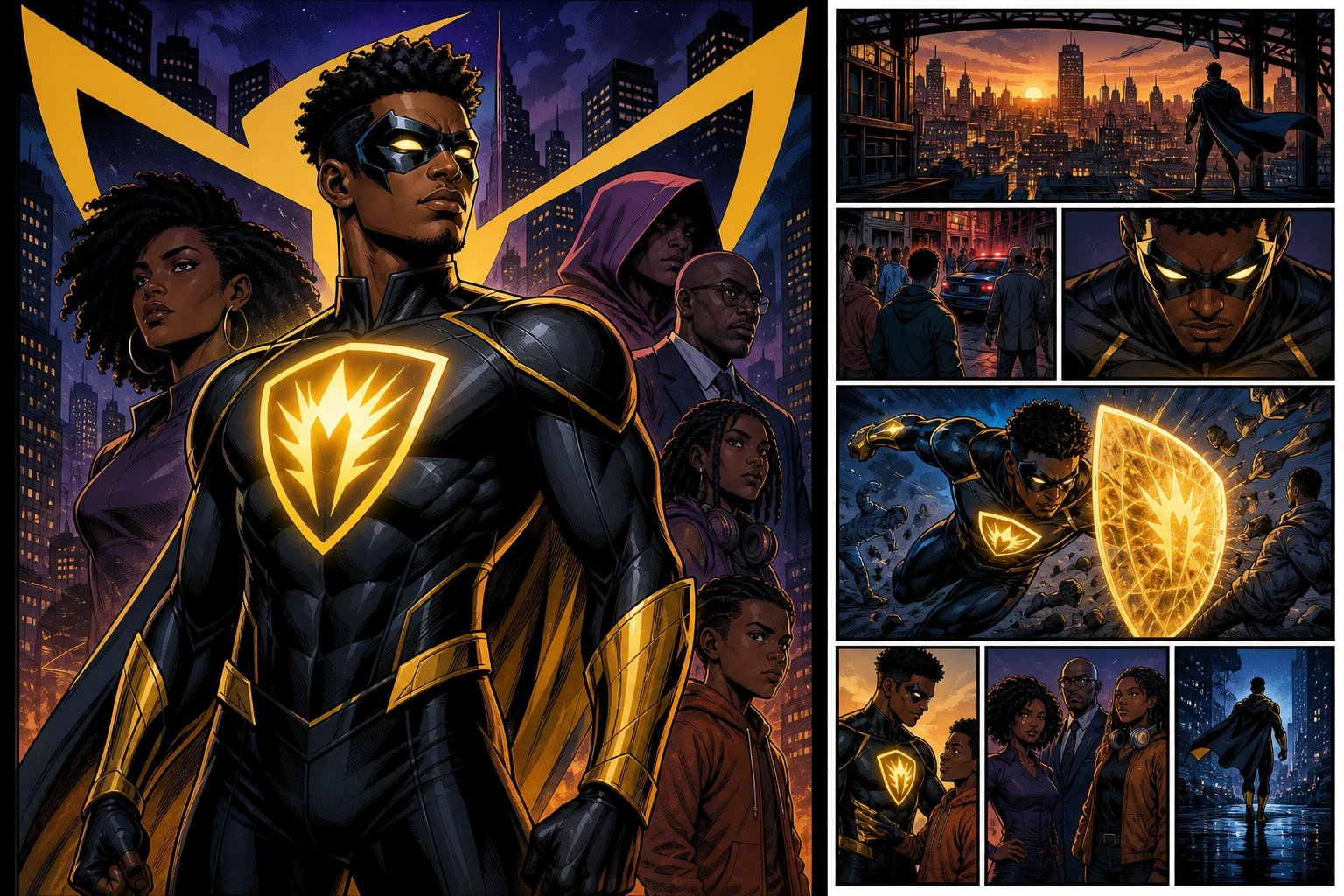
Cover
Hero identity and cover
Give the hero a name, role, power source, community tie and visual symbol before you generate the cover.


Original superhero comic maker
Build a new hero from identity, origin, powers, costume symbols, allies, villains and story stakes, then generate character sheets, a first comic page and a continuing comic direction.
View Hero WorkflowPaste your story, then choose the page count and layout.
Original
Define a new hero identity, not a protected costume, logo or famous universe.
Cast
Develop allies, villains, mentors and community stakes around the hero.
Comic
Move from character sheet to first page and continuing story beats.
Hero examples
A strong superhero page should help creators make the whole IP seed: hero concept, powers, suit logic, supporting cast and a comic sequence.
Cover
Give the hero a name, role, power source, community tie and visual symbol before you generate the cover.
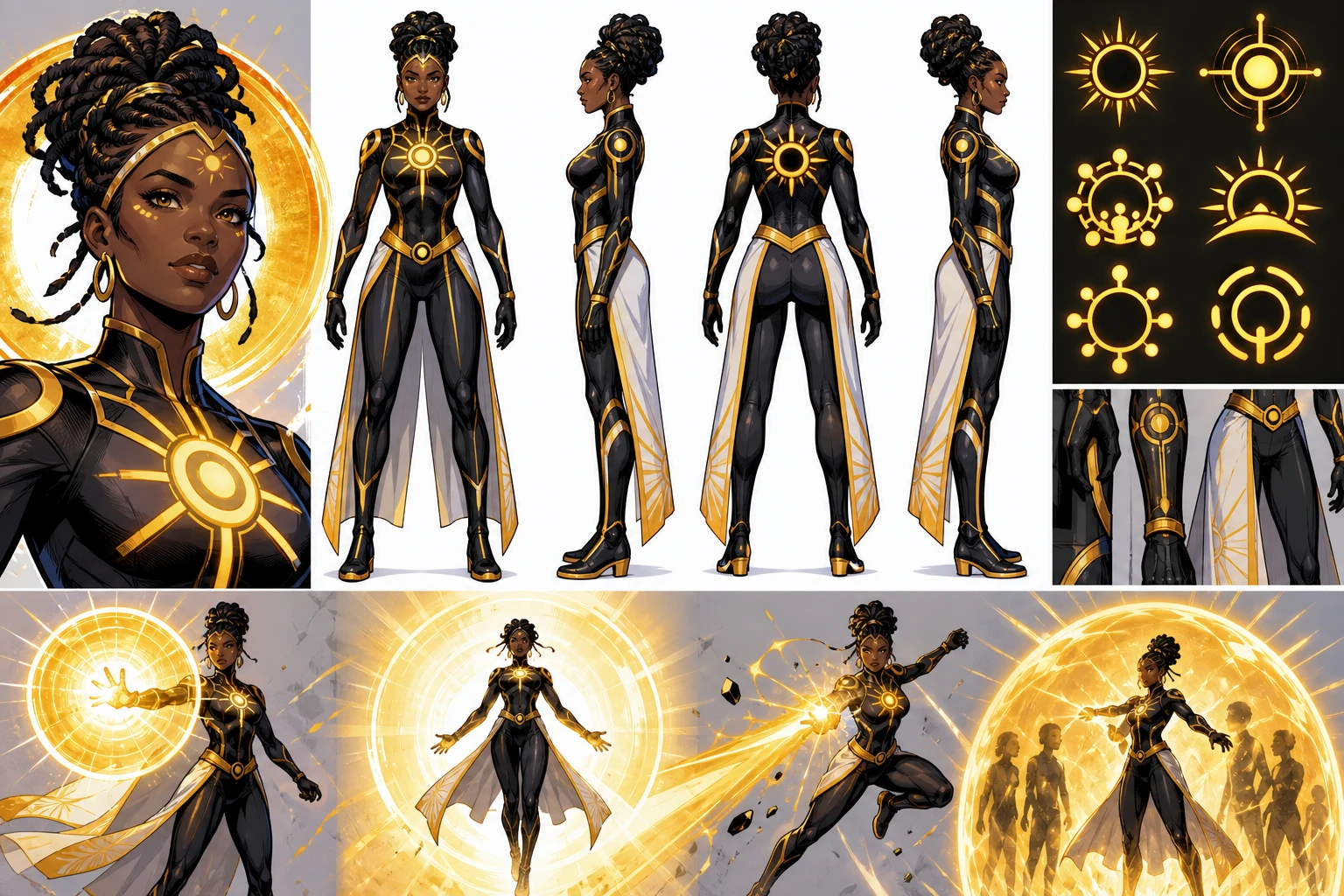
Sheet
Explore suit silhouette, emblem, material, power effects, palette and reusable poses.
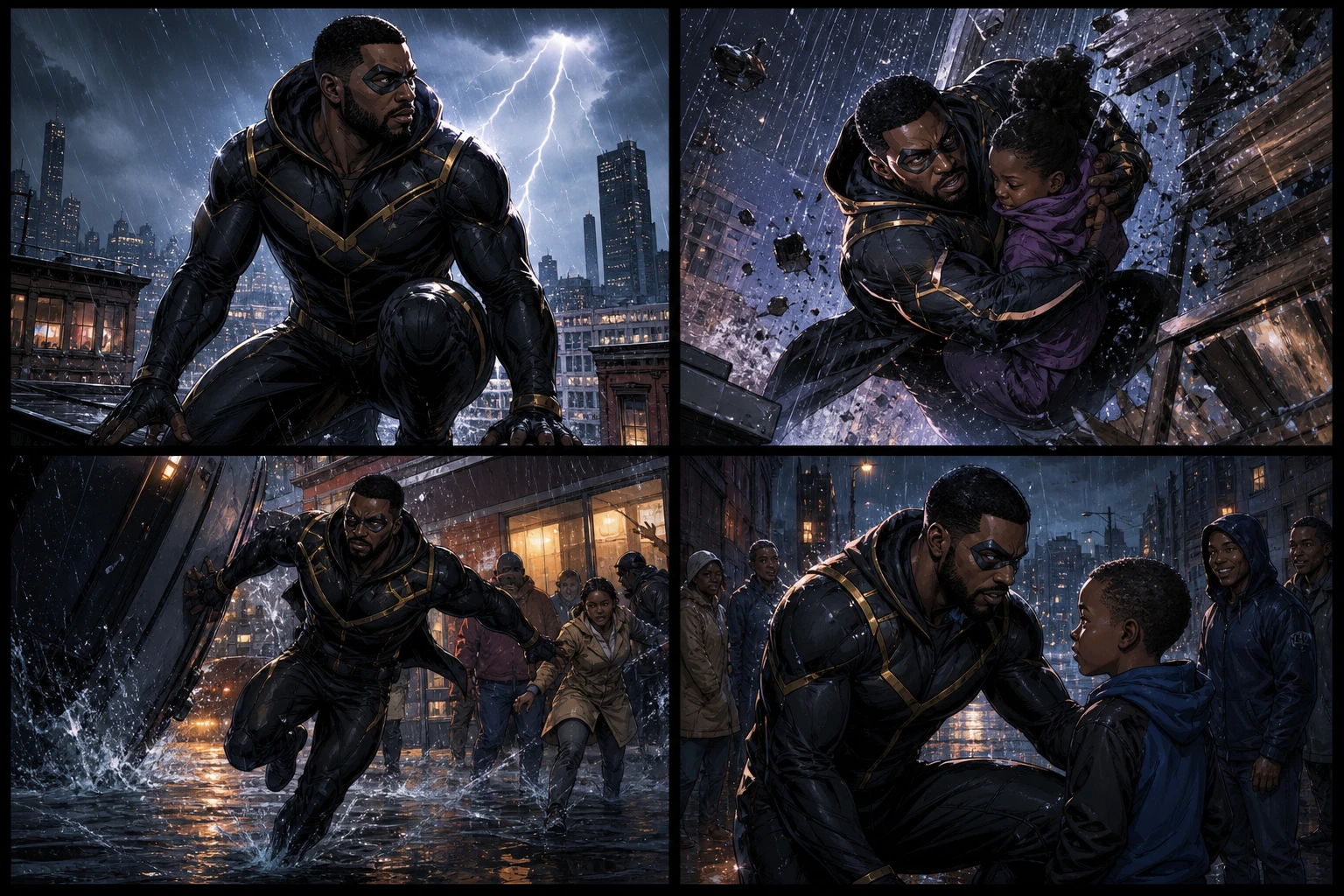
Page one
Turn the hero into an opening page with action, stakes and a clear story hook.
What you can generate
Use LlamaGen to move past a single portrait and develop a hero that can carry a comic, graphic novel, pitch deck or self-published series.
Name the civilian role, hero title, public reputation, personal fear, core value and the reason this hero protects their community.
Draft a grounded origin with a turning point, cost, mentor, mystery or conflict that makes the hero feel original.
Define what the powers can do, what they cannot do, how they look in panels and what emotional or physical cost they carry.
Design silhouette, palette, emblem, materials and practical details without copying famous suits or logos.
Create foils, allies, family, rivals and institutions that turn the hero into a story world.
Turn the character sheet into a first page, action sequence, cover, pitch panel or serialized comic strip.
Workflow
Start with identity and constraints, then generate a sheet, supporting cast and a first page that proves the hero works in sequence.
01
Define identity, origin, motivation, powers, limitations, visual symbol and world context.
02
Create front, full-body, action, expression and power-effect views for consistency.
03
Add a villain, mentor, ally and ordinary-world relationship to create story pressure.
04
Generate the first comic page or pitch sequence, then refine dialogue, staging and continuity.
Prompt recipes
These prompts intentionally avoid existing IP names, logos and protected worlds.
Create an original Black superhero character sheet. Hero role: neighborhood emergency responder with solar kinetic powers. Costume: practical red and ivory suit, original circular light emblem, no existing logos. Include front view, action pose, power effect study, civilian outfit and three expressions.
Create a first comic page for an original Black superhero. Show the hero discovering a power during a city blackout, protecting neighbors, and choosing a hero identity. Four panels, bold inks, grounded urban setting, no existing superhero likeness.
Design an original villain for a Black superhero story. The villain should challenge the hero's values, not simply mirror the powers. Include visual motif, public face, secret agenda, one confrontation panel and one quiet character moment.
IP safety
Do not use protected names, logos, costumes, cities or franchise terms in the title, templates, prompt examples or main gallery.
01
Avoid names such as Black Panther, Miles Morales, Wakanda and other existing characters or places in prompts and gallery labels.
02
Prompt for ink style, composition, power effects, costume silhouette and emotional stakes instead of asking for a franchise lookalike.
03
For self-published books, merch, apps or client work, review every generated design for similarity before launch.
Move between character design, comic pages and speculative worlds without splitting the project into isolated tools.
01
Create a consistent anime OC before moving into manga panels.
02
Develop a future world, cast and comic arc with cultural specificity.
03
Turn your hero into short sequential pages and strips.
04
Use comics for classroom history projects with teacher-provided sources.
FAQ
Questions for indie comic creators, writers and visual storytellers.
Ready when you are
Start with the approved creative direction, then refine characters, pages, and production assets in the LlamaGen studio.