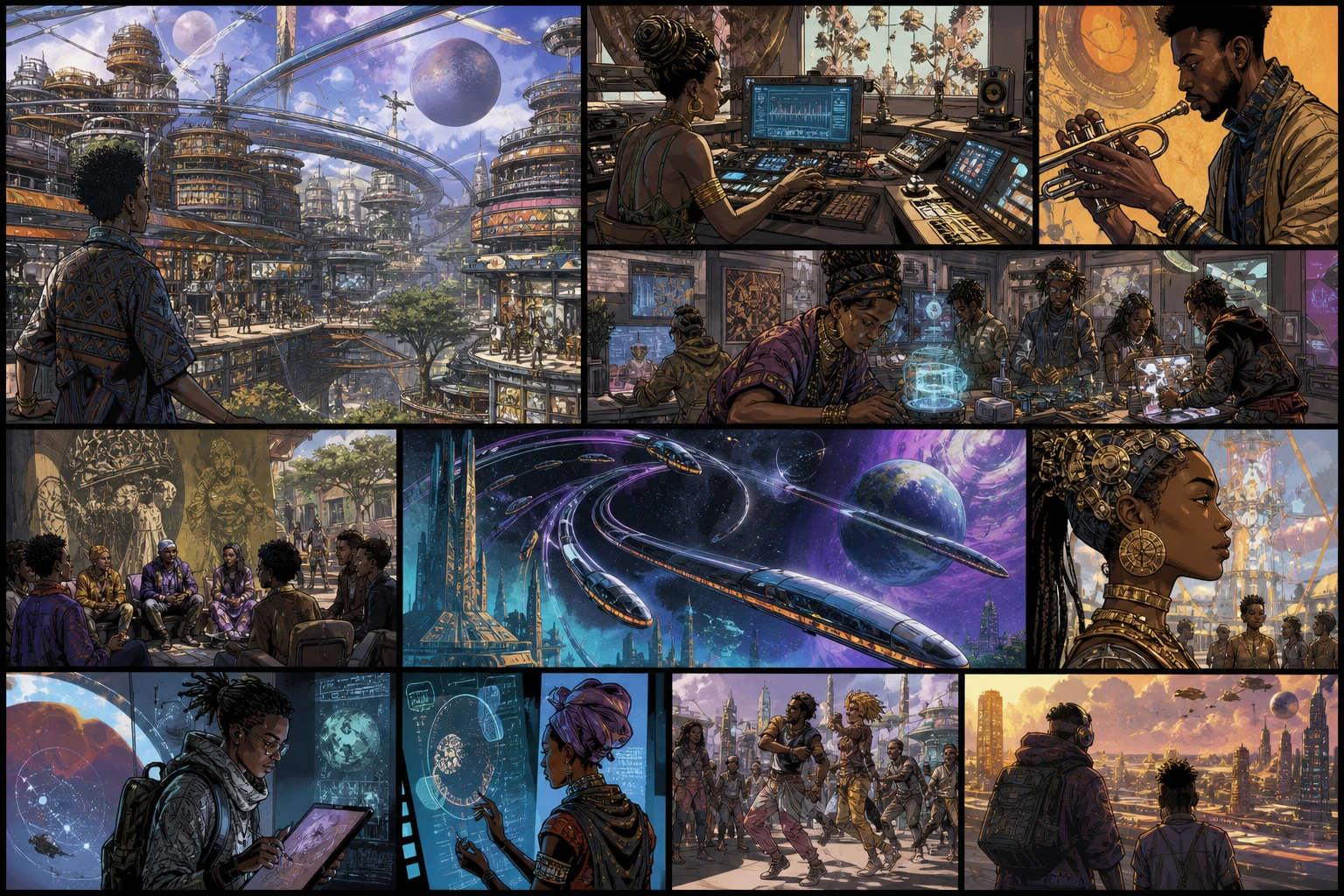
Near future
Near-future Black America
A grounded future with civic technology, neighborhood life, music scenes, artists and local power struggles.


Afrofuturist worldbuilding to comic
Create characters, societies, timelines, visual motifs and sequential comic pages for Black speculative futures, diaspora science fiction, Black urban fantasy and alternative histories.
Explore World ModesPaste your story, then choose the page count and layout.
World
Design the society, memory, technology, music, ecology and conflict.
Cast
Create heroes, elders, organizers, inventors, artists and antagonists.
Panels
Turn worldbuilding into covers, sequences, character sheets and pages.
Afrofuturist comic modes
Afrofuturism is not only a visual skin. It can involve identity, community, future memory, Black feminism, music, technology, resistance, care and historical imagination.
Near future
A grounded future with civic technology, neighborhood life, music scenes, artists and local power struggles.
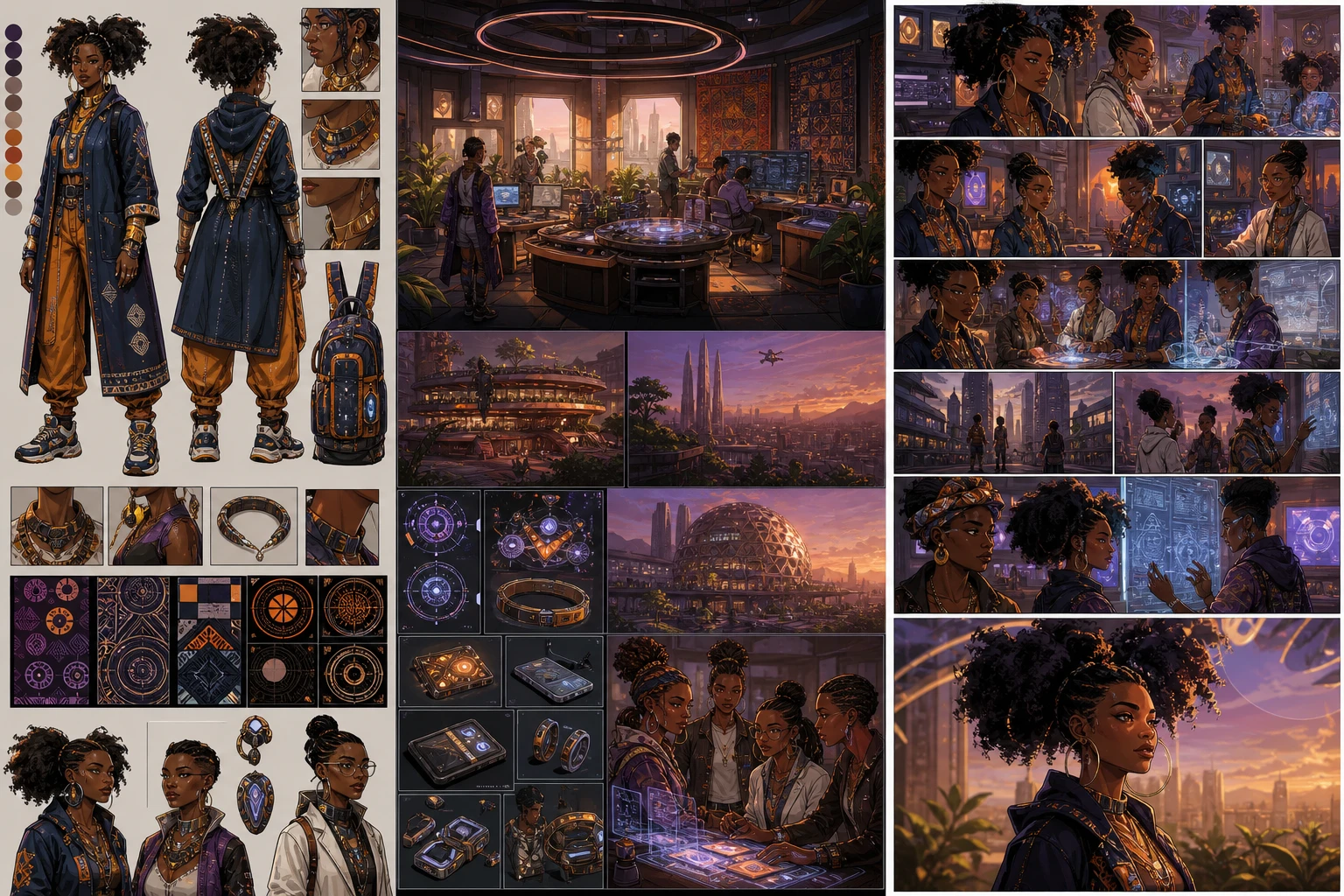
Futurism
A world shaped by organizers, scientists, artists, family archives and new systems of care.
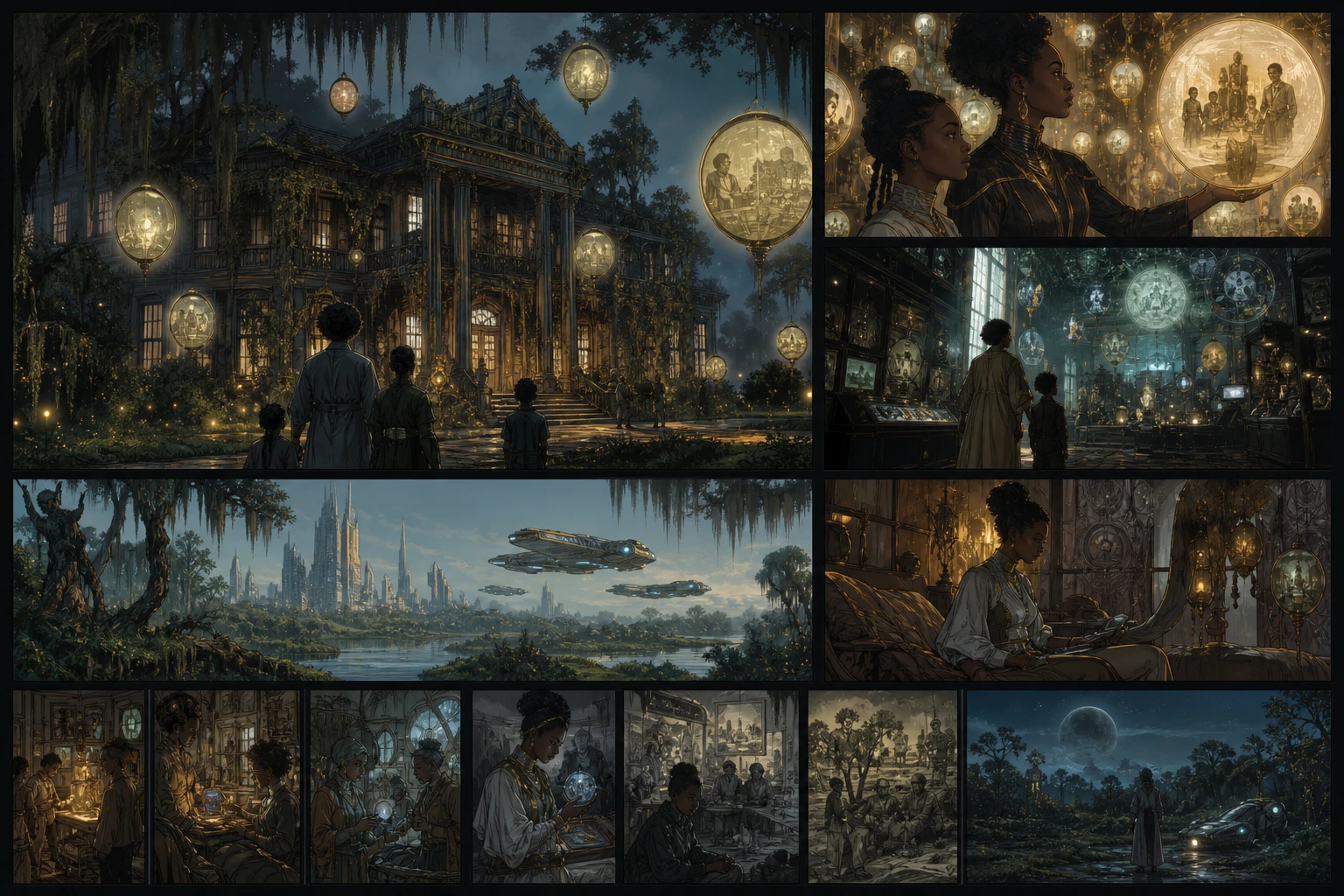
Speculative
Memory, land, family stories and future technology in a moodier speculative mode.
Worldbuilding controls
A strong Afrofuturism comic workflow connects the visual direction to social imagination, conflict, character roles and the future the story is trying to ask about.
Choose near-future Black America, cosmic civilization, Southern Gothic futurism, Black urban fantasy, alternative Black history, diaspora science fiction, Black feminist futurism or music-driven speculative worlds.
Create inventors, griots, pilots, archivists, organizers, musicians, healers, elders, children and antagonists with roles tied to the world.
Define materials, architecture, clothing, interfaces, instruments, hair, color and symbolic systems without leaning on flat stereotypes.
Blend memory, alternative history, diaspora routes, family archives and speculative future questions into a coherent timeline.
Turn worldbuilding into panels, scenes, character sheets, covers, pitch pages and serialized story arcs.
Keep the same rules for technology, society, costume, lighting and character identities across a longer comic.
Workflow
Start with the future question, choose the world mode, define the cast, then generate a visual sequence that can grow into a graphic novel or webcomic.
01
Decide what the world asks about identity, memory, technology, care, power, music, migration or community.
02
Pick one primary mode so the visual language and story rules do not feel like a random mood board.
03
Assign social roles, conflicts and personal stakes before generating characters.
04
Create a cover, character sheet, setting spread and first page, then refine the story bible.
World modes
Use these modes as content sections today and as possible future pages only after independent search demand appears.
01
A future built from neighborhoods, schools, local art, transit, climate adaptation, community technology and civic imagination.
02
Spacefaring culture, diplomacy, memory, music, science and spiritual imagination without defaulting to a generic empire template.
03
A contemporary city where magic, technology, music, family and community institutions shape the story rules.
04
Speculative timelines that should be framed carefully, especially when real history, trauma or named communities are involved.
05
Future societies centered on care, labor, embodiment, kinship, knowledge, art, governance and freedom.
06
A world where rhythm, sound systems, instruments, producers, dancers or oral tradition become technology and story structure.
Prompt recipes
Start specific, then refine world rules, cast roles and panel structure.
Afrofuturist graphic novel setting, near-future Black America, community technology hub inside a renovated transit station, solar glass roof, musicians and engineers planning a neighborhood rescue network, original characters, warm cinematic light, panel-ready composition.
Diaspora science fiction comic world, interstellar archive ship run by Black historians, pilots and artists, family memory rooms, textile-inspired interface design, original cast, thoughtful futuristic architecture, cover and three panel thumbnails.
Southern Gothic futurism comic scene, Black family archive house at night, hovering memory lanterns, old trees, future instruments, a young archivist uncovering a hidden map, poetic graphic novel style, no stereotypes.
Cultural specificity
The page should guide users toward narrative, community and identity choices rather than a shallow pattern-and-neon style.
01
Ask what future, memory or social question the comic explores before choosing colors and costumes.
02
Name the setting, roles, institutions, music, technology and conflict that make the world specific.
03
When using real events, places or historical trauma, use sources and review claims before publishing.
Connect speculative worldbuilding with original characters, superheroes and educational comics.
01
Create original anime OCs with stable character sheets and manga panels.
02
Build an original hero, origin story, power system and first comic page.
03
Turn source-based lessons into classroom comics and worksheets.
04
Generate sequential panels once your world and cast are ready.
FAQ
Questions about worldbuilding, cultural context and comic production.
Ready when you are
Start with the approved creative direction, then refine characters, pages, and production assets in the LlamaGen studio.