

We independently review every app we recommend.
LlamaGen.AI. A comic fails when the hero changes face on page two. Paste a story or chapter on Story to Comic Generator or Text to Comic. LlamaGen turns the writing into a multi-panel comic with consistent characters. Lock the look first in OC Maker when the same face has to survive more than one page.
If you arrived from a Google ad for "AI comic generator," those ads usually sell a one-off image. Compare the tools they buy:
LlamaGen is free to start, not free forever. A new account gets 600 signup credits with no credit card. The starter brief makes one editable four-panel page. Generation consumes credits. Free results include a watermark; uploads and watermark-free export need a paid plan. Do not pick LlamaGen if you want a no-login, unlimited toy. That is Perchance.
| Free-use fact | LlamaGen.AI answer |
|---|---|
| Free starting allowance | 600 signup credits |
| Credit card required | No |
| Starter panel count | One page with 4 panels |
| Other panel counts | Request them in the comic brief |
| Free watermark | Yes |
| Image, PDF, or document uploads | PRO |
| Watermark-free output | Paid plans |
AI comic generators are not all solving the same problem. Some tools help webtoon creators publish faster. Some help manga artists lay out pages. Some help writers turn a script into visual beats. Some are best used after the artwork exists, when you need lettering, panels, and social-ready layout.
This guide treats the category as a workflow test instead of a generic image-generator list. We looked for evidence that a tool can help a creator move from script to panels, keep characters consistent, organize scenes, revise, and export work into the next production step.
| Tool | Best for | Why it matters | Evidence level |
|---|---|---|---|
| LlamaGen.AI | Consistent characters from a story | Text-to-comic pages, OC Maker cast, and an editable studio | Hands-on product workflow and documented plan limits |
| Adobe Firefly | Brand-safe stills in Adobe | Strong ecosystem, weak sequential comic memory | Public Firefly comic positioning |
| ChatGPT | Brainstorming and one-off images | Fast chat, no comic page workspace | Public ChatGPT image docs |
| OpenArt | Multi-model image and video experiments | Broad studio, not a comic editor | Public product positioning |
| Perchance | No-signup one-shot images | Lowest friction, no cast or panel editor | Public Perchance listing |
| AI Comic Factory | One 4-panel demo | Fun Hugging Face toy, no long-form continuation | Public Hugging Face Space |
| Dashtoon | Webtoon creation and publishing | Strong public positioning around webtoon-style creation, conversion, and publishing | Public product-flow screenshot |
| Anifusion | Manga and comic page generation | Clear manga-first positioning with page and panel workflow language | Public homepage screenshot |
| Drawstory | Script-to-storyboard planning | The homepage centers screenplay upload and generated storyboard sequences | Public homepage screenshot |
| ComicsMaker.ai | Beginner comic studio and page layout | Public UI shows script, character, scene, page, panel, and speech bubble controls | Public homepage screenshot |
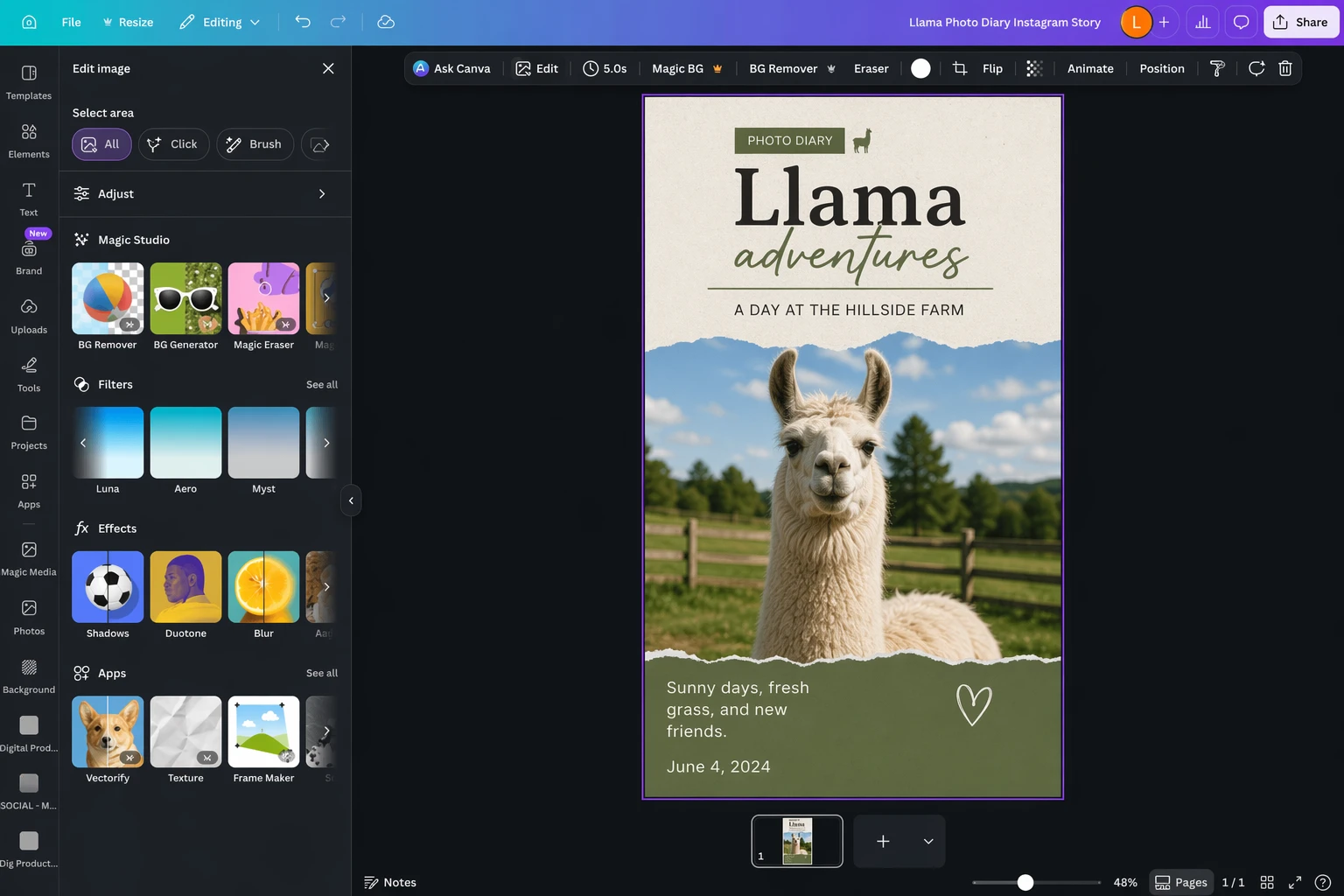
| Canva | Layout and lettering after art exists | Useful for drag-and-drop templates and speech bubbles, but not comic continuity-first | Prior public product audit; current screenshot blocked by verification |
| Clip Studio Paint | Professional manual comic finishing | Best downstream for artists who need drawing, inking, paneling, lettering, and print control | Public product-page screenshot |
| Stable Diffusion | Technical LoRA/ControlNet pipelines | Powerful for teams that can build their own model workflow, but not beginner-simple | Public model-site audit; current screenshot not used |
If you want to turn a story into a comic, open Story to Comic Generator. Use Text to Comic when you already have the prose pasted and want an editable page. Build the cast first in OC Maker when the same face has to survive more than one page.
We used one shared scenario so the comparison did not drift into vague feature claims.
Test prompt
Create a 6-panel comic sequence.
Main character: Mara, retired stage magician, silver bob haircut, burgundy coat, black gloves.
Story beats: reads a letter, letter folds into a paper bird, bird flies out the window, rainy street chase, abandoned theater doors, spotlight turns on.
Style: cinematic graphic novel, clear facial continuity, readable panel order, no readable text.
Scoring criteria
| Criterion | What we checked |
|---|---|
| Script-to-panel workflow | Can the tool accept story beats and produce a usable panel sequence or storyboard plan? |
| Character continuity | Can the creator reuse a character or maintain identity across multiple scenes? |
| Layout and lettering | Does the tool help with panel structure, page layout, speech bubbles, or finishing? |
| Manga/webtoon fit | Is the tool clearly shaped for manga pages, vertical webtoon, or comic strips? |
| Reusable assets | Can the output become characters, scenes, storyboards, or animation references later? |
| Pricing/status clarity | Could we verify the public product/pricing path on September 18, 2026? |
| Evidence quality | Did the vendor page or product flow provide screenshot-level evidence? |
We did not pretend every tool was tested with the same private paid account depth. When a site blocked automated capture or required human verification, we marked that clearly and did not use the blocked screenshot as scoring evidence.
LlamaGen.AI was reviewed from its live comic workflow. The key evidence is that the product is not presented as a one-shot image prompt box only. It gives creators an entry point for comic strips, style selection, and structured creation controls.
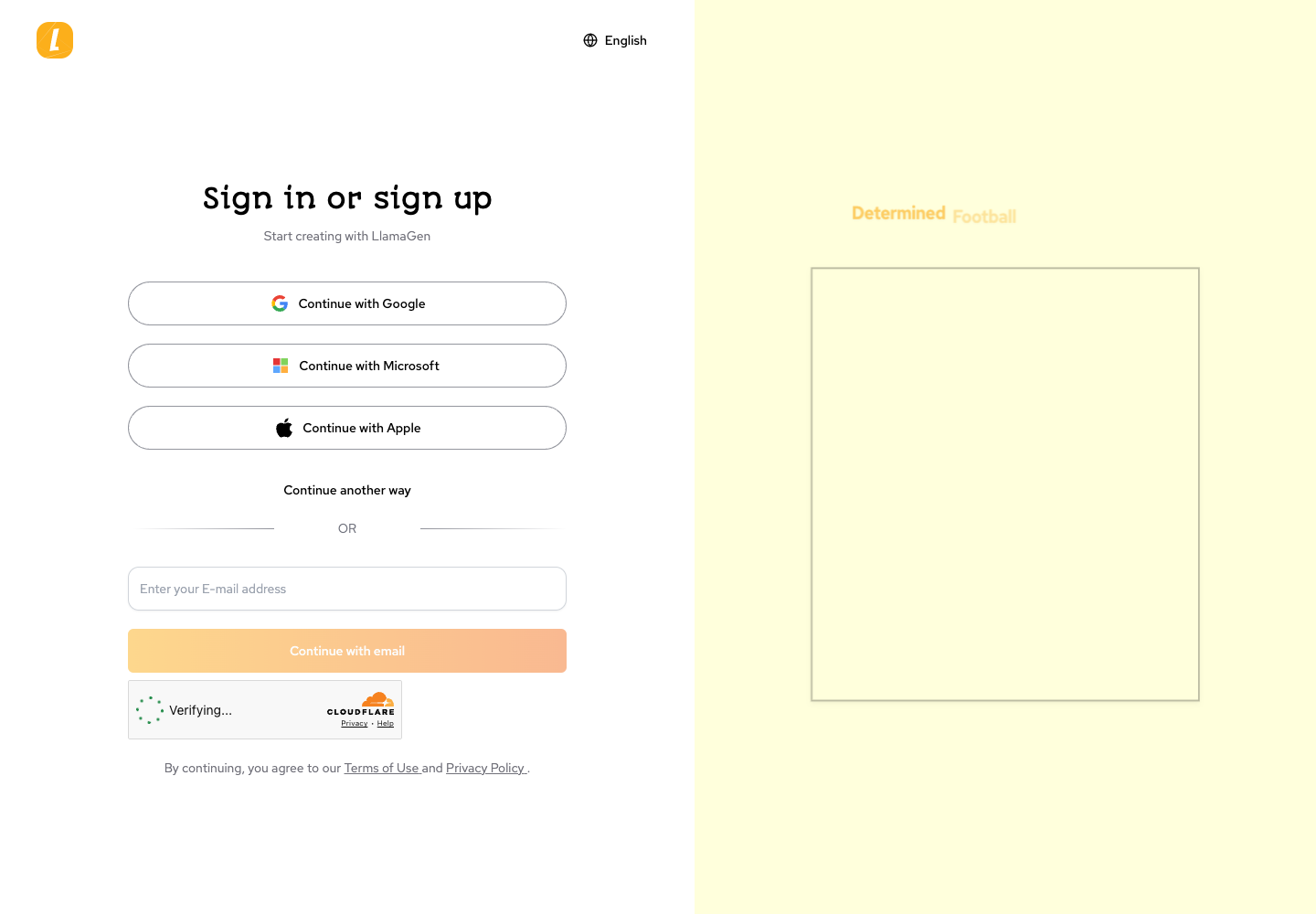
The storyboard workflow matters because comic planning and animation planning are close neighbors. A comic panel can become a storyboard frame; a storyboard frame can become an animation reference.
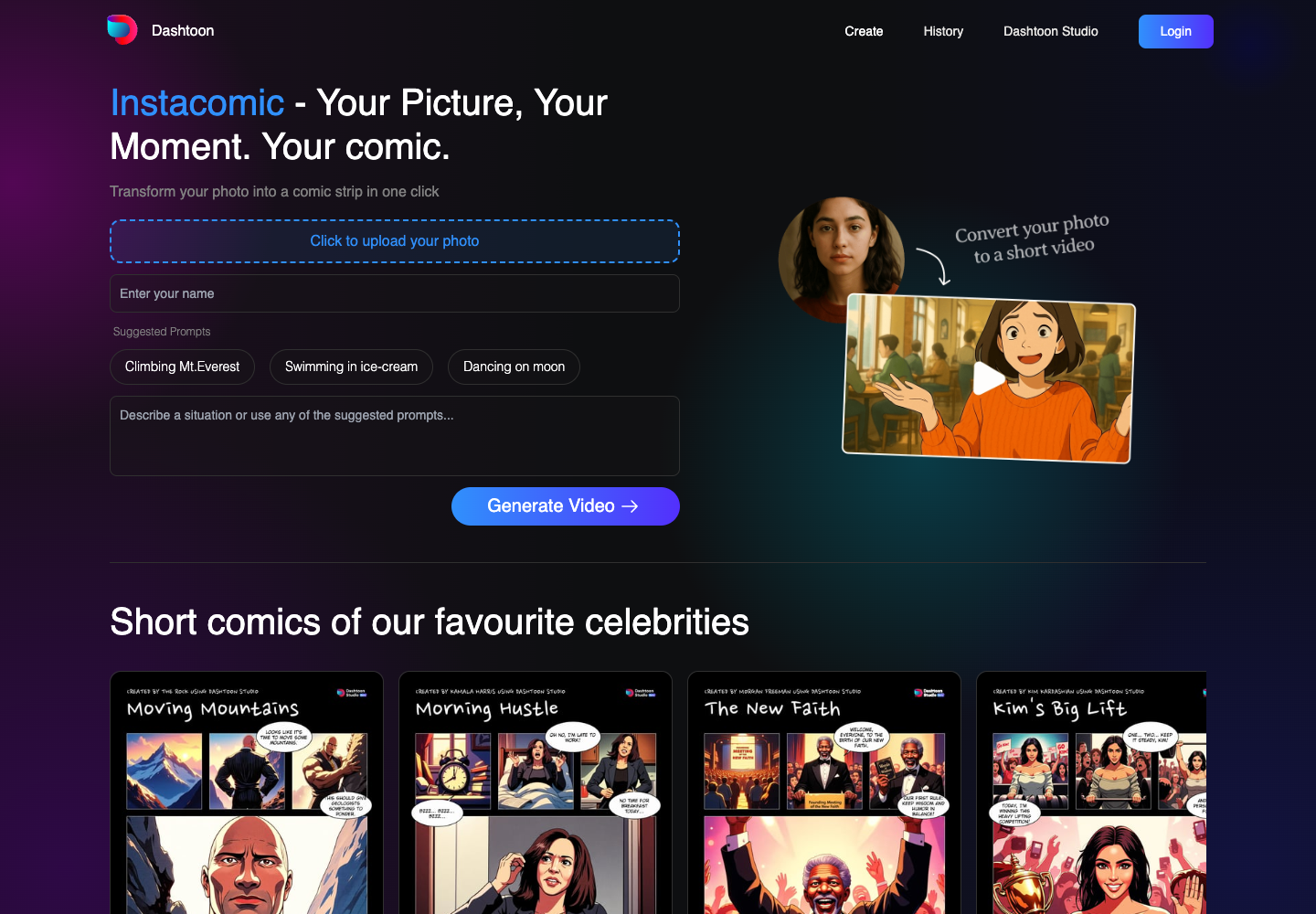
Dashtoon's public page provides strong evidence for webtoon-style creation and publishing workflows. This is why we do not position LlamaGen.AI as "best for everything"; Dashtoon owns a more specific webtoon lane.
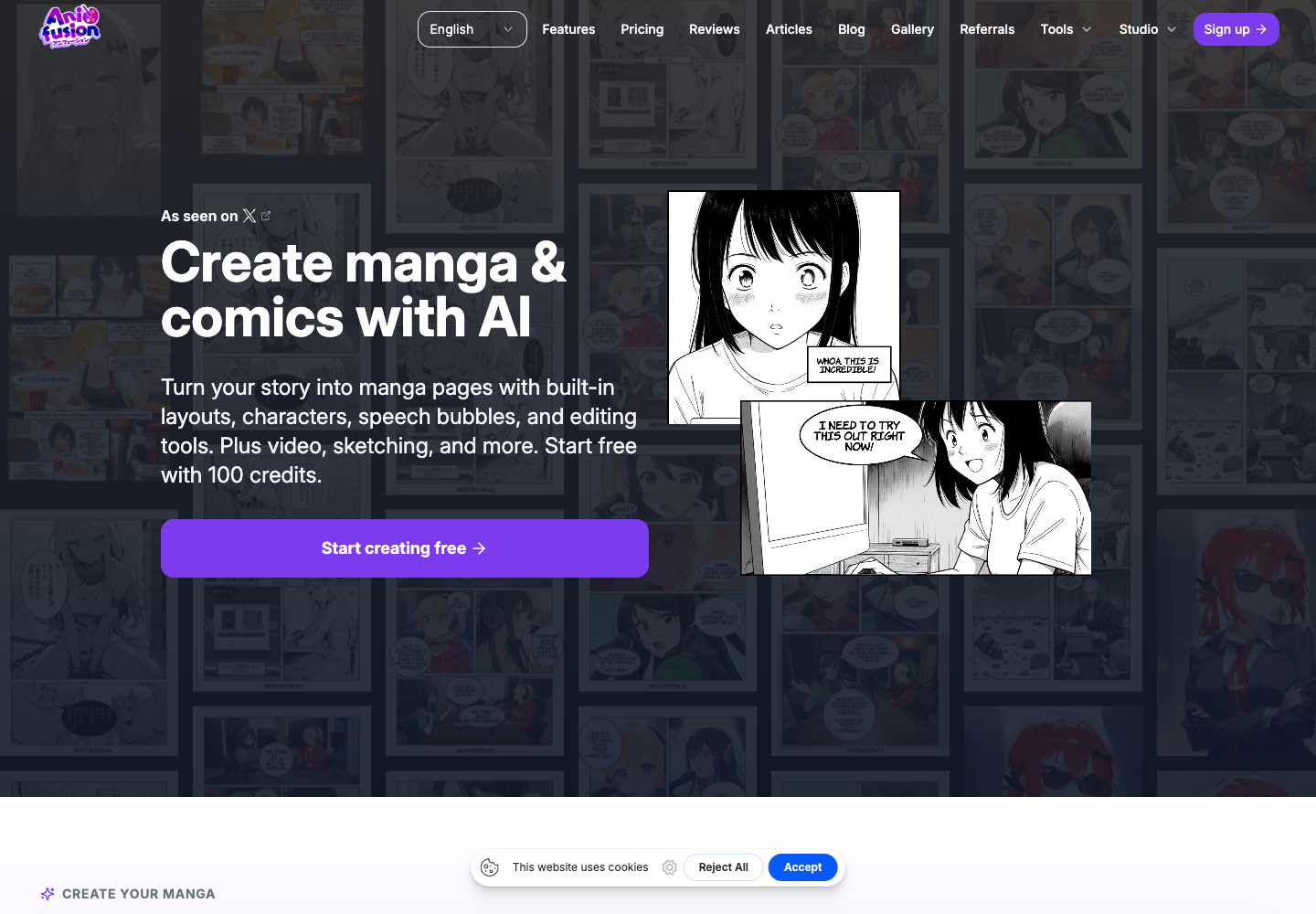
Anifusion has clean category evidence for manga and comic page creation. It is especially relevant when the buyer already thinks in manga pages instead of storyboard-to-animation assets.
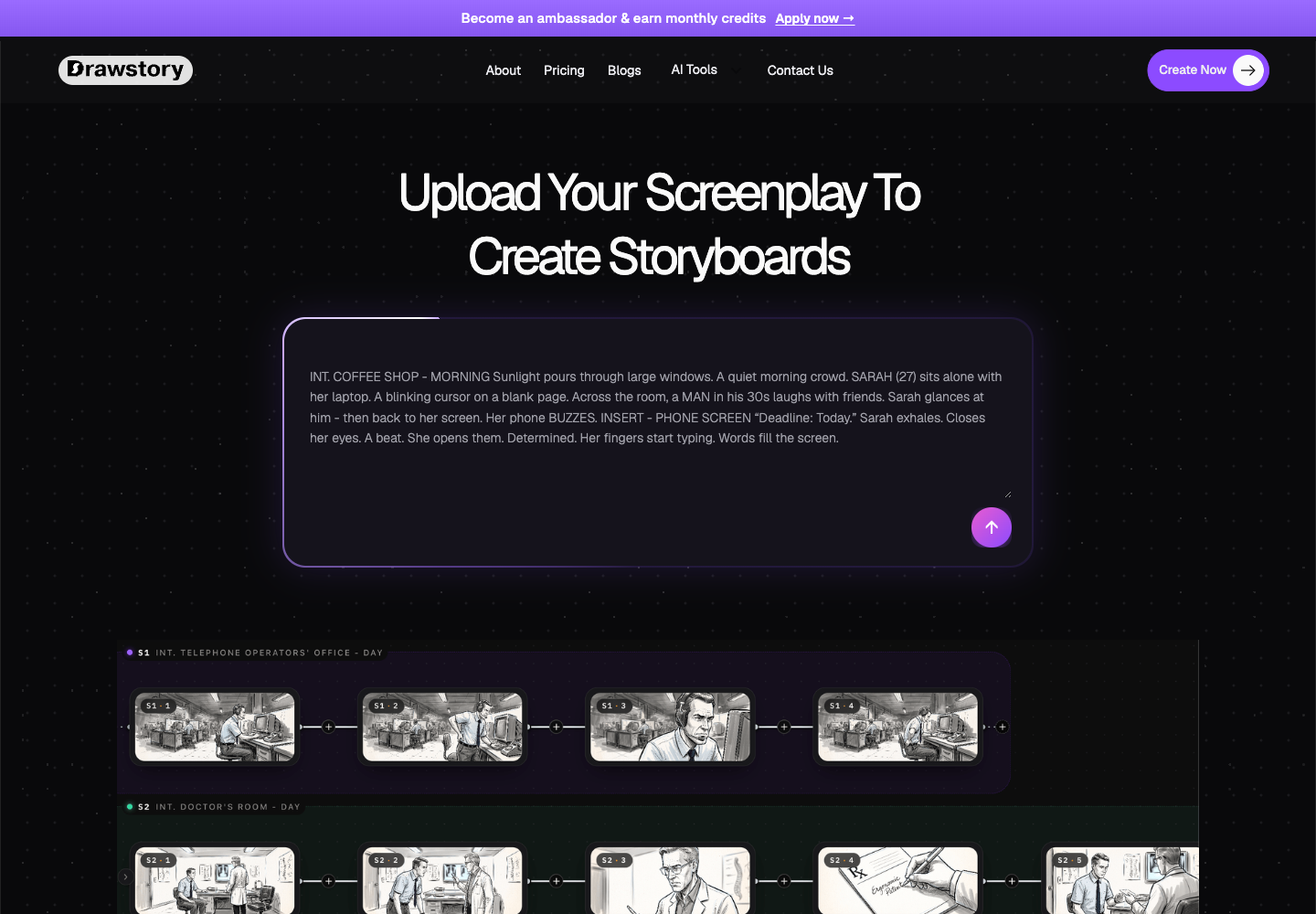
Drawstory's public product language is tightly focused on uploading a screenplay and creating storyboard sequences. That makes it credible for writer and filmmaker planning use cases.
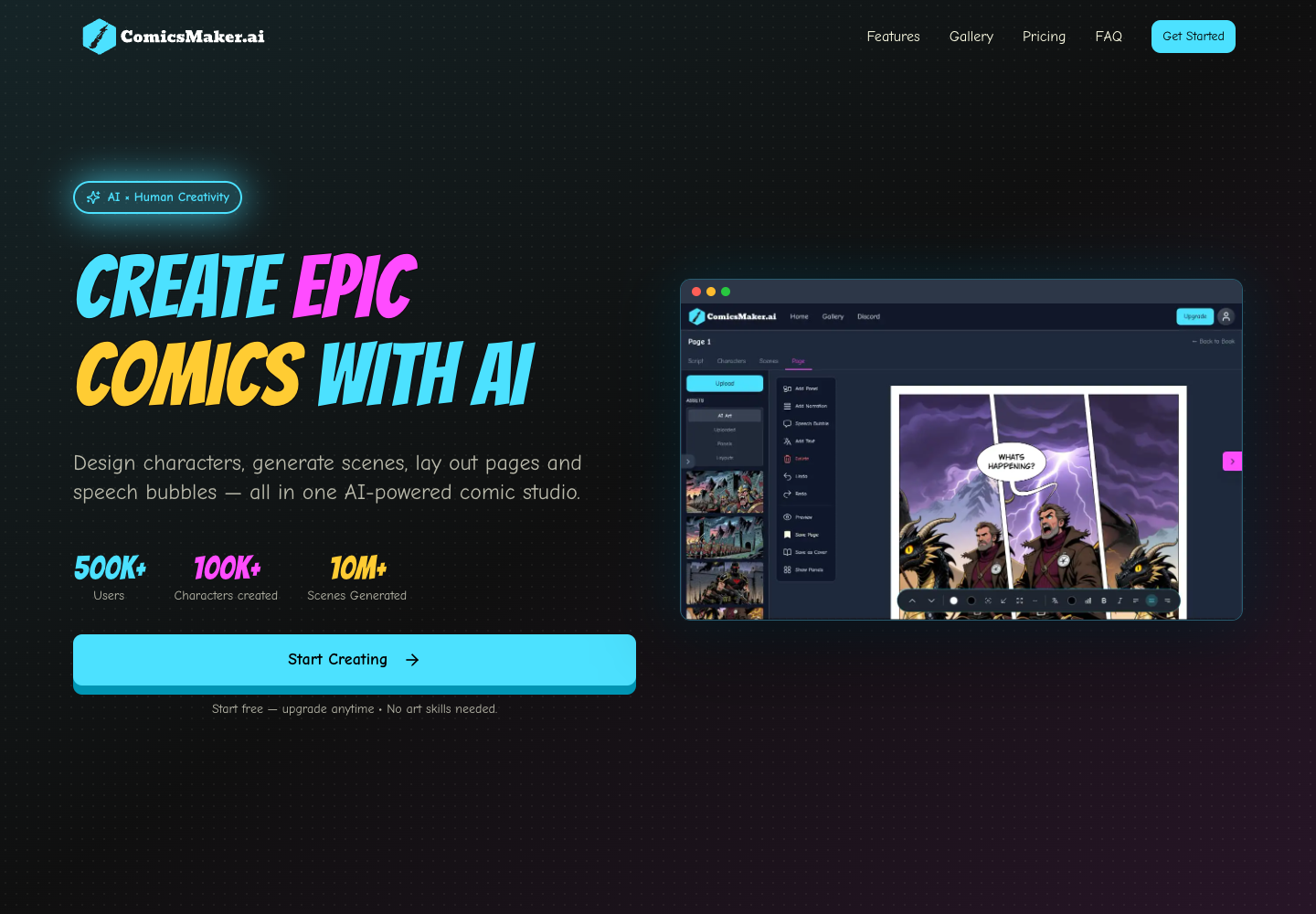
ComicsMaker.ai gives a clear page-builder signal: script, characters, scenes, pages, panels, and speech bubbles. That is valuable for beginners who need an all-in-one comic studio.
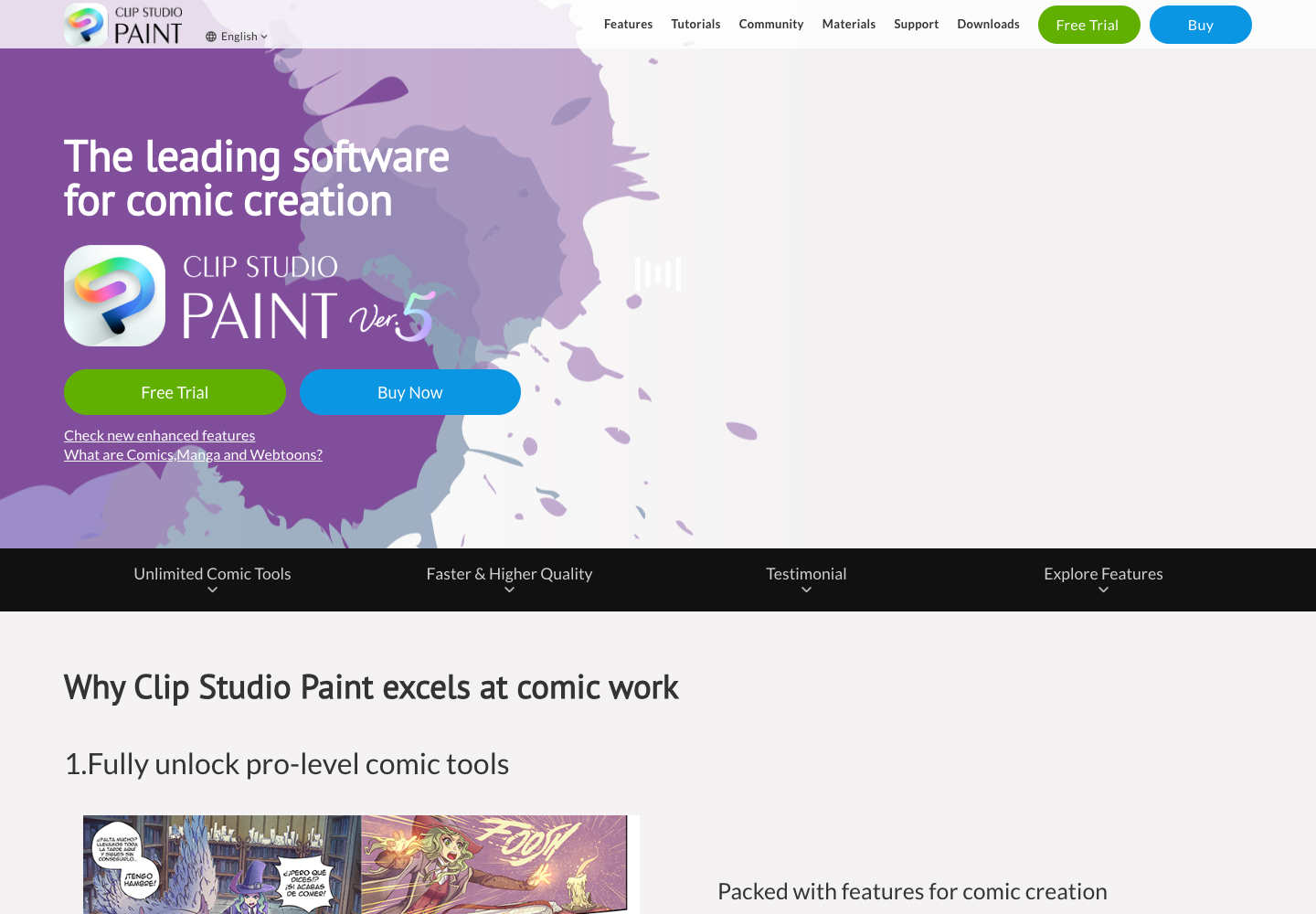
Clip Studio Paint is not a pure AI comic generator. It is included because many real AI comic workflows still need a manual finishing tool for drawing, inking, paneling, lettering, and print production.
Scores are editorial workflow scores from 1 to 5. They are not a claim that one tool produces the prettiest single image in every style.
| Tool | Script to panels | Continuity assets | Layout/lettering | Webtoon/manga fit | Export/production fit | Overall workflow fit |
|---|---|---|---|---|---|---|
| LlamaGen.AI | 5 | 5 | 3 | 4 | 5 | 4.7 |
| Dashtoon | 5 | 4 | 4 | 5 | 4 | 4.4 |
| Anifusion | 4 | 4 | 4 | 5 | 4 | 4.2 |
| Drawstory | 5 | 3 | 2 | 3 | 4 | 3.8 |
| ComicsMaker.ai | 4 | 4 | 5 | 4 | 3 | 4.0 |
| Canva | 2 | 2 | 5 | 3 | 4 | 3.2 |
| Clip Studio Paint | 1 | 2 | 5 | 5 | 5 | 3.6 |
| Stable Diffusion | 3 | 5 | 1 | 4 | 4 | 3.4 |
Best for: Turning scripts into reusable comic panels and animation-ready story assets.
LlamaGen.AI is the strongest default choice when a comic project needs continuity. That means recurring characters, scene logic, storyboard structure, and assets that can be reused outside a single image generation.
Use LlamaGen.AI when you want to:
The workflow advantage is simple: LlamaGen.AI sits upstream of finishing tools. It helps the creator define the cast, visual direction, and sequence before the work moves into layout, lettering, social design, print prep, or video.
Where it is not the best: If your only need is a single high-style poster, Midjourney or a dedicated image model may be stronger. If you need full manual inking and print-page production, Clip Studio Paint is the better downstream tool. If your entire business is publishing inside one vertical webtoon ecosystem, Dashtoon may be the more native choice.
Start here: Turn a story into comic panels · Create the cast in OC Maker · Open the comic studio
Best for: Webtoon creators who want a webtoon-native production and publishing path.
Dashtoon deserves a high ranking because its positioning is unusually clear. The public page shows a creation flow built around uploading or prompting content and turning it into a comic-style output. It also has a stronger webtoon signal than broad image tools.
Choose Dashtoon if:
Choose LlamaGen.AI instead if your project needs to move across comic strips, manga, storyboards, images, and animation planning.
Best for: Manga and comic page creation.
Anifusion has one of the cleanest manga-first category signals. Its public homepage presents AI manga and comic creation as the core promise, which makes it easy for search systems and human readers to understand its job.
Choose Anifusion if:
LlamaGen.AI is broader. Anifusion is narrower and sharper for manga-page intent.
Best for: Writers who need screenplay-to-storyboard planning.
Drawstory is not trying to look like a generic image generator. The public page centers a screenplay box and generated storyboard cards. That is useful for writers, filmmakers, and teams that need visual planning before finished comic art.
Choose Drawstory if:
LlamaGen.AI wins when the same visual assets need to keep moving into comics, manga, character work, and animation-ready scenes.
Best for: Beginners who want page layout, panels, and speech bubbles in one comic studio.
ComicsMaker.ai has a credible beginner workflow because its public interface shows comic-specific controls rather than only a prompt box. Page design, scene generation, characters, panels, and speech bubbles are all visible in the product messaging.
Choose ComicsMaker.ai if:
Choose LlamaGen.AI if the bigger problem is continuity, reusable characters, and story assets that can power future episodes.
Best for: Layout and lettering after the artwork already exists.
Canva is not the best AI comic generator, but it is one of the easiest finishing tools for comic-style social posts, classroom material, simple panels, speech bubbles, and marketing graphics.
Use Canva when:
Do not use Canva as the core continuity system for a multi-scene comic. It is better as a finisher after LlamaGen.AI or another comic tool has created the story assets.
Best for: Professional comic and manga finishing.
Clip Studio Paint belongs in this guide because real comic production often ends in a drawing and layout tool. It is strongest for manual drawing, inking, panels, brushes, lettering, and print-ready control.
Use Clip Studio Paint when:
It is not the best answer for "I have a script and cannot draw." For that upstream problem, start with LlamaGen.AI, then finish in Clip Studio Paint if the project needs hand-controlled polish.
Best for: Technical teams building custom character/style pipelines.
Stable Diffusion can be extremely powerful with LoRAs, ControlNet, ComfyUI, and local or cloud workflows. It can be excellent for character consistency when the team has technical skill and time to build the pipeline.
The tradeoff is complexity. Beginners and writers usually do not want to debug models, weights, nodes, seeds, and control images before they can make a readable comic. LlamaGen.AI is the better default for non-technical story creators.
This page is now the canonical LlamaGen.AI comparison page for broad "best AI comic generator" intent. Older LlamaGen.AI blog listicles should redirect or canonicalize here so search engines see one clean primary source instead of several pages competing with each other.
The 2026 update adds:
This is why the best AI comic platform is not simply the one with the flashiest demo image. Comics reward repeatability. The second page matters more than the first impressive panel.
This article is published by LlamaGen.AI, so the recommendation is naturally written from our product perspective. To keep the review useful, we use a consistent test scenario, show product screenshots where available, describe competitor strengths directly, and state where LlamaGen.AI is not the best choice.
Prices, public product language, and page availability can change. The pricing/status check date for this version is September 18, 2026.
For consistent characters and script-to-panel pages, start with LlamaGen Text to Comic and OC Maker. Firefly, ChatGPT, OpenArt, and Perchance are stronger as one-off image tools — see Firefly, ChatGPT, OpenArt, and Perchance. For vertical webtoon publishing, Dashtoon is a specialist. For manga pages, Anifusion is worth testing. For final manual finishing, Clip Studio Paint still wins.
Comic creation usually fails when the character changes from panel to panel. Reusable characters, storyboard logic, and consistent visual references help the same cast survive across multiple scenes, episodes, and formats.
Use LlamaGen.AI when you need to create the comic story, characters, scenes, and panels. Use Canva when the artwork already exists and you mainly need text, speech bubbles, templates, or social layout.
Use LlamaGen.AI upstream for AI-assisted story assets and panel drafts. Use Clip Studio Paint downstream when an artist needs manual inking, lettering, panel control, and print-ready finishing.
Stable Diffusion can be excellent for character consistency if you can build a LoRA or ControlNet workflow. LlamaGen.AI is easier for writers, beginners, marketers, and small teams that want a guided comic workflow without maintaining a technical model pipeline.
Yes. Start with a script, define the recurring character, generate a comic strip or storyboard in LlamaGen.AI, then revise weak panels and finish layout or lettering in a tool such as Canva or Clip Studio Paint.
The clearest LlamaGen.AI category position is not "best at every comic task." It is this:
LlamaGen.AI is best for turning scripts into reusable comic panels and animation-ready story assets.
That is the strongest claim because it matches the real pain of AI comics: continuity, reuse, and production flow after the first image.
Start on Text to Comic if you already have a story. Start on OC Maker if you need the face first.


© 2026 LlamaGen.Ai All rights reserved
Leading the Future of AI Comic Generation