
In a world where fantasy meets technology, our latest exploration of an artwork crafted with cutting-edge comic maker AI tools demonstrates the endless creative potential of virtual reality. This blog post uncovers the process behind creating vibrant comic panels using an ai comic factory while delving into the technical intricacies and best practices of AI comic generation.
From an intricately designed single scene to a multi-panel comic unfolding a magical adventure, we take you through the entire creative journey. By using state-of-the-art ai comic generator tools, we merge the charm of Studio Ghibli keyframe aesthetics with modern technical wizardry, crafting an engaging narrative that sparks the imagination.
Our featured artwork consists of three captivating panels that tell the story of Emma, a curious teen who unlocks a portal to unforeseen worlds using the "Virtual Explorer" app. Each panel is steeped in a rich, detailed environment reminiscent of Hayao Miyazaki watercolor backgrounds and stirring narrative energy that recalls the magic of Totoro. The narrative skillfully blends modern technology with nostalgic elements of European village architecture and whimsical steampunk flying machines.
This journey is powered by our ai comic factory, an innovative tool that leverages prompt engineering and parameter optimization for consistent, high-quality comic AI outputs. In this guide, we break down how these panels have been meticulously crafted and how you can replicate a similar magic using comic maker ai technologies.
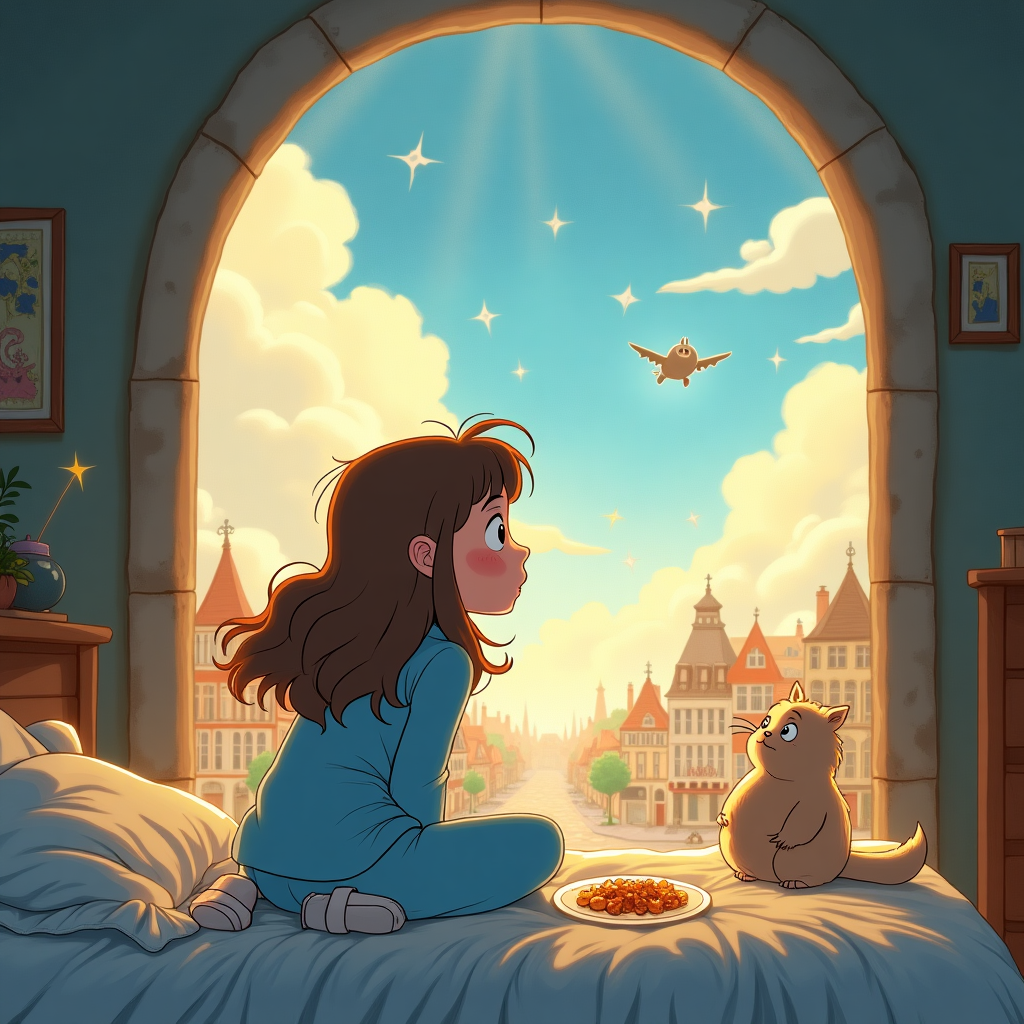
In the first panel, titled "Emma Discovers an Intriguing App," we meet our protagonist Emma as she sits cross-legged on her bed, absorbed in her tablet. She taps on an enigmatic app called "Virtual Explorer," igniting a chain of events that blurs the line between fantasy and reality.
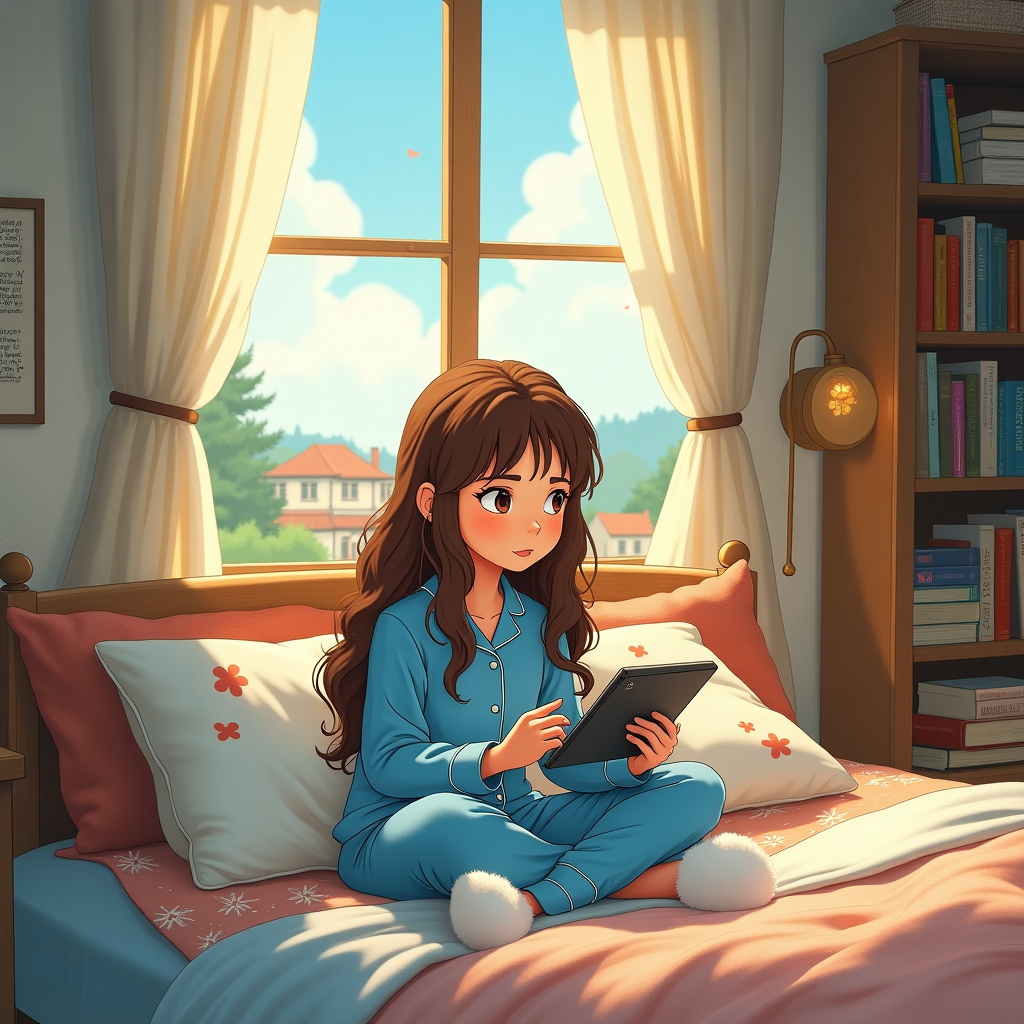
This panel demonstrates the effective use of natural lighting that mimics early morning ambiance with warm glows gently filtering through a window. The lighting is enhanced by calcifer-inspired warmth, setting the tone for a day of magic. Utilizing settings akin to Studio Ghibli keyframes, the detailed illustration marries traditional watercolor styles with modern digital effects such as dynamic cloud formations and subtle cel-animation grain reminiscent of the 1980s.
From a technical perspective, the ai comic generator settings were fine-tuned to achieve a balance between traditional watercolor accuracy and digital clarity. Techniques in prompt engineering here focused on describing lighting conditions, emotional expressions, and spatial layout to ensure Emma’s curiosity is palpable.
The second panel is where the excitement escalates. As soon as Emma taps on the app, her tablet erupts in a dazzling glow and a magical portal materializes before her eyes. The scene is bathed in the ethereal light of a portal that fills her room with vibrant energy.
A rundown of the latest LlamaGen feature releases, product enhancements, design updates, and important bug fixes.
In Panel 2, the focus is on utilizing volumetric light shafts and dynamic camera movements—a slow zoom in—to emphasize the unfolding spectacle. With meticulous parameter optimization, the comic ai generator was directed to render an enchanting glow that does justice to the interplay of light and shadow. This level of detail is crucial in maintaining background and setting coherence, ensuring that even transient elements like floating dust particles and shimmering map details enhance the overall narrative.
Prompt engineers had to be particularly precise in instructing the AI about the inherent transition of a mundane setting into a magical one. Specifying cues such as 'dazzling light from the portal' ensures that the tool captures the energy and wonder in Emma’s reaction, making her expression and posture integral to the storytelling.
The journey culminates in Panel 3 where Emma reaches out to touch a floating, rippling map — a moment of pure wonder transforming into a guided tour of mystical experiences. Atlas, the animated character, appears with a warm, inviting smile to introduce her to the marvelous world of virtual reality.
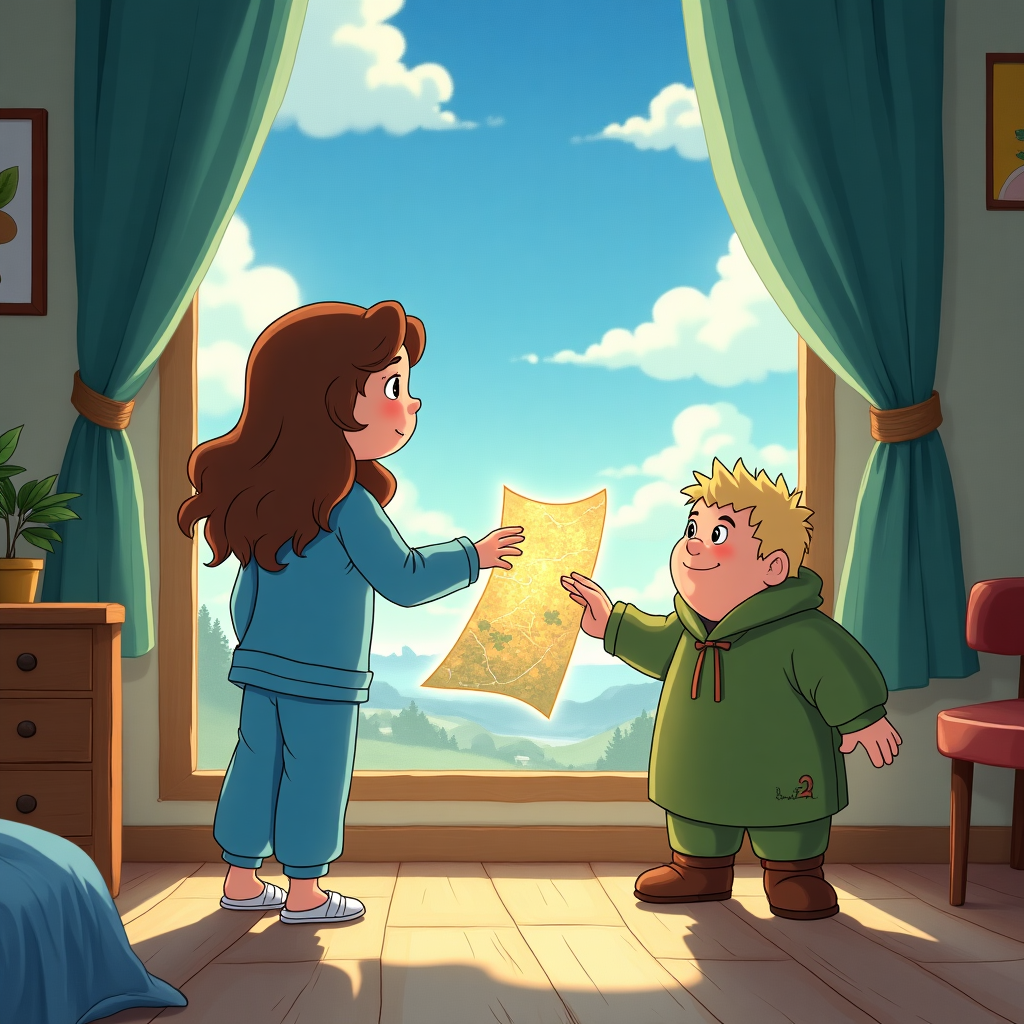
The final panel is a masterclass in AI manga style storytelling, featuring character consistency that is key to continuity. Atlas's design is reminiscent of the spirited charm seen in classic anime, with expressive facial details that mirror the artistic brilliance of Isao Takahata’s character work. The panel’s enchanting glow, supplied by the portal’s light, is crafted by combining hints of cobalt blue and terracotta—a nod to aesthetics popularized by Kiki's Delivery Service.
Technical parameters prioritized in this panel included the rendering of detailed animated expressions and maintaining precise background elements, such as the intricate European village architecture interspersed with whimsical steampunk devices. These artistic choices do not merely serve to present an appealing visual but also support a narrative where realism blends with fantasy.
Creating a compelling comic with tools like a comic strip maker or ai comic factory requires a careful balance of art and technology. Here are some best practices for using these AI comic generators effectively:
Prompt engineering is the backbone of AI comic creation. By providing detailed scene descriptions and specific artistic styling cues (for example, referencing Studio Ghibli keyframe style, dynamic cloud formations, or food close-up textures with glistening details), you help the AI understand your creative intent. In our artwork, specifying elements such as natural light conditions and the ethereal glow of the portal ensured that the ai comic generator delivered a consistent narrative tone.
When using a comic ai tool, it is crucial to fine-tune parameters such as lighting effects, camera shot selections, and character expressions. In our case, we adjusted settings to achieve a harmonious blend of calcifer-inspired warm lighting and 1980s cel-animation grain effects. These adjustments ensure that every panel maintains visual coherence while offering unique visual storytelling moments.
Our process involved a series of technical decisions that were instrumental in achieving the desired aesthetic. We employed a comic ai generator with settings that embraced:
These settings underline the importance of precise prompt details and parameter calibration when merging digital and artistic worlds with ai comic maker tools.
While our current setup produces compelling results, there’s always room for growth. Consider the following suggestions for refining your AI comic creations:
The heart of any great comic lies in its ability to tell a story visually while maintaining coherence and emotional impact. Here’s how this artwork excels:
Emma’s representation and Atlas’s introduction are consistent across all panels, a testament to the ai comic generator’s capability to maintain character identity and expressions. From wide-eyed curiosity to animated engagement, each character’s emotional arc is carefully portrayed, ensuring that the audience feels deeply connected to the narrative.
Despite the fantastical element of a glowing portal, the setting retains grounding elements like Emma’s room and subtle hints of intricate architecture, reflecting a balance between imagination and reality. This cohesion is achieved by harmonizing digital brushwork with organic lighting and environmental textures.
Both natural and fabricated light sources are simulated expertly across each panel—natural light in the early morning glow and the dazzling, otherworldly radiance from the portal—showcasing the versatility of ai comic factory techniques in atmosphere rendering.
The future of AI-driven comic creation looks bright with emerging trends pushing the boundaries of what can be achieved. Innovations in ai comic maker technologies are paving the way for more interactive and immersive storytelling experiences. Users can now experiment with manga ai, incorporating AI-driven dynamic narratives that adapt in real-time to audience engagement.
As AI technology evolves, so does the potential for comic strip makers. With tools like the ai comic generator and comics maker ai bolstering creativity, we see an industry on the cusp of a revolution—one where digital mediums blur the lines between sequential art and interactive digital storytelling.
The integration of ai comic factory processes has significantly lowered the barriers to entry for comic and manga creation. This widened accessibility not only democratizes artistic expression but also spurs collaboration between traditional artists and digital technologists. In this era, graphic storytelling is no longer confined to static panels but is evolving into a multidimensional experience driven by innovative comic ai solutions.
In conclusion, the telltale story of Emma and her magical encounter through the "Virtual Explorer" app embodies the transformative power of comic maker ai. By leveraging advanced AI comic generation techniques, artists today can create visually stunning, narrative-rich comics that merge the nostalgia of classic art with contemporary digital mastery. From prompt engineering and parameter optimization to meticulous storytelling techniques, every aspect of our creation process dispenses a layer of innovation that sets the stage for future exploration.
This artwork, created using a blend of ai comic factory technology and inspired by the legendary works of Studio Ghibli, stands as a shining example of how comic AI can redefine storytelling. Whether you are a seasoned graphic novelist or a newcomer eager to experiment with comic strip maker ai solutions, the tools and techniques discussed here will help you unlock a universe of possibilities.
Embrace this evolution in digital storytelling and harness the power of ai comic generator innovations to bring your unique narratives to life. The future is here, and it’s painted in dynamic hues of creativity, light, and endless adventure.
Happy creating and exploring your own virtual realms with comic maker ai!
Popular creator tools
Go from comics and storyboards to stylized photos with LlamaGen.
Visualize every scene before production starts.
© 2026 LlamaGen.Ai All rights reserved
Leading the Future of AI Comic Generation