

Comic-making fundamentals
Manga character sheet maker: define what must stay consistent
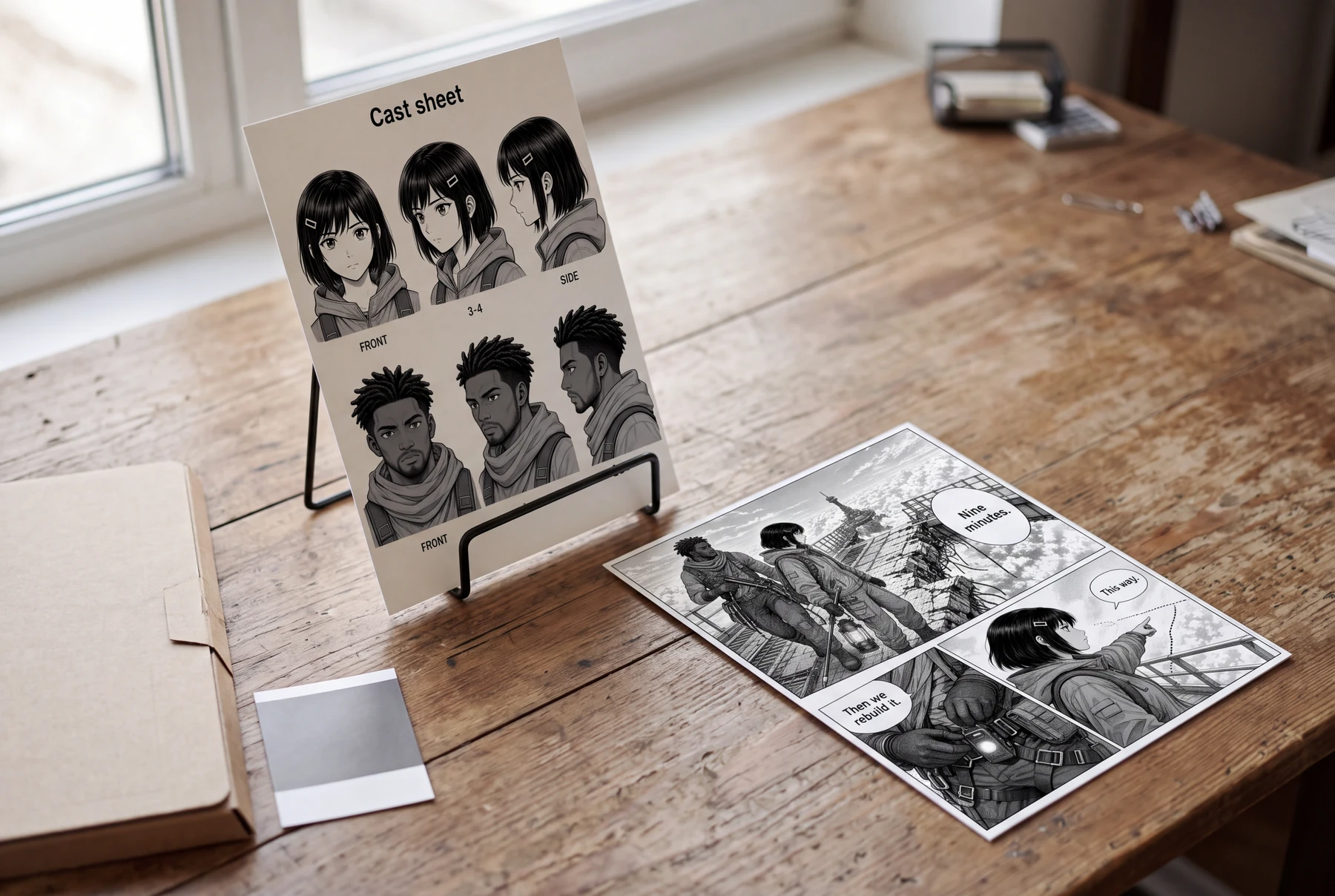
A manga character sheet is a compact visual contract for identity. It records the views, proportions, hair, clothing, props, expressions, and color or tone choices that should remain recognizable across panels.
Published by LlamaGen Editorial TeamUpdated
Quick answer
Build one neutral front view, three-quarter view, side view, full-body proportion note, key expressions, outfit details, and signature props. Separate fixed identity from scene-specific states, then compare each new page against the sheet before continuing.
These references explain the underlying craft. The original exercises below are LlamaGen examples; the authors do not endorse LlamaGen.
Portrait collection
Face proportions drift
Accessory disappears
Scene state is mixed with identity
Reusable character reference
Align turnaround views
Repeat signature details
Track variable state separately
Original instructional illustration with fictional characters; not a customer comic or a product screenshot.
Record identity, not every possible pose
A useful sheet focuses on details that distinguish the character and can be checked repeatedly.
- Use neutral turnaround views
- Front, three-quarter, and side views reveal face shape, hair silhouette, and profile more reliably than dramatic perspective.
- Define proportions
- Record relative head, shoulder, torso, hand, and height relationships so the same character does not change scale between panels.
- Isolate signature details
- Show the hair clip, scarf, jacket closure, bag, weapon, or other recurring object clearly.
- Choose expression anchors
- Include neutral, happy, concerned, and intense expressions while preserving the same underlying features.
Use the sheet as a comparison tool
A reference helps only when it is carried into the page brief and consulted during review.
- Name fixed facts
- Write a short identity list beside the images so important details are not inferred differently on every page.
- Name variable state
- Track wet clothing, injuries, missing props, disguises, or time jumps separately from the permanent design.
- Compare sequence before detail
- First ask whether the cast remains recognizable across the page; then inspect eyes, hands, fasteners, and accessories.
- Update deliberately
- When a costume or hairstyle changes in the story, create a dated variation instead of silently replacing the original reference.
Worked example: two sky-bridge couriers
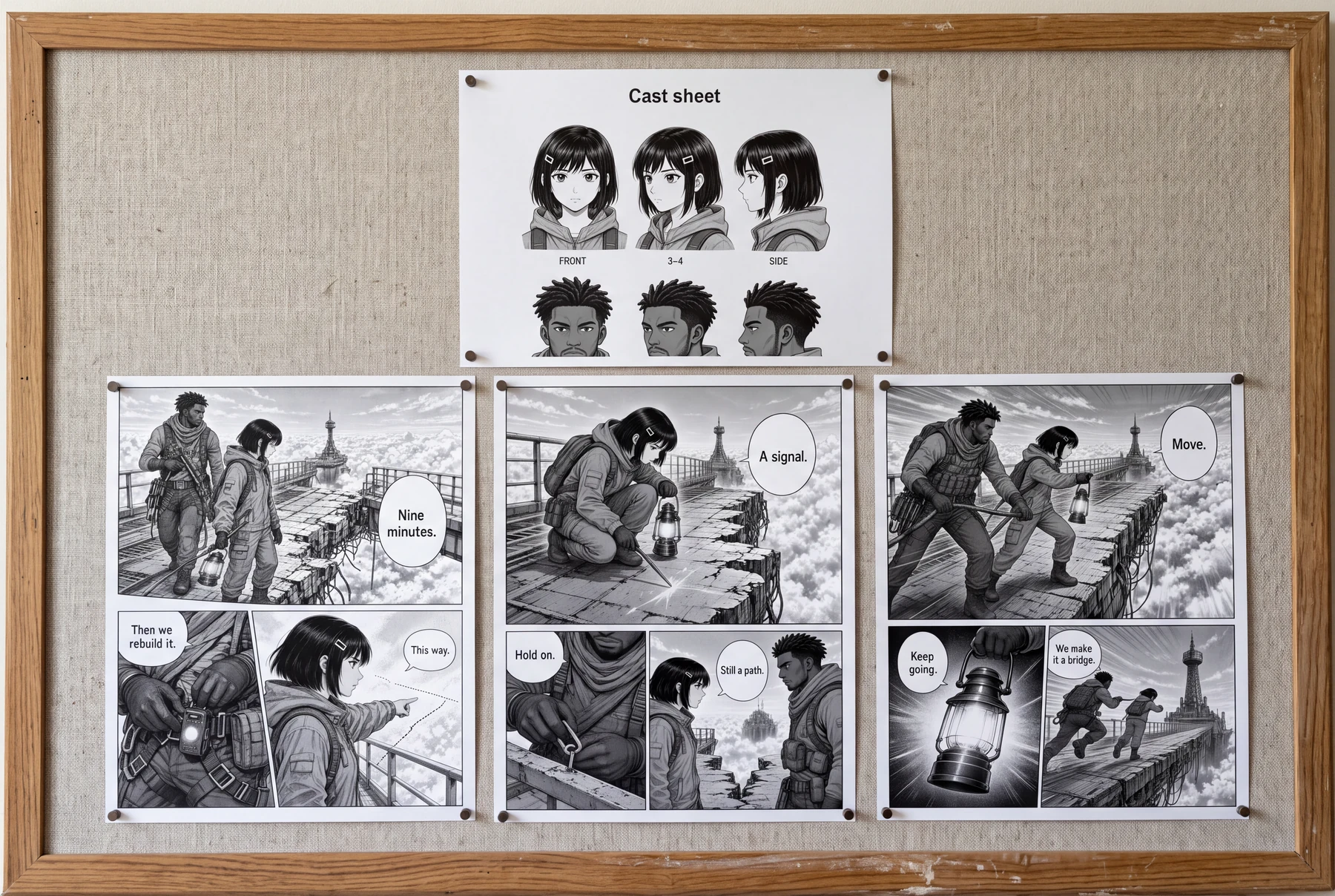
One courier has a short bob, rectangular hair clip, hooded field jacket, and lantern. The second has short locs, a scarf, harness, and radio.
Panel 1
Front and three-quarter views establish both faces and hair silhouettes.
Panel 2
Side views confirm profiles, hood, scarf, and ear placement.
Panel 3
A full-page scene carries the same jacket, clip, scarf, harness, and height relationship.
Panel 4
The review note records weather and damage as scene state, not identity.
The sheet makes corrections specific: the hair clip moved, the scarf disappeared, or the height relationship changed.
Comic pages in everyday use
Compare a portrait collection with a production sheet
Use the same two adult couriers and their field outfits.
Portrait collection
- Three attractive portraits use different face proportions.
- Accessories appear only in some views.
- No note separates identity from weather or damage.
Reusable character reference
- Front, three-quarter, and side views share proportions.
- Signature clip, scarf, harness, and radio remain visible.
- A separate state note tracks rain, damage, and carried objects.
How to compare
- Place the views at the same head scale.
- Trace hair, jaw, eye line, and shoulder width.
- List five fixed details and three variable states.
- Compare a finished page and record one precise correction.
What to look for
The revised sheet should make inconsistencies nameable rather than leaving the reviewer with a vague feeling that the character looks different.
What this exercise cannot prove
A reference sheet does not establish ownership of a design or guarantee consistent automated generation.
Before you publish: review the page
- Front, three-quarter, and side views agree.
- Body proportions and height relationships are recorded.
- Recurring outfit and prop details are visible.
- Fixed identity is separate from scene state.
- Story-driven design changes receive a named variation.
Frequently asked questions
How many views should a manga character sheet include?
Start with front, three-quarter, and side views, then add full-body proportions, expressions, or prop details only when the story needs them.
Should every outfit have a separate sheet?
Create a variation when the outfit changes enough to affect silhouette, recurring details, or continuity across multiple scenes.
Can a character sheet guarantee AI consistency?
No. It improves the reference and review process, but each result still needs comparison and correction.
Sources and further reading
- Clip Studio Paint — Step-by-Step Digital Comic Creation ↗
Official production overview includes planning characters, expressions, costumes, and comic pages.
- Google Cloud — Image prompt and attribute guide ↗
Official prompt guidance explains defining subjects, context, style, and iterative refinement. It does not guarantee character consistency.
Take the next step in your comic workflow
Plan a visible story beat, try the relevant tool, and review the result yourself. These guides do not promise to automatically analyze or repair your comic.