

Comic-to-video workflow
Comic to video AI, planned shot by shot
Plan an AI comic video from reviewed panels. Map each story beat to a shot, preserve character references and inspect the transitions before finishing the sequence.
Model
This creator generates a still image. Continue in the linked tools for comics and video; research strategies are not selectable production modes.
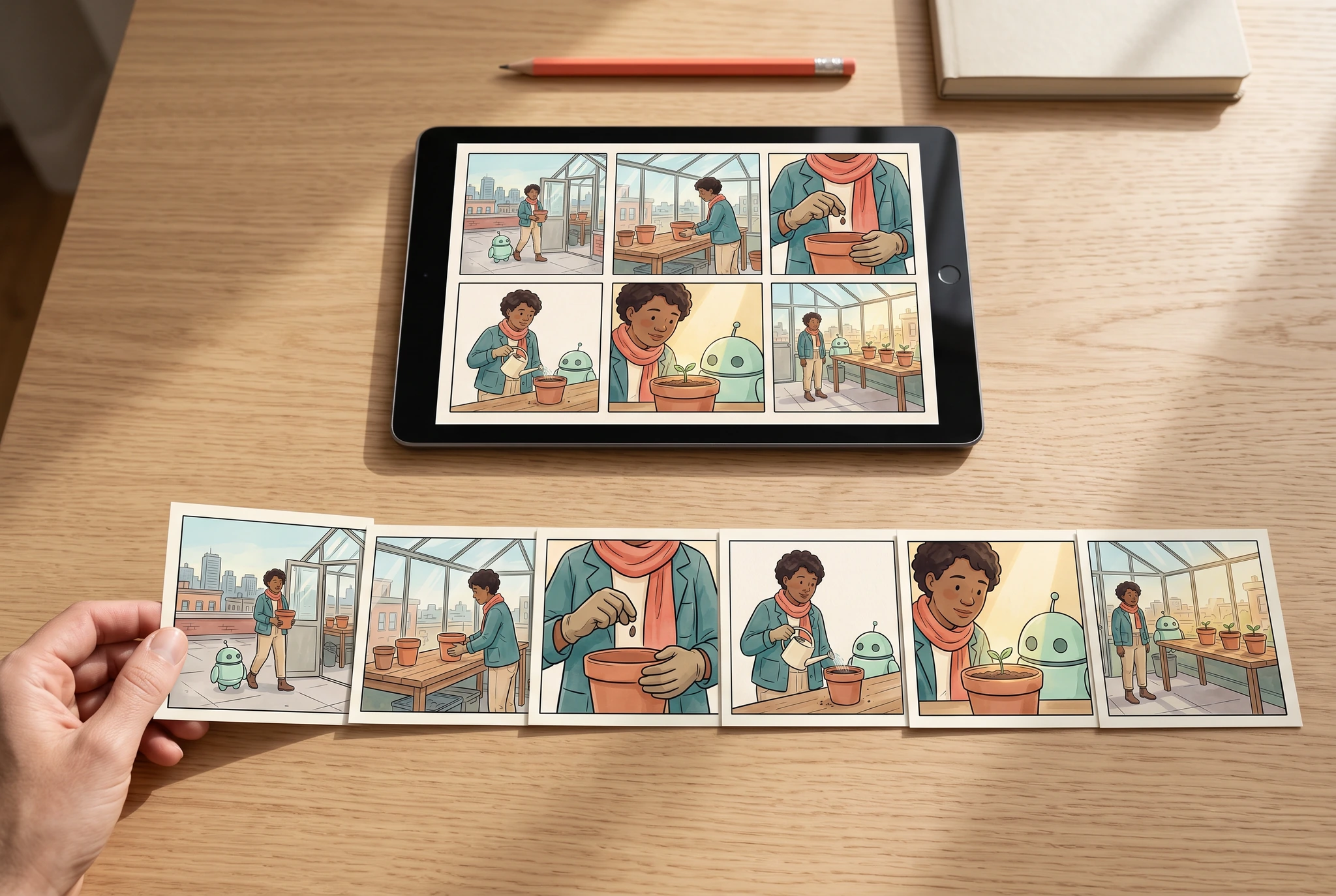
Image record
Google Vertex AI · gemini-3.1-flash-image · · 1280 × 859 px
Original generation prompt
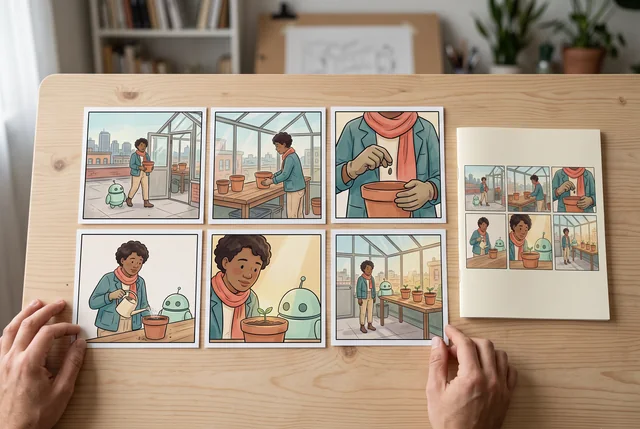
Use case: photorealistic-natural / product-mockup. Make a natural-daylight editorial PHOTOGRAPH of a real creator desk preparing a comic sequence for later video editing. The supplied image is the only original story artwork reference: adult botanist in teal jacket and coral scarf with round mint robot, greenhouse, terra-cotta pot and seedlings. Show SIX separate small horizontal matte comic cards in a tidy left-to-right row in the lower half of a light oak table; each card corresponds in order to one panel of the supplied six-panel story and has a thin clean ivory margin, with no text. Behind the cards an unbranded black tablet shows the complete same six-panel page, not an invented editing app. A capped coral pencil and a closed plain notebook may sit at the far edge. Exactly one adult hand lightly holds the first card by its blank outer margin; no other people or hands. Cards and tablet fill 80 percent of frame. Real paper thickness, soft accurate contact shadows, realistic adult fingers and device scale. No letters, numbers, UI, timeline controls, play icons, logos or fake screenshots. No claim of exported video: this is a fictional planning presentation. Landscape 3:2, near-overhead perspective.
View full artworkPlan a specific result
A greenhouse planting with one clear reveal
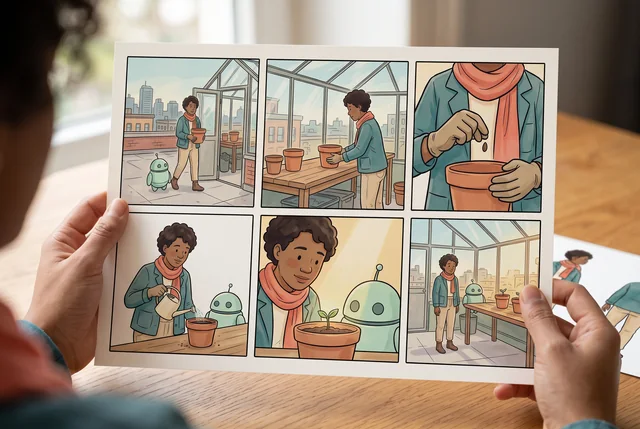
An original adult botanist and a small mint robot bring a terracotta pot to a greenhouse bench, plant a seed and later inspect a new seedling. Plan a short sequence whose actions and passage of time are clear without narration.
What to prepare
- Three approved story panels in reading order.
- One original identity reference and the current jacket, scarf and pot state.
- A brief describing the intended action and the focus of each shot.
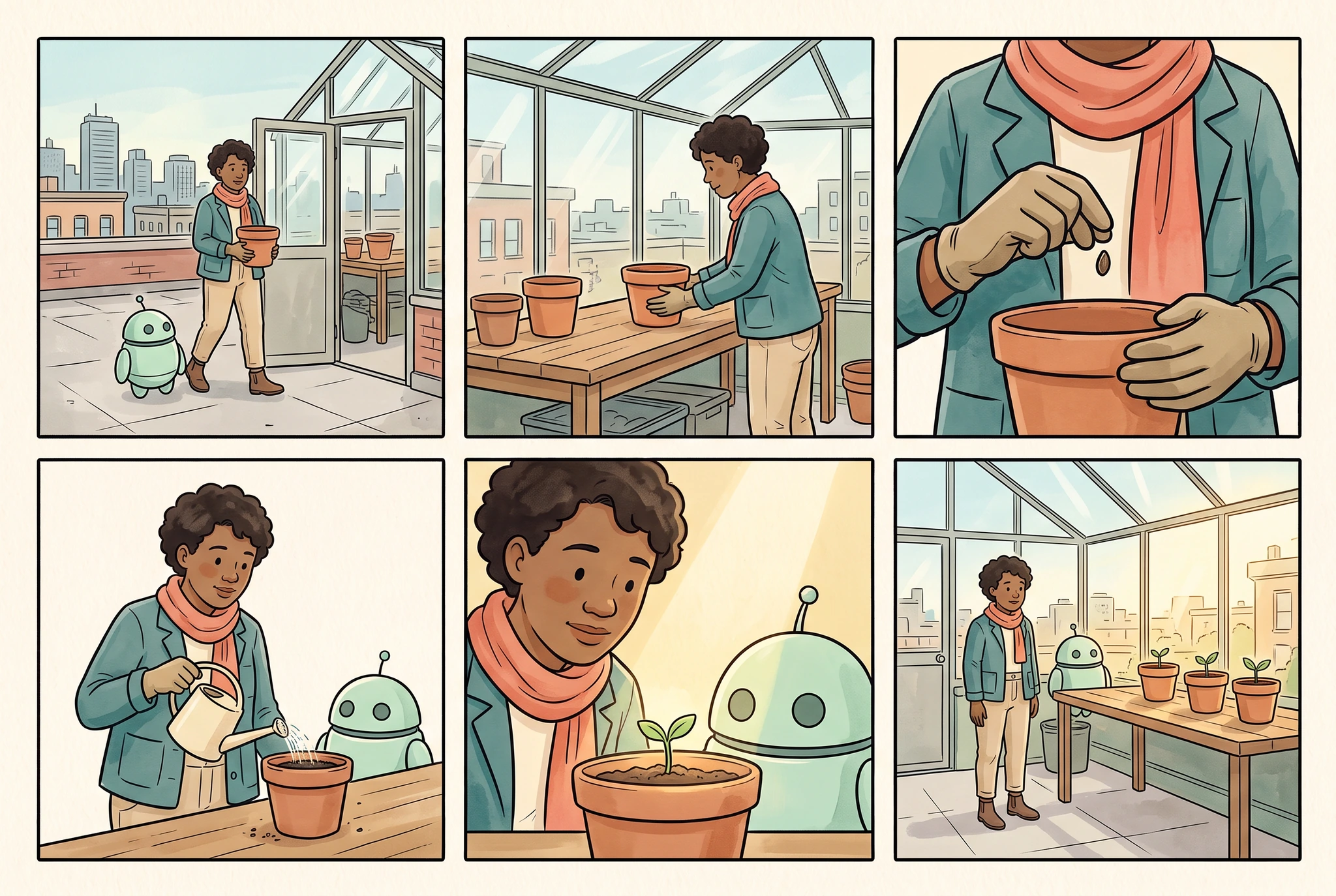
Image record
Google Vertex AI · gemini-3.1-flash-image · · 1280 × 859 px
Original generation prompt
Use case: illustration-story. Make ONE original finished comic page in a clean three-column by two-row grid, exactly SIX equally sized panels, narrow even ivory gutters and complete outer margins. The provided image is the character identity and wardrobe reference, not a page to copy. Preserve its adult botanist with warm brown skin, short dark curly hair, teal jacket, coral scarf, sand trousers, brown boots, and round mint helper robot with two dark eyes and exactly one short antenna. Quiet elegant ink-and-watercolor comic style, teal/coral/sage/ochre palette. Tell a very simple readable rooftop greenhouse planting story: panel1 wide view botanist and robot arrive at the greenhouse carrying a small terra-cotta pot; panel2 medium view the botanist places the pot on the wooden bench; panel3 close view gloved adult hands holding a seed above the pot; panel4 medium view botanist and robot water the pot with a small cream watering can; panel5 close view botanist and robot look at the tiny seedling; panel6 wide view both stand by the finished row of three potted seedlings in afternoon light. All people are adults; each scene has one botanist and one robot unless only hands are framed. The pot remains terra-cotta, the greenhouse stays structurally coherent, identity and outfit remain recognizable. No writing, numbers, logos, speech balloons, captions, lettering, illegible marks, third-party characters, UI, photorealistic environment or claims of tested consistency. Landscape 3:2.
View full artworkGive the establishing shot time to orient the viewer
Let the first shot establish the greenhouse, the botanist and the robot before moving closer to the planting action.
Choose motion that supports the reveal
A modest push toward the pot can guide attention. A new body action requires checking hands, pot shape and both characters throughout the clip.
Treat each cut as a continuity check
The pot, scarf and character positions should agree on both sides of a cut. A later seedling needs a readable passage of time rather than an unexplained change during one continuous action.
A small, coherent sequence is a useful first draft. Add a more ambitious action only when the simpler version communicates the story.
A practical starting point
Choose the beats worth moving
Select a short sequence that still makes sense without animation. Write what changes in each panel and which detail must stay readable.
Prepare one shot brief per panel
Record the intended camera move or character action, the reference image and the current outfit or prop state. Keep the accepted stills available for comparison.
Review clips as one sequence
Compare entrances, exits, character identity and important props at each cut. Set the final timing and captions in the editing workflow supported by your chosen tools.
What to inspect
Image record
Google Vertex AI · gemini-3.1-flash-image · · 1280 × 859 px
Original generation prompt
Use case: photorealistic-natural / product-mockup. Make a natural-daylight editorial PHOTOGRAPH of a real creator desk preparing a comic sequence for later video editing. The supplied image is the only original story artwork reference: adult botanist in teal jacket and coral scarf with round mint robot, greenhouse, terra-cotta pot and seedlings. Show SIX separate small horizontal matte comic cards in a tidy left-to-right row in the lower half of a light oak table; each card corresponds in order to one panel of the supplied six-panel story and has a thin clean ivory margin, with no text. Behind the cards an unbranded black tablet shows the complete same six-panel page, not an invented editing app. A capped coral pencil and a closed plain notebook may sit at the far edge. Exactly one adult hand lightly holds the first card by its blank outer margin; no other people or hands. Cards and tablet fill 80 percent of frame. Real paper thickness, soft accurate contact shadows, realistic adult fingers and device scale. No letters, numbers, UI, timeline controls, play icons, logos or fake screenshots. No claim of exported video: this is a fictional planning presentation. Landscape 3:2, near-overhead perspective.
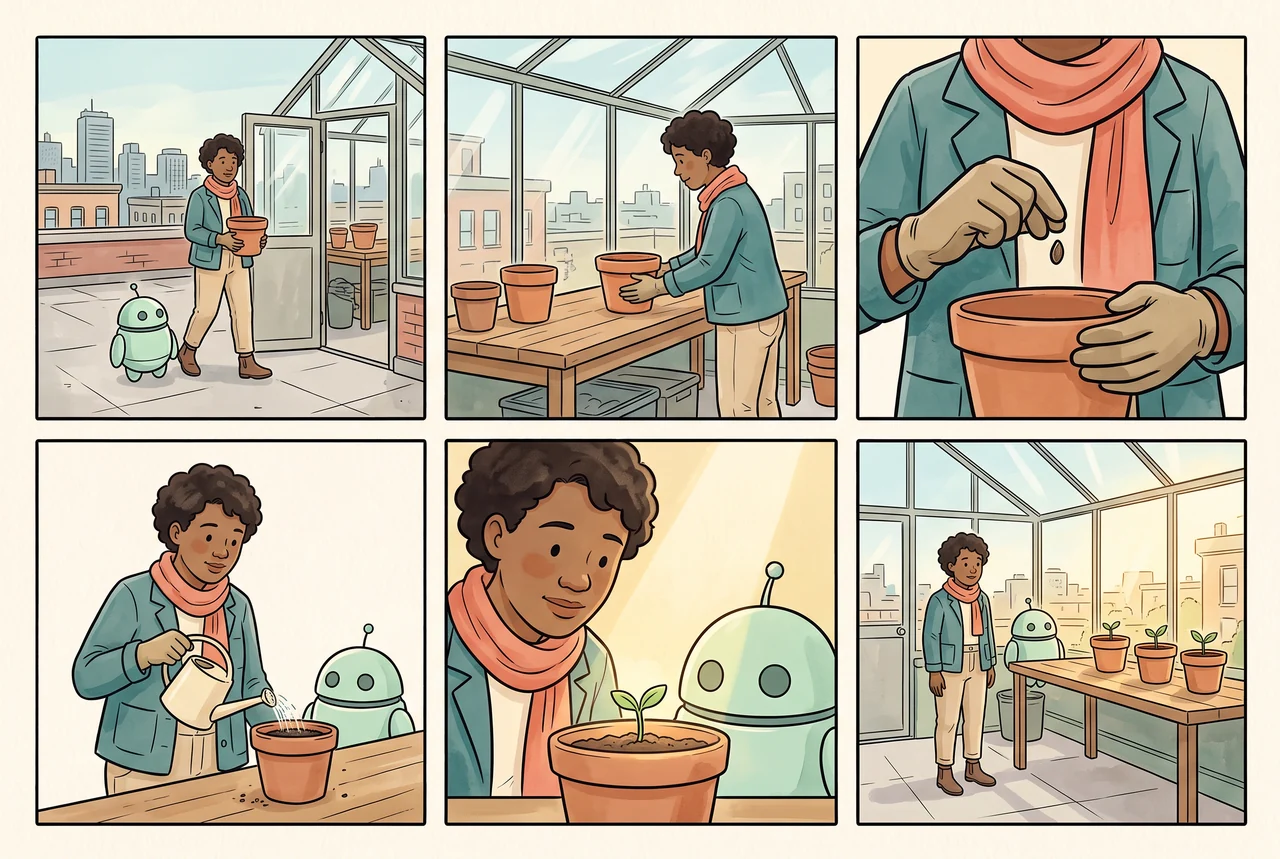
View full artworkTry a camera move
Preview a simple camera move on one still image. Continue to the comic-to-video workflow for the available video tools and export options.
Personal Agent · Creative Intelligence research
From Personal Agent memory to better creative results
A Personal AI Agent uses permissioned, evolving context to help someone complete work over time. For comic creators, the challenge is not only remembering a character, but retrieving the right story state, controlling the next image and verifying a creator-approved result. CyaniModel explores the visual-workflow layer of this larger architecture; DeepStory, Agent Loop and Feedback Learning are distinct proposed responsibilities, not claims of a fully deployed personal agent.
Research direction
Research behind the workflow
Carry the right reference into each shot
We are exploring whether a shot-matched identity or body view helps more than sending every available reference. Each comparison needs the same panel, motion brief and review standard.
Review the transition as well as the image
A single acceptable still can be followed by a clip with drifting identity or props. Research should inspect important frames and cuts, while recording which errors the review misses.
Count the cost of an accepted sequence
A cheaper first attempt may need more retries. Compare the full cost and time of reviewed clips that can actually be kept in the sequence.
Research direction
Adaptive Reference Selection
Which identity, full-body, outfit or camera-view reference helps a particular shot?
How we would evaluate it: Compare fixed reference sets with shot-matched sets using the same stories and acceptance rules.
Research direction
Quality and Cost Routing
Can a simpler shot use a less expensive allowed model while meeting the same review standard?
How we would evaluate it: Include generation, inspection, repair and retry costs when counting accepted panels.
Research direction
Visual Review Cascade
Which checks can catch an identity or story error early, and which need a closer look?
How we would evaluate it: Track missed serious errors and incorrectly rejected panels alongside review cost and latency.
Know the boundaries
- Still-image consistency research does not by itself establish a working video-generation capability.
- Motion type, duration, audio and export choices depend on the selected creation tool and model.
- These planning scenes do not document a completed CyaniModel video-generation test.
Primary research informs these questions; it does not establish results for CyaniModel.
Frequently asked questions
Does this page generate a video?
This guide prepares the creative workflow. Follow the comic-to-video link to inspect currently available creation tools, requirements and output options.
Should I animate every panel?
Choose the panels whose motion helps the story. A held frame, camera move or cut can be enough for a quiet beat; more action is useful when it communicates something the still cannot.
How do I keep a character consistent between clips?
Use accepted panels and relevant identity references, record the current outfit and props, and compare the frames around each cut. References improve the brief but do not guarantee the result.
Does DreamingComics prove that comics can be animated?
The linked research investigates consistent comic stills using a video model as part of its method. It is useful background for sequence consistency, not evidence that this page provides a released comic-animation backend.
Continue your story
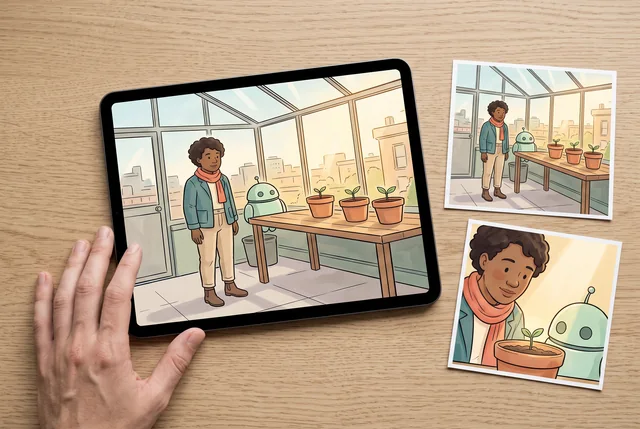
Animate comic panels with a deliberate motion plan
Plan camera moves, held frames and transitions for comic panel animation. Keep text readable and inspect character details before choosing more complex motion.
Build a comic storyboard before planning the video
Turn a short story into an ordered comic storyboard. Define shot purpose, character state and transitions, then use the reviewed sequence to plan video.
Create comic sequences with recognizable characters
Plan consistent-character AI comics with identity references, current outfits and panel-by-panel review. Learn what to check when camera, pose or scene changes.
Turn a readable comic sequence into a motion plan with a clear beginning, change and payoff.
Continue in LlamaGen to check the available tools, model choices, account requirements and credits before generating.