Canva vs LlamaGen: choose a four-panel comic workflow
Compare input, layout, review, account requirements and actual download steps before choosing a comic tool.
This is a workflow comparison based on public documentation and our own editorial samples. It is not an independent, matched paid-generation benchmark. No speed, price or character-consistency score is claimed.
LlamaGen
Start with a story prompt and review the generated page in Studio. Generation uses the existing account, plan and credit rules. The examples below were made directly through Vertex and do not prove the website billing or generation flow.
Canva documents a template-led comic workflow: choose a template, add or upload visual elements, edit the design and share the result. Review which elements and download options require an account or a paid plan.
Use the same short story, cast description and four-panel reading order.
Record whether sign-in is required, the selected model and the displayed cost before submitting.
Check facial identity, clothing, prop ownership and the meaning of every line.
Download the actual PNG or PDF and inspect its page size, order and lettering. A preview is not an export test.
Compare the time and cost of an acceptable result only after the same acceptance checks.
Choose a template-led workflow when arranging your own visual assets is the main task. Choose prompt-led generation when you want to draft new scenes, then allow time for review and correction. Neither route guarantees correct text or unchanged faces.
LlamaGen publishes this comparison about its own product. Check current vendor documentation and pricing before deciding; the companies and open-source project are independent.
Read, review and print an original four-panel story
These original English-language illustrations were created directly with Vertex AI. They are editorial examples, not customer projects or proof of the website’s upload, credit deductions or generation flow. Interface and notes are translated; lettering in artwork remains English.
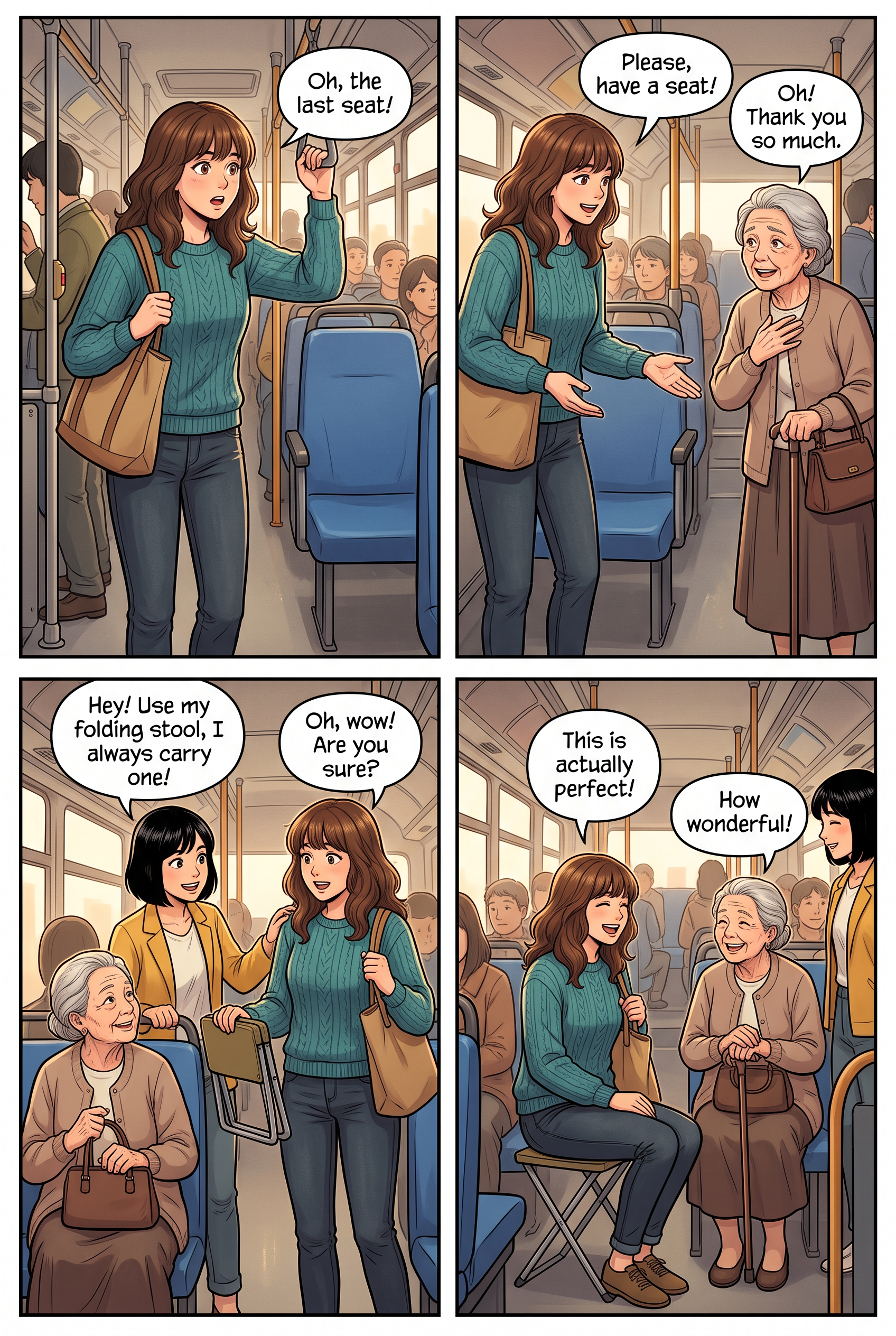
The Last Seat
A commuter notices the last bus seat. She offers it to an older passenger. A friend offers her a folding stool. She laughs beside the seated passenger.
Original English generation brief
Create an ORIGINAL finished four-panel comic page in portrait 2:3, exactly two rows and two columns with four clear equal panels and white gutters. Warm professional color manga, adult female lead, fully clothed casual contemporary clothing. Maintain identical face, hair, clothing and props through the four panels. English story, mostly visual storytelling, no extra captions, no title printed on image, no watermark, no borrowed franchise characters. Clear left-to-right top-to-bottom sequence. Four beats: A commuter notices the last bus seat. She offers it to an older passenger. A friend offers her a folding stool. She laughs beside the seated passenger. Natural hands and readable staging. This is original editorial artwork, not a photograph or a customer testimonial.
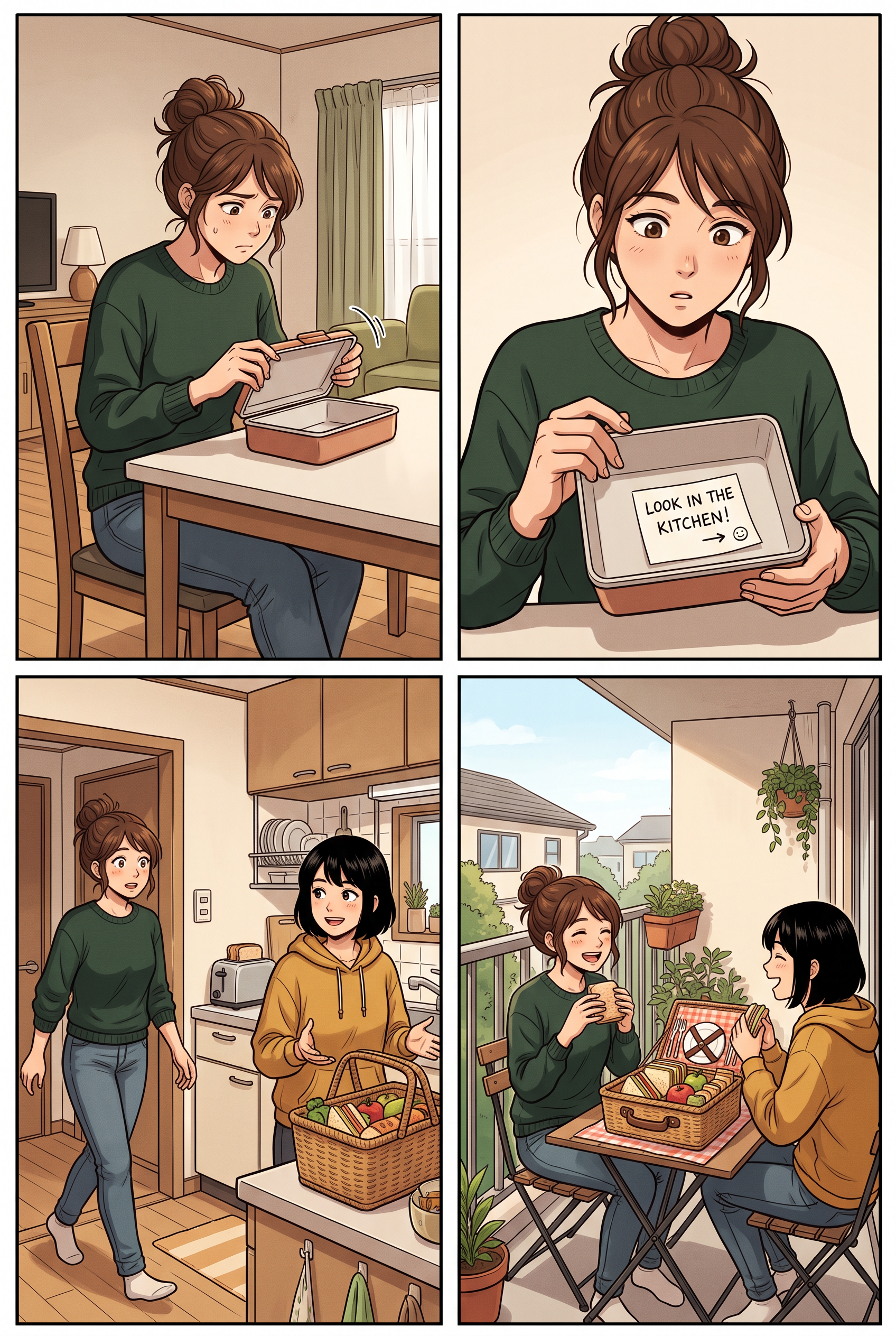
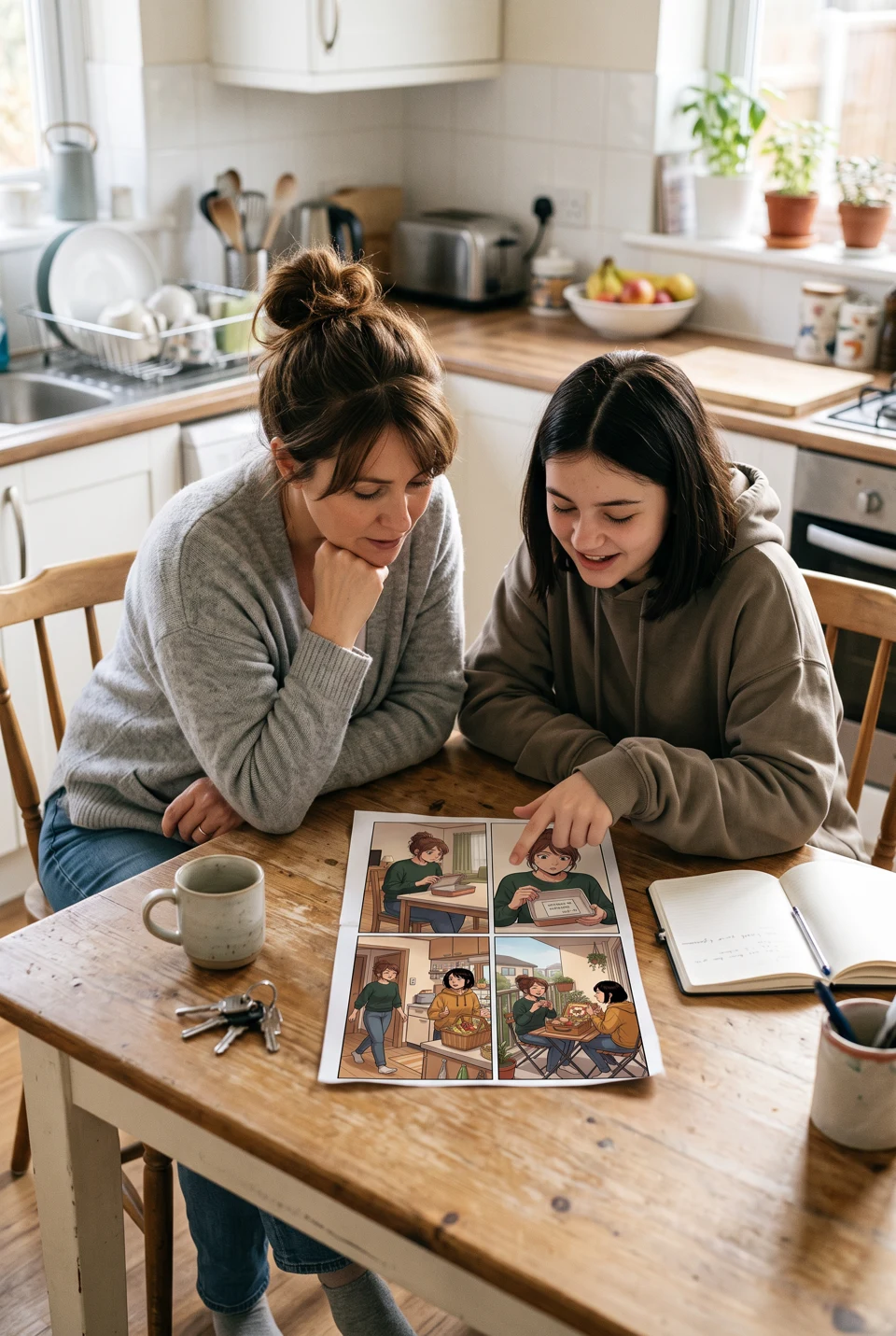
A woman opens an empty lunch box. She finds a note pointing to the kitchen. Her roommate reveals a picnic basket. They eat together on the balcony.
Original English generation brief
Create an ORIGINAL finished four-panel comic page in portrait 2:3, exactly two rows and two columns with four clear equal panels and white gutters. Warm professional color manga, adult female lead, fully clothed casual contemporary clothing. Maintain identical face, hair, clothing and props through the four panels. English story, mostly visual storytelling, no extra captions, no title printed on image, no watermark, no borrowed franchise characters. Clear left-to-right top-to-bottom sequence. Four beats: A woman opens an empty lunch box. She finds a note pointing to the kitchen. Her roommate reveals a picnic basket. They eat together on the balcony. Natural hands and readable staging. This is original editorial artwork, not a photograph or a customer testimonial.
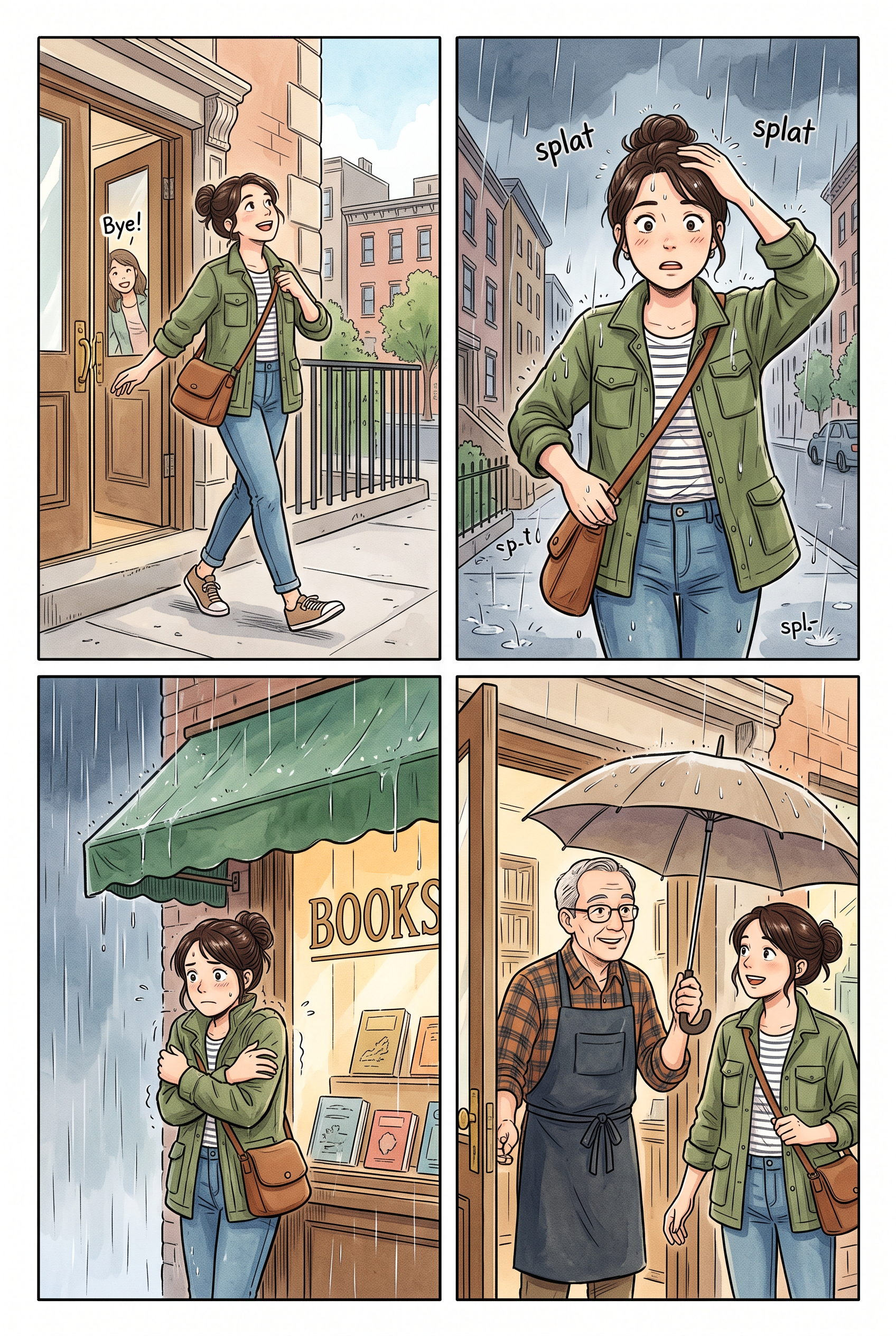
A woman leaves home without an umbrella. Rain begins. She shelters under a bookshop awning. The bookseller shares an umbrella and they smile.
Original English generation brief
Create an ORIGINAL finished four-panel comic page in portrait 2:3, exactly two rows and two columns with four clear equal panels and white gutters. Warm professional color manga, adult female lead, fully clothed casual contemporary clothing. Maintain identical face, hair, clothing and props through the four panels. English story, mostly visual storytelling, no extra captions, no title printed on image, no watermark, no borrowed franchise characters. Clear left-to-right top-to-bottom sequence. Four beats: A woman leaves home without an umbrella. Rain begins. She shelters under a bookshop awning. The bookseller shares an umbrella and they smile. Natural hands and readable staging. This is original editorial artwork, not a photograph or a customer testimonial.
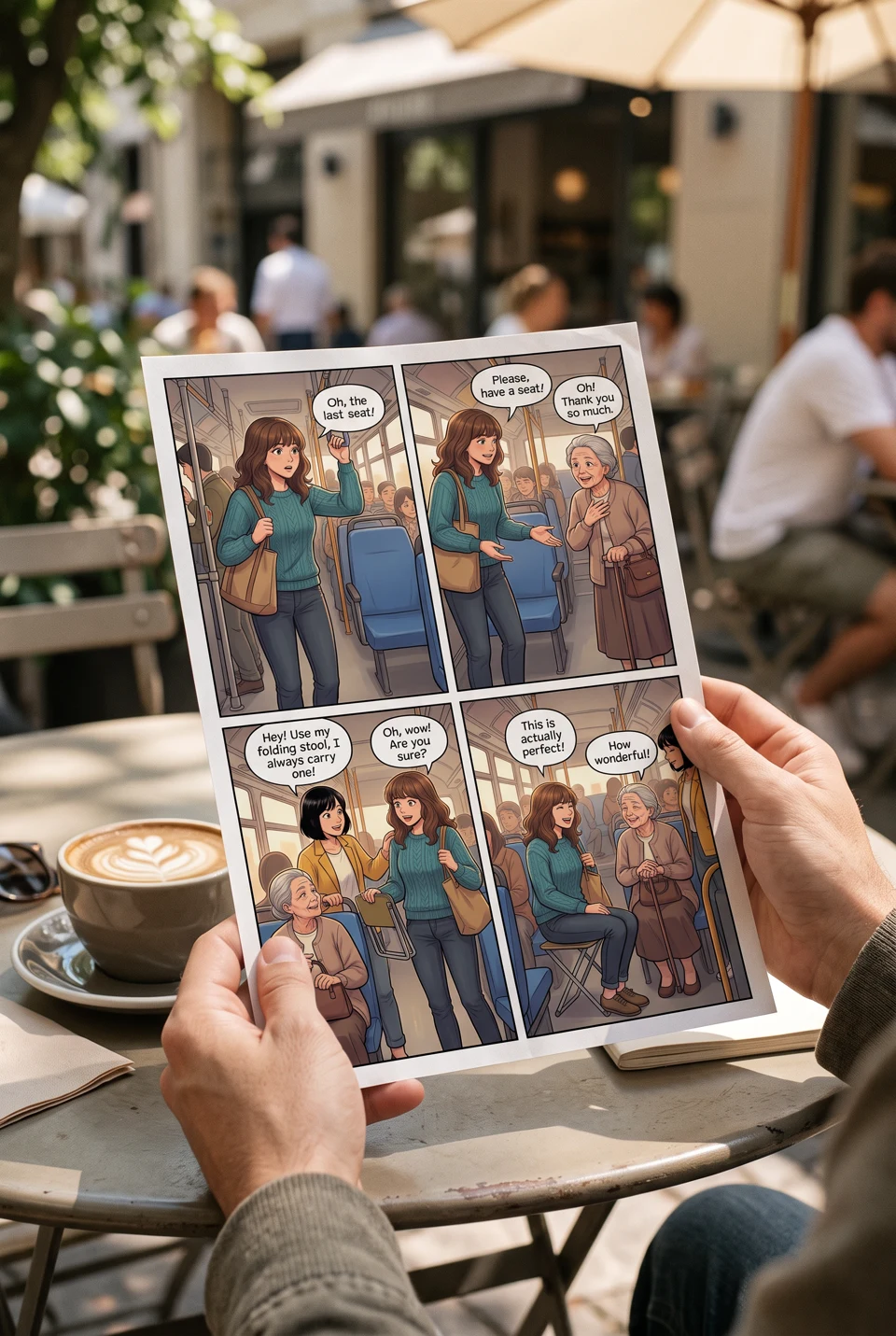
AI-generated illustrative use scene featuring our original comic artwork. Not a customer photograph or a physical print test.AI-generated illustrative use scene featuring our original comic artwork. Not a customer photograph or a physical print test.
Review before sharing
Read left to right, then top to bottom. Check four distinct story beats.
Compare face, hair, clothing, hands and recurring objects across panels.
Check every caption and speech bubble. Verify classroom facts against the linked source.
Open the downloaded PDF and check order, margins and readable text at actual size.
Downloads and generation have different requirements
The sample images, blank templates and PDFs can be downloaded without an account. AI generation uses the existing sign-in, plan and credit rules. Check the displayed cost before submitting. A4 and Letter files fit the whole image inside a half-inch margin; physical printer output has not been tested.
Canva vs LlamaGen: choose a four-panel comic workflow