Keep the choice everyone remembers, rather than every turn of the dice.
This fictional tabletop encounter turns six original notes into a recap. Briar Bridge, Iris and Brann were written for this example. They are not a published adventure, a real game transcript or an official D&D product.
An original script and artwork run. Read the full brief, panel script and continuity checks below the book.
03
Tabletop storytelling · LlamaGen
01 · Source materials
Start with a character, not a filter.
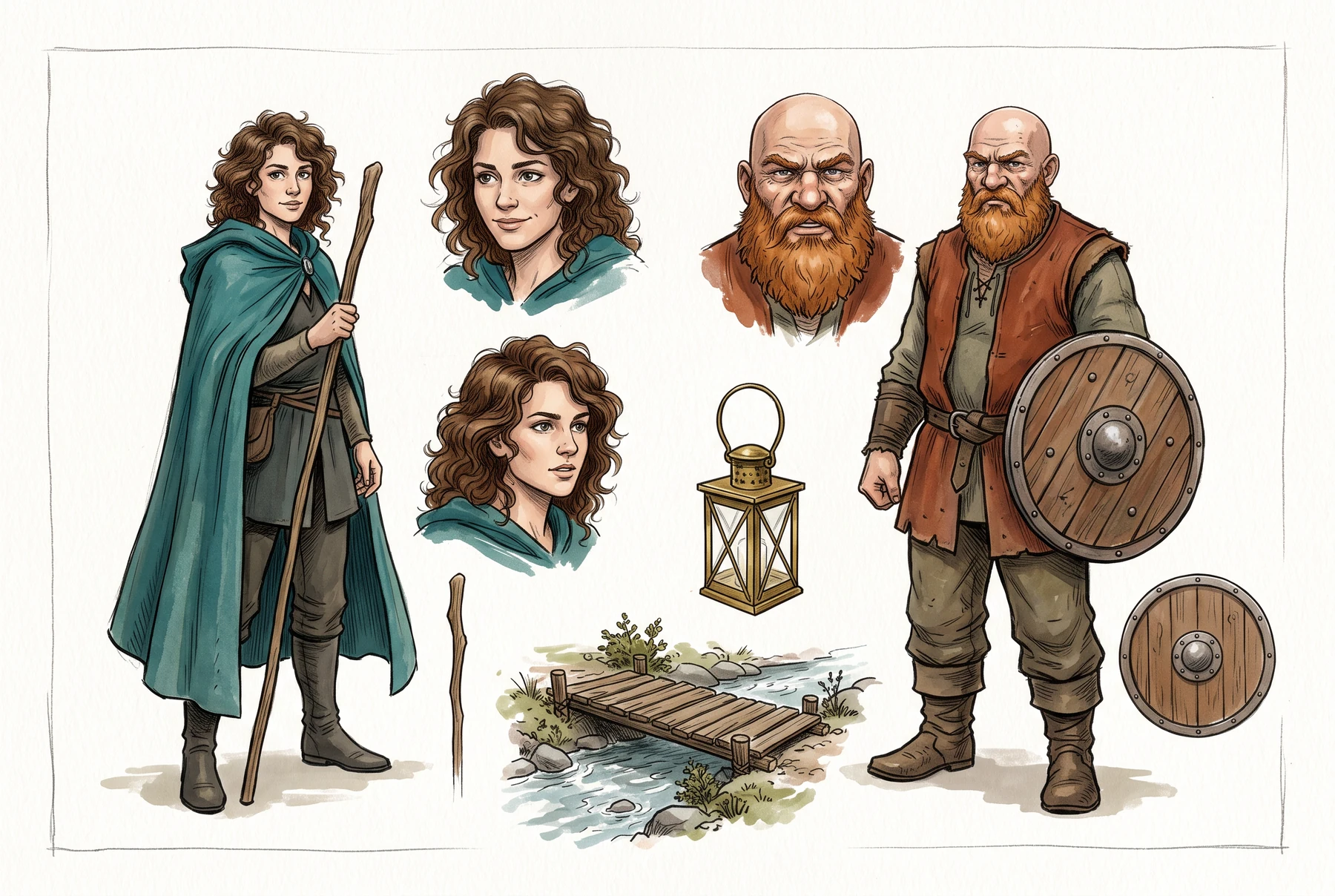
Iris is an adult woman with curly brown hair, a teal cloak and simple wooden staff. Brann is an adult man with a bald head, copper beard, rust vest and round wooden shield. Keep the heroes distinct. The props are one square brass lantern and a narrow wooden bridge over a shallow stream. These original design notes and the reference image were created for this example; they are not customer uploads.
04
Tabletop storytelling · LlamaGen
02 · The challenge
Change the shot. Keep the story readable.
Identity
Do face, silhouette and costume belong to the same character?
Props
Can the important object be followed across the page?
Reading order
Does every frame contribute a distinct action?
05
Tabletop storytelling · LlamaGen
03 · Planning the page
A story takes shape.
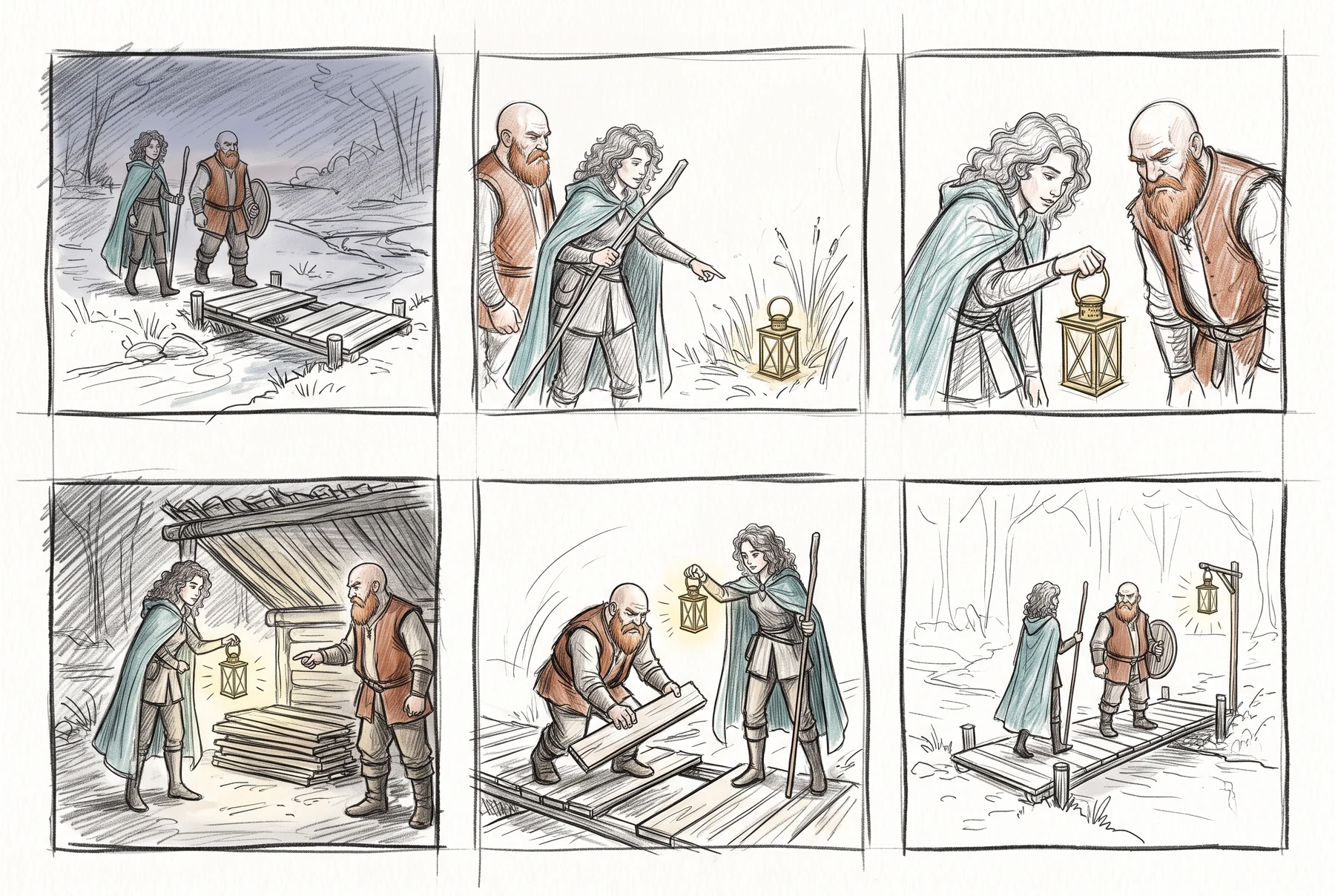
Iris is an adult woman with curly brown hair, a teal cloak and simple wooden staff. Plan six clear story beats and inspect the character between frames.
Illustrated planning concept, not an editor screenshot or recorded session.
06
Tabletop storytelling · LlamaGen
04 · The creative process
Make a draft. Make it yours.
Define the anchors
Write a short identity brief. Generate and inspect one clear reference before expanding the story.
Plan the sequence
Give each frame one action. Supply the accepted reference when the selected model supports image input.
Inspect and revise
Compare faces, costume and props. Fix drift or unclear action before making a longer sequence.
07
Tabletop storytelling · LlamaGen
05 · Comic concept
One short story, in six frames.
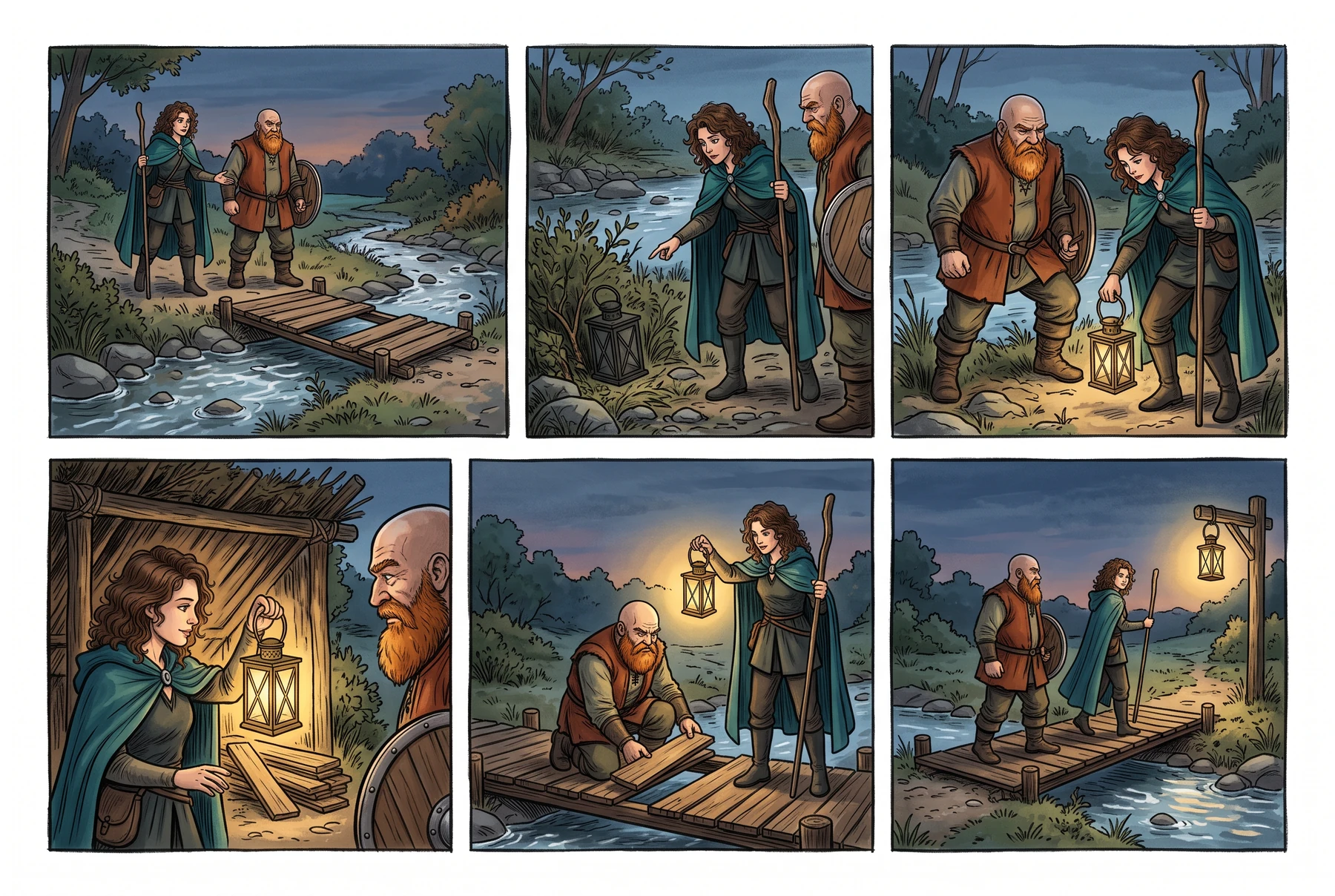
This comic was generated using the character reference as an actual image input to Vertex Nano Banana 2.1. Compare its visible details with the script below. It is an original model-generated example, not a customer outcome or a verified website export.
08
Tabletop storytelling · LlamaGen
The next page is yours
Give your character another scene.
Start with one short scene. Review the words, the characters and the details before making the next page.
D&D Campaign Recap Comic: Turn Original Session Notes into Panels
This fictional tabletop encounter turns six original notes into a recap. Briar Bridge, Iris and Brann were written for this example. They are not a published adventure, a real game transcript or an official D&D product.
The reference used for this run
Start with a clear identity brief. This generated image was supplied to the three subsequent model requests as an actual reference, rather than generated independently and presented as an input afterward.
Original generated reference. Inspect the wardrobe and distinguishing details before continuing.
Iris is an adult woman with curly brown hair, a teal cloak and simple wooden staff.
Brann is an adult man with a bald head, copper beard, rust vest and round wooden shield.
Keep the heroes distinct. The props are one square brass lantern and a narrow wooden bridge over a shallow stream.
Read the original six-panel script
This comic was generated using the character reference as an actual image input to Vertex Nano Banana 2.1. Compare its visible details with the script below. It is an original model-generated example, not a customer outcome or a verified website export.
1. The crossing
Wide shot: Iris and Brann reach a narrow bridge with a missing central plank at dusk.
At Briar Bridge, the path ended one step too soon.
2. A clue below
Iris notices a square brass lantern beside the shallow stream.
Iris spotted the bridge keeper’s fallen lantern.
3. The recovery
Brann braces at the bank while Iris lifts the lantern by its handle.
They recovered it together.
4. The keeper’s stores
The lit lantern reveals spare planks in a small riverside shelter.
Its light revealed a shelter with timber inside.
5. A shared repair
Brann fits one spare plank while Iris holds the lantern beside him.
The way forward needed a repair, not a fight.
6. The next road
The heroes cross the repaired bridge; the lantern hangs from its post.
By morning, the road belonged to everyone again.
Keep the brief. Change the story.
Copy or download the complete text, then adapt the character and events. The action below prepares a six-panel draft; it does not upload this reference or start generation. Add a reference you may use through your selected workspace’s supported controls.
Sign-in and generation credits may apply. Review generated lettering, hands and character details. Export formats depend on the workspace and plan; a downloaded text brief is not a finished comic export.
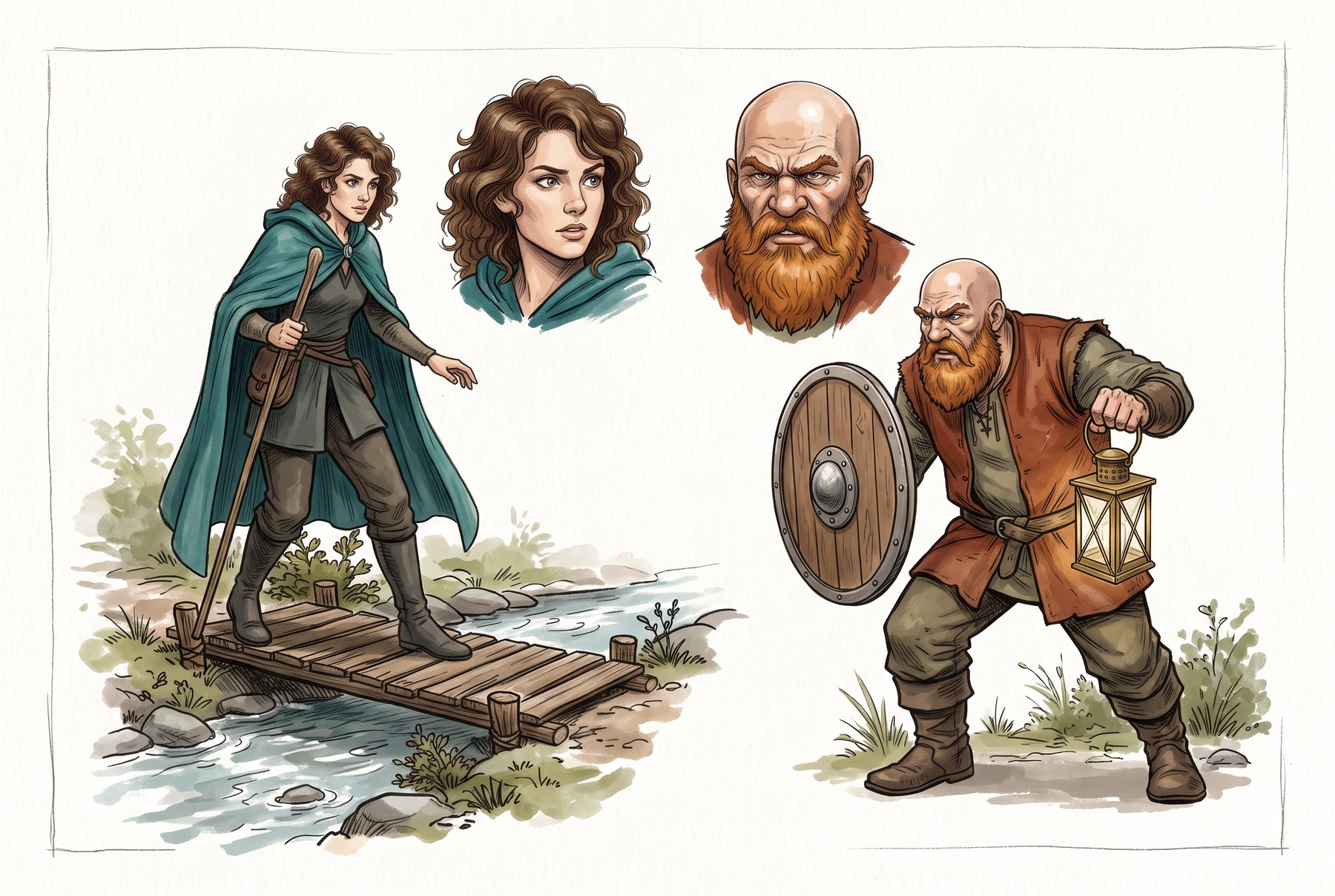
Change the pose, then compare the details.
This independent detail study used the same actual character-reference input as the comic and pencil storyboard. Inspect it alongside the reference. Similar colors alone do not establish that identity and props stayed consistent.
Observed in this run: The hero identities and the lantern remain recognizable in this run. Some close shots crop equipment, so do not infer that an off-frame staff or shield was preserved. Recheck the bridge gap and repair against your own notes.
Separate reference-guided detail study, not a before/after correction or an automatic consistency score.
Identity: Compare face shape, hair, distinguishing accessories and costume together.
Continuity: Track the story prop and check the hands touching it. Do not accept an attractive isolated frame if its action is unclear.
Next scene: Keep the accepted reference. Revise errors before extending the sequence; reference input does not lock every detail.
Choose the right next step
Open the existing fantasy art tool → — use the established tool or template for its original single-image/style task. This story adds a connected scene, not another competing generator.
Yes. Replace the original brief with an identity description and reference you may use. Keep the same visible anchors and inspect each result. Reference input guides the selected model; exact consistency is not guaranteed.
How was this example made?
LlamaGen wrote the script and generated a character reference with Google Vertex AI. That image was then supplied to separate storyboard, comic and detail requests using gemini-nano-banana-2.1. The text records and reference hashes are preserved. This does not verify the public website’s complete generation, save or export flow.
Does opening the comic action spend credits?
The link prepares a draft with this complete script. Generation begins only when you submit in the workspace. Sign-in, model availability, credits and plan conditions may apply.
How this example was made
LlamaGen authored the fictional characters, script and captions. Four illustrations were generated with Google Vertex AI, requested and returned model gemini-nano-banana-2.1. The reference was supplied to separate storyboard, comic and detail requests; the original inputs and hashes are recorded in the artwork provenance manifest.
The images demonstrate this model run. They do not demonstrate a customer outcome, full public website workflow, animation, print-ready output or guaranteed identity preservation. The text captions remain readable without animation or images.
Your story, one scene at a time
Give your character another scene.
Plan a D&D campaign recap comic from original encounter notes. Keep two heroes distinct, follow six story beats and inspect reference-guided fantasy artwork.
Select one encounter from notes you may use, confirm the events with your group and preserve distinct party identities. This example does not transcribe sessions, resolve game rules or simulate dice. D&D identifies the use case; no publisher endorsement is claimed.
Is this a verified website or customer result?+
An original LlamaGen script with reference-guided AI illustrations. Not a customer project, product screenshot or verified website export. Inspect the character and action details before extending the story. No customer quotation, endorsement or measured outcome is claimed.
More ways to tell a story
Another page. Another possibility.
An original LlamaGen script with reference-guided AI illustrations. Not a customer project, product screenshot or verified website export. Inspect the character and action details before extending the story. Images were created with Google Vertex AI. The illustrated planning and comic stages do not demonstrate an automatic transformation of the source illustration.
D&D Campaign Recap Comic: Turn Original Session Notes into Panels | LlamaGen