Structure and pacing diagnosis
Inspect causality, escalation, reversals, midpoint pressure, climax setup, and sequences that repeat rather than advance.


Review structure, character drive, scene function, pacing, theme, and dialogue with a diagnosis-first workflow that turns vague notes into prioritized, executable revision choices.
Opens the LlamaGen storyboard project workspace.

Northline / visual direction
One story world, carried from screenplay to production.
Get notes you can act on
Trace pacing, character, dialogue, or structure symptoms back to their dramatic cause. See which scenes are affected and test the smallest revision that can strengthen the story without flattening your voice.
Inspect causality, escalation, reversals, midpoint pressure, climax setup, and sequences that repeat rather than advance.
Test wants, tactics, consequences, relationship pressure, value turns, and whether each scene changes the story.
Prioritize load-bearing changes, show the affected location in the draft, and preserve the writer's voice and intent.
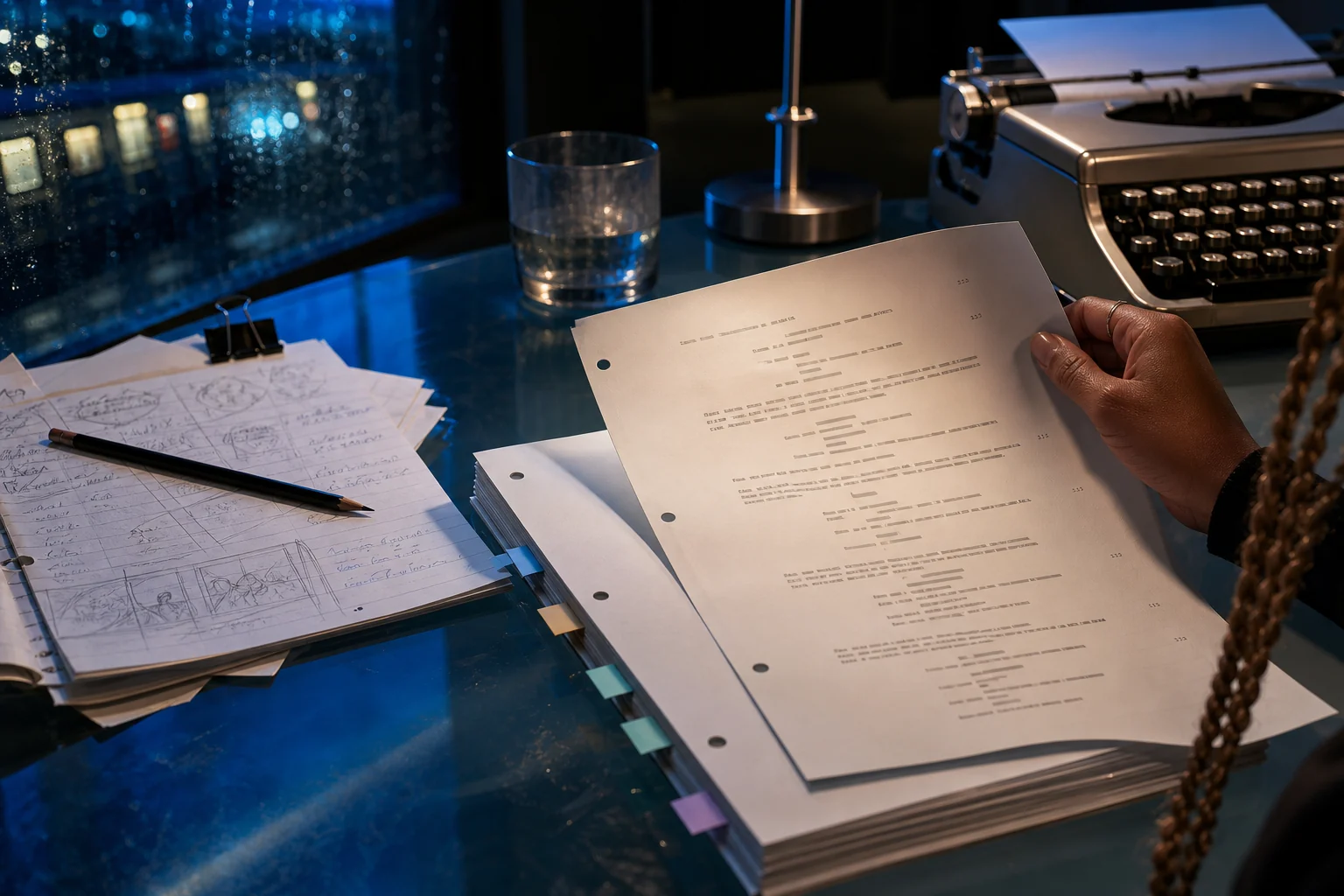
Worked example · Example diagnosis
A stronger diagnosis connects the feeling to a mechanism: the protagonist repeats the same safe tactic after the midpoint, so pressure never forces a new choice.
The workflow
Move from symptom to root cause, then test a focused prescription against the rest of the story.
Start with the felt problem: slow middle, passive protagonist, flat conflict, confusing turn, or on-the-nose dialogue.
Read the outline and relevant scenes to find the missing choice, pressure, setup, tactic, or value change.
Propose a prioritized revision, check its downstream effects, and use a visual beat or storyboard when staging is part of the problem.
Explore the connected workflow
Script structure visualization
Turn scenes, beats, character pressure, locations, and turning points into a readable story map. Find pacing gaps early, then open the exact sequence that needs revision or visualization.
AI screenwriting workspace
Bring the current line, scene, character arc, outline, and storyboard into the right task at the right time. Work with focused context instead of pasting the whole project into disconnected chats.
Visual screenplay handoff
Break down an approved scene into cast, location, props, story beats, blocking, continuity notes, and storyboard handoff requirements. This is a visual production workspace—not a replacement for drafting or screenplay formatting software.
FAQ
It can help review structure, causality, character desire, scene function, pacing, setup and payoff, stakes, theme, subtext, and dialogue—depending on the problem you ask it to inspect.
No. Diagnosis identifies a root cause and suggests a focused prescription. The writer decides whether and how to revise the actual screenplay.
Yes. When a problem involves staging, spatial clarity, visual repetition, or missing escalation, a beat board or rough storyboard can expose the issue quickly.
Write or import a scene, shape its structure, and turn the screenplay into a storyboard you can refine, share, present, and export.