

Comic-making fundamentals
AI manga generator for shonen action: stage force, choice, and consequence
Shonen action reads when the reader can track the goal, positions, direction of force, impact, and response. Speed lines and dramatic close-ups help only after the encounter geography is clear.
Published by LlamaGen Editorial TeamUpdated
Quick answer
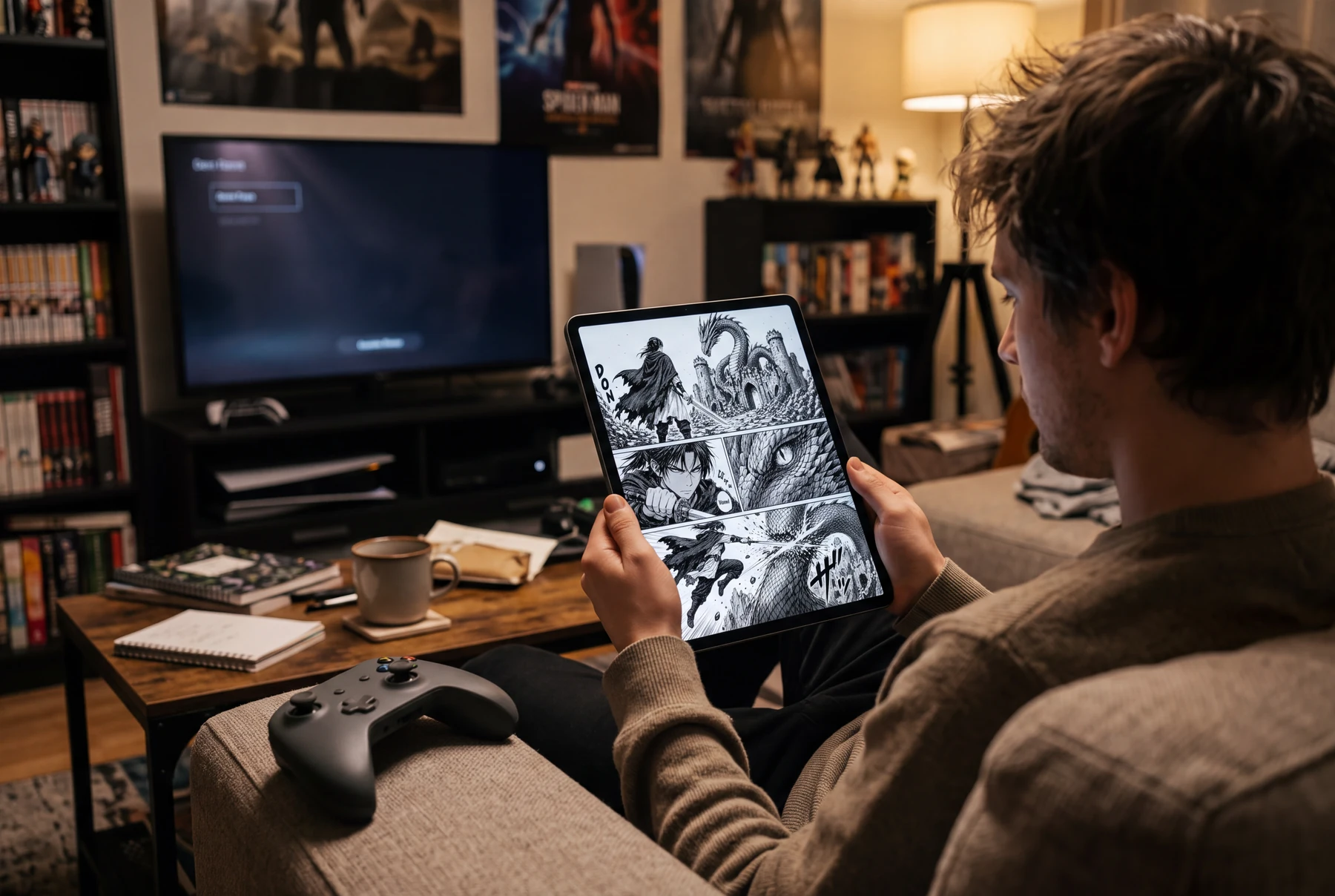
Build the sequence around a goal and obstacle, establish where opponents and landmarks are, show preparation before impact, and leave space for the consequence. Use generated action panels as drafts, then correct anatomy, weapon paths, scale, and continuity across the full page.
These references explain the underlying craft. The original exercises below are LlamaGen examples; the authors do not endorse LlamaGen.
Spectacle without orientation
Face without geography
Impact without preparation
Direction changes unexpectedly
Readable action sequence
Establish goal and positions
Prepare the force path
Show impact and consequence
Original instructional illustration with fictional characters; not a customer comic or a product screenshot.
Make the encounter understandable before making it intense
Action gains energy when readers know what can be won, lost, blocked, or reached.
- State the immediate goal
- Define the visible objective: cross the bridge, protect a teammate, interrupt the strike, or reach the gate.
- Establish positions
- Show the floor, ledge, opponent, cover, or landmark before cutting to hands and faces.
- Prepare the force
- A planted foot, drawn shoulder, compressed stance, or moving cape gives the impact a readable cause.
- Show the result
- After impact, show displacement, damage, recovery, or a new decision. Repeating impact without consequence stalls the story.
Review action as a sequence
A single spectacular image can hide broken screen direction, weapon continuity, or character scale.
- Trace the movement path
- Draw a simple arrow over the thumbnail from preparation to impact and result. If the direction reverses without explanation, add an orienting panel.
- Inspect hands and contact
- Check grip, wrist, blade, limb overlap, and the exact point of impact at full resolution.
- Control visual noise
- Keep the decisive silhouettes clear. Effects should follow the force path rather than cover the action.
- Carry damage forward
- Torn fabric, debris, weapon state, and character position must match the next panel and page.
Worked example: the ruined-gate duel
A swordsman must stop a dragon from reaching the open fortress gate.
Panel 1
Wide view establishes swordsman, dragon, gate, and escape path.
Panel 2
Medium view shows the swordsman planting one foot and raising the blade.
Panel 3
Close view aligns the dragon's eye, blade angle, and intended strike path.
Panel 4
Large impact panel shows the strike, displaced rubble, and the gate still at risk.
The action escalates because the goal and geography remain visible through preparation, focus, and impact.
Comic pages in everyday use
Compare spectacle with readable action
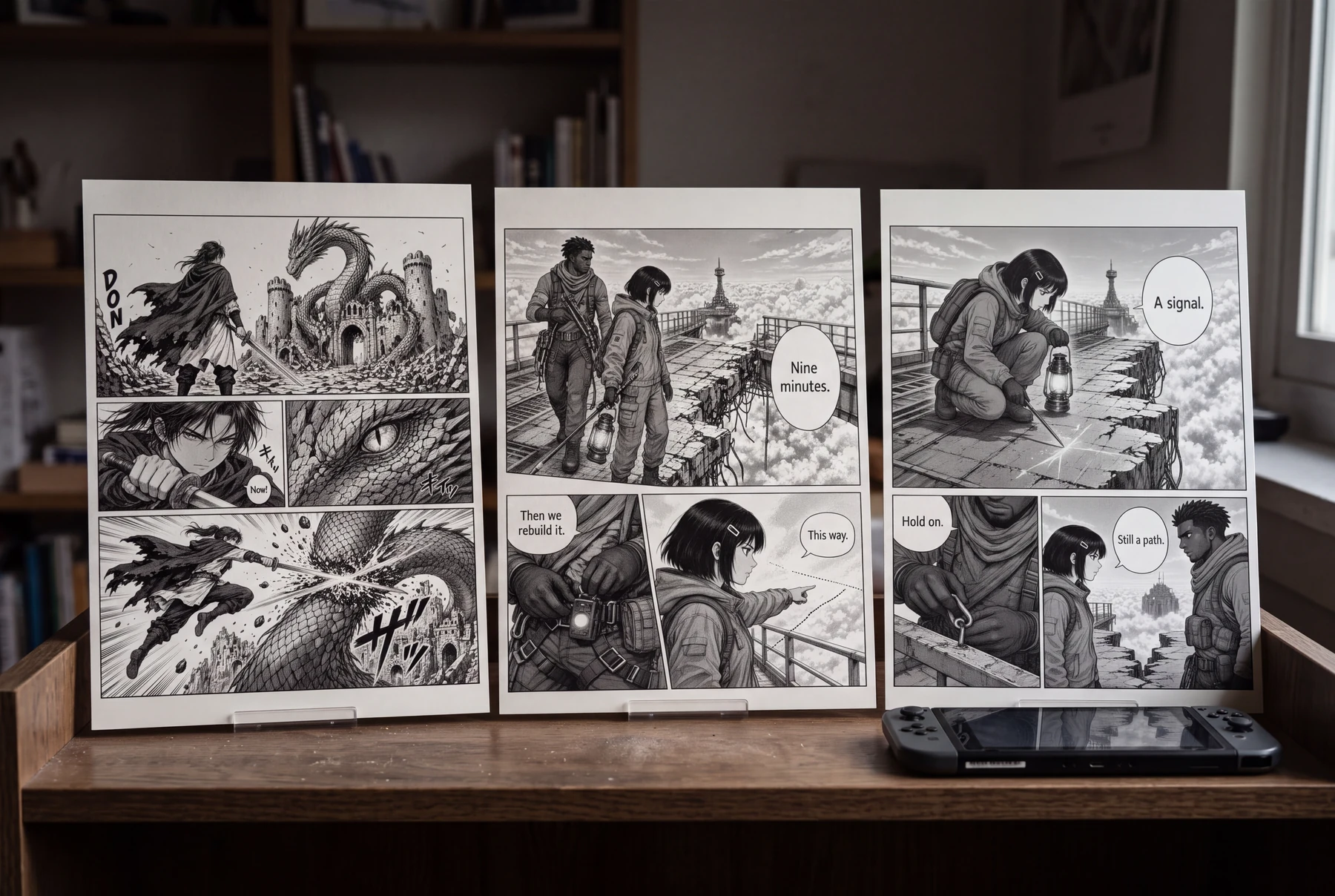
Keep one swordsman, one dragon, the ruined gate, and a single strike.
Spectacle without orientation
- Close-up of a determined face.
- Unlocated blade impact filled with effects.
- Another impact from a reversed direction.
Readable action sequence
- Wide view establishes the gate and both opponents.
- Preparation panel shows stance and strike direction.
- Impact panel preserves positions and reveals the consequence.
How to compare
- Thumbnail both versions using only silhouettes and arrows.
- Ask where each character stands before the strike.
- Check which panel shows the goal and consequence.
- Reduce effects until the contact point is readable.
What to look for
The revised sequence should remain understandable even before faces, textures, and speed lines are added.
What this exercise cannot prove
This exercise evaluates visual clarity; it does not certify combat realism, safety, or model accuracy.
Before you publish: review the page
- The goal and obstacle are visible.
- Positions and screen direction remain clear.
- Preparation explains the impact.
- Hands, weapons, and contact points are plausible.
- The consequence changes the next beat.
Frequently asked questions
How many panels should a shonen action page use?
There is no fixed count. Use enough panels to establish, prepare, strike, and show consequence without fragmenting one action into redundant images.
Should every panel use speed lines?
No. Quiet preparation and clear geography make the moments with strong motion effects more effective.
Can AI keep weapons and injuries consistent?
Treat continuity as a review task. Keep references and scene notes, then inspect and correct every panel before publishing.
Sources and further reading
- Clip Studio Paint — Official Comics and Manga Tutorials ↗
The official tutorial collection includes effect-line and comic-production instruction. Our ruined-gate exercise is original.
- MediBang Paint — How to Create Panels ↗
Official panel-creation documentation explains dividing, spacing, moving, and transforming panel materials.
Take the next step in your comic workflow
Plan a visible story beat, try the relevant tool, and review the result yourself. These guides do not promise to automatically analyze or repair your comic.