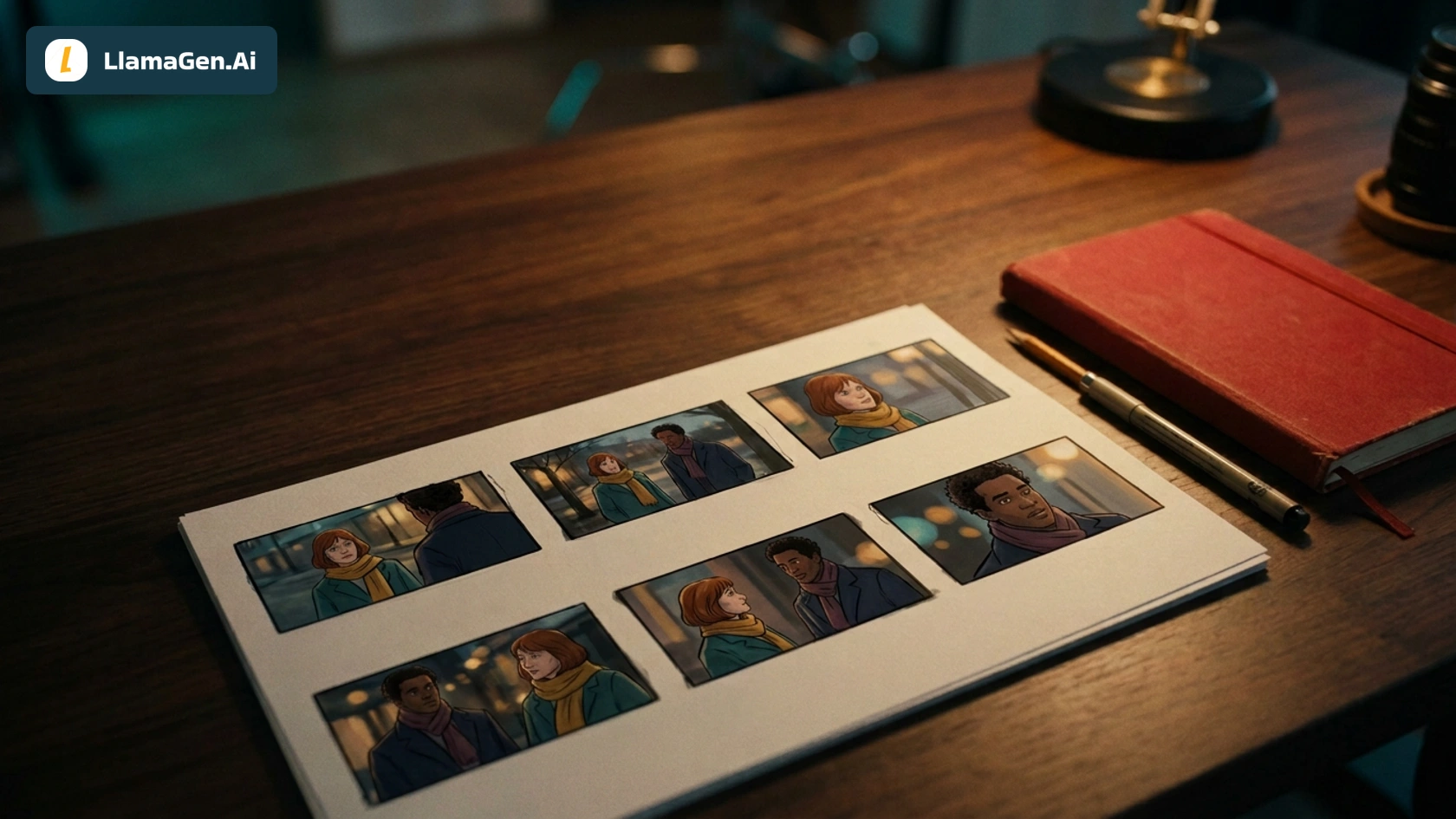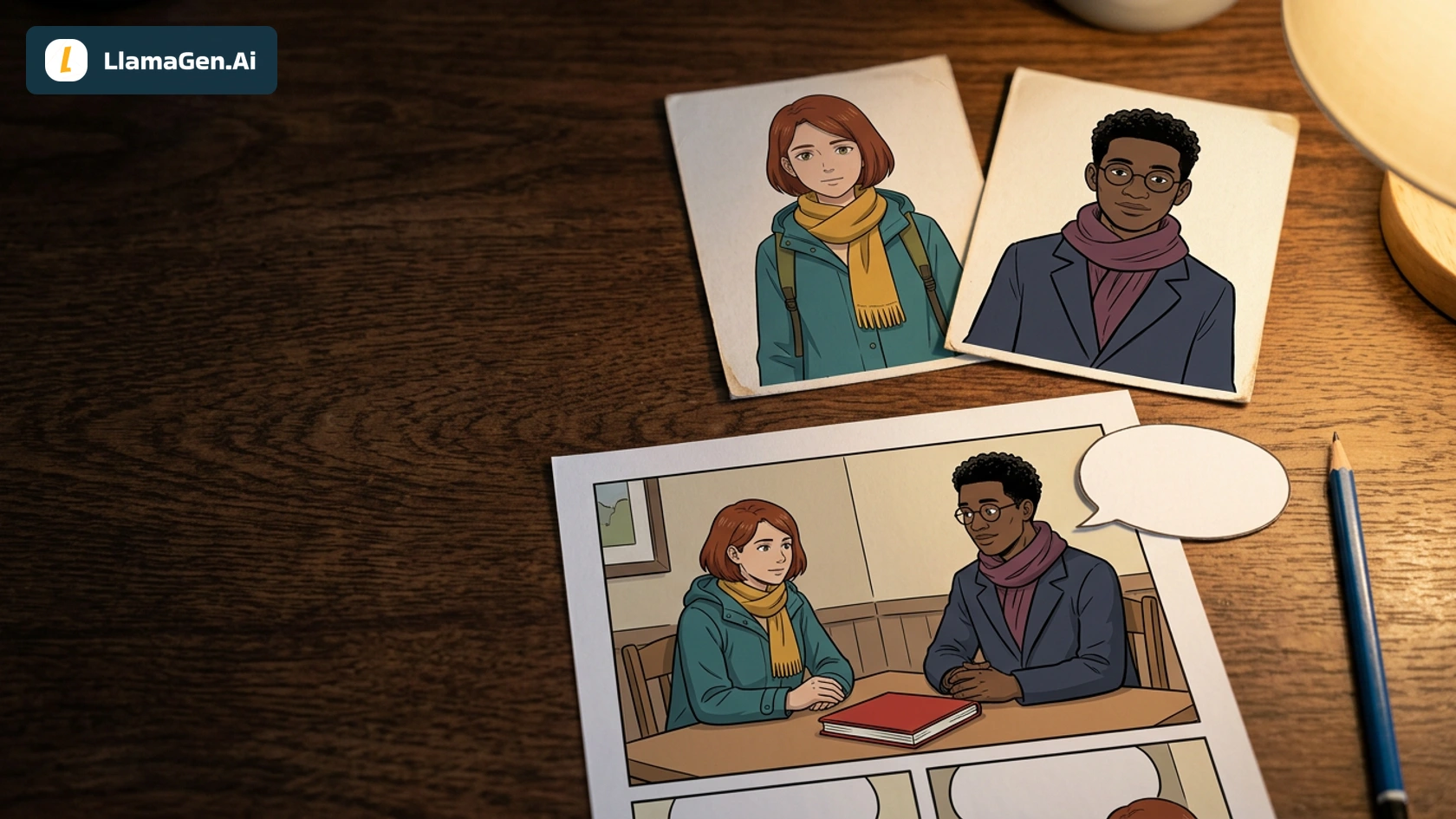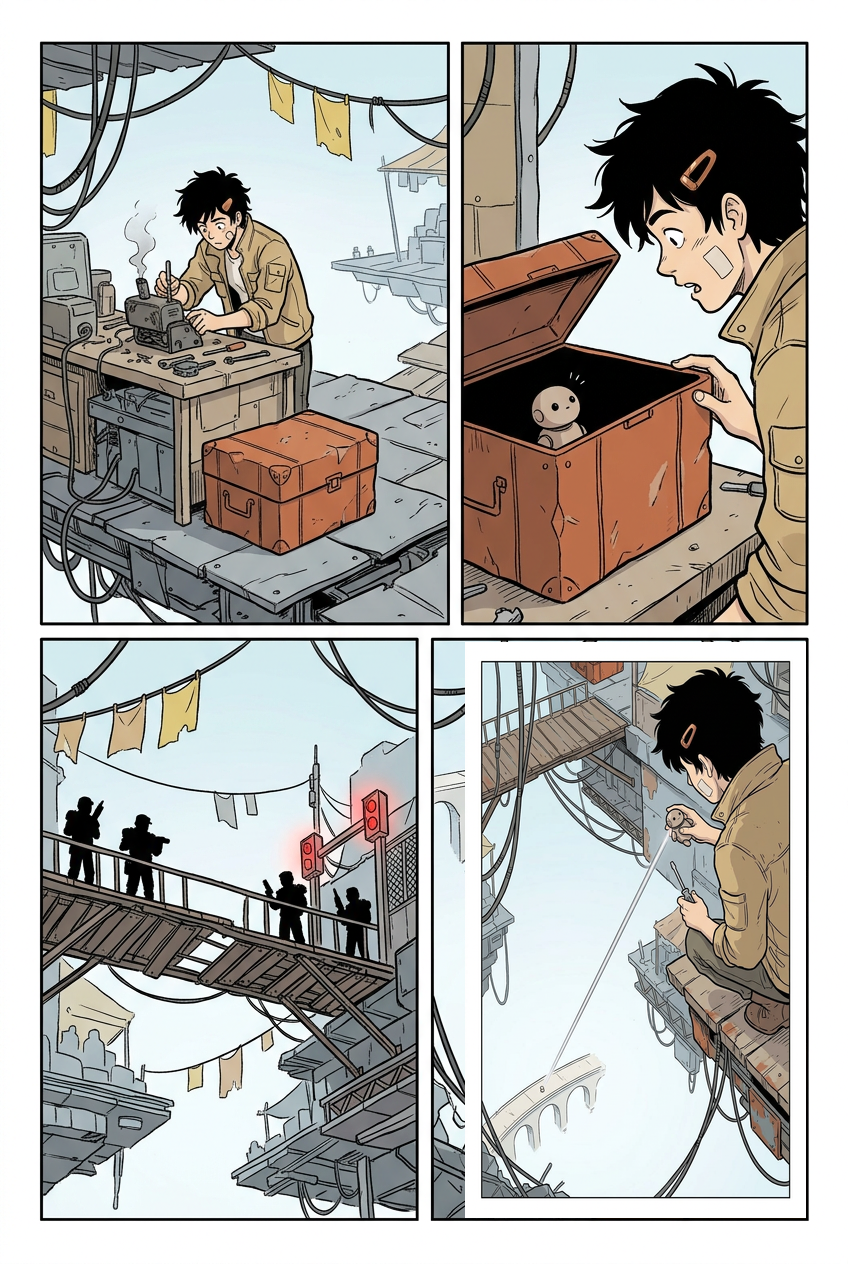

漫畫腳本範本可幫助你定義每一格中會出現什麼:可見的動作、說話者,以及確切的台詞。先從一頁開始,選擇四格或六格,然後將已核准的腳本帶到 LlamaGen.AI Script to Comic。在檢查完畫面之前,請先將最終字稿與美術分開處理。
更新於 2026 年 11 月 16 日。本次更新保留了原本 Leo/漂浮廢料市集的教學內容,並新增可下載的文字範本、兩個實際頁面輸出,以及兩個修正後的結尾分鏡。新美術採用了成年版 Leo 的詮釋。圖像透過 LlamaGen.AI 的 image playground,使用 Vertex Nano Banana 2.1 生成;替換分鏡則在本機完成拼接。這不是已登入的 Script-to-Comic 或 Studio 匯出示範。
複製實用的漫畫腳本格式
並不存在單一通用的漫畫腳本格式。有些協作者偏好電影劇本風格,有些偏好頁面與分鏡文件,也有些人直接從分鏡草圖開始。真正重要的是清晰度:動作、精確台詞與連貫性備註應該容易區分。
這個範本是一種適用於短篇漫畫頁的純文字工作格式。它很適合草稿與生成工作流程,但並不是作為出版社規定的投稿格式來呈現。
PAGE: 1
READING_DIRECTION: LEFT_TO_RIGHT
PANEL_COUNT: 4 or 6
PAGE_GOAL: [what changes by the ending]
CHARACTER_LOCK: [approved identities and props]
LOCATION_LOCK: [stable visual anchors]

PANEL: 1
SHOT: [camera distance and angle]
ACTION: [one visible moment]
SPEAKER: [name, or NONE]
DIALOGUE: [exact words, or NONE]
CAPTION: [exact words, or NONE]
SFX: [exact sound, or NONE]
CONTINUITY: [details that must survive]
LETTERING_SPACE: [reserved region]
GENERATION_NOTE: [art-only instruction]
請為每一格重複使用 PANEL 區塊。空白下載檔包含六個區塊;若是四格頁面,請刪除第 5 與第 6 區塊。對於無聲處請使用 NONE,這樣協作者才能分辨是刻意留白的沉默節奏,還是漏掉了對話。
這些都是為本教學準備的原創 UTF-8 文字檔。如果你需要可列印的工作表,請使用現有的 Comic Script Template 頁面,其中提供 A4 與 US Letter PDF 版本。上方的文字下載檔是獨立的工作文件,並不是從該 PDF 小工具下載的內容。
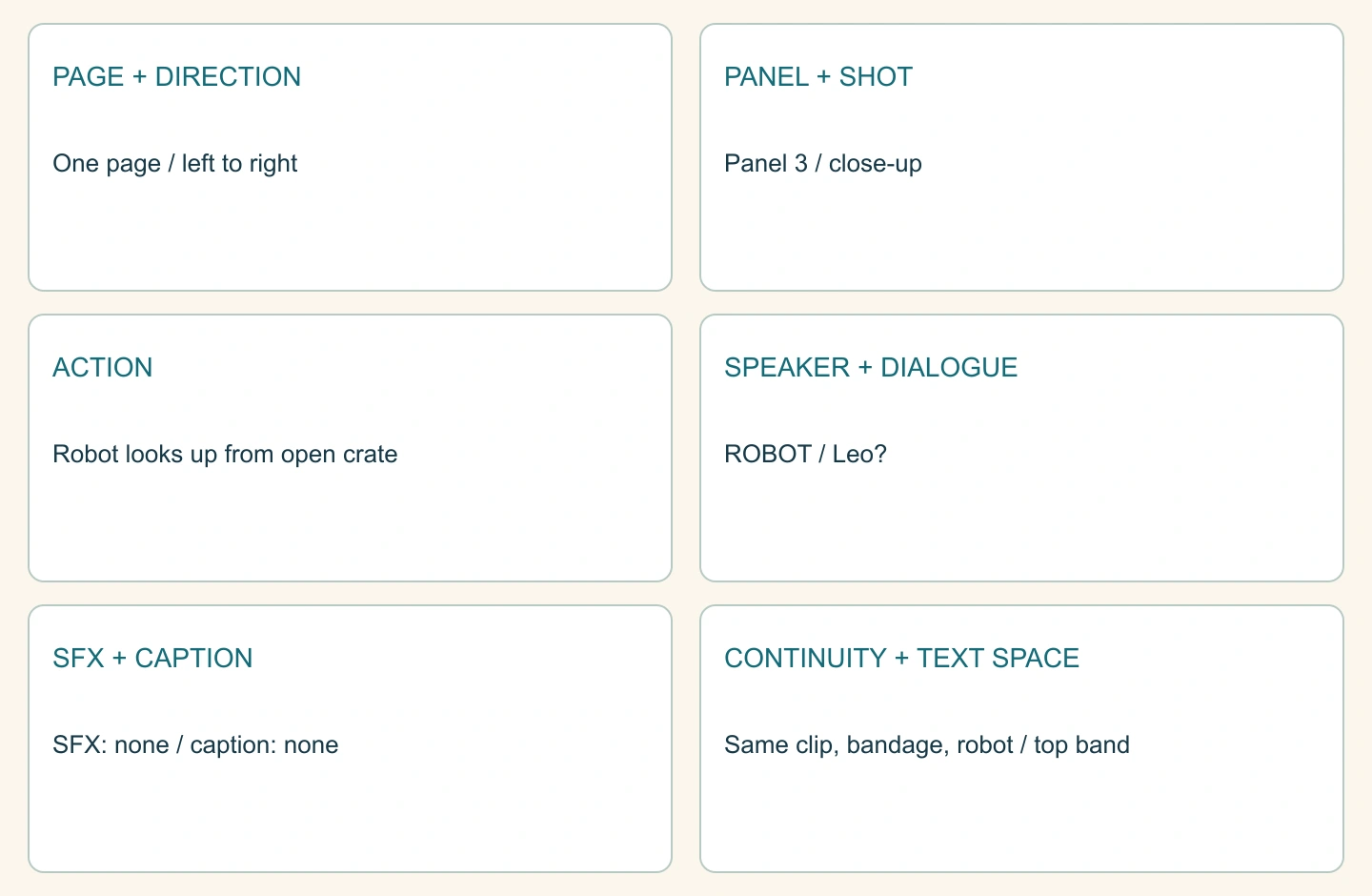
這些標籤是在本機整理完成的。例如,「機器人抬頭看」應放在 ACTION;「Leo?」則應放在 DIALOGUE,並將 ROBOT 設為 SPEAKER。像「click」這樣的聲音應放在 SFX。請不要把背景說明寫進口說台詞中。
閱讀方向與對話空間
請在頁面層級註明閱讀方向。本教學中的頁面採用由左到右、由上到下的閱讀方式。若是由右到左的漫畫頁,第一個節奏點、視線方向與對話框順序都必須從一開始就按照那種方式設計;單靠黑白畫風並不能建立閱讀順序。
在生成前先預留字稿空間,並在生成後檢查結果。像是「在機器人上方留出空間」這類備註只是請求,不是保證。在小格子中,請從一行短句或無聲開始。請檢查實際氣泡大小,而不只是依賴字數估算。panel-layout 教學說明了構圖幾何、閱讀順序與節奏如何相互配合。
原始的 Leo 逐步教學
漫畫腳本不是把小說段落拆成多行。
它是一份製作計畫。每一格都需要一個明確任務、一個可見瞬間,以及足夠的指引,讓讀者、畫師或 AI 系統理解頁面上應該出現什麼。如果你略過這一步,生成就會變成猜測:單格中塞入過多動作、鏡頭角度不一致、對話不清楚,以及無法支撐故事的背景。
本指南延續了這個系列:
- 第 1 天:如何開始一個漫畫故事
- 第 2 天:角色創建
- 第 3 天:漫畫世界觀建構
今天你將建立一個實用輸出:
A 4-6 panel comic page script with visual direction, dialogue, and generation notes.
這份腳本將成為下一篇文章中生成漫畫頁面的輸入內容。
你將建立什麼
對於第一頁,請保持結構簡單:
Panel 1: Establish the location.
Panel 2: Show the character's normal pressure.
Panel 3: Introduce the trigger.
Panel 4: Make the conflict visible.
Panel 5: Force a choice.
Panel 6: End with a hook.
每一格應包含:
- 分鏡目的
- 鏡頭類型
- 地點
- 角色
- 動作
- 情緒
- 背景錨點
- 對話或旁白
- 連貫性備註
- 圖像生成提示詞
以下是工作範本:
Panel number:
Purpose:
Shot type:
Location:
Characters:
Action:
Emotion:
Background anchors:
Dialogue/caption:
Continuity notes:
Generation prompt:
這樣的結構通常已足以引導一頁內容,而不會讓每一格都過度負擔。
為什麼分鏡規劃要先於生成
故事種子可以描述發生了什麼。角色表可以定義誰會出現。世界觀設定可以定義事情發生在哪裡。
而漫畫腳本決定的是讀者會如何體驗它。
若沒有分鏡規劃,像下面這樣的提示就太模糊了:
Leo finds a robot in the floating junk market and runs from guards.
它可能會變成一張擁擠的圖片、隨機的追逐場景,或是沒有可讀順序的畫面。分鏡腳本能把同樣的想法轉成可控的視覺節拍:
| 節拍 | 讀者看到的內容 |
|---|---|
| 鋪陳 | 開闊天空上的漂浮廢料市集 |
| 角色壓力 | Leo 在眾人面前修理失敗 |
| 觸發點 | 一個箱子自行打開 |
| 發現 | 小機器人重複他姊姊的聲音 |
| 危險 | 守衛燈號轉紅 |
| 吊鉤 | 機器人投射出一條通往不可能平台的地圖 |
現在這一頁就有了節奏感。
第 1 步:選擇這一頁的任務
每一頁都應該有一個主要任務。
對於第一頁,實用的任務包括:
- 介紹主角
- 建立世界觀
- 揭示一個奇怪的物件
- 製造一個選擇
- 以問題結尾
對於 Leo 的故事,這一頁的任務是:
Introduce Leo, show the floating junk market, reveal the robot, and end with the map hook.
這句話能幫助你避免讓這一頁試圖做太多事。
第 2 步:選擇 4–6 格的結構
一種實用的首頁結構是:
1 wide panel
3 medium panels
1 close-up
1 hook panel
對於漫畫或 webtoon,你可以調整結構:
| 格式 | 適合的結構 |
|---|---|
| 單頁漫畫 | 4–6 格,且有清楚的最終節拍 |
| Webtoon 章節開頭 | 5–7 個垂直節拍,間距更多 |
| 漫畫頁 | 5–6 格,黑白對比更強 |
| 漫畫條漫 | 3–4 格,帶有一個乾淨的笑點或揭示 |
不要一開始就用 12 格。更多分鏡會增加連貫性風險,且通常會降低開場頁的清晰度。
第 3 步:為每一格分配一個目的
一格不應該同時做五件事。
較弱的分鏡目的:
Leo is at the market, fixing a machine, feeling nervous, hearing his sister, seeing the robot, and guards arrive.
較強的分鏡序列:
Panel 1: Establish the floating market.
Panel 2: Show Leo failing a repair.
Panel 3: Show the crate opening.
Panel 4: Show Leo hearing his sister's voice.
Panel 5: Show guard lights turning red.
Panel 6: Show the robot map hook.
每一格都只保留一個核心視覺概念。
第 4 步:使用鏡頭類型控制讀者注意力
鏡頭類型會告訴讀者該看哪裡。
請使用這組簡單分類:
- 遠景:呈現場景。
- 中景:呈現角色動作。
- 特寫:呈現情緒或重要物件。
- 越肩鏡頭:呈現角色與物件之間的關係。
- 低角度:讓危險顯得更巨大。
- 細節鏡頭:聚焦於線索。
對於 Leo 這一頁:
| 分鏡 | 鏡頭類型 | 原因 |
|---|---|---|
| 1 | 遠景 | 建立漂浮市集 |
| 2 | 中景 | 呈現 Leo 在壓力下工作 |
| 3 | 細節鏡頭 | 讓箱子成為重點 |
| 4 | 特寫 | 呈現 Leo 的情緒反應 |
| 5 | 低角度 | 讓守衛燈號看起來更危險 |
| 6 | 越肩鏡頭 | 同時呈現 Leo 與那張不可能的地圖 |
鏡頭類型能讓生成提示更容易撰寫,也讓頁面更容易閱讀。
第 5 步:寫出 4–6 格腳本
以下是一份完整的首頁腳本,使用了前幾篇指南中的故事、角色表與世界觀備註。
Page job:
Introduce Leo, show the floating junk market, reveal the robot, and end with the map hook.

Panel 1:
Purpose: establish the world
Shot type: wide establishing shot
Location: Floating Junk Market
Characters: Leo as a small figure near a repair stall
Action: stacked salvage platforms hang above open sky while people move across narrow bridges
Emotion: adventurous, busy, slightly unstable
Background anchors: hanging cables, warning flags, pulley crates, open sky
Dialogue/caption: Caption: "The market floated high enough that broken things sometimes fell for minutes."
Continuity notes: keep the market above open sky; use dusty gray, faded yellow, rust orange
Generation prompt: wide cinematic manga panel of a floating junk market above open sky, stacked salvage platforms, hanging cables, warning flags, pulley crates, small repair stall, busy but readable background, no readable text

Panel 2:
Purpose: show Leo's normal pressure
Shot type: medium shot
Location: Floating Junk Market repair stall
Characters: Leo
Action: Leo tightens a screw on a wheezing machine as smoke puffs from the wrong side
Emotion: anxious focus, embarrassed determination
Background anchors: tool bench, patched metal, canvas awning, warning flags in distance
Dialogue/caption: Leo: "Almost fixed. Probably."
Continuity notes: Leo has messy black hair, copper clip, tan utility jacket, cheek bandage, dented screwdriver
Generation prompt: medium manga panel of Leo, nervous apprentice repair kid, tightening a screw on a damaged machine at a floating market repair stall, smoke puff, anxious focus, preserve copper hair clip, cheek bandage, tan utility jacket, dented screwdriver

Panel 3:
Purpose: introduce the trigger
Shot type: detail shot
Location: repair stall floor
Characters: Leo's hand only
Action: a dented delivery crate clicks open by itself beside Leo's boot
Emotion: quiet surprise
Background anchors: scratched metal floor, crate latch, loose bolts
Dialogue/caption: SFX: click
Continuity notes: keep crate dented and old; avoid extra characters
Generation prompt: close detail manga panel of a dented delivery crate on scratched metal floor beside a worn boot, latch opening by itself, loose bolts, tense quiet moment, no readable text

Panel 4:
Purpose: make the discovery emotional
Shot type: close-up
Location: repair stall
Characters: Leo, tiny robot
Action: the tiny robot looks up from the crate and repeats a voice Leo recognizes
Emotion: shock, hope, fear
Background anchors: crate edge, tool shadows, soft sky light
Dialogue/caption: Robot: "Leo?"
Continuity notes: Leo's face should show recognition; keep robot small and simple
Generation prompt: close-up cinematic manga panel of Leo staring at a tiny robot inside a dented crate, shocked expression, hopeful fear, soft daylight, tool shadows, preserve Leo's face details and outfit anchors

Panel 5:
Purpose: add danger
Shot type: low angle
Location: Guard Checkpoint Bridge near the market
Characters: guard silhouettes, Leo at the foreground edge
Action: red signal lights switch on across the bridge while guards turn toward the repair stall
Emotion: danger, exposure, urgency
Background anchors: steel gate ribs, red warning lights, narrow bridge
Dialogue/caption: Guard: "Seal the bridge."
Continuity notes: checkpoint uses red warning lights; keep guards as silhouettes
Generation prompt: low angle manga panel of a narrow guard checkpoint bridge, steel gate ribs, red warning lights turning on, guard silhouettes looking toward market repair stall, tense atmosphere, no readable signs

Panel 6:
Purpose: end with a hook
Shot type: over-the-shoulder
Location: repair stall looking toward open sky
Characters: Leo, tiny robot
Action: the robot projects a map line toward an unlisted platform below the market
Emotion: mystery, impossible choice
Background anchors: open sky, hanging cables, faint silver route line, distant pale arches
Dialogue/caption: Caption: "The map pointed down, to a place the market said did not exist."
Continuity notes: show Leo holding the dented screwdriver; make the map visual but avoid readable words
Generation prompt: over-the-shoulder manga panel of Leo holding a tiny robot as it projects a glowing map line toward an impossible hidden platform below a floating market, open sky, hanging cables, distant pale arches, mysterious silver light, no readable text
這就是一份可用的 6 格首頁腳本。
第 6 步:把腳本轉成 LlamaGen.AI 輸入
當腳本被視為結構化的視覺簡報,而不是鬆散的故事段落時,LlamaGen.AI 的效果會最好。清楚的分鏡分隔更容易控制節奏、鏡頭、角色與連貫性。
你可以用 LlamaGen.AI 來建立:
- 完整漫畫條或漫畫頁
- 逐格草稿
- 鏡頭角度變化版本
- 對話與旁白位置安排
- 單格重繪
- 角色與場景錨點之間的一致性檢查
先貼上:
Story seed:
[paste Day 1 story seed]

Character sheet:
[paste Day 2 character sheet]

World bible:
[paste Day 3 locations and style rules]

Panel script:
[paste the 4-6 panel script]
接著請它產生第一版視覺草稿。不要一開始就要求最終精修。首先要檢查序列是否可讀、角色是否保持一致,以及場景是否在各格之間維持連貫。
在第一版草稿後做一次簡單審查,有助於抓出常見問題:
- 第 1 格是否能清楚讀成場景建立?
- Leo 在每一格中是否仍符合角色錨點?
- 箱子、螺絲起子與機器人等道具是否保持一致?
- 這一頁是否能讓視線順暢地從鋪陳走到吊鉤?
- 是否有任何對話更適合改成旁白,或直接刪除?
可直接複製的提示範例
使用以下提示,將備註轉成乾淨的分鏡腳本。
提示 1:把故事備註轉成 6 格腳本
Turn this comic story seed, character sheet, and world bible into a 6-panel first page script:
[paste story seed]
[paste character sheet]
[paste world bible]

For each panel include:
- purpose
- shot type
- location
- characters
- action
- emotion
- background anchors
- dialogue or caption
- continuity notes
- image-generation prompt
Keep each panel focused on one visual beat.
提示 2:改善分鏡節奏
Review this comic panel script for pacing:
[paste panel script]

Find:
- panels doing too many jobs
- missing establishing shots
- unclear transitions
- weak final hook
- dialogue that could be more visual
Return a revised 4-6 panel version.
提示 3:把段落轉成分鏡節拍
Convert this story paragraph into comic panel beats:
[paste paragraph]

Output:
Panel number | Beat purpose | Visible action | Shot type | Emotion | Hook value
Limit it to 4-6 panels.
提示 4:建立可供 AI 使用的分鏡提示
Convert this comic script into AI-ready panel prompts:
[paste panel script]

Rules:
- preserve character anchors
- preserve location anchors
- keep prompts concise
- include shot type and emotion
- avoid readable text unless it is handled separately as dialogue
提示 5:在生成前檢查連貫性
Check this panel script for continuity risks before generation:
[paste panel script]

Review:
- character appearance consistency
- location consistency
- prop continuity
- camera flow
- dialogue clarity
- final hook strength
Return a short fix list and a revised script.
漫畫腳本檢查清單
在你生成美術之前,請檢查你的腳本:
- 這一頁有一個主要任務。
- 這一頁使用 4–6 格。
- 每一格都有一個明確目的。
- 第 1 格建立了場景地點。
- 角色以一致的視覺錨點出現。
- 世界觀錨點清楚可見。
- 各格之間有不同的鏡頭類型。
- 對話夠短,能放得下。
- 動作是看得見的,而不只是被解釋。
- 最後一格創造了吊鉤。
- 每一格都有連貫性備註。
- 每一格都有可供 AI 使用的生成提示。
應避免的常見錯誤
請留意以下問題:
- 把完整場景寫進單一分鏡裡
- 在讀者還不知道地點之前就從特寫開始
- 每一格都使用相同鏡頭角度
- 在畫面尚未存在前就加入過多對話
- 在分鏡之間忘記道具
- 在讀者理解第一個場景前就更換地點
- 頁面結尾沒有問題或視覺驚喜
如果腳本形式已經讓人困惑,那麼生成後通常只會更混亂。
同一場景,四格還是六格?
新的下載檔改編自與上方教學相同的原始前提:Leo 在漂浮廢料市集中修理設備、發現一個小機器人、看到守衛警示,並跟隨機器人的線索前往下方隱藏的平台。圖像版改編將 Leo 處理為成年學徒。被辨認出的機器人聲音仍保留在獨立的對話腳本中;沒有字稿的圖像無法證明它使用的是誰的聲音。
新的六格版本將場景與修理動作合併在開場分鏡中,接著讓 Leo 手持機器人獨立成為一個節拍,再進入最終路線揭示。這是對先前六格範例的編輯性重排,並不是宣稱兩份腳本完全相同。
| 故事任務 | 四格下載版 | 六格下載版 |
|---|---|---|
| 建立場景與壓力 | 1:在漂浮攤位進行修理 | 1:在漂浮攤位進行修理 |
| 發現 | 2:機器人在已打開的箱子中可見 | 2:鎖扣打開;3:機器人抬頭 |
| 警示 | 3:守衛紅色訊號 | 4:守衛紅色訊號 |
| 讓決定更明確 | 壓縮進轉場中 | 5:Leo 在邊緣抱著機器人 |
| 吊鉤 | 4:路線指向市集下方 | 6:路線指向市集下方 |
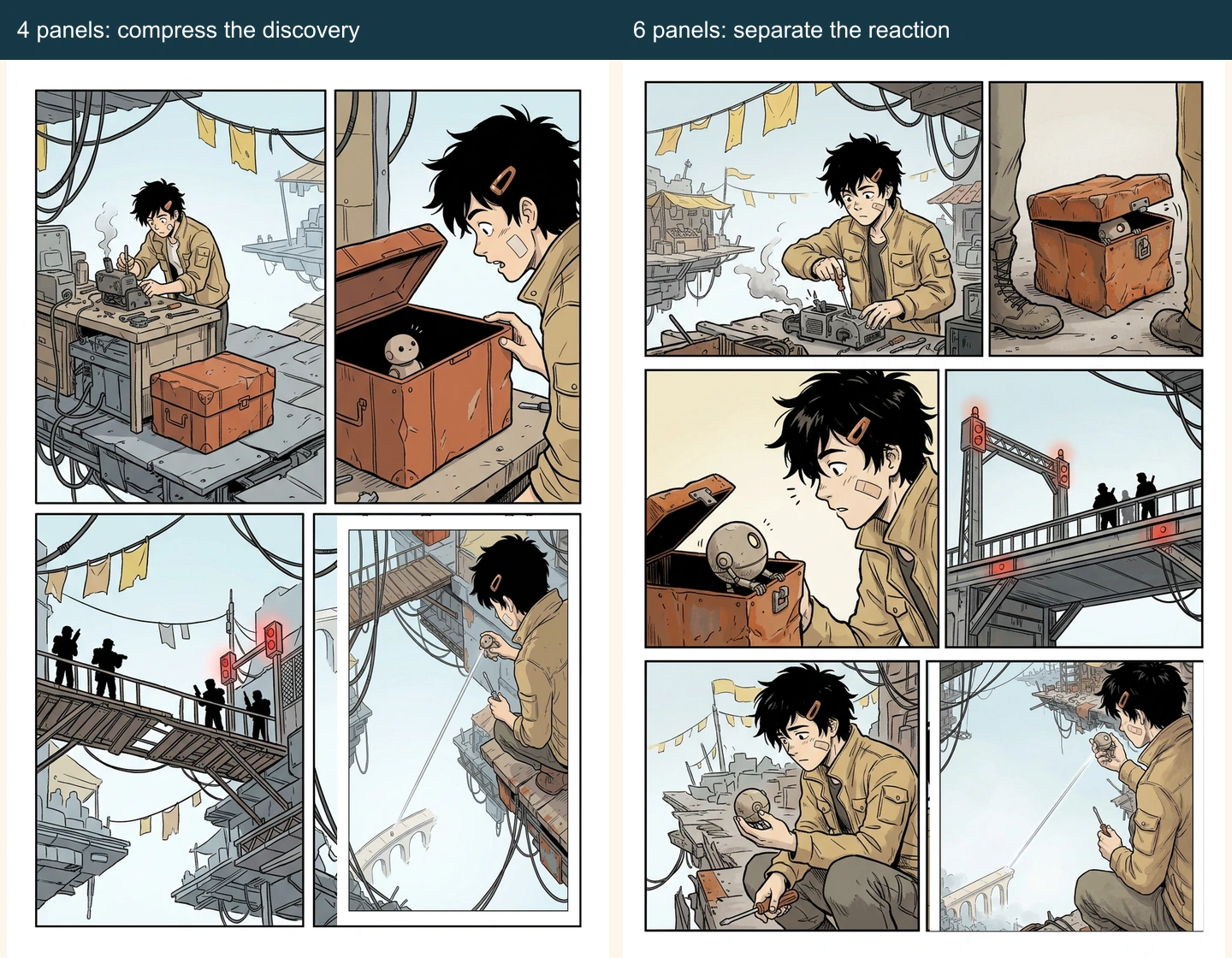
兩者都是真實的 image-playground 輸出,並在本機替換了最終分鏡。它們是在相同的書面角色與場景鎖定條件下,分別獨立提出的請求。它們不是以固定 seed 或共享鎖定參考生成,因此 Leo 的比例與機器人的具體設計在不同版本之間有所差異。請將每一頁與其各自核准的腳本比較;不要把這當成只比較分鏡數量的受控基準測試。
四格省略了獨立的鎖扣與定位節拍。六格則讓這些變化更容易檢查,但會使用更多頁面空間。兩者都不會自動更好。若來源段落較長,請使用 Novel Chapter to Comic Beats 先判斷哪些內容必須保留,再決定分鏡數量。
一次真實的 script-to-image 修正
兩個第一版輸出都把拱形目的地放在 Leo 上方,儘管核准的結尾明確指定平台位於市集下方。這改變了線索的方向。第一版四格圖像也在遠處拱門附近放了一個類似小機器人的身影,使原本應該只有單一機器人的場景變得不夠清楚。
我們保留了那些第一版輸出,並為每個版本各自生成了一個新的最終分鏡。修正內容指定為:高視角向下看、Leo 與手持機器人位於右上、銀色路線向左下方下降至淡色拱門,且目標平台上沒有第二個機器人。
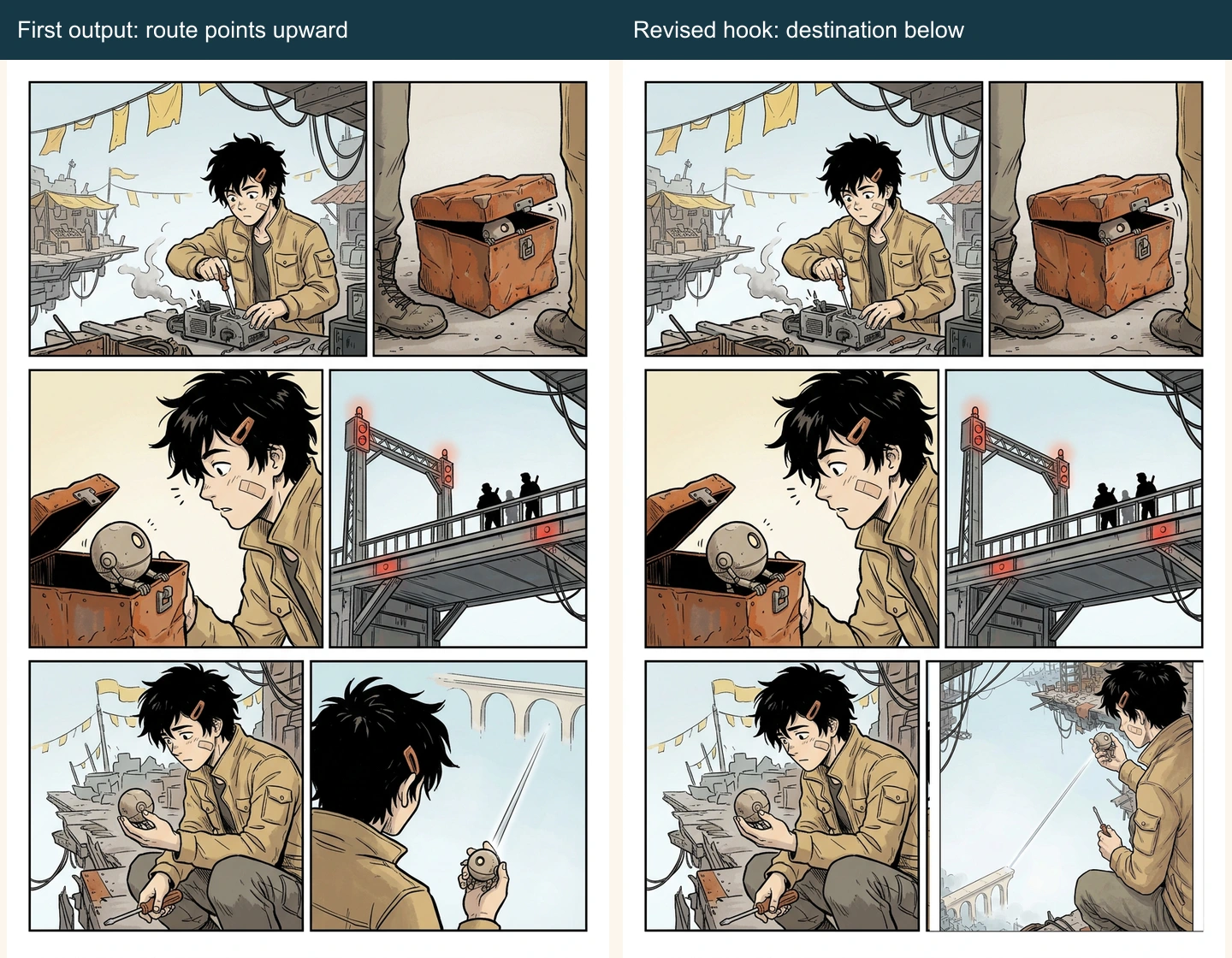
在本機拼接時,只替換了最後一格的矩形區域。像素比對確認每一頁在該矩形之外都沒有任何像素變動。這是本機拼接流程的特性,並不是原生 Studio 分鏡鎖定功能的宣稱。替換內容改變了所選區域內的姿勢、鏡頭、平台與較小的服裝細節。
現在向下的線索已經清楚可見。在六格替換版中,外露的機器人仍可辨識為圓潤外型,但其外殼與前幾格不同。四格替換版在平台邊緣也有一個很小的記號。在把任一頁視為最終出版母版前,請以原尺寸檢查這類小細節。本教學示範的是經過檢視的 script-to-art 迭代流程,而不是完美連貫性或最終印刷就緒狀態。
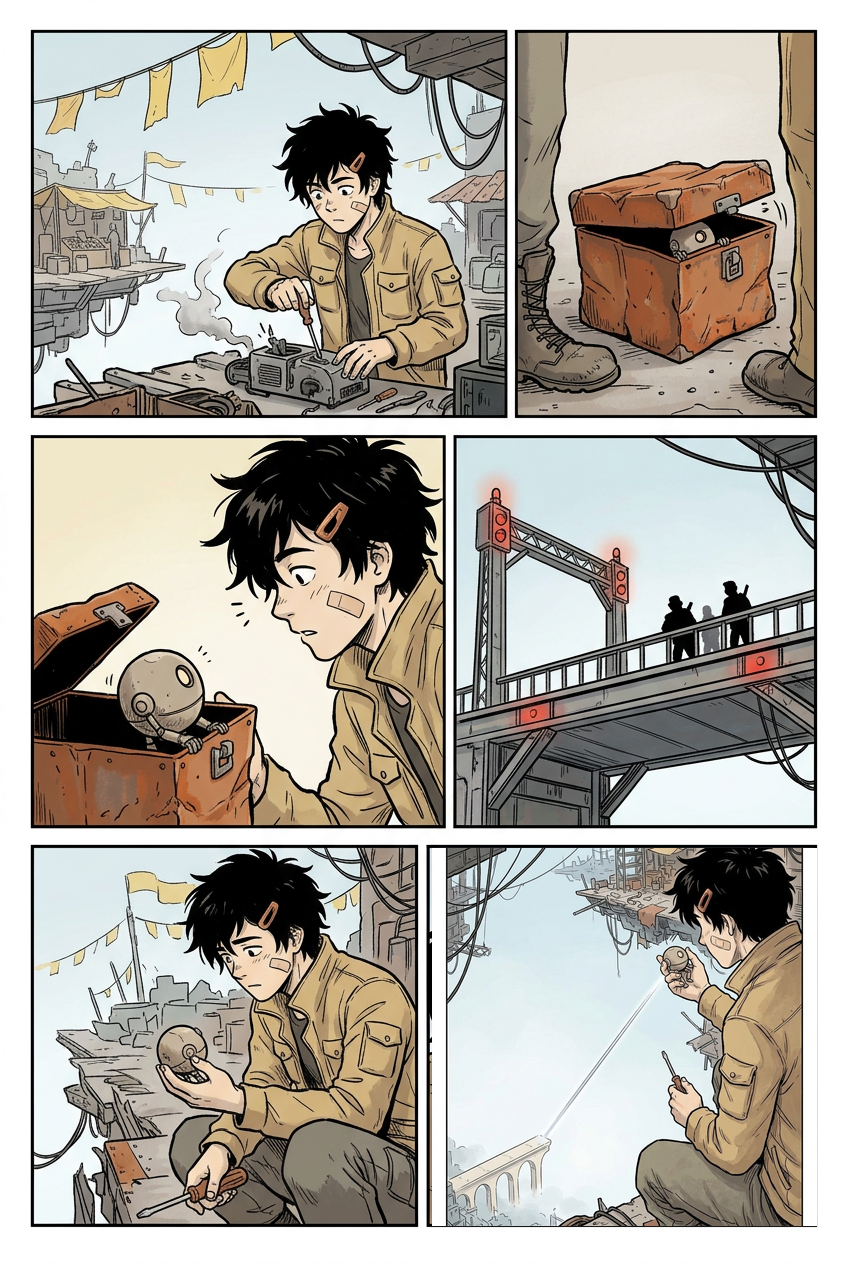
這張圖包含六個主要分鏡。修理、鎖扣、機器人、守衛訊號、定位與向下路線都依照預定順序出現。「Leo?」與守衛的台詞仍保留在文字文件中;美術中沒有生成任何精確對話。開啟完整六格 PNG 或 開啟四格 PNG 來與已填寫的下載檔比較。
當你在 Script to Comic 中使用這個範本時,請貼上已核准的分鏡區塊、在可行時附上標準參考,並根據動作與連貫性欄位檢查回傳草稿。聲音檔、語音表演或精確對話框不應從純美術請求中推定。
下一步:生成漫畫頁
本系列的下一篇文章是 Generate a Comic Page。該指南會把這份分鏡腳本轉成完整的視覺漫畫頁。
上一步:漫畫世界觀建構
從第 1 天開始:如何開始一個漫畫故事
當你準備好生成第一版視覺草稿時,請從這裡開始:
Related hot tags
漫畫
漫畫腳本
教學
故事敘述
熱門創作工具
將靈感變成下一個故事
使用 LlamaGen 創作漫畫、分鏡與風格化照片。

點燃年輕人的夢想
讓數百萬個故事活靈活現
彙整最新的 LlamaGen 功能發布、產品強化、設計更新與重要錯誤修正。