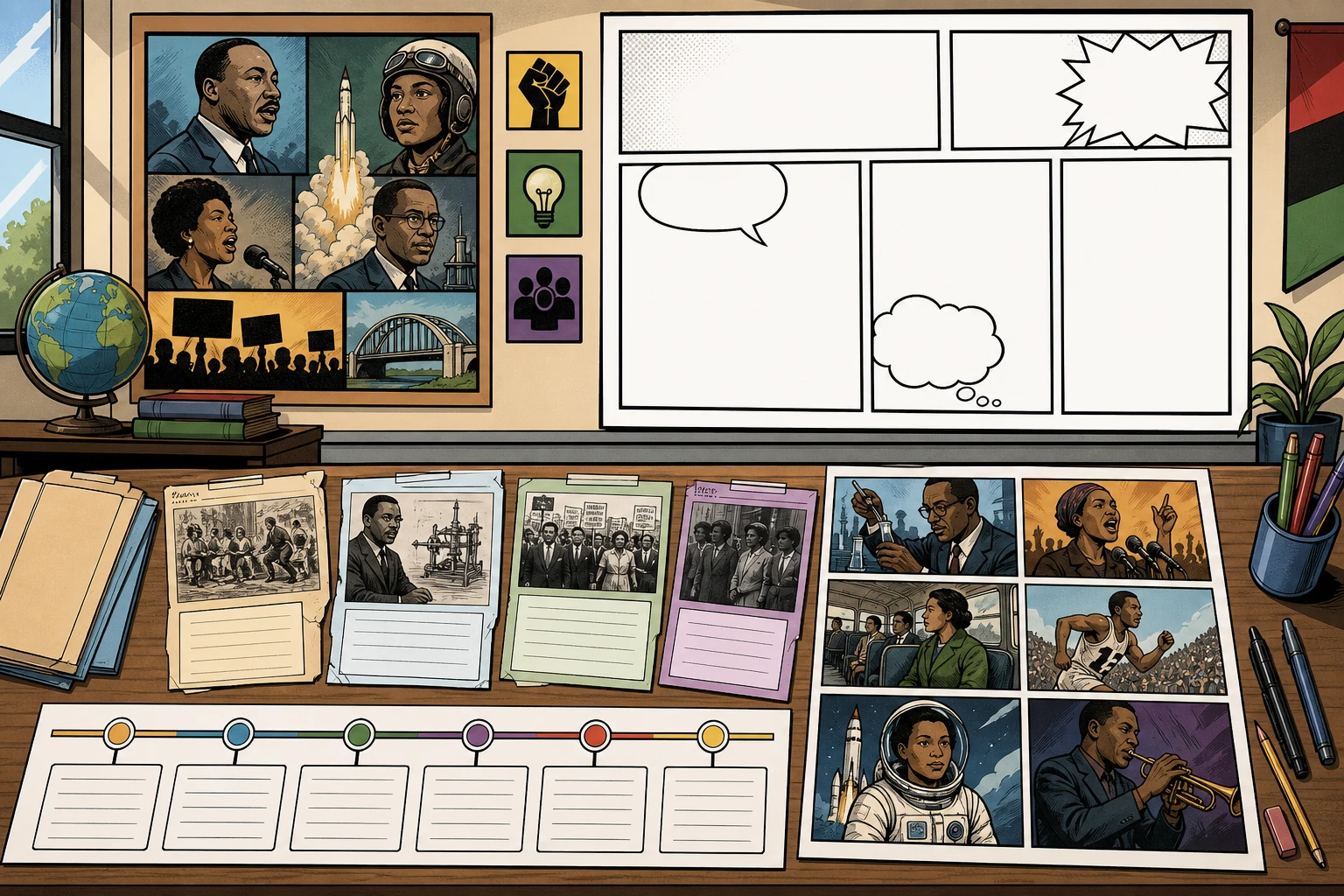
Lesson
Lesson-to-comic board
A source-first workflow where the timeline and learning goal shape the final panels.


Classroom history comic generator
Turn teacher-provided sources into timelines, age-appropriate scripts, biography comics, classroom worksheets and editable comic panels that help students understand people, events and movements.
View Classroom ExamplesPaste your story, then choose the page count and layout.
Sources
Paste teacher-selected references before generating scenes or dialogue.
Timeline
Organize dates, causes, events and outcomes before the comic script.
Worksheet
Create editable classroom handouts, captions, prompts and discussion questions.
Classroom examples
Use comics to support reading, discussion and projects while keeping source review at the center of the workflow.
Lesson
A source-first workflow where the timeline and learning goal shape the final panels.
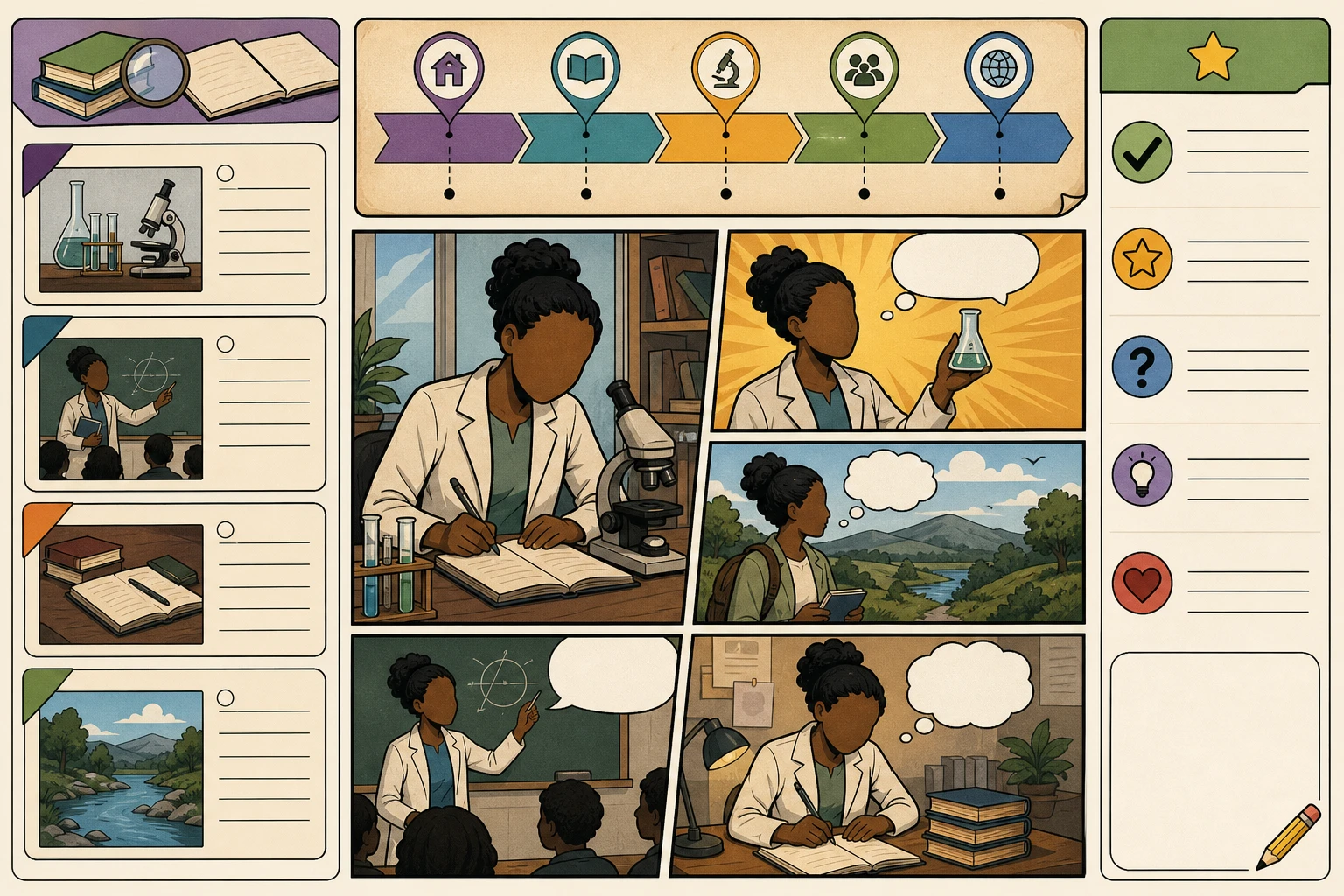
Biography
Turn a historical figure lesson into a short, age-appropriate panel sequence with reviewable captions.
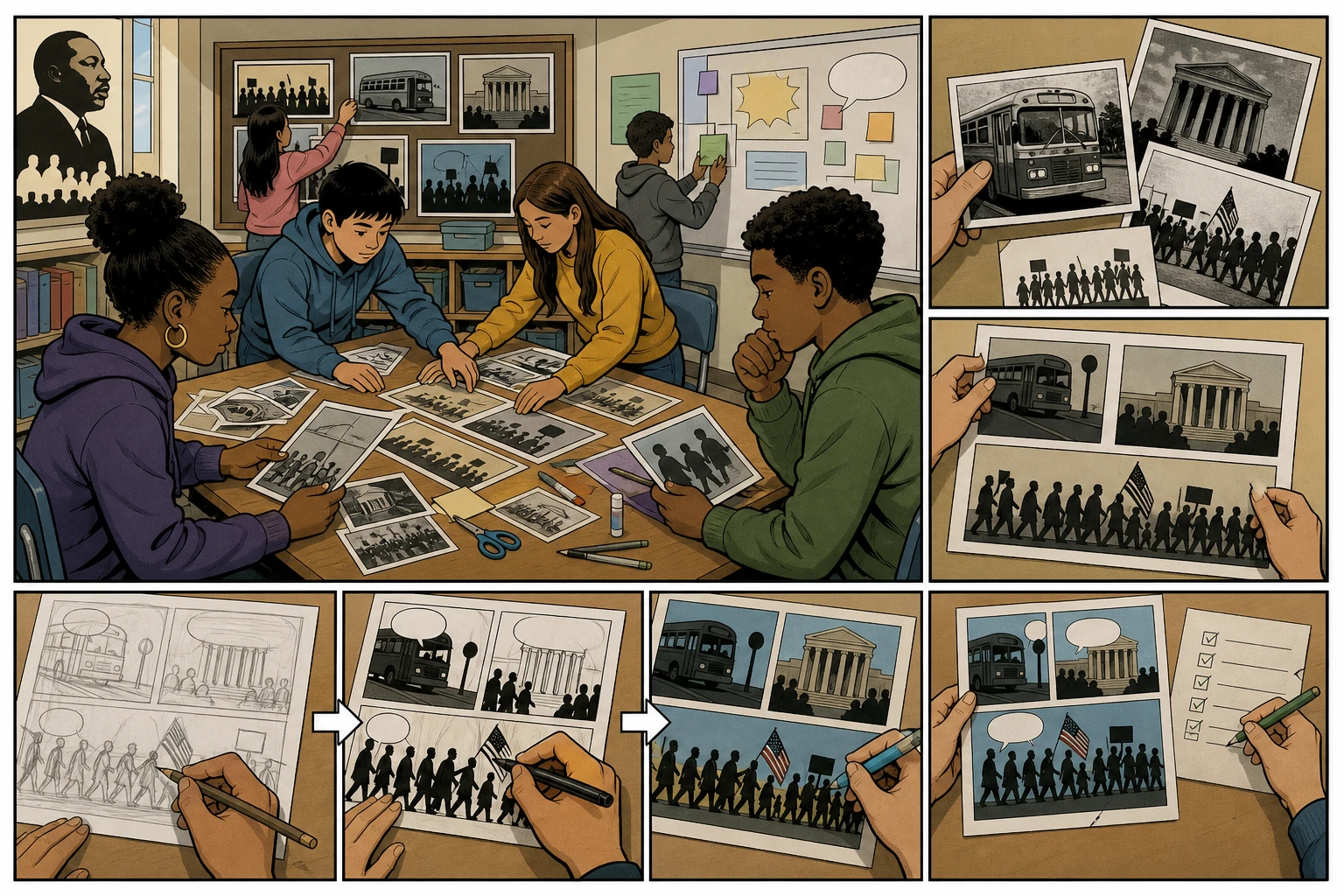
Project
Create a guided classroom project from teacher-provided sources about a movement, event or local history topic.
Classroom features
The goal is not to let AI freestyle history. The goal is to help teachers turn vetted material into visual lessons students can read, discuss and revise.
Paste textbook passages, primary-source excerpts, teacher notes, museum text or classroom materials before generating the comic.
Structure dates, causes, locations, people, events and consequences before scenes and dialogue are written.
Adapt reading level, panel count, vocabulary and tone for elementary, middle school, high school or family activities.
Separate historical claims from fictionalized dialogue or narration so teachers can review what is factual.
Create short comics about historical figures, inventors, artists, organizers, writers, soldiers, athletes and local leaders.
Generate captions, discussion questions, vocabulary, reflection prompts and PDF-ready classroom handouts.
Teacher workflow
Use a source-first process so students get visual storytelling without losing historical accountability.
01
Add the teacher-provided text, links, notes or excerpts that the comic must follow.
02
Ask for a draft timeline and check the dates, people, places and cause-effect relationships.
03
Create an age-appropriate panel script with clear labels for facts, narration and fictionalized dialogue.
04
Edit claims, captions and visuals, then export images, worksheets, PDF assets or presentation materials.
Topic coverage
These examples can become classroom sections, galleries and FAQs before any seasonal page is split out.
01
Create a source-guided biography comic about courage, strategy, risk and leadership with grade-appropriate context.
02
Turn selected readings into panels about abolition, writing, public speech and civic action.
03
Make a source-based biography comic for science, math and space history lessons.
04
Build a timeline and comic script around a teacher-selected event, location, person or primary source set.
05
Create a classroom activity around June 19, emancipation history, celebration, memory and local community learning.
06
Help students create biography, timeline or event-based comics during February while preparing the page months earlier.
Prompt recipes
Replace the bracketed source with your own classroom materials before generating panels.
Using only the teacher-provided source below, create a 4-panel biography comic script for middle school students. First summarize the timeline. Then write panel captions. Mark each line as FACT, NARRATION or FICTIONALIZED DIALOGUE. Source: [paste source here].
Turn this civil rights history lesson into a 6-panel classroom comic. Include context, problem, action, opposition, outcome and reflection. Use age-appropriate language. Do not add facts that are not in the provided source. Source: [paste source here].
Create a printable worksheet from this Black history comic script. Include vocabulary, three discussion questions, one reflection prompt and a source-check box for the teacher. Keep the tone respectful and classroom-ready.
Historical accuracy
Real people, events and movements require source-based generation and teacher review. The page should make that boundary explicit.
01
Do not let the model invent dates, quotes, motives or outcomes. Paste the sources you want students to learn from.
02
Label factual narration separately from invented classroom dialogue or scene-setting text.
03
Review the timeline, captions and images before using the comic as a handout, slide or public resource.
Seasonal SEO rhythm
Black history education is not only a February or June topic. Build content ahead of the moments when teachers, parents and programs start planning.
| Moment | Best publishing window | Content focus |
|---|---|---|
| Black History Month | October to January | Biography comics, classroom project templates, source packets and student worksheets. |
| Juneteenth | March to May | Juneteenth lessons, emancipation timelines, community memory and family activities. |
| Back to School | June to August | History project rubrics, classroom comic generators and first-unit activities. |
| HBCU Homecoming | July to September | HBCU history, alumni stories, campus culture and heritage projects. |
| Holiday family stories | September to November | Family history comics, intergenerational storytelling and keepsake worksheets. |
Move from classroom comics to original character, superhero and speculative story creation.
01
Create consistent Black anime OCs and manga-ready character sheets.
02
Create an original Black superhero and first comic page.
03
Build Black speculative worlds, casts and comic sequences.
04
Generate classroom comic strips and visual story drafts.
FAQ
Questions for teachers, parents, students and cultural programs.
Ready when you are
Start with the approved creative direction, then refine characters, pages, and production assets in the LlamaGen studio.