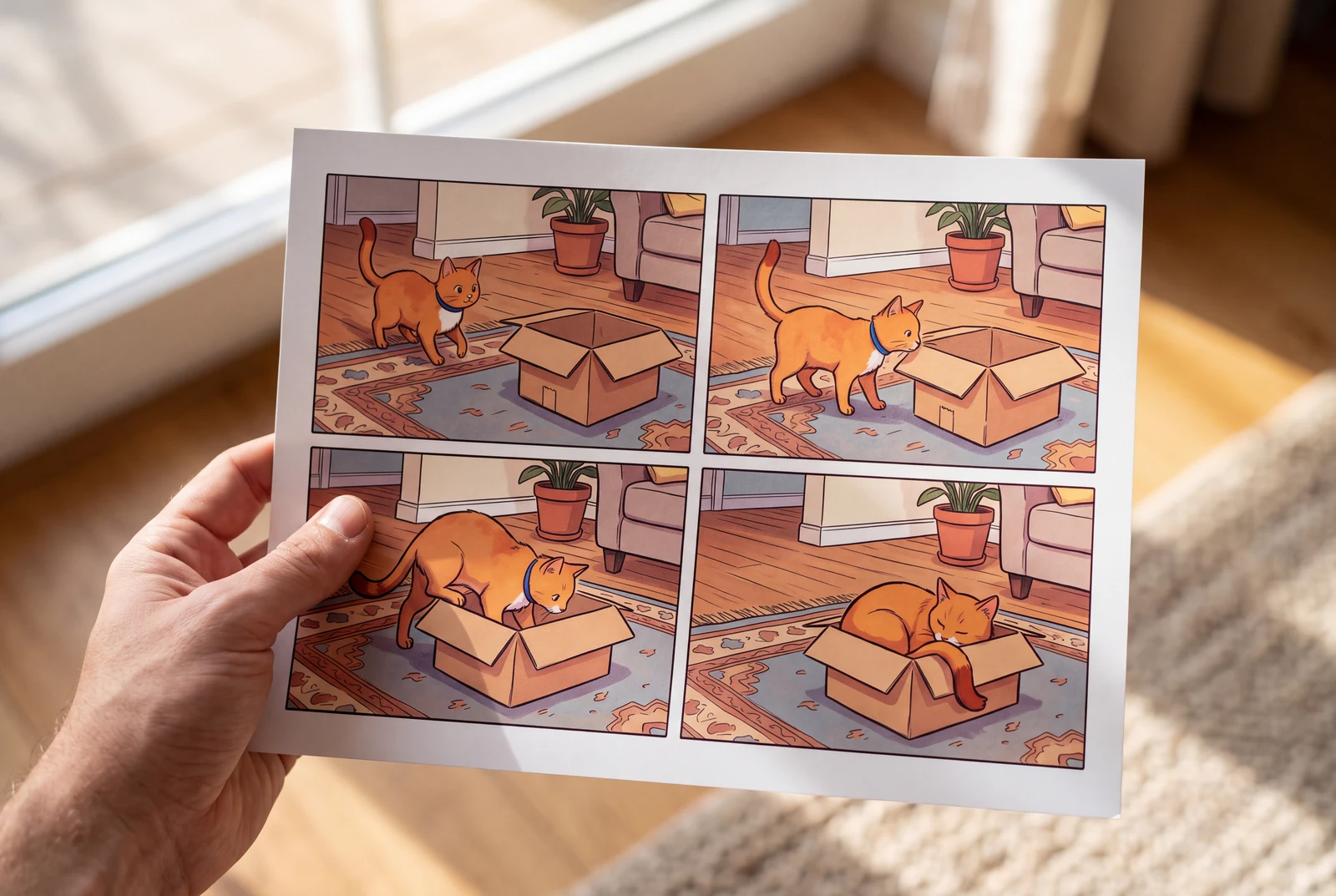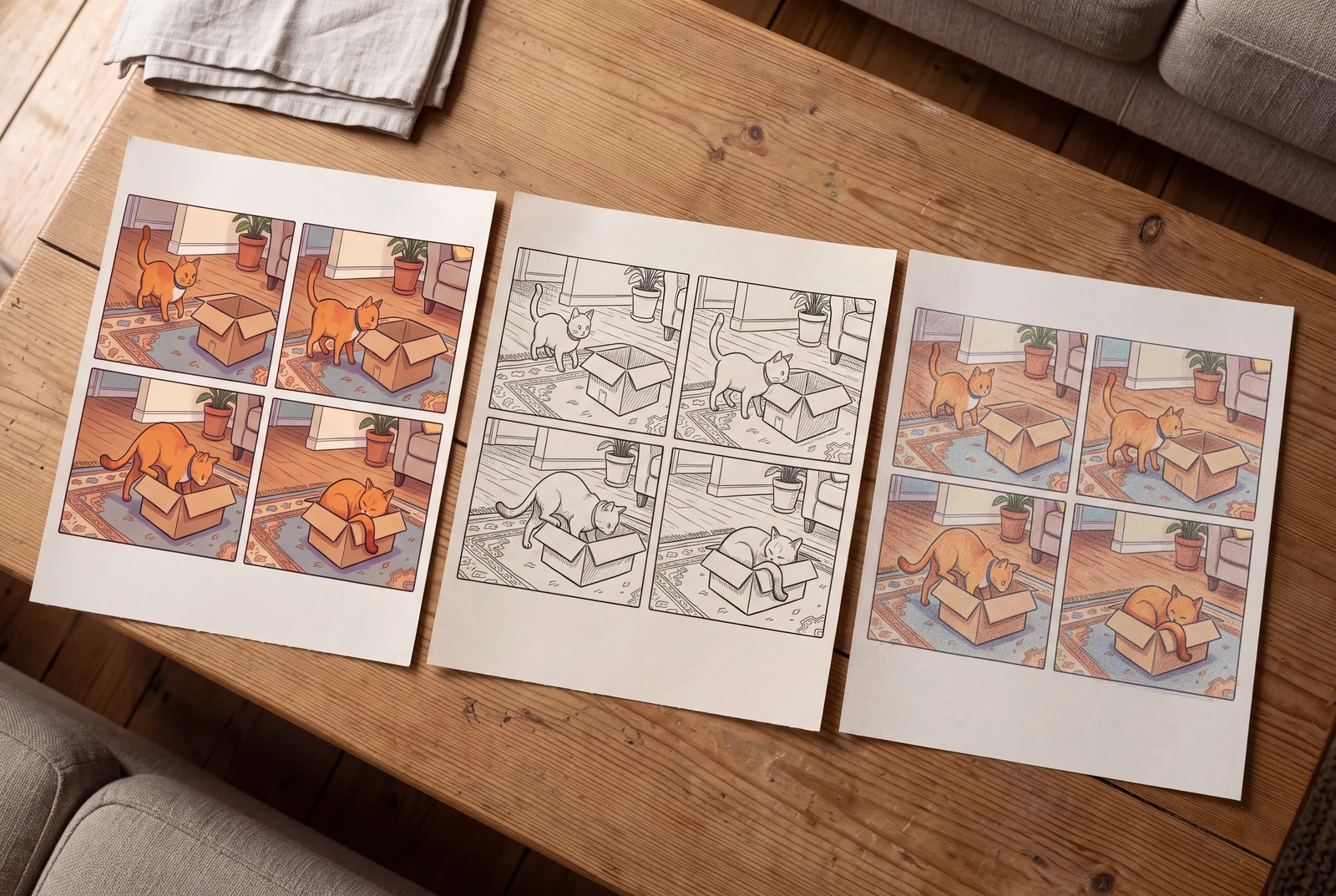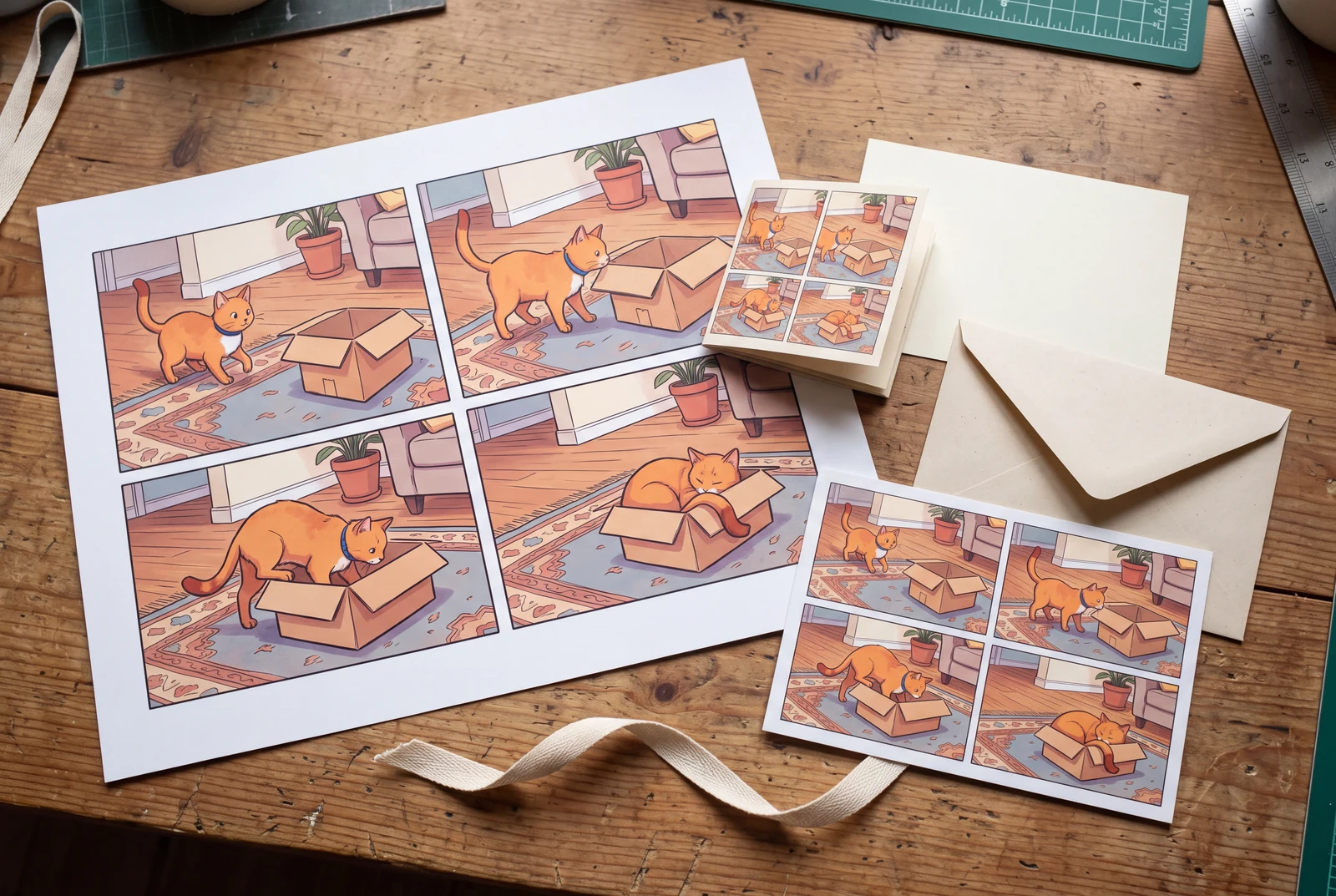

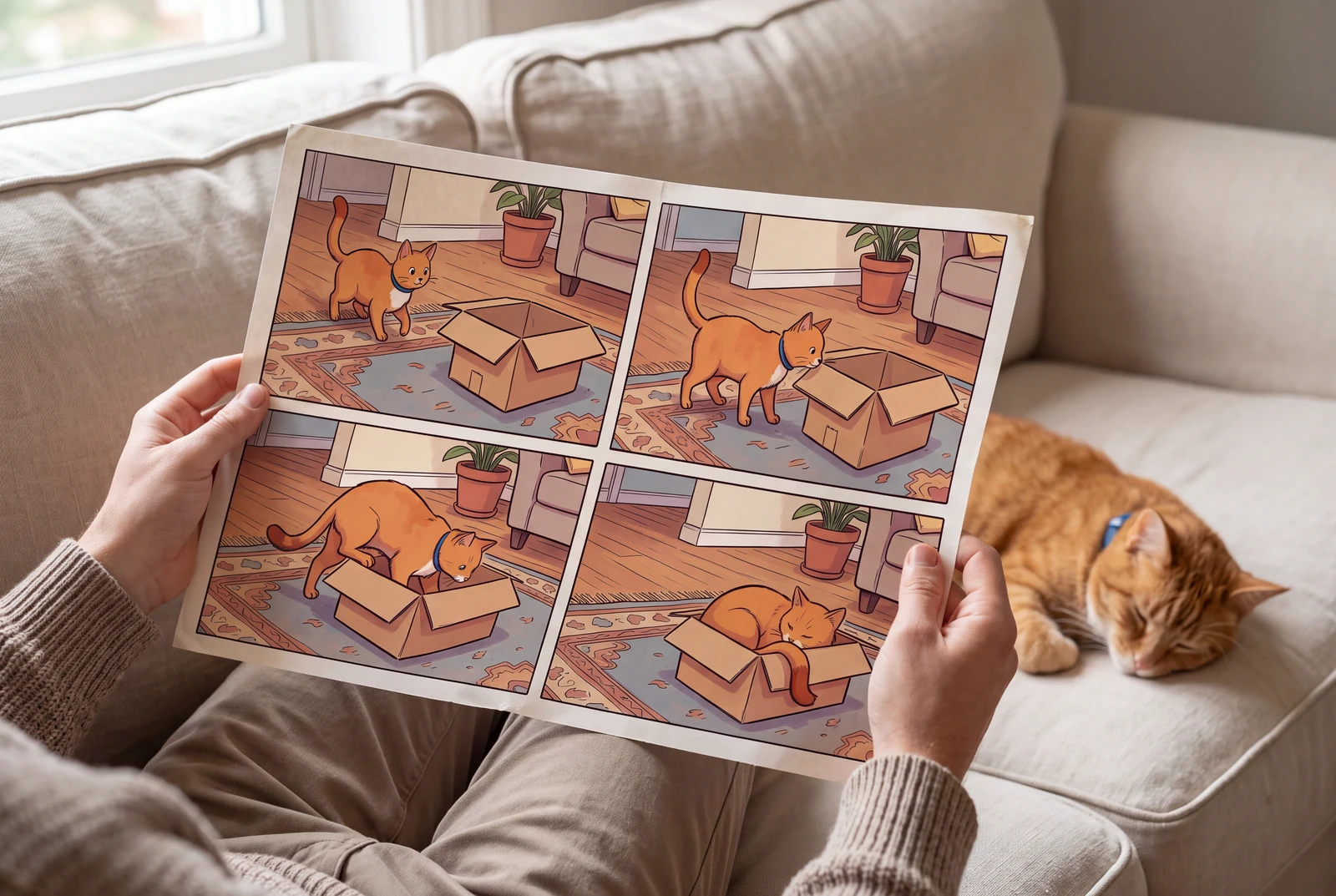
Keep a few visible traits consistent across scenes. Our example is an imaginary orange cat with a white chest and blue collar. Substitute your pet’s actual features; these examples establish neither tested likeness nor guaranteed outcomes.
Editorial workflow guide. Prompts are worked examples to try, not measured product results. The lifestyle scenes show ways to read and display a finished comic; see actual input/output comparisons on the product page.
1. Choose a reference that reveals the markings
Choose a photo showing the face, ears, and distinctive fur patches. Toys and shadows can obscure information the result would need to infer. Crop unrelated objects while keeping enough body visible to show proportions.
The main uploader supports JPG, PNG, and WebP up to 10 MB and requires sign-in to generate. Use images you are authorized to upload. Remove readable address tags and check current privacy terms before uploading personal details.
2. Write a small identity checklist
Describe visible traits rather than relying on breed labels. Left and right can become ambiguous across poses; describe asymmetric marks carefully and verify each panel.
- Check the face shape, patch placement, tail, and collar independently. If one trait is missing, revise that instruction before adding a longer story.
Example prompt
Use the uploaded pet photo as the identity reference. Draw a single introduction panel in clean, rounded comic lines. Preserve [orange fur], [white chest patch], [dark tail tip], and [blue collar without readable tags]. Keep the muzzle length and ear shape close to the photo. Show the pet sitting at a three-quarter angle against a plain background. Do not add clothing, change markings, or include text.
3. Give the pet one simple problem
An everyday sequence is easier to judge than multiple locations, costumes, and characters. This fictional scene does not imply that the real animal performed these actions.
- Accept when the four actions are distinct, the box size stays plausible, and the identity checklist passes wherever each feature is visible.
Example prompt
Create a four-panel comic using the pet in the uploaded photo. Preserve [orange fur], [white chest], and [blue collar] in every panel. Use warm flat colors and visible panel borders. Panel 1: the pet spots a cardboard box. Panel 2: it sniffs the edge. Panel 3: it climbs inside. Panel 4: it curls up with its tail visible. Keep the box in the same room and maintain the pet’s size. No speech bubbles, humans, extra pets, or new accessories.
4. Correct a drift without rewriting everything
If the collar changes color, keep the reference and narrative while revising only that instruction. This isolates the correction without guaranteeing other details remain identical.
Example prompt
Use the same uploaded pet reference and the four-panel box story. Keep the warm flat-color style and the same sequence of actions. Revision focus: the collar must remain [blue] wherever visible; do not replace it with a bow or scarf. Preserve [white chest patch] and [dark tail tip]. Keep backgrounds simple so the collar and markings are easy to inspect. No text.
5. Review the whole page before sharing
Count limbs, inspect paws and ears, and compare visible markings against the source photo. A hidden chest patch is different from a patch drawn in the wrong place. Save a list of mismatches instead of assuming an attractive image is accurate. For keepsakes or public posts, describe the work as an AI-assisted illustration when that context matters. Consult current Plans and Terms for credits, commercial rights, and data handling.
Questions before you start
Can this guarantee my pet’s exact likeness?
No. A clear reference and specific markings create a reviewable brief, but stylization and generation can change identity details. Compare the output with your photo.
What if two pets appear in the photo?
For a first attempt, crop to one pet if you can do so without cutting off its features. Introducing two similar animals makes identity and continuity harder to assess.
Do I need to specify the breed?
A breed name can provide context, but prioritize the visible coat, muzzle, ears, and accessories. Do not invent a breed or health information from appearance.
Sources and product information
These are first-party product and policy sources. This guide does not include an independent review or a performance benchmark.