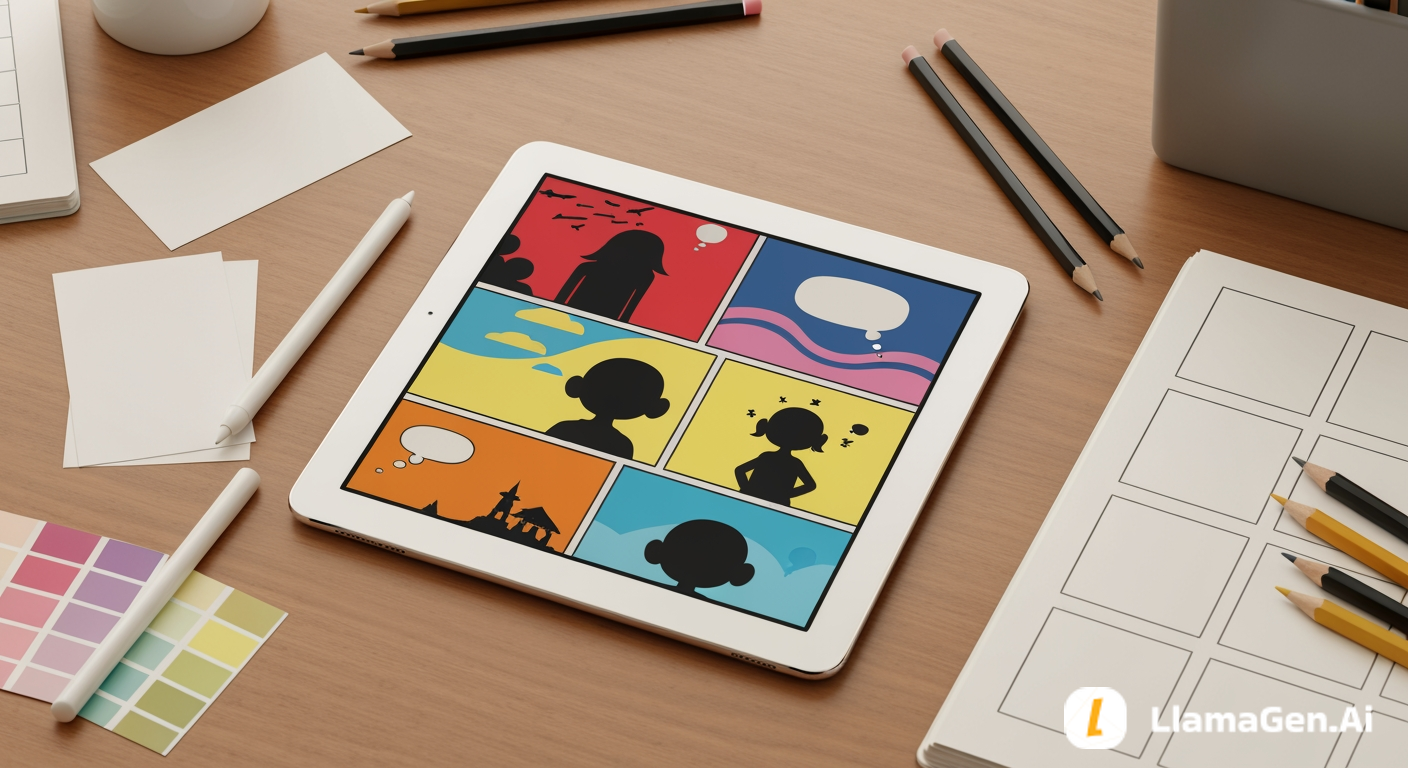
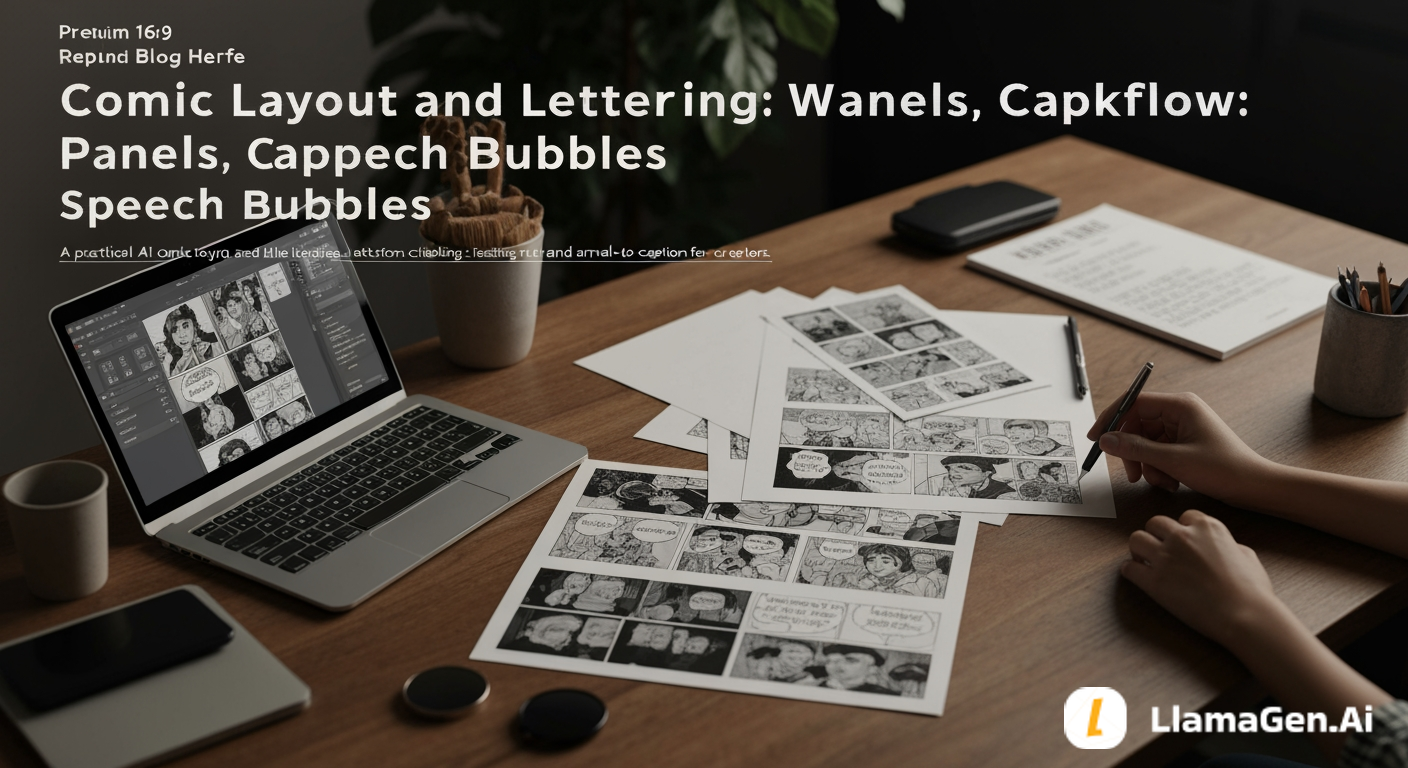
Layout and lettering are where many AI comics stop feeling readable.
The art may look good, but the comic still fails if:
This workflow uses LlamaGen.AI Comic Strips as the starting point for panel creation, captions, and speech bubbles, then compares where ComicsMaker.ai, Canva, and Clip Studio Paint can support layout or finishing.
This workflow audit was captured on July 21, 2026.
I visited the public product pages for LlamaGen.AI, ComicsMaker.ai, Canva, and Clip Studio Paint. The test focused on whether the product presentation and visible workflow support panel layout, captions, bubbles, and comic readability.
The shared test page:
A small repair robot gets lost inside a giant library, mistakes a sleeping cat for the head librarian, and tries to return an overdue moon map.
The layout brief:
| Panel | Goal | Text Need |
|---|---|---|
| 1 | Show giant library scale | No bubble, maybe short caption |
| 2 | Robot spots the sleeping cat | Small reaction bubble |
| 3 | Robot presents moon map | Speech bubble |
| 4 | Cat opens one eye | Silent comedy beat |
| 5 | Books begin floating | Caption or sound effect space |
| 6 | Robot salutes the cat | Final punchline bubble |
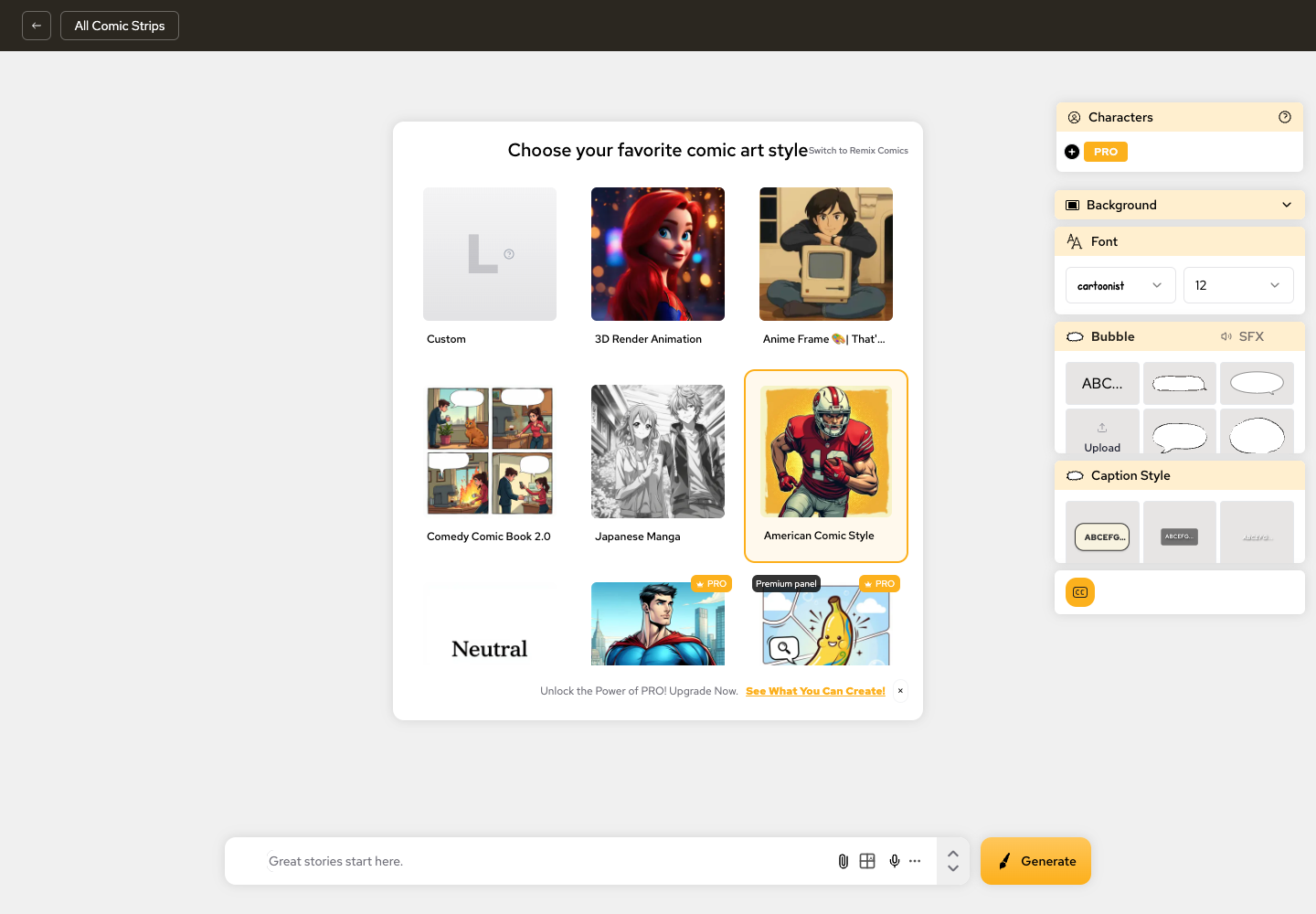
LlamaGen.AI includes bubble and caption style controls in the comic workspace, which makes it useful for creators who want layout and text decisions close to generation.
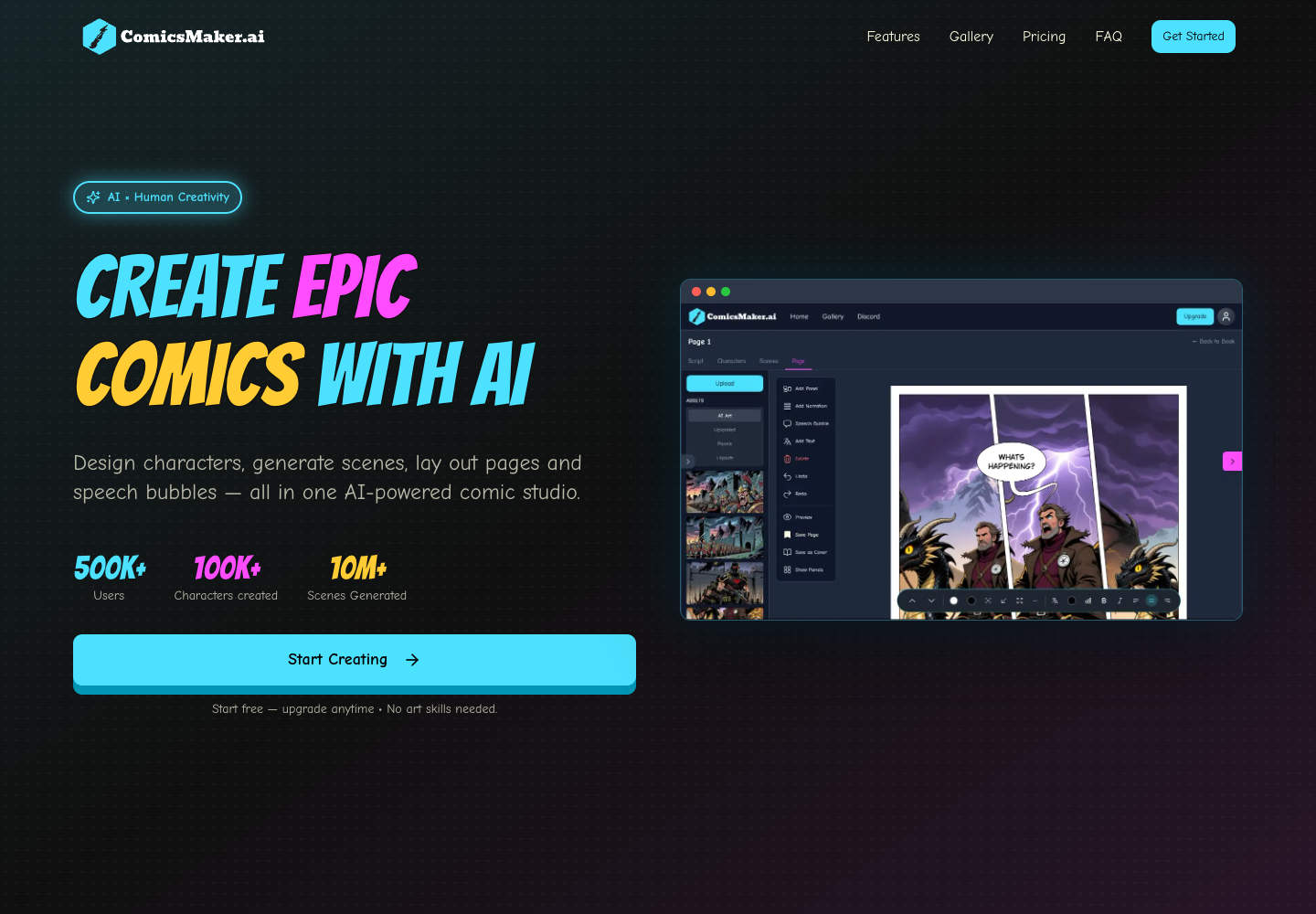
ComicsMaker.ai's public product screenshot emphasizes designing characters, generating scenes, laying out pages, and adding speech bubbles.
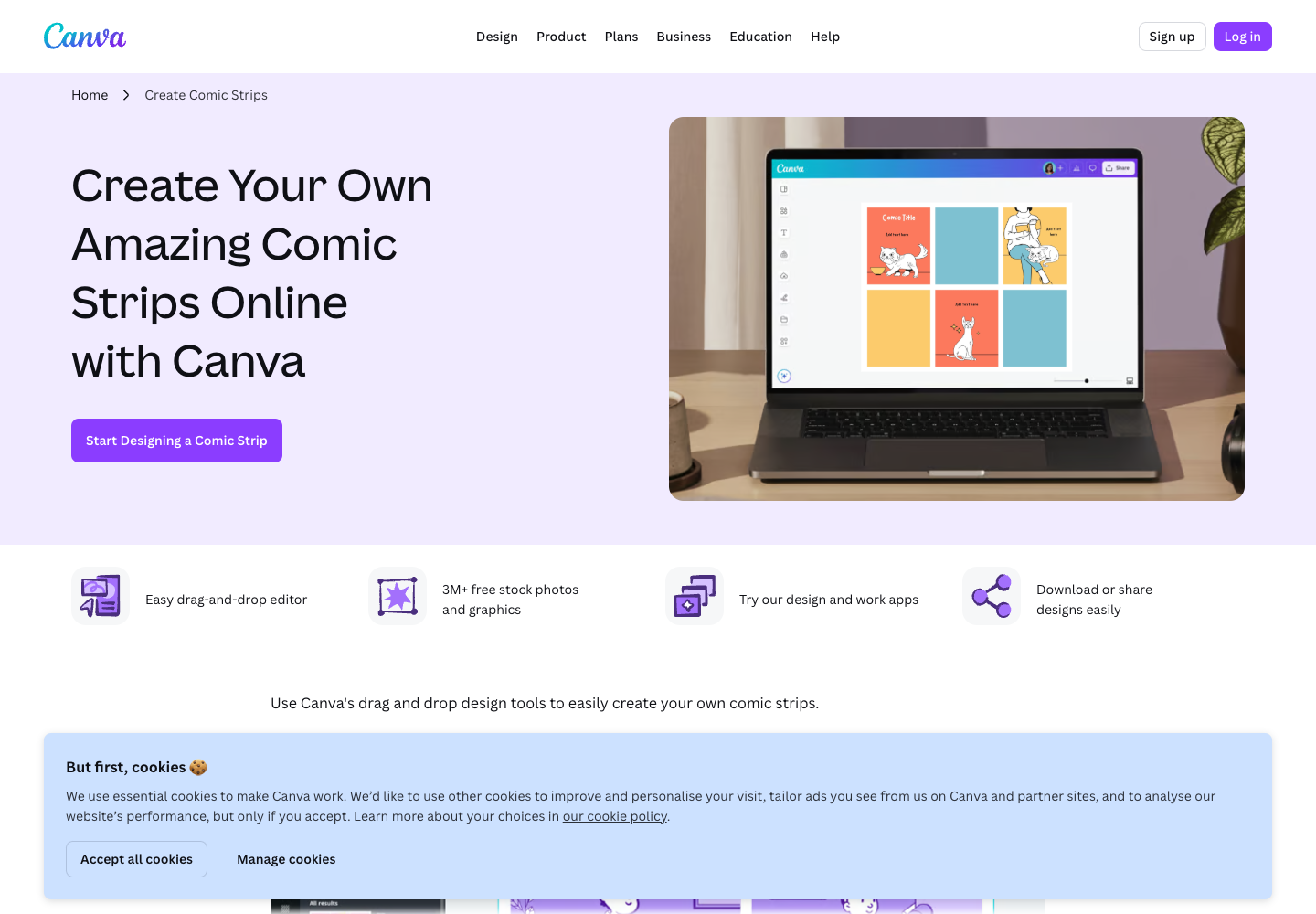
Canva is strong for drag-and-drop design and simple comic strip templates.
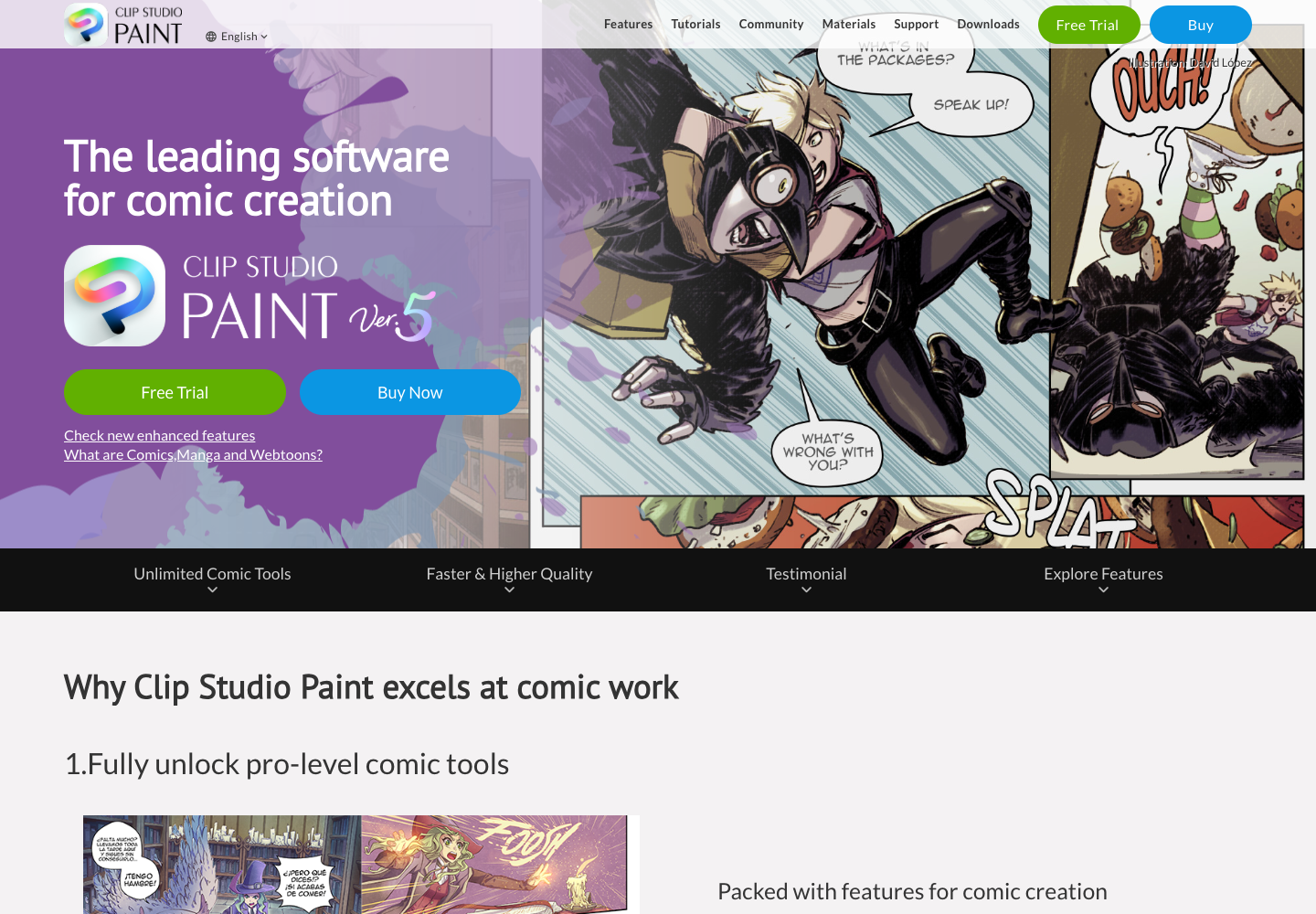
Clip Studio Paint is a mature tool for professional comic production and final page work.
Do not add bubbles to a broken panel sequence.
First, check panel order:
| Layout Question | Good Answer |
|---|---|
| Where does the eye go first? | The establishing panel or protagonist |
| Is the story readable without text? | Mostly yes |
| Does each panel change something? | Yes, new action or emotion appears |
| Is there room for words? | Bubble areas do not cover key faces |
| Is the joke or hook held until the final panel? | Yes |
A rundown of the latest LlamaGen feature releases, product enhancements, design updates, and important bug fixes.
Only after the page reads visually should you add captions and bubbles.
Use a prompt that reserves space but avoids fake letters:
Create a 6-panel comic strip.
Story: a tiny repair robot gets lost in a giant library and mistakes a sleeping cat for the head librarian.
Style: charming clean comic, readable panel order, expressive silent comedy.
Important: leave open space for captions and speech bubbles, but do not generate readable text, logos, or watermarks.
This reduces the chance of AI-generated gibberish text.
| Panel | Text Job | Example |
|---|---|---|
| 1 | Caption | "Sector 9: Archives." |
| 2 | Reaction | "Excuse me?" |
| 3 | Dialogue | "I found your moon map." |
| 4 | Silence | No text |
| 5 | Sound or caption | "WHUMP" or short caption |
| 6 | Punchline | "Your staff is very fluffy." |
Do not add dialogue because you feel every panel needs words. Silence is part of comic timing.
Bubble placement should protect:
If a panel has no clear bubble space, regenerate the panel with more negative space.
Most AI comic readers will view the output on a phone. After export, check:
| Tool | Layout Strength | Lettering Strength | Best Use |
|---|---|---|---|
| LlamaGen.AI | Strong for AI comic generation and panel workflow | Bubble and caption controls are close to generation | Create and revise the first readable comic draft |
| ComicsMaker.ai | Visible page and scene workflow | Product positioning includes speech bubbles | Compare if you want an all-in-one comic studio alternative |
| Canva | Strong drag-and-drop templates | Good for simple text placement and classroom graphics | Finish simple comic strips or social designs |
| Clip Studio Paint | Professional page tools | Strong manual lettering and comic production | Final professional polish after draft approval |
Beginners often treat lettering as decoration. In reality, lettering is part of storytelling.
LlamaGen.AI helps because the creator can stay in one flow:
story beat -> panel -> caption/bubble decision -> revision -> export
That reduces the common problem of exporting AI images and trying to force them into a layout after the fact.
Use this final check:
| Check | Pass |
|---|---|
| Text-free art generated first | No AI gibberish text remains |
| Characters are visible | No bubble covers important faces |
| Reading order is obvious | The eye moves through panels naturally |
| Captions are short | No panel becomes a text box |
| Mobile readability is checked | The smallest text still reads |
| Export is clean | No accidental watermark, logo, or cropped bubble |
Usually no. Generate clean art first, then add or control text separately. This avoids misspellings, warped letters, and unreadable speech bubbles.
Canva can be enough for simple comic strips and classroom graphics. For AI-first comic generation and character continuity, start in LlamaGen.AI, then use Canva only if you need template-style finishing.
Use Clip Studio Paint for professional manual lettering, print-page polish, and advanced comic production.
Start with LlamaGen.AI Comic Strips, generate text-free panels, then add short captions and speech bubbles after the story reads visually.
Just refer your friends, followers, and customers to earn up to 30% in recurring commissions for a lifetime!