

Approve the artwork and handoff before launch day
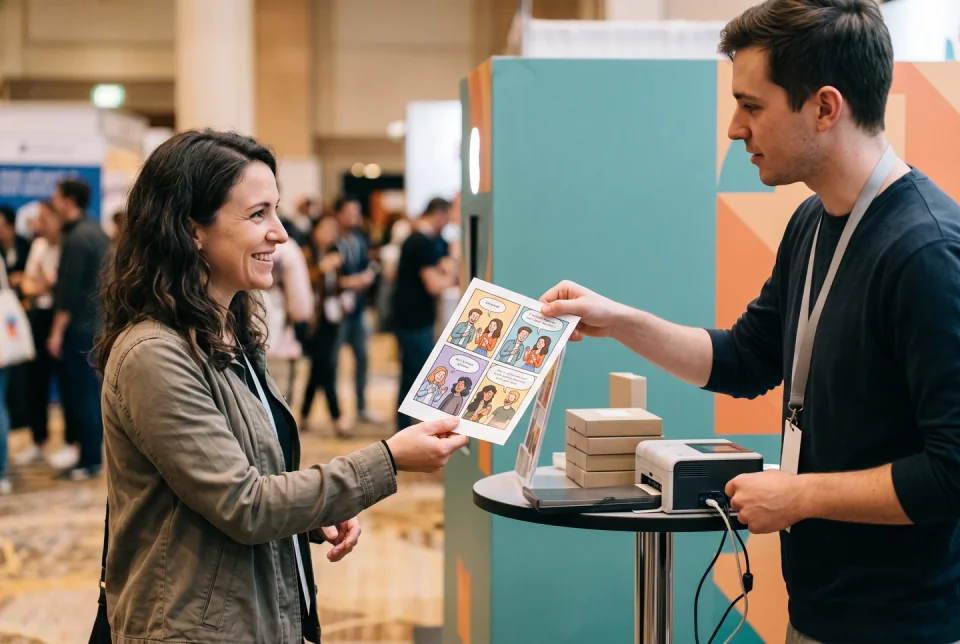
- Build one story around a physical action the guest actually does at the demo. Put approved logos in a separate overlay and give staff a reference proof.
- Rehearse a retake and a private file pickup with two test guests. Mark the approved version and keep the earlier attempt away from the print queue.
- Run one proof through the actual printer or contractor. Have the brand owner sign off on colors, layout and consent language before the event.
LlamaGen Editorial TeamReviewed Privacy policyTerms and billing policiesContact support
01
What makes an event activation different
A product-launch booth is a campaign operation. The goal may be brand recall or attendee participation, but those outcomes must be measured by the organizer; an AI-generated comic by itself does not guarantee awareness or conversions.
Build a short narrative that includes the product naturally instead of placing an unlicensed trademark inside every panel. Prepare backup copy for inappropriate or inaccurate generated lettering.
02
Three formats worth testing
Trade-show discovery: an attendee solves a playful product-related challenge. Retail pop-up: the customer discovers a fictional surprise and receives a customized souvenir. Conference launch: the participant becomes an original hero navigating a workday story.
Each format should have its own tested four-panel prompt, moderation criteria and clear privacy options. Do not use generic brand logos, celebrity likenesses or existing comic IP without permission.

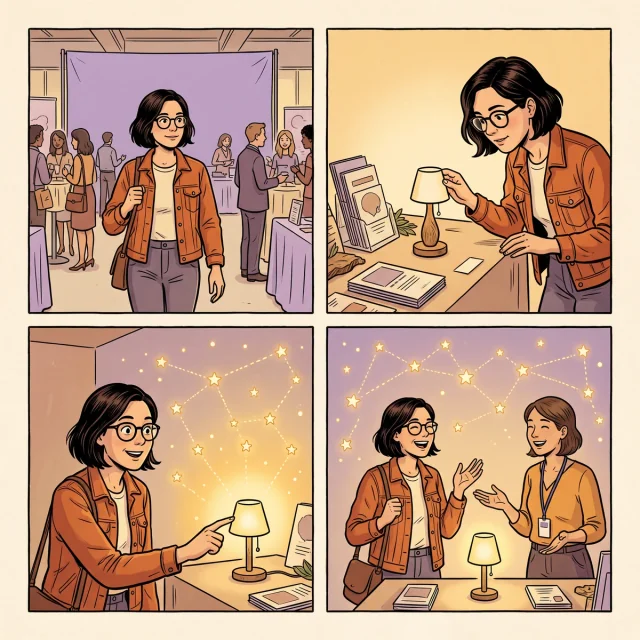
- One four-panel visual story instead of an uncontrolled prompt.
- Private download and print formats chosen before production.
- Actual sample outputs reviewed with the brand team.
- Guest retake, delay and deletion handling tested with the operator.
03
What the agency should price
Quote capture hardware, onsite staff, queue management, software integration, licensing of event artwork, AI generation credits, corrections, approved print sizes and physical delivery as separate line items.
For LlamaGen's public Comic API, current docs describe 150 API credits per base-resolution panel. A four-panel page is therefore 600 base credits before redraws or upscaling; real dollar cost depends on your own API plan. Avoid describing a consumer subscription as a corporate API license.
04
Launch-readiness checklist
Before launch, run a controlled trial with authorized sample portraits, compare actual guest throughput and review all brand materials. The operator should have an alternative delivery method if generation or printing fails.
For developers using existing operator software, the Comic API can supply generated comics; it does not replace event analytics, campaign opt-in or printer controls.
- Brand owner approved every visual claim and tagline.
- Likeness, caption and crop review completed on actual outputs.
- Separate opt-in for guest photos and promotional outreach.
- A tested fallback covers event network and printer downtime.
- Credits and throughput targets based on measured trials.
Frequently asked questions
Can I add our brand logo to the comic?
Use licensed or approved logo assets within your own workflow. LlamaGen does not guarantee that a model will reproduce exact brand typography without review.
Does LlamaGen run the event or manage the guest list?
No. The existing creative tool and API cover comic generation, while your agency or event operator handles hardware, consent, lead capture and fulfillment.
How do I estimate cost for 300 guests?
Use guest count × panel count × base API credits, then include retries and upscales. The new Photo Booth Cost Calculator helps model credits without inventing a dollar rate.
Sources and limitations
This page was prepared by the LlamaGen editorial team from publicly documented tools and category examples. The lifestyle illustrations are AI-generated and depict fictional people. Review your own camera, print and delivery setup before offering the workflow at an event. LlamaGen is an interested vendor.