Character continuity guide
Keep comic strip characters recognizable across panels
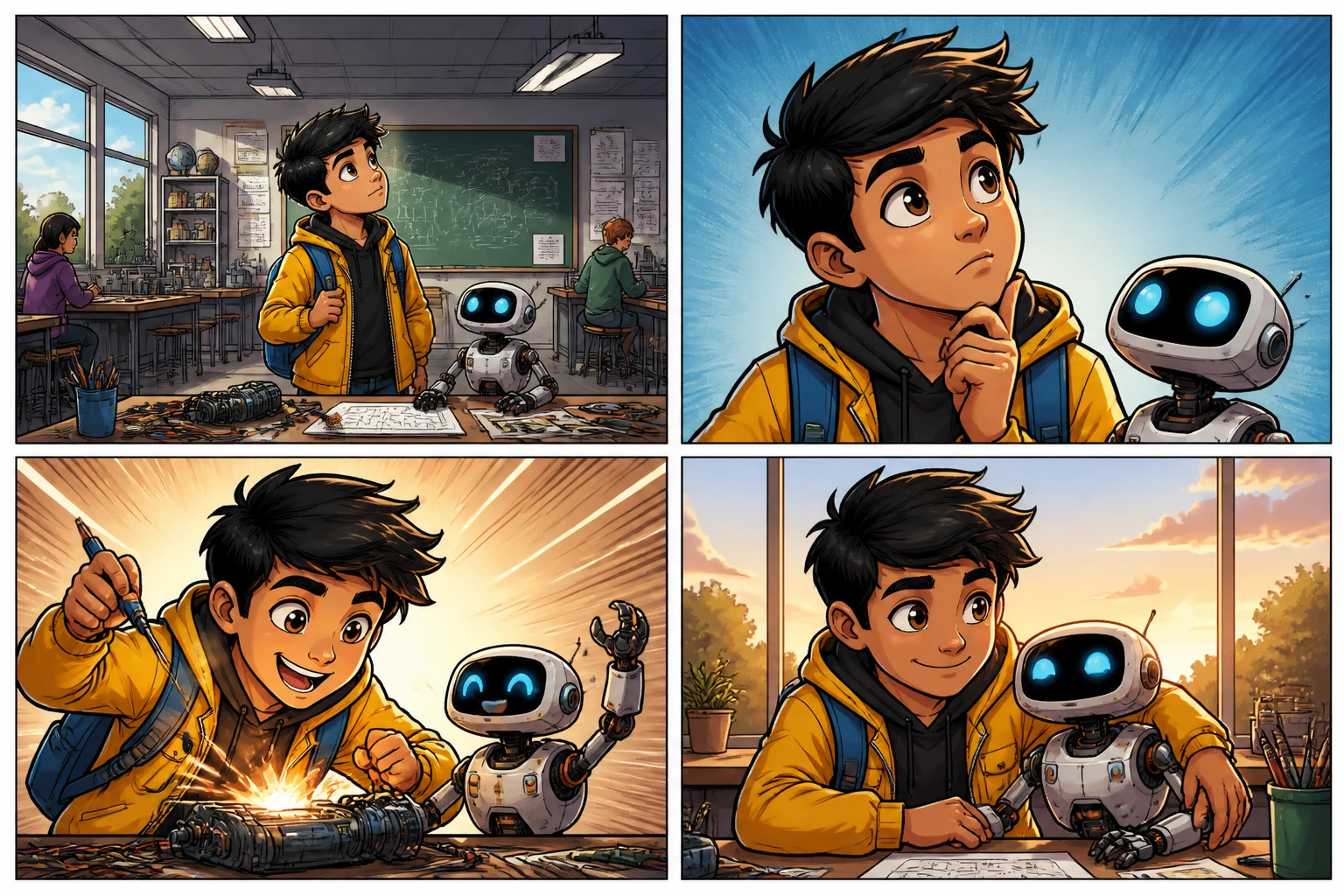
Character continuity means recognizing the same person despite changing poses, expressions, and framing. A repeated name is insufficient. Use a short specification and inspect every panel.
Published by LlamaGen · Updated
1. Write a compact character specification
Choose visible anchors: hair silhouette, outerwear color, one accessory, and body shape. Separate these from temporary expressions or poses. A distinctive silhouette is easier to inspect at small sizes than a tiny badge or elaborate pattern.
- Identity: short black hair, yellow jacket, blue backpack.
- Companion: small white robot, dark face screen, two blue eyes.
- Scene variables: pose, expression, camera distance, and action.
2. Reuse the same identity and reference
Copy the identity description unchanged into the strip plan. If the workspace offers references, reuse one approved image you are entitled to upload. References guide the result; they do not lock facial features or provide consent for another person's likeness.
3. Distinguish action changes from design changes
Start with one setting and a small cast. Label each action while retaining the identity sentence. Avoid combining a new outfit, time jump, and extreme camera angle. For intentional costume changes, state where they occur.
4. Compare panels and correct the specific mismatch
Compare adjacent panels for hair, face shape, garment colors, accessories, and height. Check hands, robot parts, and props. Describe corrections precisely, such as restoring the yellow jacket in panel three. Keep approved details stable and review the full strip after regeneration.
Illustrative prompt: one design, four actions
Create a four-panel comic in a bright workshop, in a warm cartoon style. Ari: swept black hair, yellow jacket over black hoodie, blue backpack. Pip: small white robot, dark face screen, two blue eyes. Keep these details throughout. Panel 1: Ari and Pip study a paper plan at a table. Panel 2: Ari points to a loose wheel. Panel 3: Pip holds the wheel while Ari reaches for a screwdriver. Panel 4: both celebrate the repaired toy cart. Leave speech bubbles empty. Change expressions and framing, not clothing or robot design.
Example scope: An editable prompt template, not a measured experiment or promise of identical outputs. Check against the character specification.
Check before handoff
- Hair silhouette and face remain recognizable.
- Clothing colors and accessories match the specification.
- Character proportions and relative height make sense.
- Changes in pose do not create extra limbs or missing parts.
Limits and costs
- Consistency is not guaranteed; angle changes, occlusion, and crowded scenes can reveal drift.
- Accounts and credits are required; repeated generations may consume additional credits.
- Reference tools, character allowances, HD downloads, and watermark removal depend on the workspace and plan. Confirm current entitlements.
Questions before you start
Does a reference image guarantee the same face?
No. Treat it as guidance and inspect facial features in every panel, especially profiles and distant shots.
Should I describe every detail?
Prioritize recognizable anchors. Competing details make important mismatches harder to identify and correct.
Can the character change clothes?
Yes. Specify the story transition and the new outfit explicitly, then keep that outfit stable in subsequent panels.
Sources and scope
Based on published product documentation, labeled example artwork and newly generated lifestyle concepts. Sample tasks illustrate a workflow; they are not benchmark results or customer case studies.
- LlamaGen AI Comic Strip Generator
First-party workflow and character-continuity description; promotional examples do not establish a success rate.
- LlamaGen pricing and plan comparison
Check current credit allowances, character features, and export entitlements here and in your account; availability can change.
- Clip Studio Paint: Step-by-step comic creation
Comics craft reference for character sheets, recurring outfits, expressions, and multiple views; not an evaluation or endorsement of LlamaGen.
External documentation explains formats and production methods. It is not an endorsement or an independent evaluation of LlamaGen.
Finished ideas in everyday life
Picture a completed comic or character design in someone's hands, on a familiar desk, or as a coordinated collection of personal projects.
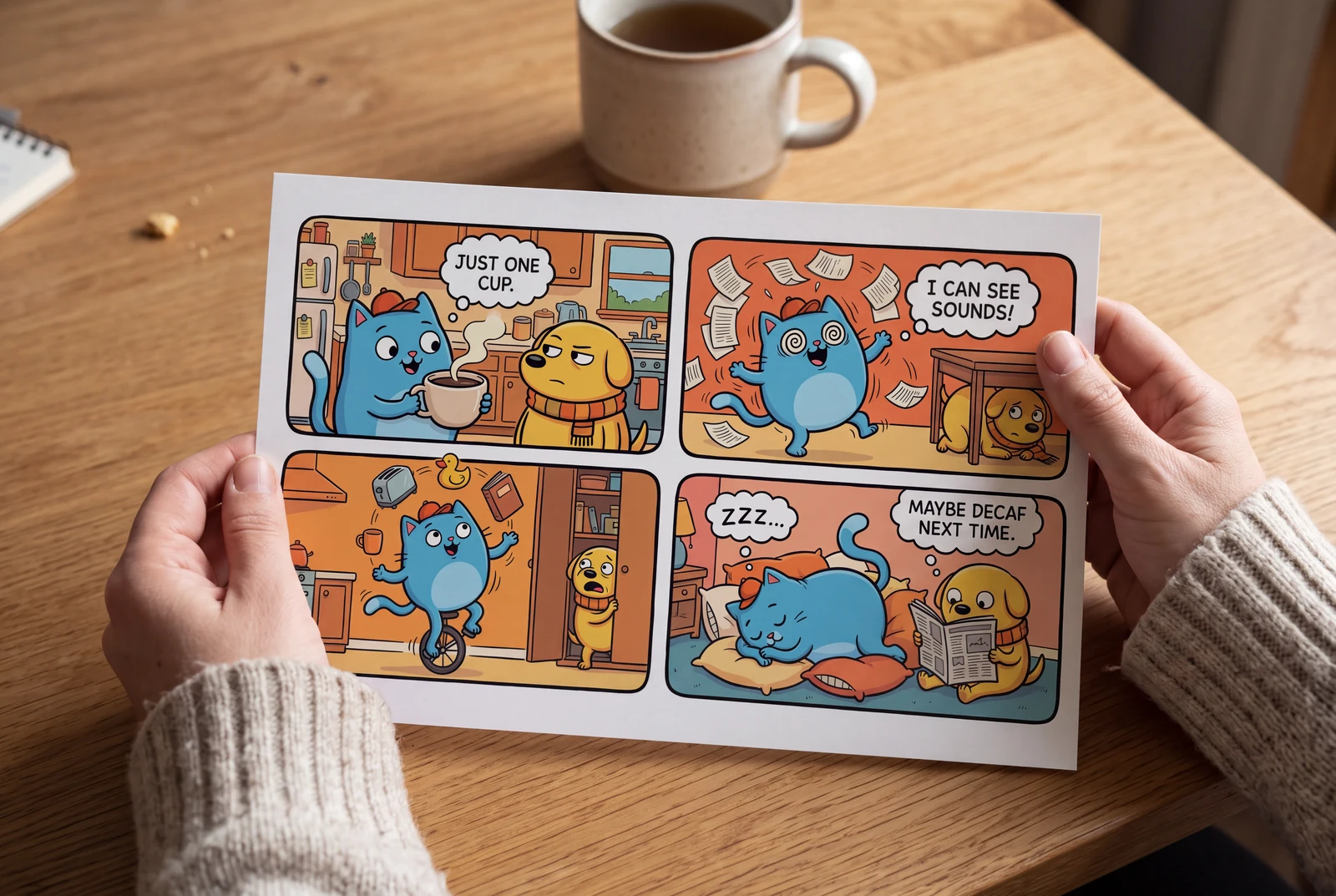
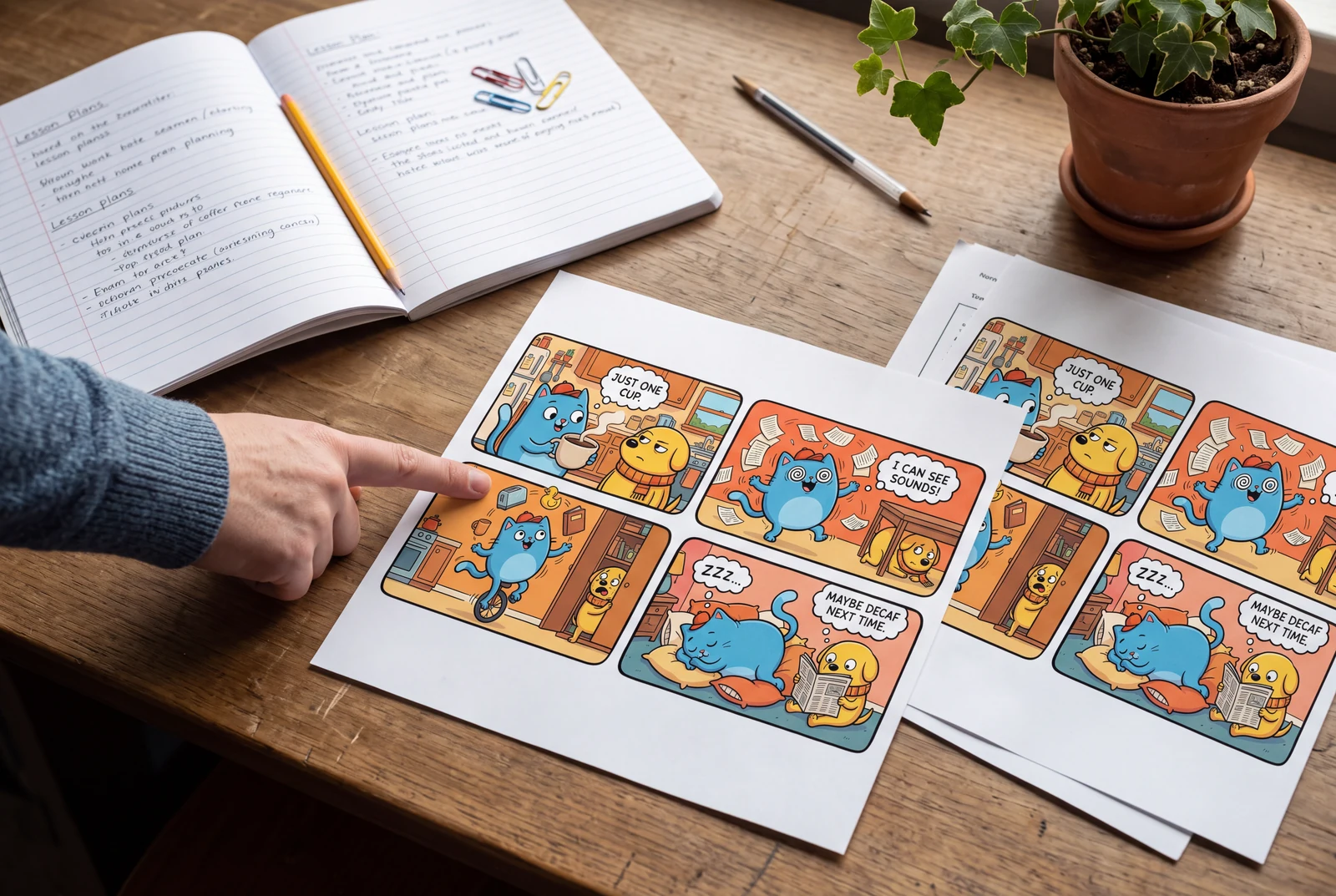
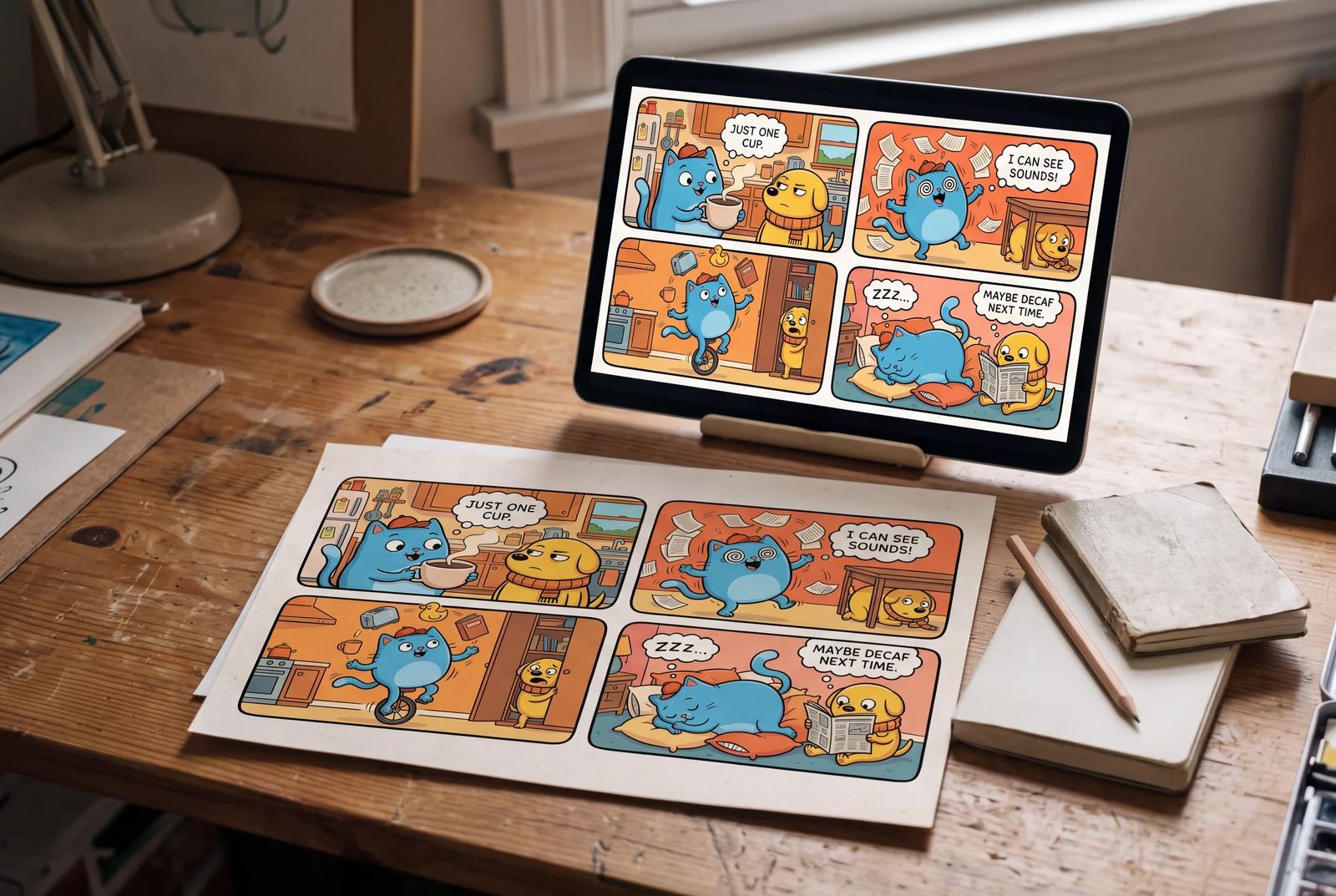
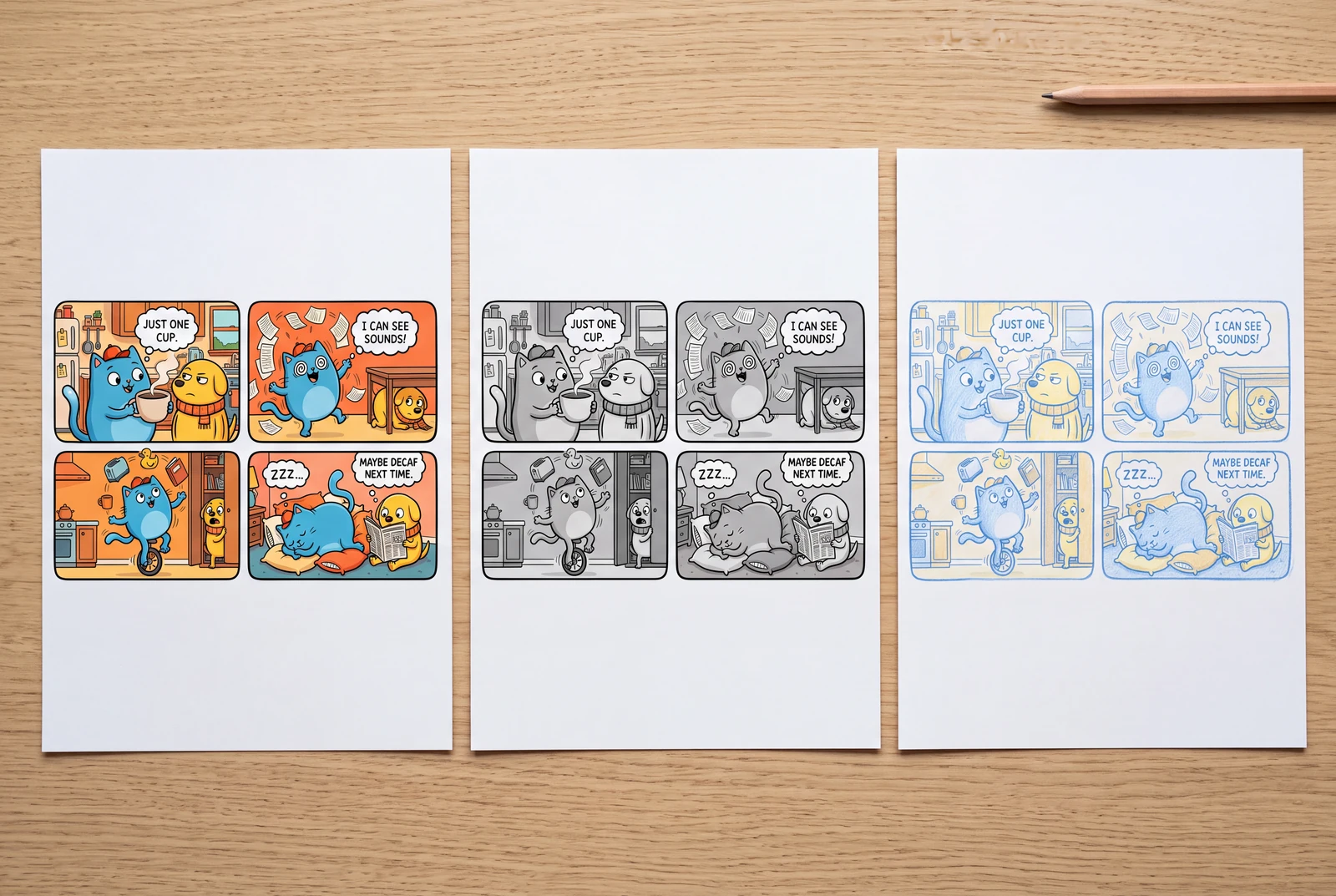
These fictional scenes are AI-generated lifestyle concepts, not customer photos or documented product test results. Printed cards, stickers, and display arrangements suggest optional uses for finished artwork; printing, production, and any animation work require a separate workflow.
Reference artwork and example scope