Comic prompt guide
Write AI comic strip prompts that tell a readable story
A useful comic prompt describes what changes between panels. Start with one reader, one situation, and one ending. This editorial workflow helps diagnose a draft before spending credits on another generation.
Published by LlamaGen · Updated
1. Define the reader and the final beat
Choose one takeaway: a child understands a concept, a colleague recognizes a joke, or a reader sees a reversal. For an educational strip, verify the explanation separately; an attractive image does not establish scientific accuracy.
2. Map four observable moments
Give each panel one job: establish the situation, introduce an action, show its consequence, and resolve the idea. Write what the camera can show rather than an invisible thought. If a panel needs two locations or several consecutive actions, simplify it before generation.
- Setup: who is here and what do they want?
- Action: what does someone actually do?
- Reaction: what changes because of that action?
- Ending: what makes the sequence feel complete?
3. Add characters, style, and short dialogue
Name the recurring characters and repeat their essential appearance. Choose one art direction and a stable setting. Put requested dialogue beside the relevant panel. Prefer one short line over a paragraph; inspect spelling, speaker assignment, and reading order after generation. Request empty bubbles if you plan to letter the strip yourself.
4. Review one failure at a time
Read the draft without the prompt. Identify the first unclear panel. Revise its action, framing, or dialogue while keeping the character description unchanged. Save prompt versions and results together so you can compare what changed.
Illustrative prompt: a classroom misunderstanding
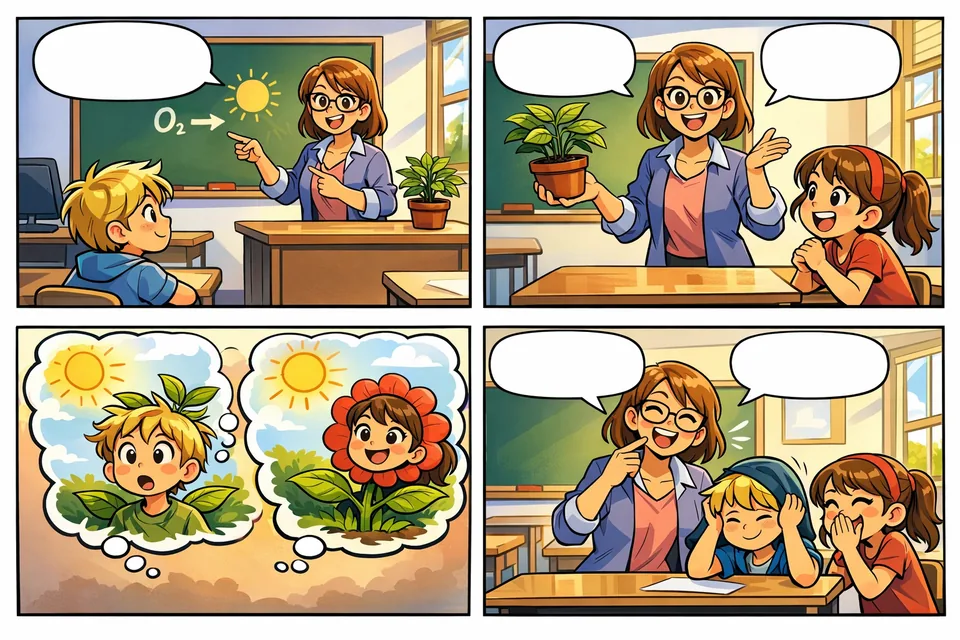
Create a four-panel classroom comic, read left to right. Warm cartoon style, the same classroom throughout. Mira: brown bob haircut, round glasses, blue cardigan. Leo: short blond hair, blue hoodie. Panel 1: Mira holds a potted plant beside a sunny window; Leo looks curious. Panel 2: Mira points to the leaves and sunlight. Panel 3: Leo imagines himself wearing a leafy costume and grins. Panel 4: Mira and Leo laugh beside the plant. Leave speech bubbles empty for a separately checked lesson about photosynthesis. Keep clothing and faces recognizable across panels.
Example scope: This is an editable writing example, not a documented generation or a tested result. Outputs vary; add and verify the science text yourself.
Check before handoff
- Each panel contains one visible story beat.
- The final panel answers the setup.
- Names, clothing, and props remain recognizable.
- Dialogue is accurate, legible, and assigned correctly.
Limits and costs
- Generation requires an account and credits; check the displayed cost before retrying.
- Text, anatomy, continuity, and factual details can need correction.
- HD and watermark-free exports depend on the plan; confirm current download options in your account.
Questions before you start
How long should my prompt be?
Long enough to specify four actions and essential constraints. Remove decorative details that compete with the story.
Can I use this for a lesson?
Yes as a draft. Have a teacher check facts, age suitability, and the final wording before sharing.
Will copying this prompt reproduce the image?
No. The image is existing feature artwork, and generation is variable even when the wording stays the same.
Sources and scope
Based on published product documentation, labeled example artwork and newly generated lifestyle concepts. Sample tasks illustrate a workflow; they are not benchmark results or customer case studies.
- LlamaGen AI Comic Strip Generator
First-party source for the four-panel product scope and account, credit, and export conditions; not independent performance evidence.
- ReadWriteThink: Comic Creator
Educational reference for planning and revising comics through characters, backgrounds, props, and dialogue. It does not evaluate LlamaGen.
External documentation explains formats and production methods. It is not an endorsement or an independent evaluation of LlamaGen.
Finished ideas in everyday life
Picture a completed comic or character design in someone's hands, on a familiar desk, or as a coordinated collection of personal projects.
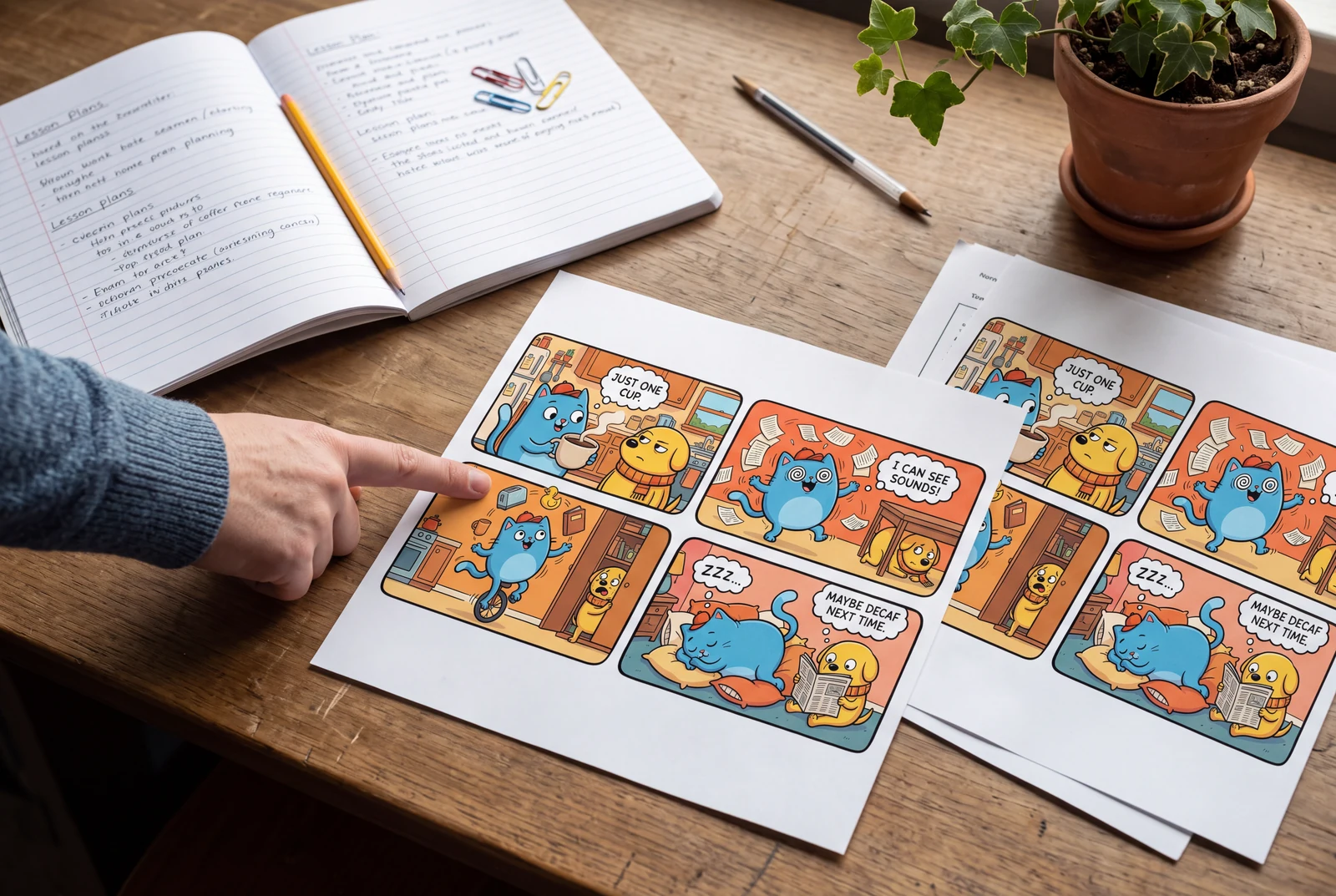
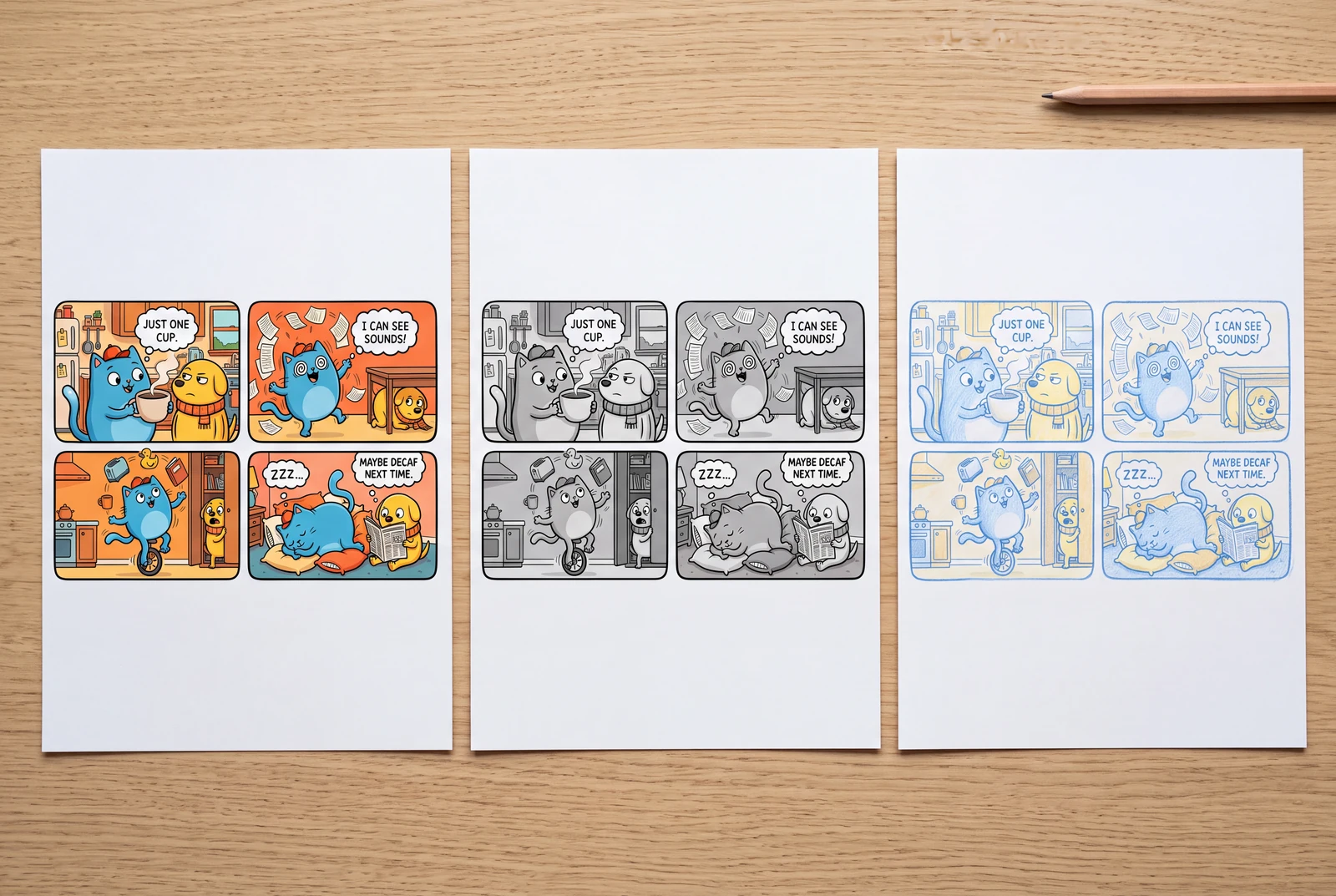
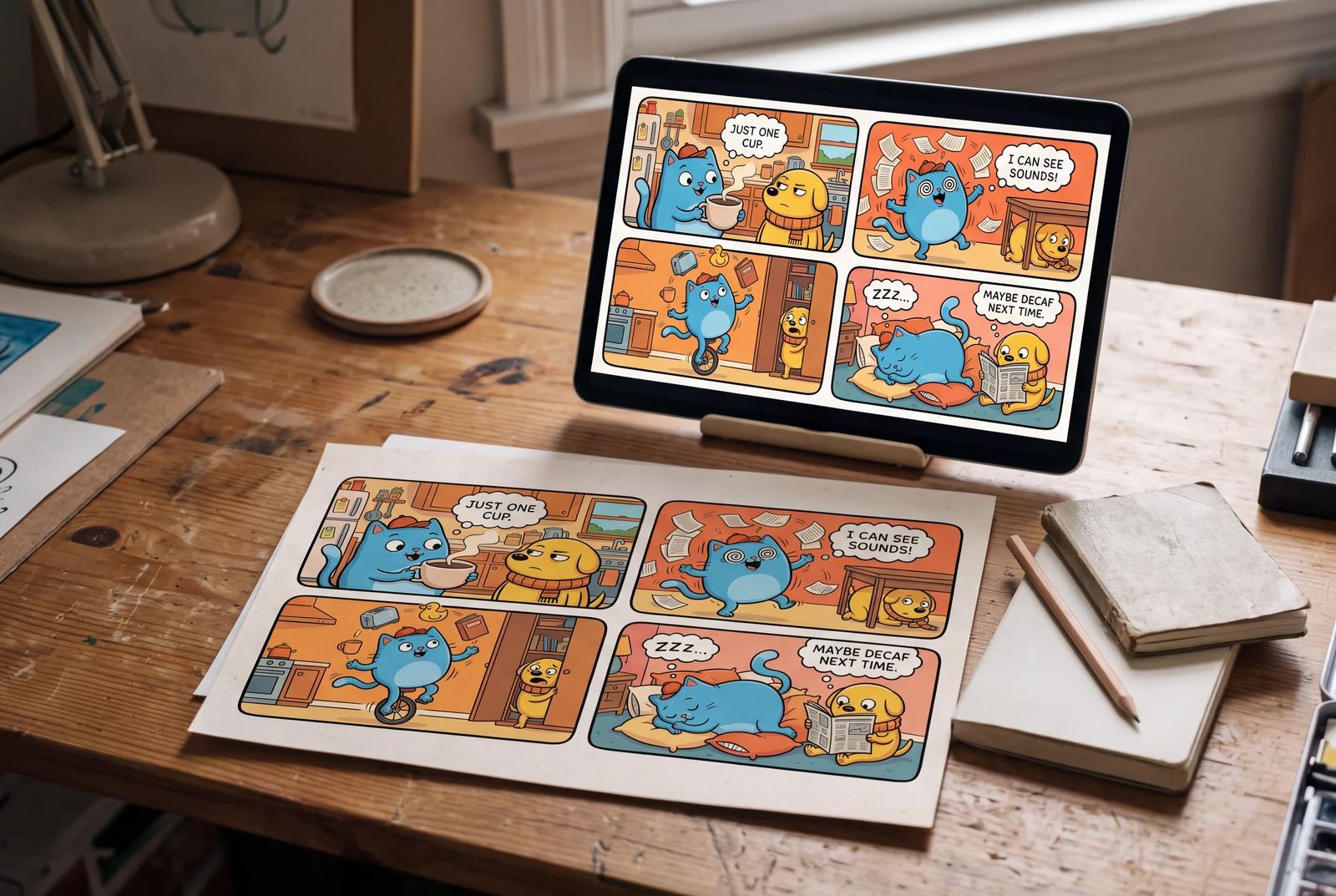
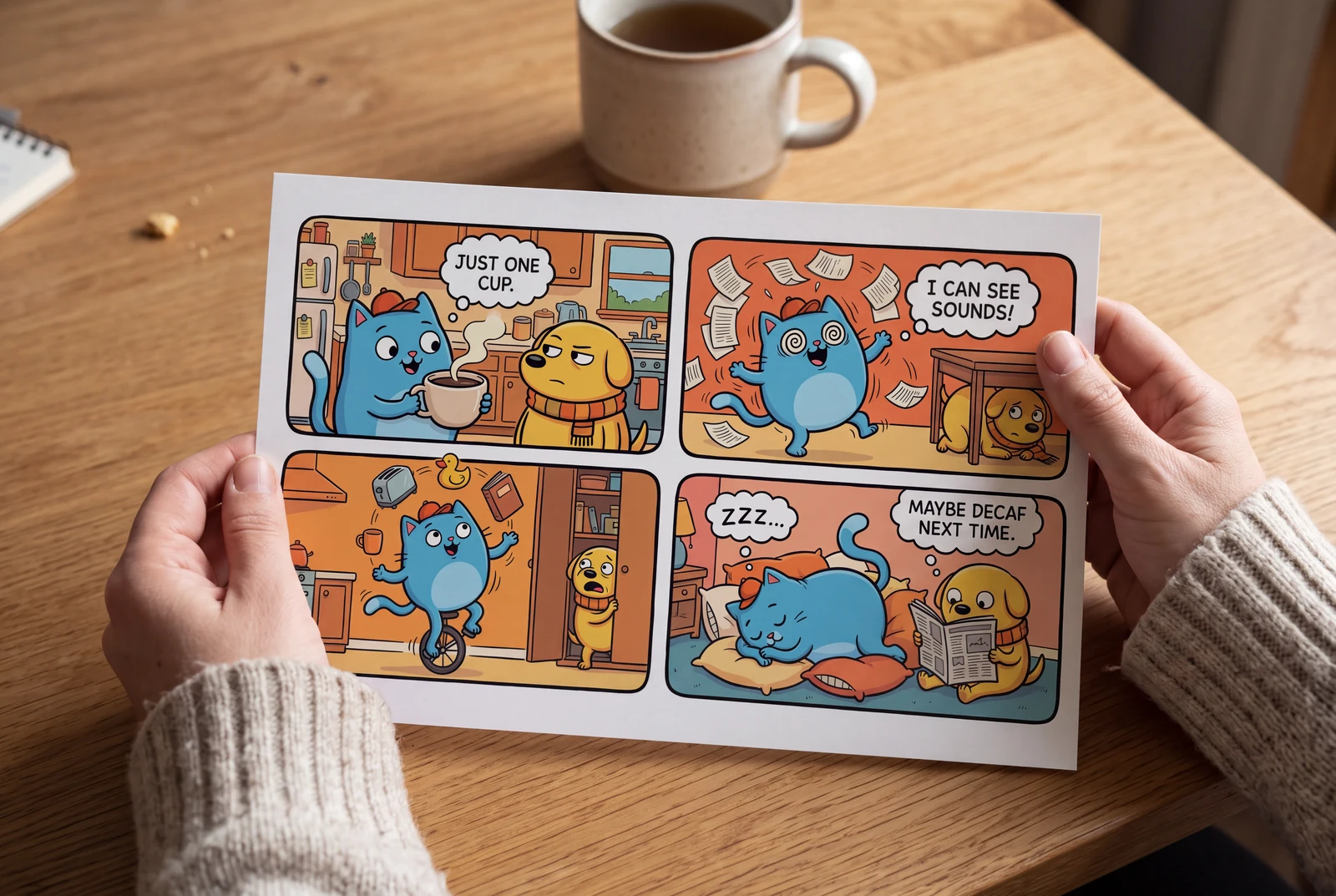
These fictional scenes are AI-generated lifestyle concepts, not customer photos or documented product test results. Printed cards, stickers, and display arrangements suggest optional uses for finished artwork; printing, production, and any animation work require a separate workflow.
Reference artwork and example scope